



![Genetyka - Pojecia - Allel - Homozygota - Genotyp - Fenotyp - Biologia [8 Klasa] - Dziedziczenie](https://i.ytimg.com/vi/UfQJV02MREU/maxresdefault.jpg)







![[18/02/26] EVOLUTION STUDY MARATHON (grunk twitch vods)](https://i.ytimg.com/vi/lAwbIX6pLYo/maxresdefault.jpg)















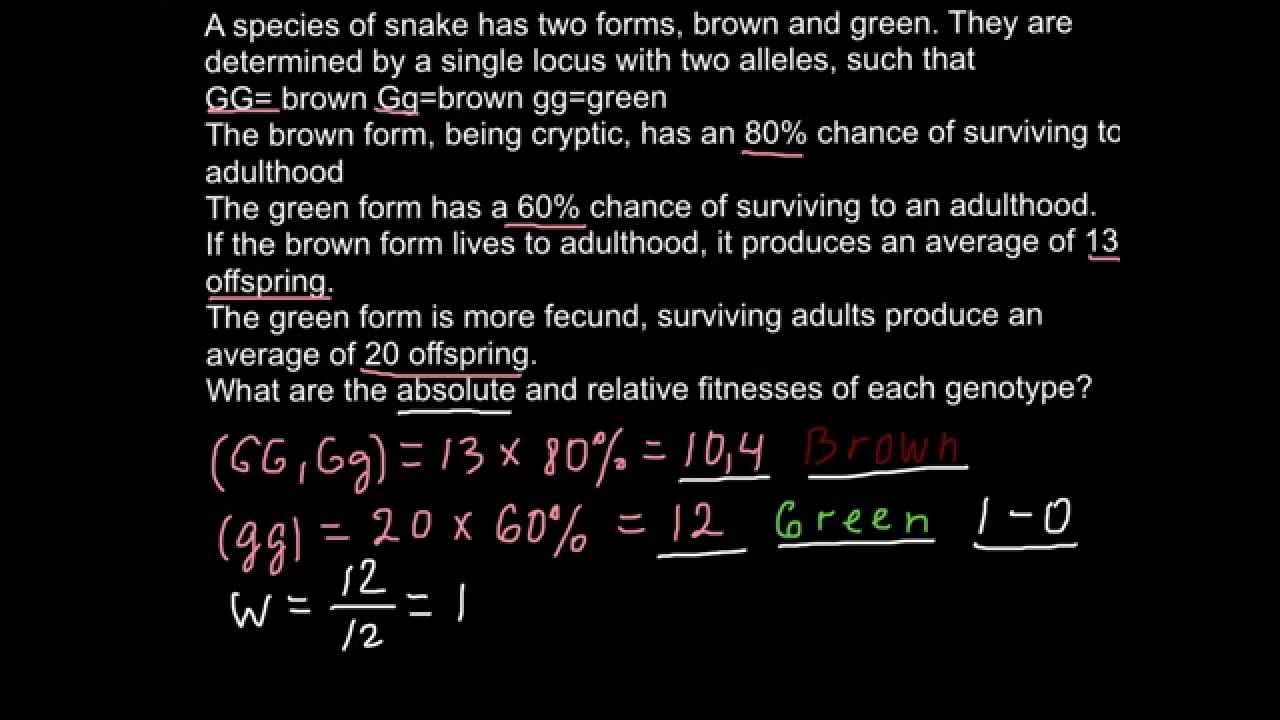
In population genetics, the selection coefficient (s) measures the relative disadvantage of a genotype compared to the most fit genotype, calculated as s = 1 - W, where W represents fitness; when the selection coefficient is zero, the genotype has maximum fitness (W = 1), meaning 100% survival to reproductive age, while a coefficient of one indicates complete mortality before reproduction (W = 0); to calculate relative fitness values, divide each genotype's survival rate by the survival rate of the most fit genotype, which serves as the baseline for comparison.
Selection Coefficient and Relative Fitness in Population Genetics
Added:Basic Mendelian genetics, including the concepts of alleles, genotypes (homozygous and heterozygous), and phenotypes.
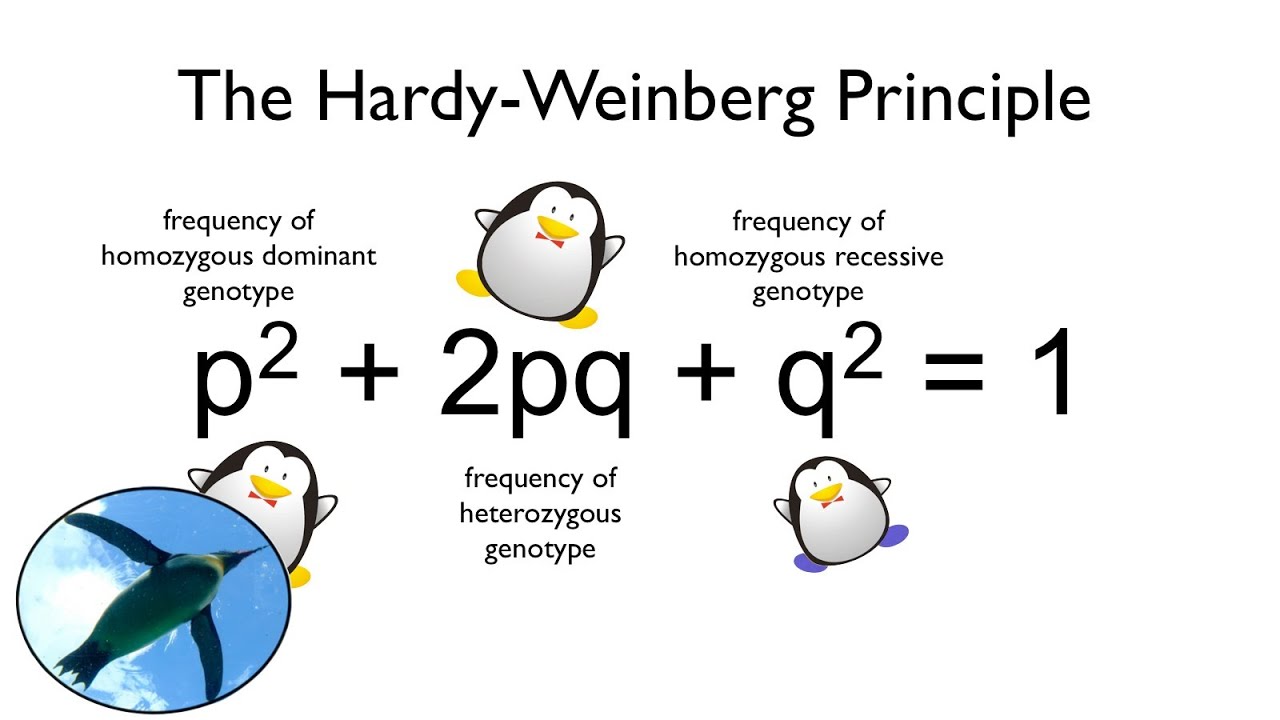
The Hardy-Weinberg Principle and how to calculate allele and genotype frequencies in a population.
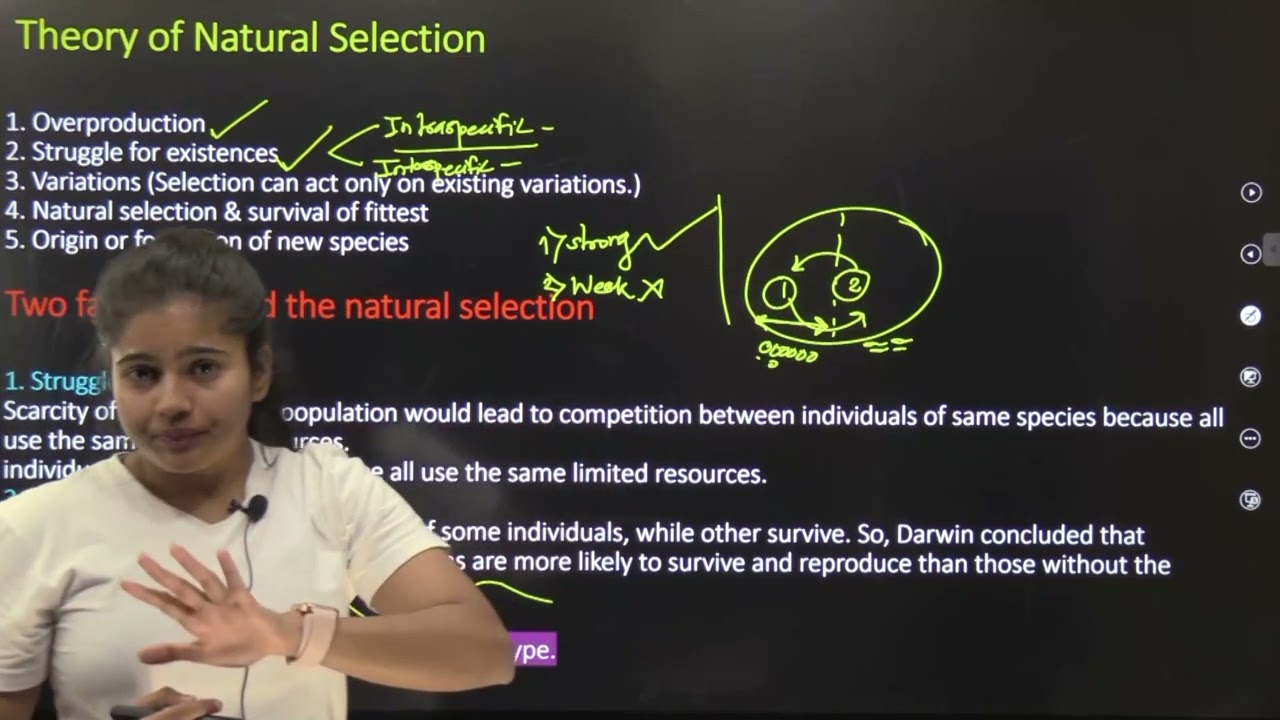
The core concept of natural selection and how it leads to differential survival and reproduction.
The conceptual distinction between absolute fitness (actual offspring produced) and relative fitness.
Calculating changes in allele frequencies (delta p) over generations under selection.
Analyzing different modes of selection, such as directional selection, disruptive selection, and heterozygote advantage (balancing selection).
Understanding the concepts of genetic load and mutation-selection balance.
Applying population genetics models to real-world scenarios, such as the evolution of drug resistance in pathogens or pesticide resistance in insects.
11.8K views71likes7:26Original Release: 2014-05-31
hi today I have two simple questions this is going to be questions about uh population genetics but uh though this is very simple questions these questions are very important uh for your ability to solve many genetics problems so please pay attention today and here is a first problem The Selective coefficient for the homozygous dominant genotype is 0.1 The Selective coefficient for the homozygous recessive genotype is zero there is complete dominance of the capital A Al little over the small a Al what are the fitness of the three genotypes and uh if you feel that you can solve this problem I recommend you to stop video here try to solve this problem on your own uh the first and the second and when you would be ready you can run video again and you can compare your answer with my answer in explanation so uh we use uh W uh W uh V to designate Fitness so this is going to be W uh for the homozygous uh recessive genotype because uh it show best uh results and uh Fitness here uh or selective coefficient is zero what doesn't mean that uh 100% of this genotype would survive until reproductive age so uh uh once again selective coefficient uh that is zero that means that 100% of this uh genotype with theive until reproductive age and on the other hand uh uh selective coefficient that is one and we have only we can choose only between zero and one and one is the maximum uh when selective coefficient would be one that means that 100% of the genotype would die before it can reproduce so uh as uh I told the best uh results of the survival here would be uh homozygous uh recessive so this is going to show the best fitness so that means uh that Fitness when uh selective coefficient is zero the fitness is equal to one and uh we also have two more genotypes uh that is w v that is homozygous dominant and we have to just uh deduct from one uh selective coefficient that is 0.1 and and the answer here would be 0.9 and uh the other genotype would be heterozygous and the results would be the same because we have complete dominance of uh dominant uh uh alil uh a capital A over the recessive alil small a so here we would have same results 1 - 0.1 would equal to 0.9 and what does this numbers means uh once again here we would have 100% of the fitness or survival rate and here 0.9 means uh 90% so 90% would survive until the reproductive age and hgus also would show 90% survival rate until uh reproductive age so we can uh use these numbers as uh as answers here and we can move to the next question uh if 40 out of uh 100 individuals with uh homozygous dominant and heterozygous genotypes survive to reproductive age and 80 out of 100 individuals with with uh the um homozygous recessive genotypes wife to reproductive age what are the fitness of the three genotypes and um I just want to warn you that this is not going to be uh like uh 80% and 40% if you think that this is this easy this is easy but not uh this easy so how we are going to solve this problem first of all we have to find the genotype that show best uh survival results and this is going to be homozygous recessive because 80 out of 100 would uh survive and uh here for the other genotypes we have 40 uh that is homozygous dominant and heterozygous that would survive out of 100 so this genotype that is homozygous uh recessive would show best results so once again uh WV that we use for the fitness of the homozygous recessive uh we have to use it as a base for our calculations and we have a survival rate 80 so we have just to divide 80 by 80 and we would get uh uh Fitness that is going to be equal to one and now we also can find uh all the other genotypes so this is going to be homozygous dominant we have to divide 40 by 80 and uh here uh Fitness would be 0.5 and Fitness of the heterozygous genotype also would be 40 / 80 and fitness here would be 0.5 so as you see this is not uh 0.8 for the homozygous recessive uh genotype and not 0.4 for the homozygous uh dominant and heterozygous as you see numbers here are different 1 and 0.5 0.5 that we use for our results here and uh this is uh how we calculate and I hope this information will interesting to you and helpful uh thank you for your attention Please Subscribe for my new videos that I post almost every day thumbs up if you like this video goodbye
Up Next

70:10
Fitness, Adaptation & Natural Selection: Evolutionary Genetics Explained
@talkpopgen
1.8K views•2023-08-10

50:12
Bacterial Communication: Quorum Sensing and Biofilm Formation Explained
@JHUAAP
12.6K views•2011-06-28

9:59
Genetics: Calculating Progeny Genotypes Using Probability Rules
@GeneticsLessons
27.9K views•2013-12-03

7:08
Bacteriophages: Earth's Deadliest Killers and Future Antibiotics
@kurzgesagt
34.6M views•2018-05-13
Related Study Plans & Knowledge Roadmaps
Structured learning paths in Biology
biology
RNAi: Biogenesis, RISC & Gene Silencing
01Molecular Biology Foundations: DNA to Protein
02Introduction to RNA Interference (RNAi)
03Molecular Biogenesis of miRNA and siRNA
+ 2 more learning modules
10h5 modules
Explore Roadmap
biology
Mycorrhizae: Signaling, Biophysics & Ecology
01Foundations of Mycorrhizal Symbiosis
02Molecular Signaling and Root Colonization
03Biophysics and Bioenergetics of Nutrient Exchange
+ 1 more learning modules
11h4 modules
Explore Roadmap
biology
Circadian Clocks: TTFL, SCN & Periphery
01Foundations of Molecular Biology & Gene Expression
02Introduction to Chronobiology and Actograms
03The Core TTFL: Molecular Architecture of the Clock
+ 3 more learning modules
14h6 modules
Explore Roadmap
biology
Population Genetics: Math, Drift & Selection
01Genetic & Probability Foundations
02The Hardy-Weinberg Principle and Baseline Models
03Mathematical Modeling of Natural Selection
+ 3 more learning modules
18h6 modules
Explore Roadmap