















![[3/5] Théorie des Jeux, appliquée à MtG : stratégies mixtes et stabilité évolutionnaire](https://i.ytimg.com/vi/9czNEPARh_g/maxresdefault.jpg)
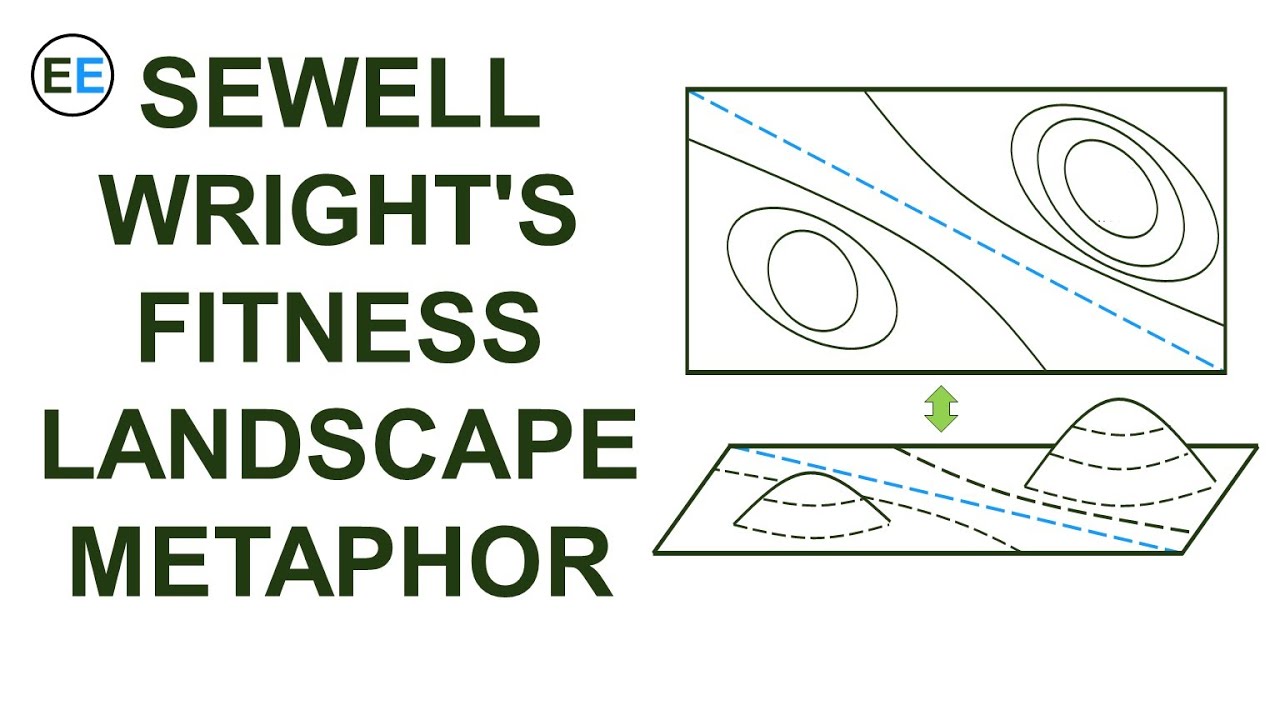





Natural selection is the mechanism by which differential reproductive success changes allele frequencies in populations, where fitness measures an individual's contribution to the next generation (absolute fitness = expected offspring, relative fitness = standardized by maximum). The change in allele frequency is given by Δp = p(1-p)(w₁* - w₂*)/W̄, where w* represents marginal fitness. Wright's adaptive landscape shows populations climbing toward local maxima of mean population fitness, while Fisher's fundamental theorem states that the change in mean population fitness equals the additive genetic variance in fitness. However, frequency-dependent selection can lead to unstable equilibria or even 'Darwinian extinction' where advantageous traits destroy the environment that supports survival.
Fitness, Adaptation & Natural Selection: Evolutionary Genetics Explained
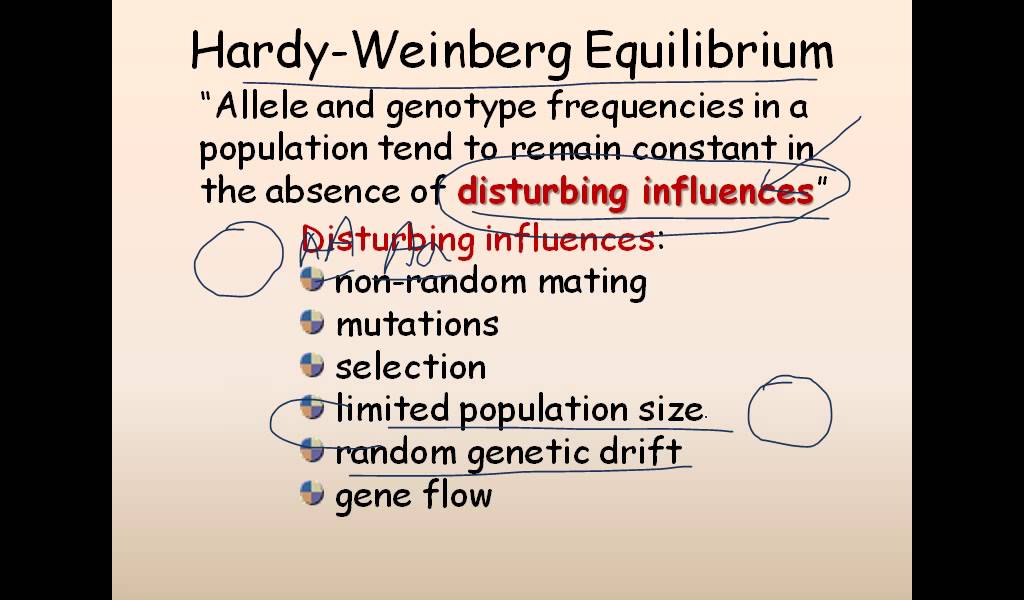
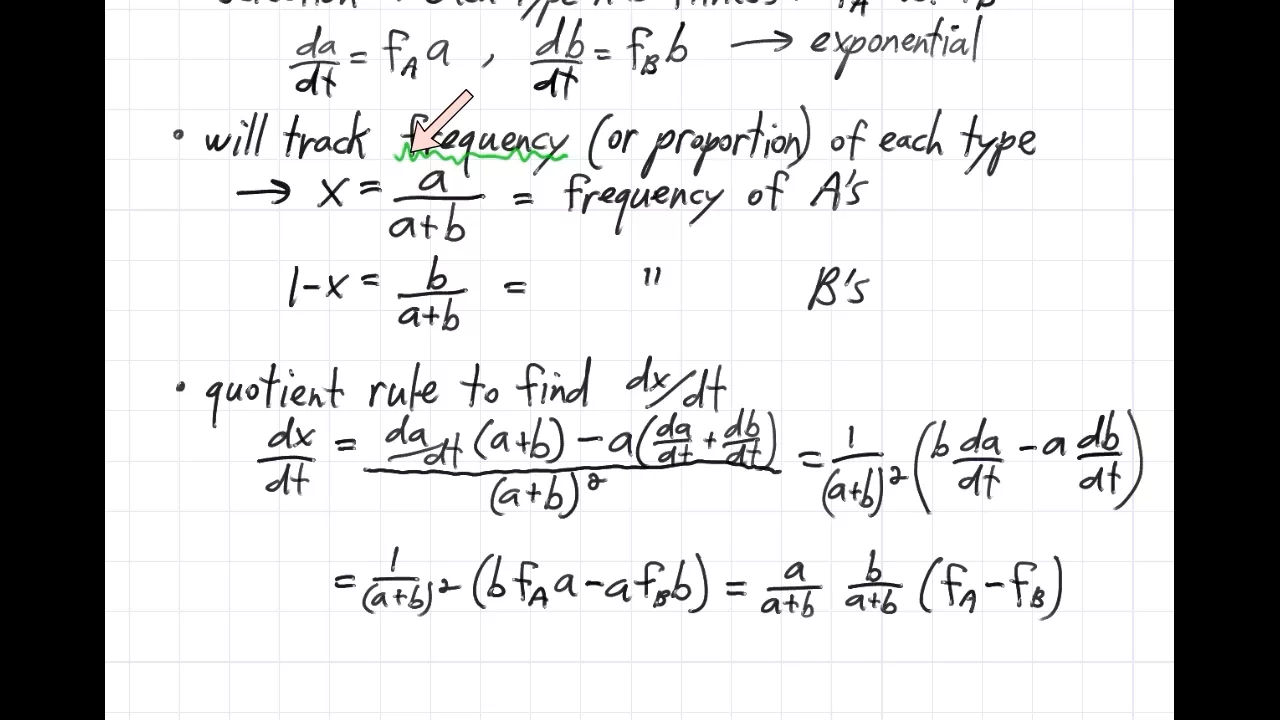
Added:[Music] foreign [Applause] [Music] [Applause] [Music] [Applause] [Music] [Applause] welcome back to the channel if you are new here my name's Zach Hancock I am an evolutionary biologist who specializes in population genetics phylogenetics and genome Evolution on this channel you'll find a mix of evolution education videos like the one we're fixing to do as well as sort of the history and philosophy of science and a bit of pseudoscience debunking mostly focused on creationism um this is the third part of my ongoing series the causes of evolution where we are attempting to sort of dig into the first principles of evolutionary theory and really evaluate this idea at a quantitative level and so just as to sort of recap the past two episodes we started off with what is phenotypic variation um where does it come from and what sort of variation is relevant to Evolution so we talked about how phenotypic variation can emerge from development can emerge from the environment or it can emerge from underlying genetic differences between individuals and we concluded that what we're ultimately interested in in an evolutionary context is the genetic contribution of individuals to succeeding Generations in the next video we derived a very simple model based on just mendelian inheritance called hardy-weinberg equilibrium and we found that it implies that there should be no Evolution that allele frequency should not change from generation to generation under a series of sort of simplifying assumptions and this told us something very important that the processes of evolution actually lie in the various ways you can violate the assumptions of hardy-weinberg so those are the mechanisms of evolution and the first one that we talked about is the violation of random mating so non-random mating we found was one of the first mechanisms of evolution capable of changing allele frequencies and genotype frequencies but we found that many types of non-random mating change genotype but not allele frequencies such as inbreeding and positive assorted of mating we found that negative assorted of mating will change frequencies but only for a little bit that they will eventually equilibrate at 50 frequency and then they won't change anymore and we also introduced the concept of FST which measures the amount of genetic differentiation between populations and is hence sort of a direct measure of the amount of evolution that has occurred um so that's what we talked about so far let's now refresh our memories about what all of the assumptions of hardy-weinberg equilibrium are so again if these assumptions are met then evolution is not expected to occur allele frequencies will not change across Generations one that gametes are paired at random we found last time that if you violate this assumption then you will deviate from hardy-weinberg equilibrium secondly that gametes aren't preferentially chosen from the gene pool right so that whichever gamete you draw at any one time is completely blind to which one it is you you have no idea which one you're picking okay um third is that allele frequencies are equal between the Sexes um fourth that alleles don't change from Individual to the gene pool so whatever alleles that individual has are the only alleles that they can then give to the gene pool they don't change in that process fifth is that gametes are drawn infinitely and with replacement um so you you're we're drawing every possible combination that could exist in the gene pool that's the fifth assumption um the sixth of the gametes aren't added from other Gene pools you can think about this as the gene pool is kind of a closed system you we don't have multiple Gene pools in which individuals are being added from other Gene pools right it's a it's a closed system and then finally individuals only contribute to the gene pool once we call this non-overlapping Generations where individuals aren't continuously add adding their their alleles into the gene pool across multiple Generations okay so again these are the assumptions of Hardy Weinberg and if they are met then we do not expect allele frequencies to change across generations and hence we don't expect Evolution to happen what we've talked about thus far is non-random mating that was the previous video but today we're going to look at the violation of the second assumption that gametes aren't preferentially chosen from the gene pool and we should already kind of recognize which what mechanism of evolution this one is and if you guess natural selection you are correct so natural selection has the longest history of all the different mechanisms of evolution um because it is the original mechanism that was first proposed by Darwin in 1859 in the Origin of Species and I want to stress here that his perception of natural selection is a bit different than the way that we think about it today so what what I want to do is give his perception a sort of a historical basis of where we're coming from but then we're going to pretty rapidly diverge from the way he thought about natural selection to the way that the founders of you know theoretical population genetics think about Evolution um so first Darwin put forward his argument for evolution by natural selection as a kind of verbal argument that goes like this one is that individuals have far more offspring than can survive to reproduce we've got this reproductive excess secondly is that there exists variation between individuals and some of that variation is heritable that is as we've talked about before it has a genetic basis three that some of that heritable variation provides an advantage to the individual increasing the chance that they reproduce over others again remember not every possible Offspring can reproduce there is an excess reproduction only some of them will get to so if they have some variation that that gives them a little bit of an advantage over everyone else than that particular trait the fourth claim will spread through the population okay so so and he calls this process of differential reproductive success natural selection and that that spread of that new variation evolution by natural selection and framing it this way is very important and that leads us to this next point that natural selection is not the same thing as the theory of evolution by natural selection um R.A Fisher one of the founders of theoretical population genetics famously began his 1930 book the genetical theory of natural selection with the sentence natural selection is not Evolution um and Landy and Arnold I think really summarized this well in their 1983 paper when they write quote natural selection acts on phenotypes regardless of their genetic basis and produces immediate phenotypic effects within a generation that can be measured without recourse to principles of heredity or evolution in contrast evolutionary response to selection the genetic change that occurs from one generation to the next does depend on genetic variation so to kind of get a grasp on on what this means and why we differentiate natural selection and evolution by natural selection let's put let's start with a simple conceptual model so imagine just a haploid population that reproduces by cloning okay and you've got three different variants red blue and green the red variant on average only leaves half of an offspring every single generation okay so that means on average half of them don't reproduce the blue one on average only replaces themselves so they only they only undergo fission one time and so they leave one Offspring on average the green one will on average split twice leaving two Offspring so with this with this understanding and assuming that each one of the variants in these haploid lineages are what's contrary attributing to their ability to leave more offspring we can then take a couple of measurements one we can think about the average number of Offspring left in the population we can measure this by two plus one plus point five those are the three possible numbers that each one of the variants leaves divide them by three and that gives us an average of 1.16 Offspring um left every generation we can then think about how we can conceptualize this at an individual basis with a by introducing the concept of fitness and so the greens Fitness for example we could Define as two the number of Offspring they leave on average divided by the population average equals 1.72 so we can see that the number of offspring that green leaves on average is greater than the population average alternatively blue on average leaves 0.86 in red 0.43 both below the population average another way we could do this is by relative Fitness so we could standardize the concept of individual Fitness by the maximum so if we take grease since green is the max we can standardize by two so Green's Fitness is 2 divided by 2 which is one so they have the highest Fitness Blues Fitness is one divided by two so that's 0.5 so they have half the Fitness of Green and then Red's Fitness is point five divided by two which is 0.25 that is they have only a quarter of the Fitness of Green okay so with that in mind we can now think about how Fitness relates to Natural Selection so differential reproductive success as Landy was just talking about before um is natural selection right that's natural selection happening in the Here and Now green leaves more offspring than blue and red that's differential reproductive success hence that's just natural selection now evolution by natural selection is the is this process actually changing the frequency of these variance through time so here on the bottom panel right here I'm just showing kind of a made up graph or green you can imagine increases in frequency at the expense of blue and red so this change in frequency Through Time driven by differential reproductive success that is connected right to the variance in in genotypes that is evolution by natural selection just uh wanted to make that clear divide those two things up okay so that brings us now to this thing that we kind of introduced without really talking a whole lot about and that is Fitness so Fitness is defined in many different ways but they are all meant to capture an individual's contribution to the Next Generation a fitness becomes complicated because again selection can act at many different states so so this little circle is just kind of showing the life history of a simple dioces diploid species you can see that from the zygote to the adult this particular Arrow can be acted upon by viability selection so how How likely are are you to grow from a zygote into an adult and be able to reproduce if if everybody has exactly the same probability of doing that then there's no viability selection right and so if we measured Fitness right there everybody has the same Fitness however if we measured Fitness from the mate Choice from being able to find a mate then we would be talking about sexual selection we're talking and then we can measure Fitness as How likely are you to get a mate versus some other individual so Fitness can be measured there however if everybody gets has the exact same probability of mating then there's no selection acting there then from the parent to the production of the gametes there's another area where Fitness could be defined it could be defined by accandidi or by gametes right you can actually have selection acting on gametes themselves and then lastly from the gametes pairing up to the zygote you can have compatibility selection so what is the compatibility of the two gametes that are going to form that goat that's another area that selection can be acting so again people often complain about Fitness as this you know like super complex concept but but the reason for this is based on when you measure Fitness hints that tells us something about when selection should be acting right so just keep in mind that Fitness is a multi-faceted thing that encompasses each of these different life history components all of which are capturing an individual's ability to contribute to the Next Generation right that's the key thing that that connects all of these different types of Fitness is that they all can be boiled down to is the individual going to contribute to the Next Generation irrespective of its viability sexual selection fecundity compatibility Etc that's the that's the the Common Thread across all so then we can take a step back and say that the most exact and sort of general definition of Fitness is at the individual level so individual Fitness which can be expressed by the genotype level as well because genotypes code for phenotypes um and that is just the number of Offspring they produce often divided by the population mean number of Offspring um and this is a very useful definition of Fitness because it permits us the ability to link Fitness to ecology okay because it then it becomes a function of an individual's contribution to population growth so with that in mind let's see how measures of fitness and an evolutionary context are actually connected to the ability of the population to grow in size um so Fitness can be measured as either absolute or relative as we talked about before Absolute Fitness is the best way to connect it to ecological principles um because it's going to be connected to population size so Absolute Fitness is just the expected number of Offspring produced by a parent of a given genotype previous example the green uh the green lineage always left two Offspring so the expected number of offspring that they produce is two that's their Absolute Fitness again their relative Fitness is taking their absolute Loot and dividing it by the highest absolute since they were the highest their relative Fitness is one by relativizing Fitness we then kind of divorce it from ecology we divorce it from population size but what we want to do here since we want to really try to make Fitness a concrete idea is we're going to stick with Absolute Fitness and we're going to show how it's connected to ecological principles so let's define the population size in the Next Generation as n t plus 1 is equal to P Squared this is the frequency of the homozygous genotype multiplied by the population size and the present generation N Sub T multiplied by the Absolute Fitness of that genotype okay and we're doing that for each of the alternate genotypes the heterozygotes in the middle and then the alternate homozygote at the end we should recognize that p squared plus 2p1 minus P plus 1 minus P Squared is hardy-weinberg right that's that's the random mating expectation that we derived in the last video all all we are doing is adding in population size to each one of these and then multiplying that by the by the Absolute Fitness of each one of those genotypes okay furthermore we can div we can Define mean population Fitness which is W bar as equal to the hardy-weinberg frequencies the p squared plus two P one minus P plus 1 minus P Squared just multiply by the absolute fitnesses of each one okay so that's this that's this expression here therefore we can directly relate population mean population Fitness to the population growth rate um and in fact it scales at a rate of the mean population Fitness multiplied by the present population size doing that is going to give us the population size in the Next Generation so I've just kind of plotted an example of this here this is the mean population Fitness with the population growth rate so you can see as the mean population Fitness increases the population grows in size so okay so this is really cool this again allows us to connect Fitness to something real but we can also show that that Fitness in this context is connected to ecological principles of population Dynamics so if you are familiar at all with with ecology you might know about the population growth rate which is often just called R is a central parameter and just general population biology for example in the famous lack of Volterra Predator prey models R kind of plays a central role here so in case you're not familiar with that down here at the bottom is sort of like a seminal paper in which you have they're tracking the population size of rabbits or or hairs in this case and lynxes they're Predators right so the hairs are in the sort of dark brown the lynxes are in the red so through time they're just tracking the changes in the population size you can see that as the Predator's population goes down the the praise population goes up as the praise population increases now there are more prey for the Predators to eat so their population goes up as well but as their population increases they begin to deplete the rabbits whose population goes down right and so this creates this kind of oscillating effect through time and the slope of that increase in size the ability of that increase to occur that's a central parameter in the latke Volterra model that is just called R the population growth rate so again we can see that there's there's a real world um interpretation of this value so let's see if we can connect this directly to our concept of mean population Fitness that's defined from a genotypic level and sure enough we can so if we take the population size at t plus ones when the next Generation again we as we saw before that's equal to N Sub t w bar which is approximately equal to N Sub t e raised to the r again where R is a population growth rate we can see that just rearranging these the ends actually cancel out and what we're left is that the population growth rate the per capita rate from ecology is approximately equal to the natural log of the mean population Fitness so to put some numbers in there imagine a population of size 1000 and a growth rate of 0.1 we can directly calculate mean population Fitness from those with this expression as follows just plugging in point one to e and we get 1.1 that's the mean population Fitness just going backwards plugging in the natural log of 1.1 gives us 0.095 which is approximately 0.1 which was the population growth rate that we started with so again I I just really want to stress this because some critics of natural selection and you know who you are um often claim that Fitness is not a real thing it's not something that that has any like real world meaning to it and I just want to want to wanted to kind of go through this to show you that mean population Fitness has a very very real world application with the concept of population growth and that we can actually get the mean population Fitness directly from measuring the rate of growth of a population okay so now that we've been able to connect these two things right we've been able to connect the mean population Fitness to something we care about in ecology that then means this mean population Fitness has a lot of things that we could be interested in and one of those is how does the mean population Fitness change with allele frequencies okay so as the allele frequencies are changing does the does the mean Fitness also change right so to be able to sort of get at this question what we need to do is actually take the derivative of the mean population Fitness so to put this in in kind of plain English the rate of increase of mean population Fitness given the allele frequencies can be determined by taking the derivative of the expression above with respect to P okay so what I want to do is actually walk us through the calculus here and to just kind of give us a brief refresher for people to either you know haven't taken calculus in a long time or even if you never took it let's just give a brief refresher about what derivatives are telling us okay and and why we're going to go through go through this math so imagine just some hypothetical function f of x up here on the top panel and this is the shape of that function okay a derivative is then the slope of a tangent line at any point along that function okay and what this kind of tells us is the instantaneous rate of change of that function at that point in time so what I've done here is I've just drawn uh and it's about 0.42 for this function I've picked the point at which the slope is equal to zero and so it's just a flat line that the tangent line sits right flat on top of that slow what that's telling us is that the function at that point in time the rate of change is zero okay if we go to the left then you can see the line is going to start going up like this and so the rate of change becomes positive if we go to the right the rate of change at any point is negative okay so again you can think about the derivative as the instantaneous rate of change at some point in time along that slope so to connect this back to you know how does Fitness change with allele frequency you can think about it as at any particular frequency of P what is the rate of change in mean population Fitness how fast is it changing how slow is it changing um with any given value of P right that that's what that tells us so that's what we're going to derive here so that we can know how quickly is mean population Fitness changing as a function of allele frequency hopefully you followed that um and let's let's dive into the calculus here first thing that we need to do is remind ourselves something called the power rule so in calculus the power rule states that if you have some function that is X raised to an exponent n then to take the derivative of that function that is you move the exponent in front of the X and then you take one away from the exponent okay that's that's getting you the derivative of that function so plugging that in to our our little equation down here we're going to first take the derivative of this very first part remember we're just taking the derivative of P we're not going to take the derivative of w we'll talk about what that means at the end um so we take the derivative of P we just move the 2 down in front and then we take 1 away from the 2 which just leaves one and so the derivative of this first part is 2pw11 piece of cake super easy did the derivative of that one now we're going to do a little bit of rearranging in the second part um and we're going to see why it's going to make some of the math a little bit obvious later on so we're going to swap where the p is we're going to move the P to the back move the W 1 2 to the front Okay that's all we've done here just rearranged a little bit and then we're going to do the same thing with the last term we're going to move the w22 or the the fitness of the alternate allele we're going to move that to the front um so now we have the The Next Step okay now let's get let's get into taking the derivative of these these other P's that are left okay so to do that to do the middle one first we have to rely on another rule from calculus and this is the product rule so the product rule states that if you have two functions x and z to take the derivative of those multiplied together as a product then you take the derivative of the first one multiplied by the second one plus the first one multiplied by the derivative of the the second one okay and that's what we're doing here so we are taking the derivative of the first part the 1 minus P here multiplied by the second one just P plus 1 minus P multiplied by the derivative of the second one so that's just the product rule that we're doing right here uh plus the derivative of 1 minus P Squared we've just put the derivative here we're going to use a different rule for dealing with this derivative okay so before we we talk about that one let's take the derivative of this part here so the derivative of a constant is zero so one so the derivative of 1 is 0 the derivative of a line which is just p is one all right so this becomes 0 minus one here in the middle then we just keep the P plus 1 minus P multiplied by the derivative of P which is just one so that gives us a solution for this middle part okay next we're going to use a little fancy rule called The Chain rule to deal with this one minus P Squared so the chain rule states that if you have a function inside of a function to break that up you can take the derivative of the outside function multiply by the inside multiplied by the derivative of the inside so that's all we've done here so we're taking this 2 moving it out in front that's where where that is and then we're keeping 1 minus P multiplied by the derivative which is just again that's the derivative of the first part multiply by the derivative of the function inside of it 1 minus B okay so we're just using the chain rule to get rid of that 1 minus P Squared so then we are just going to clean up the middle a little bit here so remember is like 0 minus one plus one minus so we just cleaned up the middle and that gives us 2 W 1 2 1 minus 2p okay that's all we've done here is just clean the middle up so then we take the derivative of this last little part here which is since this is a constant at zero minus one and then all we're going to do is move that negative to the front and then we're going to distribute out that to pw22 and that leaves us with this expression here okay so this is now the derivative has been taken for all of the respective terms now we're just going to do some you know quick little algebraic magic Factor it out and that gives us with this nice Final Solution this solution is in a nice form because on this first term here we can see that we have the homozygous plus half the heterozygotes minus the second form which is the other half of the heterozygotes plus the alternate homozygote right so this is a is a form that that's that's nice to sort of sort of have this in okay so that was you know a lot of math so let's kind of remind ourselves once again what we were trying to do right now that we have the derivative of the mean population Fitness we can infer how the rate of mean population Fitness changes as a function of allele frequencies so the shape of this function is a feature of the degree of dominance so we can think about the additive case in which the heterozygote is half the fitness of the homozygote um this gives us a linear increase in mean population Fitness okay so we can see in this top panel here that that that that that increase is just linear across time and in fact the derivative of a linear function is a constant okay and that's that's it's just equal to in fact it's just equal to the slope right so that's a very simple case and the additive but if it's not additive let's say the The Beneficial allele is uh recessive for example so H is equal to zero that gives us a different shape so we see the mean population Fitness on the bottom changing as a function of P has a different non-linear shape and it increases almost logarithmically right so you have this very slow gradual increase in which the the bulk of the change starts happening once they the allele reach is a pressureable frequency so with this in mind when can kind of start to Intuit a kind of rigorous definition of what we mean by adaptation which will become explicit here shortly so implicit in our model so far is that selection is acting on survivorship okay so that's that zygote to adulthood um that's the that's what we would call viability selection is in that time frame okay um furthermore our model is presently assuming that genotype Fitness is constant and independent of the frequency of each individual genotype right and we call this frequency independent selection so remember when I said before we were taking the derivative of mean population Fitness with respect to P but we were ignoring W that doesn't say we were considering that W is a constant that it was not going to be changing as the genotype frequency changes okay that's frequency Independence um we're gonna see that if we relax that assumption we can get some wonky results and we'll talk about those when we get there um furthermore importantly since selection acts on genotypes right not directly on alleles um assuming hardy-weinberg equilibrium we can still calculate the marginal Fitness of each individual allele okay so we're gonna we can Define the marginal Fitness of alleles like follow so the whenever you see this little asterisk next to um the fitness function that means we're defining it as marginal Fitness okay so W1 asterisk this is the marginal Fitness of allele A1 and that is equal to the probability that this A1 allele pairs with another A1 allele multiplied by its the fitness of that genotype right because if you're paired with the same one then you were a homozygous for A1 so you that your Fitness is then w11 plus the probability that you paired with an A2 okay so that means the probability that you became that The Offspring is heterozygous multiplied by the fitness of the heterozygotes you do the same with W2 asterisk so the marginal Fitness of the alternate allele and then assuming random mating we can actually write the marginal fitnesses as follows remember because under random mating the probability that you pair with another genotype is simply equal to the frequency of that allele in the population right that that's what random mating is telling us is that that that probability should be the same so then we can actually write these these fitnesses as follows now since we have since we've defined the fitnesses the marginal Fitness of each one of the alleles we can then Express these as a function of the mean population Fitness right so the mean population Fitness focusing on the marginal fitnesses of alleles is then just equal to P times the marginal Fitness of p plus 1 minus P times the marginal Fitness of one minus P okay so can we also think about the rate of change given the marginal fitnesses of these alleles well yes we can just plug in each one of these marginal fitnesses into the expression that we got previously do a little simplification and we find that the rate of change in the mean population Fitness relative to the change in frequency is simply equal to 2 multiplied by the marginal Fitness of A1 minus the marginal Fitness of a 2. so now the way that we can interpret this marginal Fitness is as the expected number of descendants of A1 into the Next Generation so this is a pretty General result that is a very useful way of thinking about fitnesses as the sort of probabilistic statement about How likely any given allele is to lead descendants into the Next Generation Um so in the previous one we were looking at genotypes and in this one thinking about marginal fitnesses we are looking at the changes in alleles so why do we care about this why do we care about marginal Fitness is if we already have a genotypic fitness well this actually gives us something very very useful and it shows us why scaling Fitness any way we want doesn't actually impact our results so I've just listed the two the two solutions that we found so far for the mean population Fitness and the derivative of mean population Fitness with respect to P that's the two up here and so if we take N Sub 1 as the actual number of A1 alleles in the Next Generation then N Sub T is equal to N Sub 1 plus N Sub 2 therefore P sub T is equal to N Sub 1 over N Sub T so we can write what the frequency of P should be in the next Generation as P sub t plus 1 is equal to N Sub 1 multiplied by the marginal Fitness of the A1 allele divided by the total number of alleles multiplied by the mean population Fitness now since N Sub 1 over N Sub T is literally the frequency of P sub T right that that is what that is the number of A1 alleles divided by the total number of alleles is the frequency therefore we can actually just cancel that out and place a p unit spot right so then we end up with P sub T multiplied by the marginal Fitness of A1 divided by the mean population Fitness this is why we can scale Fitness any way we want because the ins always cancel out okay so now let's think about how does the allele frequency change from one generation to the next we often denote this as Delta P where Delta often in mathematics just means the change so Delta p is equal to P sub t plus 1 minus P sub T that's literally just what it is in the Next Generation minus what it is in the present is then equal to what we just derived minus P sub T multiplied by the mean population Fitness which then gives us P multiplied by the marginal Fitness of the A1 allele minus the mean population Fitness divided by the mean population Fitness um this is a this result is very robust and this particular way of calculating the change in frequency is true irrespective of if the population is in hardy-weinberg weather frequency uh so weather selection is frequency independent or dependent or if there are many many alleles right that this expression will still work you will still get the correct change in frequency expect a change in frequency from generation to generation so this is a really cool sort of central result that we can calculate the change in frequency given that we have some estimate of marginal Fitness and mean population Fitness okay so all of that was derived assuming only the A1 allele what we want to do now is actually bring back in the alternate allele and to do that we'll just add back in this expression from mean population Fitness and we'll plug it in right here okay so we're just bringing it down plugging it in here there it is we're going to do a little bit of factoring here and this gives us P 1 minus P multiplied by the difference in the marginal fitnesses between the A1 allele and the A2 allele divided by the mean population Fitness now this also shows us something pretty cool um depending on the differences in these fitnesses we can actually get some pretty interesting shapes so one of them is that as the frequency of P increases shown down here on the x-axis the rate of change of P shown here on the y-axis will actually change right so for example you can have a really rapid rate of increase when p is at low frequency but once P kind of reaches an intermediate frequency the rate at which it changes starts to go down right and it actually starts to fall now it's still positive right so it's still being selected upon and it's still going gonna go to fixation but the rate at which it goes to fixation starts to kind of fall off and we can gain some intuition and why this might be by just thinking about how select election is acting right so selection is acting on genotypes and depending on the degree of dominance that's going to tell us how selection is going to be able to behave so we can think about for example if the beneficial allele is recessive right then what that means is that at very very low frequencies of P most of them are hidden you don't see them because they're in the heterozygotes so their frequency increases very slow initially but then as they start to get in more and more and more copies more of those heterozygotes more are more of the peas are in the homozygous State and when they're in the homozygous States election can see them and then they will rapidly increase in frequency alternatively if they are dominant or additive then what they will tend to do is increase in frequency very rapidly at first and then they will slowly start to to level off and the reason that they slowly start to level off is that alternate allele right the A2 allele that's being selected against persists because it's hidden in heterozygotes right so since most of the time time when that A2 allele is present it's in a heterozygous State selection can't see it so the chain the rate of change at which that allele is going to fixation just slows down and what this often gives us is these kind of sigmoidal Curves right so they often the rate starts slow increases rapidly and then will start to slow again right so again all of these these the shapes of um the change in P we are getting from the derivations we've just done and from the the Expressions that that we've that we've just shown here okay so so long as Fitness is independent of frequency we can combine the two expressions we just derived into one um to to get a new change in frequency and by combining them together we get the change in frequency is equal to P minus P 1 minus P divided by two times the mean population Fitness multiplied by the derivative of p with respect to mean population Fitness but do a little bit of simplification and we can see that the change in the frequency of P can be written as P1 minus P divided by 2 multiplied by the derivative of p with respect to the natural log of mean population Fitness this ladies and gentlemen is rights adaptive landscape it links population growth which is that natural log and mean population Fitness right which is equal to r with the variance in genotype frequency so where did that come from so this P 1 minus p over 2 this is actually equal to the variance in the genotype frequencies so so the change in P from one generation to the next is simply the variance in genotype frequencies at that particular time Point multiplied by some Fitness function and that Fitness function is represented by this derivation here so this enables us to Envision changes in allele frequencies as a function of a of a fitness landscape okay and that Fitness landscape the shape of that Fitness landscape is dictated by this function right so whatever values we plug into this function is going to change the shape of that landscape furthermore what what this tells us what rights adaptive landscape tells us is that populations should be climbing to the local Maxima of mean population Fitness okay so so long as this expression holds true and fitness is independent of frequency populations will climb these little Hills until they reach the top and that top is is represented as the Maxima of mean population Fitness hence we can rigorously Define the concept of adaptation as the evolution of traits that permit organisms to maximize the population growth rate in a given environment so we see that ideas like adaptation and rights adaptive landscape have theoretical mathematical and underpinnings that allow us to investigate how they should change in response to some Fitness function right and that Fitness function again defines where that population should end up with respect to genotypic variants so with that in mind let's think about the different kinds of Fitness functions and think about them in respect to rights adaptive landscape metaphor um some features of these adaptive Landscapes are actually unstable and this means that the direction of the change in frequency depends on the starting condition of P um to Rockwell I mean here is imagine you have a population and there's a lot of variation segregating neutrally in that population and then that that population enters a new environment and now suddenly selection is acting on one of those variants right so the frequency at which that variant is at when they enter the new population depending on the fitness function can dictate what's going to happen in the population and where the local Maxima of that Fitness landscape they land on so the simplest case is in directional selection okay where there's only this one very obvious Peak and it Peaks when the frequency of p is one all right that means that directional selection should always move a population um to maximum Fitness and there is always an equilibrium that exists and it's irrespective of where you started okay so no matter if you start at very very low frequency or very very high frequency you're going to to go to fixation so that's represent it up here so you can imagine the little red ball is the starting frequency of p x axis here is p y-axis is just the mean population Fitness and you can see that it should always increase right and it's going to eventually increase and reach the maximum either when p is fixed or when p is at very very high frequency so that's the the peak of that landscape alternatively you can imagine stabilizing selection so stabilizing selection favors alleles that are at intermediate frequency um and again irrespective of where we start they're going to move to the same Mountain so if we start for example our little red ball if we start at the frequency here selection is still moving you up and so you're going to land in this top spot now this one's pretty interesting because when you reach that Peak right any additional increase in your frequency actually decreases mean population Fitness right so it decreases it and so what that's going to do is now selection is going to push back and it's going to reduce your frequency right and so what you end up happening is you end up just stabilizing on the top of that Hill okay so that's again that's stabilizing selection it's stabilizing those frequencies at the top of the hill alternatively disruptive selection or under dominance this is where selection is acting against alleles at intermediate frequency um the equilibrium that is reached is entire entirely dependent on where we start okay so imagine we started P right here any increase in the frequency of P decreases mean population Fitness right and so what p is going to need to do is decrease in frequency and so the equilibrium for this particular function if we start here is right here right it's going to move that allele to up here but what if we started P on the other side now any decrease in the frequency is going to decrease mean population Fitness and so the equilibrium is actually on this peak right similarly if we start down here any increase is a decrease in mean Fitness so it's going to push it downwards so what this shows us is depending on where we start right what that allele frequency is at when we begin our it or or iteration or when selection is acting it's going to dictate where the equilibrium in that population is and M mathematics anytime that you have an equilibrium that is always reached it's always the same one irrespective of where you start we call that a stable equilibrium right so whether p is zero or one it's always going to reach the same equilibrium frequency that has the highest mean population Fitness alternatively in the case of disruptive selection it is an unstable equilibrium because the initial conditions are going to dictate where you end up in that Fitness landscape so again we have two potential landscape topographies that lead to stable equilibria and then one that leads to unstable equilibria because it depends on what the frequency of that allele was when we started okay we've been talking thus far about frequency independent selection where the fitnesses of each one of the individual genotypes are considered to be independent of that genotypic frequency itself however in nature this is often not the case much more likely is that there's frequency a dependent selection that is the fitness of each one of those genotypes changes as a function of the genotypic frequency itself um as just sort of a simple case this is often applied in ecology so you can imagine a population that is um has two different kinds of let's say uh feeding strategies uh some that will share and then some that steal right when the sharers are at very very high frequency then the Steelers are have the highest Fitness right so they can rapidly increase in frequency because they are because there's lots of shares that they can steal food from but as their frequency gets too high they start to lose the shares and now there's now being a stealer is not as good right and so their Fitness starts to fall off and then the fitness of the shares start to increase right so that's just kind of a simple ecological case it's a frequency dependent selection is used widely in Game Theory um behavioral ecology uh a lot of a lot of feel think about frequency dependent selection so that's just one kind of simple example um so in this case if we go back to when we took the derivative of the mean population Fitness um that's what's shown up here at the top now all that we need to do is then take uh the subsequent derivative of the fitnesses themselves okay so instead of just taking derivative with respect of p with respect to w we also need to take the derivative of w um and so that's what's shown here it's just us walking through each one of these and taking the derivative um the important thing to bear in mind here is that in the case of frequency Independence that means that these these values are constants right and if these values are constants this term becomes zero and it just cancels out right and then you're just left with up here so just I just wanted to kind of show you that frequency dependence only emerges when there is uh when the w11 actually does change with respect to P so there's some shape function um within that that Fitness value so what we want to do here just for kind of simplicity's sake um is actually just take the sum of all of these values so this is the average of the derivative of genotypic frequencies with respect to allele frequency and we will just rewrite that as the expectation of the derivative of genotypic Fitness which is W with respect to allele frequency which is p so this is the term we're going to substitute this blue box with and just remember when you see this term this is actually what it is right it's the summation across each one of these terms okay so now we're going to take our little variable that we just created which again is a summation of these terms and we can plug it in to Wright's adaptive landscape and when we do that this is what we end up with so this is rights adaptive landscape on this part and then we're just adding in or in this case subtracting from the the contribution to frequency dependence to the rest of the of the change in a low frequency so taking a second just to kind of remind us what all of these terms are so in the red box this is the additive genetic variance of Fitness okay so remember I told you before that P 1 minus P divided by 2 is the is the gene genotypic variants and so all that we've simply done is we've multiplied the genotypic variance by one over the mean population Fitness when you multiply those two together you get P1 minus p over two times the mean population Fitness okay so that's what that term is that's the additive genetic variance of Fitness multiplied by the average change in genotype Fitness with respect to the change in allele frequency that's what this second term here represents okay so just to put it into words so that we can remind us what all of these values are actually representing so let's think about a couple of different shapes of this Fitness function could take and then see if we can Intuit what might be a stable versus an unstable equilibrium in this setting so first it's just a very simple directional selection case where the fitness function is a constant and irrespective of where we start P off that is whatever the frequency of P doesn't matter it will increase linearly and that's what's shown here so we're just going to increase and then the stable equilibrium point is the fixation of P that's directional selection very simple now let's imagine the slightly more complicated case of negative frequency dependent selection where the fitness of p is at the highest when p is at low frequency and then as P increases in frequency eventually its Fitness levels and then will go down okay so if we started here for example p is at high Fitness so it's going to increase in frequency but as it increases in frequency it eventually reaches a point to where any further increase in frequency actually decreases its Fitness and so what that means is that it's going to stabilize here similarly any decrease in for in frequency increases its Fitness so they have more offspring which increases its frequency right so what you end up with is this kind of stable equilibrium point at which it's not going to go any further it's not going to increase Beyond because that decreases its Fitness and it can't go backwards because as the frequency goes down its Fitness goes up and it's Fitness going up means it's increasing in its frequency right and so it gets stuck in the stable equilibrium right here where it can no longer be at higher frequency this is an important point and something that only emerges in frequency dependent selection notice that the highest Fitness point is actually back here this is where the fitness is the highest but notice that this is not a stable equilibrium point and that P will not stay there instead it's going to increase in frequency until you get a stable Fitness function that is not the maximum of the possible mean population Fitness hence in this case in the case of frequency dependent selection selection is not guaranteed to maximize population Fitness like it did in the frequency independent case so now let's look at the case of positive frequency dependence again we can see here that there's a strong dependence on where we begin what the initial frequency of p as to where we're going to end up so if we start off on this side of this unstable equilibrium right so if p is over here peace Fitness is low and it's going to decrease right and eventually it's going to decrease and the stable equilibrium is loss if we start off over here right at high frequency then it's Fitness is high and it's going to increase and it's going to stabilize at fixation okay the only way the only equilibrium point that can be achieved in positive frequency dependence is if the alleles begin at intermediate frequency that is if this is the starting condition of the population so while those are obviously more complicated than the frequency independent case it can get even more complicated you can imagine any kind of Fitness landscape any kind of Fitness function could describe this system so here's an example of just a complex frequency dependence where where the fitness is actually sort of oscillatory across different frequencies right and so here the equilibrium frequency is strongly dependent on where we begin right so let's say we began at high frequency right at high frequency we are at low Fitness and so we're going to start to go down okay we're going to start to go down and then we're going to reach sort of a stable equilibrium point right here because the stable equilibrium point is achieved because any further decrease in frequency increases Fitness which pushes us back to equilibrium okay similarly if we were to start right here in the middle since we're at the highest Fitness we're going to be pushed forward and then we're going to stabilize right here at this equilibrium point because again any additional increase in frequency decreases our fitness which pushes us back to the equilibrium point if we however start here right now we are at low Fitness and so selection is going to push us down until we eventually Reach This stable equilibrium again because any additional decrease in frequency increases Fitness which pushes the frequency back down okay so so we can see there's multiple stable equilibrium points as well as multiple unstable equilibrium points so this is uh in many ways they're kind of counter-intuitive result right that darwinian selections adaptive process can actually drive populations to not sit on Fitness Peaks right and they can actually get stuck in these kind of Fitness valleys um and indeed not only can populations get stuck in Fitness valleys they can even be driven to extinction by positive natural selection we call this process darwinian Extinction and the traits that drive it we call Kamikaze traits um and again this is only this kind of thing only happens in frequency dependent selection but it is a pretty wild phenomenon um and it's a it's akin to a kind of fisherian runaway selection so imagine for example this is just a very simple example imagine you have a population of weevils that eat leaves okay and most of the individuals in a population eat leaves of a very specific plant okay now some of the individuals of the population gain an adaptation that permits them to eat seeds of the plant okay so initially they are going to have very high Fitness because they have this completely new food source right so if we think about red as the fitness of the seed eaters and then green as the fitness of the plant that they are eating right so initially the seed eaters have very high Fitness right at very low frequency which stays pretty high but eventually what ends up happening is they're eating the seeds of the plant that needs to reproduce and so the plants are now not reproducing as much because they're losing their seeds that are going to contribute to the reproduction right so the the population of the plant starts to go down the Beetles continue to persist as that population you know gets lower and lower and lower and lower until eventually that population is get gets so near to Extinction that the Beetles themselves can't persist and will drive themselves to Extinction as well and so this way is just sort of a simple example in which how a predator can drive its prey to Extinction and in doing so drives itself to Extinction right so this is again is a case of darwinian Extinction that's driven by this co-evolutionary interactions between these two organisms that lead some individuals to do better but in doing better they are actually destroying the environment that they need to live in um cancer is another sort of empirical example of natural selection actually leading to its own death right because cancer the environment in which cells live is you can think of as basically the individual right and so as they spread across that environment they will eventually kill the environment that they need to live in and that is a case of positive darwinian selection they're evolving under natural selection and yet they're destroying the environment they event so again this is a a case of frequency dependent selection being capable of driving not only adaptation but also Extinction now what I want to do is to sort of bring everything together that we've learned so far all the things that we've derived all the concepts that we've introduced to help us understand one of the most important ideas in early population genetics and this is Fisher's fundamental theorem of natural selection so understand what it is what it means let's begin with the derivation we just did for frequency dependent selection in rights adaptive landscape so again that's this this here in words this is the change in P given the variance in genotypes which again is this and frequency dependent selection which is this term the next thing that we need to think about is that we are often thinking about Fitness as a mean which we can call W um and since it is a mean that means that that Fitness effect has a variance okay um and we call the variance in genotypic Fitness the additive genetic variance of Fitness now recalling that this value in blue is the variance in genotype frequencies multiplied by one over the mean population Fitness we can actually rewrite this change in the frequency of p with respect to the slope of a regression line of Fitness against genotype so I'm showing that here so this is a2a2 a1a2 and a1a1 this is the black dots represents the estimated Fitness for each one of them so that's there in W and then we can draw a regression line between them right and this regression line is determined by a least squares approach and you can see that there's some distance between the observed and the line that represents the least squared or the best fit line okay and this best fit line is is determined by a slope that we're going to call beta WG and so what this beta WG represents what the slope represents is actually this function right it's the rate of change that we expect to see given the genotypic variance and the mean population Fitness so this is one kind of way that we can actually get at this Fitness function is by estimating it by a linear regression and so we can write this again as the change in P is one over the mean population Fitness multiplied by the variance in genotype frequency which again that's just this term here multiplied by the this beta coefficient right which again is just this here and we can rewrite this as P1 minus p over 2 W bar multiplied by the beta coefficient so putting all these equations is together we can show that the variance in genotypic Fitness is equal to the mean population Fitness multiplied by Delta P which is the change in the frequency of P multiplied by that beta coefficient of that regression line and that again that beta coefficient simply represents the fitness function which is right up here all right this is what we derived previously where this part of the fitness function represents frequency Independence and the second part represents frequency dependence okay so we just plug that in for the beta coefficient that gives us W Bar times Delta P times that Fitness function now we can do a little simplification and if we recognize that Delta p is usually pretty small and if that assumption holds then Delta P multiplied by this first derivative is approximately equal to Delta W bar that or the mean change or the change in mean Fitness furthermore we can rewrite Delta P multi applied by the frequency dependence as simply the expectation of Delta W then we can rewrite this whole little function here as the variance in genotypic Fitness equal to mean population Fitness which is there multiplied by delta mean population Fitness which was this assumption we made here minus Del mean population Fitness multiplied by the frequency dependent component um now if we are interested in the rate at which mean population Fitness should change from one generation to the next we just rewrite this and solve for Delta for delta mean population Fitness or Delta W bar and in doing so we see that Delta W bar is equal to the variance in genotypic Fitness divided by mean population Fitness Plus the expectation of Delta W and this ladies and gentlemen is Fisher's fundamental theorem of natural selection put in words it is the change in the mean population Fitness equals the genetic variance in Fitness very often in textbooks and papers you will actually see them drop the second term the frequency dependent term just won't exist and so all that they will show as this first term here and so if we discard that term uh Fisher often called the second term actually the environmental deterioration so you can think about the the move away from the Fitness Optimum due to some environmental effects right but if we ignore that term for a second as Fisher did and as a lot of other population geneticists do and we just focus on this part then we can kind of understand why Fisher thought it was so important one is that since variants can never be negative and ignoring frequency dependence this means the change in mean population Fitness is either stable it's you know not changing or it's increasing that is to say that if there is any variance in a population for Fitness right if there's any variance in Fitness then the mean population will increase in Fitness that that's that's what that's saying there's variance in Fitness natural selection leads to an increase in the fitness of the population okay that's that's the very simple assumption that's being made if there's no variance in Fitness then then there's no positive selection selection is not climbing any Optimum now this could be either because there it's already at an Optimum right so it's not that there's no selection at all it could be that's just sitting at an Optimum already um or there is no variance to allow it to reach some Optimum um so again Fisher thought that this was I mean he Fisher called this literally the fundamental theorem he he thought this this was akin to thermodynamics um and that it was uh you know sort of a fundamental principle in population genetics and again this fundamental principle is the idea that natural selection should act to maximize population Fitness and that its ability to do so is directly related to how much variance and Fitness there is at any one time okay that's cool um but one of the things that that we need to remember of course as we've already talked about is this second term right this uh this frequency dependent term very often people will on the fundamental theorem and say oh it's not really that fundamental because for example in populations Fitness can go down and that could be and to them that's sort of a uh undermines the concept of the fundamental theorem at least in the way that fisher um kind of kind of advertised it and this does not like go like decreasing Fitness does not contradict the fundamental theorem um because the fundamental theorem actually does include this second term okay and the second term accounts for the fact that if there is frequency dependence you can actually get a decrease in mean population Fitness okay so while that term is often ignored and thrown aside and not considered technically it is not a violation of Fisher's fundamental theorem if mean population Fitness goes down because there could just be frequency dependent selection going on and we've already showed that in the case of frequency dependent selection it is not guaranteed that there will be a maximum Fitness attained right that the Mac the local Maxima of mean population Fitness is not guaranteed to ever be reached in the case of frequency dependent selection so I don't think that that undermines the fundamental theorem um the universality of the fundamental theorem is is a product of or as a function of how many of these assumptions that we are willing to accept so that's one of the things that like it's a useful expression it's a useful way to kind of maybe think about Evolution right the natural selection uh it depends on there being some variation to act upon right um but in terms of how fundamental is it I you know I leave that for the audience to decide okay so we talked about a ton of things here we've gone through a lot of math a lot of it was probably really really dense hopefully you've picked up something and I and I want to use this as kind of to just sort of bring everything together refresh our memories on all the things we've talked about so far so first we began with sort of defining Fitness and we showed that Fitness can be defined in terms of the per capita population growth rate and that is that we can directly link genotypic Fitness at w bar we can directly link it to ecological principles of population growth rates uh population growth rates are often denoted by R and that is approximately equal to the natural log of mean population genotypic Fitness so Fitness is not some arbitrary thing it does have an ecological meaning that is of relevance and thinking about the rate at which populations increase or decrease in size Etc um secondly we get kind of a rigorous definition of adaptation as a process by which the population growth rate increases and is maximized as reaches a maximum as a function of increasing allele frequencies right so again rights adaptive landscape showed that population should be maximizing Fitness they should be searching out those the the peaks in that landscape reaching that maximum Fitness and in climbing that Hill that is the process of adaptation that's what we mean by adaptation is the ability of increasing a low frequencies to maximize Fitness again we we derived rights adaptive landscape and then we talked about how the second term in it this this derivative term is the fitness function that dictates the shape of the fitness landscape and then the first term is just the variance and genotypic frequencies um then we showed how frequency dependent selection can actually lead to unstable equilibrium in which fitness maximization is not guaranteed and that allele frequencies can actually fluctuate perpetually so a low frequencies can fluctuate perpetually or they can can reach sort of a stable equilibrium that is some value below the maximum population Fitness okay so there are Peaks elsewhere that in the case of frequency dependence are inaccessible by natural selection um we derive Fisher's fundamental theorem and we show that it states that the mean population Fitness is always an increasing function of the additive genetic variance in Fitness um we also showed that there's some caveats there right that the fundamental theorem also includes this frequency dependent component and hence it's not necessarily a violation of the fundamental theorem for Fitness to be decreasing or for a population to not be able to achieve that maximum Fitness because of frequency dependence right so um we we sort of gave that caveat and so here at the very last point that I want to make um is to try to dispel these sort of simplistic Notions of natural selection obviously this is you know a pretty dense video where we went through a lot of math and a lot of like like difficult topics and terminologies Etc but the purpose here is to show that the concept of like survival of the fittest right is a gross oversimplification of natural selection and that in fact it's such a gross misrepresentation as to be wrong in many many cases that we actually have no mathematical expectation that natural selection should necessarily maximize Fitness right and we've shown that in many different ways in this video today that while the tendency of natural selection is to increase mean population Fitness there's actually no expectation that it should maximize it okay especially in the case of frequency dependent selection um a couple of other sort of caveats that I want to put on this is that we've in this video we've only looked at one Locus models okay and that's true of the the previous one as well but I I want to point out that natural selection as a concept can also be applied to two Locus genome-wide multiple genes so like it's we did the very simple kind of Base laying the ground work for some Concepts that we will talk about later especially thinking about how natural selection interacts with some of these other mechanisms right so in this case natural selection was the only force acting but you can imagine when you start to add in other forces things get even more complicated right um and that's quite frankly that's when it really gets exciting that's that's when the videos are going to really get fun is when we start putting in all these mechanisms together um and see what happens right um so I I want us to bear in mind that that's coming and it's going to be a bit more complicated but I think it'll be a useful sort of exercise yeah so that's the the next mechanism of evolution and that is evolution via natural selection um like I said this is a pretty dense video so if you have any questions please feel free to drop them in the comments I do want to shout out um Sean Price's evolutionary theory uh book this is where a lot of this has come from um I got this book relatively recently this is an excellent book for diving into the mathematical ideas behind evolutionary theory so if you're really interested in this sort of in this idea and this concept I highly recommend this book um and that's where a lot of sort of the the derivations here come from um so yeah thanks so much for being here I hope you enjoyed it and I will catch you foreign [Music]
Up Next

Genetic Drift in Evolution: Causes and Mathematical Modeling
@talkpopgen
1.8K views•2023-11-16

Bacterial Communication: Quorum Sensing and Biofilm Formation Explained
@JHUAAP
12.6K views•2011-06-28

Enteric Nervous System Explained: The Gut's Brain | Neurobiology Lecture
@alumniu6029
438 views•2018-09-12

Bacteriophages: Earth's Deadliest Killers and Future Antibiotics
@kurzgesagt
34.6M views•2018-05-13
Related Study Plans & Knowledge Roadmaps
Structured learning paths in Biology