



















In Mendelian genetics, the multiplication rule (P(X and Y) = P(X) × P(Y)) is used to calculate the probability of an offspring having a specific genotype by multiplying the independent probabilities of each allele combination; for example, when two heterozygous parents (Aa) self-pollinate, the probability of producing an offspring with genotype aa is 1/4, and for multiple independent loci, these probabilities are multiplied together to find the overall probability of a particular genotype combination.
Genetics: Calculating Progeny Genotypes Using Probability Rules
Added:Understanding of basic Mendelian terminology, including genes, alleles, homozygous, heterozygous, genotype, and phenotype.
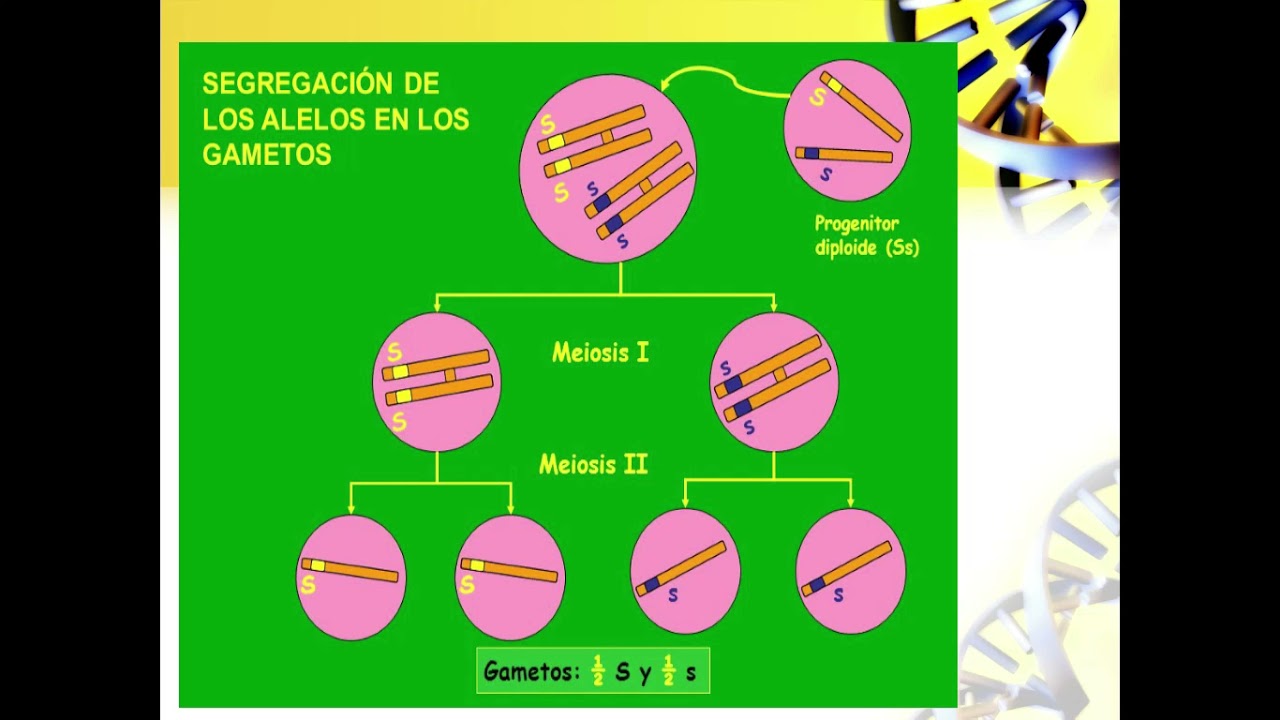
Familiarity with Mendel's Law of Segregation and how gametes receive only one allele for each gene during meiosis.
Experience constructing and interpreting simple monohybrid Punnett squares to predict offspring traits.
Basic mathematical understanding of probability concepts, including how to express likelihood as fractions, decimals, or percentages.
Applying probability rules to complex multi-hybrid crosses (e.g., trihybrid or tetrahybrid) where visual Punnett squares are highly impractical.
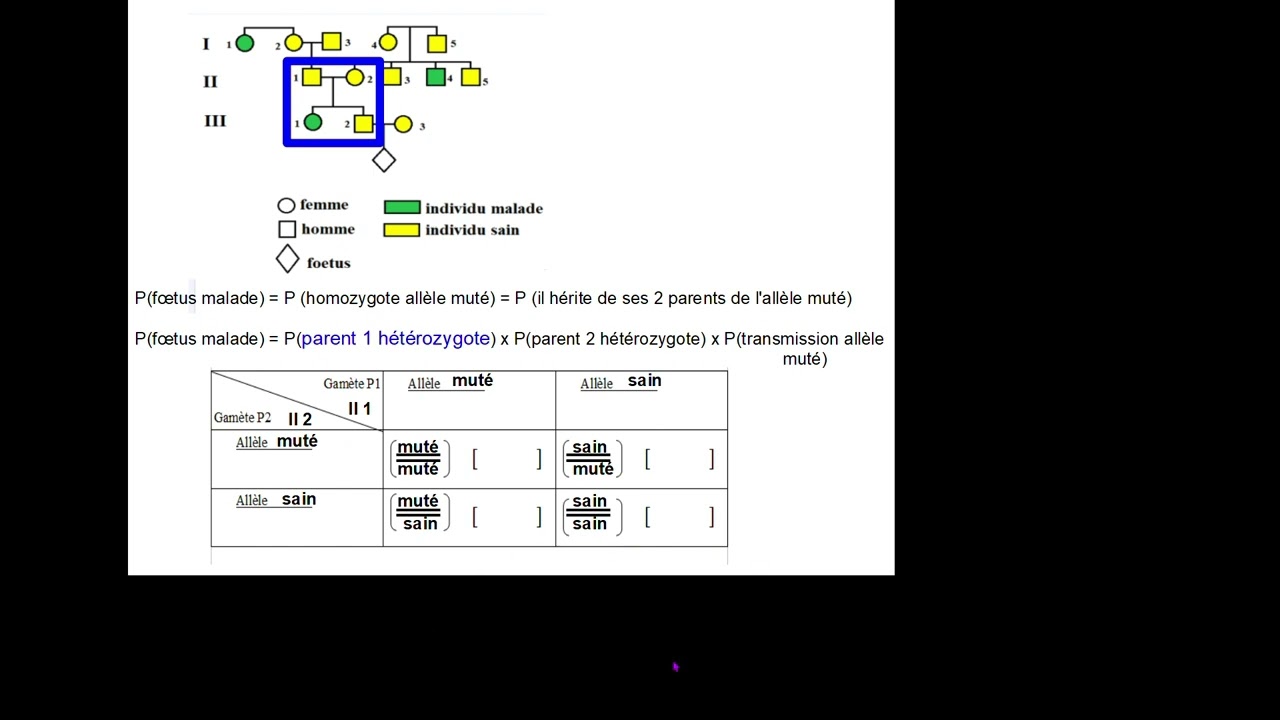
Utilizing probability calculations in human pedigree analysis to determine the carrier risk or inheritance likelihood of genetic disorders.
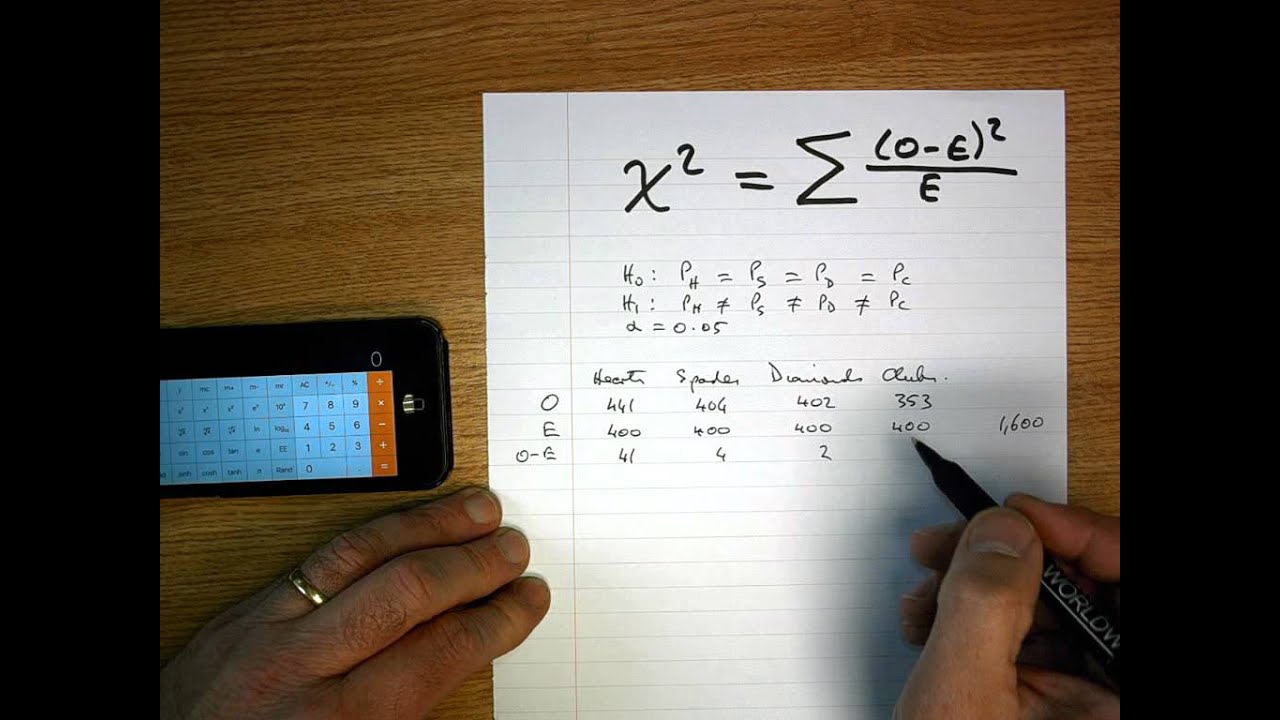
Learning how to perform a Chi-Square goodness-of-fit test to evaluate whether observed progeny ratios deviate significantly from expected probabilistic ratios.
Exploring how genetic linkage, crossing over, and gene mapping alter standard Mendelian probability expectations.
27.9K views174likes9:59Original Release: 2013-12-03
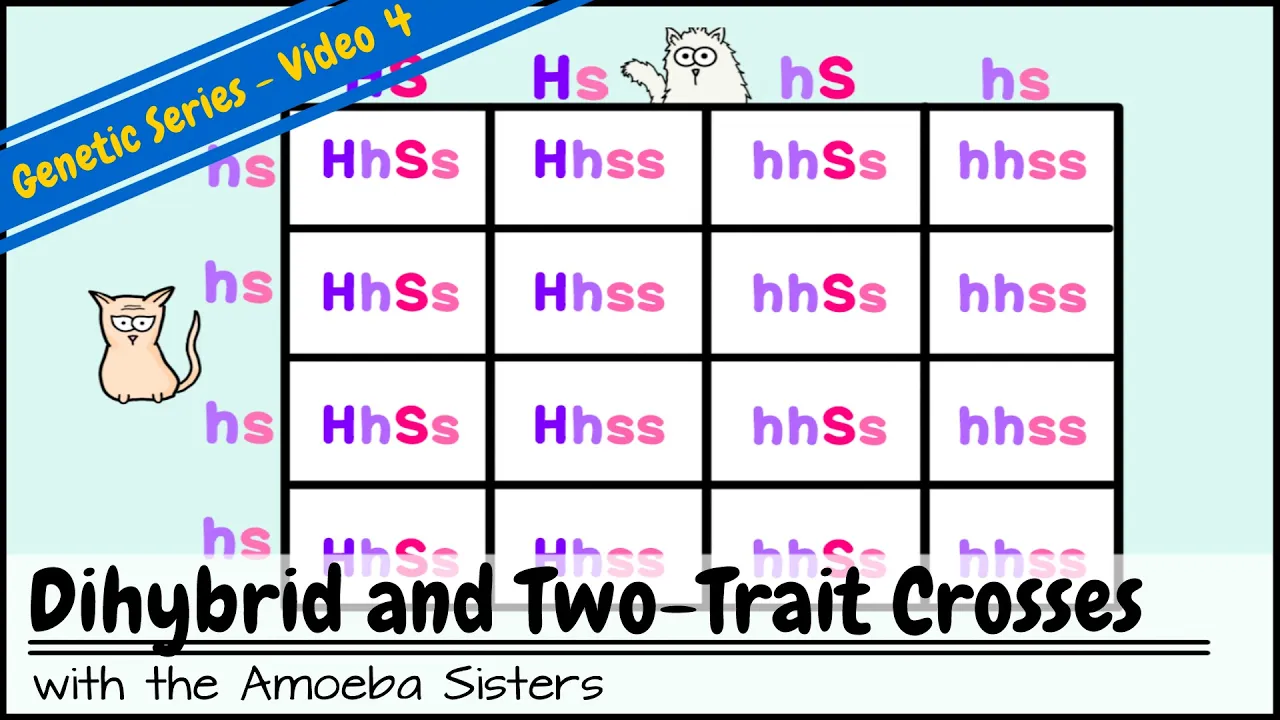
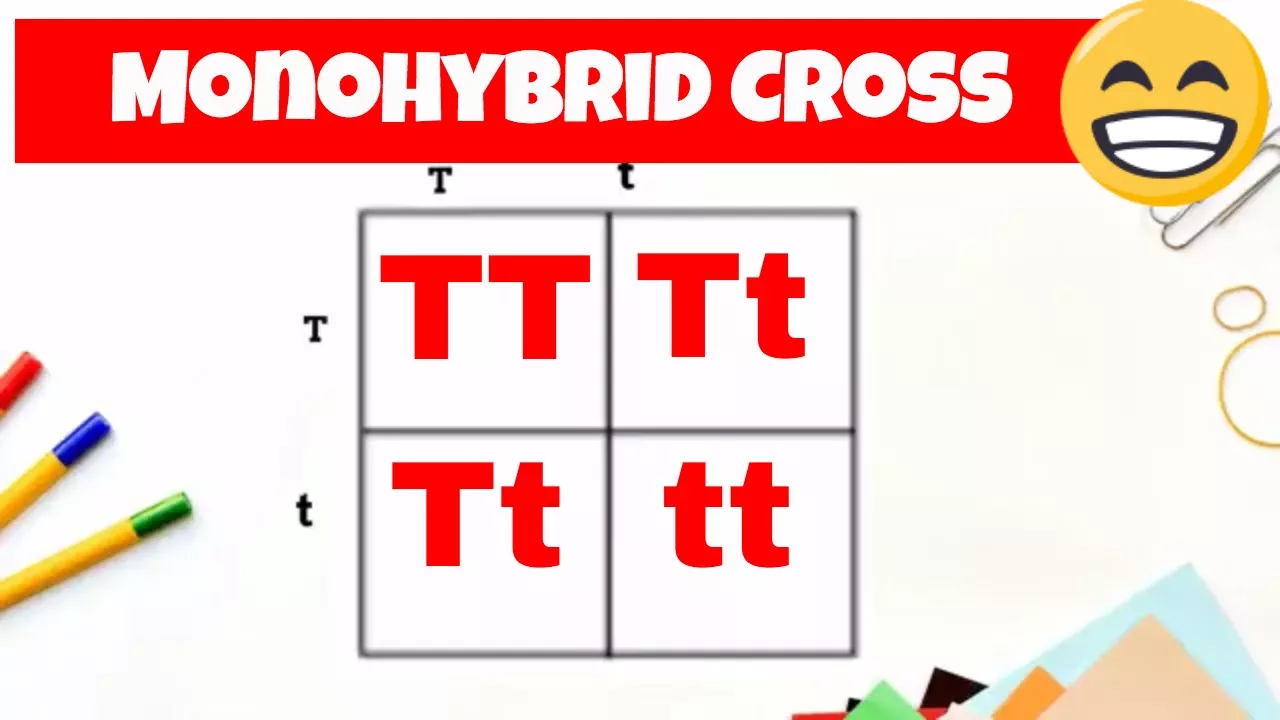
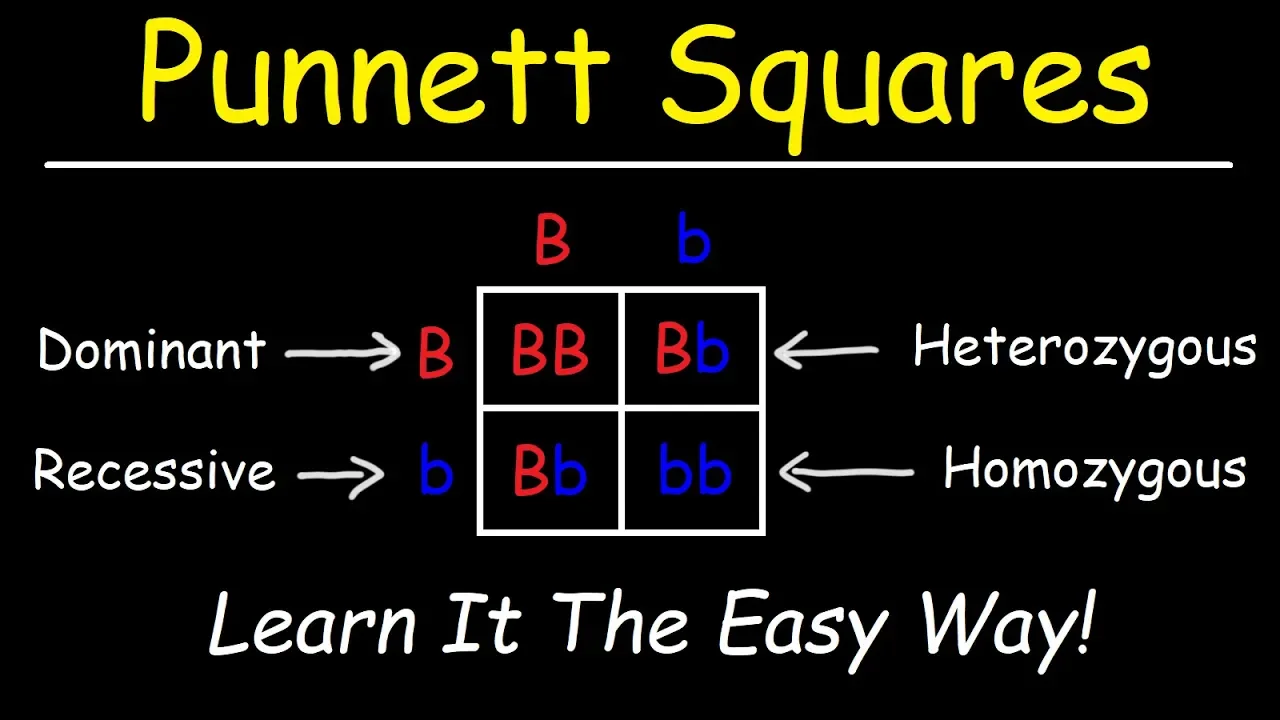
hi if you're going to take a genetics class anytime soon uh believe me on your exam you would have uh one of the questions that is going to be similar to this one it looks scary from the beginning how to solve it but believe me this is uh very easy to solve and in 5 6 minutes you would be able easily to do it and I will explain you how to do it step by step so uh what we have here we have two um parents that we start with this is parent one and this is parent two and uh when we cross these two parents we're going to get uh F1 generation and F1 generation we are going to self-pollinate and now the question itself what is the proportion of the F2 proi would be of this particular genotype so we have to calculate probability and here is how we are going to do it so uh let's me start here so this is going to be our parent one and this is going to be parent two so you see parent one at zi a is homozygous dominant and parent two homozygous recessive parent one at lasai B homozygous recessive and parent two homozygous dominant and parent one homozygous dominant and parent uh two homozygous recessive and so on with the rest of the Los size if uh one parent is homozygous dominant another one is homozygous recessive and uh This is How we get U F1 generation and as you see here uh all uh L SI are present in heterozygous form and how we got it it's very easy so for example here would be our parent one and um parent one at lasai a is homozygous dominant so we put um capital a capital a here and parent 2 atlasi a is homozygous recessive so we put for parent to small a small a and now we build a pet square and what we are going to get here is small a capital A small a capital A small a capital A small a capital A so as you see all the F1 generation for this particular lassai going to be heterozygous so this is going to be 100% heterozygous and that's explanation why we when we uh cross uh one homozygous uh dominant with homozygous recessive or uh dominant can be here and recessive here that's explanation why uh at the all say uh this particular F1 generation going to be heterozygous so this planet Square explains it so now going to be a second step how we are going to solve this problem and also I want to show you that uh we self-pollinate F1 generation so both parents going to be of the same uh gen type so this is going to be absolutely the same uh uh for the uh parent one here and parent two here genotype is the same so because there is no segregation in the F1 generation but what's going to happen with um our next cross and this is um qu our question what is the proportion of the F2 pren would be of this particular genotype and as you see we have a dominant homozygous dominant homozygous recessive heterozygous forms here so how calculate this probability and let me explain it one again with the use of the planet Square so for example this is going to be parent one here and for thei a this time we have capital a small a and here going to be parent two and uh parent two also going to have um capital a small a here so we put capital a small a here and once again build a planet square and here we're going to get capital a a capital a capital A small a small a capital A and small a small a as you see here is a segregation of our traits and um for example homozygous dominant going to be uh one out of four chances and for the heterozygous form we have two out of four or we can simplify it as 1/2 so one half chances half of the chances going to be heterozygous and once again uh for the homozygous recessive we have chances that is 1 out of four so we uh put one out of four uh here for the homozygous recessive this is going to be for the heterozygous and this is going to be for the um homozygous dominant and now we very easily can solve our problem so here for the what is the chances for the um AA here to be homozygous dominant and as you see here the chances is um 1/4 so we put 1/4 here and next BB and this is homozygous recessive and chanes to be 1/4 so we uh put 1/4 here and what are the chances for the lasai C to be heto and as you see here heterozygous is uh 1/2 those uh our example for um only aasai but um this is going to be um the same uh figures for all different lasai when we have two uh heterozygous parents and we have here uh all uh heterozygous um parents heterozygous at all side so we just uh change letters but uh principle stays the same so for the um heterozygous uh Los i c we have probability that is 1/2 and we put 1/2 here and one force here one over four here and 1/2 here so now how we are going to calculate our probability we have to multiply all these independent probabilities and this is how we are going to get our answer so 1/4 * 1/4 this is 116 uh multiplied by 1 2 uh this is 1 / 32 multiplied by4 this is going to be uh 1 over 128 ulti it by 1/4 this is going to be 1/ 512 and multiplied by 1 half this is going to be 1/ 1,24 and you also can calculate uh the probability as a percent you just have to uh divide 1 by 1,24 and you can get the answer as a percentage so this is our answer I hope my explanation were clear and now you would be able to solve analogous problems thank you for your attention please subscribe to my channel new videos every day goodbye
Up Next
11:14
Hardy-Weinberg Equilibrium Problem | Allele & Genotype Frequencies
@SciEdSusan
17K views•2019-11-05
50:12
Bacterial Communication: Quorum Sensing and Biofilm Formation Explained
@JHUAAP
12.6K views•2011-06-28
7:26
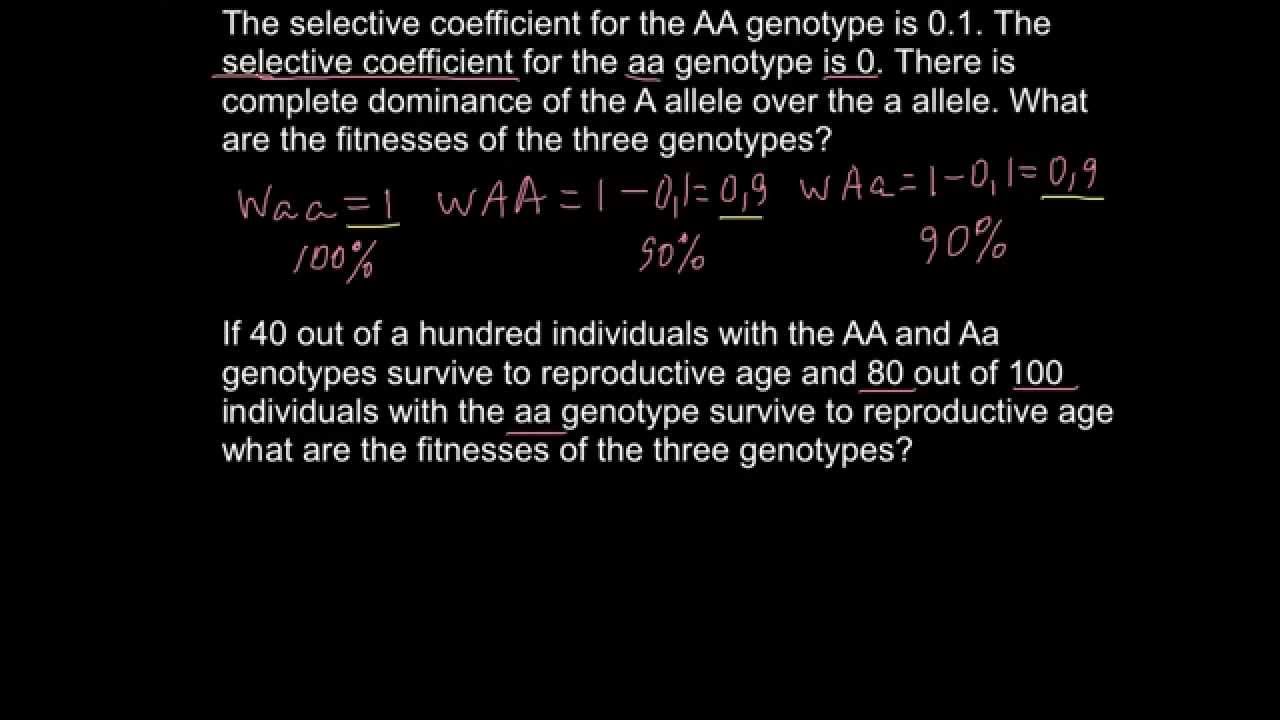
Selection Coefficient and Relative Fitness in Population Genetics
@GeneticsLessons
11.8K views•2014-05-31
7:08
Bacteriophages: Earth's Deadliest Killers and Future Antibiotics
@kurzgesagt
34.6M views•2018-05-13
Related Study Plans & Knowledge Roadmaps
Structured learning paths in Biology
biology
RNAi: Biogenesis, RISC & Gene Silencing
01Molecular Biology Foundations: DNA to Protein
02Introduction to RNA Interference (RNAi)
03Molecular Biogenesis of miRNA and siRNA
+ 2 more learning modules
10h5 modules
Explore Roadmap
biology
Mycorrhizae: Signaling, Biophysics & Ecology
01Foundations of Mycorrhizal Symbiosis
02Molecular Signaling and Root Colonization
03Biophysics and Bioenergetics of Nutrient Exchange
+ 1 more learning modules
11h4 modules
Explore Roadmap
biology
Circadian Clocks: TTFL, SCN & Periphery
01Foundations of Molecular Biology & Gene Expression
02Introduction to Chronobiology and Actograms
03The Core TTFL: Molecular Architecture of the Clock
+ 3 more learning modules
14h6 modules
Explore Roadmap
biology
Population Genetics: Math, Drift & Selection
01Genetic & Probability Foundations
02The Hardy-Weinberg Principle and Baseline Models
03Mathematical Modeling of Natural Selection
+ 3 more learning modules
18h6 modules
Explore Roadmap