



![Genetyka - Pojecia - Allel - Homozygota - Genotyp - Fenotyp - Biologia [8 Klasa] - Dziedziczenie](https://i.ytimg.com/vi/UfQJV02MREU/maxresdefault.jpg)




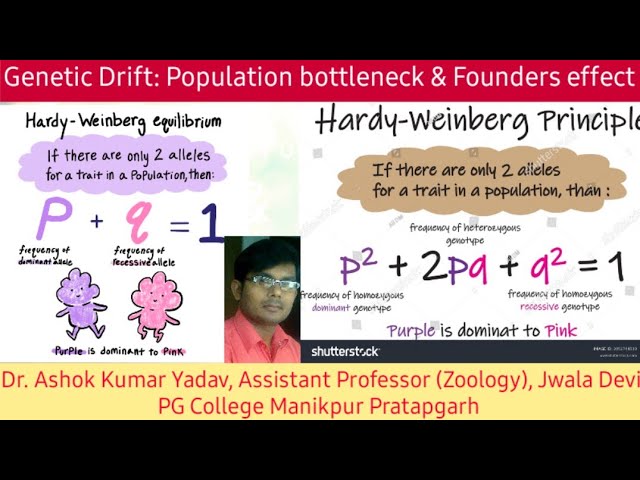
















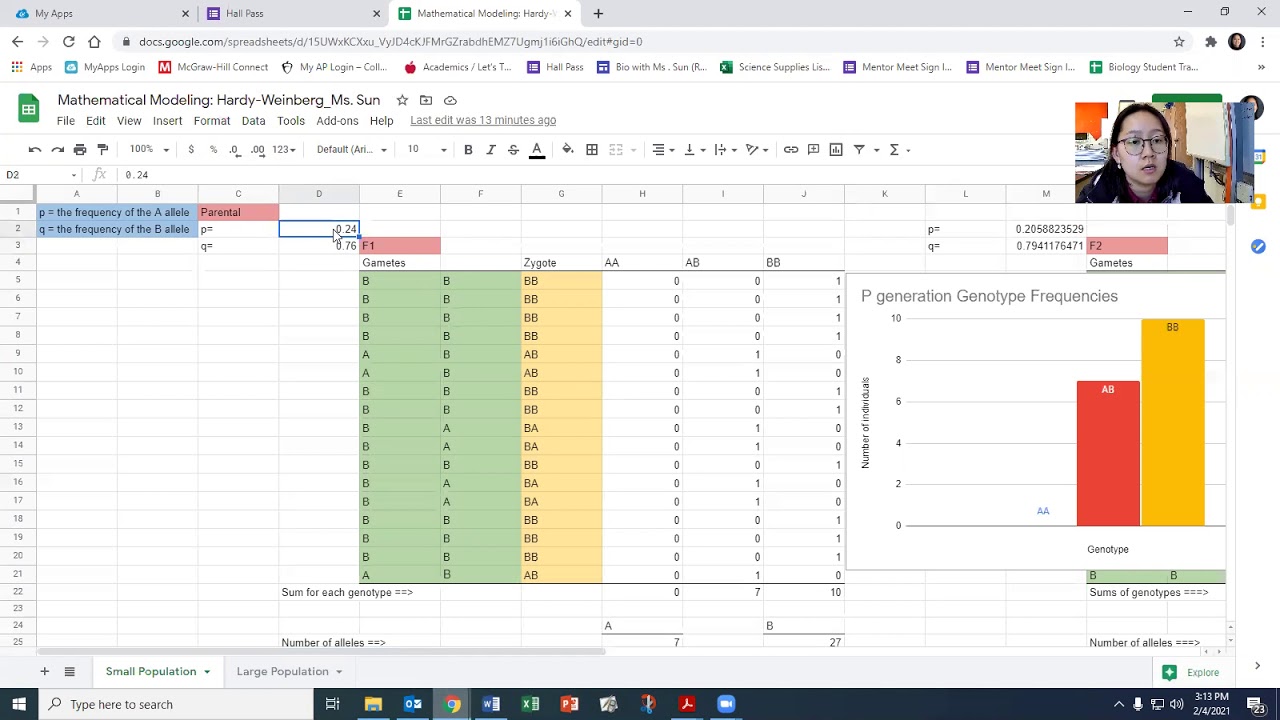
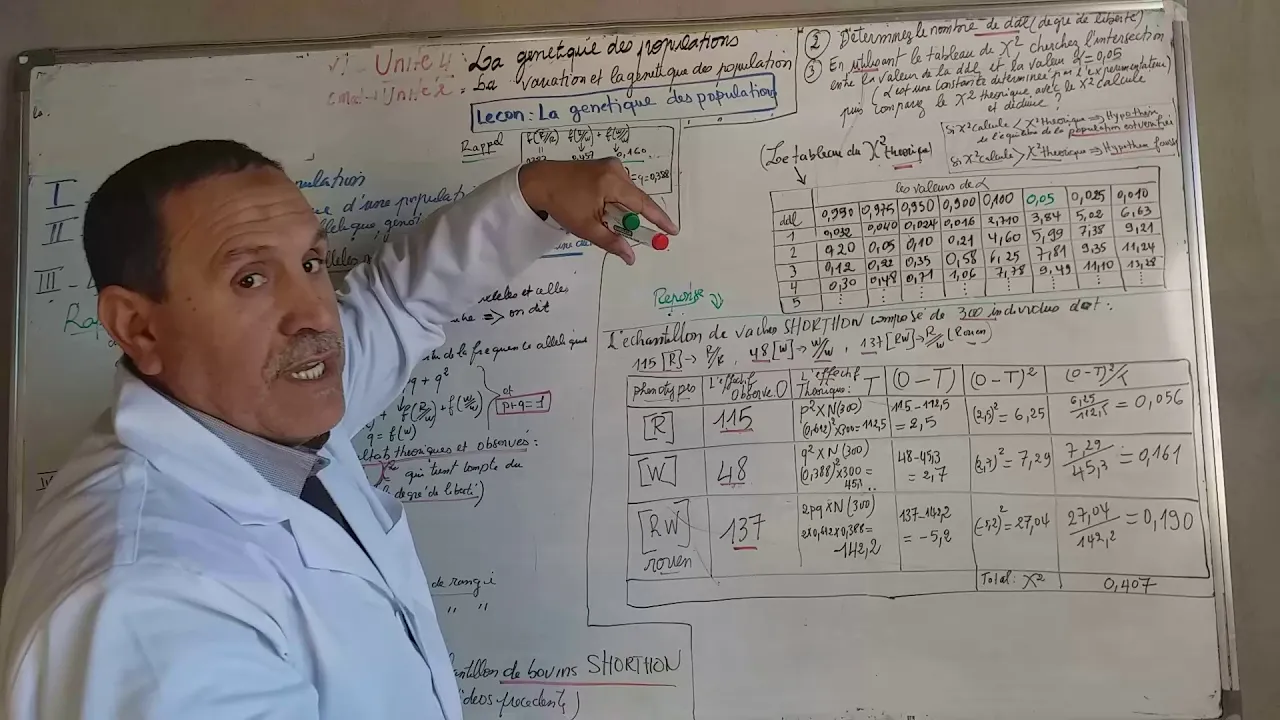
To test if a population is in Hardy-Weinberg equilibrium, first calculate allele frequencies (p and q) by counting alleles in the population, then use these frequencies to predict expected genotype frequencies (p², 2pq, q²) and compare them with observed genotype counts; if the observed values significantly differ from expected values (typically determined using a chi-square test), the population is not in Hardy-Weinberg equilibrium, indicating that allele frequencies are changing across generations due to evolutionary forces.
Hardy-Weinberg Equilibrium Problem | Allele & Genotype Frequencies
Added:Basic Mendelian genetics, including the definitions of alleles, genotypes (homozygous and heterozygous), and phenotypes.
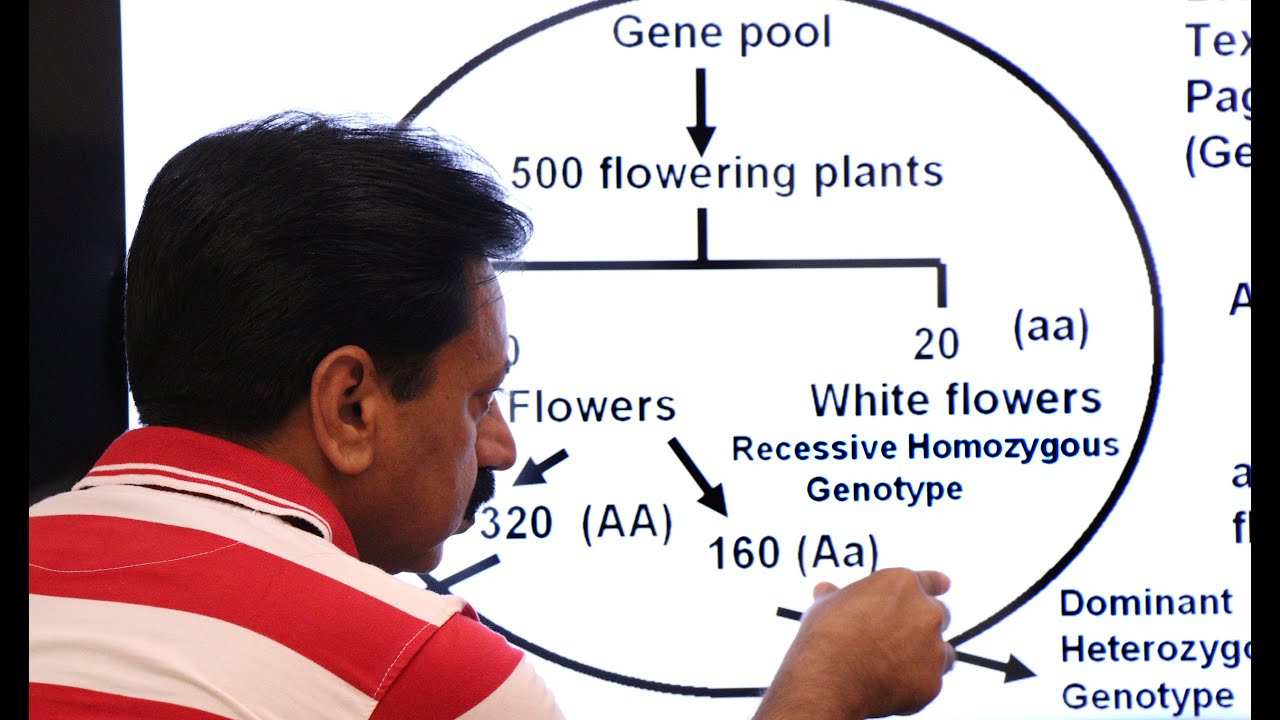
The concept of a gene pool and the distinction between allele frequencies and genotype frequencies in a population.
The five theoretical assumptions of the Hardy-Weinberg principle (random mating, no mutation, no natural selection, large population size, and no gene flow).
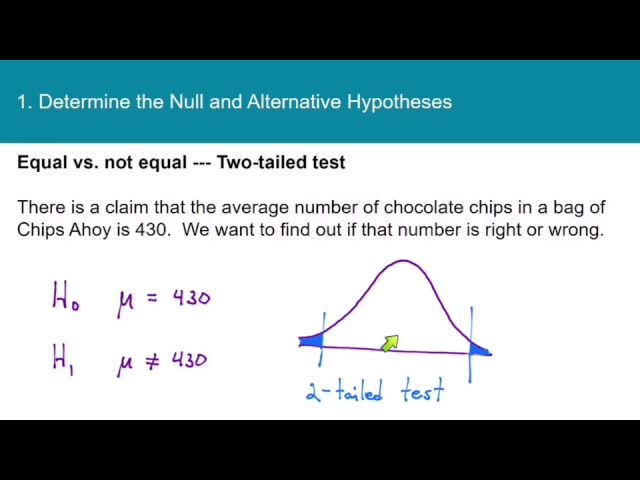
Introductory statistics, specifically the basic concept of hypothesis testing and how to set up null and alternative hypotheses.
Analyzing microevolutionary forces (natural selection, genetic drift, mutation, and gene flow) and calculating how they shift a population away from Hardy-Weinberg equilibrium.
Applying the Hardy-Weinberg equation to more complex genetic systems, such as loci with multiple alleles (e.g., ABO blood groups) or sex-linked traits.
Real-world applications of population genetics, such as tracking disease-causing recessive alleles in human populations or assessing genetic diversity in conservation biology.
Advanced statistical methods in genetics, including understanding why degrees of freedom are adjusted in HWE chi-square tests and using programming tools (like R) for population modeling.
17K views243likes11:14Original Release: 2019-11-05
hi Alan welcome to a discussion of hardy-weinberg equilibrium using the hardy-weinberg equations today we're going to remember that our population has three different colors of flowers in it red white and pink and they exist in three different amounts we've got 90 red individuals 35 pink and 25 white individuals so there's a hundred and fifty in our population and we know the genotypes of each of these individuals so red individuals are big R big R pink individuals are heterozygous and white are homozygous recessive little R little R so of course if we're counting the number of genotypes there's a hundred and fifty 150 individuals 150 genotypes but because each individual has one two alleles we know that there are 300 alleles in this population now what we want to ask is is this population in hardy-weinberg equilibrium that is does P and Q maintain from one generation to the next and we can do some math to figure out whether P and Q stay the same over the generations or if they're changing so let's start by calculating P so we know that P is the frequency of the dominant allele the frequency of big R and we have two places to find big are in our homozygous dominance and in our heterozygous individuals so if we're gonna calculate the frequency of big R we need to ask out of the 300 alleles that are present how many are big R so we've got two times ninety individuals who have big R and then also 1 times the number of heterozygous individuals whoops I need to write the number in there the number of heterozygous individuals who have a big R so we count these guys twice because there are two and these guys just once because they have one big R so we can simplify that down to be 250 of 300 which is the same as 0.72 if you round up okay importantly there is another way to do this math and I want to show it to you for just a second here P equals the frequency of big are all still true we want to take into account the big R big R individuals and the heterozygous individuals but in this case I want to say for every individual that's homozygous dominant I'm gonna count half of an individual who's heterozygous so out of the total population so we could say ninety plus one-half of 35 out of a hundred and 50 individuals okay if you if you do the math this is exactly the same as up here but we're just dividing by the number of alleles versus the number of individuals and it might be easier for us to think about using this math up here where we're counting alleles since P is really thinking about the allele frequency alright I've gotten rid of that alternative strategy to calculate P and I want to point out just one more thing here we we could say that to calculate P we just need to figure out how figure out P squared and that's the number of big R big R individuals out of the total population so 90 out of a total of 150 and take the square root of that and they'll give us P well that's a great choice if we already know that the population is in hardy-weinberg equilibrium in this case we want to ask if this is in hardy-weinberg equilibrium and so it's so much better for us to not use this shortcut strategy and instead actually count the number of alleles up here including heterozygotes and homozygous dominant if we were already in hardy-weinberg equilibrium then we could use P squared equals homozygous dominant but we don't know that in this case that's what we're trying to calculate so I'm gonna get rid of that math too all right now we've calculated P three different times and I want to just repeat that calculation except for now we're gonna calculate Q the frequency of the recessive allele little R and in this case since we're not in hardy-weinberg equilibrium we can't just take Q squared instead I'm gonna have us actually count the number of alleles that are in this population so we'll take one time's the heterozygotes because they have one copy of little R and two times the number of homozygous recessive because they have two little ours okay out of the total number of alleles which is 300 so we can simplify that math down to eighty five out of 300 and even further down to 0.28 if you round okay so now we've calculated P and Q we've done it by actually counting the number of alleles because we don't know if these individuals are in hardy-weinberg equilibrium and happily enough P plus Q equals 1 because big R and little R are the only two alleles in this population by summing them together they should equal fully 1 or 100% and they do which is great terrific now we've got P equals 0.72 and Q equals 0.28 and the next thing we want to figure out is given these allele frequencies what are our potential genotype frequencies and that is just some straightforward math so P squared or the big R big R individuals is going to be 0.72 squared the little R little R individuals is going to be 0.28 squared and the heterozygous individuals will be two times zero point seven two times zero point two eight if we do the math on these the frequency of the homozygous dominant individuals will be zero point five to the frequency of the heterozygous individuals will be zero point four and the frequency of the homozygous recessive individuals will be zero point zero eight now great we've got the frequencies but I also want to calculate the actual numbers so we started with a population of 150 let's calculate what the numbers would be for a population of 150 and that means we need to multiply 150 times each of these and that math turns out to be 78 individuals will be big R big R red 60 individuals will be heterozygous pink and just 12 individuals will be homozygous recessive little R little R okay so we've calculated P and Q by Counting the number of alleles in this population we've calculated P squared 2pq and Q squared based on those allele frequencies and then we've also calculated the number of individuals in the population given these P and Q values now these are the number of individuals that we would expect in the population if it were in hardy-weinberg equilibrium now what we started with was 90 are our individuals 35 heterozygous individuals and 25 homozygous recessive individuals that was our original numbers here's our calculated numbers our original numbers are what we observed our calculated numbers are our expected values so to compare between observed and expected and asked are these I mean are these actually the same or are they just different enough that these are different numbers and what we might expect we can run a chi-square test and I'm not going to go through the math to do a chi-square test here but I think it's safe to say that this chi-square test would give us a p-value that's really unfortunate a significance value of less than 0.05 which would mean that these are different than one another different numbers so that suggests that this population is not in hardy-weinberg equilibrium because what we observed right here is not the same proportions of homozygous heterozygous recessive individuals as what we expected to see if they were in hardy-weinberg equilibrium all right last but not least we've determined our population is not in hardy-weinberg equilibrium because P and Q change and what we actually measured was that P squared + 2 PQ + Q square change across different generations so we're not in hardy-weinberg equilibrium terrific what can we do with this information the math that we've practiced here today will help us test whether a population is in hardy-weinberg equilibrium you can use these same strategies of calculating all this good stuff up here to answer simpler questions about how inheritance works or how many homozygous dominant or heterozygous individuals are in a population but this particular problem was testing is the population we're interested in in hardy-weinberg equilibrium alright bring questions to office hours and I will talk to you soon
Up Next
7:26
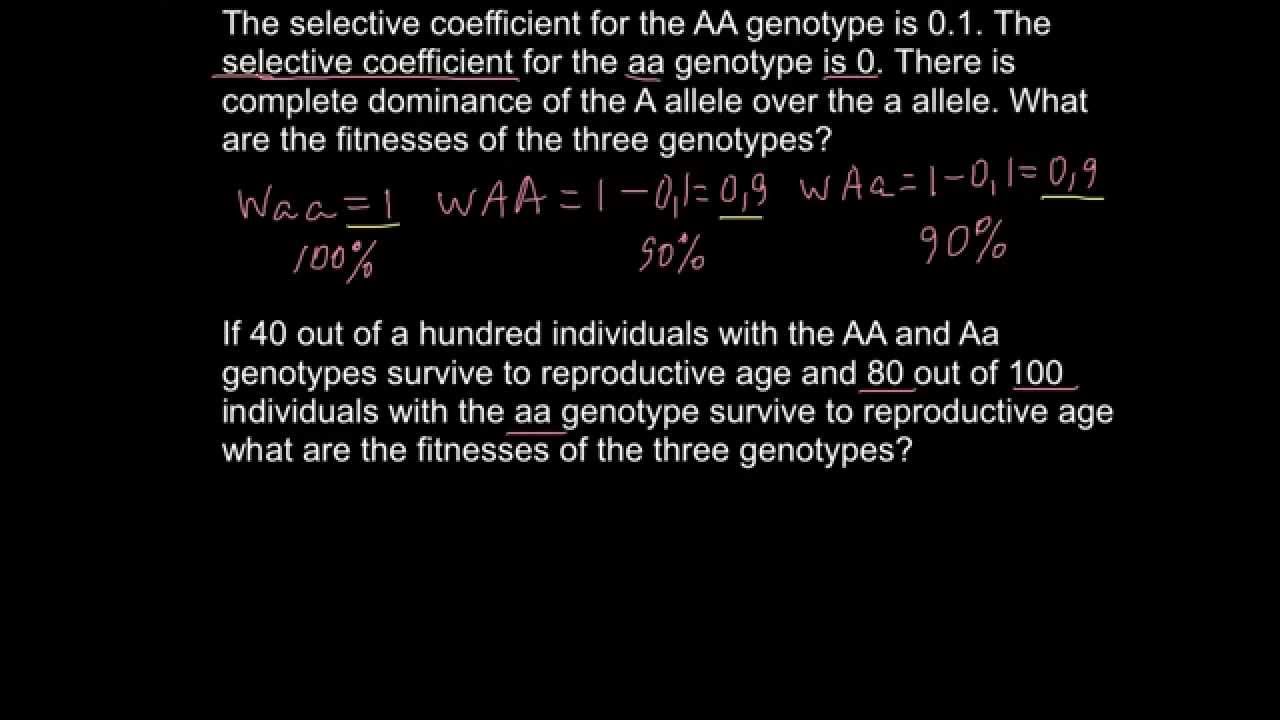
Selection Coefficient and Relative Fitness in Population Genetics
@GeneticsLessons
11.8K views•2014-05-31
50:12
Bacterial Communication: Quorum Sensing and Biofilm Formation Explained
@JHUAAP
12.6K views•2011-06-28

5:35
Enteric Nervous System Explained: The Gut's Brain | Neurobiology Lecture
@alumniu6029
438 views•2018-09-12

7:08
Bacteriophages: Earth's Deadliest Killers and Future Antibiotics
@kurzgesagt
34.6M views•2018-05-13
Related Study Plans & Knowledge Roadmaps
Structured learning paths in Biology
biology
RNAi: Biogenesis, RISC & Gene Silencing
01Molecular Biology Foundations: DNA to Protein
02Introduction to RNA Interference (RNAi)
03Molecular Biogenesis of miRNA and siRNA
+ 2 more learning modules
10h5 modules
Explore Roadmap
biology
Mycorrhizae: Signaling, Biophysics & Ecology
01Foundations of Mycorrhizal Symbiosis
02Molecular Signaling and Root Colonization
03Biophysics and Bioenergetics of Nutrient Exchange
+ 1 more learning modules
11h4 modules
Explore Roadmap
biology
Circadian Clocks: TTFL, SCN & Periphery
01Foundations of Molecular Biology & Gene Expression
02Introduction to Chronobiology and Actograms
03The Core TTFL: Molecular Architecture of the Clock
+ 3 more learning modules
14h6 modules
Explore Roadmap
biology
Population Genetics: Math, Drift & Selection
01Genetic & Probability Foundations
02The Hardy-Weinberg Principle and Baseline Models
03Mathematical Modeling of Natural Selection
+ 3 more learning modules
18h6 modules
Explore Roadmap