

![[3강] CS리더스관리사 이론 및 기출문제-서비스1](https://i.ytimg.com/vi_webp/CeHABA5IlWU/maxresdefault.webp)

![The Managed Heart by Arlie Russell Hochschild [book review]](https://i.ytimg.com/vi_webp/uQVN2KP0oR4/maxresdefault.webp)


![감정노동과 건강관리[산업안전보건교육]](https://i.ytimg.com/vi/D3lJGjR5MvA/maxresdefault.jpg)
![Job Demands-Resources theory (JD-R) | Organizational stress | burnout [Game of theories #30]](https://i.ytimg.com/vi/DD7QnILnP7U/hqdefault.jpg)










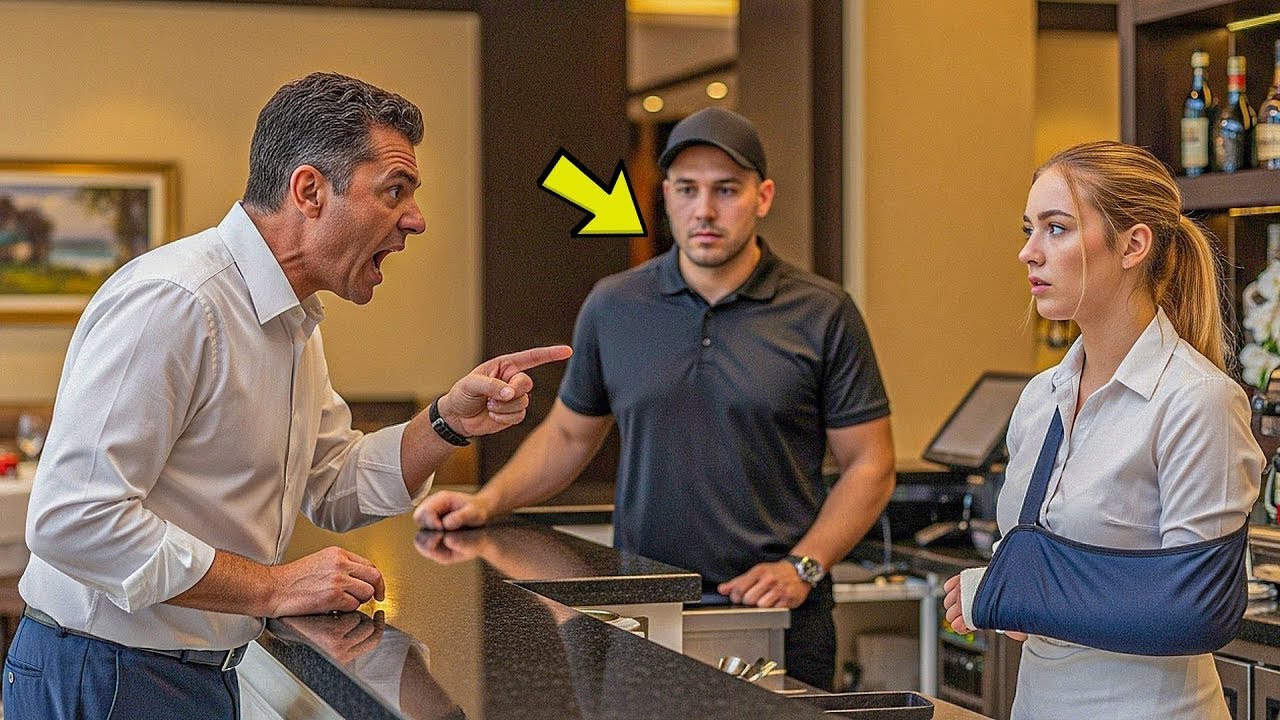



![[비정상회담][174-3] 감정노동 직업군에 갑질하는 사람들 (Abormal Summit)](https://i.ytimg.com/vi_webp/SN1yNVEdwgM/maxresdefault.webp)

Emotional labor, defined by sociologist Dr. Arlie Russell Hochschild as the work employees do to evoke or suppress emotions in the service of paid work, is a significant but often invisible burden on service workers who must maintain friendly, inviting personas regardless of their actual feelings, as demonstrated by Melissa Fernandes' analysis of 1,156 reviews across 27 service sectors revealing that customers expect and reward emotional labor while rarely recognizing or compensating for this hidden cost of good service.
The Hidden Cost of Good Service: Emotional Labor Explained
Added:Understanding the basic definition of the service economy and how customer-facing roles differ structurally from manufacturing or traditional labor.
Familiarity with Arlie Hochschild's foundational sociological concept of 'emotional labor' and the distinction between physical, mental, and emotional work.
Basic psychological concepts of emotional regulation, specifically the difference between surface acting (faking expressions) and deep acting (actively trying to feel the required emotion).
An awareness of basic occupational health concepts, particularly the definition of workplace stress, job demands, and professional burnout.
Analyzing the gendered division of emotional labor and how societal expectations of emotional management differ for workers in both professional and domestic spheres.
Exploring the psychological consequences of 'emotional dissonance'—the conflict between felt emotions and forced professional expressions—on long-term mental health.
Investigating organizational management solutions, such as how companies can design support systems, peer-support networks, and fair compensation policies to mitigate emotional toll.
Examining emotional labor in high-stakes professions such as healthcare, teaching, and social work, where emotional demands are highly intense and critical to outcomes.
406.6K views23.7Klikes13:16Original Release: 2022-03-12
- Hey there, welcome to the video.
My name is Melissa and I'll be your host for today.
Today's special is emotional labor with a side of bread.
I love your shoes by the way.
How was that for performance?
In this video I learned from emotional labors, leading researcher and read 1,156 reviews on the internet to figure out if y'all even notice it happening.
I think this is going to be a long night.
Thank you to Brilliant for sponsoring a portion of this video.
I used to be a server at a bar for almost four years, more than half of my income that I made, came from my tips.
And I know that that probably wasn't because people were impressed by my ability to remember their orders or the fact that I was running around on eight hour shift on a handful of French fries, It was because I was friendly, inviting, and acted nice.
And people like that.
It kind of felt like I had no choice but to put up this facade, otherwise I wouldn't get paid.
And that could be really hard because sometimes people suck.
All right, so are we ready to take our orders and everything?
Yes, so I would like the Cobb salad.
Great choice.
But can I get that with a hard boil egg instead?
Yeah, we can absolutely do a hard boil egg for you.
I just wanna let you know that it's gonna take about an extra 15 to 20 minutes just 'cause we don't have any ready on hand right now.
Is that okay with you?
Oh, I don't mind waiting, that's no problem.
Wonderful, wonderful.
I'll go put those in the kitchen.
Hi, yeah.
So it's been exactly half an hour, where's my egg?
Oh yeah, I'm really sorry, it's actually not ready yet.
This is unacceptable.
And you know what?
It was never listed my responsibilities to smile at creeps but it might as well have been.
So in this video, let's figure out why servers need to smile, and if it's worthwhile I don't understand, how am I supposed to boil an egg faster?
You want me to defy physics?
(soft music) Now it took about two Google searches before realizing that the thing that I'm talking about is emotional labor, which is a term created by Dr. Arlie Russell Hochschild.
So I reached out to her, and she actually replied.
She's too busy.
However, she gave me a reading assignment, tell me answer all of the questions that I sent her, which is really sweet and unexpected, considering I misspelled her name in the email that I sent.
I need to get better at that, but anyways let's get reading.
So I read her recommendations, which included her book, "The Managed Heart," and a collection of essays including Can Emotional Labor Be Fun?
All right, so the thing that I felt at the restaurant like being super friendly to guests was a part of the job is actually an example of emotional labor.
Now to understand what that really means, let's go back to the beginning.
What is emotional labor?
The sociologist Dr. Arlie Russell Hochschild coined the term in her 1983 book, "The Managed Heart."
She first notice the way people can manage their emotions to sell a specific image.
After seeing the way her parents' behaviors changed around dinner guests.
She then extended that concept to the workforce and defined emotional labor as the work employees do to evoke or suppress healing or emotion in the service of doing paid work.
Hochschild's original example was the common caring persona flight attendants maintained even in the face of rude flyers, to sell the idea that the cabin is a safe space to relax.
Now, emotional labor is often overlooked by customers because of social expectations and the way that it's commonly used to disarm and create a sense of ease.
It can also be invisible to employees in the sense that the labor is expected, even though it isn't tracked or consistently compensated like other responsibilities.
However, if you look for it, you can find emotional labor across many industries, especially in the service sector.
Like when your real estate agent is excited for you to sign the deed on a house, selling the idea that accepting the average person's largest source of debt is fun.
Or when your server laughs at your joke, selling you a comradery that's worth tipping.
Or when a social media manager filters their personal experiences through brand account, selling you a sense that a corporation is as relatable as a person.
So if that's what emotional labor is, or is it?
There's another way that I've seen the term emotional labor being used.
And it's kind of summarized in this deranged tweet that Taha sent me a couple days ago.
I should preface that I'm sure that this person is really lovely, but check this out, asking for consent for emotional labor even from people with whom you have a longstanding relationship should be common practice.
Someone reached out and asked for an example of how you can respond to someone if you don't have this space to support them.
"Hey, I'm so glad you reached out, I'm actually a capacity helping someone else who's in crisis dealing with some personal stuff right now and I don't think it can hold the appropriate space for you.
Could we connect, insert later date or time instead?
Do you have someone else that you can reach out to?"
If I was in a crisis, and my friend told me to come back at another time, there's something about that that's just a little off.
This isn't emotional labor.
In an interview, Dr. Hochschild said that this isn't how the term was intended to be used and it's kind of been over extended.
And I agree, because it turns the conversation away from the fact that workers have to perform emotional labor to meet job requirements, not to be your friend.
But I think that we can both agree that managing your emotions does take a lot out of you.
Like remembering people's orders or lifting heavy boxes, it's a skill that people can learn.
Some people are good at math and some people are good with people.
Maybe you are a fellow service worker and have great people skills, but maybe you wanna sharpen up on your math skills or something.
And that's where Brilliant comes in.
Brilliant is an interactive stem learning platform.
And they have an extensive course catalog in subjects ranging from geometry, algebra, statistics to physics and it's for anyone who wants to learn at any skill level.
Something that I really appreciate about their learning approach is how interactive and hands on it is, kind of like what we do here at Answer in Progress.
We kind of learn by doing things.
That's what I appreciate about their learning style.
Everything is hands on.
You can explore all these topics and concepts through puzzles and games, which makes learning pretty fun.
The course that I've been really interested in is their logic course.
Two robots finished between Lex and tie, that's wrong, okay.
It helps you build your critical thinking skills and kind of keeps your mind really sharp and focused.
Yay, using this course has been really helpful in helping me organize my thoughts and pull it all together, 'cause sometimes I struggle with that.
And it doesn't really feel like you're doing homework because you're playing games.
You can break your learning down into manageable chunks and do a little bit every single day to kind of help keep your mind sharp and focused.
So to get started, you can visit brilliant.org/answerinprogress, or you can visit the link in the description.
And the first 200 people will get 20% off Brilliant's annual premium subscriptions.
And with that, let's get back to the video.
So with your friends, you both agree that I'll be there for you and you there for me.
but as an employee, it's kind of like, I'll be there for you, and that you yell at me.
Thanks to researchers like Dr. Hochschild, we know a lot about the people performing emotional labor, but what about those receiving it?
Do they recognize it?
And how do they respond?
I used to think as a server that if I didn't smile or be super friendly, I wouldn't get a tip.
So I'm sure that there's varying opinions on this matter.
But you know one of the best places to go to get unfiltered and honest opinions?
Google reviews, my hypothesis and you know what?
I'm gonna pick up the microphone for this part because I think this is important.
Okay, hypothesis time.
There's two types of people who leave reviews.
The people who leave bad reviews, who have probably not had a very good customer service experience and are mad because they weren't met with plaintiffs and friendliness.
And then there's the people who leave good reviews, who have just had a good pleasant customer experience because people are friendly.
Okay, so I'm gonna need to read a lot of reviews.
Okay, so here's the rules, Sabrina and Taha collected 1200 reviews in 27 different service sectors in five different countries based on where you live.
Yes, I'm talking about you.
So we looked at our audience demographics and found the largest associated cities.
And after Google mapping the location and service sector they rolled the D20 to select the business and save some of the best and worst reviews for me to read, which I now have and this is so expensive.
Boom, let's get some reviews.
Hello, now I knew that 1200 reviews was a lot, but seeing it in physical form in front of me confirms that it's a lot.
I thought it'd be a really great idea to print it in color.
'cause it would be pretty, color printing is very expensive.
So I print this in two batches.
The first batch is in color and then I told Sabrina about it.
- What?
- And then 172 pages, not in color.
I've got a lot of reviews to get through, it is 4:30 PM.
Honestly, this is the same size as the "Chronicles of Narnia," if not bigger and I guess I should start reading.
So I was looking to see if there were patterns and what motivated people to leave a review in the first place.
Whether it be a five star review, one star review or notable.
If I could give this place zero stars, I would reviews.
Okay, strap in, this person wrote a five point essay.
"The waiter had spilled water all over my husband and a bit on our appetizer.
No, we did not get a replacement of apps."
This one was interesting, and they still gave the waiter a 15% tips.
On to airlines, I think this is going to be a long night.
As I read, I noticed that the most intense reviews had one of two motivations.
One, someone had felt morally wronged and was seeking reparations, or two, they were just delighted by the services and wanted to drop in and say, "You go girly."
I started to pick up on some words that people were using often.
In the good reviews, people like to describe the experience as very professional or the person is very caring and trustworthy.
And in the bad reviews, well, just rude in all caps.
try to read 60 pages every hour, and then I should be done in three hours, four, six hours.
Oh my God, I still have a lot of reviews to get through.
I think I need to get into cozy mode.
Boom.
Oh, that's why I needed the light.
Something to note though, is that in a lot of these bad reviews, people were complaining about the product not being what they expected.
And then secondary was about the experience of the person giving them service.
You know what I just realized, I am reading these reviews manually.
I could have gotten Sabrina to run these through some sort of code to just scan for buzzword and see what words came up, and see what people were complaining about.
That would've taken a lot less time.
Well, here we are.
"Awful and not helpful and has zero customer service skills, and is rude AF."
Fair enough, ooh, ooh, another one.
"This place is depressing."
Again, fair enough.
It's late and it's taking a very long time to read these reviews, I should probably shower.
So I read a lot of reviews in several sectors across the service industry, so much paper.
Restaurants, accountants, lawyers, hotels, auto repairs, plumbers, airline workers, cab drivers, theme parks, movie theaters, concert halls, we covered a lot.
And something that I noticed is that there's some service industries where people just expect more emotional labor from workers than others.
And I guess it really depends on what's being sold and how central the personality of the person is to the service or experience that you have.
All right, so I finished reading all of the reviews and I think I've actually changed my perspective on emotional labor, just a little bit.
But let me explain.
I took some notes while I was reading all the reviews, and I have some of my favorite ones here.
I'm not sure if I'm gonna read them all because it'll take a very very long time.
It was really interesting for a couple of reasons, I still think that over smiling and over politeness is a little excessive.
And I don't think that, that is a natural thing to expect from people you are engaging with in a business.
Service workers are doing their job and it's something additional that they have to do to perform and be polite and be nice.
Like some of the most common words that I came across in my reviews were friendly and polite and caring and all of these things.
And when people left really bad reviews, oftentimes it was because they were dissatisfied with service or they were just complaining about how mean people were.
But it got me thinking a couple of things about expectations for when you're going to a restaurant or going to see your accountant or going to the salon, you're going there for a service, you're going there to get a thing.
And people being kind and polite and nice to you is kind of just an extra.
And I understand creating that because it's nice when a stranger is nice to you.
But I think that we also have remember that this relationship goes both ways.
If you want this amazing, caring, professional, friendly experience from service workers and people that you're interact with you also have to be that person as well.
Man, I don't wanna live, laugh, love on y'all but these people at the end of the day, they're not your friend, they're there to do their and do the work.
This is a business relationship that we're talking about.
And I think that's why talking about emotional labor is so important.
Some people do just wanna make genuine connections with people.
But again, remember that this is a work environment.
There's a lot to unpack in these reviews but I think it's important to recognize that I just should not have printed them.
That was my takeaway.
Next time we're not gonna print them.
Up Next

12:12
Environmental Sociology Explained: Key Concepts and Themes
@Prof.Fulkerson
24.8K views•2017-03-17
54:57
Contemporary Sociological Theory: Micro, Macro, Integrative
@NaSESYNC
45.7K views•2016-02-17
19:23
How to Analyze Conversations Scientifically | Elizabeth Stokoe | TEDx
@TEDx
1M views•2014-12-04
9:41
What is Sociology? The Sociological Perspective Explained
@crashcourse
4.6M views•2017-03-13
Related Study Plans & Knowledge Roadmaps
Structured learning paths in Sociology
sociology
Celebrity Culture: From Hollywood to TikTok
01Foundations of Celebrity Sociology
02The Rise of Micro-Celebrity & Digital Platforms
03Parasocial Relationships & Algorithmic Intimacy
+ 2 more learning modules
12h5 modules
Explore Roadmap
sociology
Hostile Architecture: Space, Power & Control
01Introduction to the Sociology of Space
02Social Control and Surveillance in the City
03Hostile Architecture and Defensive Design
+ 2 more learning modules
12h5 modules
Explore Roadmap
sociology
Loneliness Epidemic: Third Places & Isolation
01Foundations of Social Capital and Community Cohesion
02The Death of Third Places and Urban Space Erosion
03The Privatization of Leisure and Atomization
+ 2 more learning modules
12h5 modules
Explore Roadmap
sociology
Sociology of Tourism: Gaze, Power & Heritage
01Foundations of the Sociology of Travel and Leisure
02John Urry and the 'Tourist Gaze'
03Staged Authenticity and Cultural Commodification
+ 2 more learning modules
14h5 modules
Explore Roadmap