


















![감정노동 및 직무스트레스 관리[법정필수교육]](https://i.ytimg.com/vi/CEQpqDRkc24/maxresdefault.jpg)









Emotional labor, a concept introduced by sociologist Arlie Hochschild, refers to the process of managing and controlling one's emotions to fulfill the emotional requirements of a job role, particularly in service-based professions such as nursing, teaching, retail, and customer service, where workers must display specific emotional expressions (like cheerfulness or calmness) even when they don't genuinely feel them; this emotional management can manifest through surface acting (faking emotions) or deep acting (actually changing inner feelings), and while it is essential for workplace interactions, it can lead to stress, emotional exhaustion, and burnout if not properly acknowledged or supported.
Emotional Labor Explained: Arlie Hochschild's Sociology Concept
Added:Erving Goffman's Dramaturgical Analysis, specifically the concepts of impression management, front stage, and back stage behavior.
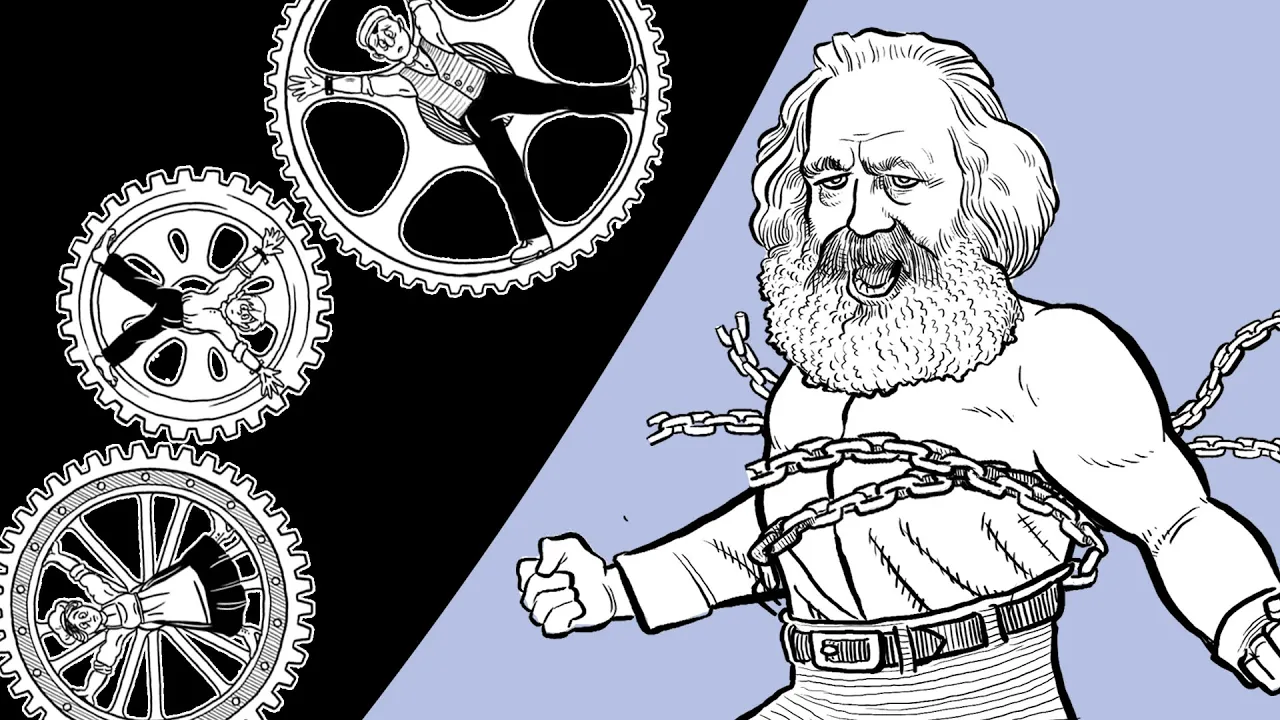
Karl Marx's Theory of Alienation, to understand how workers can become estranged from their own labor and, by extension, their feelings.
The macroeconomic shift from a manufacturing-based industrial economy to a service-oriented post-industrial economy.
The sociological concept of social roles and how societal expectations shape individual behavior and identity.
The gendered division of emotional labor and Arlie Hochschild's related concept of the 'Second Shift' in domestic life.
The psychological consequences of emotional labor, including emotional dissonance, job burnout, and depersonalization.
The evolution of emotional labor in the digital age, particularly within the gig economy, remote work, and social media influencing.
The concept of 'Aesthetic Labor' and how employers commodify workers' physical appearance, dress, and demeanor alongside their emotions.
640 views17likes8:23Original Release: 2025-09-26
Arley Hotchild emotional labor. When we think about work, most people immediately imagine physical tasks such as lifting, moving, typing, cooking, or other activities that involve the body.
Others might think about mental work such as analyzing data, planning a project, or solving problems.
However, one of the most overlooked forms of work is the kind that involves emotions.
Arley H. Hotchild, a well-known sociologist, introduced the concept of emotional labor, which helps us understand how emotions themselves are managed and controlled as part of doing a job. Her work sheds light on something many people experience every day, but rarely put into words.
Emotional labor refers to the process of managing feelings and expressions to fulfill the emotional requirements of a role. Especially in workplaces where interaction with others is central.
To put it simply, emotional labor is when workers have to put on a smile even when they are unhappy, stay calm when they are frustrated, or act caring and friendly even when they do not feel that way inside.
It is the effort of controlling emotions to create a certain impression for others.
This is especially common in service-based jobs where customer satisfaction is tied to not just the product or service, but also the attitude and behavior of the employee.
Flight attendants are one of the classic examples that Hotchild studied. They are trained to always appear cheerful, polite, and calm, no matter how rude or demanding a passenger might be. Their job is not only to serve drinks or give safety instructions, but also to make the customer feel cared for and safe that requires a kind of emotional performance.
We can see emotional labor in many other professions.
Teachers are expected to be patient and encouraging even when they are exhausted or annoyed.
Nurses are expected to provide care with kindness and compassion even if they are feeling overwhelmed.
Retail workers and waiters are expected to smile and maintain a positive attitude even if customers are disrespectful.
Call center employees must speak politely and helpfully even when people on the phone shout at them. In these jobs, managing one's emotions becomes just as important as doing the technical tasks of the role.
What makes emotional labor difficult is that it can create a gap between what a person truly feels inside and what they are forced to show on the outside. This is sometimes called surface acting where people fake emotions that they do not feel. Over time, this can lead to stress, emotional exhaustion, and even a sense of losing touch with one's real self.
For example, imagine a worker who spends all day smiling at customers but feels drained and angry inside.
After years of such experiences, the worker might feel disconnected from their authentic emotions because they have had to suppress them so often. This mismatch between inner feelings and outer expressions is one of the central challenges of emotional labor.
However, there is also something called deep acting which is when workers try to actually change their inner emotions to match the outward behavior they need to show.
For example, a nurse might try to truly feel compassion for patients instead of just pretending.
Deep acting can sometimes reduce the stress of faking emotions because the person is aligning their inner feelings with their role, but it still requires a lot of psychological effort.
The concept of emotional labor is important because it makes us see that jobs are not only about skills and physical effort, but also about the invisible emotional work that employees put in every day. When companies demand constant cheerfulness, politeness or empathy, they are essentially asking workers to use their emotions as part of their labor. This has serious implications for how we think about fairness in the workplace.
For example, many service jobs are low paid, but they require enormous amounts of emotional effort that often go unrecognized.
Hotchild's work also helps us understand why burnout is so common in jobs that involve constant human interaction.
Teachers, nurses, social workers, and customer service employees often experience high levels of burnout because they are not only doing technical tasks but also carrying the emotional burden of keeping others comfortable, calm or happy. In this sense, emotional labor becomes invisible but very powerful in shaping both workplace dynamics and people's personal lives.
Beyond the workplace, emotional labor also plays a role in personal relationships.
For example, within families, women are often expected to carry more emotional labor by managing household conflicts, comforting children, or keeping the atmosphere harmonious.
This is sometimes called the second shift where women not only do physical household chores but also take responsibility for the emotional well-being of everyone in the home.
Recognizing this helps us see how emotional labor is connected to larger issues of gender, inequality, and power.
In modern times, emotional labor has expanded into new areas.
With social media and digital communication, people are now expected to present themselves positively online, managing impressions in ways similar to workplace demands.
Customer service jobs have also multiplied and in many of them companies use training programs to teach employees how to display the right emotions almost like actors following a script. This shows how deeply emotional labor is woven into the fabric of society.
Understanding emotional labor does not mean we should stop being polite or kind. Rather, it helps us become more aware of the hidden effort that goes into creating positive social interactions.
It allows us to appreciate the people who do this work every day and to question whether they are being fairly rewarded and supported. It also invites us to reflect on our own roles since many of us engage in emotional labor in ways we may not even realize.
Arley Hotchild's idea continues to be highly relevant today because it opens our eyes to the reality that emotions are not just private feelings but also resources that are used, controlled, and sometimes exploited in the social and economic world.
By seeing emotional labor as real work, we can start to think about how to value it, support those who do it, and reduce the negative effects it can have on people's mental health.
If you found this explanation helpful and you would like to learn more about sociology, psychology, and other important concepts that shape our daily lives, please make sure to like this video and subscribe to the channel. Your support helps me keep creating content that makes complex ideas easy to understand for everyone.
[Music]
Up Next

13:16
The Hidden Cost of Good Service: Emotional Labor Explained
@answerinprogress
406.6K views•2022-03-12
54:57
Contemporary Sociological Theory: Micro, Macro, Integrative
@NaSESYNC
45.7K views•2016-02-17
9:42
Urban Sociology Explained: Key Concepts and Theories
@sociologylearners1835
544 views•2025-11-09
9:41
What is Sociology? The Sociological Perspective Explained
@crashcourse
4.6M views•2017-03-13
Related Study Plans & Knowledge Roadmaps
Structured learning paths in Sociology
sociology
Celebrity Culture: From Hollywood to TikTok
01Foundations of Celebrity Sociology
02The Rise of Micro-Celebrity & Digital Platforms
03Parasocial Relationships & Algorithmic Intimacy
+ 2 more learning modules
12h5 modules
Explore Roadmap
sociology
Hostile Architecture: Space, Power & Control
01Introduction to the Sociology of Space
02Social Control and Surveillance in the City
03Hostile Architecture and Defensive Design
+ 2 more learning modules
12h5 modules
Explore Roadmap
sociology
Loneliness Epidemic: Third Places & Isolation
01Foundations of Social Capital and Community Cohesion
02The Death of Third Places and Urban Space Erosion
03The Privatization of Leisure and Atomization
+ 2 more learning modules
12h5 modules
Explore Roadmap
sociology
Sociology of Tourism: Gaze, Power & Heritage
01Foundations of the Sociology of Travel and Leisure
02John Urry and the 'Tourist Gaze'
03Staged Authenticity and Cultural Commodification
+ 2 more learning modules
14h5 modules
Explore Roadmap