














Ethnomedicine is defined as any medical system that emerges from and is shaped by a particular cultural context, encompassing both traditional healing practices and biomedical medicine; Singer and Bear argue that all medical systems are ethnomedical in nature because they develop within specific cultural situations and evolve alongside cultural changes, with efficacy measured differently across cultural contexts and influenced by factors such as pharmaceuticals, biotechnology, and cultural beliefs about healing.
Ethnomedicine: An Overview in Medical Anthropology
Added:The core concept of cultural relativism, allowing for the objective study of beliefs and practices different from one's own.
The foundational distinction in medical anthropology between 'disease' (biophysical condition), 'illness' (subjective experience), and 'sickness' (social role).
An understanding of Western biomedicine as a culturally situated system rather than a universal standard.
Basic anthropological definitions of culture, belief systems, and social institutions.
The study of 'medical pluralism,' examining how individuals and societies navigate and combine multiple therapeutic systems simultaneously.
The political economy of health, including how power dynamics, inequality, and structural violence affect access to diverse healing practices.
Clinical medical anthropology, focusing on applying ethnomedical insights to improve cultural competency and communication in healthcare settings.
Ethnopharmacology and the scientific validation of traditional healing resources and botanical medicines.
7.7K views0likes15:01Original Release: 2015-09-12
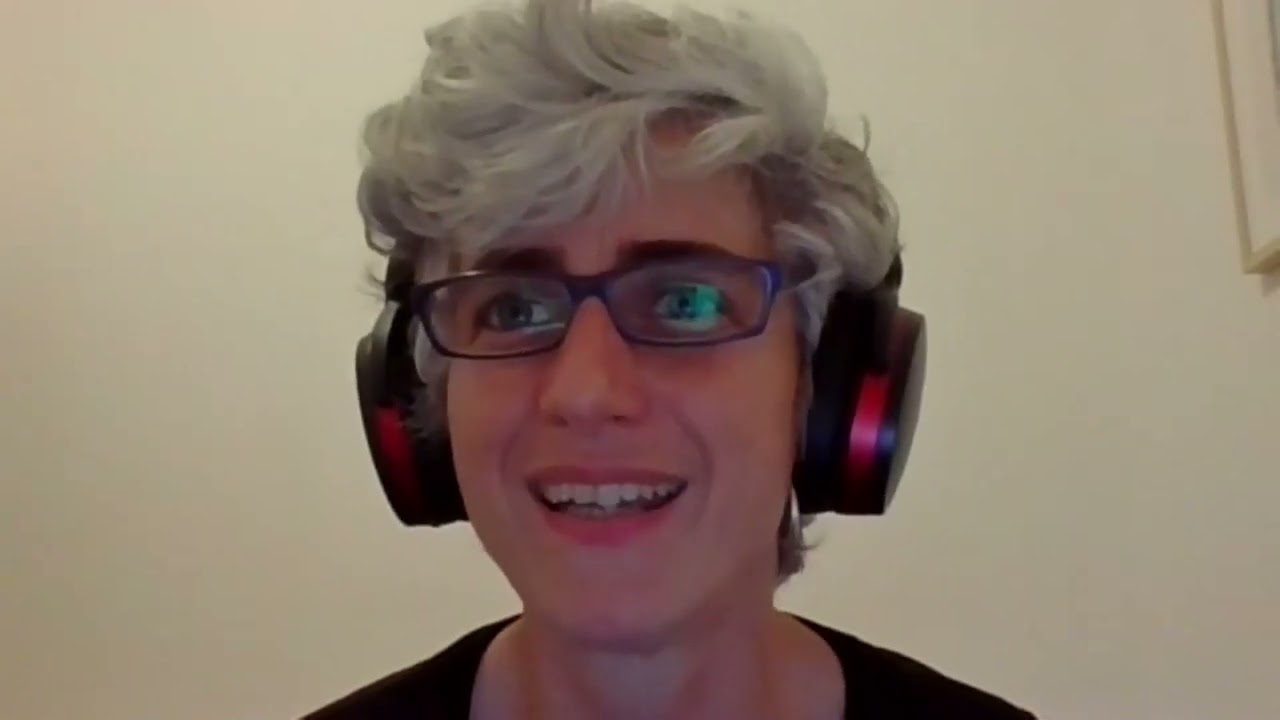
in this lecture I'll be discussing ethnomedicine from singer and Bears 2012 introducing medical anthropology the second edition of their text I'm going to start with a overview of ethn medicine from there the authors go into a discussion of traditional healing systems and their e efficacy and how that efficacy is measured in the context of biomedical and scientific terms they then talk about different ways of classifying Medical Systems in terms of the ideology origin and progression of disease as well as various healers who attempt to confront the disease at different levels within Society the authors then present a evolutionary model of disease and healing systems and as they argue throughout the entire chapter and indeed in much of the book as a whole that all met medical systems are in fact ethnomed that is they are all part and parcel of a particular cultural situation within which they uh develop as the as the and as the culture continues to change so too is the medical system influenced uh and we'll talk here specifically about the impacts of pharmaceuticals and biotechnology in the context of biom medicine so what is ethno ethno is a is a marker it indicates uh is historically indicated nonwestern and it's a historically a marker of indigenous origins of a variety of systems and one of those systems would be uh ways to deal with disease and of course there's a plurality or multiple ways that indigenous peoples across the world confront illness and name particular disease and have those practitioners associated with the power to name a particular disease and to root it out again a key part here throughout the text is that all medical systems are part and parcel of Social and cultural environment within which they emerge payer uh Lyn payer in her 199 1988 text medicine and culture maintains that there are multiple biom medicines depending on the country as well as the particular cultural situation um so when we're talking about biom medicine it would be more accurate from an anthropological perspective to talk about biomedicines that is how they are constructed in a particular circumstance or situation rather than as a monolithic entity and indeed we'll see this more in our discussions when we're talking about medical pluralism later in this class as payer notes biomedical doctors vary depending on the country for example uh there's a fair amount of convergence between the United States and Germany with the use of antibiotics in Germany biomedical doctors are much less likely to prescribe antibiotics as they focus on the natural recuperation as well as healing of the body as a whole we also see um different differing perspectives on bodily modification and what is looked at as the ideal body as we've talked about in the context of previous work in this class uh for example singer and bear note that amongst women in France there's a popularity of breast reductions whereas in the United States there is a popularity of breast enlargements the authors then go into a discussion of traditional approaches to healing and they look at some various aspects of traditional systems and these are documented in the work of a variety of ethnobotanists which include uh not only Anthropologist looking at the the cultural situation but um also Al botanists and uh Ivan Ross's book here is an example of this looks at the CHL constituent traditional and modern medical uses of medicinal plants of the world and that link there that that URL is actually active to the entire text if You' like to go ahead and take a look at that uh singer and bear maintain that traditional systems are marked by magical or magical religious rituals that are designed to maintain Harmony and they're designed to maintain Harmony between a variety of different actors and so this there there's an idea here that agency corresponds not only to humans and the human interactions with uh one another but also between humans and the natural world as well as humans and the supernatural world and the purpose of these rituals is essentially to maintain the harmony uh between each of these varying worlds and again this depends on the particular cultural context which of these would be emphasized singer and bear note that members of the community are in Incorporated uh into many of these magical uh religious rituals and as a whole they serve as a therapeutic Management Group they also note that the estimated efficacy of the traditional Pharmaceuticals that are the pharmacopia as they refer to it is between 25 and 50% depending on the given area that have been shown to be effective in biomedical uh in bi biomedical standards and scientific study they also note that there is something to the idea of perhaps the potential exoticness of a particular type of treatment noting uh that in some cultural situations you see cross-cultural healing being viewed as more efficacious uh that is more effective uh than healing methods that would be present within a particular group or community and indeed they note the parallel here with what's going on in the United states with the increase in complimentary and alternative medicine and of course the attempts to integrate that into a larger biomedical system and the fact that it would be complementary uh to biom Medicine the authors of the Tex then talk uh uh essentially conduct a literature review of various anthropologists in their Works who have attempted to classify healing systems uh uh into particular typy IES and what is the particular Point of Departure and each one of these theorists has a slightly different Point of Departure in terms of what they're looking at and how they're essentially dividing up the world uh Pamela Ericson who you see pictured here at the University of Connecticut often a co-author with Merl singer the one of the co-authors of the book uh notes uh ethnomedical theories of disease causation and notes that these are there are three three different ethnomedical theories of disease causation the first of these would be biomedical understandings derivative of allopathic medicine the second would be a loss of an internal balance of bodily systems humal systems yin-yang gender these sorts of internal balances and the third would be external to the actor caused by someone with an evil eye so an external causitive agent Foster and Anderson in 1978 maintain that every Medical system Embraces both a disease Theory system as well as a Health Care System they divide the the disease Theory system into two types A personalistic and A naturalistic in the personalistic type there's some sort of agency which is present be it human non-human or supernatural being as the um causitive agent of disease whereas in the naturalistic system there's an imbalance of certain elements in the body of the whole uh again this would closely mirror Ericson's work on loss of internal balance of body systems above they also maintain that the medical systems Embrace a Health Care system which examines or is essentially the relationship and interactions between healers as well as patients in a variety of settings and all this of course is mediated by cultural understandings lost on the new an Soo in 197 1997 look at practitioners specifically noting the difference between personalistic practitioners such as shamans medium Sorcerers and Priests and naturalistic practitioners such as herbalists chemists body workers and lay midwives continuing on in various typologies of healing systems young in 1976 examines the way in which Medical Systems organize knowledge about diseases breaking this down to two types internalizing systems where physiologic explanations of uh are are given as well as biophysical signs and externalizing systems where events are occurring outside of the sick body essentially leading um to this cause of disease a young in 1976 1976 and 1977 examines knowledge transfer and this is one of the key interests of Young's work overall all and notes that there are two main types of knowledge transfer the accumulating medical system where you see formalized teaching in written forms as well as institutions so arotic conferences massage therapy conferences uh professional associations organizations medical schools all of these would be examples of accumulating Medical Systems practices in accumulating medical systems on the other hand young points out that there are diffusing Medical Systems where information is much more guarded it's not shared between practitioners and sometimes it's even regarded as a secret uh that only the shaman can possess and potentially dangerous to others who are outside uh of um these uh of the knowledge to be able to control uh the um the knowledge the Corpus of knowledge of shamanic practices as a whole frga in 1997 maintains a biocultural or medical ecological perspective where in he essentially hypothesized that is a biological adaptation for sickness and healing that is he also that healers in forging societies possessed elaborate knowledge of social organization and they were able to essentially rally and help to organize uh groups as a whole the authors then discuss on page 126 they have a table where they relate the type of society to causes of illness and types of healers and and I'm just going to talk about a couple of these more information is about is available uh on the on pages 125 to about 129 in text and they U look at nomadic forging societies um and early Empires and civilizations as well as industrial societies chiefdoms uh post-industrial societies again I'm just going to highlight the nomadic forging societies and the early Empires and civilizations in nomatic forging societies the reported causes of illness are the self ancestors gods and Outsiders uh meanwhile the types of healers are shamans and divider and diviners shamans are ID have engaged with idiosyncratic techniques that is very individualistic again this is information is relatively guarded amongst individuals and we see this amongst the Inuit and Australian Aborigines the shaman is essentially goes to visit Supernatural realm in order to petition for favors u in early Empires and civilizations the perfored causes of illness or individual behaviors moral feelings elaborate ethn ethnologies imbalances and body humors and we'll discuss body humors more the context of the readings for this week as well the types of healers are priests professional Physicians folk and religious healers as the authors of the textbook maintain biom medicine is a form of ethnomedicine they begin with a discussion in the section of Michelle fuko's work in 1975 who notes that that in 1800 biom medicine emerges in Europe with focus more uh on the body than on the ill person or what Fuko refers to as the clinical Gaye this is what um singer and bear refer to as the social constructivist perspective fron in 1970s uh looks at the position of biom medicine in modern societies the state religions and pre-industrial civilizations essentially Elites control this in both settings hence professional dominance is delegated rather than absolute uh this is not Universal with increase in patient rights part of this is seeing hospitalization as a sacrifice where one is outside of one's normal self something that one must endure uh medical negligence and reporting of medical negligence and increase interest in complimentary and alternative medicine and none of those two none of those three things are necessarily distinct from one another um that is they would all potentially impact and fuel one another the uh also notes that the status varies amongst biomedical phys uh particularly they point out in Mexico biomedical Physicians experience or have less Prestige than many other professions and they also know that there's an increased interest in ethnographies located in hospital settings due to the relative dir of that previously they conclude with the discussion of different aspects of biom medicine particularly Pharmaceuticals and biotechnology etkin in 1998 uh looks at the efficacy of pharmaceuticals depending on the cultural understandings of what efficacy means noting that cultural construction of pharmaceuticals as modern or Western sometimes acquire culturally constructed fetishized qualities in the sense that possessing a lucky charm in the same sense that possessing lucky charm will bring personal Fortune lock and yuan in 2010 described biomedicine as a technology biomedicine essentially is technology technology intensive procedures that that critical medical anthropologists know produce uneven results for the rich poor and challenge ethical standards of practice and we saw this in an earlier discussion uh regarding um the idea of living canavas in Bangladesh and the organ trade so in this lecture on ethn medicine I hope to have provided you an overview of ethn medicine an examination of traditional healing systems some of the typologies of medical systems that medical anthropologists have employed evolutionary models of disease and healing systems and biomedicine and all Medical Systems as ethnomedicine yes
Up Next
57:44
Mixing Medicines: Ecologies of Care in Buddhist Siberia
@BPMH_UofT
145 views•2022-02-09
38:41
Astrobiology Through an Anthropological Lens: Field Insights
@georgiatechastrobiology
128 views•2021-04-14
4:45
Proxemics Explained: The Study of Personal Space
@Vox
536K views•2016-07-05
10:38
Psychology of Internet Trolling and Pranks Explained
@AzzyLand
10.7M views•2017-12-20
Related Study Plans & Knowledge Roadmaps
Structured learning paths in Anthropology
anthropology
Space Anthropology: Analogs, Culture & Habitats
01Foundations of Space Anthropology & Cosmic Imaginaries
02Extreme Isolation & Micro-Societies in Orbit
03Space Analog Habitats & Earth-Based Simulations
+ 2 more learning modules
15h5 modules
Explore Roadmap
anthropology
Legal Anthropology: Customary Law & Pluralism
01Foundations of Legal Anthropology and Social Justice
02Legal Pluralism: Coexisting Legal Systems
03Customary Law and Indigenous Dispute Resolution
+ 2 more learning modules
15h5 modules
Explore Roadmap
anthropology
Global Tourism: Gaze, Authenticity & Heritage
01Introduction to the Sociology of Tourism
02The 'Tourist Gaze' (John Urry)
03Staged Authenticity in Tourism
+ 3 more learning modules
14h6 modules
Explore Roadmap
anthropology
Modern Kinship (ART, Adoption & Chosen Family)
01Foundations of Kinship and Family
02Assisted Reproductive Technologies (ART) & Relatedness
03Transnational Adoption and Global Kinship
+ 2 more learning modules
12h5 modules
Explore Roadmap