













![토렌트의 원리 예능 설명 (feat.P2P) + 관련 질문들 - [高지식] 거니](https://i.ytimg.com/vi_webp/9KeJR6vSnw4/maxresdefault.webp)


This video teaches how to build a basic BitTorrent client by implementing the core P2P file sharing protocol, covering key steps including parsing .torrent files using bencoding, calculating infohashes for content verification, communicating with trackers to find peers, performing TCP handshakes, exchanging messages with peers using standardized IDs (choke/unchoke, interested, have, request, piece), and downloading file pieces concurrently while managing race conditions.
Build a Custom BitTorrent Client: Implementation Guide
Added:Fundamentals of TCP/IP networking, including sockets, ports, and the mechanics of a network handshake.
Concepts of concurrency and asynchronous programming, such as multithreading, event loops, or async/await patterns for managing parallel tasks.
Binary data manipulation, including working with buffers, byte streams, and bitwise operations.
Basic cryptographic concepts, specifically cryptographic hashing algorithms like SHA-1 and how they verify data integrity.
Distributed Hash Tables (DHT) and the Kademlia protocol to enable trackerless torrent downloads.
The BitTorrent Extension Protocol (BEP), which enables features like Magnet links and Peer Exchange (PEX).
Implementing uTP (Micro Transport Protocol) to handle congestion control over UDP instead of TCP.
Advanced seeding algorithms and game-theoretic choking/unchoking strategies to optimize bandwidth and peer fairness.
8.5K views527likes6:42Original Release: 2025-11-02
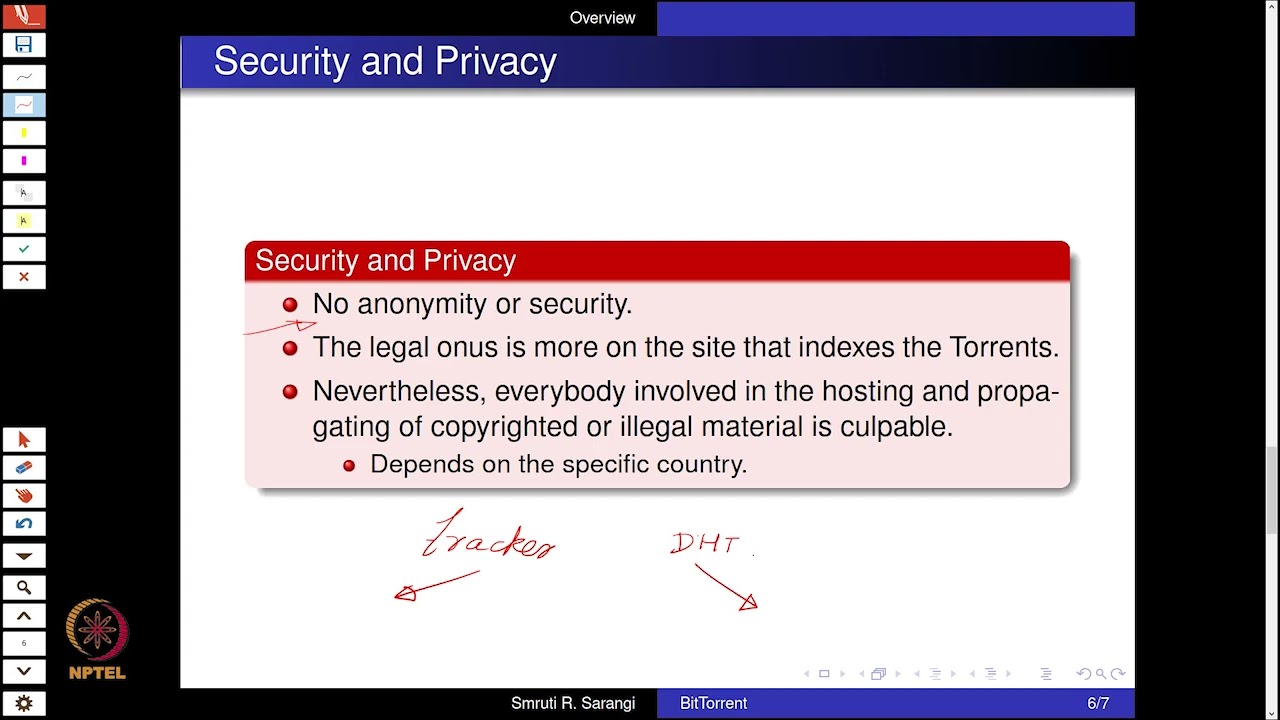
In case you are so rich that you have never even heard of torrenting, it is a peer-to-peer or rarely illegal file sharing system. When you run a torrent file, your client detects peers who already have game of throw um GTA um any illegal file that you want. Each P connection gives you a piece of your movie and eventually you collect all the pieces. So here's what we are going to do. Reader torrent file which gives us the address of tracker. Tracker is a centralized server that responds to get request. Then we'll request a list of peers from tracker. Next, we'll shake hands with the peers like a good boy.
And finally, download pieces and write to this. You can do this in any programming language that [music] you want. Yes, really. I won't force you.
Now, firstly, you're going to write a parser that decodes your torrent file from beenccoded to BD encoded. That is nothing but a dictionary. This is the BE encoded format. You'll write four simple functions that will each process a different data type and one function that decides which function to call.
After decoding the torrent data, you will see some very important values such as announce that gives you the trackers address and info that gives you info about the pieces. This will be of importance later. Don't forget it. You also need to write a function that converts BDE coded to be encoded. Yes, this is also plot relevant. This will be very useful. Next, you're going to calculate infohash. That is a hash value that uniquely represents the contents of your data. If even a single bite is changed in your Harry Potter movie, the hash value will drastically change. Just like an ID or a primary key that the tracker and your peers used to verify that they are sharing the same torrent even if they downloaded it from a different website. Now to calculate info hash, you'll need to convert the info dictionary back to be encoded format and calculate its SHA1 hash. Moving on to the second step. Now we know where the tracker lies and we just need to build a URL and send a request to the tracker so it can tell us where our peers are. This tracker also talks in the language of torrent. So we'll need to [music] decode its top secret message. Don't let the FBI know about it. Then you'll find out that the pods are written in bytes instead of numbers. So convert it into a list of IP plus port addresses and celebrate on making this far. Now the fun part begins. You see viewers are huge skeptics. They won't just share I want to eat your pancreas with anyone.
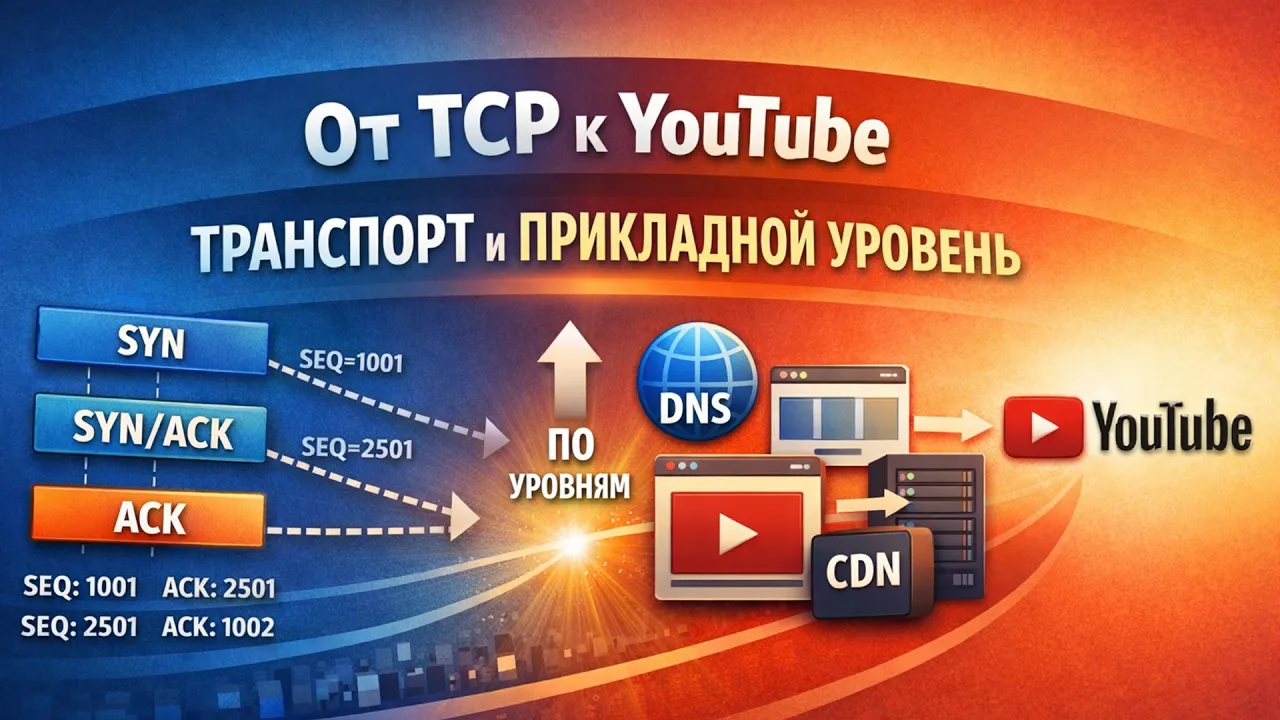
First you'll need to do a classic TCP handshake. Follow that by a bit torrent handshake where you'll send information like protocol name, info hash, and your ID. And the pure sends you back the exact same items. Why? Because it's the protocol. Next, we got to talk. The Bit Torrent protocol establishes a message format that all peers use to communicate. Each message starts with a four byt length prefix, a one byte length message ID and payload. The ID can be any of the numbers from 0 to 8 that represent a particular state.
Initially you are in a choke and not interested state. After the last handshake pure might send bitfield that tells you what pieces they have. You send an interested message proclaiming that you are interesting in downloading this piece. Then the pure sends you an unchoke message meaning they won't give you the sexual gratification anymore. I mean they are announcing that they are kind enough to send us that piece. The pure can also send us a choke message that means they are not kind enough to send us that piece. There's also have field meaning the pure has a field. It just says look I have this piece. Next we send a request message asking for one piece or whatever anime you are watching. And finally the pure starts sending us the piece to you with ID 7.
You can also cancel it using ID number eight. Here inside a while loop with a timeout in case the pure stops responding. You keep appending the P's received data to a hashmap until you have fully received that piece. Once downloaded you need to verify its hash.
Once all pieces are downloaded and verified, you write the file to the disk. You can later add a functionality to write the file piece by piece instead of writing only when the entire file is finished. Implementing this handshake is pretty simple. Once you know this, first create a bit torrent class with these constructor values. Then write the following definitions for TCP handshake, bit torrent handshake, send interested message, send request for a piece, a generic receive message, a generic handle message, and to close the connection. Then write a definition outside the class that downloads a specific piece from a specified pier.
And finally a last definition that reads the torrent file, calculates infohash peer list and tries to download all pieces from the same pier. After this is finished, you can upgrade to a concurrent model where you are downloading data from multiple peers. By the way, let me know in the comments if you can tell why most Bit Torrent clients use concurrency over threading.
If you've made it this far, then this final step is the most fun and satisfying part. In the concurrent model, you will need a piece manager that keeps track of pieces that are needed, in progress, and those who are finished. You'll make core routines for every pure. Each core routine will first get the bit field of a pure. Then download one of the pieces the pure has that is neither in downloaded nor in the progress set. The loop continues until all available pieces from that pure has been downloaded. Once all pieces have been downloaded, cancel all currently running task and save the file. The challenging part is to look out for race conditions. You need to strategically set locks on certain important [music] variables and code blocks or some really bad things can happen such as losing four nights of sleep and a quadrillion neurons. And you can take this project miles ahead. You can implement the rarest force algorithm for downloading pieces instead of the sequential algorithm that we are currently using.
You can add functionalities to pause and resume, upload support for peers, a TUI or GUI, magnet link and UDB support, a streaming mode to stream videos as they download, or somehow add AI and launch it as a startup. This is an epic video that I followed while creating this project. You can also simply follow these steps I mentioned in this video and take some help from Claude from time to time. If you get stuck, ask Charg GPD to create challenges for the next step for you to solve. There are certain parts such as calculating syntax for a1 hash or some bite calculation that you cannot [music] literally solve by yourself unless you are psychedelic or asking little helps from charge GPD. But instead of that you can also take reference of my code from my GitHub.
I've added lots of comments and neatly arrange it so anyone can easily follow along. Although I would admit that the best resource is simply code crafter subscription where they'll neatly guide you every step of the way. You also get access to tons of other really mind-blowing projects. This video is not sponsored by Code Crafters, but I do have an affiliate link that'll get you a 40% off. If your brain size increase by watching this video, kindly increase my subscriber count as well. Thanks for watching. Bye.
Up Next
15:49
Mutexes and Atomic Values in Go: Synchronization Guide
@anthonygg_
18.7K views•2022-12-06
87:26
Introduction to Secure Multiparty Computation with Yehuda Lindell
@fhe_org
7.7K views•2021-02-04
4:55
HTTP Requests Explained: GET, POST, PUT, DELETE
@codecademy
103.1K views•2021-10-07
19:25
Enigma Machine Mechanics: WWII Encryption Explained
@JaredOwen
13.2M views•2021-12-11
Related Study Plans & Knowledge Roadmaps
Structured learning paths in Computer Science
computer-science
Container Runtimes: Namespaces, Cgroups & Go
01Linux Systems & Go Programming Foundations
02The Core of Isolation: Chroot and Filesystems
03Linux Namespaces: Process Isolation
+ 3 more learning modules
32h6 modules
Explore Roadmap
computer-science
Building a CHIP-8 Emulator: Rust & CPU Basics
01Computer Architecture Foundations (Bits & Bytes)
02Rust Programming for Systems Development
03CHIP-8 Virtual Hardware Specifications
+ 2 more learning modules
32h5 modules
Explore Roadmap
computer-science
Building BitTorrent: Go, P2P & Concurrency
01Go Fundamentals & Concurrency
02Networking Foundations & P2P Architecture
03Bencode Parsing & Torrent Metadata
+ 3 more learning modules
26h6 modules
Explore Roadmap
computer-science
Actor Models (C++ Concurrency & Lock-Free)
01C++ Multi-Threading Foundations
02Thread Pools and Task Scheduling
03Atomics and Lock-Free Queue Design
+ 3 more learning modules
45h6 modules
Explore Roadmap