




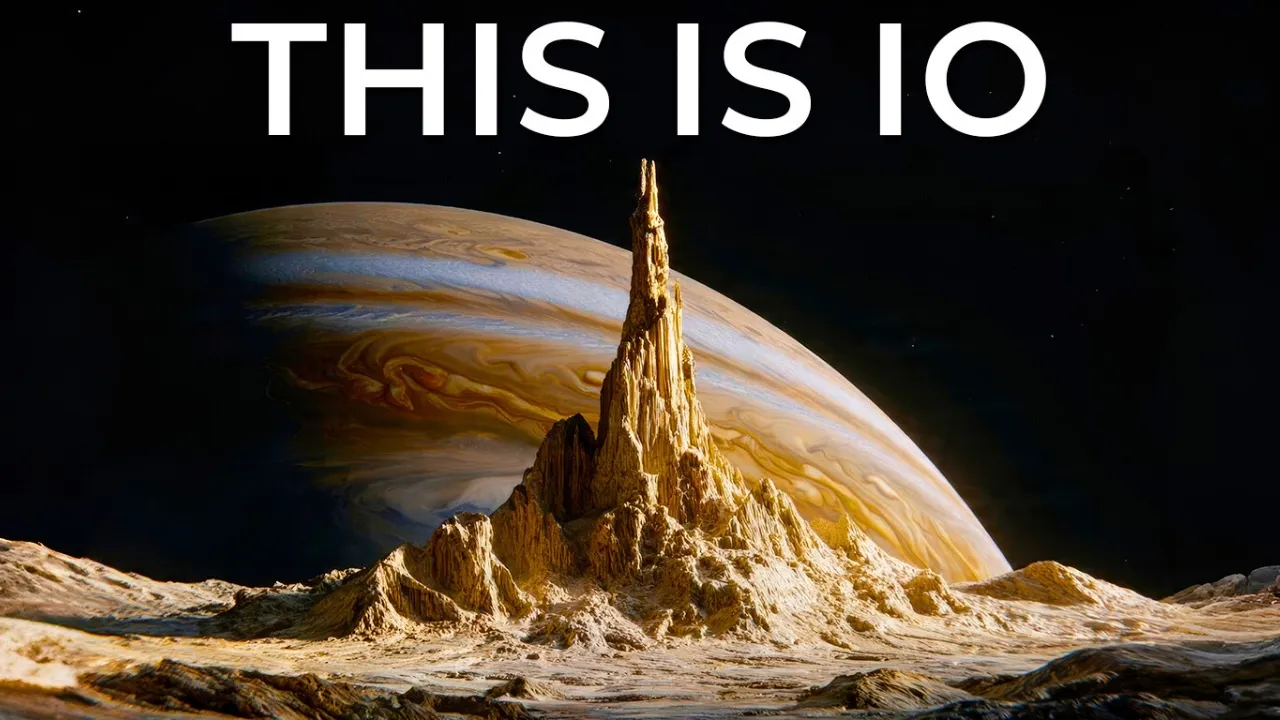







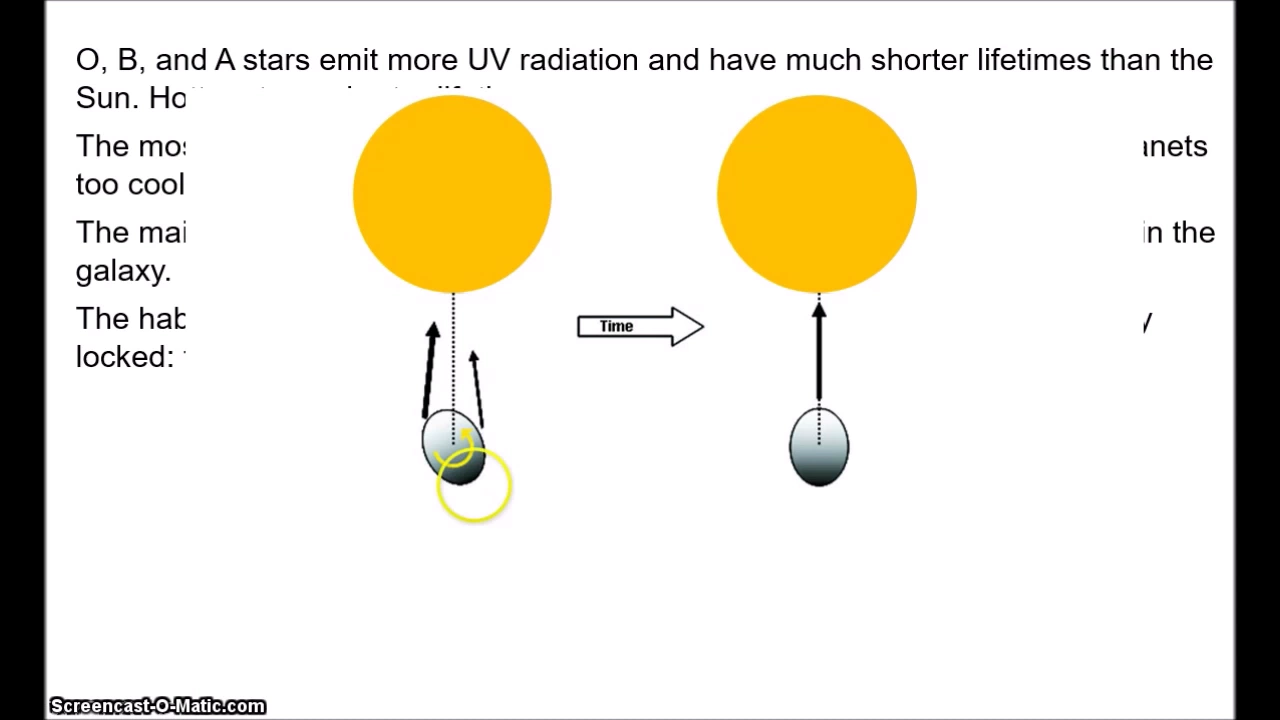








Tidal heating occurs when gravitational interactions between celestial bodies cause internal friction that generates heat, driving geological activity on moons like Io and Enceladus; this process is governed by the relationship between orbital energy, angular momentum, and torque, where the difference between the torque transferred from the planet and the change in orbital energy determines the amount of heat produced, with orbital resonance configurations amplifying these effects and allowing scientists to calculate heating rates based on observed orbital changes.
Tidal Heating in Enceladus and Io: Celestial Mechanics Explained
Added:Newton's Law of Universal Gravitation and Kepler's Laws of Planetary Motion to understand basic orbital dynamics.
The concept of tidal forces, specifically how gravitational gradient forces deform a celestial body.
Orbital resonance (such as the Laplace resonance), which maintains the eccentric orbits of these moons.
Basic thermodynamics, focusing on how mechanical energy (friction and deformation) is dissipated as thermal energy.
Astrobiology and the criteria for habitability, exploring how tidal heating creates subsurface oceans capable of supporting life.
Advanced geophysics and planetary volcanism, comparing Io's silicate volcanism to Enceladus's cryovolcanism.
Current and future space exploration missions, such as analyzing data from Cassini-Huygens and anticipating findings from the Europa Clipper and JUICE missions.
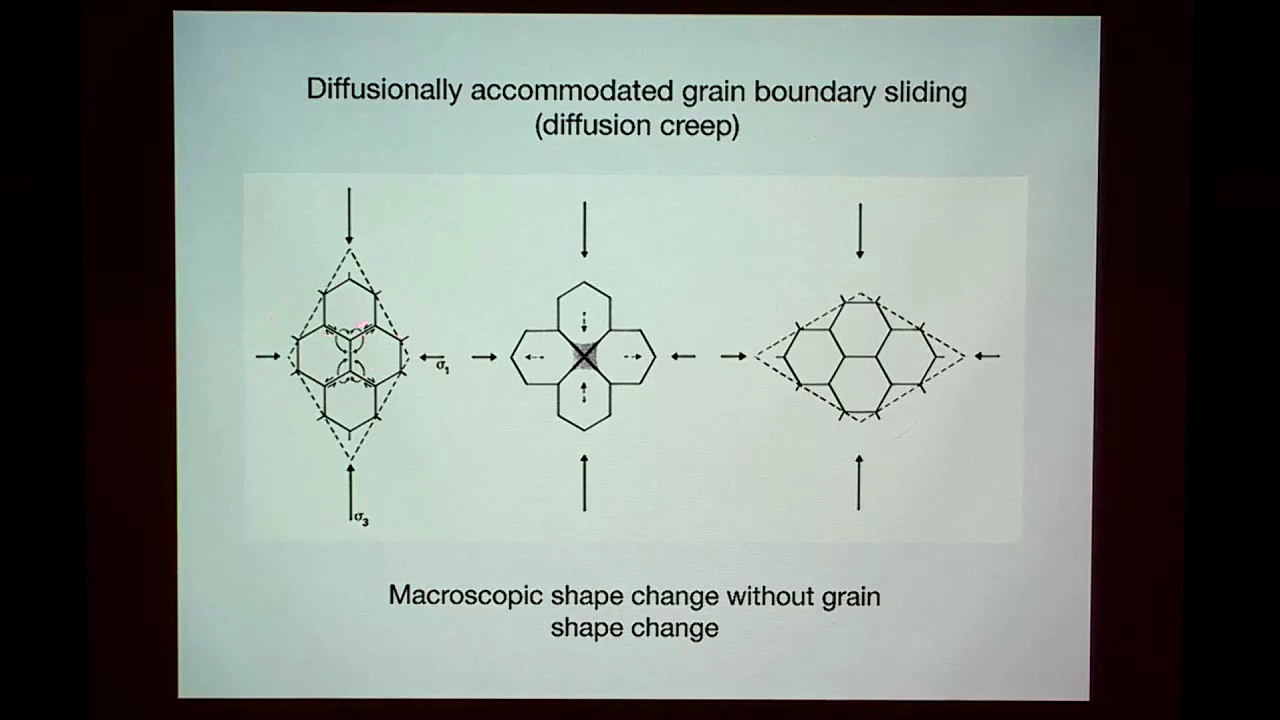
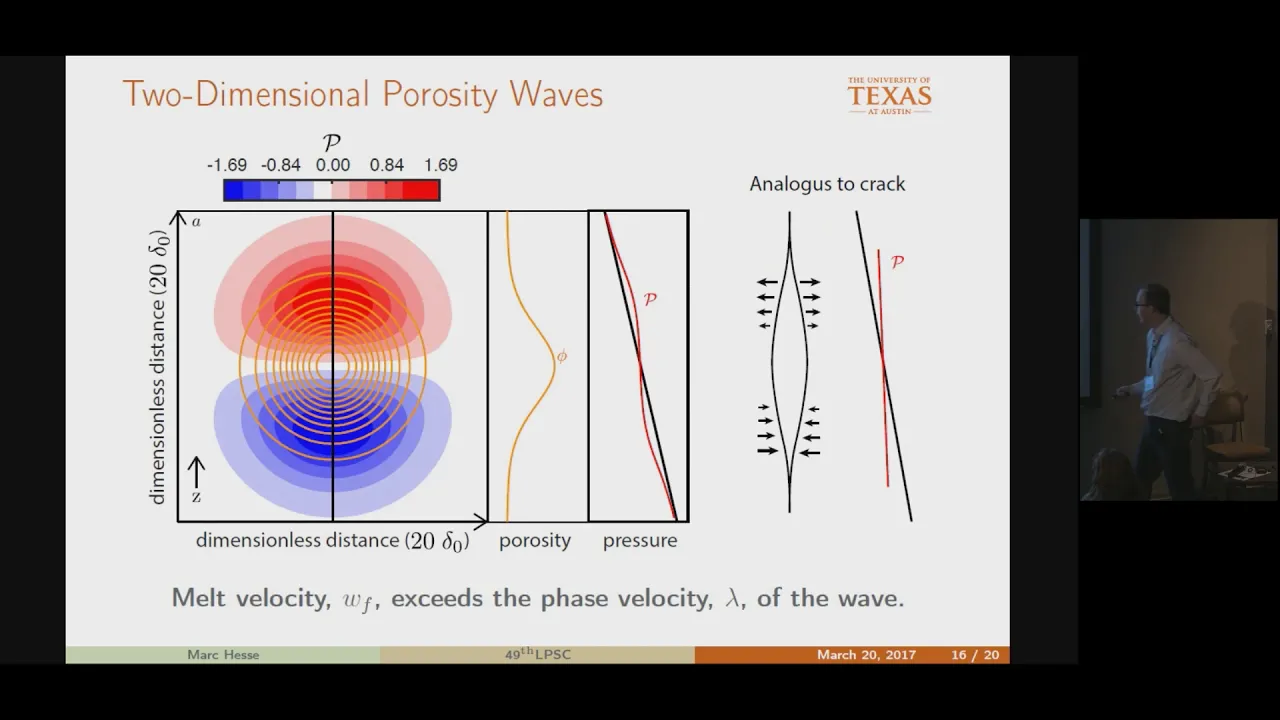
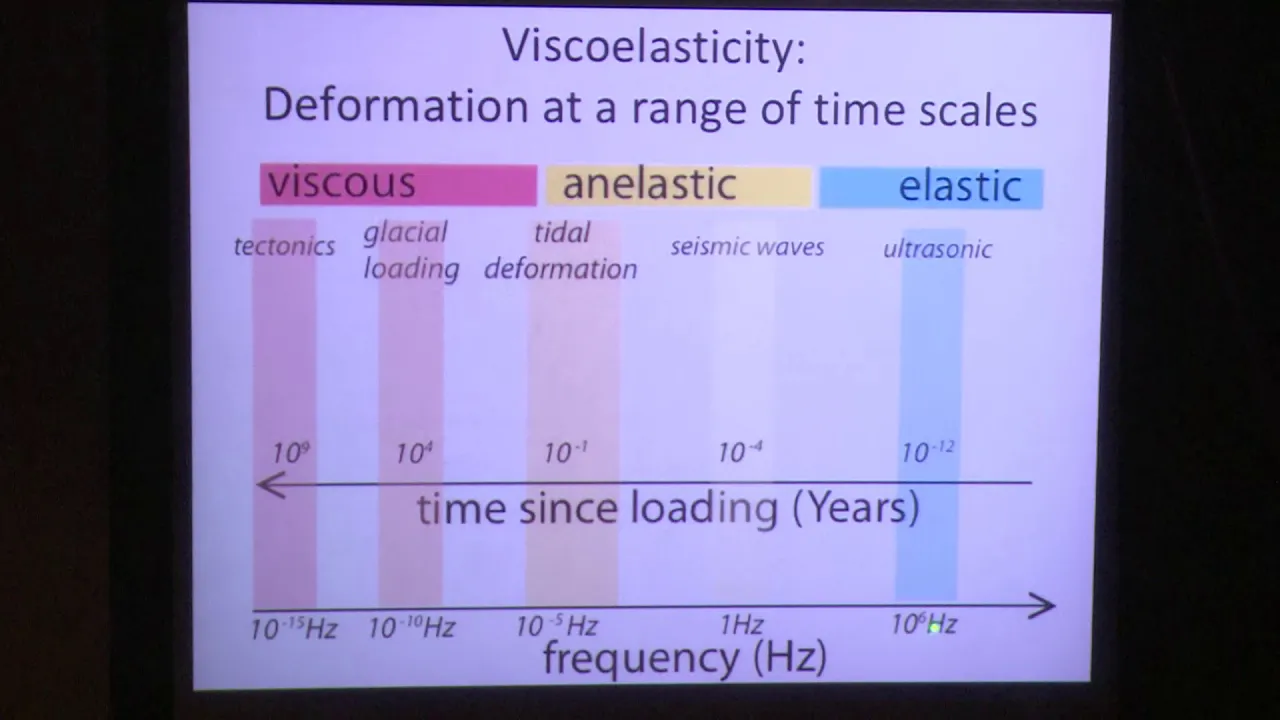
Mathematical modeling of viscoelastic deformation and heat transport mechanisms in planetary mantles and icy crusts.
3.8K views234likes16:33Original Release: 2013-10-15
no it's not one of those shitty advertisements it's just me with an announcement I have awoken an old website of mine from its long Slumber that's vum gates. here you can find all the material on the celestial mechanics episodes as well as some old Austrian comedy in the future I want to use the website as sort of a Blog but let's see how this turns out and Now for Something Completely Different [Music] Dr Jake abar possesses a PhD in physics from the University of Texas at Dallas recently he wrote an article titled youthful solar system bodies puzzle evolutionary scientists a synopsis of Dr AB Bear's article is as follows a feature story in a recent issue of the journal Nature described four solar system bodies that that are puzzling to evolutionary scientists specifically the article discussed the rings of Saturn two of Saturn's moons Enceladus and Titan and Jupiter's moon EO well PP saying if is a pleasure would be an exaggeration but upon suffering through your 3 minute and 34 second long delusion with regard to planetary science I feel morally obliged to elaborate on the inaccuracies your intellectual infidelity ENT s indeed after only watching the first 25 seconds of your rather unconventional sermon I can diagnose with atmost confidence that treatment is dangerously overdue thus I respectfully suggest that you assume the accustomed position in order to commence with the [Music] procedure before the fun begins let me quickly address the blatant appeal to Authority you started off with it seems creationists are very keen on cloaking their Tweddle under the pretense of Academia presumably under the misconception that everybody will accept it as un question questioningly as they do you know PP the number of acronyms before or after somebody's name does not necessarily Grant quality to the religiously motivated distortions that person may utter I guess that comes with the territory of those who subscribe to the idea that the whole universe was conjured from nothing at the behest of the celestial version of the NSA and that sad agency was incapable of keeping the wiggling dietry advisor from coing the two sex spots into educating themselves and we all know what you PP think of education but I digress in your video you ruminate the half digested lingual leftovers your pal Jak has cripp from an article in nature magazine I find this particularly ironic since your type make a habit of coughing at such sources when not in line with the Orthodoxy in this light might I remind you that the article in question is the facto not a scientific publication but a pellet ticker for the interested Layman I was therefore a bit arranged that your pal being the scientific Leviathan you make him out to be seems to have only graced from the appetizer and not the four main causes thus could it be that your friend Jake specifically selected what could be bent to support his presupposition and ignored everything else well let's find out the brightness of Saturn's rings is puzzling because after billions of years they should have been darkened by dust from comets and asteroids yet these rings are still brilliantly beautiful likewise watery geysers erupting from the South Pole of Saturn's moon Enceladus suggests that the Moon is giving off a great deal of heat yet this heat should die down relatively quickly secular researchers are also puzzled by the methane in Titan's atmosphere because sunlight degrades methane Titan's atmospheric methane should have been depleted after only a few tens of millions of years yet methane is still present in Titan's atmosphere likewise the extreme volcanic activity on Jupiter's moon EO seems incapable of being sustained for extremely long periods of time the observant spectator will have realized by now that this is the nature article from Celestial mechanics free in which I specifically addressed Ian Chu's somewhat unconventional musings regarding the chovan moon IO nevertheless I will to the benefit of both my audience and you PP cover all four phenomena mind you scientific honesty signifies as you obviously don't know that these matters cannot simply be Shrugged off in the pompous manner they were raised hence this video will concentrate on iO and Enceladus while I postpone treatment for Saturn's rings and the atmosphere of Titan until our second appointment now PP I suggest that you listen as closely as your president does IO and Enceladus are among the most fascinating bodies in the solar system IO named after Jupiter's hot L is the most volcanically active body in the solar system with volcanic plumes spewing dust hundreds of kilometers into space Enceladus on the other hand is encased in ice which gives him the high highest albo among bodies in the solar system cryo volcanoes at the South Pole shoot out large plumes of water vapor and ice crystals as well as organic substances that are the source of Saturn's earring in both cases the energy source for the geological activity is believed to be tidal dissipation in Celestial mechanics free I already presented a derivation for tidal heating here I want to outline the relation for the changing energy of a satellite from Cap's laws we know the energy of a satellite to be minus the gravitational constant time the mass of the planet times the mass of the satellite and divided by two times the semi- major axis of the satellite's orbit we use the angular momentum for a satellite on a capillarian orbit to substitute the semi major axis a and get an expression for the energy with L and e as parameters e is the eccentricity of the orbit the change in energy or power is given by the derivative of e with respect to time we can use the chain rule to express the differential as d e over d l * D l/ DT again L is the angular momentum and T represents time the first term gives us the following expression substituting L for Expression 2 gives us the square root of G * m / a cubed * 1 - e^ 2 now let the square root of G * m / a cubed be the orbital mean motion n and the equation can be simplified to n over the square < TK of 1 - e 2 in our case the eccentricity is a lot smaller than one thus the E over the L can be approximated as the orbital mean motion knowing that the derivative of L with respect to time gives the torque we arrive at the E over DT equal n * T so we have found an equation that relates the rate of change in energy to the mean motion and the torque transferred from the planet to the satellite let us assume that there are two satellites in resonance configuration so that the angular momentum can be exchanged between them orbital resonance occurs when the respective orbital periods of two satellites are related by a ratio of small integers both torque and energy would be distributed between the two satellites thus the total rate of energy transferred from the planet to the satellite system is n0 * t0 + N1 * T1 this changes the energy of the orbit and heats at least one satellite mathematically we can write the following expression whereas e0 and E1 are the capillarian energies of the satellites and H is the rate of heating so we find that tidal dissipation depends on the difference between the torque that is transferred from the planet to the satellites and the influence this has on the respective energies and thus the orbits now having presented my idea of tidal dissipation let's hear yours secular planetary scientists have proposed multiple hypotheses to explain these anomalies many of these explanations however assume that we just happen to be simultaneously viewing multiple short-lived astronomical phenomena however even secular scientists acknowledge that such a coincidence seems highly unlikely of course there is an hypothesis that could easily explain all four of these astronomical anomalies if the solar system were only thousands rather than billions ions of years old as implied by a straightforward reading of the Bible then the continued Brilliance of Saturn's rings the continued presence of methane in Titan's atmosphere and the continuing geological activity of EO in Enceladus would not be surprising as a matter of fact all of those things would actually be expected well PP let me remind you that the combined ignorance of you and your prompter does not necessitate the abandonment of fundamental physics six in favor of the mandering Poetry of bronze AG desert dwellers you see throughout history your lot have pompously ascribe the mysteries of nature to the absolute truth of a book and by doing so have been absolutely wrong so let's get back to these hypotheses the secular scientists presented and you deliberately ignored the ratio between the mean motions of two satellites is given by the relation seen here where n is the mean Motion in radians per seconds and a and b are integers in a resonance configuration Delta is zero for example 1 times the mean motion of Enceladus minus 2 * the mean motion of diona equals zero if this relation remains constant over time the two bodies are in resonance equilibrium to spare my audience's patience I will skip straight to the equilibrium condition with a the semi major axis of the orbit we find that in a resonance equilibrium the change of the semi major axis divided by the semi major axis is the same for both satellites now while we interpret the aforementioned equation for the change in orbital energy it would be advisable for up P to hold on tight and grit your teeth because this is going to sting a little in the case of Saturn and its moons the left hand side of equation 10 is positive so torque is transferred from Saturn to Enceladus observations conducted over the last 123 years show that Enceladus is evolving outward from Saturn at a rate of about 3 cm per year we know from equation one that the energy of the orbit is inversely proportional to the semi major axis if the orbit grows the change of orbital energy is positive further the equilibrium condition requires that the change in energy for any other satellite that shares resonance has the same sign so the first expression on the right hand side is also positive so the heat produced through tidal dissipation is torque transferred to the satellite system minus change in orbital energy to summarize from Capas laws of planetary motion we have derived a relation for the heat produced through tidal Heating we have done so by considering Two Moons in an equilibrium resonance configuration a moon that orbits a planet raises Ties on that planet if the planet rotates faster than the moon's orbital motion this tidle bulge is dragged slightly ahead because of this offset a portion of the gravitational pull between Saturn's tidal bulge and Enceladus is perpendicular to the connection line between the two bodies I.E there is a torque acting on the satellite this is of course the same process responsible for the recession of Earth's moon which has given rise to the similarly titled creationist mind fart but let's carry on with the agenda by multiplying the torque both moons receive by their average motions we get the first rightand term of the relation this of course affects the respective orbits the relation of the semi- major AIS of the orbit and the energy of a satellite is shown in this qualitative plot note that by convention the energy is defined negative let us assume that at Time Zero say in 2012 we measured the semi major axis and calculated the corresponding energy at time one say a year later we conducted the same measurement and found that the orbit and consequently the energy have grown in fact observations of Enceladus indicate that his orbit grows about 3 cm per year and hence the change in energy is positive in case of IO we find the opposite she moves closer towards Jupiter and thus the change in energy is negative since the orbital acceleration is mostly driven by the torque observations of the orbit also allow to estimate the torque as a consequence of thermodynamics the change of orbital energy will be smaller than the torque the difference is converted to heat and drives the volcanism previous theoretical models have assumed a much smaller transfer of torque from Saturn to its moons and have hence been unable to account for the observed heat flux from Enceladus and while your kind pompously ascribed the matter to big brother and his Entourage playing Celestial pingpong real scientists were hard at work to find the actual answers their recent analysis of long-term observations show that a much higher torque must be at work to account for the measured orbital acceleration as a conse quence eccentricity equilibrium for Enceladus can now account for the huge heat emitted from his South Pole in case of the choian Moon IO similar deliberations indicate a negative change in orbital energy and hence even a bigger amount of heating but Enceladus remains a puzzle still the new findings might well overturn the conventional wisdom regarding the formation of Saturn's moons even more intriguingly a large title ipation in Enceladus implies that the satellite probably possesses liquid water underneath the icy shell and where we find water we may also find [Music] [Applause] [Music] life
Up Next
39:34
Why Jet Engine Turbine Blades Don't Melt: Materials Science
@veritasium
9.3M views•2025-11-17

12:53
21cm Hyperfine Transition in Neutral Hydrogen: Radio Astronomy Basics
@AaronRobertParsons
12.4K views•2011-10-13

32:32
NMR Spin Physics I: Zeeman Effect, Resonance Condition & Larmor Frequency
@nptel-indianinstituteofsci8064
2.3K views•2024-01-17

27:14
Entropy and the Second Law of Thermodynamics Explained
@veritasium
27.5M views•2023-07-01
Related Study Plans & Knowledge Roadmaps
Structured learning paths in Physics
physics
Nuclear Physics (Decay, Fission & Reactors)
01Atomic Structure and the Binding Force
02Radioactive Decay and Half-Life
03Nuclear Fission Mechanics and Chain Reactions
+ 2 more learning modules
12h5 modules
Explore Roadmap
physics
Soft Matter (Polymers, Colloids & Rheology)
01Foundations of Soft Matter & Thermal Forces
02Polymer Physics and Macromolecules
03Colloids, Surfactants, and Self-Assembly
+ 2 more learning modules
38h5 modules
Explore Roadmap
physics
Analytical Mechanics: Lagrangian & Hamiltonian
01Mathematical Foundations: Calculus of Variations
02From Newtonian Mechanics to Constraint Dynamics
03The Principle of Least Action & Lagrangian Mechanics
+ 3 more learning modules
28h6 modules
Explore Roadmap
physics
General Relativity (Spacetime & Cosmology)
01Foundations of Relativity: Special Relativity
02The Geometry of Spacetime: Equivalence Principle & Curvature
03Einstein's Field Equations: The Mathematics of Gravity
+ 2 more learning modules
55h5 modules
Explore Roadmap