


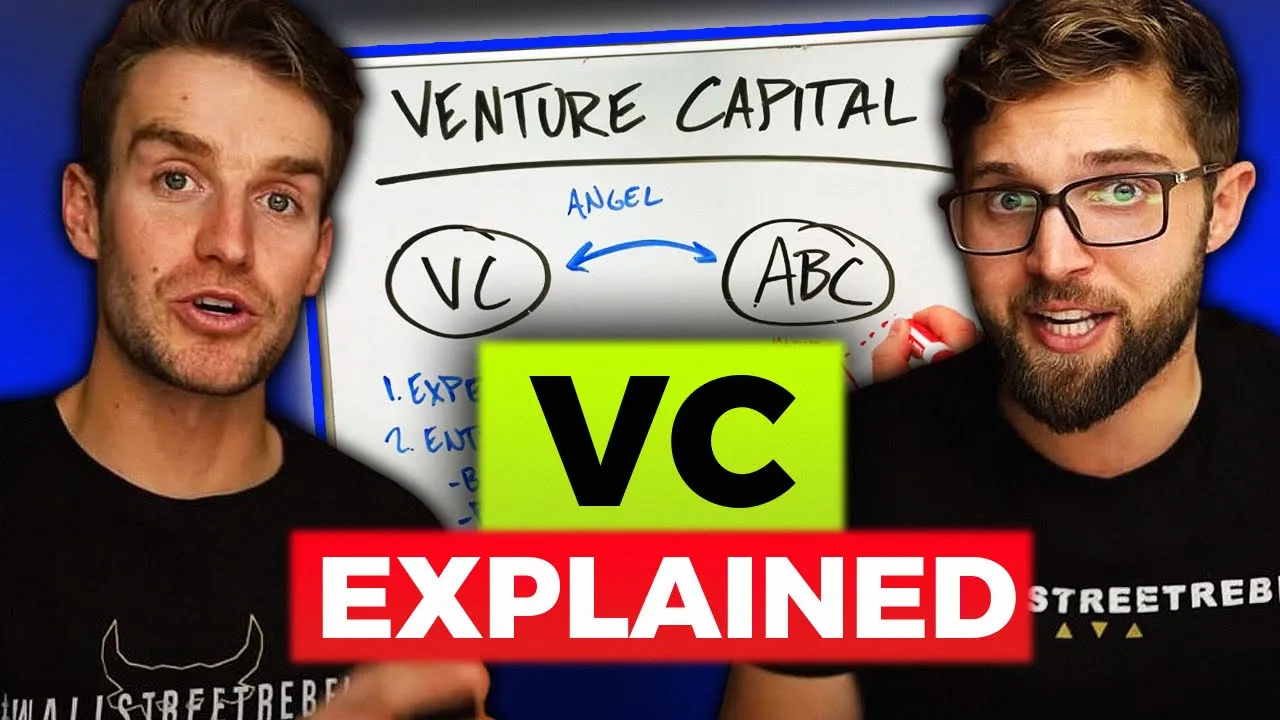

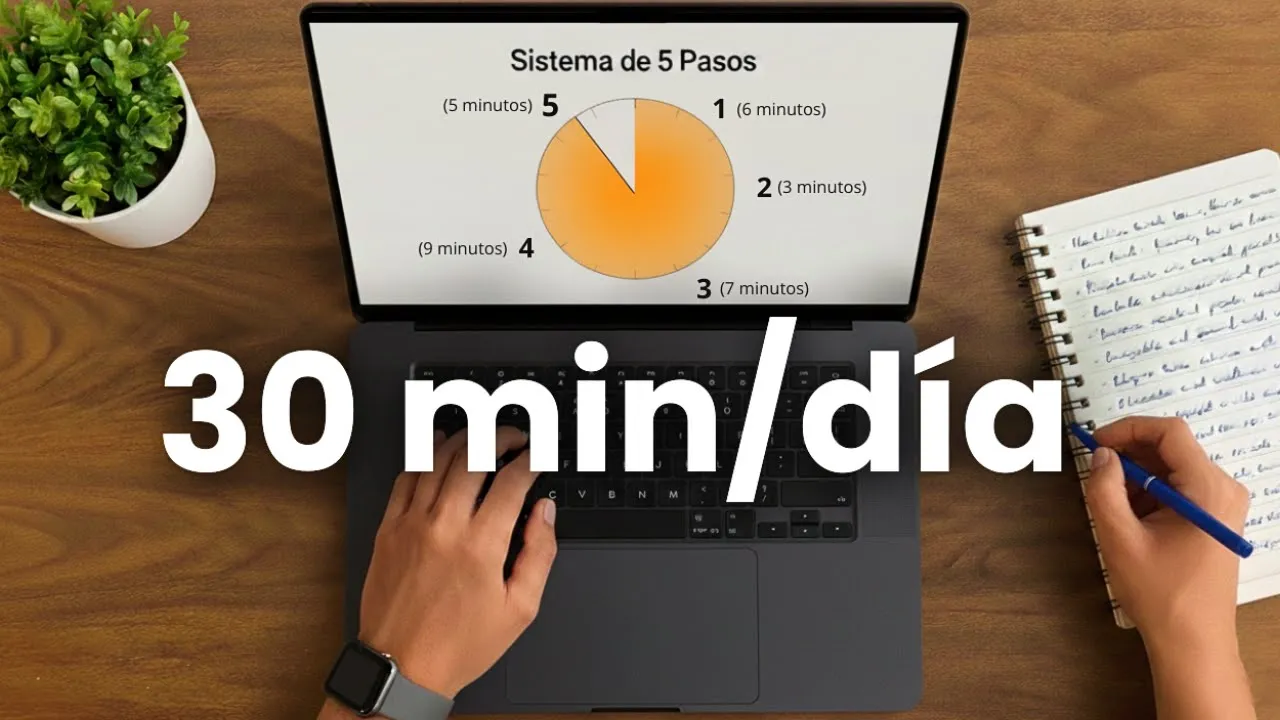


















A successful 30-second VC pitch requires: (1) a crystal-clear first line explaining exactly what your company does, (2) saying just enough to spark curiosity rather than providing all answers, (3) treating investor questions as gifts that reveal their interests and concerns, (4) presenting your solution as 'magical medicine' that will 'drip money,' (5) clearly articulating your competitive advantage, (6) demonstrating traction even at early stages, and (7) establishing why you are the ideal founder to lead the company.
Mastering the 30-Second Startup Pitch: A Guide to VC Funding
Added:Fundamentals of Venture Capital (VC): Understanding how startup financing works, the role of institutional investors, and what VCs look for in high-growth companies.
Defining a Value Proposition: The ability to clearly articulate the unique value a product or service delivers and the specific customer pain point it addresses.
Target Market Identification: Understanding how to segment a market and define the Addressable Market (TAM, SAM, SOM) for a business idea.
Basic Business Models: Familiarity with standard monetization strategies (e.g., SaaS, marketplace, transactional) and how startups generate revenue.
Designing a Comprehensive Pitch Deck: Expanding the 30-second pitch into a structured 10-to-15-slide presentation covering traction, team, and financial projections.
Investor Q&A and Objection Handling: Developing strategies to answer rigorous follow-up questions from investors regarding competition, unit economics, and risk mitigation.
Startup Valuation and Financial Modeling: Creating realistic 3-to-5-year financial models and understanding how to determine an early-stage company's valuation.
Term Sheet Negotiation: Learning the key legal and financial terms, such as dilution, liquidation preferences, and board seats, involved in closing a seed or Series A round.
84.2K views1.4Klikes8:16Original Release: 2025-05-01
Hi, I'm Brian. This is Humble Conviction and we're going to do the seven essentials for a killer 30 secondond pitch. Now, people say that I am obsessed with 30 seconds. Why 30 seconds for a pitch? Why not 45, 60, 15 seconds?
And here's why. It's the natural simulation of the way we actually talk in the real world. So, say you're at a cocktail party and there are investors there, anyone there. They come up and say, "Oh, hey, when your name is Brian, what are you working on?" And therefore, I have one line that's ready to go that describes perfectly what I do. Then they say, "Oh, that's interesting." And what do I do? I don't give them like an hour.
I give them a few more sentences. That's 30 seconds. You have a little back and forth. And hopefully at the end of it, they say, "Oh, well, uh, that's really interesting. I'm an investor. Uh, let's set up a meeting." And there you go.
Boom. You've just moved the ball down the field. And that's the next step you want. So, let's go over these, uh, seven things. Number one, make sure that your first line is crystal clear and explains exactly what the company does. So, the way to think about it is if the lights went out during a presentation after that first sentence, everybody would still know what you do. You don't have to say any of the rest. And I actually have here I wrote a really good one for you as an example to make it uh make it concrete. So, here's a good one. We are an enterprise software company that helps midsized e-commerce companies train their AI models like Fortune 500 companies do at a fraction of the price.
Let's break that apart and see why it's so good. So, I mentioned what it is.
It's enterprise software, who it's for, midsize e-commerce companies. What does it do? It trains AI models. And the benefit is that it's both less expensive, but it also because I mentioned Fortune 500, it suggests that you're getting an increased level of sophistication from what you would usually have. Um, so that's a really great way. And if you heard that, there would be no way to misunderstand what that company does. Even if you have the perfect oneliner, there's no way you can say everything in a 30-cond pitch. I know that when you do your investor deck, there's the whole list of 12 things you're supposed to do. market size, competition, traction, your founder bio, your previous companies, all of that. There is no way you can do that in 30 seconds. So, the whole goal is to say just enough and leave them wanting more. And that gets me into number three. The whole goal of this pitch is to get questions, not answers.
And here's something that I think of.
It's a mindset that's incredibly valuable, almost indispensable. You're going to get a lot of questions and they're going to seem overwhelming.
you're not going to know how to answer.
You may not even understand the question and you may feel under attack. But in fact, the mindset is that every question is a gift. Because think about it, you're not a mind readader. The investor is telling you exactly what they think, what they're interested in, what they're curious about, what they're confused by, what they're skeptical of. You do not have to guess. They are telling you exactly what they want you to say. And that is a gift. And we all love gifts.
So don't keep your answers too long.
Keep them short because the less you talk, the more time there is for gifts.
Uh, and we all love gifts. Number four, your solution should sound like a magical medicine, not a helpful vitamin.
Investors see hundreds of companies.
They've seen companies like yours. I guarantee it. But when they see yours, they need to say, "Oh my god, if they can actually build that and build this business around that, that is magic and it's going to be dripping money." Now, that's a phrase I'm stealing from a favorite investor of mine. I didn't ask her permission, so I'm not going to say who it is, but dripping money. So, when you give your explanation to the company, ask someone else, "Does that sound like a magical medicine? Does it sound magical?" Number five, be incredibly clear why you're different.
Address the competition and own that point. The worst thing you can say when an investor asks you about competition is, "Oh, we don't have any competition."
Absolutely untrue in every case. You're just going to look stupid if you say that. In fact, the investors probably seen a competitive company if they're interested in your space the day before, the week before. So, the best thing to do is make sure you really understand who else is out there in the marketplace. Be super confident about it. Be knowledgeable. There are different examples of companies that are trying to do what you do and they're different in some ways and similar in other ways. Maybe it's an incumbent big company software that you're trying to displace. Maybe it's another startup. A lot of people say, "Oh, there's a startup but they're smaller than we are, so they don't matter." Yeah. Well, you got to address that those guys, too. So, just be honest with yourself. You've figured this out. You've built this product. I am sure that there are ways that you are different and better. And just make sure that you know what those are and you're prepared to address them.
Number six, if you don't mention traction with your company, investors will assume you have none. I work with so many companies that are super early stage. Their product isn't built yet.
They don't have customers. They don't have revenue. They don't even know what they're going to charge for yet. And yet, I'm here to say that every single one of them has some kind of traction they can speak to. They have probably done customer discovery. They probably have a unique insight. Maybe they have an app that's not released yet, but it's slated for release in Q4. Who knows if it's actually going to come out in Q4 or not, but if you're working towards it, you can say it and put it in a positive light. Um, never lie about your traction, but there's always something you've done. And hell, if you've incorporated the company, then you've have some traction and you should mention that. Even if you say, "We just incorporated three weeks ago and we already have three beta users." Now, the beta users could be friends of yours who have tried a wireframe and are excited about the concept. So, don't push the truth too far, but there's always something you can point to as traction.
And number seven, why are you the best person in the world to build this company? You know, sometimes it's things you would expect like your professional experience or your background or the education you have, but in the end, it really is whatever it takes for you to be a reliable narrator to the investor.
They should watch you. And frankly, that's a lot of humble conviction.
That's why this channel is called humble conviction. It's the way you communicate yourself. It's you should just exude leadership that I'm the right person to run this company. There are examples where great founders have no actual professional background in the area that they're building in. You know, we call them tourists, not settlers. But you can turn that in your advantage. I had a company that's just raised money that I worked with very closely. And it was uh for seniors or recent retirees who were trying to address loneliness in their lives. Uh and they have a platform that gives them all kinds of activities and social connections. And the founder, she had no background in senior services, in that kind of thing. But what she did have is she had a personal story about how her parents had retired and she saw them out of sorts, not enough to do, lonely, and she said there had to be a better way. So she set out to make a solution for this. And that company got funded. It's a great company. I have very high hopes for it. and despite the lack of a professional background. Those are seven elements that I see time and again for successful 30 secondond pitches. Now, you'll notice that it wasn't specific things you need to talk about. It's the ways to talk about the things you choose to include in your 30 secondond pitch because you can't include everything, just the things that are going to leave them wanting more that will get you that second meeting that can eventually lead to investment.
I hope you found this video helpful. If you did, let's please help spread the word. What do they say on YouTube? They say like, subscribe, comment, uh tell a friend about it. Whatever you do, let's do some great pitching. Pitch strong and stay humble.
Up Next

86:10
Fundraising Strategies for Startups: Pitch Decks and Investor Types
@ethis8778
122 views•2020-09-10

46:36
Retention Habits of Top DTC Ecommerce Brands Revealed
@SendItPodcast
44K views•2026-03-03

15:23
Decoy Effect: How Pricing Psychology Influences Consumer Spending
@bobinvestsUS
90K views•2026-01-05

17:30
The Planned Obsolescence of Light Bulbs and Tech
@veritasium
25.3M views•2021-03-26
Related Study Plans & Knowledge Roadmaps
Structured learning paths in Business
business
Pop-Up Retail: Strategy, Design & Execution
01Introduction to Pop-Up Retail & Strategic Goal Setting
02Budgeting, Site Selection, and Legal Essentials
03Experiential Retail Design & Visual Merchandising
+ 2 more learning modules
15h5 modules
Explore Roadmap
business
Reg CF: Startup Funding, Marketing & Launch
01Introduction to Equity Crowdfunding & Reg CF
02Platform Selection & Legal Preparation
03Crafting High-Converting Campaign Assets
+ 2 more learning modules
14h5 modules
Explore Roadmap
business
Productized Services: Scaling Solo Freelance
01Foundations of Productized Services
02Packaging and Scope Definition
03Pricing and Subscription Models
+ 2 more learning modules
15h5 modules
Explore Roadmap
business
Gov Procurement: Find, Bid & Win Contracts
01Introduction to Government Procurement & Business Setup
02Small Business Certifications & Set-Asides
03Finding and Analyzing Contract Opportunities
+ 2 more learning modules
14h5 modules
Explore Roadmap