






















This video analyzes 15 horror films where directors manipulate audience perception by making viewers emotionally invested in characters who are secretly the villains, demonstrating how psychological horror exploits human empathy and trust to create profound narrative betrayal through techniques like unreliable narrators, hidden identities, and psychological manipulation.
Twist Endings in Horror Cinema: The Villain as Protagonist
Added:Understanding of classical narrative structure, specifically the traditional roles of protagonist and antagonist.
Familiarity with standard horror genre tropes, conventions, and audience expectations.
The concept of the 'unreliable narrator' and how perspective shapes audience empathy.
Basic narrative mechanics of foreshadowing, red herrings, and dramatic irony.
Advanced analysis of audience psychology, exploring how moral alignment and cognitive dissonance affect viewer engagement.
Screenwriting techniques for successfully executing plot twists, including clue planting and retroactively coherent structures.
Investigation of post-modern cinema and deconstructive storytelling across other genres (e.g., neo-noir, psychological thrillers).
An exploration of the philosophical and ethical implications of the antihero and villain-protagonist in literature and media.
390.3K views13.7Klikes27:30Original Release: 2025-10-02
You know that sick feeling when you realize that you've been played? You spent two hours cheering for someone who turns out to be a complete psycho? Yeah.
Well, these movies, they didn't just trick you, they made you an accomplice.
Because these are horror movies where you didn't realize one of the main characters was secretly the villain all along. Let's start with Shudder Island.
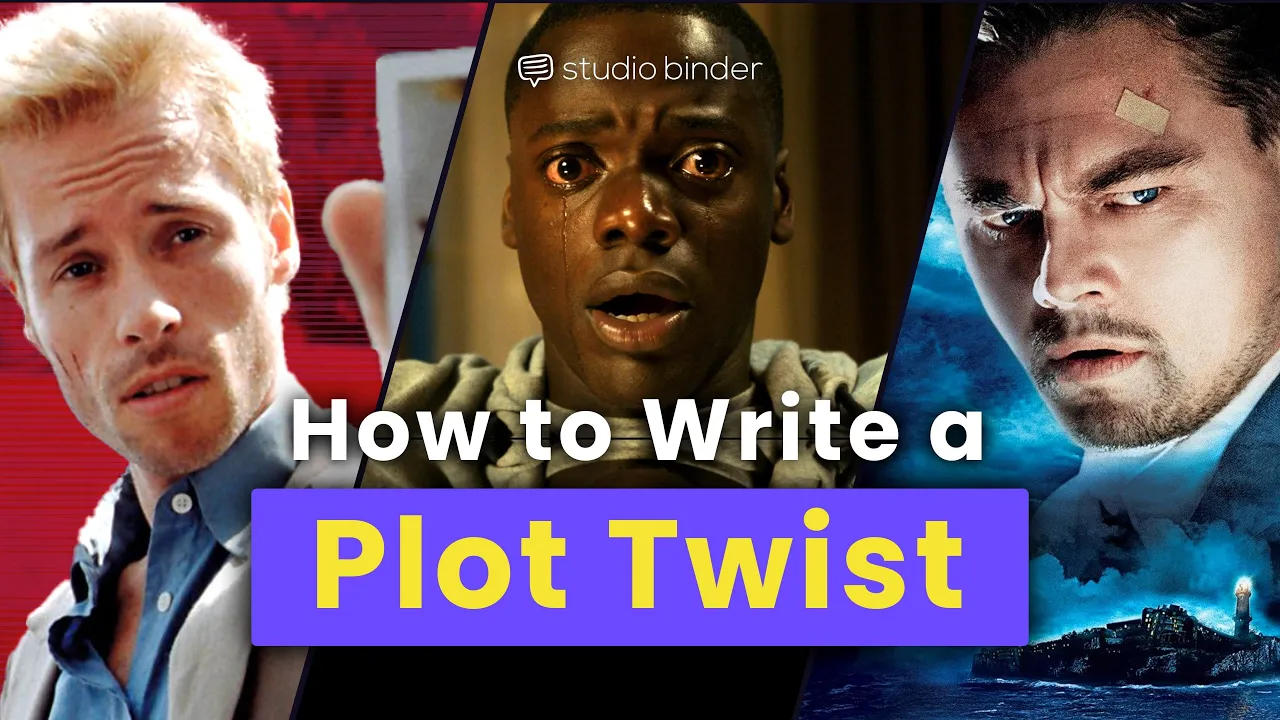
Leonardo DiCaprio shows up on a creepy island playing a US marshal named Teddy Daniels. You're immediately on his side.
Guys got trauma from the war. His wife died in a fire. And now he's stuck investigating some missing patient at this nightmare asylum. Classic hero stuff, right? You're watching him fight against these sketchy doctors who are obviously running some evil experiment program. But here's where Martin Scorsesei gets sneaky. The whole time you're thinking Teddy's the good guy exposing corruption. He's actually patient 67 having an elaborate breakdown. His real name is Andrew Leus and he killed his wife after she drowned their kids. The entire investigation, yeah, it's made up. his partner Chuck.
Yeah, that's actually his psychiatrist playing along with this expensive therapy session. The really messed up part is how well this works on a rewatch. Every weird reaction from the staff makes perfect sense when you know they're all babysitting a delusional murderer. When guards watch him too closely, when his partner asks obvious questions, when patients give him strange looks, they're not suspicious of the hero. They're worried about the patient having another episode. DiCaprio sells this so hard that even when the truth comes out, part of you still wants to believe Teddy's version. That final scene where he maybe chooses labbotomy over facing his guilt, chef's kiss. The guy would rather have his brain scrambled than admit he's the monster he spent the whole movie hunting. You invested 2 and 1/2 hours rooting for a child killer. And Scorsesei made sure you'd feel gross about it afterwards.
And speaking of dead people you didn't see coming, let's talk about the others.
Nicole Kidman plays Grace. this super religious mother protecting her two kids from what seems like ghosts haunting their Victorian mansion. She's doing everything right, hiring help, keeping the curtains drawn because her kids are allergic to light. Hold up. Allergic to light? Hm, that's a little fishy. You know, she's just trying to maintain some normality after her husband went off to war. Average girly pop things in the 1960s or whatever time period this is from. You know, you're completely on her side because she's just a mom dealing with the supernatural [ __ ] The movie builds this whole atmosphere where Grace is the victim. Strange noises, moving furniture, her kids talking to invisible people. Obviously, the house is haunted and this poor woman is just trying to keep her family safe. When she finds old photographs of dead people in her house, you're thinking, "These ghosts need to get a hobby and leave this poor single mother alone." Then the rug gets pulled out from under you.
Grace and her kids aren't being haunted.
They are the haunting. She killed her kids in a fit of madness and then took her own life. And now they're the spirits terrorizing the new living owners. Those ghosts she was so scared of. Yeah, that was just a normal family trying to hold a seance to figure out why their house was so messed up. What makes this twist brutal is that Grace was genuinely trying to protect her kids. Even as a ghost, she was still trying to be a good mom. Dead children in a house that isn't theirs anymore that she also killed. Uh, you know, the movie doesn't make her evil, just tragic. Oh, she's kind of evil. But she spent the whole time sympathizing with a woman who committed murder. And the film never lets you feel bad about this sympathy. The scariest part isn't even the supernatural stuff. It's realizing how easily the movie made you root for someone who just killed their kids.
Also, YouTube just announced a new feature called hype, where you can help smaller creators like me get our videos seen to more people. So, if you could give this video some hype, that would be greatly appreciated. But please, Flapjack is going to kick me out in the street. Look at that face. It is pure evil.
But at least Grace had supernatural excuses for her behavior. Because in Secret Window, Johnny Depp's playing this divorced writer named Mort, who's basically every author's worst nightmare. Stuck in a cabin, can't write, and some creepy guy from Mississippi shows up claiming Mort stole his story. I hate when those guys from Mississippi are always trying to come get [ __ ] from me. Now, if you've ever met a writer, you should know that they're already half crazy on a good day. This is one of my best friends, Brad Martin. Let me tell you, he is a nut job. He cannot be trusted with his pen and paper. So, yeah. Anyways, yeah, Mort seems pretty normal for someone dealing with plagiarism accusations in a messy divorce. This farmer guy, John Shooter, keeps escalating things. He kills Mort's dog, burns down his house, and murders people Morton knows. It's standard stalker behavior. Except Mort can't prove he wrote his story first because, wouldn't you know it, all of his evidence keeps disappearing. You're watching this poor guy get terrorized by some unhinged fan. And honestly, you kind of feel bad for him. But turns out Mort's been having full-on conversations with himself in crazy cuckoo land this whole time. Just like my girlfriend John Shooter doesn't exist. He's just Mort's split personality doing all the murdering while Mort blacks out and forgets. The whole plagiarism thing was Mort's brain cooking up a reason to justify killing his cheating ex-wife and her boyfriend. Classic writer move.
Honestly can't handle real life, so he creates an elaborate fictional excuse for murder. You know, Stephen King really nailed the psychology here.
Writers already talk to imaginary characters all day and themselves, so having one talk back and convince you to commit felonies isn't the biggest stretch of all time. The movie even has Mort literally arguing with himself in mirrors, but you think he's just practicing what he'll say to shooter. By the end, Mort's happily munching corn he grew over his victim's graves, completely at peace with being a cannibal murderer. The guy went from sympathetic divorced dad to backwoods serial killer and somehow made it look reasonable. But of course, a Family Guy can be way more twisted than writers.
And no, I don't mean Peter Griffin. Get Peter Griffin out of here. Get back in the corner, Peter.
In Frailty, Bill Paxton shows up as this single dad who gets visions from God telling him to kill demons. Except these demons look exactly like regular people, and his demon hunting toolkit is just an axe and some work gloves. His two young sons watch dad chop up neighbors while he explains this is holy work and they're saving the world. The story gets told through flashbacks by one of the sons, Fenton, who's now grown up and turning in his brother Adam to the FBI for continuing dad's murder spree.
Fenton's clearly the good kid who questioned the insanity while Adam bought into the whole religious psycho thing. You're rooting for Fenton because he's the only sane person in this fundamentalist nightmare family. Except the dad's been dead for years, and the guy telling the story is actually Adam, and he just killed the real Fenton for being a demon. Adam's been running around using his dead brother's name while continuing the family business of religiously motivated murder. And the FBI agent he's confessing to, he's also on God's hit list, apparently. Here's where it gets really weird. The movie suggests maybe dad wasn't completely crazy. Every person they killed turns out to have been a genuine scumbag with dark secrets. So, either this family had incredible luck picking bad people to murder, or Bill Paxton actually did have some kind of divine insight into people's souls. Anyways, Adam walks out of the police station completely unnoticed because apparently witnesses can't see him when he's doing God's work. The guy's got supernatural protection for his holy killing spree.
The movie then ends with Adam living his best life as a rose garden owner, presumably still getting heavenly murder assignments between watering schedules.
Okay, killer gods aside, multiple personalities make everything more complicated in movies, especially in Identity. 10 strangers get stuck at a desert motel during a storm and they start dying one by one. Classic setup, right? There's John Cusack playing an ex- cop turned limo driver who becomes the unofficial leader trying to keep everyone alive. Normal guy, good instincts, exactly who you'd want in charge during a murder spree situation.
The movie plays out like a standard who done it with emergency meetings and sussy buck events and everything.
Someone's picking off the guests and you're trying to figure out which one is the killer. Kusak's character Ed is doing detective work, being helpful and clearly positioned as the hero who's going to solve this mess and save whoever's left standing. Then the movie just throws logic out the window. None of these people are real. Hell, I'm not even real. You're not even watching a video right now. You're locked in an insane asylum. You need to get help. Get help. Get help. Get help. Get help. Just kidding. Just like me, they were all personalities inside the head of some convicted murderer named Malcolm Rivers who has a multiple personality disorder.
The whole motel scenario is happening in his brain while doctors try to cure him by making his personalities fight it out. Ed wins. Kills the bad personality and case closed. Right. Wrong. Quiet little kid personality was the real psycho the whole time. And he just played dead while Ed took out the competition. Malcolm gets cured and released from the hospital, except now the killer kid is running the show. The guy walks out of psychiatric care with a child's mind and enjoys murder, which seems suboptimal from a public safety standpoint. You spent 90 minutes rooting for Ed to be the last man standing, not knowing you were basically cheering for one mental illness to beat another mental illness in Brain Thunderdome. The hero you wanted to survive was just the appetizer. The main dinner feature was a 10-year-old with homicidal tendencies and adult strength. But honestly, that's not that scary because small towns have their own special brand of crazy. In My Bloody Valentine 3D, 3D is very important. Jensen Ackles comes back to his hometown after a mining accident killed a bunch of people 10 years earlier. He's the mine owner's son, and he feels guilty about the whole thing.
Just wants to sell the property and get out. You know, reasonable response to having your family business turn into a death trap. The problem is someone in mining gear starts murdering locals the minute Tom gets back to town. It could be the ghost of Harry Warden, the original psycho miner who went nuts and killed people before supposedly dying in the accident. It could be someone else using the mining gear to frame a dead guy. Either way, Tom seems like a target, not a threat. The movie throws suspects at you left and right. Is it the sheriff, the deputy? Some other towny with a grudge? F keeps almost getting killed by this mining gear maniac. So obviously he's not the problem. Right. Right. Well, the guy can barely handle being back in his hometown without having panic attacks, much less coordinate an elaborate murder spree.
Yeah, you saw it coming. Tom's been the killer the whole time. His brain split after the mining trauma, and he created a hairy warden personality to handle all the murdering. He dug up the original psycho's gear and went to town on anyone he thought deserved it. Well, his conscious mind just blanked out during the murder parts. The really twisted part is that Tom genuinely doesn't know he's doing it. He's having full conversations with imaginary Harry, getting mad at this other guy for ruining his life, completely unaware that he is the other guy. The dude managed to gaslight himself into thinking he was the victim of his own murder spree. Just like I gaslight myself into thinking I'm the victim in my own life story. The final scene shows Tom escaping disguise as a rescue worker, still totally insane and ready to keep the mining tradition alive. That can't be that scary because asylums make everything worse. Obviously, in session 9, Gordon's just trying to run his Abbyus removal crew at this abandoned mental hospital. Guys, fun fact, don't eat a bestus. It's not crunchy cereal. I know one of you was commenting that in the last videos. Do not eat a bestus, please, or I'll tell your mom and dad.
Anyways, Gordon's got a newborn at home.
He needs the work and honestly seems like the most normal blue collar dad that you could ask for. His crew finds old therapy tapes of some patient with multiple personalities, including one called Simon, who sounds genuinely evil.
While everyone's getting creeped out by the tapes, Gordon's trying to keep his guys focused on the job. He's stressed about money, sure, but who is it when you got a baby, and you're scraping asbestous out of a horror movie set for a living. Meanwhile, his crew starts disappearing one by one, and the whole place feels cursed. Simon's voice on those old recordings keeps talking about living in the weak and the wounded, which is creepy psychiatric stuff that makes everyone jumpy. Gordon seems as freaked out as anyone else, just trying to finish this nightmare job and get home to his family. The problem is Gordon, the standup gentleman he is, killed his wife and baby days before the job started. He's not a good guy. He just doesn't remember doing it because his brain completely snapped from the stress. The asylum's evil atmosphere found the perfect broken mind to work with. and how Gordon's been murdering his crew while thinking he's the victim of some supernatural force. That gentle family man that we've been rooting for has been methodolically killing his co-workers and talking to himself like two different people. The job site isn't haunted. Gordon brought the horror with him. The last scene shows him having a complete breakdown, babbling into a dead phone line about being sorry for things he can't quite remember doing. You just watched a grieving father try to hold it together at work, not knowing you were actually watching a murderer's final mental collapse. But let's move on to a horror movie where the case actually gets solved. Let's talk about Angel Hart. Mickey Roer plays Harry Angel.
This private detective in 1950s New York who gets hired to track down a missing singer named Johnny Favorite. It's a straightforward case, decent money, and Harry seems like your standard noir protagonist. Tough, cynical, you know, good at his job. His client is this well-dressed guy named Louiswis Cipher who wants to find Johnny because of some old debt. Harry takes the job and starts following leads through New York and New Orleans. But everyone connected to the case keeps turning up dead in increasingly brutal ways. Harry's having nightmares, memory problems, nosebleleeds, all the stress of working a case where witnesses keep getting murdered. Robert Dairo is playing Louis Cipher. And if you didn't catch the name sounds exactly like Lucifer, then you're probably the type of person that also thinks the WWE is real, just like the Queen of England and the Tooth Fairy.
Still, Harry doesn't figure that out either, and neither do most viewers on first watch because who expects the devil to show up in their detective story. In fact, Harry's been investigating himself this whole time.
He is Johnny favorite, the guy sold his soul to Satan years ago, then tried to escape the deal by stealing someone else's identity and becoming Harry Angel. All those murdered witnesses.
Yeah, Harry killed them during blackouts while his repressed memories fought to stay buried. Lewis Cipher isn't just his client. He's the devil coming to collect on Johnny's debt. Those memory lapses and nightmares were Harry's mind trying to protect him from remembering that he's actually a soul settling murderer who's been running from hell's collections department. The movie ends with Harry descending into what's obviously the underworld, having spent 2 hours helping Satan track down his own damn soul. The guy literally solved the case of his own damnation while thinking he was the good guy. But Japanese horror tends to take a more subtle approach to evil compared to devils that come and collect your souls. Let's talk about cure. Detective Takab is investigating these bizarre murders where ordinary people suddenly carve X marks into victim's necks then can't remember why they did it. Every killer acts like they just woke up from a dream and found themselves holding a bloody knife. You know, it's like a standard police work movie, except nobody can explain what's making normal citizens snap. Takab tracks down this drifter named Myyama who keeps asking people weird questions and making them stare at flickering lights. The guy seems harmless enough.
He's just some homeless man with memory problems who talks in riddles. But everywhere Myama goes, someone nearby suddenly becomes a murderer. The detectives figure out that Myama's been hypnotizing people into killing, which should solve the case. arrest the hypnotist, stop the murders, everybody goes home happy. In fact, Takabe kills Mayama during interrogation, and that's supposed to be the end of it. Except Myama spent all of that interrogation time asking Takab personal questions and getting inside his head. All those sessions where Takabe thought he was breaking down the suspect, Myyama was actually breaking down the detective.
The final scene shows Takab sitting in a diner, calmly talking to a waitress who suddenly picks up a knife with a blank expression. Takabe absorbed whatever evil Mayama was spreading. The guy who spent the whole movie stopping hypnotic murders just became the new source of hypnotic murder suggestions. He killed the original problem and inherited it at the same time. What makes this particularly nasty is how subtle it is.
You don't see Takab give any specific command. It's just a normal conversation that ends with someone reaching for a weapon. The detectives save the city from one killer by becoming that killer himself, and he probably doesn't even know he's doing it. But teenagers have their own special relationship with reality cuz we need to talk about the uninvited. Anna gets released from psychiatric care after her mother died in a houseire and she's trying to readjust to life at home. Her dad's already moved and this new girlfriend Rachel, which seems pretty fast considering mom just died, but hey, grief makes people do weird things.
Anna's sister, Alex, is the only one who gets it. They start investigating Rachel because something feels off about this woman who showed up so conveniently after their mother's death. Turns out Rachel might have been a former nurse named Mildred Kemp. That's an ugly name.
Who killed kids at her previous job. So, the sisters start working together to expose a potential child murderer. And you're absolutely rooting for them. But Ghost Mom keeps showing up to warn Anna about Rachel along with some dead children who seem to be Mildred's victims. It's supernatural evidence that Rachel's dangerous and needs to be stopped before she hurts anyone else.
And Anna's clearly the hero trying to protect what's left of her family. But here's the plot twist. Alex has been dead this entire time. And Anna actually killed her sister along with her mother in that house fire and then invented an imaginary Alex to help her cope with the guilt. All of those sisterly conversations and detective work happened entirely in Anna's head while she planned to murder Rachel for crimes that never happened. Rachel wasn't a child killing nurse. She was just a woman trying to help a widowed man and his traumatized daughter. Anna stabbed an innocent person to death while hallucinating that she was saving the world from a serial killer. Those helpful ghost warnings were Anna's subconscious trying to tell her something was wrong, but she interpreted them backwards. So yeah, the poor girl everyone felt sorry for turned out to be a family annihilator with severe psychiatric problems. And the movie makes you sympathize with her right up until the cops drag her away. But camp counselors usually don't have those kind of problems. Now we got to talk about Sleepaway Camp. Summer Camp slashers usually follow a pretty predictable formula, but Sleepaway Camp decided to throw that rulebook into the wood shipper. Angela Baker is the quiet, traumatized kid who barely speaks after losing her parents in a boating accident. She gets shipped off to camp with her cousin where all the popular kids immediately start bullying her.
Angela fits perfectly into the final girl mold. She's innocent, shy, clearly suffering from some kind of trauma. And when campers start getting murdered in creative ways, she's always somewhere else looking helpless. It's a classic victim setup. You're rooting for this poor kid to survive, whatever psycho is loose at the camp. But every death seems to happen when Angela is not around to see it. Bullies get boiled alive in kitchen pots. Mean counselors meet unfortunate ends. And Angel just keeps being this sweet, damaged girl who wouldn't hurt a fly. She even gets a camp boyfriend who tries to protect her from the mean bullies. But the final scene on the beach changes everything.
Angelou's sitting there holding a severed head completely buttass naked and making this inhuman hissing sound.
The big reveal, a giant gong. I'm joking but not really. From the reveal, which you can assume what I'm talking about because I can't post that on YouTube, you find out Angela is actually Peter, a boy who was Angela's brother, but this is actually Peter who is now posing as Angela. If that makes any sense. Let me just explain. Basically, Peter is a boy who got raised as a girl by his twisted aunt after his parents died. Yeah. All of that trauma and silence suddenly makes sense. The kid's been living a lie their entire life. The movie never explains whether Peter knew the truth or if the murders were some kind of psychological break from the forced gender confusion. Either way, you spent 90 minutes feeling sorry for the sweet, awkward girl who turned out to be a murderer with a psycho ant that made him dress and act like a girl their entire life. The ending shot still makes people uncomfortable decades later. You definitely can't unthink about how completely the movie fooled you. But and speaking of things that are messed up, we got to talk about French cinema because they seem to find the most twisted approaches ever. Let's talk about high tension. Best friends Marie and Alex head to Alex's family farmhouse for a study weekend. And everything goes sideways when this hulking serial killer shows up in the middle of the night.
Marie becomes a resourceful hero hiding while this maniac slaughters Alex's entire family and kidnaps Alex. The whole movie follows Marie trying to save her best friend. She's smart, brave, and determined. She's everything you want in a final girl. Marie tracks the killer to gas stations, outsmarts him at rest stops, and basically turns into an action hero to rescue Alex from this monster. Marie's got this intense devotion to Alex that drives her through the entire nightmare. She's not just trying to survive. She's risking everything to save someone she clearly cares about deeply. Their friendship seems genuine and touching, which makes the reveal so so much worse. All those brutal murders, the chase scenes, the clever escapes. Yeah, Marie did all of it. Her obsessive love for Alex made her brain snap completely, and she created an elaborate fantasy where she was the hero instead of the psycho. Marie killed Alex's family, kidnapped Alex, and then imagined herself as the one trying to save her. The movie doesn't really explain how Marie managed to be in two places at once during some scenes, which is why this twist divided audiences.
Some people love the audacity of making the final girl into the killer, while others felt cheated by logic problems.
What's genuinely disturbing, though, is that Marie's love for Alex is real. She just expressed it by murdering everyone else in Alex's life and then playing rescue fantasy games. By the end, Marie's completely unhinged, screaming Alex's name from inside a mental hospital while Alex watches through oneway glass, probably wondering how she missed the red flags. At least Marie's motives were like somewhat understandable if you were like a psycho person, though, because that doesn't happen in us. Family vacation time means loading up on the car and heading to the beach house, which should be relaxing until four people in red jumpsuits show up in your driveway holding scissors.
Adelaide Wilson's dealing with what appears to be the world's most coordinated home invasion. These intruders look exactly like her family down to the last detail. Red jumpsuit Adelide explains that they're the tethered. They are underground duplicates of every person on Earth, forced to mimic the lives of their surface counterparts without getting any of the good stuff. Adelaide and her family fight back against their evil twins because that's what you do when doppelgangers try to murder you with craft supplies. Adelide's a protective mom fighting tooth and nail to save her kids from these underground monsters.
She's resourceful, determined, and willing to do whatever it takes to stop this invasion. Red jumpsuit Adelide is clearly the villain. She's the one giving speeches about inequality and leading the scissor wielding revolution.
But what the movie doesn't tell you to the very end is that Adelaide is one of the tethered. As a kid, she got attacked by her duplicate in a fun house and they switched places. The Adelide we've been rooting for escaped from the underground and stole another girl's life. While the real Adelaide got dragged down to live in tunnels and eat raw rabbit. This means our hero spent the entire movie fighting the actual victim of her childhood identity theft. Red jumpsuit Adelide wasn't evil. She was the original person trying to reclaim her stolen life and family. Those underground monsters weren't invaders.
They were prisoners finally breaking free from their horrible existence.
Adelide's son figures out the truth by the end, giving his mom this suspicious look like he's wondering what other lies she's been telling. She just smiles back, completely comfortable with being a successful identity thief who murdered the person she replaced. But body horror can get even more weirder than evil twins. Let's talk about malignant.
Madison Mitchell is having visions of a serial killer murdering people, which seems like standard psychic horror. And she realized the killer is somehow connected to her childhood medical procedures. Gabriel's this cloaked figure who moves in weird jerky ways and has supernatural fighting abilities that would make John Wick jealous. Madison's clearly traumatized and confused trying to understand why she's seeing these murders and how they connect to her past as an adopted kid with mysterious brain surgery scars. Gabriel keeps showing up in her visions, slaughtering people connected to the hospital where Madison was treated as a child. The movie builds Gabriel up as this unstoppable supernatural force. He could walk through electrical systems, control technology, and fight entire police stations full of armed officers while moving backwards. Madison seems like his unwilling psychic witness, forced to watch his killing spree without being able to stop it. But plot twist, Gabriel isn't a separate person. He's Madison's parasitic twin brother who was partially removed during childhood surgery, but never actually killed. He's been living attached to the back of her brain and spine this whole time, waiting for a head injury to wake him up so he could literally pop out of her skull and take control of her body. When Gabriel emerges, Madison's body contorts and moves in reverse because he's facing backward when he takes over. All those supernatural abilities were just Gabriel using Madison's body in ways normal people can't. Those murder visions weren't psychic. Madison was actually there committing the crimes while Gabriel controlled her limbs. The final act shows Madison fighting Gabriel for control inside her own head, which is probably the most literal internal conflict any character has ever had. She wins and locks him back in her brain, but Gabriel's still in there making electrical buzzing sounds, ready for the inevitable sequel. Now, let's talk about horror comedies because they usually don't get this dark. Not The Cabin in the Woods, though. Five college kids drive to a remote cabin for the weekend, which immediately triggers every horror movie alarm in your head. Dana is the sweet bookish girl, clearly set up to be the final girl who'll survive whatever is coming. When zombie hillbillies attack and start picking off her friends, Dana fights back exactly how she's supposed to. But behind the scenes, technicians in lab coats are controlling everything. The cabin, the monsters, even which horror movie cliches the kids will follow. They're running an elaborate ritual to appease ancient gods sleeping beneath the earth.
And horror movie rules are literally the instructions for this world saving ceremony. Dana survives until the end just like she's supposed to. But then the technicians explain the final rule.
She has to kill her friend Marty to complete the ritual and prevent the apocalypse. One friend dies. Humanity lives. Dana becomes the tragic hero who sacrificed everything to save the world.
Dana then looks at Marty and looks at the guy telling her to commit murder for the greater good. Basically says nothing. She refuses to kill her friend, which sounds noble until you remember that her choice dooms every single person on Earth. For the entire movie, you think that they are bullshitting you, but they are not because the ancient gods then wake up and start destroying the world while Dana and Marty share a joint and wait to die.
Instead of playing the hero role and making the hard choice, Dana decided that humanity deserved whatever was coming. She chose personal morality over species survival, which makes her either the most principled person ever or the most selfish. The final shot shows giant hands bursting from the earth while Dana calmly smokes weed, completely at peace with ending civilization because she didn't want to be responsible for another death. Yeah, talk about taking the horror my ground. So, what do we learn from all of this betrayal? These are 15 different movies where you got played. Yeah, basically horror movies play us. These are endings nobody saw coming. We got completely doomed. What other movies did I miss? Are there any of your favorites that I should talk about in future videos? Let me know. If you enjoyed watching this video, make sure to give it a like and subscribe to the channel for more content like this.
And YouTube just rolled out a new feature called hype. And if you give hype to small creators like me, it helps our videos get seen by more people. It is free to do and it's the number one way you can support creators like me.
And if you're interested in watching more of my content, you can click the video on screen
Up Next
16:50
Star Wars Score Analysis: Rey’s Theme & Musical Foreshadowing
@Sideways440
512.5K views•2017-12-31

23:14
Visual Analysis Essay: How to Analyze Graphic Novels in College Writing
@nataliepleimann5941
1K views•2020-10-14
4:55
Film Blocking Techniques for Directors: Space, Shapes, Lines
@StudioBinder
1.9M views•2018-07-23

4:00
Evolution of Darth Vader: Anakin Skywalker's Animated Journey Across Star Wars Films
@TellItAnimated
13.4M views•2019-03-30
Related Study Plans & Knowledge Roadmaps
Structured learning paths in Film Analysis
film-analysis
Sensory Cinema: Foley, Haptic Sound & Texture
01Introduction to Film Sound and Foley Artistry
02Micro-Sounds, Textures, and Extreme Amplification
03Haptic Audition and Film Phenomenology
+ 1 more learning modules
12h4 modules
Explore Roadmap
film-analysis
Breaking the Fourth Wall: Mockumentary & Satire
01The Invisible Wall: Basics of Cinematic Illusion
02Looking at the Lens: Direct Address & Character Glances
03The Mockumentary: Satire, Realism, and Complicity
+ 2 more learning modules
12h5 modules
Explore Roadmap
film-analysis
Analyzing the Long Take: Cinema, Space & Ethics
01Foundations of Film Grammar: Montage vs. The Long Take
02Choreography and Mechanics of the Simulated One-Shot
03Phenomenology of Film: Real-Time Spatial Continuity
+ 1 more learning modules
14h4 modules
Explore Roadmap
film-analysis
Anachronistic Music: Period Drama & Subversion
01Foundations of Film Sound and the 'Needle Drop'
02Traditional Authenticity vs. Revisionist History
03The Rise of the Anachronistic Soundtrack
+ 2 more learning modules
12h5 modules
Explore Roadmap