




















Indigenous tribes in the Amazon possess irreplaceable medicinal knowledge that Western medicine cannot replicate, yet these isolated and uncontacted peoples are disappearing faster than the rainforest itself due to external threats like illegal logging, mining, and drug trafficking; protecting these tribes is essential not only for preserving their cultural heritage but also for safeguarding potentially life-saving medical discoveries that could benefit humanity.
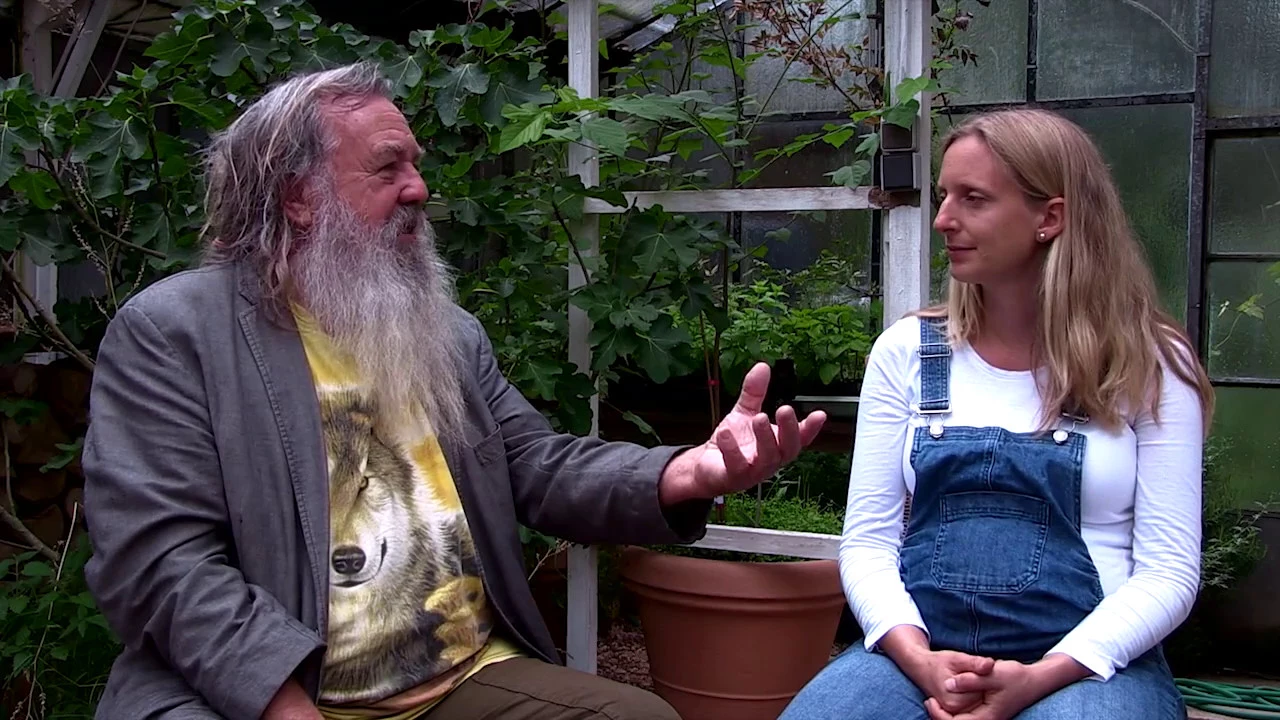
The Endangered Wisdom of Amazon Tribes | Ethnobotanist Mark Plotkin
Added:Basic definition and scope of ethnobotany, specifically how human cultures interact with and utilize local plant species.
Fundamental concepts of biodiversity and ecology, particularly why the Amazon basin is a critical reservoir of unique flora and fauna.
An understanding of indigenous history in South America, including the concepts of uncontacted tribes and the historical impact of external contact.
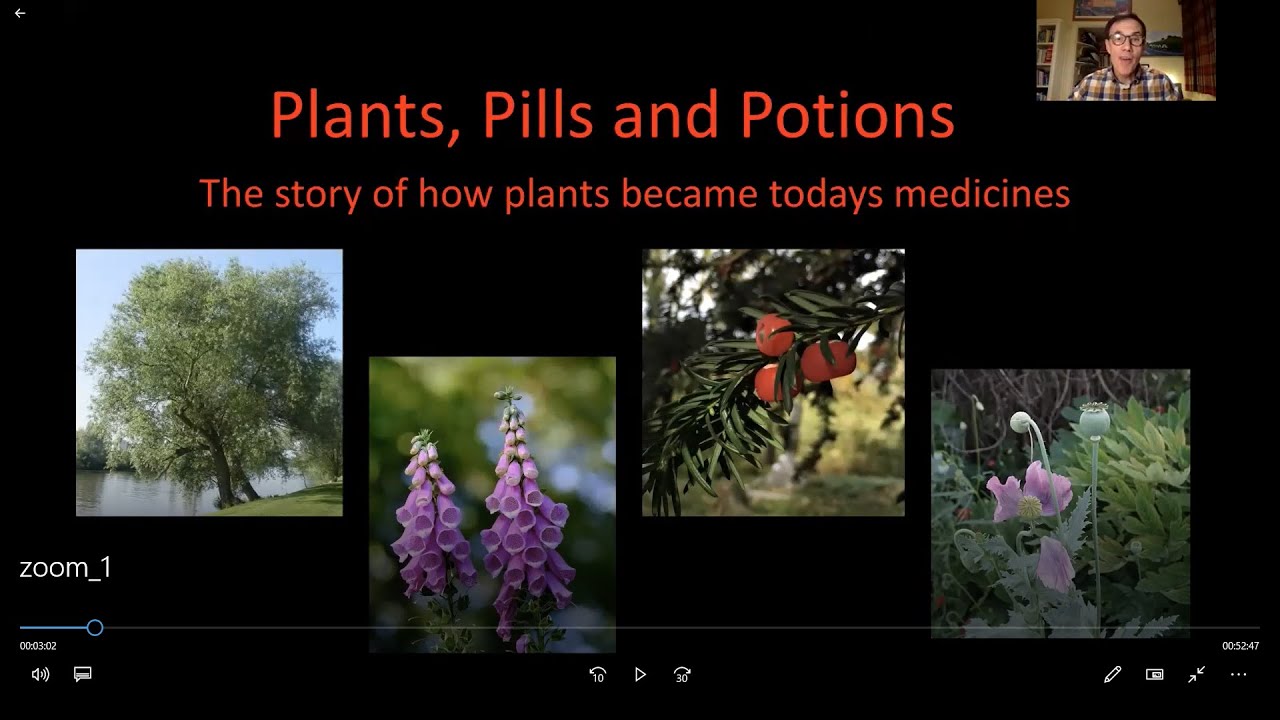
The basics of pharmacology, specifically how natural compounds from plants serve as the basis for modern Western medicine.
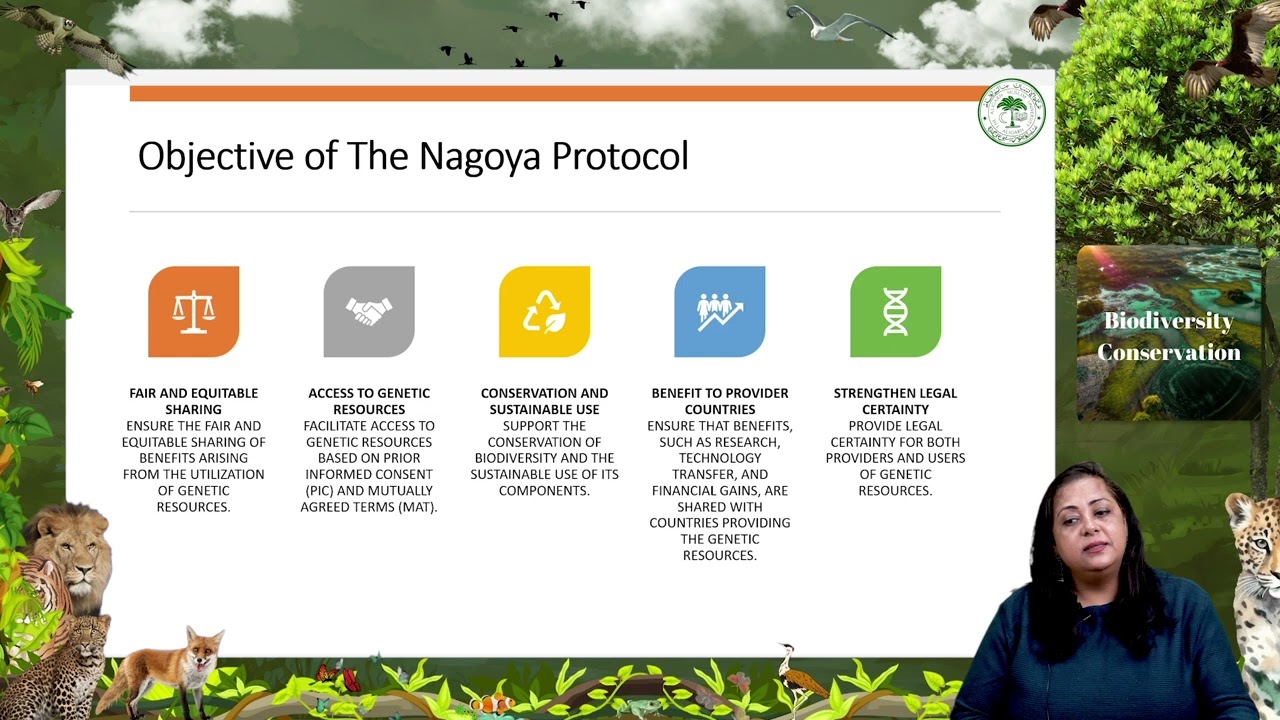
The ethics of bioprospecting and biopiracy, including international frameworks like the Nagoya Protocol on access and benefit-sharing.
Advanced studies in Traditional Ecological Knowledge (TEK) and its integration into modern climate mitigation policies.
Legal and political mechanisms for protecting indigenous land rights and sovereign territories from industrial exploitation.
The chemistry of ethnopharmacology, exploring how specific Amazonian plants interact with human neurochemistry and physiology.
248.6K views4.9Klikes16:35Original Release: 2014-11-24
Now, I'm an ethnobotanist.
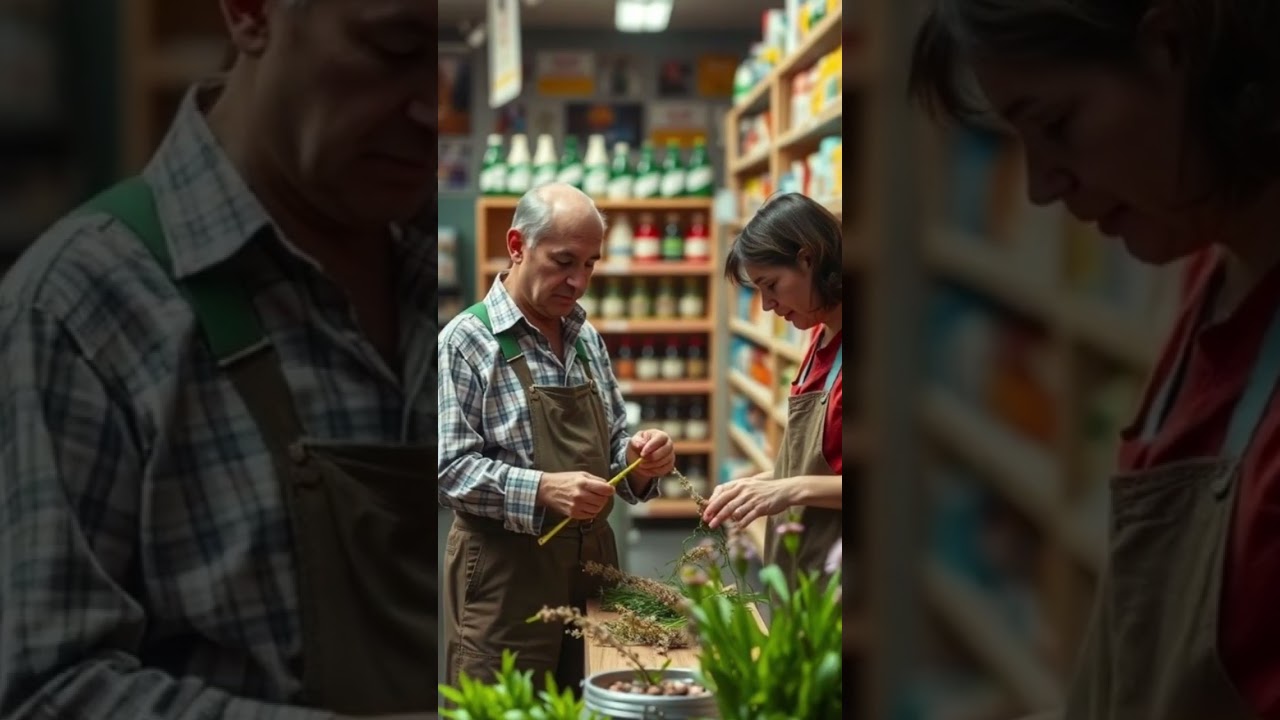
That's a scientist who works in the rainforest to document how people use local plants.
I've been doing this for a long time, and I want to tell you, these people know these forests and these medicinal treasures better than we do and better than we ever will.
But also, these cultures, these indigenous cultures, are disappearing much faster than the forests themselves.
And the greatest and most endangered species in the Amazon Rainforest is not the jaguar, it's not the harpy eagle, it's the isolated and uncontacted tribes.
Now four years ago, I injured my foot in a climbing accident and I went to the doctor.
She gave me heat, she gave me cold, aspirin, narcotic painkillers, anti-inflammatories, cortisone shots.
It didn't work.
Several months later, I was in the northeast Amazon, walked into a village, and the shaman said, "You're limping."
And I'll never forget this as long as I live.
He looked me in the face and he said, "Take off your shoe and give me your machete."
(Laughter) He walked over to a palm tree and carved off a fern, threw it in the fire, applied it to my foot, threw it in a pot of water, and had me drink the tea.
The pain disappeared for seven months.
When it came back, I went to see the shaman again.
He gave me the same treatment, and I've been cured for three years now.
Who would you rather be treated by?
(Applause) Now, make no mistake — Western medicine is the most successful system of healing ever devised, but there's plenty of holes in it.
Where's the cure for breast cancer?
Where's the cure for schizophrenia?
Where's the cure for acid reflux?
Where's the cure for insomnia?
The fact is that these people can sometimes, sometimes, sometimes cure things we cannot.
Here you see a medicine man in the northeast Amazon treating leishmaniasis, a really nasty protozoal disease that afflicts 12 million people around the world.
Western treatment are injections of antimony.
They're painful, they're expensive, and they're probably not good for your heart; it's a heavy metal.
This man cures it with three plants from the Amazon Rainforest.
This is the magic frog.
My colleague, the late great Loren McIntyre, discoverer of the source lake of the Amazon, Laguna McIntyre in the Peruvian Andes, was lost on the Peru-Brazil border about 30 years ago.
He was rescued by a group of isolated Indians called the Matsés.
They beckoned for him to follow them into the forest, which he did.
There, they took out palm leaf baskets.
There, they took out these green monkey frogs — these are big suckers, they're like this — and they began licking them.
It turns out, they're highly hallucinogenic.
McIntyre wrote about this and it was read by the editor of High Times magazine.
You see that ethnobotanists have friends in all sorts of strange cultures.
This guy decided he would go down to the Amazon and give it a whirl, or give it a lick, and he did, and he wrote, "My blood pressure went through the roof, I lost full control of my bodily functions, I passed out in a heap, I woke up in a hammock six hours later, felt like God for two days."
(Laughter) An Italian chemist read this and said, "I'm not really interested in the theological aspects of the green monkey frog.
What's this about the change in blood pressure?"
Now, this is an Italian chemist who's working on a new treatment for high blood pressure based on peptides in the skin of the green monkey frog, and other scientists are looking at a cure for drug-resistant Staph aureus.
How ironic if these isolated Indians and their magic frog prove to be one of the cures.
Here's an ayahuasca shaman in the northwest Amazon, in the middle of a yage ceremony.
I took him to Los Angeles to meet a foundation officer looking for support for monies to protect their culture.
This fellow looked at the medicine man, and he said, "You didn't go to medical school, did you?"
The shaman said, "No, I did not."
He said, "Well, then what can you know about healing?"
The shaman looked at him and he said, "You know what? If you have an infection, go to a doctor.
But many human afflictions are diseases of the heart, the mind and the spirit.
Western medicine can't touch those. I cure them."
(Applause) But all is not rosy in learning from nature about new medicines.
This is a viper from Brazil, the venom of which was studied at the Universidade de São Paulo here.
It was later developed into ACE inhibitors.
This is a frontline treatment for hypertension.
Hypertension causes over 10 percent of all deaths on the planet every day.
This is a $4 billion industry based on venom from a Brazilian snake, and the Brazilians did not get a nickel.
This is not an acceptable way of doing business.
The rainforest has been called the greatest expression of life on Earth.
There's a saying in Suriname that I dearly love: "The rainforests hold answers to questions we have yet to ask."
But as you all know, it's rapidly disappearing.
Here in Brazil, in the Amazon, around the world.
I took this picture from a small plane flying over the eastern border of the Xingu indigenous reserve in the state of Mato Grosso to the northwest of here.
The top half of the picture, you see where the Indians live.
The line through the middle is the eastern border of the reserve.
Top half Indians, bottom half white guys.
Top half wonder drugs, bottom half just a bunch of skinny-ass cows.
Top half carbon sequestered in the forest where it belongs, bottom half carbon in the atmosphere where it's driving climate change.
In fact, the number two cause of carbon being released into the atmosphere is forest destruction.
But in talking about destruction, it's important to keep in mind that the Amazon is the mightiest landscape of all.
It's a place of beauty and wonder.
The biggest anteater in the world lives in the rain forest, tips the scale at 90 pounds.
The goliath bird-eating spider is the world's largest spider.
It's found in the Amazon as well.
The harpy eagle wingspan is over seven feet.
And the black cayman — these monsters can tip the scale at over half a ton.
They're known to be man-eaters.
The anaconda, the largest snake, the capybara, the largest rodent.
A specimen from here in Brazil tipped the scale at 201 pounds.
Let's visit where these creatures live, the northeast Amazon, home to the Akuriyo tribe.
Uncontacted peoples hold a mystical and iconic role in our imagination.
These are the people who know nature best.
These are the people who truly live in total harmony with nature.
By our standards, some would dismiss these people as primitive.
"They don't know how to make fire, or they didn't when they were first contacted."
But they know the forest far better than we do.
The Akuriyos have 35 words for honey, and other Indians look up to them as being the true masters of the emerald realm.
Here you see the face of my friend Pohnay.
When I was a teenager rocking out to the Rolling Stones in my hometown of New Orleans, Pohnay was a forest nomad roaming the jungles of the northeast Amazon in a small band, looking for game, looking for medicinal plants, looking for a wife, in other small nomadic bands.
But it's people like these that know things that we don't, and they have lots of lessons to teach us.
However, if you go into most of the forests of the Amazon, there are no indigenous peoples.
This is what you find: rock carvings which indigenous peoples, uncontacted peoples, used to sharpen the edge of the stone axe.
These cultures that once danced, made love, sang to the gods, worshipped the forest, all that's left is an imprint in stone, as you see here.
Let's move to the western Amazon, which is really the epicenter of isolated peoples.
Each of these dots represents a small, uncontacted tribe, and the big reveal today is we believe there are 14 or 15 isolated groups in the Colombian Amazon alone.
Why are these people isolated?
They know we exist, they know there's an outside world.
This is a form of resistance.
They have chosen to remain isolated, and I think it is their human right to remain so.
Why are these the tribes that hide from man?
Here's why.
Obviously, some of this was set off in 1492.
But at the turn of the last century was the rubber trade.
The demand for natural rubber, which came from the Amazon, set off the botanical equivalent of a gold rush.
Rubber for bicycle tires, rubber for automobile tires, rubber for zeppelins.
It was a mad race to get that rubber, and the man on the left, Julio Arana, is one of the true thugs of the story.
His people, his company, and other companies like them killed, massacred, tortured, butchered Indians like the Witotos you see on the right hand side of the slide.
Even today, when people come out of the forest, the story seldom has a happy ending.
These are Nukaks. They were contacted in the '80s.
Within a year, everybody over 40 was dead.
And remember, these are preliterate societies.
The elders are the libraries.
Every time a shaman dies, it's as if a library has burned down.
They have been forced off their lands.
The drug traffickers have taken over the Nukak lands, and the Nukaks live as beggars in public parks in eastern Colombia.
From the Nukak lands, I want to take you to the southwest, to the most spectacular landscape in the world: Chiribiquete National Park.
It was surrounded by three isolated tribes and thanks to the Colombian government and Colombian colleagues, it has now expanded.
It's bigger than the state of Maryland.
It is a treasure trove of botanical diversity.
It was first explored botanically in 1943 by my mentor, Richard Schultes, seen here atop the Bell Mountain, the sacred mountains of the Karijonas.
And let me show you what it looks like today.
Flying over Chiribiquete, realize that these lost world mountains are still lost.
No scientist has been atop them.
In fact, nobody has been atop the Bell Mountain since Schultes in '43.
And we'll end up here with the Bell Mountain just to the east of the picture.
Let me show you what it looks like today.
Not only is this a treasure trove of botanical diversity, not only is it home to three isolated tribes, but it's the greatest treasure trove of pre-Colombian art in the world: over 200,000 paintings.
The Dutch scientist Thomas van der Hammen described this as the Sistine Chapel of the Amazon Rainforest.
But move from Chiribiquete down to the southeast, again in the Colombian Amazon.
Remember, the Colombian Amazon is bigger than New England.
The Amazon's a big forest, and Brazil's got a big part of it, but not all of it.
Moving down to these two national parks, Cahuinari and Puré in the Colombian Amazon — that's the Brazilian border to the right — it's home to several groups of isolated and uncontacted peoples.
To the trained eye, you can look at the roofs of these malocas, these longhouses, and see that there's cultural diversity.
These are, in fact, different tribes.
As isolated as these areas are, let me show you how the outside world is crowding in.
Here we see trade and transport increased in Putumayo.
With the diminishment of the Civil War in Colombia, the outside world is showing up.
To the north, we have illegal gold mining, also from the east, from Brazil.
There's increased hunting and fishing for commercial purposes.
We see illegal logging coming from the south, and drug runners are trying to move through the park and get into Brazil.
This, in the past, is why you didn't mess with isolated Indians.
And if it looks like this picture is out of focus because it was taken in a hurry, here's why.
(Laughter) This looks like — (Applause) This looks like a hangar from the Brazilian Amazon.
This is an art exhibit in Havana, Cuba.
A group called Los Carpinteros.
This is their perception of why you shouldn't mess with uncontacted Indians.
But the world is changing.
These are Mashco-Piros on the Brazil-Peru border who stumbled out of the jungle because they were essentially chased out by drug runners and timber people.
And in Peru, there's a very nasty business.
It's called human safaris.
They will take you in to isolated groups to take their picture.
Of course, when you give them clothes, when you give them tools, you also give them diseases.
We call these "inhuman safaris."
These are Indians again on the Peru border, who were overflown by flights sponsored by missionaries.
They want to get in there and turn them into Christians.
We know how that turns out.
What's to be done?
Introduce technology to the contacted tribes, not the uncontacted tribes, in a culturally sensitive way.
This is the perfect marriage of ancient shamanic wisdom and 21st century technology.
We've done this now with over 30 tribes, mapped, managed and increased protection of over 70 million acres of ancestral rainforest.
(Applause) So this allows the Indians to take control of their environmental and cultural destiny.
They also then set up guard houses to keep outsiders out.
These are Indians, trained as indigenous park rangers, patrolling the borders and keeping the outside world at bay.
This is a picture of actual contact.
These are Chitonahua Indians on the Brazil-Peru border.
They've come out of the jungle asking for help.
They were shot at, their malocas, their longhouses, were burned.
Some of them were massacred.
Using automatic weapons to slaughter uncontacted peoples is the single most despicable and disgusting human rights abuse on our planet today, and it has to stop.
(Applause) But let me conclude by saying, this work can be spiritually rewarding, but it's difficult and it can be dangerous.
Two colleagues of mine passed away recently in the crash of a small plane.
They were serving the forest to protect those uncontacted tribes.
So the question is, in conclusion, is what the future holds.
These are the Uray people in Brazil.
What does the future hold for them, and what does the future hold for us?
Let's think differently.
Let's make a better world.
If the climate's going to change, let's have a climate that changes for the better rather than the worse.
Let's live on a planet full of luxuriant vegetation, in which isolated peoples can remain in isolation, can maintain that mystery and that knowledge if they so choose.
Let's live in a world where the shamans live in these forests and heal themselves and us with their mystical plants and their sacred frogs.
Thanks again.
(Applause)
Up Next

11:51
The Medical History of Aspirin: From Willow Bark to Modern Medicine
@SciShow
505K views•2019-01-10

26:22
Walking in the City: Urban Rituals and the Flâneur in Contemporary India
@PSBTIndia
1.9K views•2016-08-02

17:40
Visual Storytelling & Future Media: Scott McCloud’s Comic Theory
@TED
332.3K views•2009-01-15

1:42
Game of Thrones Opening Credits: A Cinematic Analysis
@gameofthrones
46.3M views•2011-04-18
Related Study Plans & Knowledge Roadmaps
Structured learning paths in General & Interdisciplinary Studies
general-studies
Artificial Light: History, Tech & Human Impact
01The Pre-Electric Era: Fire, Oil, and Gas Lighting
02The Incandescent Revolution and Grid Electrification
03Gas Discharge and Fluorescent Illumination
+ 3 more learning modules
14h6 modules
Explore Roadmap
general-studies
Elevator Engineering: History, Physics & Cities
01From Hoists to Safety Brakes: The Dawn of Vertical Lift
02Hydraulic vs. Traction: The Engineering Physics of Elevators
03Modern Speed, Safety, and Algorithms
+ 2 more learning modules
12h5 modules
Explore Roadmap
general-studies
Rubber: Material Science, History & Geopolitics
01Origins of Natural Rubber & Mesoamerican History
02The Chemistry of Natural Rubber & Vulcanization
03The Geopolitics of the Rubber Boom & Colonization
+ 2 more learning modules
12h5 modules
Explore Roadmap
general-studies
Containerization: Evolution, Logistics & Trade
01Ancient Trade & Bulk Cargo: Amphorae to Barrels
02The Industrial Revolution & Cardboard Packaging
03The Containerization Revolution: Malcom McLean
+ 2 more learning modules
12h5 modules
Explore Roadmap