









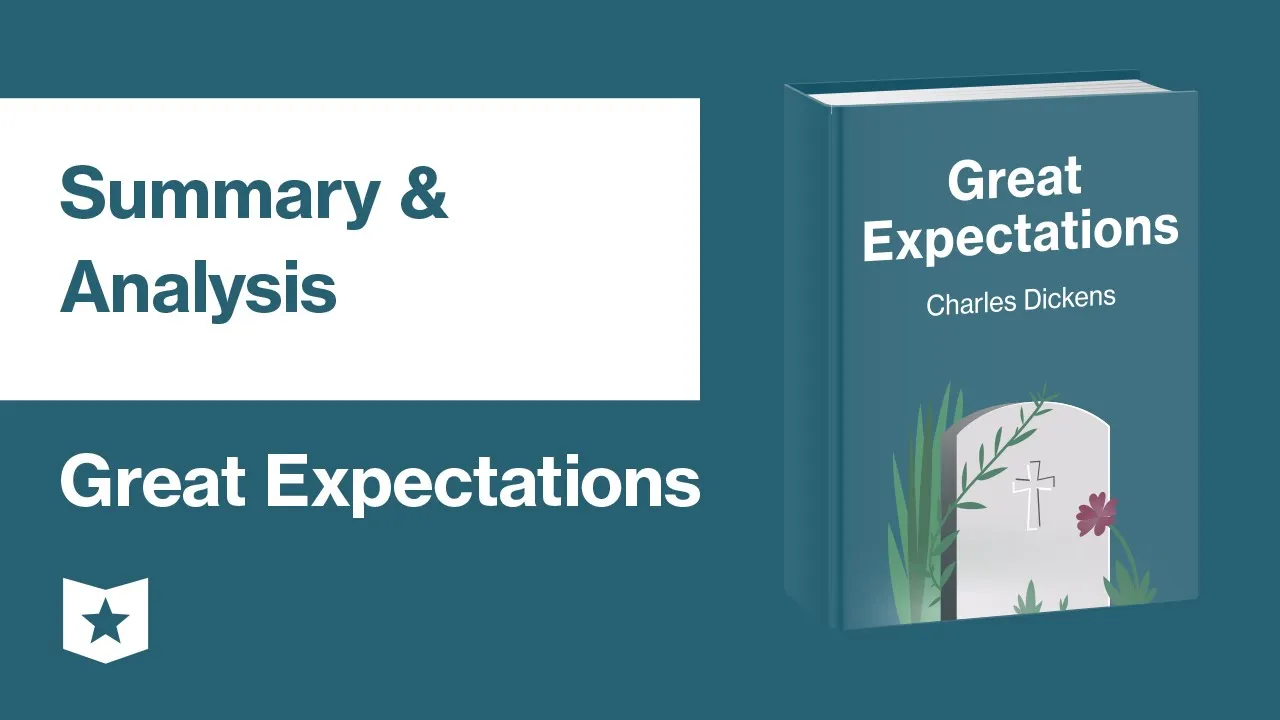
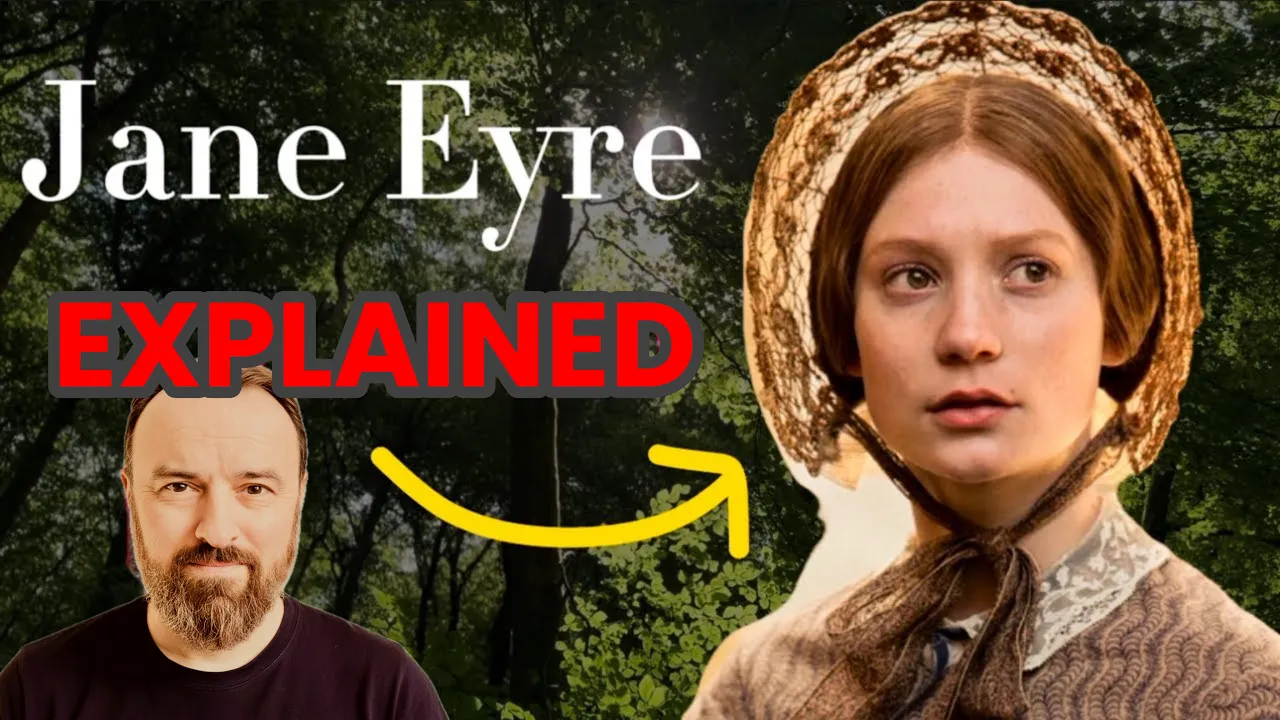







This video introduces two foundational Victorian novels—Charles Dickens's Great Expectations and Charlotte Brontë's Jane Eyre—as an entry point to understanding Victorian literature. Both novels are bildungsromans (coming-of-age stories) featuring young protagonists (Pip and Jane, aged 10-18) who explore themes of class, identity, and personal growth. The video explains how Victorian literature shifted focus from plot-driven narratives to deep character studies, examining how individuals develop over time. Key themes discussed include childhood experiences of injustice, social mobility, the exploration of crime and taboo subjects, and the representation of madness. The instructor notes that Victorian literature often concludes with either weddings or deaths, reflecting the period's emphasis on romantic and moral resolutions.
An Introduction to the Victorian Novel: Great Expectations & Jane Eyre
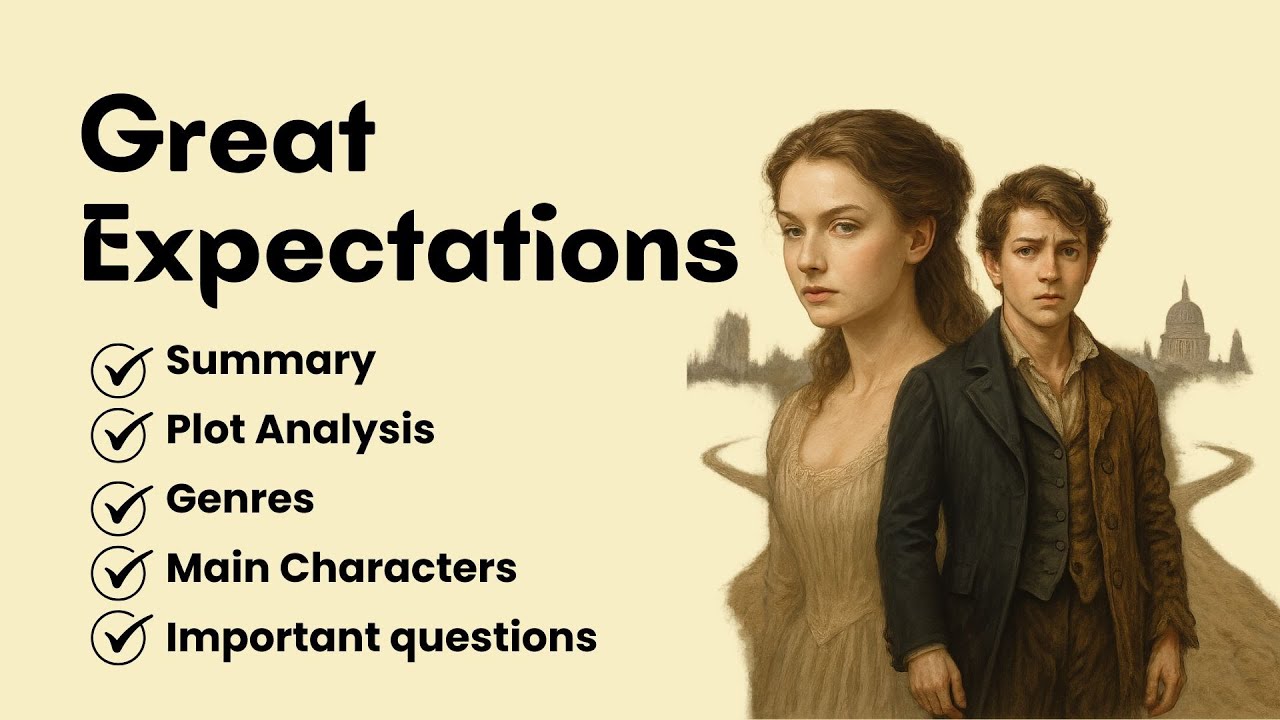
Added:greetings hypothetical students and welcome to the Noto hypothetical Victorian literature course AKA # vicet if you do not know what this is I will link my original announcement video down below and I will also link down below the Goodreads group I will also link down below my original video called a hypothetical Victorian literature course in which I talked about the hypothetical course that I might run where I a victoriia literature professor at a university which I am not but it then occurred to me that I could just do effectively that course but on my channel in video form because why not so this is the not so hypothetical Victorian [Music] course basic idea and premise of this is that every two months for the next year or two years or 3 years or however long it takes me to get through all of the fascinating themes of Victorian literature I will be taking two books every two months and I will make a slightly longer video probably half an hour maybe longer talking about how a particular theme present in all of Victorian literature is explored through these two particular Victorian novels I will almost entirely be doing Victorian novels I think I'm not planning on talking about any plays or poetry because I know slightly less about them and I don't feel that I could incorporate them enough into this series the idea is that in each of these videos I will talk about two books and a particular theme the first half of the video will be spoiler free and I will talk about the books without any Major Spoilers and then I'll will inform you in the middle of the video that spoiler-free territory no longer exists and I will then make spoilery second half of the video talking about the rest of the books so that even if you don't have the chance want to read the books along with me you will still be able to get something out of the video we will then be announcing at the beginning of each video what the books will be for the next video in two months time as well so today we're going to be talking about Great Expectations and janire and it's going to be just a kind of introduction to the Victorian novel I don't have a particular theme I want to talk about today and then in two months time in the month of May we'll be looking at the theme of industrialization in Elizabeth gas schools north and south and Charles dickens's Hard Times lots of Dickens of course but there can be no surprise about that so back to today's topic Charles dickens's Great Expectations and Charlotte bronte's Jaye a so first off I'm going to give you a quick introduction to each of these two novels J A as they may have already mentioned was written by Charlotte Bronte and it was published first in the year of 1847 it is a Gothic novel in many ways it is also of buildin's romant it follows the character of janire from her childhood I think when the book starts she's about 10 through to her adulthood to when she's about 18 she has quite a difficult life she is an orphan and she is brought up by her aunt who doesn't love her Aunt sends her away to school at a young age and from there she goes on to become a governor as a governor Jane goes and works in a place called thornfield hall for the mysterious and somewhat Charming Mr Rochester who is a man of about 20 years her senior who is not at home very often has a mysterious background and has a ward called Adele who may or may not be his illegitimate daughter it is a wonderful wonderful book one of my favorites this is the book that got me into 19th century literature and that's partly why I wanted to talk about it today because I think it is a perfect introduction to the Victorian novel as a form Great Expectations by Charles Dickens is another brilliant novel it's not my favorite Dickens novels I've mentioned before but I think it's one of the best to start with partly because like jire it's in the first person and I think that can be more accessible if you're not used to dickens's writing style or not used to Victorian literature it follows a character by the name of pip pip at the beginning of the book is somewhere between 8 and 10 I think I can never remember precisely his age but he's about the same age as Jane a is in the beginning of Jane a pip like Jane is an orphan and pip is brought up by his sister who a little bit like Jane's aunt in janire is not overly fond of pip and although she is probably presented as a better woman than Mrs Reed is in jire Pip's sister Mrs Joe resents that she's had to look after pip she is married to the blacksmith Joe gri who is Pip's friend and protector becomes Apprentice to Joe gri but then as the title of the book suggests when he is perhaps about the age that janire is in Jay a for the bulk of the book pip comes into Great Expectations he discovers that he has this mysterious benefactor who is going to sponsor him to become a gentleman and that is what the book is about I hope you can see already part of the reason why I've chosen both these two books is they both explore quite similar themes and have a similar kind of setup they both are coming of age stories and explore many of the same themes but they also look at things from different angles we have a female protagonist we have a male protagonist we have a book set in the north we have a book set in the South we have a book almost exclusively set in rural areas and we have a book that may is about half and half rural than Urban but in which London is a really important part and they have very different plot arcs which I think are really interesting to compare to each other as I said they're both buildings Romans in a way I can never say that word they're both buildings Romans in a way in that they look at how people develop over time they're both focused on character and personality and individuality but they also have really interesting narrative arcs in comparison to each other in that in many ways great expectations of his book about pip learning that he's really not so great as he thought he was whereas jire is a book about jire learning that she's greater than she thought she was but more on that later anyway I'm really sorry if I talk really quickly I'm really really excited about this video I mean look how excited I am look at all those Post-it notes so what I'm going to do first before I start talking about the themes that these two books deal with which are many of the themes I'm going to be going on to talk about in the rest of this series many of the themes which come up again and again in Victorian literature before that I want to talk about a few different kinds of novels a few kind of genres within the Victorian novel that both of these books fit into the first which I've already mentioned is the buildin's Roman the story of coming of age a lot of Victorian novels are coming of age stories I don't think I really realized how young most of the protagonists are in Victorian literature when I started reading Victorian literature because then I was 13 and people who were 18 seemed quite old and suddenly when you get to my age now I'm like oh no they're all still really young J she is really young she's five years younger than me she sounds much older than me obviously because of different social structures and different like methods of Education within the Victorian period age was kind of different like I feel like people were older at 18 in the Victorian period than they are now at 18 to a certain extent but anyway Jane a as I said begins when she's 10 and the bulk of the action the book takes place when she's like 189 pip Begins the book at somewhere between 8 and 10 the book is split into three parts it was a three volume novel at the time the first volume basically deals with Pip in his childhood in the second volume he's probably somewhere between like 18 and 23 and then in the third volume he's 23 the bulk of the action and the dramatic climax of the book takes place when he's 23 it's quite fun reading it this time because pip is my age but anyway and this is the case with a lot of Victorian literature not all Victorian literature follows characters from their childhood into their adulthood but a lot does there are a lot of stories that deal with one childhood but also coming of age and characters over really important turning points in their personality in their characters a lot of the female heroins of Dickens are between 18 and 22 I think little dor who's 22 is actually one of the Elder of dickens's heroins and then if you look at Elizabeth gasal I think over the course of North and South Margaret hail is goes from 19 to 22 a lot of Bronte novels characters are in their late teens to very early 20s and a lot of Victorian literature looks at characters Coming of Age characters growing into themselves and I think this is really interesting because it shows a new kind of interest in characterization I haven't read that much from before the 19th century but many of the novels I have read from before the 19th century things like gulli travels or robins and cruso or the Vicor of Wakefield they have a focus on plot but they don't have a focus on characters one of the things I find really interesting about 19th century literature is how that changes you can see it in Jane Austin who is obviously ly prev Victorian but you can see the seeds of the interest in characterization and characters in individuals in Jane Austin and it goes through into the Victorian period where many books are a study are character studies they're looking at how individuals change over time often how individuals grow up and turn into people so jire and gr expectations are both very much about that they're about people growing into themselves and becoming more strongly themselves build romance and I think they're really interesting like subgenre of Victorian novel the other kind of Novel which is very influential on both of these two is the gothic novel now the true like Gothic period of literature is before the victorians it's to the end of the 18th century and the early 19th century there is a kind of Gothic Revival especially towards like the end of the 19th century like something like Dracula was written in the 1890s but for the most part the gothic happened before the Victorian era things like the novels and Mrs Radcliff they're all prev Victorian but they have a massive influence on the Victorian period and Gothic themes crop up in so many novels there's a lot of even if not just Supernatural stuff a lot of Supernatural language nothing actually Supernatural happens in either jire or Great Expectations but the language in which the characters speak and in which the narrators write is imbued with the supernatural with mentions of goblins and fairies and pixies and Rochester accuses Jane of cursing his horse when when Pip goes to sat's house and Great Expectations he keeps on thinking that he sees a kind of future ghost a vision of miss havam hanging from the brewery and there's a lot more than just the supernatural that imbus these books from the gothic it's also ideas of the taboo talking about the unmentionable talking about things which are considered IM moral and considered not to be spoken about or not to be thought of within Victorian society I'll talk about this later in the spoilery section of this video but I mean things like Madness things like crime even things like sexuality to be honest is something which these books explore in a kind of subtle way the settings in these books also are quite Gothic as well Dickens has a wonderful way in Great Expectations of making London really Gothic and talking about it in this kind of dark complicated messy way especially because Pips London is so bowed up with crime especially because of his Guardian Mr Jaggers who was a lawyer the very way this begins with being attacked by a convict who threatens him and makes him get food is quite Gothic and dark and the whole setting of the Moors when he is back in his childhood home is quite dark and deserted as well then in Jane a we have this very secluded setting of thornfield Hall we have all the mysterious noises in the Night the things that Jane doesn't quite understand what's going on here there are a lot of Gothic influences in that as well and talking of things that Jane doesn't understand the other kind of Novel which is very important in the Victorian period which both of these play on is the mystery novel now neither of these are full Mysteries and we see proper Mysteries happening in Victorian literature much more later on in the period with stuff like Sherlock Holmes and stuff like wiy Collins which are very very mystery driven but both of these books do have a kind of mystery at their heart in Great Expectations it's whose Pip's benefactor is and in janire it's kind of what is going on at thornfield and this is a major feature in a lot of Victorian novels most Dickens novels have some kind of mystery some kind of reveal and Discovery later on which drives on the action and that's a really important part of Victorian literature which is really interesting and in that way like the unknown itself self becomes a kind of theme in Victorian literature which I think is really interesting and then the other things that both of these books are are love stories they're quite different kinds of love stories and I would say the Love Story element is possibly not necessarily more to the Forefront it's more featured in terms of the amount of scenes of Jane and Rochester talking in Jane air but it's very important in Great Expectations too especially is what drives pip in most of the novel what drives him to want to be a gentleman is his feelings towards Stella I'll talk a bit later in the spoilery section of my video about the ways in which these two love stories and their closures compare but I do think it's very important that love is very Central to both of these books as it is to so many Victorian novels like so many Victorian novels are love stories and most of them even if that's not their main element have some kind of love story in it another thing I think is really interesting is that the way that these two books explore and interact love is really interesting love for jire is a journey of self-discovery love for pip is mostly a journey of self-destruction and I think that's quite an interesting thing to look at when you read these books and the final the fifth kind of Novel which is the most interesting to me perhaps in the Victorian period is the novel of social commentary these two are not as typical as social commentary novels than a lot of other things but they do comment on quite a lot in society the Victorian social cometry novel is a fascinating form and tends to be books that really look at what people within the Victorian society think is wrong with Victorian society and how it can be improved I love these books I find them fascinating because I'm really interested in the history of the time I do think that is quite a lot in these gra mations is one of dickens's like less overtly social criticism novels but there is a lot about perception about snobbery about class about the damages that money can do and about the way in which money can make people react the way in which class and social Mobility can affect people's relationships with people and in jire you kind of have the same thing there a social critique of class snobbery if you look at characters like blanch Ingram and the way that she talks about governances there's also a lot of social criticism inherent in the character of Mrs Reed Jane's aunt and her cruelty to Jane about the way that people treat children in fact both of these books look very interestingly about the ways in which adults treat children which leads me on quite nicely to talking about some of the themes that these books deal with this is going to be a really really long video anyway so now I'm going to talk about a few themes that both of these books deal with that I feel like quite a lot of Victorian novels deal with as well this is still all spoiler-free I'm going to talk about I think five or six themes that will be spoiler-free and then I will tell you when we're going into spoiler territory so that if you haven't read these books you can leave these few themes I want to talk about I can talk about in general without spoiling things the first theme I want to talk about is childhood and the way that Victoria literature deals with childhood it's been said many times that the victorians invented childhood that what we consider childhood today was kind of created during the Victorian period it's not necessarily that you know children weren't children before just there's a kind of commercialization of childhood in the 19th century as there is a commercialization and industrialization of many things I think it's really interesting that a lot of Victorian books do start with childhood and do deal with children growing up and especially in these two books they start with quite similar childhoods in some ways both Jane and pip are to an extent unwanted they live with blood relatives with family members who don't really want them Pip's situation is quite different from Jane's in that pip has Joe and Joe very clearly wants and loves pit very much but both of them do experience this sense of being unwanted by a relative and also a sense of Injustice one thing I I noticed in reading these two books recently because I reread them for this video and I reread them within the space of a fortnite and it's really interesting to see all the comparisons between them and one thing I did notice is that in both of these books very early on both the child Jane and the child pip experienced important sensations of Injustice my head still achd and bled with the blow and the fall I had received no one had reproved John for wanly striking me and because I had turned against him to avert further irrational violence I was loaded with General operation unjust unjust said my reason that is when Jane has been hit by her cousin and is shut up in the Red Room then pip similarly after he's been kind of dismissed as a Stella as being coarse and common he also feels this Injustice in the little world in which children have their existence whosoever brings them up there is nothing so fin perceived and so finally felt as Injustice both these books begin with childhood and begin with this childhood sense of Injustice of being treated unfairly by the world and that kind of unfair treatment of the world both of the protagonist and of other people the way in which society is unfair and which the way the world is organized is cruel and unfair is really important in both of these books as a method of social criticism I want to talk about the theme of growing up I've already spoken about this talking about how these books are buildin's romance but I do think it's it's interesting and worth stressing stressing how important character development is to both of these books and how the idea of individuality is very important in these books there's a focus too on emotions both of these books are yes a kind of actual journey in that things happen to these characters and plot occurs but they're also emotional Journeys both of these characters change in their way across the books hip changes a lot across the course of the book but so does Jane if you look at the way she changes between her childhood and her adulthood the way she not exactly Mellows but her temper changes and the way she behaves to other people changes as well both of these books do deal with emotional Journeys on the characters and a great emphasis is put on the kind of emotional and interior life as well as external life to return to the theme of childhood it's also really interesting to look at the fact that both of these characters are orphans and that orphans feature in a lot of Victorian novels someone on the Goodreads group the discussion board for these two books I think it was Mike he commented what is it with Victorian books and orphans which made me laugh because yes what is it with Victorian books and orphans I mean both Jane and pip know who their parents are they just happen to be dead but the Quest you find unknown parents is really common in Victorian literature which is fascinating that it's such an important theme but it is and I think it's partly because a lot of issues of respectability which is so important in the Victorian period is bound up with birth and who your parents are so the idea of not knowing who your parents are calls them to question your whole like social status I think that's why one of the reasons why orphans are really interesting to the victorians and the other thing I think is to do with the victorians exploring themes of otherness and Outsiders both pip and Jane are to an extent Outsiders both Outsiders in the sense that they are orphans and that they are lonely from their childhood and that they don't feel the proper family connection they want to that they feel a little unwanted again I think this is more the case with Jane than with pit because pip does have this relationship with Joe and then even Jane once she goes away to school she has the relationship she has with Helen Burns or with her teacher Miss Temple but they do experience the feeling of being unwanted and being not belonging in the life they live this is partly to do with them being orphans and not having that direct family contact but it's also part to do with their issues of class which is another really important theme in Victorian literature just all of the themes just like link together so perfectly this is why I enjoy Victorian literature to talk for a moment about class both great expectations and jire involve a surprising amount of social Mobility for 19th century novels both Jane and pit move about in class quite a lot which is quite curious in that way this does make them sort of Outsiders pip as a boy because he has this experience with Miss havisham and Estella and because he wants to be a gentleman and because he likes reading and learning a lot more than his sister and brother-in-law neither of who can really read he wants to be a gentleman so he doesn't really feel part of the workingclass environment which he's in he doesn't feel that he'll be a good blacksmith because he wants to be a gentleman and then when he is a gentleman he's also outside of that world because he spent years being Apprentice to a blacksmith he is trained as a blacksmith and to live in this new world that is so different and alien to him that makes him an outsider as well and the same is true of Jane a when Jane is a child she is brought up by her aunt who is very wealthy she is brought up in this very very wealthy household but a bit like someone like Fanny in Mansville Park she's not really part of that household and one of the servants says to her you are less than a servant for you do nothing for your keep Jane is at a very dubious social position within the house because she is educated with the young ladies and gentlemen of the house but she is considered very very far beneath them and then when she goes on to be a governess governesses always always have a very mysterious social position within Victorian society and it's the figure of the governor is something that the victorians are very overly concerned with because they're really confused they don't know how to deal with governesses because governesses have to instruct their children and therefore have to have some authority over their children but also are paid employees and therefore have to have some subordination to their children and it just confuses the victorians no end so in that way Jane occupies a very odd social position both of these books do very interesting things with class and looking at characters who don't fit into a set class structure and that's another really really important theme within the Victorian period and part of the reason for this is that class in the Victorian period suddenly becomes a lot more fluid than ever before because their industry brings new possibilities of changing your class because industry brings new possibilities of working your way up Suddenly in the Victorian period people are moving class more than ever before and this gives the victorians a fascination with social mobility and also a deep like distrust of it and so characters with dubious social and class positions become a Fascination for the Victorian period which is why you see books like Jan a and great expectations and in v Victorian literature more than ever before there's a lot of characters who change their class and social status a lot if you look at something like David Copperfield or Oliver Twist and so many Dickens novels as well as gasal novels and trup novels like there's so many characters who whose class position changes dramatically over the course of the book which I think is fascinating anyway but as I've been talking about how industrialization changed what class meant in the Victorian period I should also talk about industrialization a theme that is surprisingly absent from both of these books considering they are Victorian novels and so many of the Victorian novels deal with industry including north and south and hard times which we'll be looking at in two months time specifically for how they deal with industry these two books do not deal with industry at all and this is quite interesting and part of the reason why is because both of them are set before the Victorian period in Great Expectations Pips talks about this being in the time of old London Bridge the old London Bridge was demolished in the early 1830s so this book is set prly in the 1820s likewise Jay a is set in the reign of George III it's set before the Victorian period this is another really interesting thing a lot of Victorian novels actually are set before the Victorian period something like weing heights and also things like little dor by Charles Dickens these books are set before the Victorian period they're set in the kind of 40 years leading up to Queen Victorian Reign which is a period that really interests people and in many ways I think it's because of how dramatically changing the 19th century was and therefore a lot of Victorian authors found it quite interesting to write about the time period slightly before the actual time period they were in because Society was changing so much and this really interested them I will talk a lot more about industrialization over the course of this very long series but I think it's worth noting that these two books don't really talk about industrialization so that brings to a close the non-spoilery part of my video it's probably still been a fairly big chunk of time that I've been talking about these two books but from now on I will be talking in spoiler territory there will be a lot a lot of spoilers so if you haven't read both of these books I would recommend stopping watching this video now because the both of these books have quite important Grand reveals later on and I would hate to spoil it for you if you haven't read them so if you haven't read these books please stop watching now I've given you fair warning goodbye but if you're still here and you have read both of these books there are many more important and interesting things to say Please be aware if you're watching this part of the video if you leave comments down below just like put spoiler warnings especially just just because there are such big reveals like bir Mason and magwitch just very important dramatic things in these books that I don't I feel like you would get less out of the book if you knew in advance first I want to look at how these two book books look at crime and taboo because both of them talk about stuff that is not allowed this kind of as I spoke about the kind of influence of the gothic the idea of talking about what you're not supposed to talk about in Victorian society which is suddenly fascinating in the Victorian period people were fascinated with crime you can see it in the books of Sherlock Holmes you can see it in so many other novels there are so many crimes in so many different Victorian novels the figure of magwitch is a very important figure in Great Expectations on the one hand he is this kind of imposing figure he is an embodiment of crime he is described as being frightening and he terrifies pip at the very beginning of the book and when Pip finds out later on in the book that magwitch that this ex-convict is his benefactor he is appalled and he is disgusted because it offends all his senses of like morality and respectability because he's been trying to be a respectable gentleman and suddenly all respectability is broken because his fortune has been made by someone who has been in prison for most of his life on that hand there is that exploration of crime but there's also something else really important here is that mag is actually a really like nice person understand why he is as he is and his affection for pip and his love of pip and what he wants to do for pip makes him a really generous and kind interesting person he is not a character you dislike at all and he's not a character by the end of it that you're at all afraid of and that is very very important because Dickens is questioning a lot of Victorian views it's a social critique in a way mag's portrayal it's Dickens saying well just cuz someone's been in prison doesn't mean they're evil and I also think it's worth looking at I'm going to say taboo rather than crime in here but obviously Rochester does try to marry jam and he already has a wife and biger me as a crime I know there are a lot of problematic things about Rochester and you know once you read wi Gasco C you see that but I still think that Rochester is an appealing and interesting and sympathetic character he is sympathetic even if you've read white zasco C every time I read this I still think he is a sympathetic character he may be problematic but he's still sympathetic as I already mentioned another taboo that I think both of these books do look at is sexuality not explicitly obviously but like Pip's love for Estella the very strong bond between them is one that is is very emotional and it's so so much to do with so much that Estella is bound up in Pip's childhood that Estella is one of the first people that made pip look at himself in a different way that in many ways everything in his life has been influenced by the meeting with her and he says this at various points of the book but it's also a very strong attraction she's very very beautiful and no matter how heartless she is PIP can't believe that she is completely heartless because she's so beautiful how could she possibly be heartless when she is that pretty and it is a very strong emotional but also physical attraction that he feels towards her and that's really important like in Jane a there is a very strong physical as well as emotional and intellectual connection between Jane and Rochester and for a Victorian novel and for quite an early Victorian novel that's a lot of kissing in this book like in Hardy there's just a lot of kissing and that's later on in the Victorian period if you compare books like Jane a to Dickens books from around the same time Dickens books in which no one ever kisses each other in a romantic way like nearly ever lots of people kiss each other in a very non-romantic way but there's very few like romantic kisses but in jire Charlotte Bronte goes to quite a lot of length to describe the physicality of the relationship between twen Jane and Rochester once they're engaged even the way they talk about their love for each other is very much about there being like a physical link between them and there are so many like sexual taboos going on of course there is the issue of of Rochester trying to marry someone when he's already married but also the fact that Adele may very well be his illegitimate child the fact that he's had many Mistresses before and the fact that after Jane discovers that he has a wife living he basically wants to make Jane his mistress he kind of says he doesn't but we all know he basically does and the way that sexuality is not separate from Love in these two books and in a lot of Victorian novels is really important it's not something that is spoken about that much in the Victorian period but it is in a lot of their novels the other thing I want to talk about Sony second on my list of spoilery themes goodness the other thing I want to talk about is mad women in attics obviously this that term applies to Jane a in which there is literally a mad woman in the Attic it's important of course in janire that for Charlotte Bronte or at least for Mr Rochester and to an extent for Jane bera's Madness is bound up with her immorality I made a video a little while ago called the drug man and the metaphorical Attic in which I compared jire with the T of welfare Hall which in many ways deal with similar plots but with the gender swap I think when you read the 10 of wo Hall if you look at it in comparison to Jan a it gives you a slightly different view of the way Bera is presented but Madness is an important theme in Victorian literature both in terms of being something that cannot be spoken of but also something that cannot be understood something that is so other and dangerous and also often feminine not always but actually always can I think of any books that explore male Madness no I'm sure there are some if you've read a Victorian novel that looks at male Insanity I would like to know I really would Madness is in general in Victorian literature it's female it's bound up with hysteria and overly emotionalness oh the victorians but it's it's it's really interesting to look at in terms of gender and in the way that Bera is presented as being too passionate and too violent and all of her emotions being like over the top like her anger and her jealousy but not just to talks about her being like un chased when she was L you like all of her passions all of her emotions are pushing the extreme which is what to an extent makes her mad but then another mad woman in the Attic sort of to look at is Miss havam now miss Haram is not mad I don't think it's ever implied that Miss Haram is mad in the way that it's implied that Bera is mad and but she is a kind of figure of a mad woman in some ways Bera is locked in the Attic in thornfield Hall Miss havisham is shut up in her own house of course Bera is kept there by force and Miss havisham keeps herself there by choice because she doesn't want to leave but she is presented in many ways as mad you know walking around in a very very very old wedding dress with one shoe off one shoe on forever having stopped all the clocks not wanting to know what day of the week it is interestingly she is also presented a bit like Bera as a vision of femininity gone wrong Bera is a woman who is not chased and tempered enough she is a woman who has too many emotions all of her emotions are pushed to the extent that she is no longer even presented as quite human she's presented almost as a beast and then in miss havam you have a character who has no emotion who has forced herself not to love because her heart was broken she has decided that emotion is wrong therefore she is cruel to everyone and she brings up her adoptive daughter to be completely heartless she brings up Stella to find it impossible to love because Miss havisham is the other end of the spectrum she's a woman with not enough emotion that is right for a Woman Within Victorian society etc etc like that's just absolutely fascinating and to compare her to Bera I think is very interesting because they make for interesting figures so many things I have to talk about just running out out of all the time in the world I also wanted to talk about character arcs G's Journey over the novel is to become a better person he's kind of fine as a child then after he decides he wants to be a gentleman and after he decides that he has been common and coarse all his life he then goes on to be very very cruel to Joe how horrible he is to Joe and how selfish and self-absorbed and snobbish pit becomes in the novel is hard the book is basically about pip realizing what a jerk he's been It's very effective and the book is about him realizing that all his judgments have been wrong the way he judged magwi when he found out he was his benefactor the way he has judged Joe and Biddy he's got everything wrong and the other thing I do like about great expotations is he's not rewarded for the life he's LED biddy who actually would have been a much better match for pip than anyone marries Joe not pip and when Pip meets EST Stella at the end they meet in kind of sadness and they part I know you can read the ending very different ways but to me my interpretation of the book they part Forever The Shadow Pips at the end of the book when he says I saw no shadow of another part ing from her it's because they will never part again because they will never see each other again it's not that they will be together forever it's that they will part it's an open to interpretation is purposefully ambiguous but if you consider the alternative ending way no Dickens wrote where they meet an Estelle as married to someone else and if you look at the lines before that where pip says we are friends and Estella says and we'll continue friends apart the idea is that they part forever pip is not rewarded he learns that he should have been a better person and he becomes a better person but he doesn't get the life he wanted that's his journey is discovering that he wasn't a very nice person whereas Jane a I think is more about Jane being true to herself she does change she becomes I think a more tolerant person between her childhood and her adulthood but for a lot of the time it's about her being true to herself about her realizing her own worth which partly comes through her love of Rochester and his love of her but also then realizing that she has a worth outside of that like when she leaves when she discovers he has a wife living and when she runs she runs because that is what fits with her moral code she is true to her moral code she doesn't give into what he wants to do because she loves him and she wants to make him happy she does what she wants to do because that's what her morality and that's what herself tells her to do that is being true to her personality and she's rewarded for that by the author with money and bir's death and therefore with Mr Rochester which is very convenient obviously her personality does change over the book but it's also a lot about her personality being proved right about her coming into her own and realizing how much worth she has because she's had this childhood in which she was treated as worth less by everybody in which her aunt and her cousins dismissed her and then if you look at what happens to her cousins like they just have horrible lies whereas Jane is kind of rewarded with happiness because she has been right and I think that's really interesting to look at in terms of these two books joh pointed out on the not so hypothetical Victorian literature course Goodreads group um I think her name is Carolina and she pointed out that it's really interesting how in Great Expectations for pip to become a better person for pip to achieve his final ending pip has to lose all his money and start working whereas J M has to stop working and get lots of money isn't that quite interesting one in terms of gender roles in possibly a slightly depressing way that Jane has to stop work to be happy and pip has to work to be happy in a kind of male female way but also aside from that because I don't think it's so simple I think the reason why Jaye a has to have that money and stop working is so she can be equal to Rochester who has lots of money and doesn't work she has been his dependent in a literal way in that he paid her salary and now he is her depended in that he relies on her because he is blind whereas the reason why pip has to start working at the end of the book is because he has to go back to a life of work in order to realize that he can have a life with meaning outside of having lots of money and being a gentleman and being married to a stellar so the the different endings serve quite different purposes but I do think it's an interesting comparison between them a lot of Victorian novels as I mentioned earlier deal with social mobility and a lot of them deal with kind of like Rags to Riches stories and Jane air is is basically a Rags to Riches stories in a way but pip um in Great Expectations it's more of like her rags to riches to rags again story and then may be true riches because he kind of works hard and does well at the end and kind of gets some money from that but it's a very kind of different story because actually what Dickens does in great expotations really interestingly is that he has a rags to riches story which riches are really proved not to be nearly so good as rags and I do think to look at the endings of both of these books is also quite interesting in terms of the grander Contex of endings within Victorian literature I think there a Critic who said that in Victorian literature all of the books either end with Wedding Bells or with death and it's kind of true I was having a think and the only book I can think of that end neither with weddings or with death are some of the Sherlock Holmes books I can't think of any other Victorian novels that end neither with weddings or death not like always the main character getting married but there's always a wedding or a death so j a wedding obviously and death because Bera dies and I think also Sy dies in the very last sentence it's a weird way to end jire but there we go obviously jire ends with Rita I married him but there's also the weddings of Jane's cousins and there's also the death of Bera and the death of singen which are important in the end of the book then Great Expectations ends with a death in that it sort of ends with the death of Mag I know that's not like exactly the end but it is in the kind of closing section of the book it also ends with the death of Miss havisham and it also ends with the marriage of Joe and Biddy and in a way the marriage of claraa and Herber as well and the final ending of Great Expectations I know I've already touched on this but I feel like the ending of Great Expectations is a wonderful ending because I love the ambiguity of it and whatever you may think about the ending even if you do think that the shadow of no are The Parting from her is because they are together like most of the film and TV adaptations S Suggest and show it's still no red I married him it's not that obvious it's not that clear and that I think is really really interesting in terms of comparing these two books that is all I wanted to say I say all I've been filming for a really long time I've been filming for about 2 hours I'm a bit worried about how long this video will be but I hope you have found some of my rambling thoughts my rambling Victorian thoughts interesting I'm very excited and Hyper now so I hope I haven't been talking too quickly but it has been great fun to ramble on in this very long lecture about Great Expectations and Jaye a as an introduction to the Victorian novel I hope that you will enjoy reading the next two if you're going to do so so in two months time in May I'll be talking about North and South by Elizabeth gasal and Hard Times by Charles Dickens and more specifically be talking about the way that industry operates within them and is explored not just industrialization in terms of economy but also the effect that industrialization has on the way people think definitely look out for that as well because it's really interesting to look at a kind of industrial mindset which is f into the victorians and explored a lot in them but more on that in 2 months time I'm now going to go because I have been talking for a very long time my throat hurts but anyway I hope you have enjoyed this video so long hypothetical students class dismissed I didn't even read any of my quotes I have I have so many quotes I read like two um
Up Next

Princess Diana as Gothic Heroine: Literature to Film Analysis
@books_ncats
54.5K views•2023-11-15

Formalism in Literary Criticism: An Academic Lecture Overview
@mattalberhasky9952
39.1K views•2015-08-05

Point of View in Fiction: First Person vs. Third Person
@magicalthriftyteacher
153.8K views•2014-03-31

1984: Orwell's Dystopian World and the Mechanisms of Totalitarianism
@AlternateHistoryHub
7M views•2017-03-04
Related Study Plans & Knowledge Roadmaps
Structured learning paths in Literature