
















Social class significantly impacts health outcomes, with lower social classes experiencing higher mortality and morbidity rates; this relationship is explained by factors such as unstable income limiting access to healthy food and healthcare, higher prevalence of risky behaviors like smoking and drinking, and reduced ability to seek timely medical care, as demonstrated by the Glasgow Effect showing life expectancy differences of up to 28 years between affluent and deprived areas within the same city.
Social Class and Health Inequalities: Sociology Revision
Added:Understanding the basic concept of social stratification and how socio-economic status (SES) divides society.
Familiarity with foundational epidemiological terms, specifically the definitions of 'mortality' (death rates) and 'morbidity' (prevalence of disease).
An introductory awareness of the Social Determinants of Health—the non-medical factors that influence health outcomes.
A basic grasp of major sociological perspectives on inequality, such as Marxism, Functionalism, and Weberianism.
Analyzing specific sociological explanations for health inequalities, such as the materialist, cultural/behavioral, psychosocial, and life-course models.
Studying seminal public health reports and frameworks, such as the Black Report, the Acheson Report, and the Marmot Review.
Exploring intersectionality in healthcare, specifically how social class interacts with race, gender, and geographic location to compound health disparities.
Evaluating public health policies and welfare state interventions designed to mitigate health inequalities.
1.9K views34likes11:19Original Release: 2021-01-07
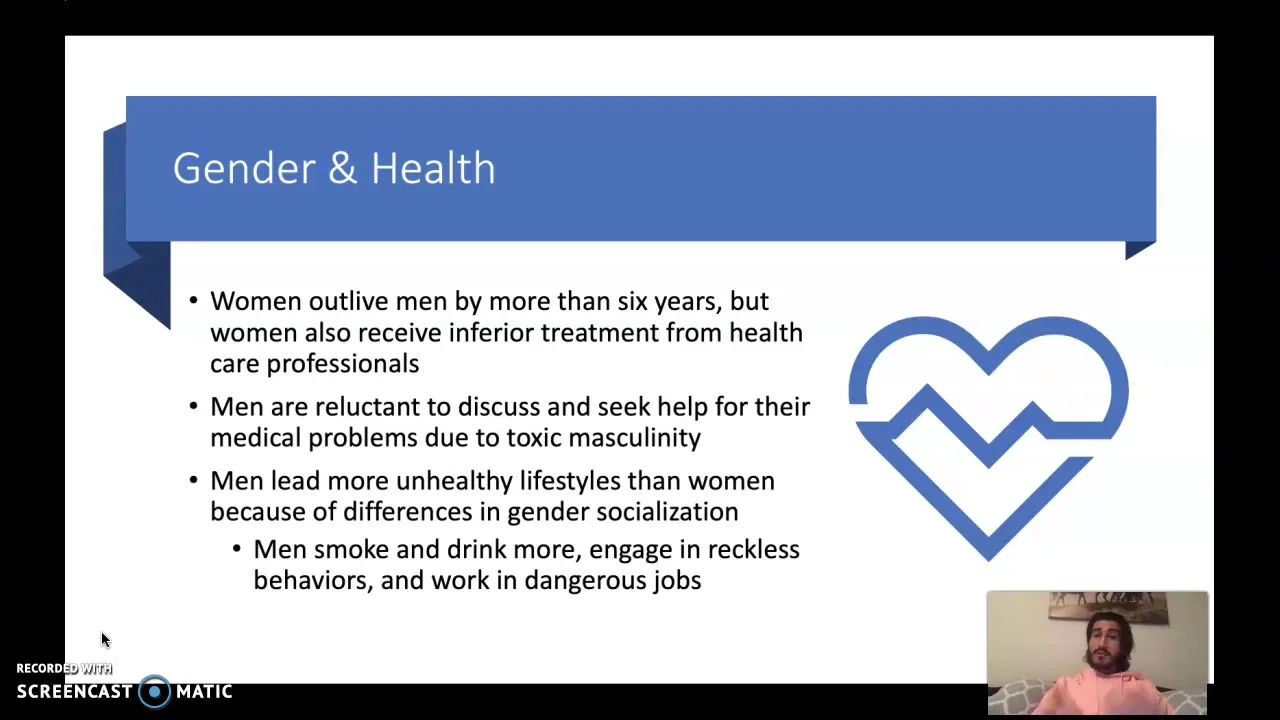
[Music] today we're going to look at class and health now this is part of my social inequalities and health inequalities series and it'll follow on from my first introductory video that i did a few months ago and so today we're going to specifically look at class and health now the main points we're going to think about today are think about class and health and how that relates to mortality and morbidity and i'll define those in a little bit i'm going to analyze explanations for some of these class inequalities as well um again these videos are meant to be a recap and obviously you know i encourage you to do further reading and all of my statistics are from ons office for national statistics unless i specify otherwise all right then so we can look at health in and in health and social inequalities in many different ways but um a good place to start is looking at class now i'm thinking of the british or the the um united kingdom class system the american class system is different so we're thinking of the traditional british class system and how that is divided up and also that is quite complex in itself because there's lots of ways that class can be divided now um in social sciences and in sociology we talk about social stratification so stratification we borrow that term from geology as in rock stratification but we're thinking of layers of society so we talk about social stratification and in most societies or probably all societies there is some form of social stratification and no matter how basic or complex that is and actually what we find is in the more affluent countries affluent meaning wealthy we find that there is a bigger gap between rich and poor now when we're thinking of social class there's lots of ways that we could um measure class and as i said it's very complex in the united kingdom and in britain traditionally there was the upper class the middle class and the working class and the underclass as well now the upper class would really or is kind of royalty landed gentry those born into money um historically um that have money the middle classes we can get into dividing up middle classes into sub-sections as well but for the purpose of this short video we'll just say middle class so middle class are um usually good money um professionals who earn um a good income own their own home um markers like this we can use and then the traditional working class are um maybe people who don't necessarily in their own home they might um do more cultural routine occupations things like that and then the underclass would be um is a different kind of category of people and the underclass is potentially people who are um long-term unemployed and involved in you know long-term crime and that kind of thing um okay so that's that's the kind of traditional way we would think of class um now in the uk the british government now use um an eight class system when they are looking at social class um and this is called the ns sec you should be seeing these um now but essentially this is an eight-class system um the ns sec and this is not actually about traditional social class this is a way of dividing people um through socio-economic status rather than um sort of the traditional class system so at the very bottom there h would be never worked at the very top it would be kind of higher managerial um and there's kind of lots of rooms in between but this one kind of is based on really um social status and how qualified you need to be for that role things like that it's not necessarily about money and although that does play a part okay so that's a little bit about kind of the general class system and we could probably do a whole video just on what is social class but i'm trying to link this to um to health so the more the sort of lower in the social stratification you are the more likely you are to have ill health lower life expectancy um and we're going to try and explain some of the reasons for that so i said i'd mention morbidity and mortality morbidity um is illness rates so rates of illness mortality or death rates okay now there's exact parameters for that but for the time being let's just say mortality is death rates morbidity and rates of illness okay now to highlight this class and health um divide we i'm going to put a graph up on the screen now from ons now this graph is the same as the nssec classification system that i showed you but now what they've done is they've divided it into men and women for each of those classifications and they've also looked at death rates okay so this isn't life expectancy this is um the rates of death so as you can see the higher up you get the less likely you are to die essentially and the lower down you are the more likely you are to die um but we will do um we will do a video on gender separately but you can see there that actually women actually fare quite well throughout no matter what class they're in whereas men the lower social class the less unskilled the work um sorry the more unskilled the work the lower life expectancy so the higher the death rates are for men um so there's a real issue there you might be wondering why this is um there's lots there's lots of reasons as to why this might be but particularly for men some of the key reasons um the more unskilled the job is the less stable it is in terms of consistent income now consistent income can have an impact on things like um what foods you can buy activities that you can do you know gym memberships not being able to do things like this and whereas if you're in a stable middle class job you would have more disposable income to do these you could make better choices about food um and recreational activities also um with the lower working class um males there's more um risk behaviors now men across the board take more risky behaviors and no matter what social class but this is more prevalent in the working classes so in sociology and social sciences risk behaviors are behaviors such as smoking drinking alcohol drug use dangerous driving you know taking general risks okay um now women do perform risk behaviors but actually men are more likely to to engage in risky behaviors and this can actually lead to shortened life expectancy now that's a point i haven't made actually and i will address this more in the gender video however um what the trend basically is between men and women that women live longer than men men die younger than women however women suffer with more ill health throughout their lives okay but we'll address that in another video um other reasons for ill health men tend to um not visit the doctor until something is very serious so it tends to be that maybe something's too escalated to um to deal with whereas if they'd have gone earlier they could have been treated for an illness again if a man is doing a kind of unskilled job on an unstable contract it may be very hard for them to leave and go to a gp appointment you know gp surgeries tend to be nine to five some are a bit a bit longer um and because of this men can't actually get out necessarily to go to an appointment and if they do they may lose pay and again that is a cycle so they're losing pay again the choices they can't make you know they're making bad choices on food exercise um diet things like that now i just wanted to highlight um another sort of case study now i've said most things are from the most data from the ons this piece of data that you're going to see now is actually from the world health organization 2008 and this was a study that was done um in glasgow and it culminated in something called the glasgow effect where um they looked at males in glasgow and actually looked at their life expectancy based on location and what they actually found was that there was a gulf and life expectancy um even in areas that are geographically close so areas of glasgow that were very close to each other one affluent one less affluent those that were in the less affluent areas of glasgow males had an average age of 54 whereas if they were in a more affluent area their average age was 82.
now they actually then compared this to other parts of the world and um the poorer area or the less affluent area of glasgow actually ranked below india the philippines lithuania poland mexico in terms of life expectancy for men um which is really shocking um and the united kingdom is one of the only places that there's such a wide gulf um within um health differences in health and class so i hope this has kind of set the scene a little bit for class and health and as i said keep an eye out because i'm going to be doing a whole series of this we're going to look at things like gender we may um address more issues around class certainly when we look at gender that'll come up again and we're going to look at disability race ethnicity thank you very much for tuning in and please feel free to subscribe and give the video a like if you have enjoyed it and leave a comment for me if you have any other ideas of future videos you'd like to see
Up Next
9:24
How Social Class Shapes Life Chances | Sociology
@crashcourse
598K views•2017-09-18
54:57
Contemporary Sociological Theory: Micro, Macro, Integrative
@NaSESYNC
45.7K views•2016-02-17
19:23
How to Analyze Conversations Scientifically | Elizabeth Stokoe | TEDx
@TEDx
1M views•2014-12-04
9:41
What is Sociology? The Sociological Perspective Explained
@crashcourse
4.6M views•2017-03-13
Related Study Plans & Knowledge Roadmaps
Structured learning paths in Sociology
sociology
Celebrity Culture: From Hollywood to TikTok
01Foundations of Celebrity Sociology
02The Rise of Micro-Celebrity & Digital Platforms
03Parasocial Relationships & Algorithmic Intimacy
+ 2 more learning modules
12h5 modules
Explore Roadmap
sociology
Hostile Architecture: Space, Power & Control
01Introduction to the Sociology of Space
02Social Control and Surveillance in the City
03Hostile Architecture and Defensive Design
+ 2 more learning modules
12h5 modules
Explore Roadmap
sociology
Loneliness Epidemic: Third Places & Isolation
01Foundations of Social Capital and Community Cohesion
02The Death of Third Places and Urban Space Erosion
03The Privatization of Leisure and Atomization
+ 2 more learning modules
12h5 modules
Explore Roadmap
sociology
Sociology of Tourism: Gaze, Power & Heritage
01Foundations of the Sociology of Travel and Leisure
02John Urry and the 'Tourist Gaze'
03Staged Authenticity and Cultural Commodification
+ 2 more learning modules
14h5 modules
Explore Roadmap