




























Social class significantly influences multiple aspects of life including parenting styles, educational attainment, political views, and health outcomes, with research showing that upper-class Americans live longer (approximately 4-6 years more than lower-income Americans), have better access to quality education and prestigious colleges, and hold different political and religious beliefs compared to lower-class Americans, thereby perpetuating inequality across generations.
How Social Class Shapes Life Chances | Sociology
Added:Basic concepts of social stratification, including how societies categorize individuals into socio-economic tiers.
Max Weber's sociological framework regarding 'Life Chances' and how opportunity is structurally determined.
The distinction between absolute and relative poverty, and how economic status is measured.
An introductory understanding of social mobility, specifically intergenerational versus intragenerational mobility.
The intersectionality of social class with other demographic factors such as race, gender, and geographic location.
Pierre Bourdieu's theories of cultural, social, and economic capital and their role in reproducing class privilege.
A critical analysis of the 'myth of meritocracy' and how systemic barriers contrast with individualistic views of success.
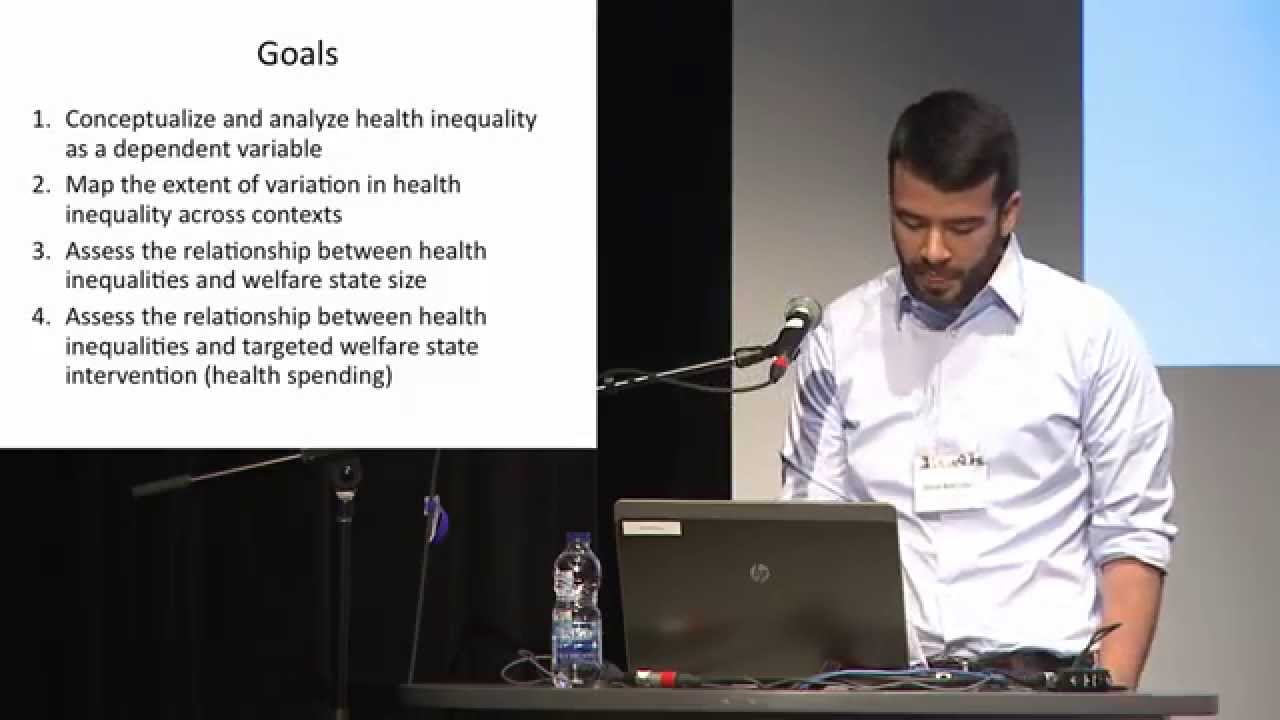
Public policy analysis of welfare state models and targeted interventions designed to reduce socioeconomic disparities in health and education.
598K views8Klikes9:24Original Release: 2017-09-18
Class matters. You probably already know that.
And not only because you’re a student of sociology, but because you’re a person who lives in a society.
But do you know how much it really matters?
Social class is huge determinant of many of the most fundamental aspects of modern life – from your education, to your beliefs, as well as your values, your occupation, your income, and not only how you live, but also how you die.
So let’s talk about how class plays out in the lives of Americans today.
[Theme Music] Class starts to matter at the very beginning of your life.
When we discussed socialization a few episodes ago, we talked about anticipatory socialization, or learning to fit into a group you’ll someday be a part of, like a gender or a race.
And one type of anticipatory socialization is class socialization, where parents convey to their children the values that go along with being upper class or middle class or working class.
Let’s take a simple example.
Suppose you’re a parent and your kid absolutely refuses to eat broccoli.
How do you respond?
Do you make them clear their plate and say that they shouldn’t waste food?
Or do you allow them to make decisions for themselves about what they eat?
Now, you may be thinking, “What?
How does eating broccoli have anything to do with class?” But how parents from different walks of life approach parenting can differ a lot by class, as American sociologist Annette Lareau found in her research on parenting styles.
Let’s go to the Thought Bubble to look at how social class can affect what kind of parent you are, or what kind you have.
In the 1990s, Lareau’s research focused on observing families of elementary school students from upper-middle class and working class backgrounds.
In doing this, she realized that parents had very different approaches to how they educated and disciplined their kids.
She found that upper-middle class parents tend to be very involved in their kid’s social and academic lives.
Think scheduled play dates, after school activities, checking their homework assignments every night.
The stereotype of a suburban helicopter mom isn’t too far from the mark for some of these families.
By contrast, working class parents – who were more likely to have less time and money to devote to these activities – were more likely to be hands off in structuring their kid’s free time.
These kids might be more likely to be playing with whoever is around their neighborhood than going on playdates.
Working class parents also tend to put a greater emphasis on obedience and discipline compared to their upper middle class counterparts, Lareau found.
While a working class parent might tell their kids to eat their broccoli “Because I said so,” an upper middle class parent is more likely to talk through decisions with their children in an effort to encourage autonomy.
Thanks, Thought Bubble.
So, yes, a toddler’s distaste for broccoli and their parents’ reaction to it, can tell us something about class.
And these trends in parenting aren’t the only difference in values and beliefs that we see across classes.
Political views tend to vary across class groups, too, with upper class Americans being more likely to be fiscally conservative and socially progressive, and lower class Americans being more likely to be the opposite.
Even religion varies by class.
Upper income Americans are more heavily represented in liberal Protestant groups like Episcopalians and Presbyterians, as well as Judaism, Hinduism and Atheism, whereas lower income Americans are more likely to identify as Evangelical Protestants or Catholics.
But beliefs and values aren’t the only thing that vary by social class.
A large component of class differences plays out through educational attainment and its consequences for success later in life.
Education is sometimes called the “Great Equalizer.” The more people who have access to quality education, the more equal a society gets.
Or so the thinking goes.
But whether you get a quality education varies by the social class you’re born into.
So we might be concerned that education will have the opposite effect, and will actually help pass inequalities from one generation on to the next.
There are a few ways that social class comes into play when we talk about education in the US.
First, where do you live?
Income segregation, or the tendency for families of similar income levels to live in the same neighborhoods, is incredibly common in the United States.
If you’ve ever gone apartment hunting in a big city, this might not come as a surprise to you.
An apartment in a “good” neighborhood, or an area with low crime, good schools, and better quality housing, costs way more than a home where crime and pollution are higher and education and job access is inconsistent.
One reason that access to education varies by class is that public schools in the US are funded mainly at the local level, so kids who grow up in affluent neighborhoods tend to have access to better schools, because those communities provide more funding.
So, living in a better neighborhood tends to mean access to better educational facilities, as well as to technology like computers, good teachers, and a wider variety of classes and extra-curriculars.
And that’s assuming you go to a public school.
Upper class children are more likely to attend private schools – and this trend continues when we get past high school.
We mentioned this last week – children who grow up working class or low-income are much less likely to attend college, and those who do are much more likely to attend public state schools or two-year community colleges.
Among elite colleges, most students don’t come from low-income families; they come from the very top of the income distribution.
A recent study of social class and college attendance found that 38 elite colleges including five in the Ivy League – Brown, Dartmouth, Penn, Princeton, and Yale – had more students who came from the top 1% than the entire bottom 60%of the income distribution.
Some of this inequality in college access is helped along by the policy of preferential admittance for so-called “legacy” students, whose parents or other family members attended the college.
Policies like this entrench class inequalities across generations by making it less likely that those from lower socioeconomic classes will move up the ladder.
Plus, the social networks formed within prestigious colleges often are the stepping stones toward jobs and financial success later in life, which again makes it more likely that inequality will get passed on to a new generation.
And of course, political and economic power tend to be concentrated among those at the top of the social class ladder.
Dreaming of being president when you grow up?
Of the ten presidents who have held office in the last 50 years, 6 attended an Ivy League school for either their undergrad or postgrad studies.
Every single one had at least a bachelor’s degree.
So education can seem less like the great equalizer in this case than the great barrier.
Without a college degree, there are jobs that are pretty much impossible to get.
The jobs that you can get without a college degree tend to come with lower prestige, lower pay, and a greater risk of occupational dangers.
Which brings us to the last class difference we’ll be talking about today: health.
Social class affects how you live – but it also affects how you die.
Mortality and disease rates vary by social class, with upper class Americans living longer and healthier lives.
A man in the 80th percentile, or top of the income distribution, lives an average of 84 years, while a man at the bottom, in the 20th percentile, lives an average of 78 years.
Women live longer than men typically. Yay for us!
But the income gap is still similar here, with women in the 80th percentile living about 4.5 years longer than those in the 20th percentile.
Why the huge gap?
Some reasons might seem obvious – if you have more money, you can probably afford better health care.
Or for that matter, afford any health care.
Others are maybe less straightforward.
For example, low income Americans tend to eat less healthy food.
Now, is that just a matter of different choices made by different people, or is it a systematic pattern that links class with eating habits?
Well, oftentimes unhealthy foods are cheaper, both in terms of money and time.
Lower class Americans tend to have less leisure time and less money to spend on cooking healthy meals.
After all, it takes a lot less time and money to pick up McDonald’s than to spend an hour cooking a meal with expensive organic vegetables.
Additionally, many low income Americans live in what are known as food deserts, or neighborhoods without easy access to fresh foods, like fruits and vegetables.
Other systematic class differences come from the occupations that different classes tend to hold.
Upper and middle class Americans are more likely to be in white collar, full time jobs, which generally have lower exposure to dangerous materials and lower risks of accidents on the job.
Not to mention more flexible work schedules.
Less danger and less stress = better health.
Plus, full-time jobs are more likely to provide benefit packages including health insurance and paid sick days.
It’s much harder to take care of your health if you can’t take the time off work to go to the doctor or rest and recover.
But that’s the reality for many working class Americans.
Class gaps in health outcomes are clearly about more than just having the money to pay for better healthcare.
It’s about occupation, neighborhood, income, education, and all the different ways that advantages like these can overlap to determine your life course.
That’s why social class matters; it gives us a way to identify the advantages and disadvantages that different groups of people share, and understand the consequences of those advantages and disadvantages.
Today, we discussed three types of class differences we see playing out in the United States.
First, the beliefs and values parents pass on to the next generation will vary by class.
Second, there are class gaps in educational attainment which help perpetuate inequality across generations.
And finally, Americans of lower socioeconomic status tend to have worse health and shorter lifespans than those with higher class status.
Next time we'll focus on a different aspect of socioeconomic stratification: social mobility – or, how your social position can change over your life time, or across generations.
Crash Course Sociology is filmed in the Dr. Cheryl C. Kinney Studio in Missoula, MT, and it's made with the help of all these nice people.
Our Animation Team is Thought Cafe and Crash Course is made with Adobe Creative Cloud.
If you'd like to keep Crash Course free for everyone, forever, you can support the series at Patreon, a crowdfunding platform that allows you to support the content you love.
Speaking of Patreon, we'd like to thank all of our patrons in general, and we'd like to specifically thank our Headmaster of Learning Ben Holden-Crowther.
Thank you so much for your support.
Up Next
32:13
Medicine as Social Control: Medicalization Explained
@shawnarohrman9232
369 views•2018-07-08

9:26
Georg Simmel's Metropolis & Mental Life Explained | Urban Sociology Lecture
@jaredbok3816
833 views•2023-07-01

11:31
Food Access and Agricultural Revolutions: A Geography Lesson
@crashcourse
117.1K views•2022-02-15
9:41
What is Sociology? The Sociological Perspective Explained
@crashcourse
4.6M views•2017-03-13
Related Study Plans & Knowledge Roadmaps
Structured learning paths in Sociology
sociology
Disaster Sociology: Risk, Power & Recovery
01Foundations of Disaster Sociology
02Structural Vulnerability & Social Inequality
03Ulrich Beck and the 'Risk Society'
+ 2 more learning modules
15h5 modules
Explore Roadmap
sociology
Celebrity Culture: From Hollywood to TikTok
01Foundations of Celebrity Sociology
02The Rise of Micro-Celebrity & Digital Platforms
03Parasocial Relationships & Algorithmic Intimacy
+ 2 more learning modules
12h5 modules
Explore Roadmap
sociology
Hostile Architecture: Space, Power & Control
01Introduction to the Sociology of Space
02Social Control and Surveillance in the City
03Hostile Architecture and Defensive Design
+ 2 more learning modules
12h5 modules
Explore Roadmap
sociology
Loneliness Epidemic: Third Places & Isolation
01Foundations of Social Capital and Community Cohesion
02The Death of Third Places and Urban Space Erosion
03The Privatization of Leisure and Atomization
+ 2 more learning modules
12h5 modules
Explore Roadmap