Inequality, Deserts & Culture in Food Systems
Learning Goal: Analyze the sociological construction of food systems, exploring how food deserts, culinary appropriation, and the globalization of diet reflect and reinforce class, racial, and geographic inequalities.
- Prerequisites: Introduction to Sociology (recommended but not required)
- Estimated Total Study Time: 12 Hours
Module 1: Sociological Foundations of Food Systems
This module introduces the key concepts of food sociology. You will learn that food is not merely a biological necessity, but a complex social construct heavily influenced by power, social class, and historical institutions. By examining food through a sociological lens, we can uncover how culinary habits reflect social hierarchies and how food systems operate from "farm to fork" to reproduce or challenge inequality.
Recommended Videos

Why this video: This foundational lecture provides a systemic overview of the sociology of food, tracing the historical evolution of food production and consumption from the household to the globalized industrial complex. It introduces how food habits are deeply intertwined with individual identity, societal structures, and systemic changes.
Knowledge Checkpoint:
- Understand how food transitioned historically from a household-centric practice to an industrial system.
- Explain how individual food habits are influenced by broader societal structures.
- Define the central concerns of the sociology of food culture.

Why this video: This short explainer by Johns Hopkins University clarifies the structural scale of modern food systems. It introduces how everything from production, processing, storage, and consumption operates globally and locally, setting up the framework to analyze structural disparities.
Knowledge Checkpoint:
- Define the term "food system" and map its components from "farm to fork."
- Describe the multi-scale nature of food systems (local to global).
- Identify the social and environmental impacts of the current Anthropocene food system.
Why this video: Sociologist Alison Alkon explores the dual nature of food: its potential to act as a bridge for connection, and its historical role as a divider that reinforces structural exclusion, discrimination, and economic inequality.
Knowledge Checkpoint:
- Explain how food acts as a marker of social power and economic stratification.
- Differentiate between the unifying and dividing aspects of food systems.
- Define "radical empathy" as it relates to food justice.
Module 2: Geographic Inequality: Food Deserts & Food Apartheid
This module transitions from theoretical foundations to physical geography. You will investigate how urban planning, historical redlining, structural racism, and corporate capital flight create disparities in food access. The module critically examines the terminology used to describe these spaces, contrasting the passive, naturalized term "food desert" with the politically active term "food apartheid," which points directly to systemic policy failures.
Recommended Videos

Why this video: This rigorous CNBC documentary offers a deep, data-driven analysis of supermarket redlining and the economic factors that drive grocery conglomerates to avoid low-income Black neighborhoods. It exposes the corporate logic and structural policies that produce food deserts.
Knowledge Checkpoint:
- Define supermarket redlining and explain how it differs from historical housing redlining.
- Identify the economic and racial factors that corporate grocery stores use to justify geographic discrimination.
- Discuss the health and socioeconomic consequences of grocery store closures in urban communities.

Why this video: Using a geographical lens, this Crash Course episode frames food insecurity and food deserts within global trade networks, economic barriers, and geopolitical challenges. It explains why food insecurity is fundamentally a problem of distribution and power rather than overall global food scarcity.
Knowledge Checkpoint:
- Explain the geographical indicators used to define "uneven food access."
- Critique the myth that food insecurity is caused solely by agricultural underproduction.
- Connect global trade policies to local food distribution failures.

Why this video: This feature-length documentary explores the day-to-day realities of individuals living in food deserts within low-income urban and rural communities. It provides a stark look at the physical, economic, and systemic barriers to sourcing fresh, nutritious ingredients.
Knowledge Checkpoint:
- Contrast the USDA's definitions of food deserts in urban environments vs. rural environments.
- Describe the daily logistical and financial barriers faced by families living without local supermarkets.
- Analyze how convenience store reliance impacts long-term public health trends in marginalized communities.
Module 3: Culinary Appropriation & Power Dynamics
This module tackles the socio-cultural tensions within the culinary world. You will analyze the thin line between cultural appreciation and culinary appropriation. In particular, you will explore the economic and racial power dynamics of culinary gentrification—where traditional, low-cost "peasant foods" are rebranded and monetized by dominant groups, often pricing out the very communities that created them.
⚠️ Curriculum Note on YouTube Polarization: The public discourse around "cultural appropriation" is highly prone to sensationalist and politically polarized "culture war" rhetoric on YouTube. To maintain academic rigor, focus on the structural transfer of capital, credit, and labor. To supplement this module, you are encouraged to independently search academic databases (e.g., JSTOR or Google Scholar) using the terms "culinary gentrification" and "culinary coloniality" for peer-reviewed literature.
Recommended Videos

Why this video: This critical, long-form commentary outlines how food gentrification functions systemically. It demonstrates how traditional dishes from marginalized cultures are repackaged with "trendy" or "clean" rebranding, transferring capital and culinary authority away from the originating community.
Knowledge Checkpoint:
- Define culinary gentrification and explain how it alters the market value of traditional ingredients.
- Explain how rebranding foods as "clean" or "elevated" carries implicit racial and class biases.
- Analyze how capital and profit flow during the commercialization of immigrant foodways.

Why this video: This concise video provides a clear, structural definition of cultural appropriation in food, emphasizing that the issue is not about who is allowed to cook a dish, but who profits from it and who loses cultural sovereignty in the process.
Knowledge Checkpoint:
- Distinguish cultural appropriation from benign cultural exchange based on power and privilege.
- Explain the role of asymmetrical compensation and credit in culinary appropriation.
- Discuss how privilege enables certain actors to commercialize marginalized cultures without social penalty.

Why this video: This pop-culture commentary illustrates a real-world case study of food gentrification: the upscale commodification of historically cheap, accessible foods (such as grilled cheese or simple street foods). It highlights how working-class staples are repackaged for high-income consumers.
Knowledge Checkpoint:
- Identify the social mechanics by which a "survival food" or "cheap staple" becomes a luxury commodity.
- Discuss how the gentrification of cheap foods impacts low-income food security.

Why this video: Culinary historian Michael Twitty discusses the intersection of historical trauma, race, sexuality, and foodways. He reframes soul food and Black southern culinary traditions not as simple "low-brow" comfort food, but as a sophisticated historical archive of resistance, labor, and survival.
Knowledge Checkpoint:
- Describe how culinary history can serve as a form of social documentation and racial resistance.
- Unpack the historical and social stratification behind "soul food."
- Contrast the historical devaluation of Black culinary labor with the contemporary fine-dining industry.
Module 4: The Globalization of Diet & Westernization
This module investigates how transnational food corporations and global trade routes export Western dietary patterns. We will use George Ritzer's sociological theory of McDonaldization (focusing on efficiency, predictability, calculability, and control) to analyze how local food systems are homogenized. Additionally, you will examine the "nutrition transition"—how the Global South shifts from traditional diets to ultra-processed foods, displacing local agricultural systems and generating global health crises.
Recommended Videos

Why this video: This theoretical video explains sociologist George Ritzer's classic framework of "McDonaldization." It breaks down how fast-food organizational principles—efficiency, predictability, calculability, and control—have crossed over from food systems to standardize global culture.
Knowledge Checkpoint:
- Define the four pillars of George Ritzer's McDonaldization theory.
- Explain how predictability and calculability lead to the homogenization of local food cultures.
- Connect McDonaldization to the rise of corporate-dominated food production.
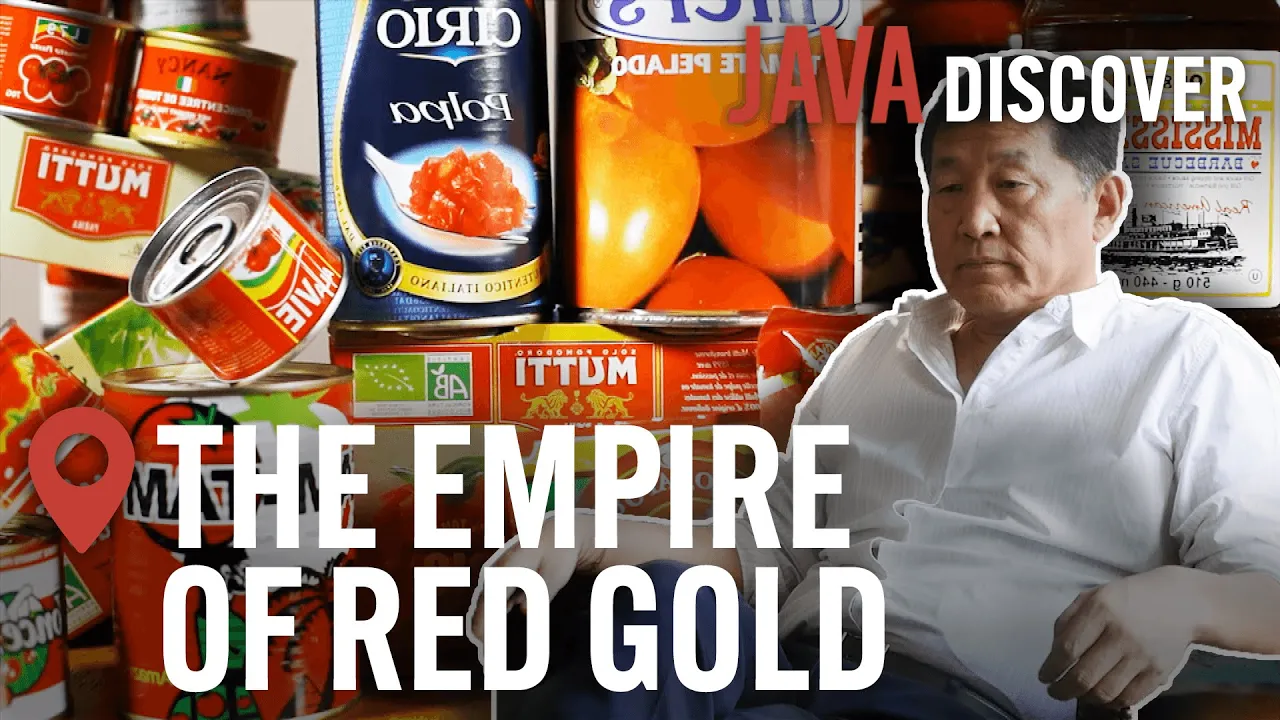
Why this video: This documentary clip provides a critical case study of globalized food trade disrupting local agrarian systems. It traces how subsidized tomato imports from industrial nations like Italy and China devastated local farming networks in Ghana, forcing migration and economic dependence.
Knowledge Checkpoint:
- Analyze how international trade agreements and subsidized imports undermine local agrarian economies in the Global South.
- Discuss the social and labor migrations caused by the collapse of local farming networks due to globalization.
- Explain how globalized "food dumping" alters local food dependency.
Why this video: Academic Phillip Baker breaks down the politics behind the "nutrition transition." He explores how transnational food companies aggressively market ultra-processed foods in developing countries, shifting dietary habits and creating a global double-burden of malnutrition.
Knowledge Checkpoint:
- Define the concept of the "nutrition transition."
- Identify the political and corporate actors that influence national dietary patterns.
- Analyze how corporate globalization exports chronic health crises like obesity and diabetes.

Why this video: This extensive, academic lecture provides a deep dive into the macroeconomic relationships between global food systems, ecological health, and physical health. It explores the globalized transition from local agricultural models to standardized Western diets.
Knowledge Checkpoint:
- Detail the macroeconomic link between Western corporate dietary export and global public health metrics.
- Contrast standard malnutrition (caloric deficit) with the modern "malnutrition of abundance" (ultra-processed diets).
- Discuss the systemic global changes required to address ecological and health degradation in the food supply chain.
Module 5: Food Justice, Sovereignty, and Systemic Resistance
This final module focuses on solutions and grassroots resistance. You will study how communities, urban farmers, and Indigenous groups are reclaiming their food landscapes. We will unpack the critical difference between food security (simply having enough food to purchase) and food sovereignty (the democratic power to define, produce, and control one's own food systems).
Recommended Videos
Why this video: Prominent food justice activist Karen Washington describes her 38 years of experience pioneering urban farming in the Bronx. Washington explains why she coined the term food apartheid to replace the term "food desert," framing unequal food access as a systemic human rights violation rather than an accidental geographic feature.
Knowledge Checkpoint:
- Contrast the terms "food desert" and "food apartheid" using Washington's political and systemic framework.
- Explain how urban farming acts as a grassroots tool for neighborhood empowerment and systemic resistance.
- Discuss how community land control combats food apartheid.

Why this video: Nutritionist and tribal member Valerie Segrest presents the Indigenous perspective on food sovereignty. She explains how reclaiming traditional, sustainable diets is central to decolonization, ancestral healing, and restoring biological and ecological health.
Knowledge Checkpoint:
- Define "Indigenous food sovereignty" in the context of colonization and land rights.
- Explain how traditional diets (like those of the Coast Salish) serve as a defense against systemic native health crises.
- Describe the spiritual and ecological principles that distinguish Indigenous foodways from corporate food systems.

Why this video: Agroecology pioneer Miguel Altieri outlines how agroecology functions simultaneously as a scientific agricultural methodology and an international social movement. He provides the conceptual tool to differentiate "food security" from "food sovereignty."
Knowledge Checkpoint:
- Differentiate between food security (having market-based purchasing power) and food sovereignty (community control over food production).
- Explain how agroecology integrates ecological science with local, traditional farming practices.
- Discuss the role of peasant movements in leading global sustainable agriculture.

Why this video: Mariah Gladstone discusses the structural trauma of dietary colonization (such as government commodity rations on reservations) and shows how Native populations can heal and combat chronic illness by physically and culturally reclaiming pre-colonial ingredients.
Knowledge Checkpoint:
- Analyze how historical US government policies (e.g., reservation isolation and food commodities) disrupted Native health.
- Detail the foundational ingredients of a pre-contact Indigenous diet.
- Explain how digital activism and culinary education can revitalize marginalized food culture.
Course Map
This flowchart maps the recommended progression through the curriculum. Module 1 provides the foundational sociological tools, which split into geographic, cultural, and global paths of analysis before converging on systemic solutions and resistance in Module 5.
Key People Index
- Karen Washington: A veteran Bronx urban farmer, activist, and physical therapist. Washington popularized the term "food apartheid" to highlight that unequal food access is a systemically engineered product of structural racism and policy decisions, not an accidental natural occurrence like a "desert."
- George Ritzer: An American sociologist who developed the theory of "McDonaldization." His framework adapts Max Weber's theories of rationalization to show how the principles of fast-food chains are colonizing modern global institutions.
- Michael Twitty: A Black, Jewish, gay culinary historian and educator. Twitty's scholarship centers on gastronomy and historic documentation, reclaiming Southern foodways and soul food from modern commercial erasure by detailing their roots in the labor of enslaved people.
- Valerie Segrest: A nutrition educator and co-founder of the Muckleshoot Food Sovereignty Project. Segrest works to revitalize Indigenous food cultures in the Pacific Northwest, framing nutrition as an ecological relationship.
- Miguel Altieri: An agroecology professor and researcher. Altieri is a leading voice in global peasant movements, demonstrating that ecological farming practices (agroecology) are essential to decoupling agricultural production from exploitative multinational markets.
Final Self-Assessment
Complete this comprehensive self-assessment to verify your mastery of the curriculum's learning goals.
- I can articulate why food is a social construct and provide examples of how social class dictates diet and health outcomes.
- I can explain the sociological difference between the passive term "food desert" and the political term "food apartheid."
- I can define "supermarket redlining" and list two historical or systemic reasons why grocery stores avoid low-income, Black neighborhoods.
- I can distinguish between cultural appreciation (respectful exchange, sharing credit) and cultural appropriation (extraction of cultural labor, asymmetric capital profit).
- I can define "culinary gentrification" and explain how upgrading "cheap peasant foods" affects the community of origin.
- I can list and explain the four components of George Ritzer's McDonaldization theory: Efficiency, Predictability, Calculability, and Control.
- I can outline how the "nutrition transition" works and why corporations aggressively target developing countries with processed diets.
- I can describe how subsidized agricultural imports from wealthy nations disrupt regional farm economies in the Global South (using the Ghana tomato industry as a case study).
- I can define "food sovereignty" and explain how it differs from the market-dependent model of "food security."
- I can summarize how Native American groups use ancestral diet reclamation to heal from historical trauma and counter health disparities.