




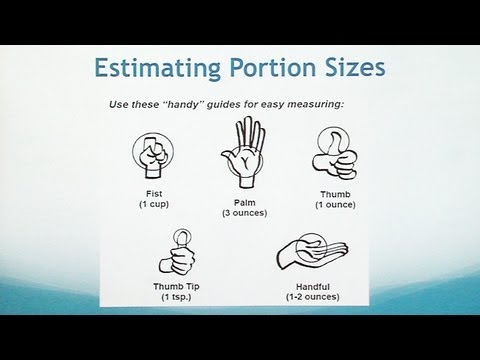



![Nutrition and Dietary Pattern [Part-1] // FON-2 || Chap-5 || BSN, Exam Study|| KMU ,MCQS Pattern.](https://i.ytimg.com/vi/Us9K-GF1BDw/hqdefault.jpg)





![[Day 4] 2021-22 Sustainable Development Transformation Forum](https://i.ytimg.com/vi/adoRfLwLANo/maxresdefault.jpg)

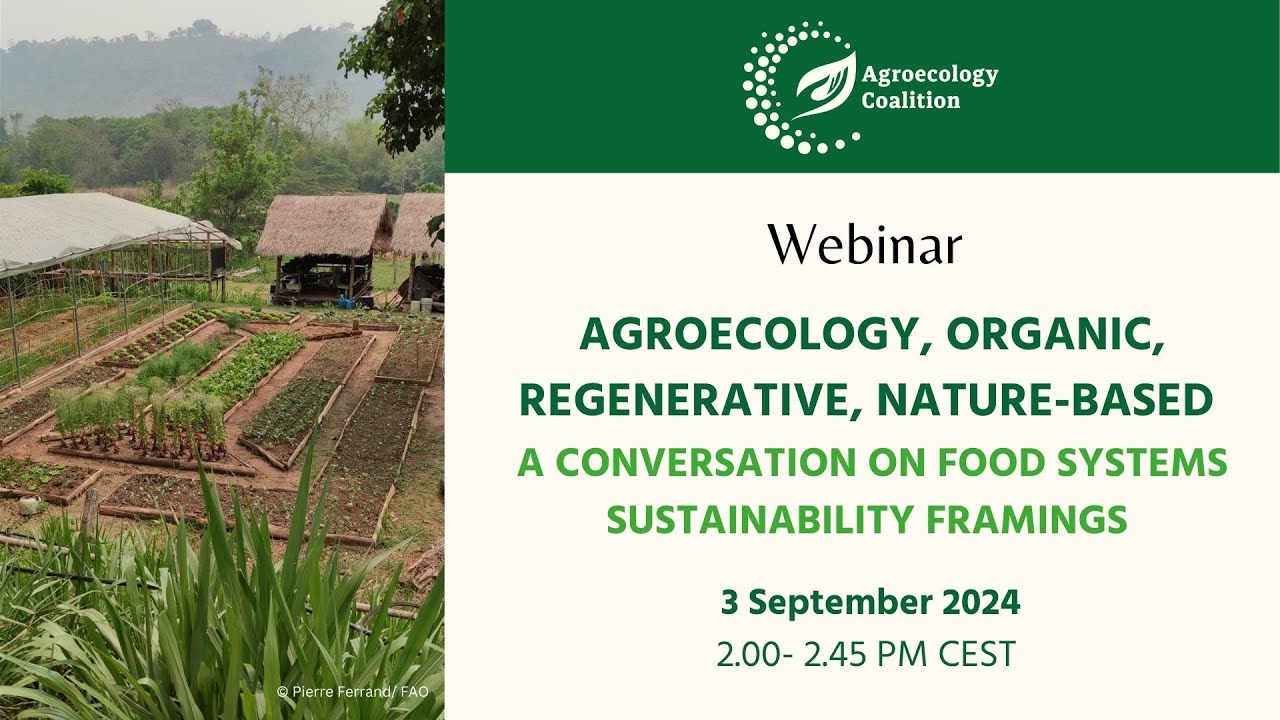




![♻️ANÁLISIS DE CICLO DE VIDA♻️ de tu producto o servicio📦 [ISO 14040 y 14044]](https://i.ytimg.com/vi/_XqiqmrH_hg/maxresdefault.jpg)

A food system is an interconnected network spanning from farm to fork, encompassing production, processing, distribution, and consumption, which interacts dynamically with economic, social, environmental, and political systems; understanding this complexity is essential for addressing global challenges like climate change, nutrition transitions, and food security inequities.
Food Systems & Diets | Anthropocene Mini-Course | Johns Hopkins
Added:Understanding the concept of the 'Anthropocene' as a geological epoch defined by significant human impact on Earth's ecosystems.
Basic knowledge of global food supply chains, including the stages of agricultural production, processing, distribution, and consumption.
Familiarity with key environmental challenges, such as greenhouse gas emissions, biodiversity loss, deforestation, and freshwater scarcity.
A foundational grasp of nutrition science, specifically how dietary patterns impact human health and chronic disease prevalence.
In-depth analysis of the EAT-Lancet Commission's planetary health diet guidelines and the socio-economic barriers to its global adoption.
Exploration of sustainable agricultural innovations and frameworks, such as regenerative agriculture, agroecology, and vertical farming.
Study of food policy and governance, including agricultural subsidies, food labeling laws, and international climate agreements targeting food systems.
Methodologies for conducting Life Cycle Assessments (LCA) to quantify the precise ecological footprints of specific food products and dietary choices.
816 views0likes59:01Original Release: 2020-07-23
Welcome.
My name is Jess Fanzo, and I am a professor at Johns Hopkins.
Really happy that you're joining us for this six week tour in Eating in the Anthropocene, a mini course in the Hopkins at Home Program.
In the next six weeks, we're going to examine the complex interactions between food systems, diets, and the environment and the political, social, and ethical issues to achieve both human and planetary health.
We'll discuss challenges in the food system as well as opportunities.
How can we achieve human and planetary health in equitable ways?
Now more than ever with the COVID pandemic, we're seeing the importance of the food system in our daily lives and how the global economy moves and is shaped.
For the course, we'll divide up this very complex, large topic into six areas.
In the first module, we'll talk about food.
What are food systems?
Why do we care about food policy?
Why should we even care about food?
So it will be an introduction to food systems to ground us all in where we need to go.
The next week, we'll talk about diets and their importance in human health and nutrition.
We'll talk about how diets are changing.
We'll look at if diets that people are eating around the world are healthy, and how those are contributing to the burden of disease.
The next week, we'll put diets and food systems and place them within climate change.
What is the role of food systems in contributing to climate change and how is climate change impacting the functionality, efficiency, and the ability for food systems to deliver the kind of diets that we want to consume in the world?
In the fourth week, we'll talk about social and equity issues of diets and food systems.
We'll bring up some ethical implications of the way we eat our food, and some of the major inequities that we're seeing around the world.
Again, the COVID pandemic really playing into this.
And the last two weeks, week five and six, we will look at well, what do we do?
How do we achieve healthy and sustainable and equitable food systems on both the individual level and the systemic level?
And that'll take us to our last week.
So let's get started.
Why should we care about food and food policy?
Why does it even matter?
Well, Wendell Berry once wrote, "Eating is an agricultural act.
Eating ends the annual drama of the food economy that begins with planting and birth.
Most eaters, however, are no longer aware that this is true.
They think of food as an agricultural product, perhaps, but they do not think of themselves as participants in agriculture.
They think of themselves as consumers."
And that's largely true.
Many of us don't think about the way food moves from being planted in grounds or being harvested from oceans, or being raised on grassy fields and the entire process of how that food is moved, manipulated, processed, and stored, to when it hits your plate.
So we need to be thinking about food and where it starts from and where it goes before we consume it.
But eating is also an ethical act.
In moving food around the world, in producing food, in consuming food, we are met with many ethical implications, many ethical challenges.
And we'll talk about this throughout the six weeks.
We have issues of sustainability, equity, food security, or security of food, ensuring that everyone has access to that food and it's not used as a weapon of war.
Culture, the culture of food.
Who is responsible for ensuring that the world is well fed?
The geography, where you live.
Vulnerabilities.
Is the food system fair to everyone?
Who should be held accountable?
And conflicts within the food system or conflicts that impact the food system.
So eating, while we often think of it as pure enjoyment or for survival, it also poses many ethical dilemmas.
I think all of you know food holds a very special place in society.
It's obviously very necessary for survival.
It's critical for nutrition or nutritional status, our health, and our overall wellbeing.
The nutrients found in food, the complex macro and micro nutrients, and the phytochemicals that make up those foods are critically important for human health.
But food also shapes our identity.
It shapes our culture, our traditions, religion, our social interactions.
Think about how much food is surrounded by social occasions and status.
What kind of food do you get access to?
Is it high quality food, low quality food?
It also makes a big contribution to economies.
Most the civilizations of the world were built upon agriculture, agrarian societies.
And as countries develop through economic and structural transformation, they may shift into other industries like services and manufacturing, but largely, most civilizations were built on and born out of agriculture systems.
Food depends on ecosystems, landscapes, environments, and earth systems.
And there's a very special kinship between food and those ecosystems and environment.
Food influences policy and politics in many different ways.
Think about food trade, very political.
And most importantly, food gives pleasure.
Food is something that we take in everyday, of course, for survival, but it has incredible pleasure associated with it.
Food is also exceptional.
It's considered exceptional because it impacts what we value.
We value human life, without food, there's no human life.
It's necessary to eat and to be able to make choices, and there's a relationship there.
Food is also exceptional because we value culture, culinary traditions, eating practices, agriculture landscapes, the way we organize ourselves.
We also value the lives of nonhuman animals.
Some care more than others about animal welfare, but for many living in the world, we do care about our relationship with animals and some value that animal relationship, and there's an ethical dilemma there about consumption and production of animals.
And we value the environment, the natural resources and the biodiversity that builds our food system, that makes up the backbone of our food system.
One can often think, well, everyone has the right to food.
The right to adequate food is realized when everyone has the physical and economic access at all times to adequate food or the means for its procurement.
The right to food has not been fully realized around the world.
It's explicitly and directly recognized as a right, as a human basic right, in only 23 countries that you can see here.
And with that, not very many countries have it as a standalone right.
It might be part of another right under standards of living or quality of life.
So this creates incredible conundrums when we think about food policy and food politics and that many governments do not recognize food as a human right.
So what is food policy?
Well, it takes many forms.
You can think about many different scenarios of what shapes a food policy.
You'll see action plans in countries, strategies, frameworks, legislation, bills, laws, regulations, guidelines, you can think the United States has their famous dietary guidelines, standards, and codes of practice.
And what it tries to do, food policy, is integrate different elements of the food system, which we'll talk about in the next unit.
And it spans the web of institutions, infrastructure, people, and processes, and many influence that policy.
There's many influencing factors, many influencing entities and many interests, some conflicting, some in partnership with countries' plans.
And I really like this quote.
This is from Kelly Parsons and Corinna Hawkes, "Collectively, food policy shapes who eats what, when, where, and at what cost.
It affects our nutrition and health, our livelihoods, and our communities, our cities and countryside, our nature and climate now and for future generations.
Food policy concerns the people whose jobs involve growing, moving, processing, and selling food.
Because everybody eats, food policy affects everyone.
It matters, and indeed it does."
So here are some examples of what governments can do in the area of food policies.
They can tax things, think about the soda and junk food taxes that are gaining in popularity.
They can regulate, think of environmental standards or regulating the safety of foods.
They can subsidize.
Think about agriculture subsidies.
So subsidizing corn, dairy, to ensure that those staple grains are being produced in the country at the lowest cost to farmers.
Redistributing income, food stamps, or safety nets.
Providing direct services, school meal programs, feeding prisons, feeding military.
Providing information or guidance like the dietary guidelines, and encouraging competition like antitrust laws.
This table on the right from Per Pinstrup-Anderson maybe about nine years ago is a great view of how food policy has changed over the years.
And you can see two columns.
It says food policy old and food policy new across different dimensions.
And food policy really has changed and has tried to keep up with the current changing world.
So way back, most food policy was focused on rural people and places.
But now with the urbanization of the world, we see a lot of food policies focusing on urban food.
You can think about supply chains, which we'll talk about.
Short, small number of actors, food not moving very far, and now very long food value chains or food supply chains or foods moving great distances around the world.
Packaging way back when, not a lot of packaged processed foods.
Now a lot of processed packaged foods.
So you can think about how much things have changed in the food policy space, a lot of this science driven, a lot of this politically driven.
But what we see is that there's many different changes that have happened over the last few decades in the food policy space.
And what's important to remember is that food touches on every element of society.
This is a graph showing you how food is important for economic development.
It's important for education, culture, and social cohesion, the environment, national security, and health.
This diagram lays out why food touches on these different elements of society and can contribute both positively and negatively towards these elements.
But we know that if done right, if policies are done in the right way, in a comprehensive way, you can really have co-benefits across these elements where health, environment, and the economy can come together around food systems and have these multiple benefits across many systems that our society engages with.
And we'll talk about this a lot over the next six weeks.
But food touches on everything.
It can have positive and negative effects, but there is an opportunity to ensure that there's co-benefits across many domains of society.
Food touches on not only food policy, but it touches on many other policies that governments work on.
Think land tenure, public health, energy, environmental regulations, health policy, labor, minimum wage policies, public procurement.
So food system policies touch upon many other policies of countries.
We need to think about the coherence of those policies and how food plays such an important role in bringing those together.
And one of my last slides here is food politics.
We have food policy, but food politics and politicking also matter.
And this is where food policies are enacted, promoted, squashed, silenced.
And this is where the rubber meets the road in how food policies play out in countries.
So governance, power dynamics, and the political economy that shape food policies are critically important.
And we need to understand the many actors that are involved in shaping food policies and the politics of that.
And we'll talk about that in module four of this first session.
There're many different actors that are engaging along the value chain.
So, I'm hoping we can delve into some of these questions over the next six weeks.
How do policies and programs influence change towards the food system the world wants?
How do we do that?
Who's responsible for that change and how do we hold those who are responsible accountable?
How can we shift the global food supply to ensure it is healthy, economically profitable, and equitable?
Can we have all of that?
How can we shift consumer demand that meets health planning and social equality standards?
And last, how can we ensure the food system can be more resilient in the context with the many drivers that are shaping food systems, climate change being the big one?
And I'll see you on the next set of week one.
Welcome to week one, module 1.2.
Let's get started.
So, what are food systems?
This is a very complex graph depicting food systems.
As you can see, it's made up of many different actors, many different elements, many different activities across varying ranges of scale from global to very local.
Let's break down what this means.
So, what is a food system?
It is an interconnected system of everything and everybody that influences and is influenced by the activities involved in bringing food from farm to fork and beyond.
So you can think about food systems as being produced, it's stored, it's processed, it's packaged, and then it's delivered to markets or restaurants.
That is the whole chain of how food moves through a food system.
We often talk about food supply chains, or what's called sometimes value chains.
We have drivers that are shaping and altering these food chains, and we have the entities, institutions, and people involved in those.
And these interconnections between these elements shape economies, they shape health, they shape politics, environment, and society.
And so just to get us grounded, what is in a name?
The term food system is generally thought of in one of three ways.
You'll often hear the food system, an interconnected system of everything and everybody.
That's often thought of in a global way, our interconnected food system.
You'll hear a food system, a food system in a specific locality or a specific context.
You can think of a food system in Baltimore or DC.
And you'll often hear food systems, the totality of the different types and diversity of food systems in different localities and contexts.
There's many different types of food systems.
And this is the one that I prefer to talk about because we have many different food systems that connect together at very different scales and different characteristics.
So why should we care about food systems?
Well, there's increased attention to the importance of food systems in shaping diets, health, the economy, and the environment.
Our understanding of food systems has really ramped up in the last five years, particularly because of some key publications that have come out articulating the importance of food systems.
The UN High Level Panel of Experts report here in the front, the Global Panel on Agriculture and Food Systems and Nutrition report, the Global Nutrition Report, and many others have emphasized the importance of food systems and have really described them in quite detail.
The sustainable development goals, the UN sustainable development goals call for a renewed focus and action on food systems with one goal dedicated to food systems, that being SDG2.
So why even talk about systems?
Why do we care about systems?
Well, just characterizing systems, they're heterogeneous, actors matter in what part they interact with in a system.
Systems are dynamically interactive, they have feedback loops.
They learn, they adapt, they break down, they're non-equilibrated.
They are dynamic.
They're moving, they're not static, and they're not reductionist.
They're not focusing on one laser point issue.
They're looking at the whole and how that whole engages within the sum of its parts.
So that is a new way of thinking.
It's also an old way of thinking.
There's people who focus on systems, system analysts, but it is a new way of thinking when we think about food systems.
It was very much focused on agriculture, production, and not thinking about the entire supply chain.
So taking a food systems approach allows for us to look more at the engagement of food systems and society and how it engages with other systems like the health system and the environment system.
This is a diagram, I know it's complicated, but it shows you food systems, and I want you to study it.
And what it shows is the elements of food systems.
Let's start here.
Food supply chains, food is produced on landscapes.
It's stored, it's distributed, it's processed, it's packaged, and then it hits markets and retail and restaurants.
Then food enters what we call the food environment.
This is the place where you as the consumer engage with the food system.
You walk into that environment, be it a supermarket, a restaurant, a corner store, an open wet market, and you look at what's on offer.
You bring with yourself your own individual influences, your economic, your willingness to pay, how much income you make, how much information and knowledge you have, your desires and aspirations, your preferences, and how far, how long does it take for you to get to the market?
Your own situational context.
The food environment itself influences your decision making along with your own individual factors that are influencing your decision making.
What kind of food is available?
What's on offer?
Is it affordable?
Is there high food prices?
What are the product properties?
Is it safe?
Is it of high quality?
Is it convenient type food?
What about the vendor properties, the location and the type of retail, the food messaging, advertising, sales, buy one, get one free?
All of these are influencing your decision making in positive and negative ways.
And this then leads of course, to your own consumer behavior, diets, and the major outcomes of the food system, nutrition, health, economic, social, environmental outcomes.
Along the top are these external drivers.
These are exogenous to the food system, but influencing the food system, climate change, globalization and trade, income growth, urbanization, population pressure, politics.
These are all influencing and shaping food systems in both positive and negative ways that we'll talk about.
And this is another way to think about the food system.
And this is looking at the barriers and opportunities for eating, and you have these many different layers.
You have your individual immediate layer, your gender, your age, your personal norms, your education, your income, your eating behaviors.
But as you start to move out, you have other influences on eating, social norms, your social support, your race, ethnicity, your community environment, your workplace, your school environment, food availability, the local stores, accessibility to those stores.
You have agriculture and the food industry that's shaping that, the availability and the influencing, those food environments, you have governmental influences on food policy, food assistance programs, and then you've got global issues, climate change, global trade, food distribution around the world.
So you can see this is a very complex, layered, influential sphere around your plate.
Food systems are also not static.
And I think this is really important.
I showed you that framework earlier, the boxes and arrows, but they don't really show the dynamism, the temporalism, the spatial nature of food systems.
How they're being shifted, and transformed, and dismantled depending on a lot of those drivers.
But also depending on the supply of food in the world and the demand for that food in the world.
Resiliency of food systems is critical.
And we're seeing this play out in COVID that food systems are not so resilient and there's many areas and cracks that we're starting to see in the food system that prevent a resilient, robust food system.
Another key piece about food systems is they act across multiple levels, local, national level, regional, and global.
And you can think about value chains at the very local level, home grown type, local farmers' markets to very global, massive, hyper supermarket type situations.
And these of course, lead to different outcomes depending on the scale of businesses, communities, and households.
So it's important to remember that food systems act across many different levels from very long to short value chains, global to local.
So it's important to be considering that.
And last, food systems interact with other systems, an impact on one system can affect another system.
So let's take the health system.
The COVID pandemic, we had a shock to the health system.
Ebola, a shock to the West Africa health system.
And that's had significant implications on the food system.
So you can think about how food systems engage with other systems.
Take the environmental system, climate change, climate related natural disasters.
These can have big impacts on the food system as well as the health system.
So these systems do not sit in silos.
They interact with each other in very profound ways, both positively and negatively.
Welcome to week one module 1.3.
Let's get started.
So what influences food system transformation?
Look at these very different photos.
In one photo here on the left, you'll see a young girl who's struggling to consume enough food.
Very subsistence.
On the other side is this Amazon walk in walk out type store, very modern, very high tech.
It's incredible to see these two very different food systems.
One very subsistence, very rural, a lot of hunger, the other very highly processed packaged foods, a lot of choice, a lot of diversity and very different costs of course, associated with that.
So why do we have such diversity within our food systems?
Let's get into that.
Well, to start with, there's still a lot of debate about what is the ideal food system?
How are we going to feed the world?
How are we going to feed the world well by 2050, with nine, 10 billion people on the planet?
There's a lot of debate.
And the debate is nowhere near over how to do that.
How do we make our food systems robust, feeding the world and in an equitable way, and producing healthy food, not only for ourselves and for the planet?
Now on top of that, you can throw this planetary health has come to the forefront over the last several years.
Climate change has garnered attention.
We're going to talk in more detail about that in week three, but there's been a plethora of reports, the Lancet EAT Commission report, the Intergovernmental Panel on Climate Change and Land report, the World Resources Institute report, and many others that have highlighted the importance of food systems.
We can think about feeding the world, but how are we going to feed the world and stay within planetary boundaries?
There's many different theories of how to feed the world, increasing food production, that's what our agriculture system has been focused on for the last 50 years.
Some have argued that, well, we produce enough food.
We actually just need to distribute it in more equitable ways and waste less.
Others say we need to change how we produce food and what we produce and stay within planetary boundaries if we want to feed the world.
And then last, some argue that we need to reduce population growth.
We just shouldn't get to 9, 10 billion people.
So the food system has done some things well, it has done many things that are not great, but it has kept up with population growth.
Food production overall has been increasing and has been outpacing population growth.
And so the Malthusian Theory that our population would expand so much that we would starve ourselves has largely become untrue in that while population growth hasn't surpassed the food supply, we still see pockets in the world where people are hungry and that's a distribution issue.
That's not a food supply, food production in quantity type issue.
So we've been able to keep up with the food supply and with population growth.
And a lot of that, the Malthus Theory has been disproven in that there was no Malthusian catastrophe.
Boserup, a female economist who doesn't get enough credit argues that we've been able to do that because of human ingenuity, technology, and innovation.
We've been able to overcome these hurdles throughout time to keep up with population growth in our food system.
And we can see that there's been this great acceleration over the last 30, 40 years in the global food system both positively and negatively.
Undernutrition has come down slowly, but we're seeing at the same time a rise in overweight and obesity.
Emissions from agriculture has come up.
Pesticide use has gone up.
Beef production has gone up.
Land area was increasing, but is now flat at about 40 percent of the land now used in the world is for agriculture.
So we've seen this massive acceleration in the global food system in order to feed the world with positive and negative outcomes.
But there's a lot of global pressures on the food system.
We can think about, you can see this bullet list of issues highlighting just a few.
We still have significant poverty and inequities in the world.
And with COVID, there's estimating that the reductions in poverty that we saw globally will be mitigated and that we'll see more poverty for the next several years.
Globalization, trade are big issues and pressures on the food system.
We saw some trade wars play out this year with the United States and China.
We have climate change and natural resource degradation is putting tremendous pressure on the ability for us to grow food.
Conflict, migration, displacement, landless, and homelessness is putting pressure on food.
Food safety issues, antimicrobial resistance, zoonotic diseases as we're seeing now, the pandemic of COVID.
Energy intensive food patterns, changing dietary demands, food aid, food assistance, food loss and waste.
Grain drain, land grabbing, shifting away from food use for food for humans towards biofuels.
So we're seeing a lot of pressures on the food system, and in times like this, we see these pressures rise to the top where they're not hidden any longer.
So let me just highlight a few pressures and we'll talk about climate change more.
Climate change is a big threat to our food system and food security.
What you see here is a diagram showing, in 1992, some scientists got together and tried to predict what would happen to some of the natural resources that are so important for our food systems.
And in 2016, a group of scientists got back together and looked to see, were those scientists right in their warning to humanity?
And the black line shows you what happened since those scientists came together in '92.
And they were largely right, fresh water resources would decline, dead zones would rise, deforestation would be massive, CO2 emissions would rise, and temperature change would rise.
So not only were the climate models right over the last 30, 40 years, but the pace of change is very alarming in the last decade.
And we know that with climate change, the population at risk for hunger is going to rise.
So the red is showing you the worst case scenario.
The green is showing you the best case scenario.
Somewhere in the middle is the business as usual, which is where the world is at now, not doing too much on climate.
And we see that hunger will rise in the next 20 years with climate change or predicting multiple breadbasket failures, et cetera.
And when we look at the dietary energy available per person per day, again, we see that in the worst case scenario in red, there's going to be less calories available per person per day because there's just going to be food production threats, and again, we'll talk about that in week three.
Climate change will impact food prices, we'll see food prices rise of some of the major commodities like corn, wheat, and rice over time, and that's predicted under no climate change shown in blue and in red with climate change, mid-range type scenario of climate change.
And with food price increases, this really impacts some households.
We see that places like Nigeria, Kenya, Bangladesh, they spend 50, 60, 70 percent of their entire income on their food.
And you can imagine with a food price spike, that would really hit these households hard.
So while we in the United States spend 10 percent of our income on food, there's many other places that are incredibly vulnerable to food prices and their changing fluctuations.
And we know that the classic 2008 and 2011 global food price spikes created a lot of social unrest.
And we saw in green, this is showing you food-related protests and riots because of these food price spikes.
So it creates a lot of uncertainty.
People get very fearful about going hungry naturally, and it causes a lot of social unrest.
So food systems though are changing.
While we have all these pressures, they continue to shift and change as we discussed in the last module.
And over time, this is showing you what's called the nutrition transition.
And this was outlined by Barry Popkin and Adam Drewnowski in the '90s.
And this has largely turned out to be true in that as countries urbanize, globalize, grow economically, their food systems change and people change as well.
People move away from a very rural subsistence type pattern where they're consuming a low variety and diversity of foods, low consumption of processed foods, and they're dealing with very high mortality of women and children, high undernutrition, high stunting, micronutrient deficiencies, vitamin and mineral deficiencies, and a low lifespan to what's called a more modernized, what you see in these transition economies, India, Brazil, China, where you see more urbanization.
People are moving away from being farmers to living in cities, getting sedentary jobs.
They shift in technology.
They're not doing such labor intensive work.
They change their diets.
They're eating more processed, packaged foods on the go, more street food and their disease shifts, obesity emerges, diet related NCDs, and you have maybe an increased life expectancy, but you also have higher disability.
So you see this shift and many countries sit in this pattern 4.
About 821 million or about a billion people sit in this pattern, food insecurity, hunger, subsistence, rural, people and places, most of this in deep rural Africa.
Most of the world sits in this pattern 4.
Double burdens of undernutrition and overweight and obesity, they're shifting, their diets are changing, and their disease burden is changing with their lifestyle and careers.
And then the last pattern is an educated, mainly urban, where you purposefully exercise.
You try to eat healthy, you try to maintain your weight, keep your disease burden quite low, and you see extended lifespan and high quality of life.
Very few people are privileged to lead this sort of lifestyle.
So much of that transition has to do with population growth and urbanization.
You can see that projected, Asia's going to top out about 4.78 billion.
Africa will keep rising, they'll be the last to grow in their population as well as to urbanize, but they will continue to grow.
Whereas Europe, North America, Latin America will be quite low as compared to Asia and Africa.
Places like Indonesia, Brazil, Pakistan, China, India will be the dominant countries with the highest number of people living in those places.
And we'll see that the world will become much more urban.
Already, North America is sitting at almost 80 percent urban, Latin America 79, Europe 73.
And again, Asia and Africa, about half its population currently urban, but will continue to increase.
So population and urbanization are key issues to food system shifts.
This urbanization will impact rural places.
Much of the urban expansion will impact rural areas in the hinterlands and this will lead to significant losses in agriculture land.
So between 1.8 and 2.4 loss of global croplands by 2030, which much of that being in Asia and Africa.
So agriculture and the ability to grow food will be significantly impacted by urbanization, particularly in Northern India, West Africa, and parts of Eastern China.
And I really like this quote by Ruth DeFries.
She's a Columbia professor.
She wrote a book called The Big Ratchet, which I highly recommend.
She talks about how for so many years we've been farmers.
We've transformed from foragers, hunter, gatherers, to farmers.
It took several thousand years for that transition to happen.
She said now that we are transforming from farmers to urbanites, our newest experiment to feed massive numbers of people from the work of just a few is just beginning.
The outcome is yet to be seen.
If everyone is moving to urban places, who will grow our food?
Who will grow our food if everyone is leaving rural places and the average age of the world's farmer is 61?
It's a big question.
Our food supply is also transforming.
We're seeing that over the years, this is showing you countries in the 1960s to 2009, diets have become more similar largely due to the food supply composition being more homogenous.
Countries used to grow a lot of different types of food and now we're growing only a small number of crops to feed the world.
75 percent of the land is used to grow between 12 and 15 crops.
Most of those being cereals, oil crops, and that's about the extent of it, sugar.
So you see a lot of increase in things like soybean, sunflower, and palm oil, the oil crops, massive increase, and declines in some of the traditional crops like cassava, sweet potatoes, millets and sorghum, both indigenous to Africa, quite healthy grains, I highly recommend trying them.
We also see the biodiversity of our landscapes declining, the variety within the species.
For example, 100 years ago, we had 544 varieties of cabbage and now we have 28.
We used to have 408 varieties of tomatoes, and now we only have 79.
So you see this massive decline in the biodiversity of species on landscapes, the types of foods we grow and within those types of foods, the varieties of foods.
And that puts us at great risk nutritionally and climate wise.
Another big trend of transformation of food systems is globalization and trade.
I won't talk about this in too much detail, but since the beginning of time, we've been trading food, trading people, think of the slave trade, which was devastating.
We could think about the trade of food and other commodities, but we've been trading natural resources, gold, ivory, minerals, as well as food around the world for a long time.
There's a lot of positives about trade, and there's also a lot of negatives about trade.
We can think about the growth of supermarkets, transnational supermarkets.
We could think about the growth of the availability of types of foods.
We can get coffee from Ethiopia at our leisure.
We've seen increase in highly processed foods that have long shelf life storage.
So there's positives and negatives with trade and a lot of politics that are affiliated with that.
As an example, trade has really changed over time for some places.
So take Nepal, a very rural subsistence South Asian country, still very poor.
Over time, you can see production and supply has stayed pretty steady.
So what they're producing in the country and the entire food supply, what's being imported and exported and produced has stayed pretty steady.
And when you look over time, they haven't had a real influx of imports.
You're seeing it increase over time, but also, their exports are increasing.
But they've largely been quite subsistence relying on their own food production and their neighboring countries of India and China.
Now take Malaysia, look at how their production has just declined over time, but their supply, food being imported has steadily risen.
Well, why is that?
Well, Malaysia decided to invest in just one crop, palm oil, and that is what they export shown here in green.
But they import almost all their other food.
And this is all done by trade.
Having trade is critically important for Malaysia to be able to feed their population.
They decided to focus on Palm oil and rely on that.
And you can imagine in situations of COVID or other shocks to the food system, this could put Malaysia at serious risk if borders are closed and food exports are protected by some countries that they rely on.
The other transformation is market changes.
Again, due to trade and other issues, we've seen this supply chain revolution as Peter Timmer and Tom Reardon talk about where with urbanization, you see this really big change in supply and demand.
You see supermarket growth, you see different types of foods.
And because of that, you see changing dietary patterns, which we'll talk about next week.
And you see that play out.
We've seen that a lot in the United States.
You see the impacts of trade, open markets, capitalism, but we're seeing this more and more in low income countries now.
Places like Ghana and Brazil where multinationals have come in and offered more fast food, more convenient food, and more of that Western type diet, which has of course, both positives and incredible negative consequences associated with that.
And so outlet types where people shop are really changing.
We see, this is showing you by region, the different types of outlets.
Look at Asia, for example, they still have a high influence of traditional stores.
These are probably the wet open air markets where they sell a lot of fruits and veg, and seafood.
But you see also hypermarkets.
These are kind of like the Walmarts, supermarkets, small supermarkets.
You see this big change in places in Africa and Asia.
Look at the large supermarkets in the Middle East and Africa.
It's a significant proportion of the types of outlets that they have.
Welcome to week one, module 1.4.
Let's get started.
So who are the food system actors?
And this will be a brief overview, and we can talk about this more throughout the next five weeks.
So just to look broadly at food system actors, this again is the food value chain.
Again, food is produced, it's shipped, it's distributed, it's processed and packaged, and it hits retail.
You can see there's many different types of actors.
You have input companies, seeds, agrochemical, farm machinery type, animal nutrition.
You got farmers themselves, crops, animal producers, fisherfolk, pastoralists who roam with their animals.
You have traders, they're trading between, they're the middlemen.
You have food and beverage companies, they're involved in processing, secondary processing where they reformulate food or add components to foods, retailers from modern to very traditional.
And then of course, we have the consumers, rural, urban consumers has two big desegregated types, but we have many different types of consumers.
And all of these different players are shaping food systems, the supply and the demand of those food systems.
And it's important to remember that beyond just those that directly engage with the food system, there are actors that shape food systems, but don't necessarily explicitly engage in food systems.
We can think of those who deal in financial services, those who deal with the economy, weather, those who deal with business, providing, what we call chain supporters.
There's government actors that shape food policy that are supporting these different main actors of the food supply chain that we see here.
So it's important to think about the food and non-food actors that are involved in food systems.
And the most important takeaway I want you to know is that there's been a big concentration and consolidation of food system actors in the world.
And we see that, for example, this is showing you companies involved in seeds and pesticides, the inputs that go into farms and landscapes.
You can see that there's been a real, not only a buyout of many of these companies with, for example, Bayer and Monsanto, a controversial company has become a massive conglomerate of a business on seeds and pesticides.
DuPont and Dow, others are consolidating, but they also just take up a large concentration of the industry.
They're very concentrated in the amount of control that they have over seeds and pesticides as one example.
You can also see there's consolidation of grain trade among countries.
This is showing you major exporters, shares of global maize, wheat, and rice exports.
United States controlling 53 percent of maize trade, which is incredible.
Again, US controlling 23 percent of wheat, 90 percent of rice, 36 percent of milled rice in Thailand and Vietnam.
But you can see countries have massive control over the major commodities that are feeding the world.
So you can envision the power attached to that consolidation of grain trade.
And what we see is a lot like an hourglass or a barbell, we have about 1.5 billion farmers in the world, and now 7.5 or more billion consumers.
And in the middle of that supply chain, the retailers, the traders, the distributors, the processors gets very thin.
And that's where we see a major consolidation of companies that control that supply chain along the middle.
Those intermediaries are mainly controlled by large transnational corporations.
So they have a lot of power in the way food is distributed and moved and processed around the world.
And this is a concern because their size and their reach puts pressure on the producers and less autonomy of consumers on the kind of foods that they want to see.
So this is something that needs to be governed carefully as we move forward.
So there's a lot of power struggle and power dynamics in the food system.
We also see food and beverage companies are more consolidated.
You can look at all of the different food and beverage brands that you may like, but when you look at the parent company, there's only a handful of multinationals that are really controlling these labels.
So again, you need to look closely at the power in this space around the types of foods that are on offer.
You can see Unilever, Coca-Cola, Nestle, PepsiCo, General Mills, Mars, controlling a significant portion of the types of foods on offer and the types of brands that may mask that parent company ownership.
And this is just a diagram showing, I really like this.
It's South America showing you the many different actors in the global governance of food.
So this is a local example, but it's very telling of the global governance and it's showing you in blue is the political sub system, yellow is the information and services of global governance of food, and green is the operational subsystem.
And on the Y axis shows you the power going very high, and then on the bottom is the interest in more local, agro, ecological food systems.
And you can see you have things like the UN, which is FAO and World Bank that have a lot of power.
You have different types of governments in blue that have some power.
And you see more of the local actors, the local producers having less power but more interest in a food sovereignty, agro-ecological type approach.
So the point here is that when we think about the global governance of food, you've got local actors, local civil society, consumers, farmers, you have United Nations type engagement.
You have FAO, World Food Program, UNICEF, World Health Organization, all involve themselves in food.
You have World Bank, you have the IMF, and you have another actor outside of government that also engages predominantly in food that I want to mention that may come up or you may hear about them.
And that's called the CGIAR, The Consultative Group for International Agriculture Research, which was established by Rockefeller and Ford foundations in the '40s and '50s, that started two institutions, the Rice Institute in the Philippines, and the Maize Institute in Mexico.
And this led to what's called the green revolution.
And now there's 15 centers around the world.
You have the Potato Center in Peru.
You have IFPRI, the Policy Research Institute in DC, and they focus mainly on research for development.
They're highly influential in the food system and in agriculture.
And most of the research that has come out of the CGIAR has helped to feed the world.
65 percent of cultivated area under the world's 10 most important food crops is planted with improved varieties developed in the CGIAR.
So the CGIAR is a very important entity and player in the global food system operations, governance, and research.
See you next week.
Up Next

2:41
Does Cultural Appropriation in Food Exist? A Korean Chef's Perspective
@TheKoreanVegan
160.2K views•2022-04-05

38:41
Astrobiology Through an Anthropological Lens: Field Insights
@georgiatechastrobiology
128 views•2021-04-14

4:45
Proxemics Explained: The Study of Personal Space
@Vox
536K views•2016-07-05

10:38
Psychology of Internet Trolling and Pranks Explained
@AzzyLand
10.7M views•2017-12-20
Related Study Plans & Knowledge Roadmaps
Structured learning paths in Anthropology
anthropology
Space Anthropology: Analogs, Culture & Habitats
01Foundations of Space Anthropology & Cosmic Imaginaries
02Extreme Isolation & Micro-Societies in Orbit
03Space Analog Habitats & Earth-Based Simulations
+ 2 more learning modules
15h5 modules
Explore Roadmap
anthropology
Legal Anthropology: Customary Law & Pluralism
01Foundations of Legal Anthropology and Social Justice
02Legal Pluralism: Coexisting Legal Systems
03Customary Law and Indigenous Dispute Resolution
+ 2 more learning modules
15h5 modules
Explore Roadmap
anthropology
Global Tourism: Gaze, Authenticity & Heritage
01Introduction to the Sociology of Tourism
02The 'Tourist Gaze' (John Urry)
03Staged Authenticity in Tourism
+ 3 more learning modules
14h6 modules
Explore Roadmap
anthropology
Modern Kinship (ART, Adoption & Chosen Family)
01Foundations of Kinship and Family
02Assisted Reproductive Technologies (ART) & Relatedness
03Transnational Adoption and Global Kinship
+ 2 more learning modules
12h5 modules
Explore Roadmap