


![The GREEN Revolution [AP Human Geo Review—Unit 5 Topic 5]](https://i.ytimg.com/vi_webp/zLA4cZef_OU/maxresdefault.webp)







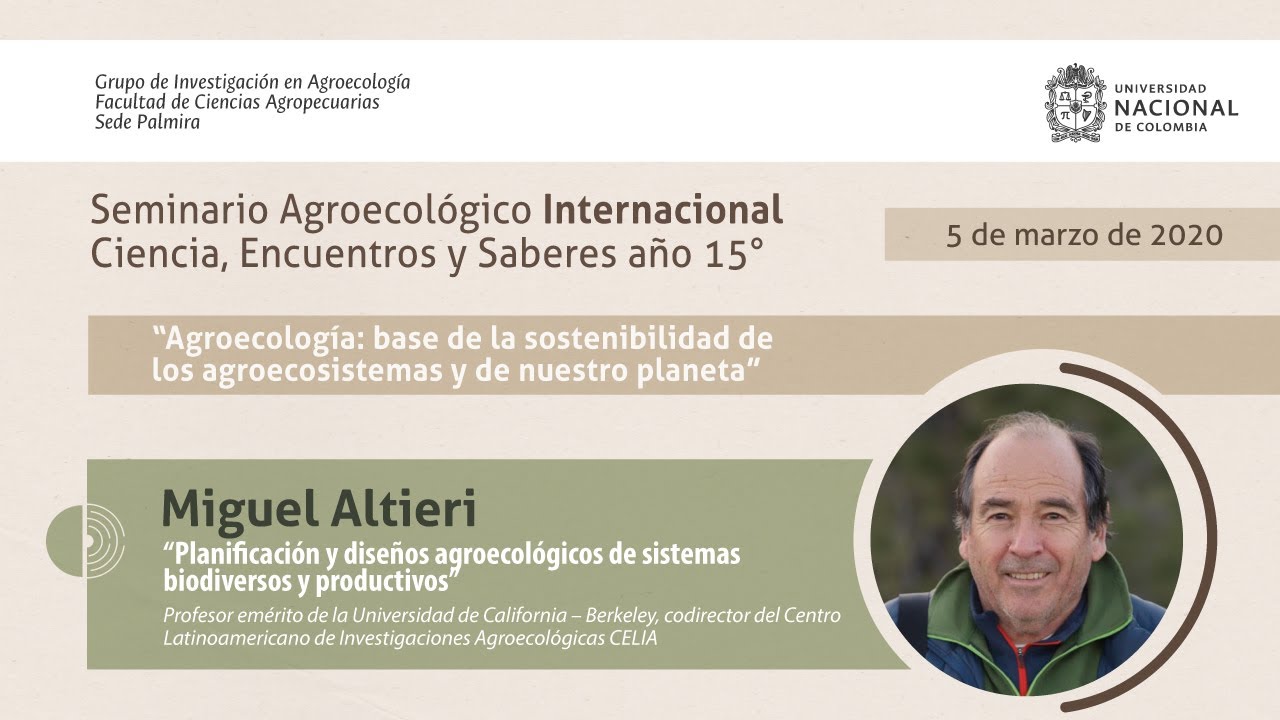





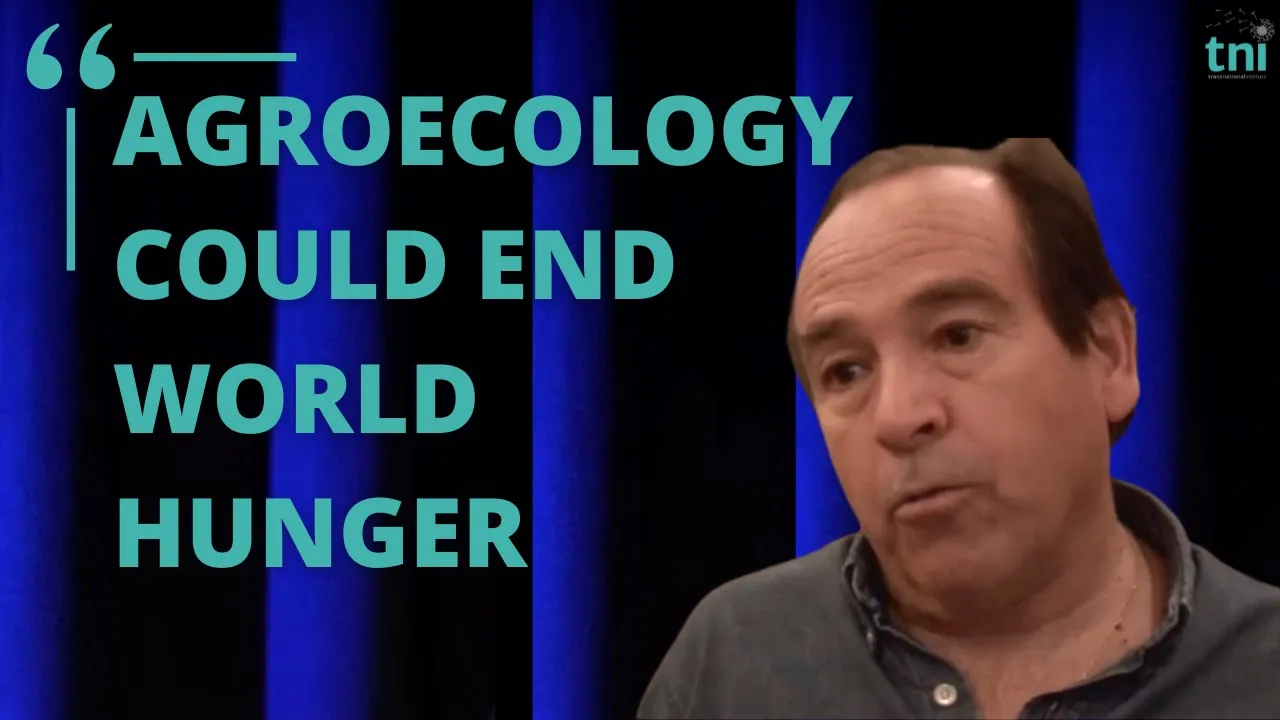
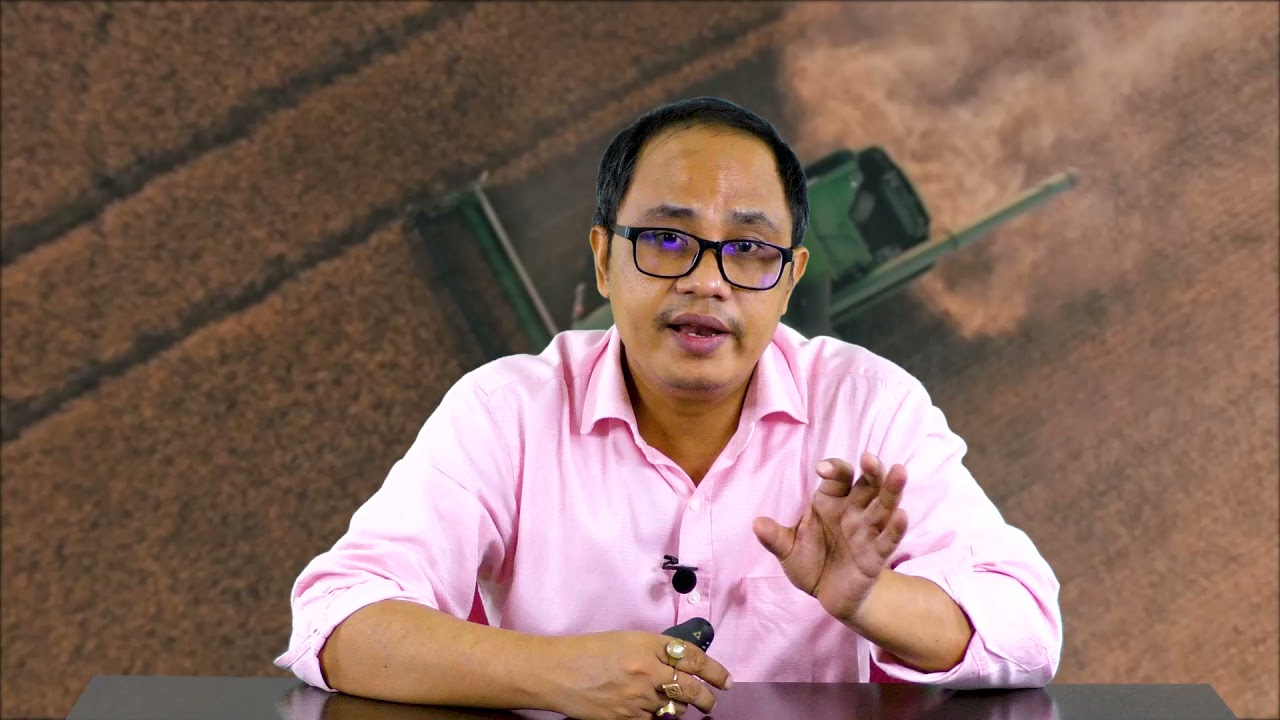
Agroecology is a science and social movement that combines modern ecological knowledge with traditional farming practices to create sustainable agricultural systems that enhance soil fertility, promote biodiversity, and support food sovereignty, distinguishing it from industrial agriculture which treats soil and plants as mechanical devices rather than living ecosystems.
Miguel Altieri on Agroecology as Science and Social Movement
Added:Basic ecological principles, including biodiversity, nutrient cycling, and ecosystem services within agricultural landscapes.
The history and key impacts of the Green Revolution, including the rise of industrial agriculture, monocultures, and heavy reliance on synthetic inputs.
The conceptual distinction between basic food security (availability and access) and food sovereignty (the democratic control over food systems).
An introductory understanding of organic farming standards and how certified organic systems differ from conventional industrial systems.
Practical applications of agroecological design, such as polycultures, agroforestry, integration of livestock, and biological pest management.
The role of transnational agrarian social movements, such as La Via Campesina, in pushing for policy reforms and land rights.
The economic, social, and political barriers that hinder the scaling up of agroecological farming systems globally.
The study of climate change resilience in agriculture and how agroecological methods mitigate environmental risks compared to industrial methods.
3.1K views112likes1:05:55Original Release: 2023-06-14
so if I want to change agriculture I cannot use the same tools that created the industrial system and and I cannot continue with the um with with market economics as the my as and profit maximization and unlimited economic growth as as the main goal you know because you see when you do agricology when you do the real organic um you're capturing carbon as a consequence of your management you're not doing that because you want to get in and cut it to to catch carbon to get into the markets this is logical obviously if you if you add organic matter to your soil if you have crop diversity you're going to capture a lot of carbon that's a consequence of that and then the governments should compensate you for that service [Music] Welcome to the Real organic podcast I'm Lindley Dixon co-director of the real organic project we're a Grassroots farmer-led movement with an add-on organic food label to distinguish organic crops grown in healthy soils and organic livestock raised on a well-managed pasture you just heard from Miguel Altieri professor of agroecology at UC Berkeley and a PhD entomologist whose long time work was focused on the biological control that keep pests in check on Organic Farms my co-director Dave Chapman spoke with Miguel last fall to learn more about the growing Global movement that is agroecology and how it's aligned with communities and the preservation of traditional knowledge [Music] Welcome to the Real organic podcast and I am very pleased today to be talking with Miguel Altieri um Miguel is a professor at maybe Emeritus now at Berkeley and um Miguel has had a huge impact on the world he has written many books and articles and Publications uh about agriculture and especially about agriculture in Latin America if that's right Miguel and I I'm very pleased to talk with you today Elliot Coleman actually connected us and um he said you really are the one to talk to about agroecology so welcome I'm really glad that that we're here together thank you very much a pleasure yeah so uh I have I have followed some of your work but I I've asked you to speak to me as if I don't know much because honestly it's amazing but most people in America really don't know anything about agroecology which is a major world movement how many how many Farmers would you say have embraced uh would consider themselves to be part of the agro-ecological movement well the whole Via Campesina which is the largest peasant movement in the world Embraces agroecology so right there we're talking about more than 100 million Farmers a hundred million yeah okay are distributed not only in Latin America but Asia Africa and including North America where you have a Via Campesina chapter in the US and also in Canada and Europe yes so the 100 million peasant Farmers have embraced this and are part of a pretty active movement and not only have most Americans not heard of it but most American farmers have not heard of it so I I think it's such an important conversation that we're going to have um how how is uh Agro ecology born as a movement I'm sure that the farming practices have been around for a very long time but it became a political movement just the way organic became a political movement long after the the practices were evolved so what's the history of agroecology well agricology it depends on who you talk to because the Europeans claim that there was a Russian scientist and then some Italian scientists that used the word agroecology back in the early 1900s but they really were talking about crop ecology how the crops adapt to the environment and things of that nature there were good contributions but agricology the way we see it today emerged in my opinion in Latin America first because of ngos that were working with uh with small farmers that have been neglected by the governments trying to come up with a with approaches of to rural development that would be that would be Grassroots based and that would provide autonomy to Farmers and also food sovereignty and and then agriculture started growing at the beginning obviously all the organizations the universities FAO and all these organizations that now are embracing agricology would reject it at that time you know I'm talking about 1982 when my first book on agricology came out although there are many other books that came later Steve lisman for example is a major uh player in agricology but his book came much later and at that time they ignored us they tried us they treated us like hippies or Communists or some something like that and then agriculture kept growing um despite the fact that they didn't received support from universities or foundations or anything like that and then they started ignoring us okay and uh and then after that they started combating us because it started growing and it was dangerous so they noticed you know Convent the conventional system the conventional establishment noticed us and um so they would say they would argue against it you kind of fit the world with agricology here agricology only does produces low production levels and it's not scientific etc etc and then but agricology kept growing and at that time Via Campesina back about maybe 15 to 20 years ago which was basically a movement is struggling for land access found agriculture and agricology was very um very compatible with their movement or the social movement I'm talking about rural social movements special movements that we're looking for for land access because agricology doesn't question traditional knowledge it it Embraces it and builds upon it and it's economically viable because um it doesn't promote external inputs of any kind it's just a basically working with the resources that the Farms have and promoting ecological processes that will sponsor soil fertility and pest control so it enhance the autonomy of farmers their technological sovereignty and um and also it was socially activating it requires social organization because the way agricology spreads is through farmer to Farmer through a pedagogical methods of horizontal methods of pedagogy very much based in Paolo freda's teachings I don't know if you're familiar with Palo Alfredo was a major Brazilian educator that um that he wrote the book The pedagogy of the oppressed and he came up with very participant participatory methods horizontal methods of transfer of knowledge and practices and experiences among people so um that's how agricology got into the hands of social movements and and then they also since um via compassin and other social movements have been promoting the concept of food sovereignty agricology was the the technological pillar of food sovereignty you know it made sense so that's that's how it it came about and today it's a it's a major social movement people say that it's a science it's a set of practices and it's a movement so that's what agriculture is a science that combines modern knowledge that we learn in the universities fall science entomology plan pathology social sciences ecology Etc and then the traditional knowledge which we in Latin America and other countries and the South have been blessed of still having microcosons of traditional agriculture the world was practiced 5000 years ago so that knowledge of the farmers is very important in agricology and what agricology does creates and a bridge in order to create a dialogue of wisdoms from which emerge the principles of agricology which are ecological principles and also social principles so could you could you tell me what the principles the core principles of agroecology are well the question the court principle the ecological principles the first one is obviously everything that has to do with the enhancement of sulfertility and soil quality through recycling of organic matter through increasing nutrient cycling and enhancing biological activity um that's the first principle the second that principle would be very much in alignment with the principles of organic farming oh yeah real organic farming yes you see what happens well I'm gonna go through the principles and then I'm going to tell you because people ask me what is the difference between organic and agroecology or regenerative or or biodynamic or you know yeah okay so the principles are basically everything has to do with with enhancing soil quality and life and fertility um through recycling of biomass and nutrients of organic matter and all that the second principle is breaking the monoculture by promoting diversity temporal diversity through rotations and things of that nature then spatial diversity through polycultures agroforestry systems things systems that persons have used for thousands of years and they have stood their desktop time so the third principle is not to is to avoid all losses uh in terms of nutrients and water and sun energy or agrobiodiversity basically just avoid losses of those resources that are crucial by by promoting conservation practices of water and and seeds and soil Etc the other principle is promoting the synergies between the components because it's not just adding diversity per se you have to add diversity that is going to complement each other through interactions because that's what promotes the the processes you see what what we say is you have the principles the principles take the form of practices for example green manuring or cover cropping it would be a practice okay that would reflect Which principle the principle of recycling and and enhancing organic matter in the soil what are the processes that result from that is basically soil fertilian enhancement biological activity of the soil nutrient cycling those are the processes so agricology promotes an agriculture not based on input but based on processes so those processes are biological natural regulation of pest biological regulation of pest diseases and weeds soil fertility enhancement through biological activity um salt crop productivity through the interactions that happen between the different crops the facilitation processes for example when you combine corn and beans there's all kinds of facilitation complementarity that happens and and so those are basically the principles is to is to enhance efficiency diversity synergy and and interactions so agricology then is a science that has these principles and you and we have development methodology because there is a conversion process let's say a farmer wants to to to move and apply their ecological principles then you can actually survey Farms with the methodology and say okay you're following the principles correctly the processes are are starting to function correctly so you're going in the right direction so so agriculture is the science of understanding Agro ecosystems it's like ecology ecology it's a science that you can understand how the tundra works in the Arctic which is an ecosystem and the tropical rainforest the principles are the same the processes are the same the structure of the systems are different and the function are different so agricology is a science that can study any agri-ecosystem any farming system a transgenic agrical system you can go in there say okay this system doesn't work it's not based on the principles of Agriculture because of this and this and this and this and this you can go to an organic farm which follows all the presets of organic farming which I have worked with here in California for many years with many organic farmers with biodynamic Farmers also and they follow the principles of organic and by Dynamic which I respect and I of course respect the teachings of all the all the teachers of those fields but I can go to that farm and say you know from a from the dinette by Dynamic perspective based on the principles of Steiner this Farm is working correctly according to to your assessment but agricologically speaking is not so you can optimize it and still be biodynamic or or I can go to a farm here in Salinas and find a let us monoculture or a strawberry field in the coast of California here that is organic certified but it's a monoculture based on input substitution yes but but that would be an example of uh something that is certified organic but it's not really organic yeah in my opinion so that I think that that's a conversation and I suspect we're going to be having the same conversation about Agro ecological soon enough that people will be claiming it yeah well many are already many already you know the only farmer I've met in California who claimed to be agro-ecological was a a hydroponic marijuana producer and I got a tour of their place and they said this everything we do is completely based on the principles of agroecology and I thought I don't think so yeah well if you apply our methodology where you go and say okay are you following the principles the hydroponic system would not have biological activity in the soil would not have a soil strata where to build all the all the microbial diversity which actually has a huge impact on crop growth and crop health and on on the taste of food also on the concept of antioxidants and so on there's a lot of research showing that so anyway um so what I'm saying um without contradicting the principles of organic or by dynamic or regenerative agricology is a science that can optimize those systems I think it still sounds to me like if I looked at at real organic I looked at the roots of organic what it's intended to be they're very similar in their looking at the Ecology of the whole right and and uh I think the thing is that uh I think that the context in which they evolved are different because organic was born in England obviously and in Europe and the Same by Dynamic the same thing in Germany and and the social and cultural context was different and ecological context you know agriculture was born in in Latin America for the purpose of working with poor small farmers but that had a huge traditional knowledge and cosmology and also in the context of a political context that also gave agricology a political perspective in the sense that it's a transformational science that wants to change the existing Food Systems to make them more socially just but not by working within the the rules of capitalism but basically changing the system in a radical way yes so I think that the origins the origins are provide a major difference and you can find commonalities in ecological principles but um agricologist transformation and it's not reformist yes it doesn't accommodate to the existing system if you want to change the existing system it wants to change the structures of power that maintain the dominant food system the corporate control of the food system and so on I I I agree completely and I do think that when when organic came to the United States and uh it kind of it was here for a little while about a decade and then it exploded in during the Vietnam war and after and I think in that period it also gained as a movement uh and in a transformational intent and I I think that that much of that intention has been lost in the last 15 years as the government took over and people became more passive and it became more of a business and then as a business it became more corporate but I think that that's what the real organic project is trying to do is is say well wait a minute there are some important reasons that we came to this they're being lost and I think we can look to agroecology as a movement that is still not for a moment forgotten that so um let's talk about that yeah another major difference is that you see the um the road population is still dominant in Latin America as opposed to the U.S where you have less than one percent of population farming so in order to change the food system here you need to have Urban movements that are going to play a major role not the rural movements the rural movements are important but are a minority whereas in later Omega it's the other way around you have huge rural movements that are promoting changes uh and there has to be an association with the with the urban movements yes yeah so um well I I want to really talk about that but first let me just check in would you agroecology continues to grow in Latin America and and the rest of the world in places where the majority of people still are in the land in the countryside farming and feeding the local community one of the things that's interesting to me is when a movement becomes outward facing and and when it's it's more uh you know one of the things that has happened with Organic is uh at a certain point when I when I first became an organic farmer there was no organic market and and we grew that way because we believed in it not because somebody would pay us to do it that way and there was no no market demand that has grown in the last 40 years very much from when I started and now there's a strong economic incentive to become organic there's also a strong corporate presence sort of driving the people out of the very Market that they created in agroecology is is there a market demand or is this really just farmers and peasants talking to each other saying this is how we want to farm this is how we take care of our community yeah um there's not There's No Label of agricology and uh and most of the uh the food that is produced is to feed the local populations but also the urban population because in the world although peasants control 30 percent of the land they produce 70 of the food that we eat you know this is this is FAO statistics actually and uh and and corporate agriculture produces biomass basically and it only occupies 70 of the land produces 30 of the food and also food that they produce are three is corn wheat and rice which provide 50 of the uh of the uh of the calories that we eat today and so um what happens is is that agriculture is more a link to the local markets and to but markets that are based more on what we call in in Spanish economia solidarida solidarity economics there are different types of Arrangements that that people have in which there are economic transactions but the main purposes are um are the main driver is solidarity between consumers and producers I know Farmers for example that in Colombia where they they produce food that they sell at the price of seven years ago because they say look since I say 50 of the I of the cost of production with agricology second I place all my food for my family the the accident I can sell it to these poor people which are my clients at the price that it's uh that they can afford because these are poor people that make you know two dollars a day or something like that so that's an example of solidarity and then the other thing is that there are governments certain governments uh for example in the case of Brazil during Lula year not now with with this bolsonaro guy uh hopefully Lula will win at the end of the of the of the month again but there are many countries that have also promoted policies of um of promoting um what they called um uh for example uh institutional markets that is the the government buys 30 of the food of all this or small farmers that are doing agricology to serve in the schools and hospitals so it guarantees a certain price and a certain amount of food that is bought by the government in order to sell serve the social markets without having Farmers to have to struggle to compete in the markets that are biased against them anyway because unfortunately as in the US I mean when I used to now I'm I married this but when I used to teach agricology I used to send my students uh to do different projects and one of them was to see how many minority people were in the Berkeley market for a farmer's market and they weren't always none or maybe one percent because of the cost of the food I mean um that's a major driver for people especially minorities to to access food is is not that there's no food out there is that the price is so high so this is this is what happens with Organic in many in many in many countries unfortunately it's more expensive than than than uh than conventional probably that's the price it should have because uh you know cheap food is is easy to come by but what about the access of people to this food yeah so that's a major element of food sovereignty food sovereignty okay let's talk about food sovereignty I mean one of the things that you just brought up a big issue and it's an accusation that's made about organic well yes that's food for the rich you know poor people can't afford that food and I say well wait a minute that's actually what the food really costs to to produce and so that the people who are growing the food can get paid a living wage so the problems of poverty aren't the fault of the organic Farmer they are the problems that we all have to deal with so talk about food sovereignty Miguel what does that mean to you well food sovereignty is there's food security means that you have access to food because you have money you could be a country that can import all the food I mean the Midwest of the US I imagine is food is food secure because they can buy the produce that comes from California and other states because they don't produce anything there in the you know to feed themselves so they buy it so they are food secure but they're not food sovereign foot Sovereign means that you have the capacity to produce the food that you need for your community for your country for for your region and that's the priority first feed the local people and and after whatever is uh Surplus you can sell in the markets in the international market or export or whatever but the main priority is to feed the local people with agricological Technologies and with access to land because you see the problem is that in order to have Farmers produce to produce food they have to have access to land and I I know that in this country I I've read for example the Declaration of the young farmers of America I went to their web page and they say that the main problem they have is access to land so uh and a lot of people here in California that want to be Farmers young people many of my students wanted to be Farmers but they couldn't afford it yeah they can afford the cost of of land so if you want to have food sovereignty in a country you have to distribute land because land has a social function you see uh land has to arable land I'm talking about class one class two foils the social function is to produce food and if that land is not producing food then it has to be distributed to those that want to produce food that's a very contentious um issue because a lot of people are both land reform so this has to happen uh you know here here in the United States um there's no there's no there's no reason why there there's so much land concentration I mean the the name of the game is get bigger get out my last number that I saw is that 219 Farmers go out of business every day yeah and the big ones are the ones that are getting big and they get big because they get subsidies from the government and they take advantage of the economics of scale so so uh a lot of the economics of scale has to do with influence over programs that subsidize them well 10 percent 65 of the subsidies in this country go to the 10 largest farmers you know the farm bill and the small farmers don't get anything you know and those are the ones that are saving biodiversity that are you know sequestering Carbon that are producing the local food etc etc and they don't get any any compensation no incentives yeah no recognition for the ecological services that they provide for Humanity and for society when you look in the United States I I hear that the problems are very different in every region in the United States do you uh there there is a large organic movement here and there's a very large uh millions and millions of of eaters who who support that and I believe they support real organic they're they're people who don't care they would just like it as cheap as possible but I think there are millions of people who actually do want to do it just in the way you talked about that they want to support the kind of farming that that uh is done in the way that they would they would believe in yeah and I think often those people are willingly spending their money and sometimes they're hard-earned money that they don't have a lot of in order to do that and they're being misled they they get tricked um by the big corporations that are moving in moving into Oregon yeah consumers consumers you know as you educating consumers is fundamental because eating is an ecological act and a political act and every time I support the big supermarkets and the big farmers I'm promoting the projects of death and when I support small farmers local markets Etc locally fruit produce food and support and promoting resiliency and and sustainability in my communities I'm promoting life and uh and I think that people need to understand that but it's not just that the role of the good food that is produced by organic farmers or agricult Farmers which is very important for health and all that for the health of the planet for the health of the people but there are other services that come along for example here in California in the in 19 in the 1980s there were a bunch of rural sociologists that did a study and found out that in the south of California that towns that were surrounded by large Farms as opposed to towns that were surrounded by small farms had more crime more violence more family breakdowns more drug addiction than towns were surrounded by small farmers because of the social relations that happened between the producers and the consumers or Goldschmidt thesis yeah in Brazil they did studies where they found that in in Sao Paulo State the towns that were surrounded by sugarcane plantations which there are many were five to ten degrees Centigrade hotter than towns that were surrounded by small farms because of the Albedo effect so you can see that there are other services that come with with uh with with a with it with the um the um Matrix of of farming that surrounds your city the water quality of your city is going to be different the air quality is going to be different the the temperature is going to be different the social fabric is going to be different yeah so it's not just the food which is very important you know we always focus on the food this food is free of pesticides as more antioxidants more vitamins etc etc it's good for the environment that's also fantastic but we forget about the social services and the cultural services and the economic services that come along with agricological farming yeah with very very real impacts absolutely yeah yeah and and it's interesting because of course there are a lot of uh unseen impacts just because the quality of food and we know that if you eat bad food you you are sicker but even the pandemic that we're living today uh is related to the model of agriculture because you see as we advance with monocultures uh we destroy the the natural forest or the natural vegetation that surrounds the farm within those habitats there's a lot of wildlife you know bats and birds and armadillos Etc that coexist with thousands of viruses and those but they're contained within those habitats they're like ecological fireworks fire breaks but when you destroy then they get in touch with them they get in contact with with rural communities with cattle and that's the basis for sonatic diseases transmission so can I can I this is great can I for a moment though uh check in the the Symposium that we're doing this year is taking a real look at regenerative agriculture and organic Agriculture and we asked the question is organic regenerative and is regenerative organic now both regenerative and organic and I think agroecological too are now facing real challenges from the very systems that they were meant to be alternatives to and I know that organic as I've I've worked in this for years now of uh that's why we call it the real organic project because we believe that organic means something and it's that meaning is being lost through the the way the USDA is interpreting it and and and enforcing it do you believe that real organic let's say that you know Elliot the the organic of Elliott Coleman would you say that that is regenerative it has to be in order for for we have to regenerate soil we have to regenerate life or restore if you want to call the name it doesn't matter you know terminology but you have to to have um to build the the soil first of all the life in the soil as as a pillar and then the biodiversity that that will go along with that the agrovisers that would go on and that implies regeneration restoration whatever you want to call it so it's a it's a principle it's a principle regeneration is a principle I think that it has to underline any agriculture that is going to be um the the next um the agriculture that is going to be able to withstand the crisis that we're facing we we are facing we will be facing well just one of them I I I I agree with you let me ask you the other side of that question because regenerative the term regenerative agriculture has exploded in the last five years and almost every big agriculture big food company is now embracing that term well that's that's a problem you see the issue is the computation of the terminology and this is happening with agroecology uh FAO which fought agricology for years you know in the last 10 years has embraced agricology but what we call the the junk agricology you know because basically what they do is they take certain principles especially the technological ecological principles and they live out all the social and political Dimensions they don't want to talk about Land Reform they don't want to talk about peasant autonomy none of that so I I understand that there are people that have pushed the term regenerative and also the term organic you know uh based on the on the on the on the philosophy of the Pioneers you know the true Spirit of that and um and that got corrupted but you see we have to there's nothing we can do against that I mean I I have no control whether FAO takes agricology and and uses the term as they fit but what I can do is to stay true to the principles of agricology and never lose the the political and social dimension of agricology which is something that they will not use because we'll go against the systems that they want to promote so I think that that was has kept agricology very very alive in Latin America we have a society Latin American Scientific Society organ ecology we have a large person Movement we have ngos we have consumers that support it because they understand that this is a is a revolutionary approach that does not fit the system if what it wants is to change it dramatically you know to create more socially just ecologically sound economically viable systems and culturally acceptable systems and so um that's that that's the only thing that that we can do we cannot you know General meals usually generated Agriculture and they and and but there you see the main emphasis for them is carbon sequestration because they want to get into the carbon markets but the carbon markets is basically just another tool that follows the same precepts of the industrial system uh as Einstein said you cannot solve the problem with the same mentality that created it yeah so if I want to change agriculture I cannot use the same tools that created the industrial system and and I cannot continue with the um with with market economics as the my as and profit maximization and unlimited economic growth as as the main goal you know because you see when you do agricology when you do the real organic um you're capturing carbon as a consequence of your management you're not doing that because you want to get in and cut it to to catch carbon to get into the markets this is logical obviously if you if you add organic matter to your soil if you have crop diversity you're going to capture a lot of carbon that's a consequence of that and then the governments should compensate you for that service it's not that you are going to go out there and sell your bonus bonus uh and and your quota you know because you see um I'm very much against cargo markets because um I see um the inequities the sorts the social inequities and climate change that 60 percent of their greenhouse gases that have created climate change historically came from a few countries more than 150 countries did not have anything to do with with with the creation of of the levels of CO2 that we have right now in the atmosphere and now those countries are The receptors of climate change look at for example Pakistan you know their contribution to climate change must be like 0.05 Global emissions and they suffer all these problems so you have this receptors of climate change but these receptors of climate change like Latin American countries like Colombia where I have my farm it's region biodiversity and what the governments in the north want is to is for these countries to to to capture sequester the carbon that is being produced over there um and uh and and and um and that is in unequal because you know um that's not the role of the South you know in order to solve the problem of climate change carbon sequestration is important but the main thing is to reduce consumption animations in the North in the countries that are producing the the the ones that are producing the most of the gases that's includes the United States Europe and recently China not not and India but recently in the last 10 years yeah yeah let me it's very important let me um ask you about the Green Revolution um I don't know that we've mentioned it yet but I think it had a a pretty big role in it was a it was a it was a moment of transformation uh in Latin American agriculture for the worse or for the better let me ask you well let's first think about the audience of the Green Revolution um the wind Revolution was promoted mainly by by three foundations Rockefeller Ford and Kellogg okay with the of course with the support of the US government and their perception was that was a very maltusian view of hunger they said that the promo hangers that we have too many people and food production is not catching up and the way to close the gap is by bringing Technologies from the north to the South so what they did is um is they they created centers International centers of which there are about 15 in letter Mega that were three um equipped by what I call innocence abroad scientists from the United States from Europe from Japan who had good intentions but they didn't know anything about the tropics and they came from a totally different social socioeconomic background and they came there with a Technologies from the temporary areas to establish programs in the South which were all based increasing production through the development of improved varieties that were highly dependent on on on inputs mostly irrigation and fertilizers well it turns out that most of the patients they wanted to help the small farmers that was the whole thing and to enhance their production and what happened is that um 20 of the small farmers in Latin America adopted the Green Revolution varieties twenty percent and similar figures in in India similar figures in Africa and that was a total failure obviously the ones that benefited were the large Farmers who's got whose um soil conditions and environmental conditions were very similar to the conditions of the experiment stations where they developed the varieties so really um the Green Revolution what it did is open markets just think about who these foundations what are they involved in Kellogg cereals and Rockefeller petroleum and Ford machineries okay so open huge market for them and but it was a total failure in terms of helping small farmers it also caused huge erosion of genetic diversity many local varieties were were were lost and more than that the knowledge because the Green Revolution what it was was not so much the change of one variety for another but it was the loss of the knowledge of the of the indigenous knowledge and it's interesting because there was a professor here at Berkeley called Carl Sauer who was a geographer who knew a lot about Mexican Agriculture and and the Rockefeller invited him with with the burlog team you know Bulldog was the uh the the Green Revolution geneticists that got the the null price and she went with them to Mexico and when they came back he wrote a Minority Report um because this other guy said yeah we need to you know improve we need to bring this yielding varieties to Mexico and blah blah blah and he wrote a minority with poor saying if a bunch of Ohio and Iowa agronomists are going to bring the variety to Mexico you're going to ruin traditional agriculture forever he predicted this they kicked him out of the committee and the Green Revolution proceeded so there were some red flags that were raised at that time so it is very important to understand that um the Green Revolution had a political agenda and an economic agenda it was not just so much about helping small farmers but it was more about bring in a model a way of thinking which was coupled with the fact that many of the scientists from the universities and from the the centers of research of developing countries were brought to do phds here in the United States um when when the Cuban Revolution happened um the there was an active an active program by universities to bring scientists and promote programs of research in those countries for example Chile where I come from um the University of California the Ford Foundation funded major scholarships for Chilean scientists to come to California to study and then they went back and they duplicate and they replicated the model of fruit production and Horticulture production Chile is basically a California if you go there you'll see all monocultures of grapes and fruit trees and Horticultural crops based on the California model um Brazil Peru Colombia Los cancos were colonized by different universities North Carolina State University in Peru um University of Florida Brazil to for what they would bring all the I remember when I was studying in Florida I did my PhD in Florida all the scientists from Argentina and Brazil came to study soybean production and look at now what is happening with soybean production in Brazil and Argentina with transgenic soybeans so the Green Revolution was a way to colonize intellectually and technologically the the region with by by brainwashing all these guys here giving them phds and sending them back to replicate models I was lucky not to fall into that but a lot of a lot of my colleagues did Miguel how did you avoid that I know that you actually studied as an entomologist I wanted to say that to people because you know you really started as somebody who is working with Farmers not just politically and socially but how do we make this work and grow a crop and deal with uh insects so you know you came from a very technical background how did you uh manage to drink the Kool-Aid without getting crazy well first of all um it's interesting because when I left Chile because there was a military coup in 73 a lot of young people left I was one of them I ended up in Colombia and I had studied in Chile agronomy and then I realized when I came to California that what I I had studied in Chile was California Agriculture but anyway I ended up in Colombia and when I ended when I went to Colombia I was lucky to work with researchers I was doing a master's they were working with small farmers who were intercropping corn and beans and cassava and different things different crops and I had never seen in my life anything like that you know I was trained in monoculture agriculture and and then I you know I was surprised I felt so unuseful because all my training dance it was not useful at all to deal with these complex systems but I was lucky enough to to work with people and I got I got interested in in ecology and anthropology and things like that and then I my thesis was to compare monocultures of corn with one with polycultures where corn was intercropped with beans and see what happened with pests and surprisingly the pest numbers went down when you intercropped so oh what's going on here so that got me into you know first of all having a huge respect for its ecological rationale of traditional farming systems but I then understanding that ecology was fundamental and that the reason why we had pests is not because these insects are bad it's just that you create the conditions for them when you open monocultures but when you treat the soil with manure and when you or with organic compost and when you intercrop you create opportunities for natural enemies to control the pest and so on and so on and I was so lucky that when I finished then I went to Florida and I did a PhD with a guy that was really open to these ideas he let me do whatever I wanted for my thesis I did a lot of inter cropping work in in Florida everybody thought I was crazy and then and then I ended up here in California as an assistant professor in 1980 at the division of biological control which is was a bunch of entomologists 11 entomologists who were the fathers of biological control because in 1800 late 1800s here in California there was a major pest called the um cottony cushion scale that attacked Citrus and at that time they were spraying all kinds of heavy metals and base pesticides and so on and some entomologists at that time figured out that that was an exotic Pest and there has to come from some country where there where it is not a pest because it's regulated by natural enemies so they went by ship to Australia they found the best and they found this big ladybug called rodolia cardinales which they brought back to California by ship in little cages they released it in California and up to today they control the pest and this division of eye control which was closed later because of my University got involved in transgenic in biotechnology with corporate Monies uh save California 2 million two billion dollars in pestis I use not take into account the health and environmental benefits of that just saving Farmers two billion dollars well that group was closed when the University of California Public University got millions of dollars from Novartis from British Petroleum to promote biotechnology biofuels and things like that yeah so that was it you know and I survived that environment because well after the division of buyer control was closed they put me in a different department and um but you know if you're gonna be in Academia um you have to play the game so the game was published publisher perished so I published a lot and they could not control me and they knew they could not neutralize me and um they tried as a matter of fact some colleagues have told me they hate you but they cannot touch you so I was able to survive 38 years as a professor at Berkeley and I always spoke out about the fact that we were a public land grant University and that we were you know that that that the the private monies were changing the research agenda in favor of private interest and that that was not the role of a public university so I spoke out about these issues and it has a cost but I think I'm glad that I did it it was important to do it and then also I was very glad to be able to work on basic ecology and basic agronomic research because it is fundamental to have very good understanding of the complexity of the organic and regenerative and agricological systems because if we don't have systems in place that have work you know that are well designed well managed with the principles there will be no food sovereignty That's the basis you know we need to train people in in in in in this new ways but this but this is much more knowledge intensive than Capital intensity yes so they need to be trained in ecology very very much about understanding complex interactions and how to promote the processes that are fundamental for our agricultural systems to be resilient to climate change to be able to we stand all the all the stresses that that that that that are facing today agricultural systems you know we see so many of the problems that we face and we see the solutions and we go this would be so easy if as a society we embrace the solutions and we we also see and you've seen it very close firsthand that there are economic interests that do not want those Solutions because they are actually based on giving us Band-Aids for the problems instead of instead of solving the problems um exactly and it's because of the reductionist approach uh that has to dominated agricultural research you see we were very much influenced unfortunately by by a few a few um as philosophers and scientists that one of them was Darwin which actually Darwin um was misinterpreted but everybody said that the drivers of evolution was competition and it turns out that in nature there's more cooperation than competition but scientists went into competition we got to get rid of everything that competes with a crop instead of hey why don't we promote what is going to cooperate with the crop yeah and um and and the cards you know that that talked about that you cannot understand the whole you have to kind of break it down into pieces and that's that's how our specialization started you know people began to specializing soils in insects and this and that and they never made their connection or maybe if I manage the soil this way maybe I'm gonna have less pests nobody talked about that ever there was no communication between soil scientists and entomologists for example and their the connections are so obvious so um we need to agricology what it does as a science brings this holistic perspective this systemic view of agrical systems understanding that everything is connected that everything is in the interdependent you know I was reading I haven't read it all but I started a book about um George Washington Carver who was studying with some of the very first people who called with a studied ecology and as the beginning of that word and that way of looking at our problems is still very undeveloped as you say we still still isolate and and hunt for a a solution of a piece and not see the connection and the connection yeah where you know it's like doctors where we treat symptoms and we don't treat the root causes an agriculture what it wants to understand is the root causes of the problems why do we have pests you know well because because there are many factors that are driving in their root causes the monoculture is the one of them and I need to change that because it doesn't promote you know habitat for biology for beneficial organisms you're putting too much free nitrogen into the system through with fertilizers which actually um promotes best more than than anything um it's interesting that in this country it's not well known Francis chavuso was a French scientist that came out with a theory called the trophobiosis he was also marginalizing in his Institution but he said that the reason why we had past problem was connected to the way we fertilize our our soils because when you put chemical fertilizer synthetic fertilizer nitrogen fertilizer um it's so soluble that the plant is not able to metabolize all the all the NO3 into protein and amino acids and you have a lot of free nitrogen and when a little aphid or a homeopter and insect comes you know they reproduce like crazy but if you do organic basically what happens um organic management there is a slow release of nitrogen and all the nitrogen is metabolized into into proteins and amino acids you don't have free nitrogen on the foliage this is something that he found in 1960s and we see that it's true you know there are some researchers that have done some research on that the connection between soil fertility and pest problems but very few because it requires this much broader understanding you know it goes beyond your discipline and you need to understand the root causes rather than not just the symptoms so that's that's what agricology as a science and the way we teach it is is is very similar to kind of holistic medicine in a way yeah so uh I have one more big question but first maybe just a clarifying question um we talk a lot about industrial agriculture could you give me your simple perspective or definition of what that means to you what what does what is why would you call some agriculture in industrial agriculture yeah I think that industrial means that it doesn't respect the laws of nature and and treats soils and plants as a mechanical device that's the mentality now the form that it takes is a huge monoculture highly dependent on external impulse energy irrigation pesticides fertilizers tractors large scale that's kind of the expression but I think that that is this mechanical view of of that that they're just it's just the soil is a substrate where you grow these things called plants that are like like artifacts that you you put inputs and they grow and they the more inputs you put the more they grow and the more they produce and so on and so on it so it's kind of an engineering type of approach rather than an ecological approach because you know when you're treating a piece basically a piece of agricultural agricultural field is a modified simplified ecosystem it's a live system and that's how you have to deal with it so this mechanical engineering engineering type of approach is what is the is this the the Mind framework in which these people work in agriculture thank you that's very good okay so as we as we start to wrap up I'm I'm curious I was just asked last night I was in a conversation with Dan Barber and um and I was asking him kind of what did he think we could do what what's the path forward and then he asked me and I was like I don't know you know it's a tough question and I don't mean to I I don't mean to put you on the spot because none of us really knows how we get to where we we see we might need to get to but we don't know how but what are your thoughts about uh hopeful changes or directions to emphasize and keep working on what where do you get your hope well you know after 38 years working at the University I wrote many books I gave hundreds of conferences I wrote papers I did a lot of research I trained a lot of people um I don't know I was never able to grasp the level of contribution and impact that my work did and after that after I retired my wife and I bought a farm in Colombia a piece of land that we are transforming will make we're transforming it into what we call an agricological lighthouse and because it's going to irradiate hope it's a space of Hope okay and and by doing that work there we connected with the local community a poor town that has been neglected by the government that is isolated because climate there's so much rain that the roads have kind of collapsed and we started a program with um with women and this and the and the kids in the school to set up food production in bracebeds um and um and the impact that it has had is is incredible so what I feel is that all the ideas that we have crystallize at the local level that's where you can Implement them and then what happens is that this when you work at the local level and then change starts happening um that becomes like a lighthouse that can influence other communities so now we have other towns nearby that have come you know that teachers bring their school children to the to the school garden and they want to do one and um and so I think that we cannot change what's happening above us you know the all the all the crisis that we're facing the governments um the economic system all that I cannot change that I cannot change policies I cannot do any of that but what I can do is I can promote projects that I can take their own life and that creates a collective energy that perhaps many many little local changes are going to lead to a bigger change I don't know if that's gonna happen but that's the hope that I have and that's where I put my energy because your your ideas are real organic and and regenerative and all that they have to crystallize somewhere in a reality in a farm in a community somewhere because you have to see how it works and and what are the real impacts so that's what I'm doing and I mean the few I'm 72 years old and um this is where I'm gonna put my energy in just working locally with local people one one little we say Huerta one little garden a day and and see where it takes us yeah wonderful Miguel Altieri thank you very much it's been a real pleasure to talk today well let's share this with as many people as I can thank you very much and we'll be in touch good luck with your project all right thank you thank you for listening to the real organic podcast we hope that you'll subscribe subscribe share the link with your friend please take the time today to leave us a rating and a review on whatever platform you're listening to so that others can find us a video version of this interview is found at realorganicproject.org and by following our YouTube channel please join us next time when our guest will be real organic farmer Phil Foster of Pinnacle Organics Phil is part of a Cadre of California row crop Farmers experimenting with reduced tillage and vegetable production and he was among the 50 thought leaders that we interviewed to discuss the co-opting of regenerative and climate farming in our recent online symposia you can find tickets to the recordings at realorganicsymposium.org [Music] foreign [Music]
Up Next

7:30
Food Sovereignty and Indigenous Health | Mariah Gladstone | TEDx
@TEDx
32.2K views•2017-06-13

12:54
Triumph of Orthodoxy Icon: Byzantine Art & History Explained
@BenCallan
2.1K views•2024-08-06

9:49
FastAPI vs Flask vs Django: Choosing the Right Python Web Framework
@TechWithTim
302.5K views•2024-05-26

1:42
Game of Thrones Opening Credits: A Cinematic Analysis
@gameofthrones
46.3M views•2011-04-18
Related Study Plans & Knowledge Roadmaps
Structured learning paths in General & Interdisciplinary Studies
general-studies
Elevator Engineering: History, Physics & Cities
01From Hoists to Safety Brakes: The Dawn of Vertical Lift
02Hydraulic vs. Traction: The Engineering Physics of Elevators
03Modern Speed, Safety, and Algorithms
+ 2 more learning modules
12h5 modules
Explore Roadmap
general-studies
Rubber: Material Science, History & Geopolitics
01Origins of Natural Rubber & Mesoamerican History
02The Chemistry of Natural Rubber & Vulcanization
03The Geopolitics of the Rubber Boom & Colonization
+ 2 more learning modules
12h5 modules
Explore Roadmap
general-studies
Containerization: Evolution, Logistics & Trade
01Ancient Trade & Bulk Cargo: Amphorae to Barrels
02The Industrial Revolution & Cardboard Packaging
03The Containerization Revolution: Malcom McLean
+ 2 more learning modules
12h5 modules
Explore Roadmap
general-studies
Textile Tech: Evolution, Labor & Global Impact
01Pre-Industrial Textiles: Handloom & Cottage Industry
02Mechanization: The Spinning Jenny to the Power Loom
03The Factory System & Global Labor Transformation
+ 2 more learning modules
10h5 modules
Explore Roadmap