Sports Sociology: Identity, Inequality & Protest
Learning Goal: Deconstruct the sociology of modern sports, analyzing how athletic institutions reinforce national identity, perpetuate gender and racial inequalities, and serve as arenas for political protest.
- Prerequisites: Introduction to basic sociological frameworks (e.g., structural functionalism, conflict theory, and symbolic interactionism).
- Estimated Total Study Time: 12 hours
Module 1: Foundations of the Sociology of Sports
This module introduces sports as a core social institution that functions as a microcosm of society. You will explore how sports transmit cultural values, social structures, and systemic inequalities, shifting your perspective from seeing games as mere entertainment to analytical lenses for societal evaluation.
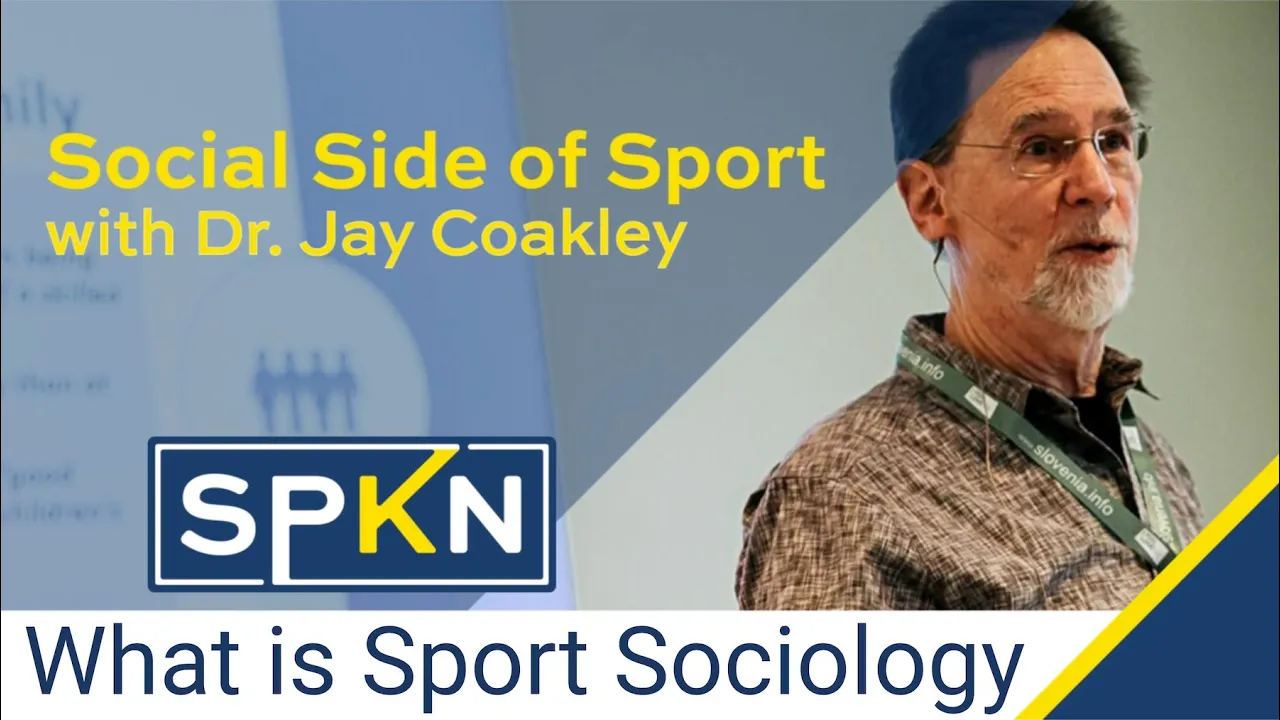
Why this video
Dr. Jay Coakley, a foundational figure in sports sociology, explains how sports are not static, objective activities, but socially constructed worlds. This video is crucial for understanding how sporting spaces are created, maintained, and continually changed by human interaction, serving as a gateway to broader structural analyses.
Knowledge Checkpoint
- Define what a "social world" is within the context of athletic institutions.
- Explain how sports serve as a "window" to view and critique surrounding cultures.
- Differentiate between studying sports psychologically (focused on the individual) versus sociologically (focused on structures and relationships).
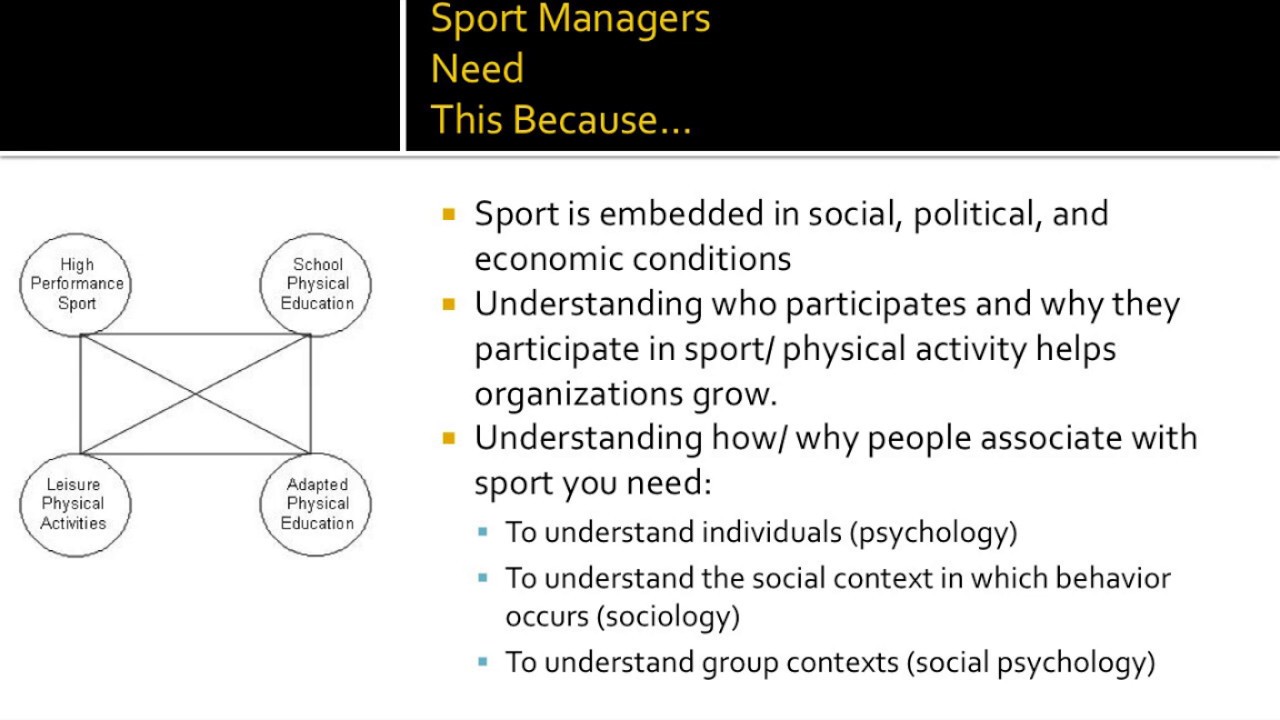
Why this video
This academic lecture bridges the gap between raw sociological theory and physical culture. It explicitly outlines how structural functionalism, conflict theory, and symbolic interactionism apply to sports institutions, allowing you to establish a robust academic vocabulary for subsequent modules.
Knowledge Checkpoint
- Map structural functionalism to the organizing principles and cooperative systems of modern athletics.
- Explain how conflict theory applies to the commercialization, labor dynamics, and resource disparities in sports.
- Describe how symbolic interactionism explains the shared meanings, rituals, and identity construction of sports fans and participants.

Why this video
This brief historical segment identifies Dr. Harry Edwards, whose seminal 1968 Cornell dissertation laid the structural framework for the academic field of sports sociology. It positions the discipline as an offshoot of the civil rights and black power movements of the late 1960s.
Knowledge Checkpoint
- Identify the historical origins and timing of sports sociology's emergence as an independent academic sub-discipline.
- Connect Dr. Harry Edwards' early work to the intersection of academic sociology and racial activism.
Module 2: Nationalism and Global Sporting Events
This module analyzes how nation-states use global mega-events—such as the Olympic Games and the FIFA World Cup—to foster domestic solidarity, project soft power globally, and advance geopolitical agendas.

Why this video
This literary and sociological analysis of George Orwell’s landmark essay, "The Sporting Spirit," dismantles the idealized myth that international athletic events foster global peace. It introduces Orwell’s critique that modern international sports are intimately bound up with the rise of competitive nationalism—often described as "war minus the shooting."
Knowledge Checkpoint
- Contrast the idealized peace-building narrative of global sports with George Orwell's critique of tribal nationalism.
- Analyze the phrase "war minus the shooting" within the context of international rivalries.

Why this video
This panel discussion provides deep geopolitical context regarding how the Olympics serve as platforms for political expression, protest, and soft-power projection. By examining historic events like the 1936 Berlin Games, Cold War boycotts, and modern state-sponsored sporting spectacles, it illustrates how international sports are inextricably linked to global political dynamics.
Knowledge Checkpoint
- Explain how nation-states use global mega-events to project "soft power" and burnish international reputations.
- Identify how political actors have historically used Olympic boycotts and protests to achieve diplomatic leverage.
Why this video
This segment dives into the psychology of athletic tribalism, demonstrating how modern spectator sports capitalize on regional, national, and political identities, converting passive observers into active participants in symbolic warfare.
Knowledge Checkpoint
- Describe the mechanism by which sports fandom facilitates the alignment of individual identity with large-scale national structures.
- Explain the sociological concept of "tribalism" as it manifests in modern stadium atmospheres and international competitions.
Module 3: Race, Class, and Social Mobility through Sports
Systemic Gap Warning: Quantitative analyses of economic barriers and empirical studies of actual social mobility odds are underrepresented in online video formats. To counter this, this module utilizes a mix of foundational conceptual lectures and focus pieces to address class structures, "racial stacking," and the socioeconomic myths surrounding athletic success.
Recommended Independent Research Queries:
- "Racial stacking in professional sports explained"
- "Pay to play youth sports class divide documentary"
- "Sports and social mobility sociology lecture"

Why this video
This comprehensive academic segment from Villanova University establishes how the institution of sport acts as a prism reflecting racial structures. It examines the historical construction of racial boundaries in sports, laying the groundwork for analyzing how athletic achievements are mapped onto racial hierarchies.
Knowledge Checkpoint
- Deconstruct the historic sociological arguments surrounding race, biology, and athletic performance.
- Explain how athletic institutions can simultaneously serve as spaces for racial integration and systems that reinforce racial stereotypes.

Why this video
This segment features sports historian Dr. Lou Moore explaining the sociological phenomenon of "racial stacking"—the systematic practice of assigning athletes to specific playing positions based on racial stereotypes rather than individual attributes (e.g., historically reserving leadership or "cerebral" positions for white players and peripheral, "raw athletic" positions for black players).
Knowledge Checkpoint
- Define the sociological concept of "racial stacking" in athletic team structures.
- Analyze how positional segregation on the field reflects and reinforces broader occupational and social hierarchies.

Why this video
This short but potent lecture clip directly challenges the dominant cultural narrative that sports serve as an easy pathway for low-income and minority youth to access higher education and upward mobility. It exposes the statistical reality that athletic pathways are highly exclusive and often closed to those without significant early developmental resources.
Knowledge Checkpoint
- Identify and critique the cultural "myth of upward mobility" through athletic scholarships.
- Detail the statistical realities of transitioning from youth sports to collegiate and professional athletics.

Why this video
This commentary piece highlights the contemporary "pay-to-play" model in youth sports. It shows how the privatization of youth athletic systems (via expensive travel clubs, private coaching, and AAU programs) creates high economic barriers to entry, effectively pricing out lower-income families and reducing class mobility.
Knowledge Checkpoint
- Explain how the shift from free public recreation leagues to "pay-to-play" clubs reinforces class division.
- Discuss the systemic barriers that lower-income families face when trying to access elite athletic development pathways.
Module 4: Gender and Sexuality in Athletics
This module explores gender stratification within athletic institutions. You will analyze the legislative history and cultural impacts of Title IX, the enforcement of hypermasculinity and homophobia in male sports, and contemporary debates surrounding sex, gender identity, and sports classification.
Why this video
This educational explainer outlines the historical origins, legislative mechanics, and evolutionary trajectory of Title IX of the Education Amendments of 1972. It traces how this civil rights law dismantled systemic barriers to women's sports in educational institutions receiving federal funding.
Knowledge Checkpoint
- Identify the core legislative text and intent of Title IX enacted in 1972.
- Explain how Title IX restructured the funding and availability of women's athletic programs in high schools and colleges.

Why this video
This New York Times Op-Doc profiles Representative Patsy Mink, the first woman of color elected to the U.S. House of Representatives and the co-author of Title IX. Understanding Mink’s legislative fight humanizes the structural transformation of sports and highlights how gender equality in athletics is linked to the broader civil rights movement.
Knowledge Checkpoint
- Explain Patsy Mink’s legislative role in drafting and passing Title IX.
- Analyze the relationship between racial advocacy and gender advocacy during the second wave of American feminism.

Why this video
Sociologist Dr. Eric Anderson introduces his pioneering research on "inclusive masculinity theory" and the decline of homohysteria in athletic spaces. He explains how hypermasculinity and homophobia have historically been enforced within sports team cultures, and how these rigid power dynamics are shifting over time.
Knowledge Checkpoint
- Define "homohysteria" and explain how it historically functioned to police gender performance in male team sports.
- Differentiate between orthodox masculinity and inclusive masculinity within athletic subcultures.

Why this video
This extended segment captures the modern conservative debate surrounding Title IX, gender identity, and biological sex in competitive sports. By featuring athlete-activist Riley Gaines, it outlines the core arguments for protecting female athletic categories based on biological sex. This serves as a primary source for analyzing how modern sports act as a primary battleground for sex and gender policy.
Knowledge Checkpoint
- Explain the key arguments made by advocates who want to preserve female-only sports categories based on biological sex.
- Analyze how different interpretations of Title IX (protecting biological sex vs. protecting gender identity) create legal and social conflicts in athletic policies.
Module 5: Athletic Activism and Political Protest
This final module examines how athletes use their public platforms to protest systemic injustice. You will analyze the legacy of athlete activism, tracing the lineage from historical icons like Muhammad Ali to contemporary figures like Colin Kaepernick, and evaluate how the public and institutions react to these disruptions.

Why this video
This retrospective tracks over six decades of American athlete activism. Beginning with Elgin Baylor's 1950s protests against hotel segregation and Bill Russell's civil rights advocacy in the 1960s, it provides historical continuity, demonstrating that modern protests are not sudden disruptions but part of a long-standing tradition.
Knowledge Checkpoint
- Identify key historical figures of 20th-century athlete activism and the civil rights issues they protested.
- Analyze how sports organizations and corporate partners historically responded to active athlete protests.
Why this video
This conceptual teaser frames sports not as passive reflections of society, but as active forces that shape public opinion on racism, sexism, and capitalism. It emphasizes that athletic platforms force political and social debates into public spaces that otherwise ignore structural issues.
Knowledge Checkpoint
- Explain how sports organizations function as active agents of social change rather than passive mirrors of culture.
- Discuss how athletic stadiums and arenas become contested political spaces.

Why this video
This panel discussion examines the evolution of athlete activism, focusing on the Black Lives Matter movement and the shift from individual actions to collective organizing. It critiques the efficacy of modern corporate sports' co-optation of activist language versus tangible systemic change.
Knowledge Checkpoint
- Contrast historical, individualized athlete protests (e.g., Muhammad Ali) with modern, collective athletic boycotts.
- Analyze how corporate entities and leagues manage, co-opt, or monetize activist slogans.

Why this video
Using the political standoff between the Philadelphia Eagles and the White House during the national anthem protests as a case study, this segment analyzes how athletic spaces intersect with national symbols, patriotism, and executive-level state politics.
Knowledge Checkpoint
- Explain the symbolic connection between national anthems, military displays, and athletic events.
- Analyze how kneeling during the national anthem shifted from a protest against police brutality to a broader cultural and partisan debate.
Course Map
This map outlines the recommended learning path and structural dependencies of the curriculum.
Key People Index
| Scholar / Activist | Analytical Context | Landmark Contribution |
|---|---|---|
| Dr. Harry Edwards | Founding the sub-discipline | Authored the first integrated sports sociology textbook (1968); organized the Olympic Project for Human Rights. |
| Dr. Jay Coakley | Defining sports sociology | Established the framework of sports as "socially constructed worlds" rather than static physical activities. |
| George Orwell | Critiquing sports & nationalism | Penned the 1945 essay "The Sporting Spirit," introducing the concept of international sports as "war minus the shooting." |
| Patsy Mink | Legislative reform | Co-authored Title IX (1972), legally prohibiting sex-based discrimination in federally funded educational institutions. |
| Dr. Eric Anderson | Sociology of masculinity | Formulated "inclusive masculinity theory" to study homohysteria and shifting gender dynamics within male team sports. |
| Dr. Lou Moore | Historical analysis of race | Explored the history of "racial stacking" and the systemic segregation of black athletes into specific positions. |
Final Self-Assessment
To complete this curriculum, you must be able to perform and explain the following analytical tasks:
- Explain the difference between studying sports from a psychological perspective versus a sociological perspective.
- Outline how structural functionalism, conflict theory, and symbolic interactionism interpret the role of sports in society.
- Deconstruct George Orwell's critique of international sports and apply "war minus the shooting" to a contemporary geopolitical conflict.
- Identify how national governments use global sporting events to build national identity and project soft power.
- Define the sociological concept of "racial stacking" and provide historical and modern examples in professional sports.
- Explain the "pay-to-play" model in youth sports and how it reinforces socioeconomic class divides.
- Describe the legal and cultural changes brought about by the passage of Title IX in 1972.
- Outline the core arguments and tensions in modern sports policy regarding biological sex classification and transgender athlete participation.
- Explain the sociological concept of "homohysteria" and how it historically policed gender expression in male team sports.
- Trace the historical lineage of American athlete activism from the civil rights movement of the 1950s/60s to contemporary protest movements.
- Analyze how corporate interests and professional leagues respond to and co-opt athlete political activism.