


























Sports is not merely entertainment but a powerful force that shapes our understanding of critical social issues including racism, sexism, homophobia, and economic inequality. Throughout American history, athletes have used their platforms to address political issues, from Muhammad Ali's anti-Vietnam War stance in 1968 to modern athletes like LeBron James and Jason Collins speaking out on social justice. However, the sports industry has become deeply intertwined with corporate interests, with billionaire owners receiving public subsidies for stadiums while athletes remain uncompensated for the revenue they generate. This creates a system where sports reflects and reinforces broader societal inequalities, making it essential for fans to recognize and challenge the political dimensions of sports culture.
Sports and Politics: The Intersection of Athletics and Social Justice
Added:BILL MOYERS: This week on Moyers & Company... DAVE ZIRIN: Sports, not just reflects our lives, but actually shapes our lives.
I mean, it shapes our understanding of things like racism, sexism, homophobia.
It shapes our understanding of our country.
It shapes our understanding of corporations and what's happening to our cities.
I mean, in so many different ways, sports stories are stories of American life in the 21st century.
ANNOUNCER: Funding is provided by: Carnegie Corporation of New York, celebrating 100 years of philanthropy, and committed to doing real and permanent good in the world.
The Kohlberg Foundation.
Independent Production Fund, with support from The Partridge Foundation, a John and Polly Guth Charitable Fund.
The Clements Foundation.
Park Foundation, dedicated to heightening public awareness of critical issues.
The Herb Alpert Foundation, supporting organizations whose mission is to promote compassion and creativity in our society.
The Bernard and Audre Rapoport Foundation.
The John D. And Catherine T. Macarthur Foundation, committed to building a more just, verdant, and peaceful world.
More information at Macfound.Org.
Anne Gumowitz.
The Betsy And Jesse Fink Foundation.
The HKH Foundation.
Barbara G. Fleischman.
And by our sole corporate sponsor, Mutual of America, designing customized individual and group retirement products.
That's why we're your retirement company.
BILL MOYERS: Welcome.
Let us now praise common sense.
Once again a president was about to plunge us into the darkest waters of foreign policy where the ruling principle becomes: "When in doubt, bomb someone."
Strategists in the White House, militarists in the think tanks, the powerful pro-Israel lobby AIPAC, and arm-chair warriors of all stripes -- neo-conservatives and liberal humanitarians alike -- were all telling Barack Obama to strike Syria, no matter the absence of any law or treaty to justify it, no matter the chaos to follow.
Do it, they said, to show you can, or what's a super power for?
But they hadn't reckoned on public opinion.
The people said no!
Not this time.
Not after more than ten years of soldiers coming home broken in body, screaming nightmares in their brains, their families devastated.
Not when our politics is an egregious fraud, unable to accomplish anything except enable the rich, while everyday people struggle to make ends meet.
Jeannette Baskin, who lives on Staten Island not far from the Statue of Liberty, who describes herself as neither Republican nor Democrat, told the "New York Times:" "We invest all this money in foreign countries and fixing their problems, and this country is falling apart."
Don't think these people callous -- those pictures of children gassed in Syria sicken them.
But there are limits to military power when religious rivalries and secular passions come armed with blowtorches.
A retired educator named Alice Ridinger in Hanover, Pennsylvania, spoke for multitudes when she also told the "Times" that while she finds the use of chemical weapons "terrible."
She fears the deeper involvement that could follow a military strike.
"I don't think that would be the end of it," she said.
Truth is, no one knows what would happen once the missiles fly.
Not the White House or Pentagon; not the CIA or NSA; not even the all-seeing oracles of cable television, the editorial writers of "The Wall Street Journal," or the seers of such influential publications as "The Economist" -- hawkish now on Syria despite having been wrong on Iraq.
In time, the White House, Congress, and the punditry could all be grateful to a suddenly attentive and stubborn public.
They may have been spared a folly, thanks to this collective common sense that became so palpable it was a force in its own right.
Now politics and diplomacy have a chance.
Perhaps only a slight chance -- the "Washington Post" reports that the CIA has just begun delivering weapons to rebels in Syria -- deepening America's stake in the civil war.
But we can't know if politics and diplomacy work unless we give them a try.
Meanwhile, give a cheer for common sense.
So with the drums of war quieted for the moment, millions of us will take a deep breath and turn our attention from all Syria all the time to the Yankees and the Red Sox, the Giants and the Broncos.
Yes, it's that time of year, when our national pastimes compete and collide, and there simply aren't enough hours in the day or night for all the alluring distractions offered.
The weekend's so packed with games it's hard to keep up with who's on first and who's been knocked flat on their backs.
Or, to be a bit more cynical, who's on steroids and who's being carried unconscious to the locker room.
Which is why I've asked Dave Zirin to help us keep score.
He's been called "the best sportswriter in the United States" -- the reporter who, you may remember, challenged the president of Bridgestone Firestone on whether his product should be the "Official Tire Sponsor" of the Super Bowl while the company was fighting a lawsuit for allegedly using child labor in Liberia.
Zirin's the first sportswriter in the long history of "The Nation" magazine.
He hosts Sirius XM radio's popular show "Edge of Sports."
And he's written several provocative, even scathing books on sports and society, including, "Bad Sports: How Owners Are Ruining the Games We Love," and this his most recent, "Game Over: How Politics Has Turned the Sports World Upside Down."
Oh, yes, Utne reader named Dave Zirin one of the "50 visionaries who are changing the world."
Welcome to the show.
DAVE ZIRIN: Oh, it's great to be here.
BILL MOYERS: You go back a long way with your chronicling of sports.
How did sports grab you?
DAVE ZIRIN: Well, I mean, I grew up in New York City just an absolute sports freak.
I mean, I memorized statistics, I followed all those great New York City teams in the '80s, the Mets, Knicks, unbelievable.
My room was a shrine to these people.
I mean, folks like Darryl Strawberry, Keith Hernandez, Lawrence Taylor.
And I never really thought about or cared about politics very much.
And that really changed for me in 1996 when I was in college in Minnesota.
At the time, there was a player for the Denver Nuggets named Mahmoud Abdul-Rauf who made the decision to not go out for the national anthem before games.
And when-- BILL MOYERS: Because?
DAVE ZIRIN: Because he said he felt like it violated his religious principles.
And he didn't believe that there should be a conflation of sports, and as he put it, paying worship to a flag.
And so a reporter got wind of it and went to him and said, what are you doing?
Don't you realize that that flag is a symbol of freedom and democracy throughout the world?
And Rauf said, well, it may be a symbol of freedom and democracy to some, but it's a symbol of oppression and tyranny to others.
Now when he said this, the sports world just blew up.
I mean, ESPN was, like, Rauf spits on the flag.
Boo-yah.
And everybody was crowding around and watching this.
And I remember seeing one of the talking heads say, well, Rauf must see himself as an athlete activist, you know, like Muhammad Ali or Billie Jean King.
And I'll never forget watching that and thinking to myself, athlete activist?
What the heck is that?
I thought I was this huge sports fan and memorizing all the stats.
It seems like there's this whole world that I didn't know existed.
And so I went to library, I've started reading a lot of old articles, started digging in the crates, reading old biographies.
Found a book cowritten by Taylor Branch, actually, called "Second Wind," it's one of Bill Russell's books.
And it opened this world to me.
And so I started to think to myself, okay, if this applies to the past, how does it apply to the present and how does sports shape our political lives today?
BILL MOYERS: And you made a beat for yourself out of focusing on the ground between politics and sports.
DAVE ZIRIN: Well, it's such a rich vein because, I mean, on a given week, it's never a what am I going to write about?
It's, what am I not going to write about?
Because there's always so much happening in the world of sports, and there's always so many different ways in which sports, not just reflects our lives, but actually shapes our lives.
I mean, it shapes our understanding of things like racism, sexism, homophobia.
It shapes our understanding of our country.
It shapes our understanding of corporations and what's happening to our cities.
I mean, in so many different ways, sports stories are stories of American life in the 21st century.
BILL MOYERS: I know you've seen Bill Siegel's documentary, a new documentary on "The Trials of Muhammad Ali."
What do you think about it?
DAVE ZIRIN: It's absolutely brilliant.
Look, I have seen every Muhammad Ali documentary.
And this is by far the best one I've ever seen for a couple of reasons.
First and foremost, there is about an hour of footage in there that I have never seen before.
All this incredible footage of Muhammad Ali speaking on college campuses in 1968.
Speaking out with incredible eloquence against the war in Vietnam.
And it's a remarkable thing to be able to see footage that has so long been underground actually get unearthed for people to see, and to truly appreciate what it was that made Muhammad Ali so dangerous.
Because I think that's what we've really forgotten.
BILL MOYERS: And the old-time leaders of the civil rights movement were concerned that he was going to take them over the deep end, that they-- DAVE ZIRIN: Exactly.
BILL MOYERS: Would lose support in the White House and elsewhere.
DAVE ZIRIN: I think that's something that people today don't really understand is that you had these two titanic social movements in the 1960s, the struggle against the war in Vietnam and the African American freedom struggle.
And then here you have the most famous athlete on earth with one foot in both.
MUHAMMAD ALI in The Trials of Muhammad Ali: No, I will not go ten thousand miles from here to help murder and kill another poor people simply to continue the domination of white slave masters over the darker people of the earth.
[...] MALE SPEAKER in The Trials of Muhammad Ali: Mr. Muhammad Ali has just refused to be inducted into the United States Armed Forces.
Notification of his refusal is being made to the United States attorney and the local selective service board for whatever action deemed to be appropriate.
DAVE ZIRIN: So he's transgressive on all these different levels.
But the other thing when we look at Ali is we also have to remember that he didn't show up in the 1960s, like, coming down from planet awesome to educate all of us about politics and sports.
I mean, he wasn't Malcolm X in boxing gloves or anything.
When you look at his life, here he is in 1960, he's 18 years old, he wins a gold medal at the Rome Olympics.
And his hero was a professional wrestler named Gorgeous George Wagner-- BILL MOYERS: Gorgeous George.
DAVE ZIRIN: And he wanted to bring the showmanship of professional wrestling into boxing.
And then the '60s kind of happened to him.
And so, and that's one of the things that the movie does, which is so brilliant, is that it shows the way, the time shaped Muhammad Ali, and then Muhammad Ali turned and shaped his times.
BILL MOYERS: 11:56:26:00 Were you taken by surprise at the range of voices that were arrayed against him across a spectrum from the right, William F. Buckley, to the left, David Susskind?
DAVID SUSSKIND in The Trials of Muhammad Ali: I find nothing amusing or interesting or tolerable about this man.
He's a disgrace to his country his race and what he laughingly describes as his profession he's a convicted felon in the United States.
He has been found guilty.
He is out on bail.
He will inevitably go to prison, as well he should.
He's a simplistic fool and a pawn.
DAVE ZIRIN: That's the part that I think people don't know today and don't understand today, because we really, we've done to Muhammad Ali what we've done to Martin Luther King, is we've turned them into these kind of harmless icons who live above the fray of messy politics.
And so just like we don't learn about the Martin Luther King who spoke out against inequality and spoke for government intervention to solve social ills, things that would make him, of course, politically controversial today, we don't talk about the Muhammad Ali who said things like, the real enemy of my people is here.
I am not going to speak out against people in Vietnam who are fighting for their own liberation, while here at home my own people in Louisville are treated like dogs.
BILL MOYERS: You've been drawn and written about Martin Luther King and sports.
How did you come to that?
DAVE ZIRIN: Well, it just, it was a fascinating thing in reading biographies of Dr. Martin Luther King, particularly the magisterial work of Taylor Branch and then reading some sports biographies about athletes in the 1960s, how much overlap there is.
And how much connection there is or the way that Martin Luther King was somebody who just kept a close eye about what was happening in the world of sports.
I think Dr. King was greatly influenced by Jackie Robinson and Jackie Robinson's breaking of baseball's color barrier in 1947.
DAVE ZIRIN: And years later he said of Jackie Robinson, he was a sit-iner before sit-ins.
He was a freedom rider before freedom rides.
And he got how important Jackie Robinson was to the struggle.
He got that you couldn't talk about the civil rights movement without talking about Robinson.
And so because of that and because I think of a sense in Dr. King that, you know, the arc of history bends towards justice, that when there was an athlete speaking out, he never said, that person needs to just shut up and play.
So when his closest advisors like, for example, Roy Wilkins, spoke out incredibly harshly against Muhammad Ali, Dr. King was someone who would not do that and would actually exchange private conversations.
And they even appeared together in public at a rally in Louisville for fair housing.
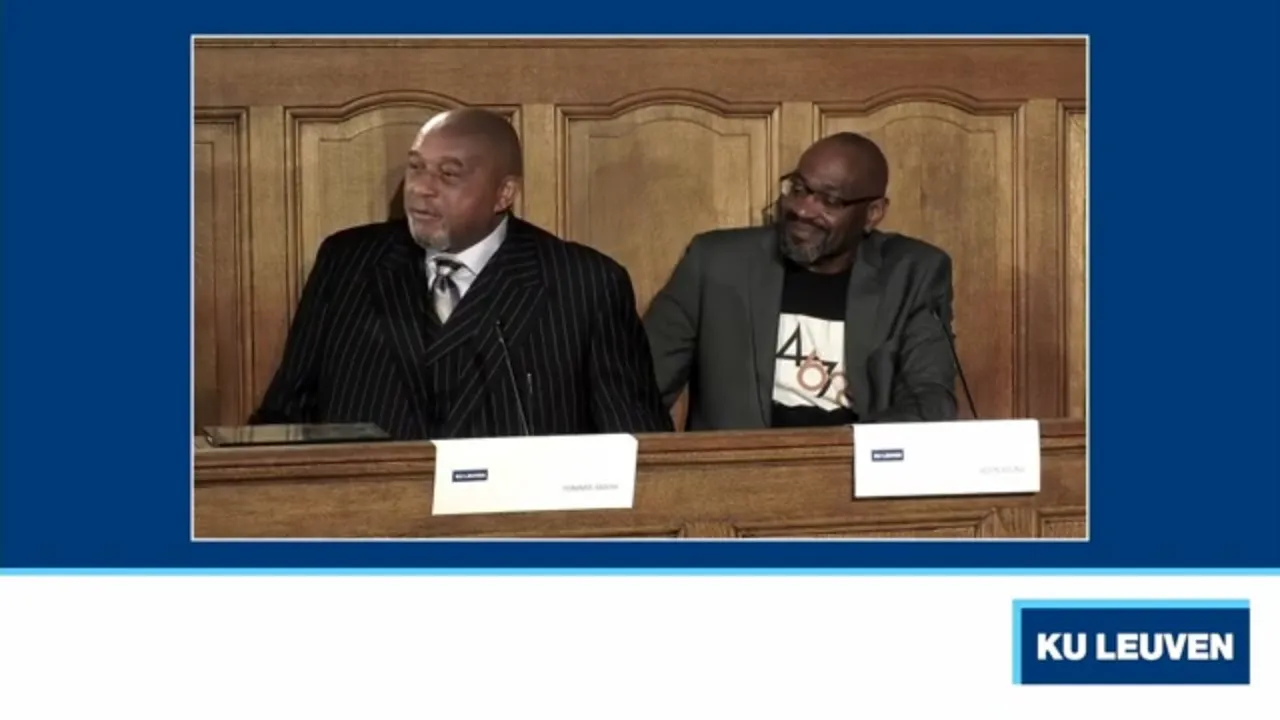
And most significantly when there was a movement in the late '60s by African American athletes to boycott the '68 Olympics in Mexico City, which of course resulted in Tommie Smith and John Carlos and their famous raised fist.
Dr. Martin Luther King defended their right to boycott, calling it an amazing act of nonviolent civil disobedience.
DAVE ZIRIN: And when Martin Luther King decided in 1967 that he would go public with his opposition to the war in Vietnam, one of the things that he said was, well, it's like Muhammad Ali says, we're all victims of a system of oppression.
MARTIN LUTHER KING, JR.: It is my hope that every young man in this country who finds this war objectionable, and abominable, and unjust will file as a conscientious objector.
And no matter what you think of Mr. Muhammad Ali's religion, you certainly have to admire his courage.
DAVE ZIRIN: And so what you had there was Martin Luther King drawing upon the experience of Muhammad Ali as a way to defend his own position, which at the time, was extremely unpopular.
So I always found that incredible fascinating that here's Martin Luther King, his own advisors are telling him, don't stand against the war in Vietnam.
Keep your focus on domestic issues.
And not only does King take that risk, but he mentions Muhammad Ali's name.
He mentions the name of a boxer as a way to justify it.
And I would encourage people today to really think about, imagine if a similar figure referenced LeBron James to say why they were taking a political stand.
I mean, it says something about the kind of stature that Muhammad Ali had.
BILL MOYERS: Is there a sports giant today who is speaking to issues of social justice the way Muhammad Ali did?
DAVE ZIRIN: The main issue is, are there movements in the streets?
Because when there are movements off the playing field, they reflect on the playing field.
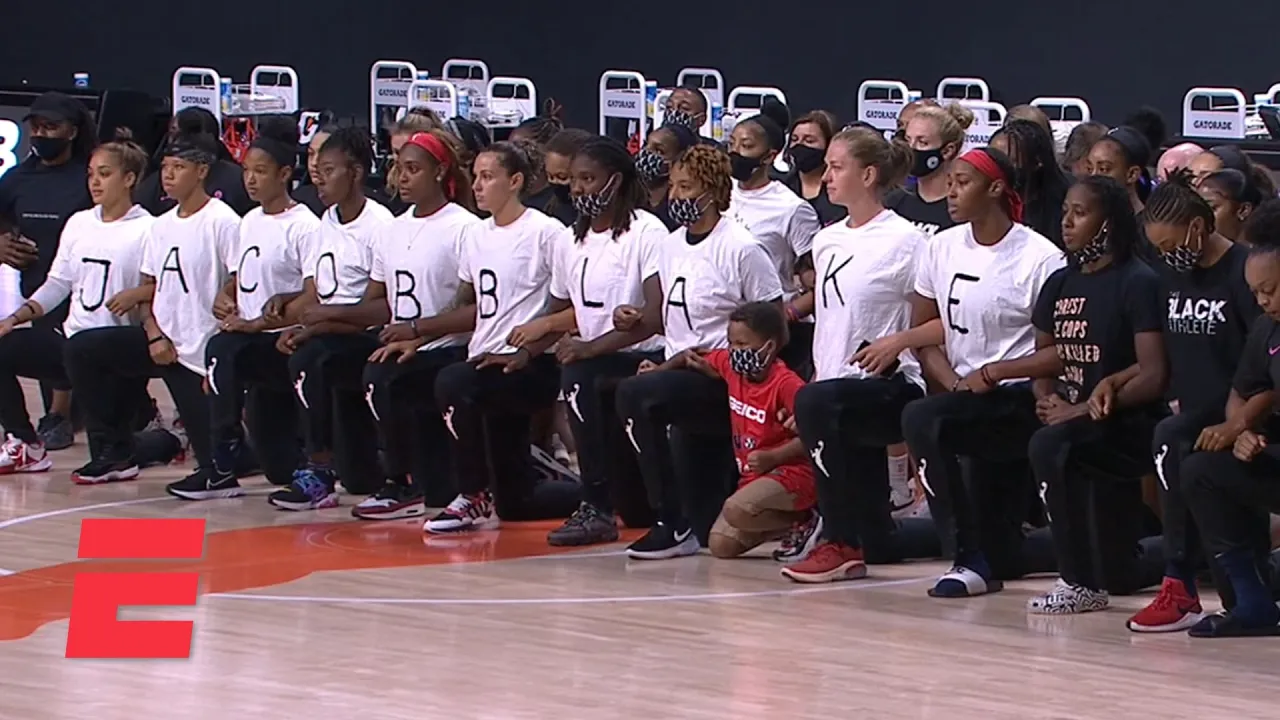
So in the last couple of years, we've seen things like the entire Miami Heat team with LeBron James and Dwyane Wade, they're superstars in the lead, all wearing hoods in protest of, at the time at the fact that George Zimmerman had not been arrested for the shooting of Trayvon Martin.
And many athletes like Carmelo Anthony of the New York Knicks, he was very vocal about that as well.
So you saw something there where it connected with players, particularly of African American players, very strongly, that there needed to be justice as a result of the Trayvon Martin case.
The other issue that of course is huge right now is the issue of LGBT athletes, lesbian, gay, bisexual, and transgender athletes standing up and speaking out for their right to their own humanity inside a locker room.
Now historically, a locker room has been, it's been called "the last closet," like an incredible bastion of homophobia.
I mean, this goes back to Theodore Roosevelt, who encouraged young boys to play tackle football, and said if they didn't they were sissies.
So, and he popularized that phrase, the sissy.
And it was a way of differentiating, are you going to be a leader, are you going to be tough, are you going to lead the new American century and play football?
Or are you going to be a sissy?
And for women who wanted to play sports, you had a similar dynamic where wait a minute, what does it say about you that you want these so-called male attributes like leadership and strength and, you know, physical daring?
Like, what does it say about you?
Well, you must, there must be something wrong with you.
You must be a lesbian or they would say all kinds of things about women who wanted to play sports.
And what you're seeing now in the 21st century are people really pushing back against that.
So in the last, even just few months, you've had Jason Collins become the first active male player to come out of the closet in the history of North American sports.
You had Robbie Rogers, a professional soccer player who came out and then retired at the same time, even though he was just 25 years old, because he said he didn't think he could be out in the locker room.
And then after Jason Collins came out, he got back on the field and played and said, Jason Collins inspired me.
And you've had Brittney Griner who is arguably the best woman's basketball player of her generation.
She came out of the closet so smoothly, you wondered if she was ever in.
And so you have a new generation of athletes who are using that platform of sports to speak out about sexuality and human rights and dignity in a way that I think would do the people from the 1960s very proud.
BILL MOYERS: As you know, there's a controversy brewing over the Olympic Games being held next winter in Russia.
President Putin has enacted a law threatening fines or even prison for anything considered to be gay propaganda.
And some people are calling for a boycott of those games.
DAVE ZIRIN: I don't think that the United States should boycott, even though I'm horrified by not just the laws, but some of the attendant violence that's taking place in Russia against the L.G.B.T.
community and even their their allies and supporters.
I'm not for a boycott, because I think first of all the athletes themselves are going to be prime to go over there and make a statement when they're in Russia.
And I think that history shows that has a profoundly more powerful effect on the political culture than if you just stay home.
I had the great fortune of doing a book with John Carlos.
And I asked what he thought about the Russia Olympics.
And I said, should people go over there and protest or should they stay home?
And he said, well, if I'd stayed home, no one would ever have heard what I had to say.
And who would remember that I stayed home today?
But people remember that I went and I said my piece.
So I think you've got to give people the chance to say their piece.
BILL MOYERS: But it's still very difficult for them, isn't it?
DAVE ZIRIN: Yeah, absolutely.
And I think there are two big reasons why it's so difficult in the world of sports.
The first reason is of course that people want sports to be as apolitical as possible because it's escape.
You know, people just want to sit back, relax, and enjoy the game.
BILL MOYERS: And it is.
DAVE ZIRIN: And, yes.
BILL MOYERS: Don't you go to games for escapism?
Are you always looking at what this means that we're not seeing?
DAVE ZIRIN: Oh no, I like the escapism too, but it's a little hard to go see the Mets and be sitting in a place called Citi Field named after a bank that was paid for by billions in public dollars and not think to yourself, yeah, I think that there's some political things maybe going on here that we should pay attention to.
But also, I think owners tend to be politically on the right wing of the spectrum.
And when they say, and when a lot of their friends in the sports media say, sports and politics shouldn't mix, what they're really saying is sports and a certain kind of politics shouldn't mix.
Because when it comes to the politics of things like militarism and corporatism, those politics are blaring at a typical game.
But when it comes to a player actually trying to use their hyper-exalted, brought to you by Nike platform to say something about the world in which they live, well, then that can be, as you said, there can be not a very graceful response to that.
BILL MOYERS: You mentioned the historian Taylor Branch who wrote that magnificent series on the civil, history of the civil rights movement.
He said not too long ago that college sports in particular still reeks with the whiff of the plantation.
DAVE ZIRIN: Right.
BILL MOYERS: You think that's true?
DAVE ZIRIN: Oh, absolutely.
I mean, you know, the first person who I could find who made that analysis of calling college sports a plantation was a man named Walter Byers.
Walter Byers headed the NCAA from 1951 to 1988.
He is responsible for the shaping of the NCAA.
And when he left the sport, he said, we've turned it into a plantation system, meaning that there is a tremendous amount of money being generated that would flow into very few hands, and none of that money, obviously, going into the hands of the people on the field or on the court themselves.
I mean, it is such a wild scam what happens in college sports in this country.
And it's only getting worse.
BILL MOYERS: Do you think college athletes should be paid?
DAVE ZIRIN: I think they should because of the revenue that they generate.
I mean, think about it like this, Woody Hayes, he's the coach over at Ohio State, his last year coaching there, he made $43,000 a year.
Today the coach at Ohio State, Urban Meyer, makes $4 million a year as a base salary, $4 million a year.
The head of the NCAA, Mark Emmert, makes almost $2 million a year.
Now keep in mind, the NCAA is a nonprofit.
I mean, I'd hate to think of how it would operate if it was a industry for profit.
BILL MOYERS: The coach at my alma mater, University of Texas, Mack Brown, had a so-so record two years ago, eight and five, and yet he got $5 million because essentially he took the team to the Holiday Bowl-- DAVE ZIRIN: Right.
BILL MOYERS: The university officials defended that, saying, well, look our athletics brought in $103 million revenue last year.
DAVE ZIRIN: Well, I mean, there's some really basic reforms that should happen right away, because the argument you always hear when people say that athletes shouldn't be paid is, well, they get a four-year scholarship.
And so the first thing we need to say in response to that is, that's factually not true.
College athletes get one-year scholarships that are renewed on an annual basis.
So you could have a 4.0 GPA and be your class president.
But if you're not performing on the field, you're gone.
So to even call them student-athletes isn't even true.
I once interviewed a former All-American, and the way he put it is the way I always carry with me, he said, we're not student-athletes, we're athlete-students, because the second we get on campus it's made clear to us what our priority should be.
So the reality at this point, it's basically they're campus workers who don't get paid.
And that kind of injustice I don't think should be allowed to stand.
BILL MOYERS: What would you do about college, football in particular?
DAVE ZIRIN: If I could wave a magic wand, I would absolutely delink these kinds of sports from a university setting.
And I would say look-- BILL MOYERS: It wouldn't be the University of Texas Longhorns?
DAVE ZIRIN: I'm sorry, but I said magic wand, this is just the magic wand.
I have a feeling I wouldn't get very far in Texas with this argument.
But-- BILL MOYERS: You might get into the state, but not out.
DAVE ZIRIN: I wouldn't get into the state... But this is the point though, is that WEB Du Bois wrote about this a hundred years ago, about the way that he felt like football was distorting, or as he put it, king football was distorting the atmosphere at Yale University.
And it's actually quaint what he wrote.
He said, the football budget is seven times the classics budget.
And it's like, well, just seven times, my goodness.
And so you fast forward to today, I would want the NFL with all of its billions to pony up for its own minor league.
I would want the NBA to do the same.
Beause it really shouldn't shock us that sports that draw the most heavily on people of color, are also the sports that put them in a completely disempowered position, where they're training for these professional leagues without getting a dime in their pocket.
So if we could delink them, I absolutely would.
We're not going to.
I get how deep this is in the vein of the culture.
So I think a much more sane approach is first and foremost, if players can make money off their individual image, they should be free to do so.
I mean, there's something obscene about a college player who boosters are paying literally $20,000 to have dinner with, but they don't get anything from that.
Or they sign a million things and they each get sold and the money goes to the university, but not even a little bit of it goes to them.
But I think a much more sane thing would be to put caps on coaches' salaries, caps on assistant coaches' salaries.
I mean, would it really be so terrible if Mack Brown made $1 million a year instead of $5 million or $6 million a year?
I mean, would the talent pool for people who want to coach really dry up.
I don't think so.
That money could then go to a stipend for all people who play sports, male or female.
And there is, I mean, this has been worked out that there's totally enough money in the system to make this happen, especially if colleges give up their addiction to stadium funding.
I mean, at Texas A&M where this kid Johnny Manziel, the Heisman Trophy winner is in so much trouble for allegedly taking a couple of grand for signing autographs.
They're about to open up $450 million in renovations on their foot, and they said they want it to be a megaphone to the world.
That's how it was described by the athletic director.
And so they want it to be a megaphone, but the person who's actually been yelling through the megaphone, so everybody knows about Texas A&M, Johnny Manziel, doesn't see anything of that.
BILL MOYERS: Supporters of the present system, critics of yours would say, but this money, going to the coaches, going into the program, doesn't come from taxes.
It comes from the revenue generated by the television contracts and all of that.
DAVE ZIRIN: There's a lot of truth to that argument.
In some cases though it does actually draw in, at the state colleges, from state monies, especially when there are budget shortfalls.
There's been terrible instances of this in California, for example, where they were cutting classes at Cal Berkeley while at the same time giving their coach Jeff Tedford a raise and doing hundreds of millions of dollars in renovations on the stadium.
But the bigger issue is that the television money is just growing.
ESPN just inked with the power conferences a 12-year, almost $6 billion contract to broadcast these college games.
That's new revenue.
That's $6 billion.
And then people say, well no, that just goes back into the athletic department.
And it's like, well, let's look at these coaches' salaries and how they're rising and still rising.
Let's look at now there's an arms race, if you will, of assistant coaches, where they're not making millions of dollars a year.
And so what you're seeing is capitalism for some and I don't even know what you would call it, indentured servitude for the masses of athletes.
And the concern is that a lot of these schools are becoming sports franchises where people happen to go to classes in between games.
BILL MOYERS: No one I know has covered so well the extent to which the world of sports has changed.
What would you say is the defining feature of that change?
DAVE ZIRIN: The defining feature of that change can be seen in any city in this country where there is a publicly-funded, billion-dollar stadium.
That to me is both a symbol and an expression of everything that's changed about the economics of sports.
Now look, I'm not saying that owners back in the day were these kindhearted creatures.
But there was an economic system in sports where if you were an owner and you were goint to make a profit, you needed to make sure that largely working-class fans would be able to pay money and put their butts in the seats and go to the park.
Now fans have largely become scenery.
The way owners measure profits in this day and age are public subsidies for stadiums, luxury boxes at the stadium, and sweetheart cable deals.
Now what's so horrible about two of those three things, the cable aspect and the public subsidies for stadiums, is that we're paying for this whether we're sports fans or not.
Our cable bills go up, our taxes go up, to subsidize these kinds of ventures.
And every single economic study shows that they don't work.
So what these stadiums-- BILL MOYERS: You mean they don't produce the revenue.
DAVE ZIRIN: No, it's more like a neo-liberal Trojan horse.
Where people end up agreeing to things that they would never otherwise agree to, because it becomes wrapped in sports.
And the idea, or maybe a fear that the team will move.
Or maybe excitement at the thought of a new building.
Yet we all pay a very serious price for this.
I went to college in Minnesota, I remember going to see the Twins at the Hubert H. Humphrey Metrodome.
And it was not a good stadium.
Billy Martin once famously walked in and said, how could Hubert Humphrey's parents name him after this dump?
So it was a pretty awful stadium.
And so, and I'm all for them having a new stadium, except the new stadium was built entirely with public money, even though it had been rejected a dozen times by the voters in various referendum.
But the owner, Carl Pohlad, who's the richest owner in major league sports at the time, he devoted, and I, this is without exaggeration, the last 25 years of his life, from age 72 to 97, to lobbying to get this new stadium.
That was his dream.
And the very week they were going to break ground on the new stadium the bridge collapsed in Minneapolis, sending about a dozen people to their deaths.
A five-minute walk from where I live in D.C., the metro went off the rails the year after the new Washington Nationals' billion-dollar stadium opened.
So people have to realize whether you're a sports fan or not, very real choices get made about the limited amount of public infrastructure dollars that we have.
And if they don't get spent on infrastructure that safeguards our basic safety, then we all pay a price for that.
BILL MOYERS: What's the hold these billionaire owners have over the city fathers and sometimes city mothers of a place like Detroit?
I mean, you saw the headlines in Detroit recently.
One day the headline says, city declares bankruptcy.
The next day, the headline says, multi-million dollar new arena.
DAVE ZIRIN: Detroit Red Wings.
Over $400 million for a new hockey stadium, the same week that they talk about Detroit declaring bankruptcy.
I mean, first and foremost, it's not being built for Detroit, it's being built for a gentleman named Mike Ilitch, founder of Little Caesars Pizza, the man is in his 80's, he's worth $2.7 billion.
And he's getting over $400 million in public money for a $650 million arena.
This was signed off on by Rick Snyder, the same governor who enacted the the anti-labor laws that are in Michigan that caused so much controversy last year, and making it a right-to-work state.
BILL MOYERS: But he says this is a rebuilding project that they're doing it for jobs.
GOV.
RICK SNYDER: What a wonderful opportunity to see excitement.
And this will have a big multiplier effect in terms of additional development in that whole area of Detroit.
So it's a good win for Detroit.
DAVE ZIRIN: Yeah, once again, it's like, what kind of jobs are you creating?
And could that money be used for different kinds of jobs in Detroit?
Detroit is a place you leave, not a place you settle.
You need to have real jobs that create a real tax base that can fund real schools that actually work.
And you've got to keep the street lights on and you've got to have a garbage collection.
And first of all, the kinds of jobs that it creates, it doesn't produce tax revenue.
It produces revenue for Mike Ilitch which he can then hide and not pay.
But it doesn't produce tax revenue for the people who are going to, who actually have to live in Detroit after this.
BILL MOYERS: So what's your intuition, if not your evidence, for what, how that happened?
DAVE ZIRIN: Well, I do have a lot of evidence on this one, because fortunately, the public records are good on this stuff.
And this is about Mike Ilitch having a lobbying wing at the Michigan capital and having the ear of Rick Snyder, I mean, Mike Ilitch-- BILL MOYERS: The governor.
DAVE ZIRIN: Yes.
Mike Ilitch wanted a new arena, the same way the Steinbrenners wanted a new Yankee Stadium.
The same way in this town Fred Wilpon, even though we didn't know it at the time, but he was borrowing money on the new Mets Stadium, Citi Field, and giving it to his best friend, who happened to be named Bernie Madoff to invest it for him.
I mean, and that's the part of it that just boggles my mind, especially as someone who grew up a Mets fan, the idea that sports can be used as a kind of economic shell game for people in power.
And I think that really is how it happens.
Because there's an agenda at the top of society that wants corporate welfare.
That's a huge part of that kind of one-percent agenda.
And sports is a way to do that without arousing the kind of ire that otherwise might exist.
BILL MOYERS: You've said that what's happened to sports in the last 30 years was actually preparing the public psyche, for what?
DAVE ZIRIN: I think for the Wall Street bailout more than anything else.
I mean, if you think about the trillion dollars of public money that went to bailing out Wall Street after the 2008 financial crisis, and the terms of that bailout as well, asking nothing of Wall Street, prosecuting nobody, and preparing people for this idea that says the role of public spending is really to bail out private capital.
And that's the way our society is going to work.
Money will flow up.
We have a trickle-up economic program in this country.
So instead of a more classical economic model that says, if you get money in the hands of working people, they will spend that money, and that will stimulate more demand and make the economy grow, the other thing the other model is now it's a finance model that says, get as much money as possible in the hands of big business.
And that's going to be the basis of our economy, even though it's going to, in an incredible sense, be like inequality on steroids.
Now I think the way that sports has operated over the last, particularly in the go-go 1990s, when the economy was growing starting really in Camden Yard in Baltimore you had this preparing of the public psyche to say, you know what the role of public money should be?
To give it to private capital so they can build these stadiums.
BILL MOYERS: So what do we do about this?
DAVE ZIRIN: Well, I think one of the things that's exciting about this moment, right here, right now, is that you have examples in places like Brazil of people standing up.
DAVE ZIRIN: They're building all the stadiums for the World Cup and people think of Brazil as this soccer-mad country.
And, of course, the organization that governs soccer is called FIFA.
And so the big banners in the streets were, we want FIFA-quality hospitals.
We want FIFA-quality schools.
And that became an in international news story, this idea of, no, the stadium doesn't represent civic pride, it represents why I have a bad hospital and why my kid goes to a failing school.
That, to me, is a huge step.
You know, that there's that expression that sometimes in struggle, days are like years, and sometimes years are like days.
Like what was happening in Brazil was like years of work happening in a matter of days.
And so the argument is now an easier one to make with people.
The second thing that's encouraging is just popular opinion.
I mean, it used to be they would do these sort of showcase referenda for new stadiums and whatnot.
They don't do the referendums anymore.
The former mayor here, Rudolph Giuliani was asked why there wasn't a referendum for the new Yankee Stadium.
And he said, well, if we have a referendum, we'll lose, which was about as honest as you could get.
So it starts with education, it starts with public awareness.
And I think-- BILL MOYERS: And anger, doesn't it?
I mean-- DAVE ZIRIN: It has to start with anger.
BILL MOYERS: In Brazil, you could watch the people protesting the inequities brought on by the spending for the World Cup facilities, and they're saying, we're mad as hell, we're not going to take it anymore.
DAVE ZIRIN: Yeah, that's we are going to need a lot of that in this country.
And I think we need to actually organize with sports fans and say, okay, you love sports, but do you really want to feel like you're subsidizing the person who owns this team?
Does that seem right to you?
And go to unions and say, okay, you think there's union labor in building this stadium and that's why you support this project, but what happens when it's done?
And then your kids are working for $8 an hour and the only way you'll ever go into this stadium is if you're selling beer.
BILL MOYERS: Here we are at the convergence of two sports seasons that always get fans excited, me included.
The opening of football, and the fall drive in baseball towards the World Series.
But then you have a controversy like Alex Rodriguez, A-Rod.
DAVE ZIRIN: Sure.
BASEBALL ANNOUNCER: With a 211 game suspension hanging over his head that he is going to appeal, Alex Rodriguez about to take his first at bat of the season.
BILL MOYERS: A-Rod, appealing his suspension for cheating, he used performance enhancing drugs that he and other players got from that anti-aging clinic in Florida, Biogenesis.
Talk about A-Rod.
DAVE ZIRIN: Oh, yeah.
I mean, it's so interesting, because on so many levels, I think Alex Rodriguez, there's a lot about him that's very loathsome.
I live ten minutes away from a horrific slum with mold and ventilation problems and rats.
Alex Rodriguez owns the slum.
It's called Newport Ventures.
And this has become a big local story in Washington D.C. that Alex Rodriguez owns this horrific building.
I mean, so the guy has made $350 million in his career.
He's loathsome on a lotta levels in terms of how he uses his money and how he uses his fame.
But at the same time, all of that being said what Major League Baseball is doing in terms of attacking him is precisely because he is such low-hanging fruit in that regard.
He's not going to get a lot of defenders.
But the part of the A-Rod story which I think needs to be talked about more is less about Alex Rodriguez and more about the other players who were pinched in this biogenesis case.
If you take Alex Rodriguez out of the picture, all the players who were just disciplined in the last couple of weeks, they all came through baseball's Dominican Republic pipeline.
They were all players either from the Dominican Republic or from Nicaragua or Venezuela and they all go through the Dominican to be trained before coming to the US.
Today, one out of every three minor league players is from the Dominican Republic, a country that has a poverty rate of over 40 percent.
One out of three minor league players.
Now the other thing about the Dominican Republic is that steroids are legal and available over the counter.
And so I look at Major League Baseball and I think, "These are people who want to have their anabolic cake and eat it too."
They want to be able to develop a huge portion of their talent in a place that's a Wild West for performance-enhancing drugs.
And then in the 1990s, when they weren't testing, they made billions of dollars with the power surge and the increase in home runs.
And now today, as the wheel has shifted, they've become the teetotalers who are cracking down in the name of public relations.
I mean, every Major League owner is like Claude Rains in Casablanca saying, "I'm shocked there's gambling going on here.
Your winnings, sir."
BILL MOYERS: So is there a pattern in how baseball chooses its culprits?
DAVE ZIRIN: It's just like we were talking about before with our cities and with inequality.
I mean, I also think that sports mirrors and reflects globalization.
And so what you have baseball doing is investing billions of dollars in the Dominican Republic, where they can sign kids as young as 15 years old for a couple thousand dollars.
They get scouted before their tenth birthday.
They go through these baseball academies that, I mean, it's been exposed so many times, like the substandard health and sanitation in these places.
A young prospect for the, my hometown team now, the Washington Nationals died in one of these academies, a young man named Yewri Guillen.
And we're at a point now where I think baseball has decided that it's better to be able to develop talent cheaply because 99 percent of them won't make Major League Baseball anyway, and to sign a bunch of people at higher rates when 99 percent of them won't make it anyway.
So it's like a kind of brutal, brutal farm system that takes place down there.
BILL MOYERS: Have we seen any of the owners penalized for failing to enforce the rules about steroids?
DAVE ZIRIN: Not only have you not seen that, you didn't see one owner dragged in front of Congress when the Congress was doing their steroid investigations.
You've never seen an owner asked, what did you know and when did you know it?
Even though we know for a fact that in the late '80s, you had trainers going to ownership meetings saying, hey, there's these things called synthetic testosterone, steroids, that they are going to flood the locker room in the next few years.
And yet they either chose the policy of benign neglect or malignant intent.
And we honestly, we don't know the answer precisely because they haven't been asked.
You know, player once said to me, and this is kind of like my guiding compass to this whole issue.
A player once said to me, when it comes to steroids punishment is an individual issue, but distribution is a team issue.
And he was trying to make the point that when they crack down, they always go after the individual.
And it's like the magical fishing net that catches the minnows while the whales go free.
BILL MOYERS: So now let's talk about football.
A lot of attention is being paid to the scientific link between routine football plays and permanent brain damage.
I want to play you a clip from a Frontline documentary called "Football High."
NARRATOR in FRONTLINE: Football High: 12:48:14:00 Starting in 2009, scientists at Purdue University put sensors into the helmets of two high school football teams.
The sensors measured every impact the athletes took over the course of a season.
TOM TALAVAGE in FRONTLINE: Football High: 12:48:32:00 The original intent for this study was to study concussions.
But we didn't experience any concussions for quite a few weeks, so we decided we would start bringing in some of our players who had not experienced concussions to just begin to understand whether or not there were any consequences from the blows that they were getting to their head.
NARRATOR in FRONTLINE: Football High: 12:48:53:00 To the researchers' surprise, neurological tests revealed that players who had never reported symptoms of a concussion had suffered significant damage to their memories.
TOM TALAVAGE in FRONTLINE: Football High: 12:49:03:00 You know what to do.
This is the letters test, zero back, one back and two back.
[...] CHRIS NOWINSKI in FRONTLINE:Football High: 12:49:37:00 The sensors in helmets find that high school kids take more force to the brain than college kids.
And the reality is, we know from the literature that the young, developing brain is far more vulnerable to this trauma.
Dr. ANN McKEE in FRONTLINE:Football High: 12:49:52:00 How do you change the game so that you're not getting all these small little hits that don't rise to the level of concussion?
That's sort of the nature of the game.
That's how it's being played.
Every time we line up, even in a practice, that's what's happening.
So we're going to have to make dramatic changes or we don't change, we don't change the face of this disease.
BILL MOYERS: Do you see those changes coming, given the fact that football is so deeply imbedded, as you have written and said, in the psyche of America?
We love the violent sport.
DAVE ZIRIN: There will be changes and people need to recognize that they will be almost entirely cosmetic.
I think what we have to accept as a society, as a football-loving society, is that football is a lot like a cigarette.
You can give it a bigger filter, you can tell people it has less tar, but no one has invented a safe cigarette.
BILL MOYERS: You don't think better helmets will work?
DAVE ZIRIN: Horribly, some of the studies show that better helmets can make things actually more damaging, because it's harder to detect when you're actually hurt, when you actually get your so-called, your "bell rung" as they used to say.
Because it becomes the sort of thing where your brain is banging against your skull, which is banging against the sides of the helmet.
And because there are less exterior injuries, which might be a telltale sign, you don't see them.
So it actually becomes worse and more dangerous.
That's the scary thing about this.
I mean, we don't, what we know now is that you don't need a diagnosis of a concussion to have a concussion.
I mean, these sub-concussive hits are actually more dangerous.
I mean, I think we're so attune to thinking that the danger of football is some 6'4" 250-pound linebacker running at four or five speed and knocking your block off.
But that's not the danger.
It's the mundane, daily knocking into the next person.
That's where the danger is.
BILL MOYERS: I have been a football fan all my life because I love the surprise of it.
The hail Mary pass that's in the air, the beauty of the last-minute tackle.
But the beauty and the surprise seem to be less compelling to me, given these reports on concussions.
And given the suicides of several professional football players.
DAVE ZIRIN: Yeah, Junior Seau who played 20 years and was not diagnosed with a concussion once.
Dave Duerson, who took his own life by shooting himself in the heart, just so his brain could be studied.
And Junior Seau also took his own life by shooting himself in the heart.
These are things that I think need to weigh heavily on the minds of football fans when they watch the game.
I mean, people like violent movies, they like violent video games they like violent sports.
But I'll tell you something.
Boxing is profoundly less popular now than it was in Muhammad Ali's day, and that's because people actually saw with their own eyes what people like Muhammad Ali went through after their careers.
And I think the more people know about how players suffer after they leave the game, the more the sport is going to be in crisis.
BILL MOYERS: Dave Zirin, thank you very much for being with me.
DAVE ZIRIN: My privilege, thank you.
BILL MOYERS: When Thomas Jefferson wrote that all men are created equal, his Monticello farm team was obviously not what he had in mind.
They were chattel, possessions toiling in his fields.
So it's not lightly that Dave Zirin and other observers invoke the plantation mentality to describe college football today -- or the National Football League.
Tom Van Riper, who covers sports for "Forbes" magazine, points out that of the 31 owners of NFL teams, seventeen -- more than half -- are billionaires.
Many boast of being self-made in the image of Horatio Alger, and are now ensconced in luxury skyboxes far above the proletarians whose own dreams of glory ride vicariously on the grunts and groans of bulky but agile gladiators only one play away from a career's end.
A collision with the laws of physics.
Football, like politics, ain't beanbag.
The fortunes of players can vanish in a single blow, while high in their plush digs, owners reap continuing gains from TV and advertising and the tax breaks and subsidies showered on them by compliant politicians.
Big-time sports now mirrors the vast inequality that has come to define America in this century.
Soon after the taping of my interview with Dave Zirin, the NFL settled a class-action suit brought by more than four thousand retired players and their families seeking damages from injuries linked to concussions.
To the casual fan, it was a win for the players -- a sum of $765 million.
But even if they finally have to cough up, the owners will feel no pain.
That's just a fraction of the estimated 10 billion dollars the league generates in revenue each year.
The average payout per plaintiff will amount to around $150,000 -- not nearly enough to cover a lifetime of lost wages and medical bills faced by the victims of serious brain trauma.
These players and their families haven't won much.
It isn't even a tie.
As another formidable sleuth of journalism, David Cay Johnston, recently asked in the "Columbia Journalism Review", "If the settlement does not cover all the costs of medical care, much less lost future wages, who will bear that burden?"
His answer: taxpayers When players are no longer insured by the league and find themselves unable to afford private insurance for their enduring afflictions, taxpayers -- that includes you and me -- will be the ones to pay, through Medicaid and Social Security disability.
We won't even be allowed to see the NFL's own extensive research into the neurological damage caused by concussions.
The settlement allows the league and the owners to keep it under lock and key.
Something else to remember as we relax in our favorite easy chair, dazzled and thrilled by men who can be hurt for life.
If the world were just, they would not be so matter-of-factly tossed aside, we might think twice about how we want to be entertained, and the owners of capital would be amply penalized for unsportsmanlike conduct.
We began the series last year with three broadcasts on winner take all politics, based on the book of that name by political scientists Jacob Hacker and Paul Pierson.
Their theme was the political engineering of inequality, or "How Washington made the rich richer and turned its back on the middle class."
In the next few months we will be returning to those core issues.
Next week, the economist Robert Reich -- named one of the best cabinet officers of the 20th century -- will be with us to talk about his new documentary "Inequality For All."
ROBERT REICH in Inequality For All: Now the thing you want to know about this Mini Cooper is it is small.
We are in proportion, me and my car.
My name is Robert Reich, I was Secretary of Labor under Bill Clinton.
Before that the Carter administration.
Before that I was a special aid to Abraham Lincoln.
Of all developed nations the United States has the most unequal distribution of income and we're surging toward even greater inequality. 1928 and 2007 become the peak years for income concentration, it looks like a suspension bridge.
WOMAN in Inequality For All: Last year we made $36,000.
MAN in Inequality For All: Think I probably make $50,000 a year working 70 hours a week.
ROBERT REICH in Inequality For All: The middle class is struggling.
People occasionally say to me, "Now what nation does it better?"
The answer is, the United States.
In the decades after World War II, the economy boomed but you had very low inequality.
BILL O'REILLY in Inequality For All: Do you know Robert Reich?
MAN in Inequality For All: I do.
BILL O'REILLY in Inequality For All: He's a communist.
ROBERT REICH in Inequality For All: When I was a kid, bigger boys would pick on me.
I think it changed my life.
I had to protect people from the people who would beat them up economically.
Who is actually looking out for the American worker?
The answer is, nobody.
If workers don't have power, if they don't have a voice, their wages and benefits start eroding.
We are losing equal opportunity in America.
Anyone of you who feels cynical just consider where we have been.
ROBERT REICH: One of the purposes of this film, Bill, is to make sure people understand that the only way we're going to get the economy to work for everybody and our society, once again to live up to the values of equal opportunity that at least we aspire to, is if we're mobilized, if we're energized.
If we take citizenship to mean not simply voting and paying taxes and showing up for jury duty.
But actually, participating in an active way, shutting off the television-- BILL MOYERS: With some exceptions.
ROBERT REICH: There's some exception.
And spending an hour or two a day in our communities, on our state, even on national politics, and putting pressure on people who should be doing the public's business instead of the business of the moneyed interests to actually respond to what's needed.
BILL MOYER: At our website BillMoyers.com there's a thought provoking variety of analysis and commentary.
That's all at BillMoyers.com.
I'll see you there and I'll see you here, next time.
Up Next

Examining Athlete Activism in Racial Justice Movements
@aljazeeraenglish
12.7K views•2020-09-15

Triumph of Orthodoxy Icon: Byzantine Art & History Explained
@BenCallan
2.1K views•2024-08-06

FastAPI vs Flask vs Django: Choosing the Right Python Web Framework
@TechWithTim
302.5K views•2024-05-26

Game of Thrones Opening Credits: A Cinematic Analysis
@gameofthrones
46.3M views•2011-04-18
Related Study Plans & Knowledge Roadmaps
Structured learning paths in General & Interdisciplinary Studies