


























Nationalism is fundamentally toxic for nations because it creates an 'imagined political community' that conflates the people, the nation, and the state, enabling oppressive regimes to claim absolute authority and paint critics as traitors; while nationalism can briefly unite people against common enemies, it ultimately diminishes societies economically through protectionism, culturally by restricting intellectual openness, and personally by reducing individuals to categories of birth rather than recognizing their full humanity.
Nationalism and Its Impact on the Nation | Podcast Analysis
Added:The conceptual distinction between a 'nation', a 'state', and a 'nation-state'.
The fundamental difference between patriotism (civic pride) and nationalism (exclusionary ideology).
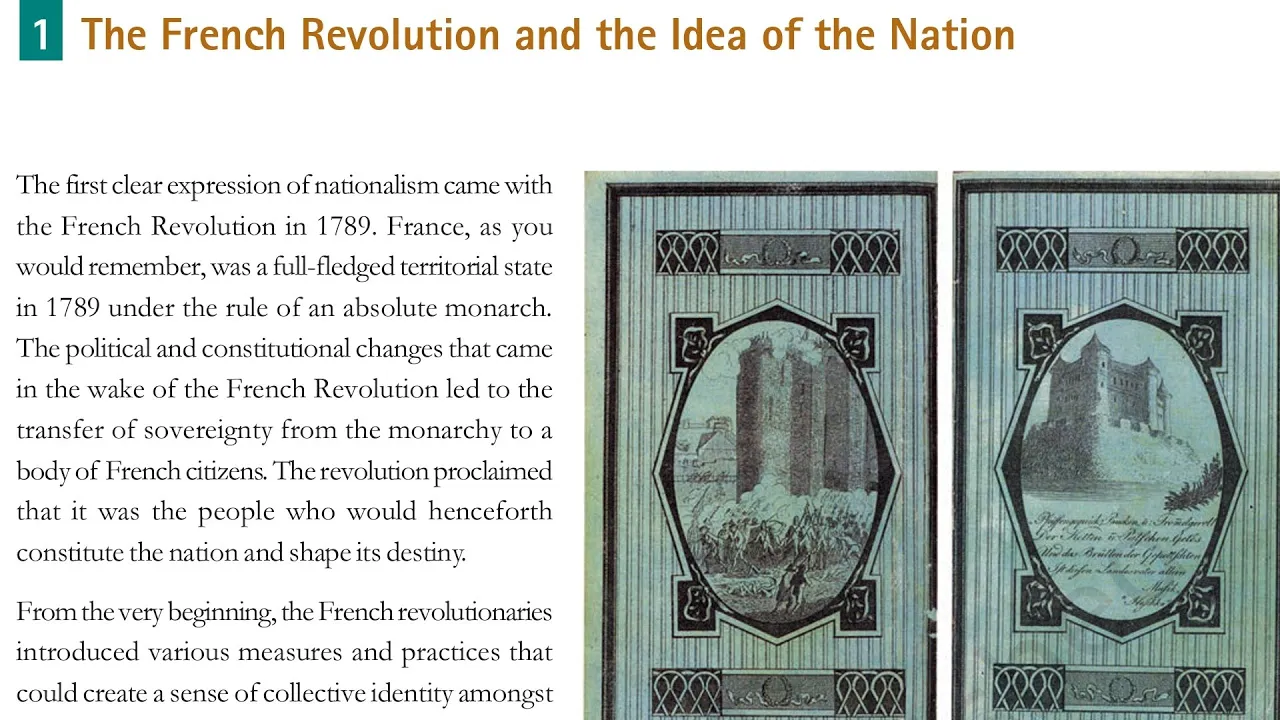
The historical emergence of modern nationalism, particularly during the French Revolution and the Treaty of Westphalia.
Basic economic principles of globalization, free trade, and international cooperation.
The relationship between contemporary populist political movements and nationalist rhetoric.
The economic consequences of protectionism, isolationism, and tariff wars driven by nationalist agendas.
In-depth analysis of supranational organizations like the European Union and the tension between national sovereignty and integration.
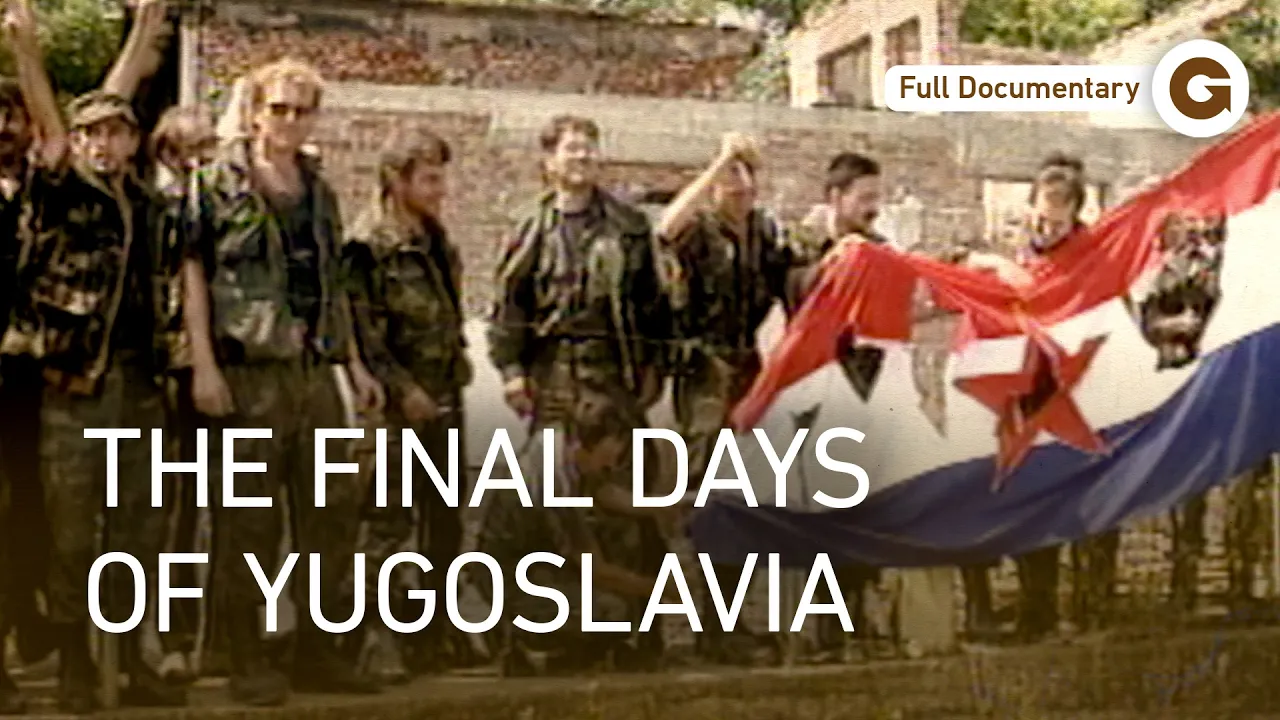
Historical case studies of extreme ethnic nationalism, such as the Balkan conflicts of the 1990s or the rise of mid-20th century fascism.
13.7K views342likes1:25:40Original Release: 2025-10-24
[music] [music] Welcome gentle reader to this important episode of everything is everything. We try to add value on the great questions of the age and today Amit is going to go after one of the biggest questions of the age.
Well, it's one of the biggest questions of the age as you put it. But it came about where I wasn't really thinking of everything is everything or doing an episode or big questions at all. I was sort of u scrolling through Twitter the day after the cricket match between India and Pakistan and we're recording this episode 3 days after that match though it'll release a couple of weeks from now and I was deeply disturbed by what happened during this recent tournament that India won. We played Pakistan a number of times. Our players refused to shake hands with their players. uh you know there was a lot of aggressive belligerent noise during press conferences from our captain and from others and in fact from politicians on the outside about the match. It was almost like it was a kind of war war minus a shooting as it were to use George Oville's phrase and it was incredibly uh ugly and disturbed me a lot especially the noises on social media after the win. Like it so happens that we won but every game in a knockout tournament is there's a little bit of a lottery element to it. you never know we had a far superior team so we won and uh yet all the noise around that disturbed me not just from the politicians but also from the players and that made no sense to me because in the past when I've seen cricket Indian players and Pakistani players have always been friendly you know Pakistani players are incredibly popular in India you listen to Wasim Akraman commentary or Vakar unison commentary Ramse Raja they are like superbly popular among our people our players have gotten gotten along well and this in particular disturbed me because it makes absolutely no sense. I mean when we think of how should we treat Pakistan, you can point to terrorist attacks and you can point to the old enmity between the two countries. But an important distinction to draw is a distinction that is really a distinction between two Pakistans and multiple Pakistans really. But one simple way to think of it is that there isn't just one Pakistan. You know, you have the people of Pakistan, the civil society and you have what our friend Prane Kotasune calls a military jihadi complex or the Pakistani state as it were. And the point is that the interests of those two are not aligned at all. They are exactly the opposite.
In fact, the Pakistani state gets a lot of his legitimacy and power from constantly painting India as an enemy.
And if they treat us as an enemy, they oppress their own people. Right? So treating the people of Pakistan badly or showing belligerance or aggression towards them uh just makes absolutely no sense and it kind of blows my mind. So that is one level at which I found this disturbing. Another level at which I found this disturbing is that fundamental absurdity of a feeling of nationalism in the common person. We we can come to why the states use nationalism and is convenient for them.
But for a common person to feel nationalistic, you are doing what Doug Stanho once described as hating people you have never met and taking pride in accomplishments you had nothing to do with. And suddenly as a country, we just rose up as a whole and seemed to do that all across social media. And it deeply disturbed me. And from there, you know, I was chatting with it while we were driving to where we shoot with uh VNAV and I spoke to him about this and I sent him some links and he said that he couldn't sleep properly at night. He was pretty disturbed by the whole thing and I figured we should do an episode about it because it's an important subject.
Now in the past we have spoken about the dangers of nationalism. We once did an episode in populism where we distinguished populist from popular. We did an episode on understanding labels.
one of my favorite episodes. Uh gentle readers, please do check that out where we looked at different labels like liberal, conservative, uh and so on and and what they really mean and what they have come to mean. And there we spoke about how nationalism is very different from patriotism and is very different from the national interest. The national interest is what is good for your country, what is good for the state.
Patriotism is love for your country.
Nationalism is an ideology that I largely uh tend to think of as kind of toxic. So my broad argument through this episode is going to be this. Nationalism is bad for the nation. Any nationalism, any nation. And that's what I'm going to hope to convince you of.
Okay, Amit, let's get going on clarity on definitions. How do we define nationalism and what does that idea fully mean?
>> The definition that I like of nationalism that seems to encompass all the other major definitions actually comes from uh possibly my favorite book on nationalism. It's called imaginary communities by Benedict Anderson where he defines a nation as an imagined political community. Right? Let's unpack that a little later. But let's first talk about how we form communities because we are talking about a modern concept. Nationalism is relatively modern and yet it arises from primordial instincts. You know you and I have often spoken about how we evolved in prehistoric times and small tribes and the huntergatherer age and you know long before agriculture long before society looked like what it looks like today.
Our instincts evolved then and we evolved in those times to be tribalistic. Life was nasty, brutation short and we lived in small tribes and it was natural to feel a solidarity for your tribe, to feel a suspicion towards the other, to be willing to fight for your tribe against the other tribe to even die for it, you know. And all of this is selected for all of these tribal instincts within us. You know, in our episode on fallacies, we also spoke about how a lot of the uh fallacies we suffer from also evolved in those times and aren't really fit for modern times.
and don't fit the reality of the world.
For example, the zero sum way of thinking, imagining that the world can be engineered in a top- down way. So do check out that episode on fallacies. So we had this tribal instinct and initially obviously this tribal instinct makes you loyal towards your tribe and then that gradually begins to change.
Maybe you live in larger settlements especially when agriculture comes about your loyalty expands a little bit there and then different kinds of communities start forming and there are different kinds of loyalties. I've spoken before in this episode about this beautiful concept that I love which was articulated by the philosopher web lei in uh his late 19th century book a history of European morals. U and the concept is a concept of the expanding circle where he says that the people that we consider worthy of our moral consideration is some is a circle that expands through time and initially it starts with your family, your kin and then your tribe and then your village and then so on and so on it keeps expanding and his optimistic arc of history narrative is that it will kind of keep expanding forever. Peter Singer wrote a book called uh the expanding circle where he said that it'll expand one day to include animals. Alas, it hasn't even expanded to include all human beings. But it keeps expanding in different ways. And one of the ways in which it does expand is to encompass what Anderson calls the imagined political community called a nation.
Right? And this is something and I'll come to the history of this shortly but this is something that we first see happening in Europe through the middle ages and after that and you know given a philip by the enlightenment and the romantic movement which are actually at odds with each other but both of them play a different role in forming this and the key word I want you to focus on AJ and a key word that all of us should think about is the word imagined right so whenever I invoke any nation it is necessarily an imagined community because as Anderson points out unlike in prehistoric times uh you know unlike Dumbar Dunbar's number of 150 we are imagining this community we don't actually know everybody in this imagined community we haven't met them we don't even know their preferences by and large but we imagine it to be something which we define narrowly in a necessarily homogeneous way and therefore in a way that is fundamentally fictional at its heart. We did a we did an episode on Hinduism where we spoke about how Hinduism was this beautiful amorphous beast. It was almost like an open-source religion you know for a long long time taking in influences from everywhere and with people not even defining themselves as Hindu you know you had Vashnavit Shva you had different tribes who would not use the word Hindu all all this categorization came in relatively recently so it's a beautiful amorphous thing do you really want to homogenize it and when you think of yourself as a particular kind of nation you homogenize it in different ways not just in terms of what your religious beliefs might But also perhaps in terms of language like a lot of this Hindi nationalism that we see is utterly bizarre to me because a lot of people up north really have no conception that people in South India have never spoken Hindi and why should they speak Hindi and they don't need to speak Hindi at all and there are of course different regional nationalisms that can also happen and that's not necessarily always a bad thing. So it's that constraining vision and and that's what I want to uh you know uh talk about for a moment before we start talking about the rest of it that this is an imagined community. I often say and it's almost a cliche on my show when I uh sort of u invoke the spirit of Walt Whitman and say that we contain multitudes individuals contain multitudes and multitudes of individuals contain further multitudes. So when you imagine a community as one thing, it absolutely doesn't make sense. Which is why it has to be imagined. Ernest Gelner once said, "Nationalism is not the awakening of nations to self-consciousness. It invents nations where they do not exist." Eric Hobsbomb once spoke about the invention of tradition that when you invoke a nation, when you say that we are one people, we are united by this, often what happens is that you find yourself struggling to invent a history, to invent a golden age or to invoke a golden age and cast it only in one particular light so you can rouse people together. And this brings me to three essential paradoxes that nations contain within themselves. As Anderson writes in his book, this is uh from his book second chapter. The first of those paradoxes is that there is a clash between objective modernity and subjective antiquity. Right? And what Anderson means by this is that nations per se, especially when we talk of nation states are a relatively modern concept. They're only a few centuries old. And yet all nations to justify themselves to talk of themselves as a nation will talk about a glorious past.
And that is subjective. That is often a question of a lot of narrative building.
Things weren't necessarily that way. The world was deeply complicated. Why are you smiling?
>> Under communism, the future was always certain. It's the past that keeps changing.
>> Beautifully said. Yeah, beautifully said. So, exactly. So, you know, that is kind of one of the clashes that is a relatively modern concept, but you're having to kind of make up. You know the scholar Shri Kapala in an episode of the seen and the unseen with me once once said about Hindutwa which is a different kind of nationalism we'll talk about once said of hindutwa that it is a theory of violence in search of a history right so that search for history or to paint history in a particular way kind of continues and that is true of all nationalisms even the other kind of secular nationalism that uh you know was dominant in India for a long time that in a sense you can't embrace the complexity of history you have you you there is that effort that is made to invent a history that suits your idea of uh nationhood but we'll come back to that later. The other paradox that Anderson talks about is universal versus particular which is that nationalists would claim that everyone has a nationalism right they are born into it everyone has a nationalism you can't avoid it it is in in a certain sense it is constricting and essentializing and at the same time everyone's nationalism is different so you know you and I could be born in completely different places and we could have our own nationalisms but you know but it it's it's formed by circumstance and we we we could therefore be natural enemies in a sense or on different uh parts of the fence.
So this sense of universal that nationhood is universal but every particular nation is you know one specific thing is another paradox and another paradox that uh Anderson talks about and that you you know you and I will appreciate because the concept of nationalism is so nebulous is that politically nationalism is a definite force. Right? We can look at the history of the world and see how it has been shaped by nationalism. And yet when we try to define nationalism, it becomes very nebulous. There are no great thinkers of nationalism. We can talk about the great thinkers of liberalism like Loach and Smith and so on. We can talk about the thinkers of socialism like Marx and Engles and Glennon and so on. But you there are no thinkers on nationalism per se. it is something a little bit amorphous uh that isn't quite um uh there you know and uh that is hard to pin down and that also makes it sort of difficult to talk about and in some ways difficult to oppose you know because as uh I'll discuss later in this episode nationalism in many ways can also be painted in a really good light all antic-colonial movements rose out of a particular kind of nationalism you know just as you and I today in modern times think of nationalism is deeply oppressive in a different time. You could have painted it in a different light and said that no it's a force for liberation bro look at this look at that and I'll refer to you know those histories and those aspects later. So that is another sort of paradox at the heart of it. Is it that there are no thinkers of nationalism or is it that uh in the modern world we don't want to take uh people like Hitler and Stalin and Mao seriously as important thinkers. So you know if you take Mosolini and nationalism I mean there is theory there. It's just that we are loathed to accept anything from Mussolini. I would actually say that um and I'm going to quote Mussolini and Hitler later in this episode to talk about how nationalism can go wrong. But I'm really going to say that if you look at Mussolini's ideas and if you look at Hitler's ideas, I find them to be assertions. I find them to be uh a vision for the way the world is and how they want it to be. But not coming at it from a bedrock of first principles. Not uh not coherent in that sense. It is like this is my vision of the world. This is how I say it is. You know we have criticized uh uh Sauurkar in some other episode where we've spoken about his definition of India as a place where everybody who belongs here according to him who belongs within the Hindu fold is someone who looks at India as both his motherland and his holy land. This is where that person is from and this is where they worship. And this is a convenient definition to other Christians and Muslims and to say that Christians and Muslims don't belong here because obviously their holy lands are elsewhere. And but the point is that what's where Sawarker doesn't go is the why of this and to me you don't qualify as a serious sinker unless you can tell me the why. When I talk about John Lock on liberalism or Adam Smith on liberalism or even when I talk about Marx you know I may not agree with him I may feel he is wrong but even when I talk about marks you you know they are trying to get at it from first principles and articulate a coherent fully formed vision of the world and these guys aren't these guys are men of action they are autocrats they are acting in the political realm and then what they per to be their way of looking at the world is not a fully formed theory but a rationalization ation for the terrible things that they are doing.
Okay, Amit, tell us a bigger backstory.
How did this nebulous idea arise and how did it become so powerful? How did it become this incredible world flattening uh thing that has reshaped the world so much that has led to you know hundreds of millions of deaths.
>> All of it is circumstantial. Now let's kind of go back a few centuries ago and look at Europe and what is true of Europe then is also true of other parts of the world also true of India. You'll uh recognize it and circumstances are slightly different in different places but the processes are pretty much the same. So if you look at Europe say in the 1300s 1400s there are no nations per se. You have kingdoms and you have empires and you have people always with a loyalty to the local because a local is all that you know immediately. So that could be your feudal lord that could be your village chieftain. The loyalties are mostly local and your local village chieftain may have a loyalty to a monarch somewhere and etc etc and that kind of consolidation is happening. But your loyalties are local because you got to remember that not only are these the days before the internet, but these are the days before maps. These are the days before the printing press. You you have a very vague conception of the world outside what is the immediately local. So your loyalty is going to be immediately local. Your circle really hasn't expanded. So the the ability to think of yourself as a nation in a larger sense simply isn't there. Who is going to spread those narratives? How are they going to spread those narratives? How are you even going to have the consciousness? Like if you look back on olden times, the Greek people have existed for a really long time. But the nation of Greece is relatively recent.
You know, earlier 2,000 years ago, you would have the Greek people living in different city states fighting with each other. But that notion that we are Greek is not so embedded because you know that that notion of the other is also a little bit elusive. You know, you have the barbarian coming from outside once in a while for invasions and you know that's one thing that is happening. But the often the notion of ourselves as a people is formed in opposition to another kind of people and even that isn't taking place. Now what happens in Europe is if you want to date the consciousness of for example the English consciousness when does it come about and some historians date it to the 15th century when you have the war of the roses. Now the war of the roses of course was a 1989 film recently made into a film uh called the roses but that is completely different. Popular uh popular culture lovers may not know that it is a tongue-in-cheek reference to something else that happened. So basically the war of the roses in the 15th century was a dynastic civil war.
But one of the side effects of the dynastic civil war is that a lot of the feudal overlords lost their power. And the local allegiance that you had to a feudal overlord was no longer there because a feudal overlord wasn't there.
And one of the ways in which that war was fought is that both sides got commoners and royals to fight together.
And the as they began to fight together, there was also a common kind of consciousness that okay, I'm a commoner, you're a royal, but we are part of the same people. What is that same people?
And that in a sense is a birth of the English consciousness. According to some historians in different parts of Europe, it happens in different ways. Now, a couple of processes to note. One is that language plays a big part in this. And when I will talk about India later, we will see why that is important. But in Europe, language plays a big part in this. that there is through a period of centuries a revival of certain vernaculars like French and German and so on and then using those languages to unite a people and say hey all of us speak French therefore we are one people all of us speak German therefore we are one people therefore we have one culture these are our great poets the second thing that happens is the printing pressing press is huge because a printing press allows you to spread narratives narratives of nationhood across Europe across the world. So you're getting scale to your message, right? If you and I just sit here in Bi Karat and we talk about Kjat nationalism, you know, uh how do we we can't just go out and talk to people in the village and spread the word. But if we we can today put it on our blogs, we can put it on social media and we can, you know, build a movement much faster that way. And in fact you know when I come to modern nationalism one of my theories for the revival and exacerbation of modern nationalism is that social media enables that kind of primitive tribalism which you know you and I 20 years ago would have thought that we're moving away from. So the medium in a sense enables a message in this powerful way and the printing press comes and you have pamphlets and then you have books and it just burgeons and suddenly narratives get around and you are beyond the tyranny of the local as it were you know and simultaneously what is happening is that feudalism is going down and all of that is happening. If you look at what is happening in India, you have a similar situation where you have kingdoms and you have hazar kingdoms happening and even within religions, you have the Vashnavites fighting the Shvites more than they fight the Muslims or anyone else at a certain point in time. And then that begins to change uh you know Manupil documented this beautifully in his book Guns, Gods and Missionaries that begins to change gradually over time. um that first there is a sense of Islam and you know how that becomes something that can be otherized and then the British come and the British are the ultimate other and and once that colonial power takes over then there are different kinds of nationalisms which start emerging out of that and we'll talk about them in due course. Let's go back to Europe for a moment. What is happening there also is that in the world of ideas things are changing that give rise to nationalism.
For example, people like Loach and Russo, especially Russo when he speaks of the social contract, they begin to talk about the will of the people, right? And when you begin to talk about the will of the people, about popular sovereignty, and that's when when this concept begins to uh really take shape, you know, what do they mean by that and what do they mean by the people and how do you define it? And this is something that kind of feeds into nationalism because then if you want to talk about nationalism you can say oh the German people or the Serbian people or the Hindu people or whatever you know but the moment you say talk about the will of the people you are effectively saying that okay the resetra of how we are you know brought together and assembled together is no longer that we are the subjects of a monarch who owns all our lands but no we are the people we are sovereign And this is the basis of our sovereignty. In an earlier age, it could have been religion or it could have been whatever tribal affiliation you had. But now in this new world, you need something to uh you know bind you together. And the concept of a nation comes. Now the concept of a nation also comes from something that happened in the late 18th to early 19th centuries.
The romantic movement. Uh and I'm not talking about you know the romantic poets and all that. The romantic movement was an artistic and cultural movement in Europe uh during that time which was actually at odds with the enlightenment. Their beef against the enlightenment was that the enlightenment is too rational, too coldly rational and that we need to rediscover our cultural heritage. We need to go to emotion. We need to go to art. We need to go to uh poetry. And that also became a powerful source of nationalism. You know that on the one hand there is the intellectual foundation which is coming from the enlightenment thinkers. What do you mean by the people? Who is sovereign on what basis? And on the other hand you have the emotional effect of going back to your old fairy tales and your old folk songs and making that something that you can rouse yourself around. So gradually in the 19th century you have nation states beginning to form. And obviously you know just before this the two key things that happen are the American Revolution and the French Revolution right and in the French Revolution there is the notion of lassio or the people right um and the people are rising up against the monarch on what basis are they doing it and there is a notion therefore of the fatherland which is a term that they then use lari I think something like that forgive my pronunciation And uh you know and all of this begins to come together. Even when Napoleon anoints himself emperor, it is not as a different kind of monarchy but as a representative of the people and you know therefore as the head of this nation and similarly the American revolution you know they define themselves in particular ways where the people are core to it and there is a sense of that nationhood even if they're deeply federal and all the states have a lot of power there is a sense of something common that is going on there and then through the 19th century you have nationalism spread not just in terms of independent nations forming themselves like this but even monarchs using nationalism to expand their power like one very interesting thread that you three see through all of Russian history through a lot of Russian history for the last 200 years is nationalism right from Tsaris Russia you have this sense of you know this talk of Russia as one nation because the zar is using that as a way to tell to you know enhance his own legitimacy that this is a great nation and I will look after it and I will make sure our glorious past is preserved you know even when um the communists come to power initially they make a lot of noise against nationalism but then after Lenin's gone if you look at Talin's reign there is what is called Russification happening there in 1937 there is a celebration of great poets um of the Soviet Union but the one who is celebrated the most is a Russian poet Pushkin you know and uh that strain is very powerful that linguistic nationalism Russian above all the other languages is happening all through and today of course we know what Putin is doing using nationalism as an excuse for imperialism and in a sense all imperial movements are born out of nationalism that we are a great nation and therefore we must expand and spread civilization because we know what is good for others etc etc and then you kind of expand and then in response to that other nationalisms u sort of emerge. So all the anti-colonial movements of the 20th century for example including India's in a sense emerges as a response to the imperialistic nationalism of you know whichever colonial power you are fighting about. So what really happens is that by the end of the 19th century nationalism nationalism rules the world.
You have nation states all across. In fact aore who I will come to later speaks about uh how you know world war I was caused solely by the toxic concept of the nation. You know he was an enemy of nationalism and the notion of nations as it were and um you know so that is in a sense a potted history of the world through times. I I'll speak about India specifically later and all the different domains and I'll also speak about uh you know the good aspects and the bad aspects of it. Uh you and I I think have both come to the agreement after seeing the entire arc of history play out till now that we think of mostly the bad aspects. Um but that's kind of a ported history of how over time it takes shape.
A bit of a side comment. I wonder whe what you think >> somewhere in this Amit. I have also wondered whether there is a a connection between this phenomenon and a different form of strife that was taking place in every society. In every society there has been the people of the land, the landed people who feel deeply rooted to land and traditional culture and cultural conservatism and all that. The people who take land seriously as opposed to a different kind of people that started emerging ever since the industrial revolution. Who are the people made of capitalism, of commerce, of finance, of a cosmopolitan vision, of a globalization mindset? The people who would get on a boat from Gujarat and go operate all over East Africa and don't feel tied to land. So there are two alternative views of the world. There are people who are clever, who are able to think creatively, who are able to operate in the world of business, finance, capitalism, globalization as opposed to the people who are tied down to the land and feel very strongly about land. How did this play out visav the story of the emergence of nationalism? I think there are two different conflicts here and one is a conflict that you are talking about where land is central to you as opposed to where individual flourishing requires you to just give up land and go elsewhere and wealth comes from elsewhere and people like you and me basically I think we think of ourselves as largely global citizens and um we we don't think of anyone else as the other but u and the other conflict is the one between the globalized outlook and the very nationalistic outlook and I think there are separate conflicts because I can't off the top of my head did think of a necessary connection between nationalism and an attachment to land. I think nationalism is more about people. Though you're right in the sense that one of the distinctions that Anderson makes in his book is that not the distinction but part of the you know when he expands upon his definition of a nation as an imagined political community is that he says that it is necessarily limited and sovereign that for the concept to make sense it has to be limited because you're obviously limited geographically.
You know, Germany can only extend so far. China can only extend so far. We'll come to Hitler's concept of Lebans Brown later of expanding Germany. But by and large, the concept of the nation is limited and equally it has to be sovereign for it to make sense.
Otherwise, you know, what are you really talking about? You're talking about a diffused community and all that if you're not actually sovereign. But I would say that these are two different conflicts which might play out in parallel ways. But if I'm trying to connect land to nationalism, do you think there's a connection or >> I think about it as obsession around territory. That's a land way of thinking. Whereas a more relaxed approach to lines on maps and borders is a part of the cosmopolitan outlook. I think of the Louisiana purchase or the Alaska purchase as you know sophisticated sensible things to do whereas in a highly nationalistic outlook we would excoriate any potential transactions around land. So those are the fault lines where these two ideas can intersect.
Great point. Lots to process. We'll think about it.
>> Okay. Amit tell us the good things that have come from nationalism. What is good about nationalism and ideally as opposed to patriotism? In this chapter, I want to talk about both the good and the bad aspects of it together because there's a yin and a yang. They are almost two sides of the same coin. And uh you know, I have in a sense declared my position or my bias, whatever you call it, at the start of the episode. I think it's more bad than good. But let's talk about them. And the first aspect is liberation versus oppression. Right? The first good thing you can say about nationalism is that let us say that you are an oppressed people and every individual is being oppressed and there is nothing that brings them together to fight against the enemy which for example most commonly would be the colonial power right and nationalism is a force for good because it unites people that hey we are all German speakers and we are being oppressed by uh you know these English speakers or we are all X and we are being oppressed by Y let's fight against him and then you fight against them and you throw off the oppressor and it's all awesome and in a sense uh most colonial movements have been driven by a kind of nationalism. This is something that Gandhi and Tagore had arguments about. There's a beautiful book which outlines uh you know Tagore and Gandhi's debates on this and Gandhi was a sort of a soft nationalist and he would kind of argue for it and Tagore was more where you and I are today that no it's just a bad thing just avoid the damn thing and I'll you know quote Tagore on this later he's got an awesome book also called on nationalism a collection of his two lectures of his three lectures from 1917 but um so that's one benign way of looking at it and I kind of get the logic behind that that yeah you want to rouse people together and you want to um combine them you want to get them to combine against a common enemy it's useful but I also think that that kind of rousing can be done on other grounds it can be done on liberal grounds that you can say that hey all of us are individuals we are fighting this common oppressor and let us put our differences aside and what unites us doesn't have to be this notion of a nation but it can just be the fact that we're fighting the same common oppressor equally what I look at what all antic-colonial movements are basically calls for the same damn thing that we spoke about in our decentralization episode that hey we want to govern ourselves who the hell are you and that governance should be as local as possible we want to govern ourselves you get the hell out of there and if um you know there is economic nationalism involved in the colonialist mind view then you are also being exploited in different ways and therefore that is another good reason that you fight uh the colonial power so you don't actually need to invent a shared identity to do it. You know, you can figure out many good reasons to do it. That's how I would look at it. Now, if you look at the other side of this mirror, then you look at oppression that every oppressor will use nationalism as a tool for himself. Right? Um the German theorist KL Schmidt once said, "Politics needs an other." Nationalism automatically gives you another because anyone who is not part of your nation is the other. it is very easy to rile the people up against them. Musulini did this in Italy as we will speak uh speak about later. Hitler did this uh in Germany where the Jews were conveniently otherred you know and we see many manifestations of uh this in India and Pakistan and so on and so forth. So nationalism is a fantastically convenient tool for the oppressor because then the oppressor can say that as Muslon indeed did. He said that look this is a nation and the state is at in charge of the nation and everything that I will do I will do for the nation. So you shut up and listen to me and if you say anything you're antinational right and I I have the right to put you down.
You no longer have any rights because you're against a nation and the nation is everything. And this is a danger that you know we've seen more and more of in modern times. Sometimes in outright oppressive ways where an autocrat just takes over a country using under the guise of nationalism but most of the time in ways that don't involve an authoritarian government necessarily but they impinge on different aspects of our lives in dangerous ways such as in economics which we'll also talk about.
The next yin and yang is cohesion versus exclusion. Right? An argument people will make for nationalism is that hey it's actually good. It brings people together. There's a certain cohesion happening here. You know if we say we are one people we are together. There's a sense of community. Isn't that amazing? To which my answer would be that a sense of cohesion comes about in many other ways. You know even economic incentives bring about a sense of cohesion. That is a beautiful thing about cities. you know that there is uh sort of a a lot of these identities that we use in our identity politics get suppressed a little bit when you're in a city because you're part of this large economic network and your self-interest means that you want the maximum people to buy from and the maximum people to sell to. You discriminate a little less.
Obviously cities aren't a magic bullet but you know that is one way in which people can cohhere and come together and people can form communities on the basis of other things. Right? We might all like for example the Peter Catat recording company like the Peter Catat recording company has this cult of you would have no idea about the Peter Cat we will introduce you to some good music. So the Peterat recording company has a cult of people who love their music and who love their work and you know that's a community of people. You have these great Hindustani classical music festivals where people are will you know uh gather for these mahuts where you know two three nights you spend together and you're doing whatever you have many different kinds of community coming up for many different kind of cultural reasons and you don't actually need one homogenized identity to give you a sense of cohesion and to give you a sense of uh community. But now the flip side of that is something that is supremely dangerous which is a sense of exclusion. Because a moment you say that we are a nation like this, we are a Hindu nation or we are a Muslim nation. You have immediately otherred somebody else and this is deeply dangerous and toxic. It causes all the fault lines in our society. This is something that we should watch out for and uh something that we should be aware of. The third fault line is cultural pride versus cultural suppression.
Right? fans of nationalism will say that nationalism can bring about a certain pride in your culture and can you know help revive it or help sustain it. So you look at for example Bengali nationalism. You look at um what happened in Ireland. You look at the negritude movement in Africa uh where you had a certain kind of black nationalism reclaiming their culture from the colonialists. And all of that is pretty awesome and I love all of that. But at the same time you don't need nationalism to bring about a cultural pride. Right? You and I are proud of many things in our culture or at least I I won't use the word proud because the accomplishments we have nothing to do with. But you and I love many things about our culture and about other cultures and that has absolutely nothing to do with uh you know a sense of nationhood right I love Kishor Yamunar but I also love Nusat Fatali Khan and I also love Van Morrison and I don't need to build a narrative of nationhood or belonging or whatever to love all of these. I just love all of these because I love all of these. But the flip side of the coin, the yang to the yin, is that you actually have a possible cultural suppression that can happen because if you define your nationalism in a particular way and you say that okay this is my culture that is not my culture. Hindustani classical music belongs to me but Sufi music is not my culture and is therefore bad.
Then that hurts the diversity in your culture and that is something that I am deeply against. I mean of course it commits a fallacy which I will talk about later that you know even something like anything you define as Indian or you define as part of your nationhood like Hindustani classical music is actually deeply multicultural in all its influences and all of that. But regardless my central point is that if you say that a is part of my culture then you're saying XYZ is not and it is a diversity of culture that leads to a flourishing of it and this is dangerous.
>> I also feel a little cringe around the word pride. We should be proud of our creative works and our achievements. And when I say our, I mean me. Okay. I have no achievement when Vishuanatan Anand plays good chess. I love him. So you know that line that you love Van Morrison. You're not proud of Van Morrison. I mean pride is something you have got to have done something.
>> Yeah. Exactly. And but you can feel pride in some of the things I do and vice versa because we play a small part in shaping each other. So I do feel a little bit of pride every time you know something good happens to you and vice versa I'm sure but apart from that if I had no part in something why should I feel proud >> correct >> the next aspect I want to speak about is not yin and yang because I'm done with the good these are you know the good things people say about it the next one is really bad and I feel strongly about it and I want to rant about it and it's not just something nationalism does many many ideologies do this and that is that when you are invoking a nation and when you are saying that I should be nationalistic. What you are essentially doing is that you are essentializing.
You are tying me down to an identity of birth or location and you are telling me this is who you are. This is the most important thing about you and I object to this because I feel this dehumanizes me. So whether it is nationalism saying that hey you are Indian and only Indian or you are Hindu and you're only Hindu and you're supposed to think in this way. Whether it is some other ideology which takes some identity of birth I have no control over and did not choose and says you are only this. Therefore the narrative is that you are forever a victim or forever an oppressor or you are forever part of our tribe and you have no say and you have to go with the central dictats of the tribe. I object to that. That is deeply dehumanizing. It is deeply illiberal because then it attacks my agency and my identity as a person. So that is what in a sense I think all nationalisms end up doing that they say that like a Hindu nationalist will say that oh you know you are Hindu and therefore you are one of us and I'm like yeah okay I was born a Hindu though I'm atheist now we have a great episode on atheism gentle readers check that out and culturally okay I'm I don't mind uh nothing wrong with that word but equally I am many many other things I contain multitudes as do all of you and uh that is [clears throat] you know in a sense the biggest objection to it that by saying that this conceptual category is fully important and that you know that this is what you have to uh you know identify with I I find that deeply disturbing because then you're denying my personness and the the the the final uh sort of uh and again this is only a bug and not a feature in any way unless you are a great oppressor uh is that nationalism provides a fantastic tool for oppressors anywhere Because then oppressors can shape the narrative. They can other whoever they want and they can paint their enemies in a bad light. Like you know for example Musulani used to call his enemies antinational right that uh just because you oppose him suddenly you are being painted as someone who opposes the whole nation and therefore it is easy to send the mobs against you and to rile them against you and immediately to paint everything in shades of black and white and that's also deeply disturbing and that's another facet of nationalism and it's these facets that kind of explain why in different ways nationalism has actually led to so many disasters across the world.
>> I want to add one element to this story.
It's something you and I have touched upon many many times in this show, but it belongs here as well. This is a public choice theory vision of the state. Okay, that we the people accept the state because we wish to have some public goods produced and some market failure addressed. And the correct political theory of the vision of the relationship between the people and the state is that the state is the agent of the people. So the people are the principle and the people hire the state and say dude we want you to keep the streets clean and every now and then the people will kick the state around and make changes when the agent is not delivering to the quality and the performance that is expected by the people. The heart of failure of the state in many many places all over the world is when the state becomes all powerful and when the state becomes the ruling class and the people stop being the principle. Okay, when we become subjects and not citizens when the state becomes a ruler and not an agent. I've always felt that in that jujitsu trick, nationalism has played an important role. Uh you and I did an episode on state legitimacy where we get to this puzzle about how does a state managed to get the people to go along with many oppressive schemes which are often frankly really bad from the point of view of the people. It seems to me that a key piece of magic that has been done is to invoke nationalism. Because once you say nationalism, you've blurred the lines between the people of Italy and the Italian government. And now suddenly the Italian government lays claim to the idea that they represent Italy. And I always want to keep track. Excuse me, what is Italy? I don't know what is Italy. Is Italy a football team? That fine. It's 11 guys. They're playing football. Or is Italy the people of Italy? Fine, that's the people of Italy.
Or is it the Italian state? Fine. It is the community that achieves and maintains a monopoly of physical violence on the territory that is Italy.
These are all different separate things.
All these get conflated through the ages of nationalism and then suddenly you've got a state that is all powerful and you manage to persuade the people that oh but you know we are the country, the nation. This is a trick that states have used to achieve oppression.
>> And I'm glad you mentioned uh you know Italy as an example in this because this is exactly what Benito Mussolini himself articulated and that's the subject of our next chapter.
So you know something that you and I talk about all the time is how the state should be there to serve the people but the state instead rules the people that suddenly from becoming citizens we become subjects. And as you said this magic trick this switch happens because of the nation. The that the state will say that we are in service of the nation and so are you and we represent the nation. Hey in a sense we are the nation. We are running the show and because you are in service of the nation, you will have to listen to us.
This is something explicitly laid out by Benito Mussolinoney. Let me read out some quotes from him. Here's a great quote where he says, "It is not the people who make the state but the state that makes the people." And in another place he says, "The fascist conception of the state is all embracing. Outside it no human or spiritual values can exist. Fascism stresses the importance of the state and accepts the individual only in so far as his interests coincide with those of the state. So Mussolini fully understood this. He understood uh how you could use the notion of the nation as a tactical weapon. Right? And you got to remember that he came in power in the early 20s. World War I just got over. And the way that he roused the people is that he said that Italy will be ruled by what he called the trenchocy. The people who have fought in the war, the common people who have fought in the war and use that as a uniting rousing cry. And then constantly because he's conveniently located in Italy where the Roman Empire was also located. Instantly he invoked that to build a nationhood. He said look at the glorious Roman Empire. They were there, we are here. how much we have fallen.
But we have to rouse ourselves and we have to come back to glory. And therefore he would speak about um you know their sort of values like their military valor and their discipline and speak about all of that and rouse the people and uh you know do things with pomp and grander so that you know the people would be together with him and indeed they were you know all the way through Mussolini's disastrous reign he was supremely popular. He was actually uh the the the popular leader out there.
He didn't even need to be authoritarian in that sense. The people were with him because this was such a popular narrative and we know the disasters of uh Muslim rule and of Italian fascism and where it took not just Italy but all of Europe. So I don't need to stress that. General readers please read some great history from that period and we will see why it was a disaster. And similarly, I want to talk about Hitler because Hitler did the same damn thing.
And whereas Mussolini's calls towards nationhood were based on shared cultural values, the glories of ancient Rome, with Hitler it was more about race. It was about racial purity and from there he built his nationalism and rouse the people and brought them together. And of course circumstances played a part for uh you know Germany of those times post World War I suffering because of hyperinflation being fertile ground for the narrative to spread and really catch the imagination but it did and every way in which nationalis nationalism can go wrong. We see that happening in Hitler where you are othering a people to the point of genocide where you see yourself as a nation that must rule the world through through the concept of Lebanon's brahm which is which basically means uh uh you know Germany expanding and taking over other lands so that our people can spread out and live in peace you know and again bringing us back to your notion of the centrality of land in some visions of nationalism we saw what happened through all of this to the extent that you know Germany turned a complete U-turn away from this after the second world war that today I I think Germany is just one of the finest nations in the world um you know whenever nationalism is invoked there it is a very benign kind of cultural feel-good nationalism not something I would object to in a sense both Italy and Germany learned from their terrible mistakes but in a lot of the rest of the world we are intent on following suit and you have a similar thing um happening even in communist countries.
Now, at one level, communism and nationalism might seem to be poles apart, right? Because communism, as we spoke about in our episode on labels, communism is all about um you know, class warfare. Whereas nations are saying that it doesn't matter what class you're from, you're part of one people.
Uh all of us are part of the same people. It doesn't matter. And that's how you unite people. So, at one level, it they might seem to be at loggerheads, but at another level, they're doing the same damn thing. you are uh you know building an identity group. You are saying everybody else is the other. Now fight, right? You're painting the other as the enemy. And even though Lenin and Stalin both spoke against nationalism per se and said the main thing is class warfare, you know, workers of the world unite, not workers of Russia unite. But in a lot of what Stalin did, the rusification, the celebration of Russian culture, the prioritization of the Russian language over others. We see not just a continuation of the way in which uh the Zars in the late 19th century would use Russification and would use Russian nationalism but we also see um you know we also see a sign of what Putin would later do and what he is in fact doing today like Putin is a classic nationalist in that sense he's invoking a great Russian empire and uh you know claiming that many other lands are part of that and etc. etc. and not recognizing the multiplicity of both nation states and of peoples and cultures and so on and so forth. So these are the terrible um ways in which nationalism has gone wrong and I would have said that there was one point maybe in the late 1980s and early 1990s where it seemed that we were entering a better world. Francis Fukoyama spoke of the end of history though you will note with a question mark at the end of the original essay. Uh you know and it seemed like the ark of history had finally bent to a better place but there's been a revival of nationalism for various reasons which we probably don't need to go into in this particular episode. I think you know you have said and I agree that social media is part of the reason that there are incentives towards extremism.
there are in in incentives towards tribalistic expression and uh even within politics we've entered a very strange place where even a land like the United States has gone towards a kind of economic nationalism that just seems like completely bizarre like we're in a bad video game simulation and there's a bug in the system and something weird just and you know it's sometimes hard to wake up and think that what really [laughter] this this is this has happened you know but uh we'll kind of come to that but you know this is all the bad that has happened.
>> I want to just underline what you said in a somewhat abstract way about what uh folks like Putin or Hitler or Mussolini did to their own people. So regardless of the pathway ultimately the nationalists mobilized their people into some kinds of violence and that worked out very very very badly. Okay.
something like 10, 20, 30% of the men of these countries were killed in war.
It's like what worse deal could you obtain? What worse destruction of the people could you achieve other than building this cauldron of war and pouring your own people into the war? So it is so graphic, it is so real that if only you could find a happy mild civilization, if only Vladimir Putin could uh sign on for Robindra Tagore as his spiritual guide instead of Alexander Dugan, then millions of Russians would be alive today. It is so clear that these ideas, these philosophies are toxic and lead to the damage of the lives and the happiness of millions and millions of people.
>> And yet it speaks tragically to the human condition that we are actually hardwired to think in these toxic and tribalistic ways. And therefore it is a battle that all of us must forever fight that it is not the ideas of Tagore but Putin. I never thought I'll use those have those two names in the same sentence. Not the ideas of Tagore but those of Putin which will thrive.
Okay, Amit, we've built an intellectual framework. We've looked back at the history of this uh scary idea. Now, take us to India.
>> I want to look at some aspects of India.
But when I think of nationalism in India, one of the terrible toxic ways that we've normalized and we take for granted is the impact on language. So I want to start by talking about that that what happened is that language through spontaneous order in this beautiful bottomup way is you know kitry of different influences it evolves over time. So once upon a time we have a beautiful language which you you can have many names for it. The name I tend to use is like Hindustani uh which is really a combination of Udu and Hindi and there are within that language influences from Persian and various other languages which have kind of come together to create that kitri whether it is Sanskrit and Pakrit from other times whether it is all those languages we will today call dialects but then a language is a dialect with an army but all these separate languages across India which have which became this thing called Hindustani which people would Greek in the north of India and it contained what we would call udu. It contained what we would call Hindi and it was all one beautiful thing which is why you know people in these separate separate quote unquote languages today can understand each other perfectly well. So then what happened is that there was a political movement that started for a multitude of reasons. Part of it al part of it is 1857 led the British to try divide and rule and uh they wanted to turn Muslims against Hindus and vice versa. But a lot of it also comes on movements from within Islam and within Hinduism that u uh you know took them into different nationalisms and different directions and I'll mention them also. But there was this movement where udu was more and more painted as a language for the Muslims and therefore out there arose something called Hindi which was consciously promoted and there were committees and organizations to promote it which was sort of a deersianized form of the language. You took out all the words that had Middle Eastern origin and you took out Udu and you said that oh this is Hindi and there was a certain element of construction to it. So the Hindi that we learned in school did you learn Hindi in school? Yeah. Yeah. So the Hindi that we learned in school we were taught a kind of shud Hindi. In fact it is an interesting quirk of the education system Ajasha that in both the 10th and 12th standard I got more marks in Hindi than in English which is partly because I was lazy as and didn't really study anything. But I had hacked Hindi and my hack for Hindi was to learn a lot of Shuh Hindi words and then string them together. So even the teacher would say that just give this marks because because nobody speaks in shuhindi right we all of us speak Hindi which we understand or local variations of it but the shud hindi where instead of dwaza you say dir and instead of dost you say mitron you know it's not something that is spoken in everyday parlance we speak in a much more uh simple way um like one way of thinking about this is if people speaking English used only sophisticated latinate words instead of everyday Anglo-Saxon words that instead of saying we shall fight them in the streets, Winston Churchill had said we shall combat them in the boulevards. Therefore combining Latin and French but nobody speaks like that. And so there was this political movement where the languages were painted in different lights and it was almost as if Udu is for the Muslims, Hindi is for the Hindus and they kind of go in different uh directions and through a long long period in time a lot of our great Hindi writers actually also thought of themselves as Hudu writers and vice versa because the languages aren't different. But you see this bizarre political movement that cuts this cleavage through our culture. And I'll speak of other illustrations of nationalism within our culture later.
But this is one that particularly strikes me and makes me really sad and it's illustrative of the growth of nationalism. You can look at it by seeing what happened to the languages.
Now while the British are ruling this country, you have different kinds of nationalism begin to emerge, right? And one of them is a Hindu nationalism and we see a version of that today. We have spoken elsewhere about Sauarker, Hindutwa and all that and it is exclusionary and it is you know invoking images of a uh quote unquote glorious past and saying that hey you know this is what we all are. It is also homogenizing what is otherwise beautifully complicated like anything that is complicated I am happy to attach the term beautifully to it because I love complicated right. So it there is something that is beautifully complicated which is um all our religious traditions and all that and it is trying to simplify and homogenize and make one kind of version of that and that's one kind of nationalism that is playing out and it really sees Muslims as the other and it is not so much anticolonial in nature. So when people today say that hey the RSS didn't fight British that's kind of true and I don't even know why they denied that or fight against it because they weren't really that was not their main focus it was about building a pan Indian Hindu identity as it were and then figuring out what next and equally you have a Muslim nationalism that is coming up and that is there in all the calls for a separate Muslim homeland and that eventually becomes Pakistan and even a lot of this is circumstantial like when I think of the accidents of history. I think of what happened around 192021.
Mundas Gandhi came back from South Africa I think circa 1914 and he came back here and he met his great hero Gopal Krishna Gokle and Gok speaks to him and realizes he's a bit naive and he says that listen don't engage in active politics till you travel around India promise me for a year you won't do politics you'll just travel around India and Gandhi says okay and then Goklay dies a month after that and Gandhi continues on his promise and travels around India without engaging in active politics and after Goklay dies he chooses to do it for some reason barefoot as a tribute to go. I don't know what the logic of that is but he does that and then later he goes to a congress gathering I think 1917 or 1918 and no one gives him any bow. He's this random weird guy who's come from South Africa and whatever and we've heard of him but he's not a serious player. I mean and he does a satyagraha which is very interesting where u you know he comes across Neu and Patel for the first time he's gaining some clout but his key moment in the congress happens where he gets together with the Ali brothers who are doing the kilafhat movement now Gandhi is calling for an independent India the Ali brothers are calling for the revival of the caliphate because the caliphate was abolished at the end of the first world war and the Ali brothers are saying we want a revival of the caliphate because we believe in the broader Muslim So now these two things have nothing in common. Gandhi is going towards a kind of nationalism and a benign kind of nationalism where he's saying okay Indian independence from the British.
These guys are saying broader Muslim um revive the caliphate. There's no coherent reason for them to come together but they do and it proves to be a tactical master stroke because Gandhi takes over the congress because of this circa 192021 and what has also happened in the congress is the great moderate leaders of the past have died out like 1914 I think both glay and firosha mata died and the last great moderate leader is a man called Muhammad Ali Jana and Mohammad Ali Jina thinks that he is going to be the next head of the congress he's going to take over he's going to drive the movement and at this point he's a very different man from what he he came and he thinks he is a heir to the uh movement as it were. But suddenly Gandhi comes and he cannot figure Gandhi out because to him this makes no coherent sense if you think about it logically that kilafhat movement and independent India what is even the connection what is going on these are opportunists they are coming together for a tactical reason and look all these fools are following them to hell with this party and then he turns completely and embittered by this he changes lines completely he is no longer a moderate he embraces the cause of the Muslim nation become becomes the biggest proponent for Pakistan and in a sense the rest is history. So anyway this is a sidlight but it's all about how these accidents of history can uh you know lead to crazy consequences down the down the line. uh because Jenna was a very different man before and after this. But anyway, so you have the Hindutwa kind of nationalism, you have a Muslim nationalism saying separate nation. You also have the idea for a secular nationalism that is coming up mainly among the elites, people like uh you know Neu and Gandhi Patel also in different ways and their whole thing is that no we don't want any of this religious stuff and we'll have a secular kind of nationalism. We'll have our own idea of India and I would hold that that idea of India is as much fiction and as much true as the other ideas of India right you are when you're talking of nationhood you are imagining it there is no one thing there everything is complicated and here I think about these different nationalisms and I think that all nationalisms can only be imposed through coercion nothing forms naturally and in a sense the nationalism that seemed to win out at this time the secular tolerant idea of India which by and you and I subscribe to was something that was imposed on the top and it didn't emerge bottom up and therefore in a sense it was bound to fail. So I look at India today and I think politics has caught up with society. Society was more under a different kind of spell. You know I had a great episode with a mukul on the Gita press. If you anyone who reads that book it's a masterpiece will show you how much those ideas were embedded in Indian society. And I think that you know and and you and I would be more in favor of one vision of India than another vision of India. But people like us failed because we could not do it from the bottom up. What Gandhi said throughout is that it is not enough to have a constitution and try to impose certain values. Even Ambedkar called the constitution a mayor top soil. He recognized that Indian society was different. And Gandhi's argument was you can only change Indian society from the bottom up. And somehow I think a smug group of westernized elites failed to take that task seriously enough. And therefore we have a rise of a different kind of nationalism that has come up because um you know that idea of India was existed only in a very superficial uh and shallow sense. So but that is a different kind of rant. But these are the different kinds of nationalisms that were playing out in India. Today of course in India we have a revival of the Hindutwa nationalism as it were and uh um right and everything that we said about other kinds of nationalism in my mind apply to uh this as well and it it has led to what you know we saw a weekend ago when India played Pakistan and you don't want to see that on a sporting field you want to see the players hug each other at the end you want all the discussion in press conferences to press conferences to be about tactics if you talk of the other side you want to talk about them with admiration and humility and both of them is genuine in any sports person because every sports person recognizes what his opponent goes through and has come through and what they are capable of.
You realize that any one result is an accident in time but there is this virulent nationalism that I worry about.
>> What you want is the press conferences of GE and Ding. What you want is a press conferences of GKE and Ding and even press conferences of the of the past or even press conferences in other sports you know chess is more of an individual sport you don't see this kind of chess something and a great example of this is actually an India Pakistan example you look at NRA Chopra when he won the gold medal two Olympics ago uh in the javelin you know one of the people he praised was the Pakistani arch nadim and you know who was his close friend he would try to encourage him he was almost like even though I think they're more or less the same age he was almost like a mentor to him, always encouraging him and all that. In the last Olympics, it was Arshad who won the gold medal with what I consider a sort of an outlier throw for him 92 point something and he won the gold medal and Nirj didn't and Nirj was deeply disappointed and there was this beautiful interview when Nira's mother was asked like a TV crew went to her house uh and asked her that what did she feel about it and she said Arshad and this is exactly the sentiment that you want to see that Indian and Pakistani people you know if you invoke nationalism and nationhood you can think of them as two separate people frankly we are the same damn people here it's the same damn culture I have traveled through Pakistan you know you don't feel like you are in a different place maybe you feel that okay some signs are in Udu instead of Hindi but that is the only difference and I would love to be able to read udu as well that is the only difference and you know that kind of thing is possible when it comes to the people and we mustn't get carried away by the rhetoric of the state on either side because a state will always invoke nationalism to strengthen its own powers and to turn against each other.
>> I mean, tell us the ideas of great Bengali philosophers.
>> Great Bengali philosophers. See, you often say things against Bengali economists and I understand the reasons for those. But among Bengali philosophers, Rohida stands alone, right? Rubindagor was a truly great man.
He was a truly great man for many different reasons. One of them, of course, is that he was a true Renaissance man. Wide-ranging interests.
He was a musician, a poet, an author, and just a great intellectual. And I want to read out some of his quotes uh on nationalism. And uh you know, we've linked his books right here. I'd want you to read them out as well. I'll read these out from my phone because one can't uh possibly remember all of them.
Togore referred to nationalism as a cruel epidemic of evil eating into humanity's moral vitality and uh then he had correctly identified that at the heart of nationalism as defined by the west there is conflict where he said the truth is that the spirit of conflict and conquest is at the origin of western nationalism is basis is not social cooperation. Elsewhere he said the nation with his flags and pious hymns cannot hide the fact that the nation is the greatest evil for the earth. And again he said that what nationalism does is it fosters hatreds by persistent misrepresentation of other races. And it's worth sort of seeing his arguments in full seeing them play out. He was by the way for Indian independence. So he's not going against nationalism because he's saying that hey no the British are fine they're good etc etc. you know, he in fact returned his Nobel Prize famously as um a protest. But uh you know, he recognized very early on that nationalism was a problem no matter who it came from. It could come from Hindutwa, it could come from uh you know, Muslim nationalists, it could come from Muandas Gandhi, but no matter where it came from that it was toxic and and you know a century ago, you have to applaud his precience. You know imagine if this technology existed then Aisha he could have done a YouTube show called and I think he would have called it everything is everything shopk so I look at what nationalism does not just in the political domain because so far we've been talking politics nation states fighting each other lines on maps all of that but I think of how nationalism invades our everyday lives like I am a sport lover I know you don't watch sport you know you keep saying life is not a spectator sport you have many important things to you don't even play football with us but uh I love sport I love sport because it brings out human character there is so much drama there so many beautiful things happen on a sporting field even though sport is fundamentally zero sum and the world is positive sum in that sense it's not exactly a perfect analog but I love sport but I also bemoan that within sport there is so much ugliness that comes from nationalism. George Orwell wrote this great essay called the sporting spirit where uh he described sport as war minus a shooting. So he looked at for example if I remember correctly a football game between Glasgow and Moscow and all the sentiments that kind of came out there and how ugly it got. Equally in a different place he spoke about how a football game in Spain a few years before that had led to riots because everybody was you know riled up by nationalism and so on. We've seen the 1936 Berlin Olympics and how Hitler tried to use that to you know push his nation's uh cause and um you know drive his rhetoric forward. There's actually a soccer war between Honduras and El Salvador. So in 1969 Honduras and El Salvador played a series of matches which were qualifiers for the football world cup and there was so much loanering and fighting during these matches that I think there was a war that lasted 100 days with 6,000 people dying. So it is commonly referred to in the parliament as a soccer war and it is not that soccer caused the war.
Nationalism caused the war but soccer was the trigger. It was amplified by soccer. that is how much u you know passions can rise because of it and I feel really depressed about that you know like in a sense in though I wish Pakistan one day has great chess players as well but in a sense I'm happy they don't right now because I feel that if GKE was beating some Pakistani grandmasters somewhere the same rhetoric would have again come up and that's completely you know uh not warranted so I I I feel really bad because I I just think that it is against the sporting spirit and I mean I I I to totally get why it's difficult to disentangle that. I mean sport in its essence is kind of tribal. I mean the reason Indians who have never been to England are saying I'm a Manchester United fan, I'm a Liverpool fan are basically tribalism. They're choosing a random tribe and psychologists have determined that you tend to support the team that is doing well when you're 12 13 years old around that crucial period which is why there are Chuty as my age supporting Manchester United. Well, good luck, brother. [laughter] But, uh, you know, um, >> right there, >> you've got the way out, which is, >> you know, we should form teams based on purely random imagined communities. Put a little bit of old-fashioned capitalism into it, have buying and selling of players, and you're done. You've decoupled it from the nation.
>> Actually, every team in a sense is a ship of thesis issue, right? You say you supported a team, but always sales are happening. You're buying players, you're selling players. So, hypothetically, every player at Manchester United could be playing for Liverpool 10 years, 5 years later, though it is actually practically impossible because none of them would get into that side. But hypothetically, it is possible and the United fans would still be supporting United with all the Liverpool players and vice versa. So, hypothetically, it doesn't make sense. I support the football teams I support because of playing philosophy because you know me and Vashnov talk about this all the time. By the way, Vashnav Vas a cinematographer has a great football substack. We'll link that from the show notes. Please check that out also. And we are united by our lover ways of playing. We are looking at the thinkers of the game. What is Guardiola doing now? How interesting that Guardiola has gone anti-guardola and you know is suddenly defending more than he used to etc etc. These are the things that really excite and stimulate us. I don't really care if a particular side wins and another particular sides loses. I just want to see great football and if I identify with a particular footballing philosophy then I will kind of support that. To move on from there other aspects in which uh nationalism infringes as language of course as I have uh mentioned and I think that's really sad. It is food. One of our most popular episodes of the show is the one we did where we said everything is Indian nothing is Indian. Right? where you look at all our food everything kind of comes from outside to get nationalistic about it would be ridiculous. There was a time where you know there was you know biryani is almost being used as if it is something antiational you know ajal kasab was given biryani biryani kalo all these things biryani is not antiational right it is somewhat unhealthy I agree but it is deeply deeply tasty especially when made well I am never going to give up biryani you see the same thing happening in some ways to music like I did an a great episode of the scene in the unseen with Shouba mudgal recently and Shubhaji was saying And at one point I said that listen nationalism surely can't be in music right because Hindustani classical owes its heritage to so many great Muslim performers and she she kind of sighed and she said you know you would really be surprised that uh you know even in music there there is a revisionist history kind of happening a renaming of raas being attempted by some people etc etc it's all in my great episode with her you can listen to that that is crazy and my whole point is that diversity is good we should embrace everything right um or even in terms of clothes like what I am wearing could be called a patan suit or you could say I'm wearing a ka with a patiala salvar is it Muslim or is it Hindu the question is ridiculous clothes don't have religion but the dress I'm wearing would be termed as Muslim by many people which is uh absolutely terrible you know there is a there is someone both of us know and he was a close friend of mine once who is a Kashmir pundit who once told me that I don't let my sister wear salvar kamies because it is viewed by him as something Muslims wear. In fact, in the generation when we grew up in the 70s and 80s, in fact, a svar kami would be frowned upon even for women to wear it.
It would be it would be seen as something Muslim women wear. Now, we've evolved and it's completely normalized.
But this dress for men would be something that you know you're wearing during Eid or it's something if you're wearing you're probably a Muslim. And that is also to me completely crazy. You know, as Bob Dylan once said, you didn't think I was going to quote Dylan here, right? As Bob Dylan once said, even the president of the United States must someday stand naked. You know, ultimately, you know, clothes have no religion and we are who we are. So that is another aspect which where it is completely bizarre uh the way nationalism plays a part. Amit by that yard stick it would seem that the universal acceptance of blue jeans in all income classes and regions of India reflects an adoption of some California chic.
Well said except that blue jeans did not originate in California GK GK >> the neem originated in France right because denim the neem in the region of neem that's what I thought it became popular >> cool in America >> it became cool because Levi Strauss put those whatever on it and miners used to wear it and all of that but yeah jeans we've totally adopted bro >> and the final aspect in which that we want to talk about there are many aspects but the final aspect in which nationalism impinges is something I'm going to ask you to talk about in some detail which is of course economics and economic nationalism right to me firstly lines on maps don't make sense when it comes to e economics because every transaction is a positive sum game it's a double thank you moment so whether I buy something from someone in Punea or from Poland should make no difference both individuals are better off everyone else kindly get out of the way but it is not like that and even leaving aside that question of treating other countries differently and looking at countries as units and so on. There is also the question of how beautiful globalization is. We have many episodes on it. We had a two-parter on uh how how much we love globalization, how dangerous and harmful tariffs are, how tariffs actually harm your own people.
So, this nationalistic rhetoric like all nationalistic rhetoric actually makes us worse off and no one else. So, and and and the world is going deeper and deeper into the grip of economic nationalism in these times. What do you have to say about that?
>> Economic nationalism is the idea that we should use state power to protect or support certain firms that are considered Indian. Okay. Now this works really really badly. So first I just want to put up obligatory concerns. Is ICIC a bank an Indian company? Okay. And 90% of the shareholding is foreign. In any reasonable world the entire top management team should be foreign and so on. So you know are there any Indian company? Do you really want to fuss about the word Indian? Infosys has mostly foreign shareholding, mostly foreign customers and uh should we be getting stuck on the notion of which country is attached to which company? I think that is less and less meaningful the more you think about it. The second problem is the use of the coercive power of the state. What this boils down to basically is anti-competitive things. So in a good world the firms should compete and productivity should matter. The firms should go wage competitive war in global markets without the government in the picture and most of the time what's going on is the firms want to cry mummy and get a government to support them when they are not able to succeed on their own steam and this leads to all kinds of rules and policies. So for example, the Indian government wants to say that certain kinds of data should be stored on Indian soil and this I find just mystifying. It makes no sense at all. In the heat of India, you have to pay more for the air conditioning of a data center. In the intermittent electricity of India, you have to pay more to get 365x 24x7 electricity. In the Indian labor market, it is more difficult to find the kind of top-end engineers who own and manage these large scale data centers. Given Indian tariffs, the price of equipment coming into a data center is higher. It makes no sense. The right answer is that the data center should sit in Greenland where the air is cold and the data center stays cold in a more convenient hassle-free wear way where you get plenty of renewable energy and Indian users will rent the services of those computers. Why do we get stuck on where the data sits? Okay, the fancy way is nationalism. We're doing this because we are a sovereign nation and we want to keep our data on our territory and somebody will say data is a new crude oil which is like supposed to be a checkmate but suddenly we have proved the case that we have to hang on to our own crude oil. No. Okay. What's really grow going on is just protectionism that firms want to run data centers in India and they don't want a level playing field where a Indian data center competes with a data center run by Google in Greenland and uh the whole claims around nationalism and crude oil and all that is used to shape certain business interests and this is the same story over and over. So there is a small role for uh strategic defense interests because every country needs to think about the safety of its defense industrial base. So for example, if equipment being used in the Indian military has a lot of components coming from China, yes, it's a problem. But that solution is to find the foreign policy so that India works closely with countries like Ukraine and buys a lot of components from Ukraine and we create foreign policy conditions where you don't have to do it yourself because again the worst outcome is the attempt at building all that military equipment in India that is suboptimal. It drives up the cost. It reduces the quality and just trying to push self-reliance is not very wise.
So Amit that was a great ride through history and principles and philosophy and unintended consequences. What are your closing thoughts?
>> My closing remarks is actually a plea to gentle readers which is to say that nationalism diminishes us. Right? Note that I am now not talking about first principles and saying these are my principles and you must share them. I am saying I'm talking about consequences.
It diminishes us in three ways. One is that it diminishes us economically.
Economic nationalism hurts only us. You know if you are going to say I'm going to protect my local firms and place tariffs on foreign companies. It is we who end up paying higher prices or getting you know uh less bang for the buck as it were. It is we who suffer. It is we who are poorer off. it is our economy which is worse. That's number one in which we diminish ourselves. The second way in which we diminish ourselves is in in a cultural way that it diminishes our culture. You know you want uh you know all the rivers of the world coming into our ocean of culture.
You know that is what enriches us. You don't want to restrict your thinking and say that oh you know this is our culture we must celebrate this and that is foreign culture and it's bad and this and that. you don't want to go there. So culturally and intellectually which is a you know an extension of that we get diminished when we say that hey we have indic values we don't need enlightenment values to me that like makes absolutely no sense you know you think about indic values you think about enlightenment values you build a cocktail of beliefs which is all your own after thinking about everything that is what you need to do and the third way in which we diminish ourselves is in terms of character right we diminish ourselves because when we think of the world in these rigid categories and they say that oh this person is from my nation that person is not. You know we lose a chance to participate in the richness of the world because the richness of the world is the richness of its people. And if we just embrace that and throw ourselves into that and learn from others and listen to their music and uh you know learn other languages our lives are much richer and by not allowing that to happen by thinking in narrow constricted ways we diminish ourselves. So uh nationalism is a great diminishment of the self.
>> Yeah. I think it was Tagore who said I want the winds from the seven continents to blow through my nation. He wanted a Bengal that was open-minded and receptive to all the ideas of the world.
Um I've often thought of a counterfactual that when the great developments around Unix and the internet were going on, what if they had called it America stack? Would it have interfered with the willingness of the whole world to accept those brilliant ideas? We diminish ourselves by bringing nationalism into the picture.
>> Well said.
Up Next

20:48
Title IX's Hidden History: The Patsy Mink Story | Educational Documentary
@NYTOpinion
74.5K views•2022-06-23

24:30
BRICS Pay and de-dollarization: A New Financial Order Emerges? | 55 chars
@DannyHaiphongYT
164.6K views•2024-10-22

7:33
Government Surveillance Methods: 10 Ways You May Be Watched
@BeAmazed
1.6M views•2017-04-09
10:19
Explaining the Saudi-Iranian Proxy Conflict in the Middle East
@Vox
18.2M views•2017-07-17
Related Study Plans & Knowledge Roadmaps
Structured learning paths in Political Science
political-science
Economic Statecraft: Sanctions & Chokepoints
01Foundations of Geoeconomics and Economic Statecraft
02The Mechanics of Weaponized Interdependence
03International Sanctions: Types, Implementation, and Efficacy
+ 2 more learning modules
12h5 modules
Explore Roadmap
political-science
Central Bank Independence: Politics & Policy
01Foundations of Central Banking and Monetary Policy
02The Time Inconsistency Problem & Inflation Bias
03The Delegation Model and Designing Independence
+ 2 more learning modules
12h5 modules
Explore Roadmap
political-science
Consociationalism: Power-Sharing & Stability
01Democratic Dilemmas in Divided Societies
02Introduction to Consociational Democracy
03The Four Pillars of Consociational Design
+ 2 more learning modules
12h5 modules
Explore Roadmap
political-science
Rebel Governance: Legitimacy, Economy & State
01Foundations of Rebel Governance and Statehood
02Establishing Political Legitimacy and the Rebel Social Contract
03Wartime Economies and Rebel Resource Management
+ 2 more learning modules
14h5 modules
Explore Roadmap