Surveillance Capitalism: Data, Power & Control
Learning Goal: Investigate the sociological implications of surveillance capitalism and modern social control, analyzing how data tracking, facial recognition, and predictive policing reshape civil liberties and power dynamics.
- Prerequisites: None (an introductory understanding of sociology or digital citizenship is helpful but not required).
- Estimated Total Study Time: 15 hours (includes video instruction, supplementary readings, and tactical technical practice).
Module 1: Foundations of Surveillance Capitalism
This module establishes the foundational socio-economic theory of "surveillance capitalism," a term coined by scholar Shoshana Zuboff. You will examine how modern digital platforms have evolved beyond traditional industrial capitalism by claiming human experience as free raw material for behavioral data extraction. Rather than simply facilitating trade, these corporations package this data into "prediction products" traded in behavioral futures markets, introducing a new and unprecedented logic of accumulation.

Why this video
This comprehensive documentary provides an ideal entry point to the curriculum. Featuring extensive interviews with Shoshana Zuboff, it outlines the basic architectural scaffolding of surveillance capitalism. It details how tech giants operate in stealth to bypass public awareness, establishing tracking systems before legislative frameworks can adapt to protect citizens.
Knowledge Checkpoint
- Define "behavioral surplus" and explain how it differs from traditional capitalist assets.
- Describe the historic shift that occurred when companies transitioned from using data to improve services to using it as a proprietary asset for behavioral prediction.
- Understand how stealth operations allow tech firms to build surveillance infrastructure without explicit public or regulatory consent.

Why this video
This short, conceptual video serves as a concise theoretical distillation. Zuboff directly explains the mechanics of how private human experiences are unilaterally captured, processed through machine intelligence, and sold in marketplace transactions as "prediction products."
Knowledge Checkpoint
- Explain how "prediction products" are commodified and traded.
- Differentiate between the consumer's role in traditional capitalism (as a buyer) versus surveillance capitalism (as the source of raw material).

Why this video
This lecture contextualizes surveillance capitalism within the broader historical trajectory of economic development. Zuboff illustrates how industrial capitalism commodified nature and labor, and explains how surveillance capitalism represents the next evolutionary step: the commodification of the human spirit, decision-making, and private life.
Knowledge Checkpoint
- Contextualize surveillance capitalism within the historical evolution of capitalism (land, labor, and now private experience).
- Describe how predictive behavioral analysis threatens individual sovereignty and democratic decision-making.
Module 2: The Mechanics of Data Tracking & Profiling
This module moves from high-level economic theory into the technical implementation of online tracking. You will investigate how companies harvest your data using invisible web trackers, cookies, and digital fingerprinting. Additionally, you will analyze the role of data brokers—highly profitable, unregulated firms that aggregate online histories, public records, and financial transactions to construct and monetize comprehensive psychological profiles.

Why this video
This investigative clip provides a crucial technical foundation. It demonstrates how websites deploy tracking cookies to follow users across different domains. The video illustrates how these corporate tracking practices were studied, adopted, and exploited by state intelligence agencies like the NSA.
Knowledge Checkpoint
- Explain how a third-party tracking cookie functions technically across different domains.
- Describe the historical overlap between commercial web tracking and national intelligence agencies.

Why this video
Kirsten Martin's presentation details the mechanics of commercial tracking scripts, beacons, and super cookies. She explains how a single web visit can trigger dozens of silent data transfers to unlisted third parties, highlighting the ethical implications of these non-consensual profiles.
Knowledge Checkpoint
- Differentiate between standard cookies, web beacons, and super cookies.
- Describe how corporate data tracking alters expectations of digital privacy and trust.

Why this video
This talk exposes the multi-billion-dollar data broker industry. Journalist Madhumita Murgia shares her investigation into how data brokers purchase medical records, financial histories, and location data to compile and sell highly intimate profiles of unsuspecting individuals.
Knowledge Checkpoint
- Explain the business model of data brokers and how they consolidate disparate sources of information.
- Identify three distinct sources of information that data brokers collect and aggregate.

Why this video
This video shifts the focus from data gathering to behavioral manipulation. It explains how platforms utilize tracking profiles to run behavioral feedback loops. These loops modify human behavior over time by optimizing user feeds to maximize engagement metrics.
Knowledge Checkpoint
- Define how algorithmic feedback loops modify offline human behavior.
- Explain how maximizing platform engagement often relies on triggering emotional reactions.
Module 3: Biometrics, Facial Recognition & Mass Surveillance
This module covers the physical expansion of surveillance into public and private spaces through biometric technologies. You will analyze the computer vision algorithms that convert facial geometry into searchable database templates, the scaling of facial databases, and the social and political consequences of losing anonymity in physical public spaces.

Why this video
This report explains the technical steps behind facial recognition systems. It details how deep learning models detect faces in real-time video, extract distinctive biological landmarks, and match those templates against national databases.
Knowledge Checkpoint
- Describe the differences between facial detection, facial classification, and facial recognition.
- Explain the multi-step technical process of turning a raw camera stream into a matched database profile.

Why this video
This short investigative piece details how law enforcement agencies use and alter facial recognition software. It explains how officers manipulate landmark structures (such as pupil distance, nose angles, and cheekbone shapes) and insert low-quality or edited imagery to generate matches, illustrating the risks of system abuse.
Knowledge Checkpoint
- Identify the primary facial landmarks used to map a face.
- Explain how subjective adjustments by operators can introduce errors into automated algorithmic matches.
Why this video
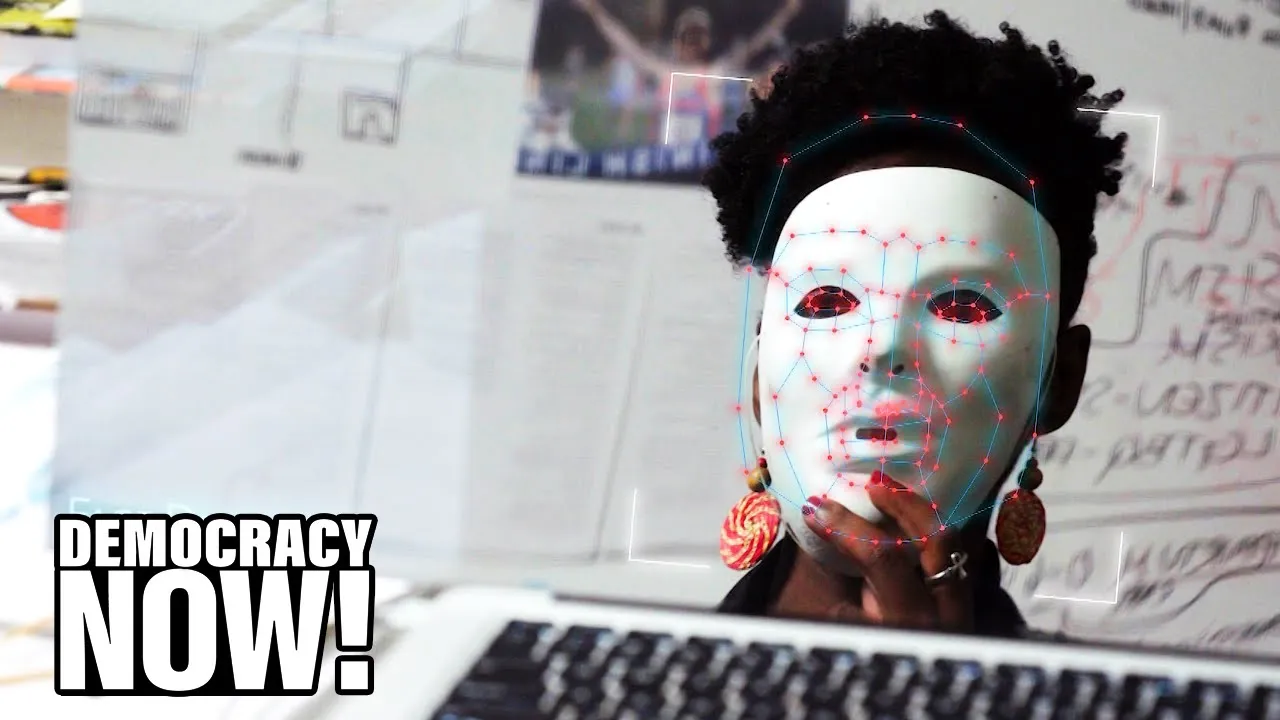
This interview with director Shalini Kantayya and researcher Joy Buolamwini explores the systemic racial and gender biases embedded in computer vision algorithms. It highlights how facial recognition systems exhibit significantly higher error rates for darker-skinned individuals and women, illustrating how historical discrimination is written into modern software code.
Knowledge Checkpoint
- Explain why computer vision systems show disproportionate error rates for different demographic groups.
- Describe the real-world consequences of deploying biased facial recognition systems in policing and public housing.

Why this video
This detailed policy presentation outlines the rise of biometric mass surveillance (BMS) in public areas. It explains how tracking citizens based on behavioral, bodily, and facial features impacts the right to assemble, protest, and maintain anonymity in public.
Knowledge Checkpoint
- Define biometric mass surveillance and its effects on civic space and the right to assemble.
- Analyze the arguments for enacting absolute bans on real-time biometric tracking in public spaces.
Module 4: Predictive Policing and Algorithmic Bias
This module investigates how machine learning systems are deployed within the judicial and law enforcement systems. By analyzing "Weapons of Math Destruction"—opaque, high-stakes algorithms—you will learn how predictive policing systems codify and reinforce historical societal biases, turning systemic inequalities into self-fulfilling loops under the guise of technological objectivity.

Why this video
Data scientist Cathy O'Neil presents her thesis on "Weapons of Math Destruction" (WMDs). She explains how secret mathematical models make high-stakes life decisions—such as sorting job applicants, sentencing defendants, and policing communities—using biased training data while remaining insulated from scrutiny.
Knowledge Checkpoint
- List the three defining characteristics of a "Weapon of Math Destruction."
- Explain how mathematical models can perpetuate and hide systemic biases.
- Identify how feedback loops function when model outcomes are used as fresh training data.

Why this video
This WIRED investigation analyzes how modern police forces deploy automated analytical algorithms to forecast where crimes are likely to occur and who is likely to commit them, highlighting the transition from reactive policing to algorithmically driven surveillance.
Knowledge Checkpoint
- Detail the stated operational goals of predictive policing models.
- Analyze how feeding historical arrest records into predictive software can result in over-policing specific communities.
Why this video
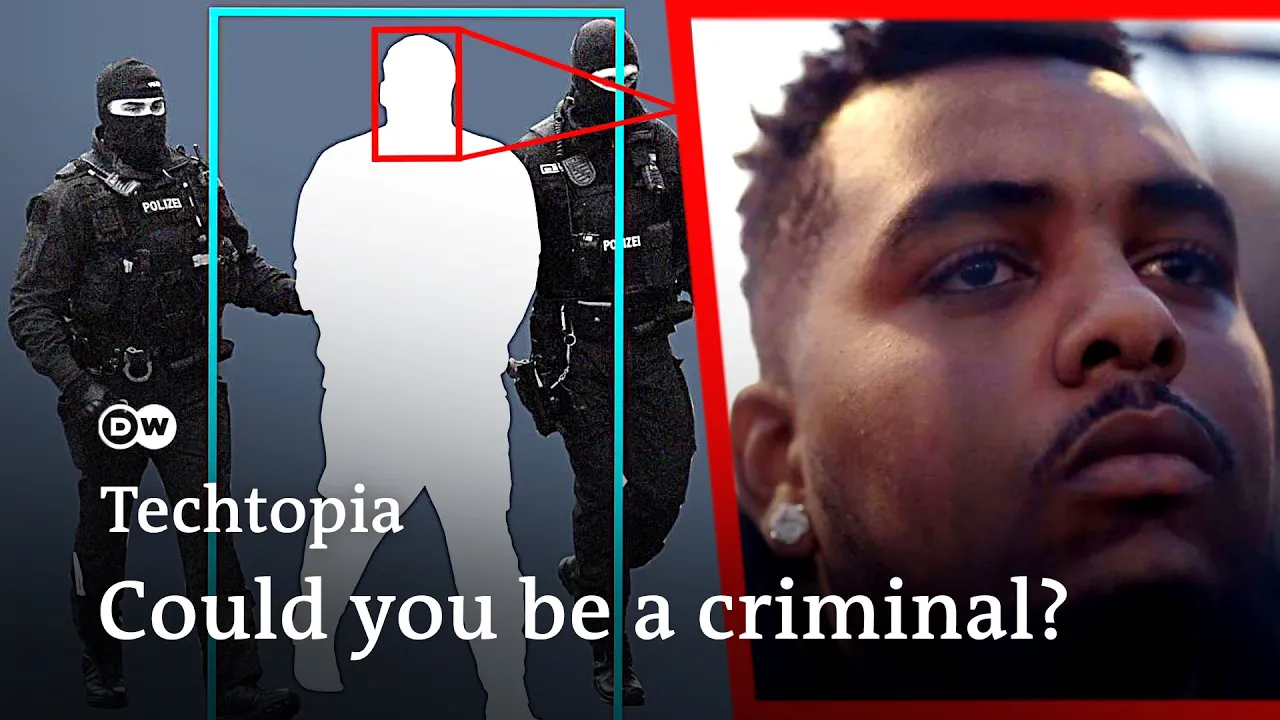
This report breaks down the two primary methodologies used in predictive policing: location-based models (which forecast crime hot spots) and person-based models (which flag individuals as potential offenders). It provides a balanced analysis of how these models can lead to automated racial profiling.
Knowledge Checkpoint
- Compare location-based predictive policing with person-based predictive policing.
- Explain how "objective" data points used by police algorithms can reflect historical social disparities.
Module 5: Geopolitics, State Surveillance & Social Credit
This module explores the interface between commercial surveillance and government intelligence. You will analyze Western intelligence architectures exposed by whistleblowers like Edward Snowden, and compare these public-private corporate-state relationships with the realities of centralized social control systems, separate from common geopolitical myths.

Why this video
In this interview, whistleblower Edward Snowden details how the National Security Agency (NSA) engaged in warrantless mass surveillance. He describes how the agency collected the communications, metadata, and internet records of millions of citizens by tapping directly into commercial telecommunications networks.
Knowledge Checkpoint
- Explain how intelligence agencies obtain digital communication data without a warrant.
- Define metadata and explain why its analysis is valuable to intelligence agencies.
- Describe the public-private relationships that facilitate government access to commercial database systems.

Why this video
Johnny Harris uses maps and primary sources to trace the physical infrastructure of global state surveillance. He shows how the NSA tapped undersea fiber optic cables in San Francisco and partnered with corporate tech giants to intercept global digital traffic.
Knowledge Checkpoint
- Identify where physical internet traffic is intercepted for mass surveillance.
- Explain how Western national security frameworks rely on cooperation from private telecom and tech corporations.

Why this video
This in-depth documentary corrects common misconceptions about China's social credit system. It clarifies that rather than being a single, unified points-based score assigned to every citizen, the actual system is a fragmented collection of financial credit databases, business compliance records, and debt blacklists.
Knowledge Checkpoint
- Differentiate between popular Western media myths of a centralized points system and the actual operational reality of China's credit databases.
- Explain how debt blacklists and business compliance checks are implemented under China's current regulatory framework.

Why this video
This video uses primary sources and media analysis to explain why descriptions of China's social credit system are often exaggerated in Western media. It analyzes how different regional systems operate and compares them with Western credit rating and judicial databases.
Knowledge Checkpoint
- Identify the core differences and similarities between Western financial credit ratings and the Chinese social credit model.
- Describe how regional fragmentation impacts the central government's efforts to integrate data databases.
Module 6: Digital Resistance, Regulation & Civil Liberties
This final module focuses on the fight to preserve digital rights, split into two areas: Individual Privacy Defense (the use of privacy tools, encrypted communications, and digital hygiene) and Systemic Regulation & Collective Resistance (analyzing legislative frameworks like GDPR and CCPA, and studying grassroots community campaigns to restrict invasive technologies).

Why this video
This video provides a comparative analysis of the General Data Protection Regulation (GDPR) in the European Union and the California Consumer Privacy Act (CCPA) in the United States. It outlines their legal requirements, scope, definitions of personal data, and enforceability, highlighting the strengths and limitations of legislative efforts to check corporate data harvesting.
Knowledge Checkpoint
- Compare the scope and enforcement powers of the European Union's GDPR with the California Consumer Privacy Act (CCPA).
- Explain the concept of "opt-in" consent under GDPR versus "opt-out" mechanisms under CCPA.
- Analyze the challenges of enforcing digital privacy laws against multinational tech conglomerates.

Why this video
This practical guide teaches individual digital hygiene. It introduces privacy-focused alternatives to mainstream corporate platforms, explaining how to adopt encrypted email (ProtonMail), tracker-blocking browsers, private search engines (DuckDuckGo), and secure messengers (Signal).
Knowledge Checkpoint
- Explain why end-to-end encryption is necessary for private digital communication.
- Identify three privacy-focused alternatives to services run by surveillance capitalists.
- Describe the difference between simply using "Incognito" mode and using tools that actively block third-party trackers.

Why this video
Criminologist Renée Cummings shares case studies of collective grassroots resistance. She details how communities, such as tenants in a Brooklyn apartment building, successfully organized to block the installation of facial recognition cameras, showing that organized citizens can push back against invasive technology.
Knowledge Checkpoint
- Analyze how local community organizing can stop the installation of surveillance infrastructure.
- Explain the term "data justice" and its relationship to civil rights advocacy.
Course Map
This flowchart shows the recommended learning sequence and module dependencies:
Key People Index
| Scholar / Activist | Key Context & Contributions |
|---|---|
| Shoshana Zuboff | Professor Emerita at Harvard Business School. Authored the book The Age of Surveillance Capitalism, which laid the theoretical groundwork for understanding how private experience is commodified. |
| Edward Snowden | Former CIA technical assistant and NSA contractor. Leaked classified documents in 2013 exposing mass domestic and international telecommunications surveillance. |
| Cathy O’Neil | Mathematician, data scientist, and author of Weapons of Math Destruction. She critiques algorithmic models used in education, policing, and employment, showing how they reinforce inequality. |
| Joy Buolamwini | Digital activist and computer scientist at the MIT Media Lab. Founder of the Algorithmic Justice League, she uncovered racial and gender biases in commercial facial recognition APIs. |
| Renée Cummings | Criminologist, AI ethicist, and data activist. She works on algorithmic fairness and data justice, advocating for marginalized communities affected by predictive surveillance. |
Final Self-Assessment
Complete this comprehensive self-assessment to verify your mastery of the curriculum material:
- I can clearly define surveillance capitalism and identify how its core economic logic differs from traditional industrial capitalism.
- I can describe the technical differences between first-party cookies, third-party cookies, and digital fingerprinting.
- I can explain what data brokers are, how they source their information, and who purchases their profiles.
- I can explain the mathematical process computer vision models use to map facial landmarks and identify individuals.
- I can identify the three defining characteristics of a Weapon of Math Destruction according to Cathy O'Neil.
- I can explain how predictive policing models risk reinforcing historical racial and socio-economic biases.
- I can summarize the PRISM and Upstream surveillance programs exposed by Edward Snowden.
- I can outline the actual structure of China's financial and legal credit initiatives, separating them from common dystopian myths.
- I can compare and contrast the legal protections provided by the EU’s GDPR and the California Consumer Privacy Act (CCPA).
- I can confidently explain the importance of end-to-end encryption and list three tools that protect individual digital privacy.
- I can analyze a case study of grassroots digital resistance and explain how communities can organize to block invasive surveillance.