






![[DS15] Keynote Can Societies manage the SIGINT Monster - Duncan Campbell](https://i.ytimg.com/vi/bb3TccQ770k/hqdefault.jpg)

![미국의 최우선 동맹국 5개! 이제는 한국까지??_첩보 동맹 파이브 아이즈_[센서 스튜디오]](https://i.ytimg.com/vi/9rVczZXS2O8/maxresdefault.jpg)








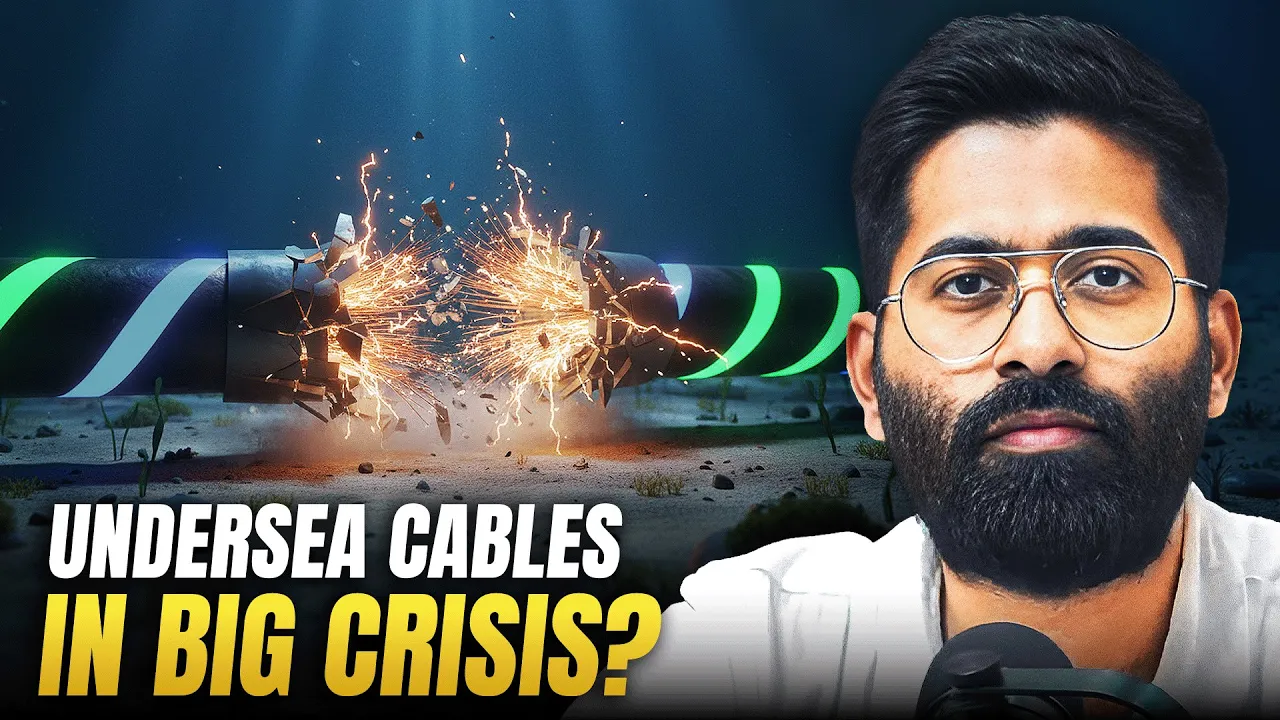
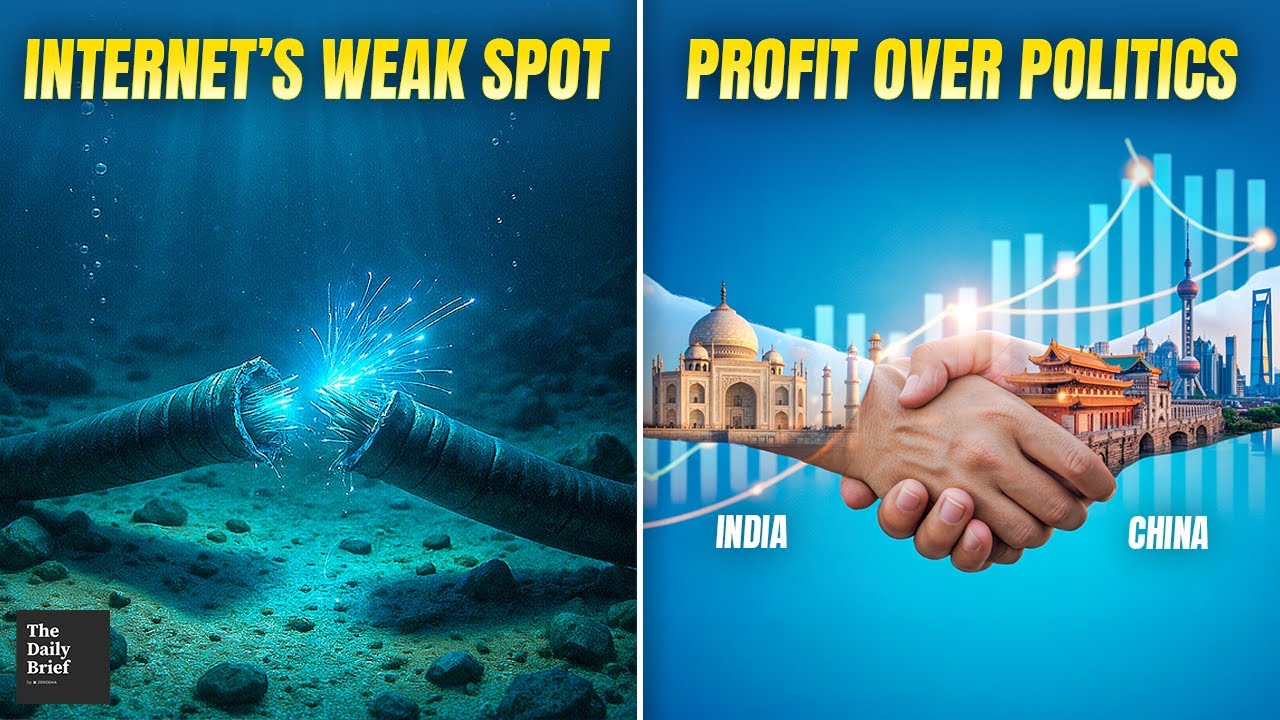


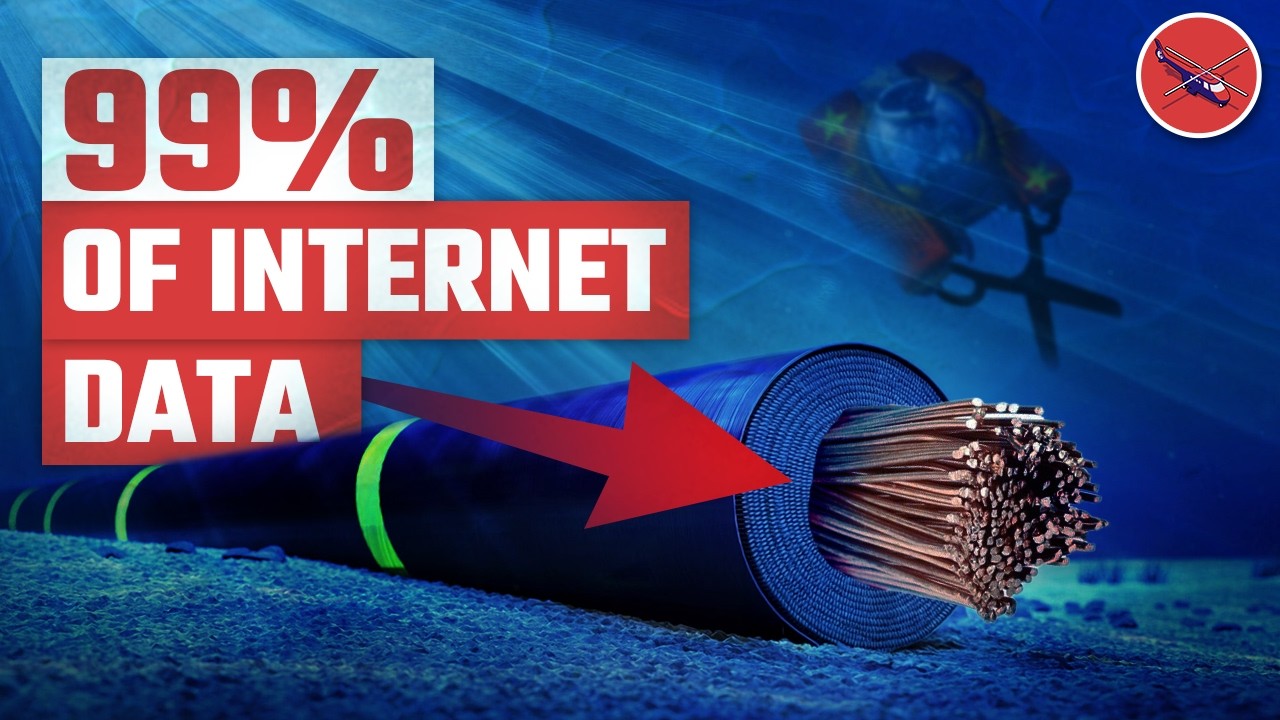





Undersea cables form the backbone of global internet connectivity, with approximately 1.4 million kilometers of cables transferring massive amounts of data worldwide; governments have exploited this infrastructure for surveillance purposes, as evidenced by leaked NSA documents revealing that the U.S. government, in collaboration with telecommunications companies like AT&T, has been tapping into these cables since at least 2006, processing data through facilities like Pinecone in New Jersey and using sophisticated systems like XKeyscore to analyze billions of communications, while China simultaneously builds its own competing cable network through state-owned companies like Huawei, signaling a new era of great power competition over digital infrastructure and information control.
Undersea Cable Espionage: NSA, China, and Global Data Security
Added:(dramatic music) - There's this house in this neighborhood in New Jersey that actually isn't a house.
It's hard to see, because it's behind this gate, but if you look at it from above, you'll see that it's actually a really large building.
Kind of looks like a warehouse.
It has dozens of air conditioning units and it's just sitting here among a sea of ordinary suburban homes.
All of this is just a facade hiding this massive building that is a landing station for AT&T, the place where these massive undersea cables that connect the world, hit the eastern seaboard.
(suspenseful music) We now know for certain that the U.S. government spies on those cables with the help of companies like AT&T.
And according to a leaked map from the NSA, they process all the data that they collect somewhere in New Jersey in a facility called Pinecone.
Lining up these maps points to this secretive disguised building as one of the best candidates for where this surveillance is being processed.
But there's a lot more of these hidden buildings around the country.
Thanks to leaked NSA documents and some thorough investigative reporting, we now know some of their locations.
Like the fake house in New Jersey, these other cable spy facilities blend in as benign, nondescript buildings avoiding any undue attention along the streets of New York or San Francisco or Dallas.
These few hundred cables that connect our world contain an unfathomable amount of data, all of our communication, all of our connections, and it would seem impossible that any government agency would be able to spy on it all, impossible, that is, if we didn't have solid proof that they do.
So let me tell you the story of the cables that connect our planet and show you that if you can tap into them, you can watch the world and they have, and they've been doing it for a long time.
- [Reporter 1] 320 million records every day.
- [Reporter 2] What we're talking about here is a total revolution of the whole concept of war. - Collect it all, exploit it all.
(TV static) - Now is the moment where I say thank you to the sponsor of today's video.
I'm very grateful for sponsors.
I wouldn't be able to do this job and make independent journalism if we didn't have sponsors.
So thank you Incogni for sponsoring today's video.
Incogni is actually quite relevant to today's video, because Incogni is super-interested in data privacy.
We live in a world where there's an entire secretive industry dedicated to collecting information about you and no, this isn't the NSA spying on you.
This is for-profit corporations who spy on you in any way they can, so they can sell that to other companies who can then market to you, who can into your phone, who can try to make you buy things.
I find this incredibly frustrating and violating that my personal information is bought and sold on an open market.
Luckily, we have rights to make this not happen.
The problem is the process of making it not happen is very complicated and this gets me to Incogni.
Incogni is a service that does this for you.
You sign up for Incogni and you give them permission to go out into the world on your behalf and take you off as many lists as they can.
The first thing they do, and this is very satisfying, is they scan to see all of the lists that you're on and they show it to you on this really nice dashboard so you can see, oh my God, I'm on dozens if not hundreds of these marketing lists.
And then they start the process of securing your privacy, of getting your email and your address and your phone number off these lists.
It's a process and Incogni will keep you updated on the progress.
They even have a tally of all of the lists that you've been removed from, which is insanely satisfying to keep an eye on.
Because of Incogni, I learned that here in the U.S.
there's this other massive problem, which are these people search sites where you can search for people and it will pull up as much information as the site has on you.
I don't like that.
Incogni sniffed this out for me and is taking me off of these lists.
Thank you, Incogni, I'm very grateful for it.
So there's a link in my description.
It's incogni.com/Johnny Harris and you can go over sign up for Incogni and try it out for 30 days and get a full refund if you don't think it's useful, totally risk-free.
I'm really grateful to Incogni for sponsoring our journalism in this video, but I'm also grateful that they exist, because I am so tired of my inbox and my phone and my mailbox being full of garbage.
Okay, with that we're jumping back into the video about the government version of collecting your data.
(videotape clicks) We laid the first copper cable across the Atlantic Ocean in 1858.
It connected Ireland to Canada.
They sent the first telegram across this wire and it took 18 hours to arrive, which was like light-speed back then.
The cable broke three weeks later, but even still, it was a huge success, a revolution for a world whose progress hinged on being more and more connected.
- [Narrator] Through a single cable, only an inch and a quarter thick, which lies on the ocean bed.
- [Johnny] The planet would be linked up by many more of these cables draped along the ocean floor, allowing us to call people across the world and eventually allowing us to access information through webpages hosted on servers far, far away.
- An online network called internet.
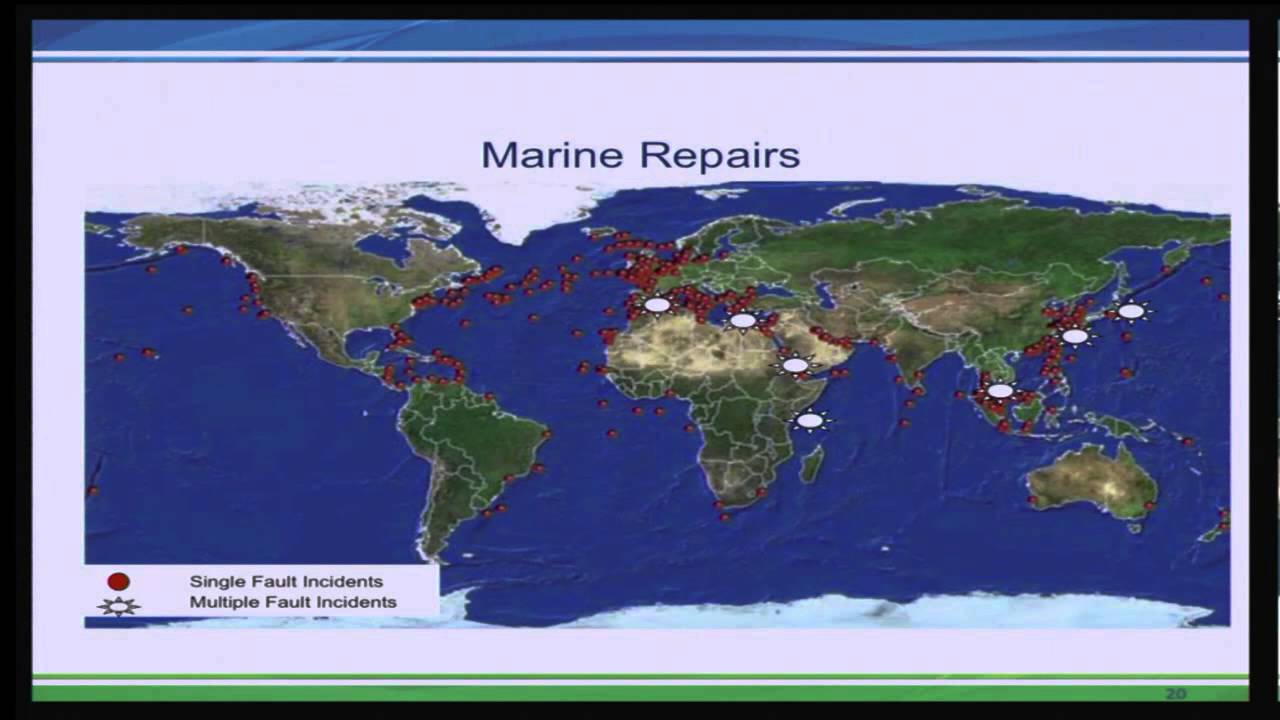
- Today, there are 1.4 million kilometers worth of cables linking us all up and they transfer a ton of data, like the fastest cables can transfer 224 terabytes per second, and the amount of data being sent around the world doubles every two to three years.
Unsurprisingly, there's a whole industry dedicated to just laying down these cables and then monitoring them and repairing them when they break.
Sometimes they get broken by fishing trawlers or anchors or natural disasters.
Sometimes they even get broken by sharks, though that's pretty rare, but sometimes these cables are broken on purpose.
There's this island right off the coast of China, but it technically belongs to Taiwan, the country that China has vowed to eventually absorb into their own.
Needless to say, there's a lot of tension here and in the last five years, the cables of this little island have accidentally been broken 27 times, which is a lot for cables.
China denies that they had any part in these 27 accidents.
They say it's just an unfortunate fishing or anchor incident, but I'm suspicious.
- [Reporter 3] Officials fear that Matsu is just a warning and that internet connections to the whole of Taiwan could be under threat.
- Sometimes it's unclear who attacks these cables.
Like a few years ago when somebody ripped out a two and a half mile piece of this cable that connects Norway to the island of Svalbard.
Other times it's very clear who's cutting the cables.
Like when the United States was at war with Saddam Hussein in the nineties and they cut Saddam's cable so that he couldn't communicate.
I mean, cutting the communication cables of your enemy is an old strategy.
They were doing that way back in the American Civil War, but the more interesting approach to me isn't just sabotage.
There's another way that you can use cables to your advantage if you are a great power trying to control things.
(electronic music) If you have access to submarine cables, which governments and militaries do, you can scrape through the insulation of this cable.
You can splice in another cable and you can duplicate the signal and hear everything your enemy is saying.
(people speaking in foreign language) The British Navy did this to a German submarine cable out here in the middle of the Atlantic, during World War I.
The Germans suspected that they were being listened to, so they sent all their communication as complex codes, but the British had very smart code breakers and they were able to decrypt all of this and discover a lot of Germany's secrets, and they discovered this secret plan that Germany had to ally with Mexico and invade the United States.
This is one reason why the U.S. ended up joining the war, and it all happened because of submarine cable tapping.
(uptempo beat music) World War II took cable tapping to a whole new level.
A more connected world meant more opportunities for vital military information to leak out.
So the U.S. created a new agency where they would tap in and monitor hundreds of thousands of civilian telegrams and phone calls flowing through both the mail, but also through these submarine cables.
I mean, think about it, it was a scary time.
It was global war, it was mass destruction, so mass surveillance on your people felt necessary in the name of national security.
- [Reporter 4] Even the insides of envelopes are scrutinized for hidden writing by these sensors.
- This agency was shut down after World War II, but the seeds of mass surveillance were now planted.
(techno music) A few years later, President Harry Truman creates a new secret department, the National Security Agency or NSA.
Their job was to secretly collect and analyze communication happening in the country, communication that was not meant for them, spying on communication of all kinds, all in the name of national security.
By the time the United States and the Soviet Union are locked in a Cold War, spying becomes even more valuable, even more of a priority for these governments, and once again, underwater cables become a target.
The Americans built this entire spy submarine, which had a secret space set aside for intelligence officers and a giant computer.
They called this space the bat cave.
Of course, they did, a bunch of military dudes on a submarine and they've got their secret computers, like, "We're in the bat cave."
I can totally see it.
This submarine called the USS Halibut had a little mini-submarine-looking thing that was actually not a mini-submarine, but rather a pressurized chamber full of special gas that divers would just sit in there and breathe.
It was pressurized to feel like the deep ocean so that these divers could go out into the ocean and be 400 feet under the surface and their bodies were ready for the pressure.
They used this to secretly navigate to underwater cables.
The one we know about happened over here right off the coast of Eastern Russia.
The divers would leave their pressurized gas chamber.
They would navigate this big, clunky electric listening device onto the cable.
It's basically a giant 20' recorder that would tap into the cable and record everything passing through.
They somehow parsed through the dozens of different signals, specific phone calls between Soviet officials, but of course, this is the analog days, so the storage on this device would fill up, so they had to go back with their little bat cave submarine every few months to replace the tape.
They did this for 10 years.
This was called Operation Ivy Bells, and we talked about it a little bit in the whole deep dive we did on submarines.
But boy, it just never ceases to blow my mind how resource-intensive this operation was.
(water bubbles) Anyway, through this tapping on the Soviet cable, the Americans learned just how scared the Soviets were by the buildup of nuclear weapons.
This helped them negotiate a slowdown in the nuclear arms race and even helped lead to the end of the Cold War according to one expert.
By the early nineties, the Cold War was over.
- [President Clinton] The change of centuries, the dawning of a new millennium.
- But then came a world changing attack into the ultraconnected internet age.
- This new law that I signed today will allow surveillance of all communications used by terrorists, including emails, the internet, and cell phones.
This government will enforce this law with all the urgency of a nation at war.
It is now my honor to sign into law the USA Patriot Act of 2001.
(audience applauds) - In 2006, a leaked document revealed that in a nondescript building in San Francisco behind this random yellow door labeled 641A, the NSA had set up this harmless-looking box that tapped into the fiber optic cables that traversed the Pacific Ocean into Asia.
The phone company AT&T had agreed to let them siphon off the traffic that was moving through their cables.
This seemed kind of nuts that the U.S. was tapping a cable where all of our communication goes through, but we had no idea what was coming.
In 2013, Edward Snowden, an NSA contractor unleashed one of the biggest leaks in American history.
- This is the greatest hemorrhaging of a legitimate American secrets in the history of the Republic.
- And that is what we have been looking through.
I mean, there's a lot more documents, but we sifted through and found the documents that show us that it wasn't just one cable in San Francisco being tapped.
The NSA was targeting every single cable that touched the United States, a huge amount of global traffic, email, text messages, phone calls.
They had cooperation from all these telecommunication and tech companies to do this.
Microsoft, Yahoo, Google, Facebook, PalTalk?
The hell is PalTalk?
Who knows, but the NSA was tapping their cables.
YouTube, Skype, AOL, and even Apple by 2012, and their goal in all of this, well, according to one of these slides, the goal was to sniff it all, know it all, collect it all, process it all, exploit it all, partner it all.
In other words, according to another leaked slide, to master the internet.
There's this one spreadsheet in all of these leaked documents that really said it, here it is.
This is a list, a spreadsheet of some of the cables that the NSA had access to, we literally know which ones.
I mean, we have the data of all of these cables.
We could literally map all of these from the southern cross cable that connects California to Australia, to the Apollo cable that connects New York to France, to the tiny cables that connect Puerto Rico to the British Virgin Islands.
All in all, by 2009, the NSA had stuck a probe in hundreds of submarine cables all around the globe.
Oh, and they didn't do it alone.
The NSA partnered with the OG masters of Cable-tapping, the British.
- Since the 1940s, GCHQ and its American equivalence have had a relationship that is unique in the world.
- Okay, so there's a weird loophole thing here.
U.S. law allows the NSA to track anyone outside of the United States, but there are restrictions when it comes to tracking American citizens.
So to get around that, they turn to their British counterparts, the GCHQ.
So over the course of a couple years in the early 2010s, the NSA is paying 100 million pounds in secret money to gain access to all of this data, this data that they call a gold mine to exploit, hundreds of thousands of names, over 76,000 geocoordinates, 194 million messages collected per day.
And unlike the NSA, the British could actually spy on American targets, but the point is they were in it to collect it all.
- If information arrives in the UK from the United States, it's governed by our laws.
The system works as intended.
(suspenseful music) - Okay, okay, yeah, it's a lot of data, but what can you do with 600 million phone events worth of data?
That's way too much for any human to actually process, and this is where it gets kind of nuts to me.
We've got this slide, which by the way, I know that we're dealing with really top secret documents, but they all have clip-art and these templatized Windows 95-looking titles, freaking love it.
(jazzy drum music) This slide, this complicated, wonky, wonky slide with this flow chart is the answer to what they do with all of this data, but here's basically how it works.
So the NSA gets all of this data of all of our communication, either from cables or from phone companies.
They funnel it through this central processing facility called Pinecone.
This is presumably where they're processing a lot of this data and trying to find patterns.
The NSA says that their job is to find suspected terrorists or other people who want to do harm to national security.
And to do this, they use computers and algorithms to make links between suspected terrorists and their immediate network, the people they call, the people they talk to, where they are.
They say they only hold on to those records and they throw out everything else.
We don't know if that's true, but let's just assume it is.
And then once it's all processed and sorted, it goes into a little searchable database called XKeyscore, which is a very clunky name, but hey, great graphic design once again.
This is basically like a internal search engine that catalogs all of the metadata that has been assigned to all of this call message geolocation information and makes it searchable.
So you could pull up a person, a suspected terrorist, and you could find everything you need to know about who they talk to, where they are, what their emails say, or in their words, anything you wish to extract.
It's all searchable on this convenient platform.
This allows them to do searches like let's look for an Arabic font, Google query coming out of the tribal areas of Pakistan, and boom, they're linked in.
It's all right here in XKeyscore the database.
Because of the globally connected world, the NSA now has access to this person.
They can see what messages they're sending.
They can see where they are right now, assuming they have their phone, all searchable in this convenient database, accessible to agencies from other countries and all over the world.
The whole assumption here is that in order to find your target, the terrorist, the spy, whatever, you need to access all of the information, this turns metadata into a weapon of modern warfare.
- We kill people based on metadata, but that's not what we do with this metadata.
(suspenseful music) - This revelation, all of these documents, this whole Snowden drama was a big deal for a lot of reasons.
One of the things it did is it made the location of cables really important.
Most of the cables were going through the United States, but after this leak, countries started to look for alternative routes that bypassed the United States, like this one that connects Brazil to South Africa and then goes on to Asia.
So over the last decade since these leaks, the U.S. has become less and less the epicenter of cable connection, and you guessed it, there's another player in town who wants access to cables, China.
(suspenseful music) China is rapidly building out their worldwide network of cables, and they're doing this through Chinese state-owned companies like Huawei.
And this is adding yet another front in this emerging Cold War tension between great powers that want to lead the global system.
It turns out that controlling and spying on cables is a requirement for global leadership in 2023, who knew?
But unlike the U.S. who purports to protect privacy and civil liberties, but secretly violates them, China doesn't even pretend.
China has built a society off of mass surveillance and control of information.
Like here's actual footage of how China tracks the movement of its population through visual recognition, through cataloging every face, every car.
Information is power in this day and age, and just a couple years ago, the U.S. formed a new special unit with intelligence and regulation officials.
It's a group called Team Telecom, and their job is to assess any new projects, any new cables, and make sure that they aren't going to threaten or weaken U.S. interests.
For example, there was this one cable that was supposed to connect LA to Hong Kong.
It was being built by Google and Facebook, and they were into the project, hundreds of millions of dollars into the project, and this Team Telecoms shut it down, too risky.
We can't have our fiber optic cables going too close to China less they spy on us.
This is making the map look really weird.
You used to only have to have one major set of cables connecting countries, but now you're starting to see duplicates.
The Chinese lines and the American lines, each building out their own network, not connecting to each other.
It's like the perfect symbol of the tension that is rising between these two superpowers.
The bifurcated world that we're moving into.
China is connecting these small remote islands laying down cables.
And these islanders are happy to have fast internet, even if it comes from China and is probably being tapped.
The continent of Africa, the U.S. and China are both laying down competing lines.
The country's caught in the middle of this understand what's going on.
Two, aspiring hegemons vying for power, each involved in spying and sucking up information in their own way, but I guess it's worth it, because it means faster internet, it means connection to the world.
Russia is even trying to get in on this with their aptly named Polar Express cable.
And even though the old school tapping into cables in the middle of the ocean to spy on your neighbor is kind of outdated now, there's some evidence that Russia might be still doing this.
They've got this one ship called the Yantar.
It's a surface ship that is generally understood to be a spy vessel, and it's been spotted on the surface above where we know submarine cables are near Ireland or near Syria.
Some think that they're just tapping into them like the old days, maybe using one of these mini-submarines.
But even if they're not tapping into them, they're very presence above the cable is kind of a threat.
They could cut this cable at any moment.
The U.S. who is very good at submarines has its own spy vessels, the most secretive one being the USS Jimmy Carter, and we have no idea what it's up to.
Security experts speculate that it's probably tapping into cables for some reason, somewhere at the bottom of the ocean.
But a lot of people in the industry are like, "No, that's so old days, why bother?"
It's so much easier to just tap into them on land.
You get way more data and you don't have to go to the bottom of the ocean.
Meanwhile, the private companies in charge of these cables have started to up their own defenses.
They're taking all these extra precautions, including sending out these submarine drones that just spend their time tracing along the bottom of the ocean, babysitting these cables and making sure that there's no damage or tampering going on.
So I feel like I'm gonna say what I've said a bunch on the channel lately, which is we are entering a new chapter in geopolitics.
A globalized world is hyperconnected, but suddenly and unexpectedly, we're seeing a new set of divisions, countries not trusting each other anymore.
Nations wanting to create their own separate systems, both economically, militarily, but also with the infrastructure of the internet.
A chapter where countries now are more skeptical than ever, especially great powers, great powers that are building their own infrastructure so that they can communicate and control information, not trusting the other half of the world to handle their data.
We see Navies with secret ships that cost close to a $1 billion a piece, and then we see everyone else caught in the middle.
And in the end, most of us just want fast internet connection with friends around the world and a feeling that we're safe.
(suspenseful music) All right, thanks for watching today's video.
Just a little nugget here.
We did this video, because we did the deep dive on submarines a few months ago.
I don't know if anyone saw that, but it was in that reporting that we came across the spying element of all of this.
And I remember I asked all of you, do you want me to do this video?
And you all said, yes.
I got like so many comments that were like, "Yes."
And so, we did it.
And that is one thing I love about YouTube and being an independent journalist on YouTube is that I get to just ask you, I'm talking to you and be like, "Hey, do you want this?"
And you're like, "Yes."
And I go, "Okay," and I make it.
And there's no corporate middleman who decides what we make.
We make what you guys wanna see.
So as always, you can pitch us ideas and we will hear them.
For those who want to support more fully in our kind of more intimate community, we have a Patreon called the Newsroom.
The Newsroom is a place where you can support what we do here, but you also get in on a few benefits, including an extra behind the scenes video every month where you get to see all of the people and the processes and the shenanigans that happen here in the studio.
We have a big team and you get to meet them, if you are a member of the newsroom.
You get access to my scripts, you get access to Tom Fox music.
But really you get access to the warm fuzzy feeling that you're supporting a YouTube channel that is trying to make rigorous journalism in a time where facts and truth are kind of eroding.
So if that floats your boat, we would love your support.
We also have luts and presets, which are like the thing we use to color our videos and our photos.
You could buy those and they help support the channel.
We have a poster that I designed.
I'm super into map projections, all the different ways you can show a map shape, and I made a beautiful poster that has it.
If you have that poster, I think a lot of you have purchased that poster, we actually sold out and we're reprinting a new batch, so they should be in there.
Don't quote me on that because they could be sold out again.
But anyway, if you have that poster, tag me or something, I wanna see what it looks like out in the wild.
I looked at it on a screen for months and now I have some here, but I don't know what it looks like out in the wild, so share it with me.
I think that's it.
Anyway, that's all I've got.
Thank you all for being here, and I'll see you in the next video, bye-bye.
- [Narrator] Although the calls through the cable will be from many nations, in many tongues, the cable itself speaks a single language to all that is the language of friendship and cooperation between the men and women of France, West Germany, England, and the United States who conceived and brought to completion the cable to the continent.
Up Next

Understanding China's Social Credit System: Myths vs Reality
@torscabinetofcuriosities
173.3K views•2025-02-20

Triumph of Orthodoxy Icon: Byzantine Art & History Explained
@BenCallan
2.1K views•2024-08-06

FastAPI vs Flask vs Django: Choosing the Right Python Web Framework
@TechWithTim
302.5K views•2024-05-26

Game of Thrones Opening Credits: A Cinematic Analysis
@gameofthrones
46.3M views•2011-04-18
Related Study Plans & Knowledge Roadmaps
Structured learning paths in General & Interdisciplinary Studies