




















![[DÍA 2 - AM] VII Jornadas Australes de Derecho Internacional de los Derechos Humanos](https://i.ytimg.com/vi/-OQOGmmUQdg/hqdefault.jpg)



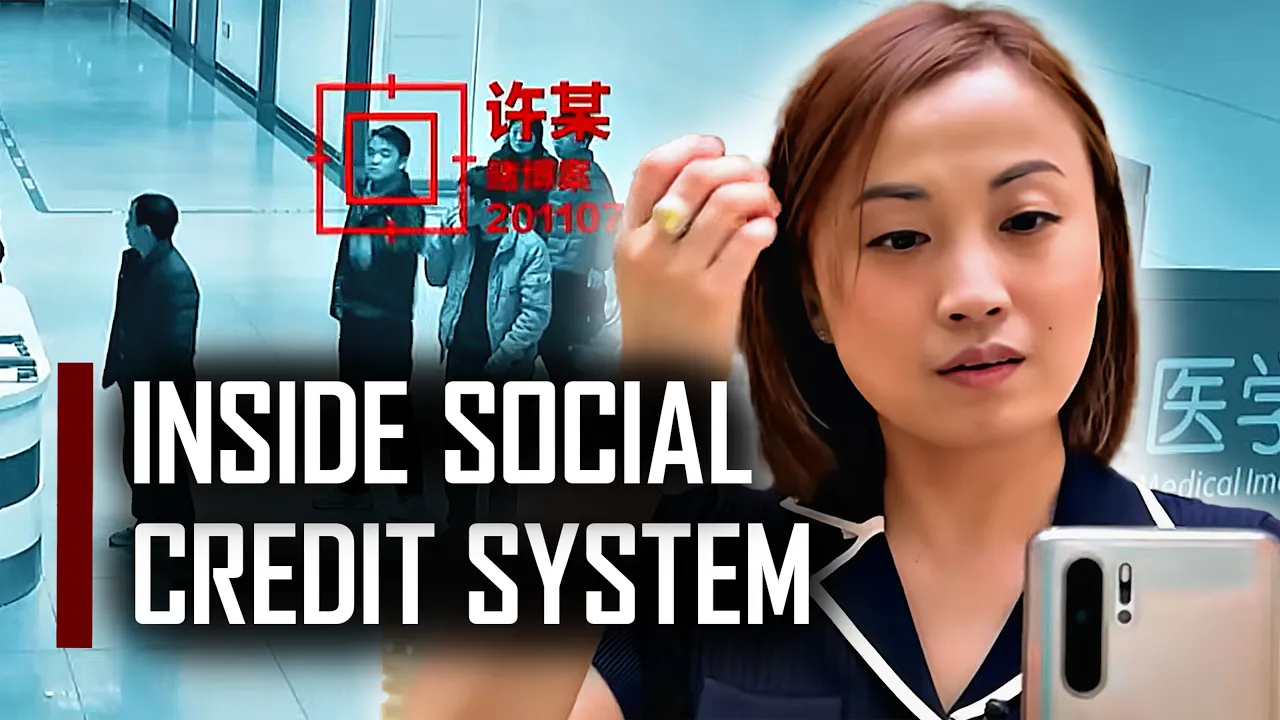
China's so-called 'social credit system' is a persistent Western misconception; the actual system consists of debt blacklists and anti-corruption measures rather than a points-based citizen scoring system. The myth originated from a 2015 Dutch article misinterpreting a 2014 Chinese government memo about establishing a 'public trust' system, which was meant to improve financial credit reporting and institutional trust, not to score individual citizens. Only one small city, Rongcheng, briefly experimented with a points-based system, which was shut down by the central government in 2019. The real system punishes debtors and corrupt officials by restricting their access to high-speed trains and luxury goods, but does not involve AI surveillance or loyalty-based scoring of ordinary citizens.
Understanding China's Social Credit System: Myths vs Reality
Added:So, I’ve talked about China enough on this channel. Time to tackle the elephant in the room.
Maybe this isn’t the elephant in the room anymore. A few years ago, whenever anyone brought up modern China in the West, the first place a lot of people’s minds would go was to the social credit system. And can you blame them? It’s an arresting thought. From about 2017 to 2021, mainstream Western news outlets would regularly publish articles asserting that China has a mandatory points-based system for scoring individual people’s loyalty to the communist regime, automatically enforced by state-of-the-art software and constant surveillance. Prosocial behavior supposedly gained you points, and anything the government didn’t like lost you a set number of points. Caught on camera picking up litter? Plus 10 social credit points! Not picking up after your dog? Minus 10 social credit points! Using a VPN to watch YouTube? Minus 50 social credit points! Is that video about Tiananmen Square? Minus 100 social credit points! You don’t wanna know what happens if your social credit gets any lower! It’s so dystopian, it sounds like a Black Mirror episode - because it was a Black Mirror episode!
These days, you don’t hear as much about the social credit system. In all the previous videos I’ve done about my travels in China, I’ve only gotten a few comments on the social credit system. I think the consensus on social credit on the Western internet these days is that it was a hoax, or a misinterpretation, or something. When everyone was joining Xiaohongshu a month or so ago, to my knowledge nobody even asked about the social credit system, because by then America had decided it doesn’t actually exist.
And it doesn’t exist! At least, that was my impression when I studied abroad in China in fall 2023. Nobody talks about it. Security cameras are all over the place - I counted 15 of them in the 5-minute daily walk from my dorm to my main classroom - but people are blasé about doing stuff like jaywalking or smoking in a no-smoking area right in front of security cameras. I brought up the social credit system once, casually, in front of a mixed crowd of Chinese and international students. The international students thought I was joking, and the Chinese students had no idea what I was talking about. When I explained it to them, they were still baffled. The only sign of anything like a social credit system that I experienced the whole time I was there was that ominous announcement on one of the high-speed trains I started this video with, and that isn’t a standard announcement. I only heard that once in all my travels. Normally there’s an announcement on the trains after every stop that warns you of a long list of things you’re not allowed to do onboard, notably including eating smelly food, but doesn’t tell you what the consequences will be.
So when I came back home to Oregon, entered my final year of college, and had to take a course on Chinese history to fulfill my Chinese minor, I was startled to find my professor, who was American but fluent in Mandarin and had spent cumulative years of her life in China, most recently right before covid, teaching the social credit system as fact! She said she’d talked to Chinese people, and even government officials, about the social credit system, and found that most of them were all for it, or at least that’s what they said. She said there was a central internet portal where people could look up their social credit score, that people do that all the time, and she had personally witnessed this. I visited her office hours and asked for some sources. I got the same news articles from the 2010s I’d already seen, claiming things about the social credit system that landed a long way from my own experience.
What’s going on? What is the Social Credit System? I’m your host Tor Parsons, this is my cohost Jolibee the Durian, and welcome to Tor’s Cabinet of Curiosities.
[Intro] There is almost no good reporting on the Social Credit System on the Western internet. All coverage of it falls into two categories: number one, articles from legacy media outlets like CNN and the like, mostly published almost a decade ago, that assert obviously false things about the Social Credit System, like that the faces of people with low social credit are displayed on screens around cities like medieval criminals in the stocks, but also have weirdly precise unsourced statistics - like, “in fiscal year 2017, X number of train tickets were denied due to low social credit” that, for all the healthy skepticism I have about American media coverage of China, I still feel those can’t have been made up out of thin air. That’s got to be a misinterpretation of some real statistic.
And then the other category are the denials of its existence, and unfortunately those mostly come from tankies who literally think modern China can do no wrong. My impression from living in China was that they’re correct that the social credit system either totally doesn’t exist, or doesn’t apply to normal people, but it’s hard to take that seriously when it’s tweeted alongside obviously false assertions about China and the CCP, like that the Uyghur internment is an American myth too. Or, the people who seemingly rightfully say there’s no social credit system will also say shit like “Tibet had it coming because the current Dalai Lama is a child predator”. No, he’s not! When I did a video about Tibet a few weeks ago and called the current Dalai Lama a good guy in passing, I got an annoying number of comments that were like “Does he know about the allegations?” Yeah, I do, and it’s bullshit. He kissed a kid on the lips once, which is a normal thing to do in Tibetan culture, and he made a joke Westerners didn’t get about sticking out his tongue as a sign of piety, which is an old Tibetan Buddhist tradition that I mentioned in the episode. I’m not sure why that one incident, which was treated as totally normal by everyone who was actually there, and the Dalai Lama probably does all the time in Dharamshala, became a big deal in the Western media. Not to get all conspiratorial, but there’s a big, powerful country that has a vested interest in making the Dalai Lama look bad, and they’re known to have a pretty sophisticated propaganda machine on the Western Internet.
But maybe that really is too conspiratorial. After all, when I was in a Chinese propaganda video - check out that story - it was comically bad and obviously propaganda. And I guess there’s a little bit of schadenfreude for a certain type of person in declaring that the Dalai Lama, of all people, is actually a bad person. You know that type of person. “The people idiot normies think are good, are bad actually! I’m like the guy from They Live, who sees how the world is run by evil aliens who make us want to buy things and conform. Isn’t that so smart and original? I’m the only one who understands how dark society is, like my soul.” But this video is about the Social Credit System. Let’s get back on track. The best source I’ve been able to find on the social credit system, one that’s dedicated to busting myths about the system but is nuanced and criticizes both China and the West, well-sourced with translated Chinese legal documents, and certainly seems like more of a disinterested investigation than anything else I’ve come across, is the work of Yale’s Jeremy Daum, one of the leaders of the Paul Tsai China Center, a think-tank about US-China relations. The story of the Social Credit System starts like this. In the 1990s and 2000s, China suddenly got rich. It went from poorer than most of Africa, to on par with the West in a lot of ways. My favorite anecdote from this time is that, at one point in the 90s, it became fashionable to hang cuts of meat in your windows. Because average Chinese people couldn’t afford meat except on special occasions before then, so you hung your meat in your window to tell the neighbors “Look how rich we’re getting!” A few years later, refrigerators became something the average Chinese household had access to, and then having meat in your window, which was a sign of wealth in the living memory of a kindergartener, became a sign of poverty, because if you didn’t have any meat on display, that meant it was in your fridge.
But times of rapid change are almost always bad for one thing: [Key and Peele Terries clip] trust. The atomization of first-world life had hit China like a truck. The Internet and social media were going live, and at the same time, Chinese people were going from living in places like this, to places like this. All over the news were stories of high-ranking people behaving badly, stories too big for the government to hush up: in 2008, an earthquake in Sichuan killed nearly 70,000 people, hundreds of whom were kids in shoddy, quickly built schoolhouses. Later that year, the country’s biggest brand of infant formula was discovered to be tainted with melamine, a chemical that causes kidney stones, so they could cheat on nutrition tests. In 2011, 40 people died in a train accident on brand-new track in Wenzhou. In 2012, Bo Xilai, the charismatic party secretary for the major city of Chongqing, who had an unusual amount of genuine mass popularity for a Chinese politician and was considered a likely choice for the next leader of the country, was arrested for a too-complicated-to-describe scandal notably involving the murder of a British businessman. Bo was so powerful that for a few hours after he was arrested, there were rumors his supporters in the military were about to launch a coup.
In the old days, you knew where to put your trust, and where not to. People would try to pick your pockets on the train, but at least you knew your neighbors, and your village party chief, and you could tell those people were upstanding citizens. Now, petty crime is almost a thing of the past because Big Brother is truly always watching, if not in ways as insidious as Westerners think - but can you trust Big Brother? In the mid-2010s, most Chinese people were still perfectly happy with the direction of their country. China was growing. Things were on the right track. But they had a crisis of trust.
So, the government did what governments do the world over: put out an extremely vague statement aimed at placating people, setting an ill-defined goal. A June 2014 announcement was headlined “Planning Outline for the Establishment of a Social Credit System, 2014-2020”. The phrase usually translated as “social credit”, shèhuì xinyong, did in a word-for-word sense mean “social credit”, and it uses the same word used to mean financial credit, but in context it could have equally been translated as “public trust”. It began, ahem: “The social credit system is an important component of the Socialist market economy system and the social governance system. It is based on laws, regulations, standards, and agreements [no shit Sherlock]; its foundation is a complete network covering the credit records of all members of society and the credit infrastructure; it is supported by the application of credit information and credit service systems in accordance with rules [no shit Sherlock]; it inherently requires establishing the concept of a culture of creditworthiness and promoting the traditional virtue of creditworthiness; its reward and punishment mechanisms are incentivizing trustworthiness and restricting untrustworthiness, and its goal is to raise awareness of creditworthiness and the level of credit throughout society.” Ominous, I guess, but more than anything, vague. It’s a whole lot of nothing. Feels like bureaucrats trying to reach their word count. To the extent that it set a real goal at all, it wasn’t to create a social credit system; it was to create a financial credit system. Bank accounts were also something most Chinese had first gotten in the past decade or so. People were defaulting on loans left and right. What the government really wanted was to expand the use of credit reports in China, so that banks had a metric to evaluate people’s likelihood of paying back loans. And realizing that the people were experiencing a crisis of trust, they tacked on some verbiage about maybe, potentially, introducing some non-financial elements to the scoring too, to generally establish a climate of trust between officials and the public. That’s the first important thing to remember - between officials and the public. When the government started talking about putting together some sort of social credit scheme, it was clearly meant to reassure the public that officials could be trusted, not the other way around. But if they ever planned to follow through on that, the details would be worked out later. It was up to local officials to put this vague plan into action. That’s the way a lot of policies work in China - the central government puts out a directive swathed in bureaucracy-speak, the local CCP leaders for the provinces and cities have to interpret it, they interpret it in varying ways with varying levels of success, and then the government tells the ones that are successful “Yes! That’s exactly what we had in mind!” and the less successful ones are the fall guys who get blamed for the policy’s vagueness in the first place. In other words, you could say that China’s states are laboratories of autocracy.
We’ll get to what the regional governments did later. It took almost a year for the West to notice the Planning Outline for the Establishment of a Social Credit System, and according to Jeremy Daum, the first people to misinterpret the announcement were…the Dutch? Ok, that’s not what I would have expected. But yeah, the earliest Western article covering the Social Credit System at all, let alone covering it as a dystopian mechanism of social control, was in the mainstream Dutch newspaper De Volkskrant in April 2015, interviewing Rogier Creemers, a lecturer in Modern China Studies at Leiden University. Creemers misinterpreted the phrase “tongyi shèhuì xinyong daima”, a “unified social credit code”, to mean that people would be assigned numbers representing their loyalty to the regime. Creemers was Patient Zero. This is where the idea of a points-based, three-digit code, like a credit score, that determines your social credit - something that never existed at all in China, with one exception that we’ll get to later - this is where that originally comes from.
In reality, what “unified social credit code” meant was that they wanted to establish a universally recognized, universally shared code used between government agencies, mostly to enforce trust of officials. The Chinese government is a vast bureaucracy in which the individual agencies don’t share much information with each other. If you’re a rural county party chief who asked for a grant from the Ministry of Agriculture to buy some tractors, and you spent that on a Lamborghini for your mistress, even if you got caught and fined and transferred to another county for that, the Ministry of Energy wouldn’t have any evidence to distrust you if you then asked for a grant to put some power lines underground, with the intention of buying another Lambo. What they were saying was, agencies need to have a system to look up people’s already existing ID numbers and do background checks, and especially important, high-ranking people, so that we can have a better understanding of who’s corrupt and who’s not.
But there aren’t a lot of people in the West who speak Chinese, and far fewer who speak Chinese Communist Party-ese. And some kind of Black Mirror-style people-rating system seemed like something China would do. The campaign of suppression against the Uyghurs, which again, is real and terrifying, was starting to become known in the West. Of course they’d impose some strictures like that on the population outside Xinjiang, too. The story spread like wildfire from the Volkskrant article. The rumor stayed in Europe for a few months, notably being picked up by Rick Falkvinge, the founder of Sweden’s Pirate Party. “Pirate” political parties were a movement, mostly in Europe, in the 2000s, and they were incredibly based. They were like, tech utopian left-libertarian parties whose main issues were being anti-copyright, anti-patents, putting together digital direct democracies like a combination of Estonia’s techno-democracy and Switzerland’s referendums, and enforcing a free and open Internet that respected users’ privacy. Most European countries set up Pirate Parties, some of them won seats in their countries’ parliaments, they almost won a majority in Iceland once, for a while the mayor of Prague was a member of the Czech Pirate Party. I wish they were still around. I mean, they still are in a lot of places, but they’re nowhere near as popular as they were. It was a very 2000s ideology, very predicated on the idea that the Internet would lead to a new era of free and open society, which it kinda did, but that didn’t look like what we thought it would. But if I lived in a country with a robust Pirate Party that wasn’t just a protest vote, I’d still vote for them. I feel like the Hiroo Onoda of the 2000s war on copyright. I know it’s over and my side lost. But I’m still fighting, goddamnit, even if I’m fighting alone.
Anyway, a rare Pirate Party L was when Rick Falkvinge took the Volkskrant article on the social credit system as fact. To be fair, he had no reason to doubt it. He published an article about social credit on his blog about privacy rights, which, by fall 2015, got noticed by privacy activists in America, leading to the first major exposure of the social credit myth in the US media: Jay Stanley, a tech policy expert at the ACLU, wrote a lengthy article that codified a lot of what we now know as the increasingly detailed social credit myth.
The game of telephone just accelerated from there - and I feel obliged to tell you that in Britain, the game of telephone itself is called Chinese whispers. That’s not really relevant, but it certainly describes what was going on in the Western press. A month after the ACLU press release, social credit was in the New Yorker and the New Republic. The real big break for social credit in America was an 8-minute NBC spot where they sent reporters to China, interviewed Chinese people, and came away with a very effective exposé on the system, seemingly providing eyewitness evidence for everything from numerical three-digit social credit scores, to public kiosks and apps where people can check their social credit, to facial recognition software enforcing it all. In reality it conflated something like 5 unrelated policies. It’s a masterclass in convincing, misleading journalism. I would put it in the same category as that fun mock-documentary where some people interviewed a bunch of astronauts and NASA engineers and then creatively edited their interviews to make it seem like they were admitting to faking the moon landing - link to that in the description. Only I’m not sure the people making the NBC documentary knew they were misrepresenting it. They went to China with the expectation of finding info about the social credit system, they’d done their research from sources like the ACLU release, and so they knew what to film. It didn’t cross their mind that they were identifying connections between policies that weren’t really there.
2018-19 was the peak of America’s interest in social credit. Mike Pence denounced it at the White House. George Soros denounced it at Davos. Memes were flooding the Internet, as well as infographics purporting to explain how to gain or lose social credit points. The following claims, all originating in the ACLU article, were universally repeated: that it involves a numerical scale usually ranging from 350 to 950, that two private e-commerce companies, Alibaba and Tencent, have a large amount of control over the system, that your friends would also get rewarded or penalized based on your actions or vice versa, and that visas to go abroad were being doled out as rewards for high social credit. All of these were misinterpretations of real policies, some related to the 2014 social credit announcement and some not. The idea that if your social credit gets to zero, you get executed wasn’t a misinterpretation of anything. It was just made up.
Meanwhile in China, the public trust system - which is how I’m choosing to translate shèhuì xinyong, while I’m going to use “social credit” to mean the Western myth - the public trust system was gradually taking shape. The implications of the 2014 announcement were coming into sharper focus. It was now clear that shèhuì xinyong would have to comprise three separate initiatives: 1 Encouraging more average Chinese citizens to keep track of their financial credit. 2 Something to promote virtuous behavior among officials, both in government and business, to promote public trust in institutions. 3 Something to promote virtuous behavior among the public, a bit more like a real social credit system. The first was being promoted by the central government, because they knew what they had to do and how to do it. The second and third were mostly left to the regional governments to come up with ideas. Let’s take these one at a time.
Number one. In order to encourage more Chinese to have good financial credit scores, the government partnered with a bunch of private companies, including one, a subsidiary of the e-commerce giant Alibaba, called Sesame Credit. Sesame Credit looms large in Western coverage of the social credit system, often misreported as a brand name of the social credit system itself, or evidence that corporations are actually the ones in the drivers’ seat on social credit. It gives you a three-digit score that ranges from 350 to 950. It’s somewhat based on mass surveillance, but a kind of mass surveillance that isn’t uniquely Chinese. Alibaba’s pitch to the government, to get them to partner with Sesame Credit, went like this: “Hello, and howdy. We’ve heard you’re interested in setting up a system of credit scores to determine who should get loans, but you’re running into hurdles, since most Chinese have no credit history. See, we here at Alibaba control an outrageous amount of the Chinese economy, and since most transactions in China these days occur through apps and QR codes, we have access to much of the financial history of many Chinese people, and we could use that to construct something a bit like a credit score. But there’s more - if you agree to partner with us, we can get access to people’s social media profiles, and their entire history on the tightly regulated Chinese internet, and use that to determine ever more accurately whether people can be trusted to pay back loans. And with your help, we can even offer visas to visit places like Singapore as perks for high credit!” The government didn’t approve Alibaba’s application to judge people based on their online history. Nor did they approve any of the other attempts to do this, from a total of 8 private companies that proposed something like that. Sesame Credit was forced to make do with people’s Alibaba transaction history alone - even though they did confuse Westerners and Chinese alike by advertising visas as a reward for high credit, something they never had the right to really offer, leading to the common canard that social credit determines whether you have the right to leave China or not. Other than making you more likely to get loans from some participating banks, the only positive consequences of a good Sesame Credit score were getting discounts on some Alibaba products, and the only negative consequences were stuff like making you pay a deposit before you rent a bike from Alibaba. Joining was always optional and there was never any indication that the government planned to force people to join Sesame Credit or any other similar program. The government sort of briefly encouraged people to join Sesame Credit, but Alibaba and the government never trusted each other much, and by now Sesame Credit is just an Alibaba rewards program.
Some people summarizing the claim that “social credit kinda exists, but not in the way Westerners think” end here. They say “it’s literally just credit scores.” Sesame Credit was literally just credit scores. But the rest of the public trust system is not literally just credit scores. Even the first pillar of the public trust system, encouraging more average Chinese citizens to keep track of their financial credit, isn’t just credit scores. The other policy that’s part of this pillar is the only way something like a social credit system can apply to ordinary people: debt blacklists.
If you read coverage outside China of social credit, one of the most common punishments for low social credit is purported to be transportation blacklists. All over the place you see claims that so many people have been banned from buying train tickets or plane tickets because of their low social credit. 17.5 million plane tickets and 5.5 million high-speed train tickets were denied in 2018 because the buyer had low social credit, according to MIT Technology Review. This and the announcement on the train that I started this video with were the two things that made me go “Wait, is this real after all?” And yes, these statistics are probably real and are related to the public trust system. There’s one way an average citizen, who doesn’t own a business and isn’t a government official, can actually be punished and lose rights under the auspices of the public trust system: if they lose a lawsuit the government assumes they can afford, and refuse to pay. If you’re in debt to someone who sued you, you get on a blacklist. Initially that means you can’t buy plane tickets, then high-speed train tickets, and if you keep refusing to pay, you eventually lose the right to send your kid to a private school, or even rent property. You can get off the blacklist by simply paying the judgment. It’s fairly common for people to discover, to their surprise, that they’re on a blacklist when they have a plane or train ticket denied, but that’s usually because of bureaucratic mistakes - they paid their judgment to the wrong office or something. Same way there’s a lot of Americans on wanted lists just because they have the same name as a fugitive. There’s no numerical score that measures how much trouble you’re in. If you’re on Sesame Credit or a similar program, being on a debt blacklist won’t affect your score there, since again, those are private programs. If there’s a Western concept the blacklists are similar to, it’s the historic practice of debtors’ prison, or the equivalent of courts suspending your drivers’ license for not paying a judgment.
The blacklists for debtors overlap with the second pillar of the public trust system: anti-corruption measures. The corruption blacklists are closer to the urban legend of the social credit system, but they only apply to people who own businesses, or businesses themselves, or to government officers. Here’s a list of the initial industries and professions they planned to target. Officially, you can look up the anti-corruption rules for each individual industry - what the crimes are, what the punishments are. For example, if you run a shipping company that’s been busted for smuggling in the past, the authorities will know to inspect your company’s containers more. And - here’s the part that’s actually new and established by the public trust system - if you start another business in another sector, they’ll know to scrutinize that one more too. Some of the rules are more vague - for the electricity sector, for example, there’s just a list of the people who the law applies to. People who run businesses doing any of these things, and people who have been blacklisted under the public trust law in other sectors. For some high-ranking people, minor violations of the law, like smoking or eating smelly food on a train, can land you on a blacklist if you get caught doing that enough times - if you don’t pay attention to those laws, most likely you won’t pay attention to the important ones, either. But even on the trains, the security cameras typically don’t have facial recognition, and you need to be busted by a real person and have that added to a criminal record for it to have effects on how your business is treated by the government. Once again, there’s no numerical score that measures how corrupt the government thinks you are. There are documents that mention businesses, businessmen, and government officials having “social credit numbers”, but that means ID numbers that government agencies can share with each other to determine who they can trust. For individuals, being put on a public trust corruption blacklist usually means being blocked from buying high-speed train tickets (but not low-speed train tickets) or luxuries like cars, watches, or golf memberships. For businesses, it means you get inspected and audited more by the government, and it means it’s harder for you to get loans, bonds, permits, or contracts for government projects, but most importantly, your business appears on a public blacklist anyone in China can look up, so people know you may not be trustworthy. If a business fulfills enough inspections and audits from the government - or, more often, fires the people whose decisions got them blacklisted in the first place - they can get removed from the blacklist. The one case I know of in which China has used these industry blacklists to prevent criticism of the regime is a law where they required foreign airlines that fly to China to list Taiwan as part of China, or else risk being blacklisted as corrupt under the public trust system. Most airlines got around this by setting up a separate website for Chinese users. Other than the Rongcheng experiment and the travails of Xu Xiaodong, which I’ll get to, this Taiwan law may be the closest the public trust system has gotten to resembling the Western vision of it.
The opposite of blacklists are redlists. If your business is squeaky-clean, or you run a really incorruptible regional government for a while, people can look you up and see you’re on a redlist. You want to be on a redlist. Redlisted businesses are inspected less by the government and redlisted officials are allowed to have perks like first-class seats reserved personally for them whenever they want to travel on high-speed trains. In the West, a list of people or businesses officially considered trustworthy would be called a whitelist. Like, you could say the TSA PreCheck program is a whitelist - the people who the TSA has determined aren’t terrorists with enough confidence that they allow them to skip some of the airport security measures. In China, the color white is associated with death. If you said your name was on a whitelist in China, I don’t know how people would respond, but they might think that means you’re on death row. Red, meanwhile, is almost entirely a good color. If your Sesame Credit score is in the red, that means you have good credit. A red flag is explicitly a good thing. There are so many brand names with “red flag” in them. And yes, that’s partially because of communism, but it predates communism too. It’s a deeper cultural thing. Now you know enough about Eastern color theory to satisfactorily decorate a Chinese children’s hospital.
Anyway, before the unified blacklists and redlists, the government already had all this information. Again, if you’re a county party chief who bought a Lambo with Ministry of Agriculture funds, the Ministry of Agriculture would know that, and they wouldn’t give you any more funds. But before the 2014 public trust announcement, the Ministry of Agriculture didn’t have a central portal where they could tell the rest of the government, be wary of this guy, he misappropriated our funds. Now they have that portal. Now, if you buy a Lambo with federal funds, you might not be able to buy train tickets. And everyone can look up that portal on Baidu and find this out about you. That’s what the announcement on the train I recorded at the start of the video was referring to, I think. It was a train from Beijing to Baotou, the industrial city I talked about visiting in this episode, and since Baotou is a major industrial hub that’s in a minority-dominated area, most people in that area are Mongolian, not Han Chinese, and like I said in another China episode, high-speed train tickets are expensive for ordinary Chinese people, people riding that particular train are disproportionately likely to either be Party officials or businessmen, possibly, since the announcement also played in English, foreign businessmen. That announcement was there to say “You know ordinary people can’t smoke on the train. But you can’t either. You are not above the law.” Which, I mean, sounds great, right? Regulations in place that directly target the most powerful members of society, preventing them from buying useless luxuries, to keep them humble? Sure, the public trust blacklists don’t prevent businessmen from, like, oppressing their workers - look up Foxconn, a contractor that makes phones and computers in China for a bunch of major tech companies, and look up why their factories are surrounded by nets. The blacklists are only about corruption and debt repayment. They’ll stop politicians from insider trading, but not from ripping apart Uyghur families. Still, though, the US has a pretty big problem with politicians doing insider trading! If only we had something like that in the US, right? No. You don’t want something like that. It was not a real, earnest attempt at ensuring good clean government and good, clean business. There were ulterior motives.
A lot of people studying the rise of Xi Jinping think the public trust blacklists were meant as a means of centralizing control over the populace, but not in the way you think. Xi Jinping holds a lot more power than any previous Chinese leader in decades. China has never been a democracy, but from the early 90s to 2012, there were enough competing factions in the government keeping each other in check that it was not quite the absolute autocracy it is now. The two leaders before Xi had term limits and stuck to them. How did Xi bloodlessly amass so much power? Most China experts say, anti-corruption purges. It’s a common dictator strategy: you have a country with a government in which corruption is normalized. You corrupt your way to the top, and once you wield enough power, you publicly announce a huge sweep against corruption. You reveal all the corrupt things your political opponents have done. Everyone in the government has done stuff like that. So have you. But now, you’re perceived as the one who’s doing something about it. The public demands that all the officials whose crimes you’ve revealed need to pay. And of course, you’re more than happy to oblige, because those are the officials who could have blocked your path to absolute power. The third pillar of the public trust system was the one left to the cities and states to figure out, and here’s where things really get interesting. See, Westerners weren’t the only people who read the vague 2014 directive and were like “damn, looks like the Chinese government wants to create a points-based panopticon system to score individual citizens on their prosocial behavior.” Some city-level CCP officials interpreted the 2014 statement the same way, and dutifully set about building one. The city that got the furthest was Rongcheng, the only place in the world where, for a time, there really was a system just like the one in the American imagination.
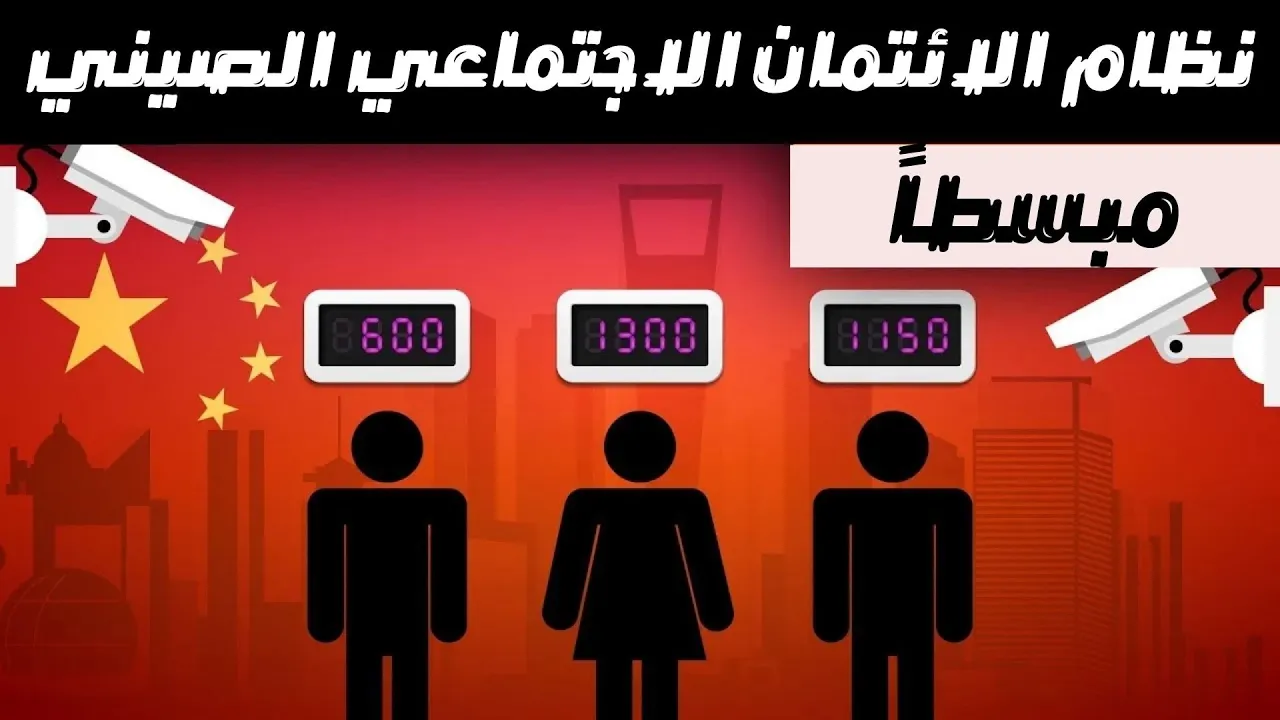
Rongcheng isn’t a major city. It’s got half a million people, which is tiny by Chinese standards. It isn’t a tourist destination. The most notable incident in its recent history - ironically, I guess, given the other thing it’s known for is being really hardcore about conformity - was a bloody mutiny on a Rongcheng-based fishing boat in 2011. The Rongcheng social credit system was pretty much like the system you’ve heard about. It wasn’t quite as draconian, but it was a numerical system that scored the behavior of private citizens based on intensive monitoring and doled out rewards and punishments for high and low scores respectively. There were 6 tiers of rewards and punishments, with the highest for people whose score exceeded 1050, and the lowest for people with scores below 600. It applied to everyone in Rongcheng, and things that could drop your social credit score included things like: stealing tap water (minus 60 points), participating in an MLM scheme (minus 30 points), spreading, quote, “negative information” on social media (minus 50 points), running a red light or jaywalking (minus 5 points), setting off firecrackers or dancing in a square (minus 5 points), illegally holding classes (minus 50 points), being a NIMBY, minus 100 points! I mean, that seems to be what this one means, right? “Engaging in unreasonable, vexatious, exorbitant price-asking or taking other illegal and drastic measures to interfere with construction work of public facilities”?!? I take back everything bad I’ve ever said about China. Meanwhile, you could gain points by shoveling snow (1 point), resolving a major dispute between neighbors (10 points), donating to charity, donating blood, signing up to be an organ donor, receiving a national or provincial athletic award, enlisting your children in the military, or being a, quote, “five-star Party member”, among other things. If you’ve seen a list or infographic like this online, it’s most likely come from Rongcheng. For how dystopian this sounds, the consequences of low or high social credit weren’t that big of a deal, nor was it well-enforced. If you had high social credit, you could get small subsidies toward transit, medical care, or retirement, and I mean small: 200 yuan for your pension, or 100 yuan toward health insurance. 100 yuan is a little less than 14 dollars. These amounts are especially paltry in comparison to what you could do to qualify for them: donating 10,000 yuan to charity would net you just 10 points. If you did that just so that it would move you into the top social credit bracket, you wouldn’t be getting anything close to your money’s worth. If you had low social credit, you could be blacklisted from, quote, “government led procurement or bidding”, you couldn’t enter the test to become a municipal official, and if you had, quote “honorific titles”, they would be revoked. So, no actual criminal penalties, and all of these are either so weak as to basically be symbolic, or would only be things officials would worry about. Even Rongcheng, it seems, wanted a social credit system first and foremost to root out official corruption. The claim that advanced AI was used to enforce social credit was wrong even in Rongcheng. The data gathering in Rongcheng was extremely low-tech. People went door to door with clipboards. Hard-copy paper spreadsheets recorded citizens’ infractions. Also, it wasn’t a permanent record - good and bad things you did expired after a few years.
And, ultimately, Rongcheng’s whole social credit system expired after a few years too. It still exists in a modified form, but it’s opt-in only, and there are no punishments for having a low score. So it’s just basically just a municipal system of Boy Scout merit badges. The national government, possibly aware by 2019 that the world was developing a detailed fantasy of China’s social credit laws that was bad for the country’s public image, demanded that Rongcheng end their social credit experiment that year, and rumor has it that local officials lost their jobs for putting something so dystopian into practice. The Rongcheng experiment, unlike the rest of the public trust system, was not very popular. Before, as recently as 2018, Beijing had put out some memos hinting that they might really be considering a points-based social credit system like the one feared by the world. Rongcheng made it clear this was off the table. The most recent memo on the public trust system was put out in 2022, and it was just a lot more vague jargon that can roughly be summarized as “Things seem to be going alright, maybe we’ll strengthen these laws in the future, but who knows what that’s gonna look like.” Regional governments are probably hard at work trying to obey this missive, but whether or not they think they know what to do, they know that what Rongcheng did is what not to do. As far as I can tell, the mechanisms set up nationwide by the 2014 public trust law are still little-known to the Chinese public, and among those who do know about them, they’re uncontroversial.
But you still can land on the bad side of them. One person occasionally covered by the Western media in conjunction with the social credit system was the MMA fighter Xu Xiaodong. His story is a really good example of what the real public trust system is, what it isn’t, and how despite everything I’ve just said, it can still be used by the government to persecute people they don’t like. Xu Xiaodong’s big thing is taking down traditional Chinese martial artists. Not by fighting them - although he does that too - but by exposing them as frauds. He has a YouTube channel where he investigates kung fu and tai chi masters’ claims, which is mostly watched by Taiwanese people and overseas Chinese, since YouTube is blocked in mainland China, but Xu is a mainlander. He’s not a top-notch MMA fighter, which he admits, but he’s defeated every self-proclaimed tai chi master who has challenged him, often in less than 30 seconds. Now, on this YouTube channel, Xu also addresses other topics, topics that put him in hot water with far more important people than martial artists who claim to have supernatural powers. He supported the 2019 Hong Kong protests. He questioned the official story of a covid whistleblower who disappeared while investigating the early outbreak in Wuhan. He criticized the zero-covid policy. The Western media regularly reported that, because of his criticism of the regime, Xu Xiaodong’s social credit was so low, he couldn’t buy train or plane tickets, rent property, or stay in some hotels. He claims it took him 36 hours to reach one fight in Xinjiang because he couldn’t use most transportation. If you’ve been watching the rest of this video, you should know what’s really going on: some martial arts star sued him for libel, right? Right. Chen Xiaowang, a tai chi grandmaster who Xu called a fraud, sued him for the equivalent of about 60,000 dollars in damages. Xu claimed for a while he wasn’t able to pay, and got blacklisted. He did eventually pay the damages in installments, and was taken off the blacklist. But by then, the media outside China had covered his travel and lodging difficulties, and attributed them not to the lawsuit but to his criticism of the CCP. Which might be what Xu was trying to do. When he arrived 36 hours late to a fight, that may have been a calculated move to draw attention to how he was being treated.
And I don’t fault him for that. Even if that was his intention, I don’t think he was misleading people by saying “Look what our government can do to people they don’t like.” I have no idea how genuine of a martial arts grandmaster Chen Xiaowang is. But it’s quite possible some official somewhere decided that they needed to shut this guy up. And disappearing him would be too obvious, so they had to just make his life suck enough to make him think twice about attacking the regime. So, why not get someone to sue him for damages he can’t afford. The journalist Liu Hu, another critic of the regime who’s been sued on trumped-up charges, and as far as I know, refuses to pay to this day, seriously restricting his rights, he’s open about how he could pay but he won’t, because he believes the lawsuit is illegitimate. But it’s also possible Xu would have been sued even if he was an upstanding CCP supporter who only specifically criticized martial artists. The thing about people who physically fight for a living is that a lot of them enjoy a fight in other ways, too.
So, let’s recap. Here is the story of social credit. In 2014, the Chinese government put out a memo talking about establishing something called a “social credit system”. There were a few motives in doing this: getting financial credit reports for more Chinese people, increasing the public’s ability to trust businesses and officials, and possibly, while they were at it, using that to do some corruption purges against potential rivals to Xi Jinping. They drew a rough circle around these sorta-related issues, and called them social credit, albeit in context maybe better translated as “public trust”. Even the drafters of the memo didn’t quite know what this meant in practice; they were expecting the regional governments to interpret it in various ways, some of which would work and some wouldn’t. Both the West and some regional Chinese governments interpreted this as meaning they wanted a points-based system to rank individual citizens on their prosocial behavior, something the government didn’t want and didn’t intend to impose. One small city, Rongcheng, put together a points-based system similar to the one feared by the West, but it was low-tech and poorly enforced, and the national government demanded they shut it down. What the government did impose was a system of blacklists to enforce repayment of debts and businessmen and officials’ compliance with the law, which was usually meted out by being banned from buying high-speed train or plane tickets. In some cases, critics of the CCP may have been sued specifically for the purpose of putting them on a blacklist, but officially, the public trust system is not supposed to be used to suppress dissent, and in practice, it doesn’t get used that way often.
So, myths versus reality. People have individual 3-digit social credit scores. Nobody has ever had numerical points-based social credit scores, other than in a trial program in the minor city of Rongcheng. If enough social-credit-reducing minor infractions pile up, you can be severely punished or even executed. Even in Rongcheng when they had their social credit system, punishments were minor, and the local officials were reprimanded by the central government for including any punishments at all. Millions of people have been blacklisted from buying plane or train tickets due to low social credit. Millions of people have been blacklisted from buying plane or train tickets due to not paying a judgment after being sued; however, this has been used to punish critics of the regime. Social credit is enforced by AI and mass surveillance. While China is definitely under mass surveillance, this has nothing to do with social credit. Under the short-lived Rongcheng social credit system, data was kept by people with clipboards going door to door. Social credit is the main mechanism of enforcing loyalty to the regime. The CCP has way more insidious ways of enforcing loyalty. And then there’s the counter-myths that you might see on social media these days. “Social credit” was made up as Western propaganda to demonize China. Not really. Most of the mythology of the Social Credit System organically came together through a series of misinterpretations, both inside and outside China, of a deliberately vague 2014 government memo. “Social credit” is just the exact same thing as credit scores. Not that either. While that’s one aspect of the system, it also includes blacklists for corrupt officials and people who owe money to the government. “Social credit” is a government accountability system, holding officials to higher moral standards than Western countries do. Not really. Sort of, but the motives are definitely less than pure.
There are a lot of rules in China. A lot more than in the West. And they are enforced a lot more arbitrarily. There’s a lot more surveillance in day-to-day life. But the series of policies set up by the government that they called a social credit system are not what you’ve been told. They are not necessarily a good thing. China is not your friend. But there is no point at which you get caught eating smelly food on the train so many times that you get executed.
And you know what that means - All those rules? Really more like guidelines.
Up Next

Understanding Privacy Erosion and Restoration Strategies
@ModernRogue
201.1K views•2020-01-09

Triumph of Orthodoxy Icon: Byzantine Art & History Explained
@BenCallan
2.1K views•2024-08-06

FastAPI vs Flask vs Django: Choosing the Right Python Web Framework
@TechWithTim
302.5K views•2024-05-26

Game of Thrones Opening Credits: A Cinematic Analysis
@gameofthrones
46.3M views•2011-04-18
Related Study Plans & Knowledge Roadmaps
Structured learning paths in General & Interdisciplinary Studies