

















![[ML 2021 (English version)] Lecture 24: Adversarial Attack (2/2)](https://i.ytimg.com/vi/kRmBiV2X810/maxresdefault.jpg)








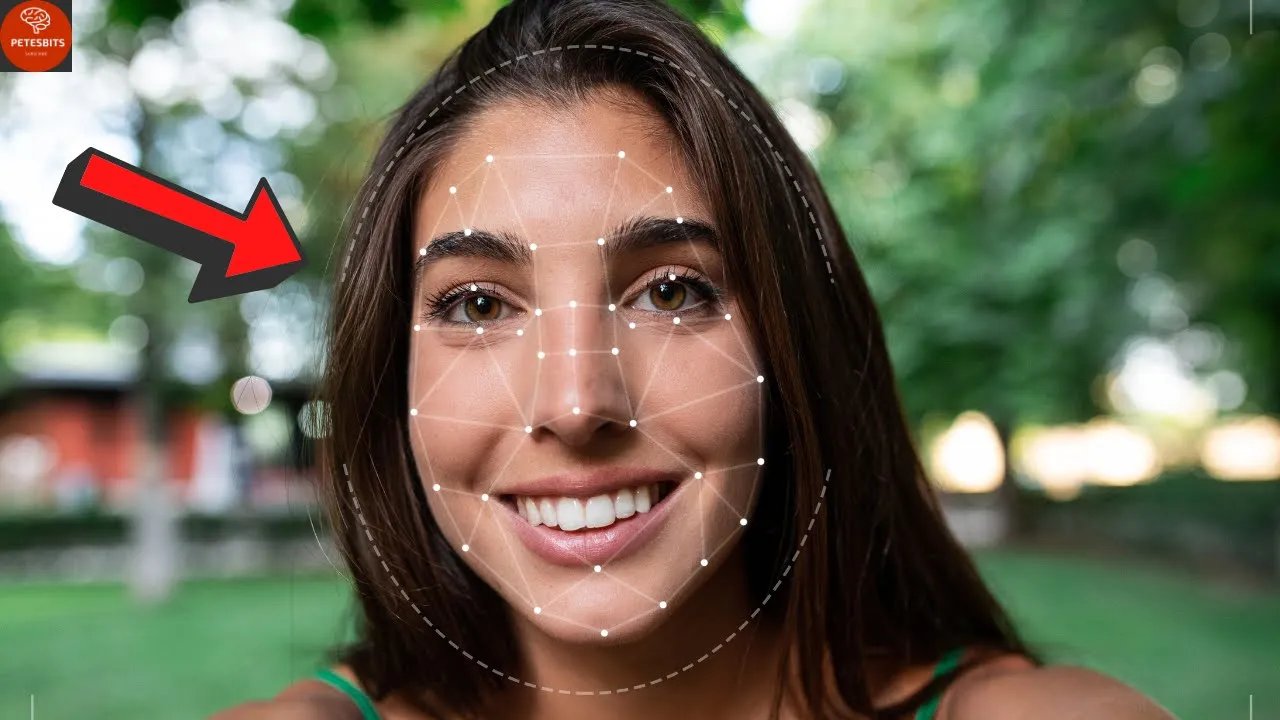
AI facial recognition technology works by using deep learning models to detect faces in images, normalize them to remove variables like lighting, extract key facial features, and convert them into mathematical representations (vectors) that can be matched against databases; this technology has enabled significant crime-solving breakthroughs, such as identifying a child abuser from just a few frames in a background image, but raises important ethical concerns about privacy, potential misuse, and the need for robust safeguards including vetting processes, audit trails, and human verification requirements.
AI Facial Recognition: Crime-Fighting Tech and Privacy Concerns Explained
Added:Basic principles of computer vision and pattern recognition in machine learning.
The concept of biometric data, including how physical characteristics are digitized, measured, and stored.
The fundamental tension between individual civil liberties (such as the constitutional right to privacy) and state-sponsored security measures.
An understanding of algorithmic bias and how demographic disparities in training datasets lead to skewed AI performance.
Analysis of global AI policy and regulatory frameworks, such as the European Union's AI Act, the GDPR, and local municipal bans on facial recognition.
Technical study of adversarial machine learning, including physical-world attacks and tools designed to evade or disrupt biometric surveillance.
The ethics and economics of surveillance capitalism, focusing on how private data brokers harvest and monetize facial image databases.
Examining legal precedents and standards of evidence regarding the admissibility of AI-generated identification in criminal prosecutions.
56.2K views779likes25:26Original Release: 2024-09-27
yes it is time a little later than scheduled for AI [Music] decoded facial recognition is hard for two reasons teaching a computer to process a human face is difficult enough matching that face to someone's identity in a database requires significant computing power and billions of photographs tied to accurate data on which those computers can train the technology has been around since the early 1970s in its most primitive form but so unreliable was it that other Biometrics fingerprinting retinal scanning came to Market quicker about 5 years ago though a company called Clear View AI claimed to have made a breakthrough tonight their CEO will join us live from Oakland California the advances in this technology are probably the biggest breakthrough in crime detection since we introduc Ed DNA testing this week police Scotland announced they will be rolling out facial recognition cameras across the country Chief conable Joe Farrell says it would be an abdication of her duties not to be using it we were given a very good demonstration of it through the summer retrospective facial recognition track down many of those taking part in the riots even those who were masked but is it becoming too intrusive the software that identifies our faces is now being developed for authentication we use it on our phones instead of a code British Telecom are currently triing that same technology to improve cyber security so that only authorized workers have access to critical systems and data there is a lot to consider and with me in the studio as ever the font of all AI knowledge uh Priya Lani CEO at sentury Tech she's come back from New York this morning so bear with her I'm going to put you on the spot on the way nonetheless give us a quick explainer of how this technology works okay so firstly what we want to do is let's say we want to spot you in an image and then you know God forbid but we want to match that to a Wanted list Christian so got an image of Christian here uh on the camera in the background you'll have him let's say in the studio and there's lots of noise in that studio there's tables there's monitors first we want to do what we call classification we want to detect the fact that we've got a face right we've got a face here so the way that we do that is use deep learning models to be able to classify the image and find the face right the way that they traditionally do that is they would look at lots of images they would tag lots of Faces in those images they say these are faces these are not faces and then you would build up AI deep models like deep training models and you would train them to learn where the faces are and they would look at those feature sets of a face there are some models that use what we called un supervised learning but M the supervised training models where you've had that sort of tagging and labeling right the model then learns what what the specific features are of the face let's say the texture the edges of what a face looks like so you've got a model that potentially can spot in that very big Studio over there all of the faces we then take your face specifically and we create and if we can play a clip actually a boundary box right a bounding box around your face so I've got a clip to show our viewers um this is friends right and you can see this sort of oh it's very short then but you saw the sort of boxes around the face right so you create these bound boxes around the face um and then essentially the the model knows that it has a face but we want to detect now whether that's you know your face and does that match something in datab again can we do that again yeah so we normalize the image so let's say you've got an image of a face there thex yeah there's the Box yeah then you normalize the image so you want to take away lots of variables that could essentially create inaccuracies so maybe the lighting you might want to turn all the images into Grays scale you might want to look at the alignment of the face and once you've done that right and this is where it's interesting in those images you saw there was sorts of lots of spots the Deep learning models will extract what it thinks are the key features of the face once it extracts those key features of Christian's face and this is where it's really interesting and I love this is we turn it all into maths right we vectorize that data so what you ends up with Christian as Christian Fraser right now what you're used to seeing in an image actually is a string of numbers it's just a string of numbers every image of you that's taken on cameras out there that are modeling that face and using this sort of AI it will have a slightly different string of numbers because your position might be different your expression might be different but they'll be very very similar because it's is your face it's a mathematical representation of your face then this is where it gets really interesting is let's say you have a Wanted list you've got a database of faces that you're looking for those faces have been through a similar process where they have been encoded into numbers and then it's a matching exercise right is there a similarity between the string of numbers that represent the face on the one that's where the computing power comes in and where the chips come in because as the chips improve those those calculations are done that much quicker and do you remember very quickly because I know I really want to get Juan on because he is the expert in this area but do you remember when we did uh an entire episode on semiconductors and we talked about how there are two big processes that happen you've got all the training data initially so you've got all the training data for example all the faces and the images then we have what we call doing inference in AI That's when you run the model you have the compute power so that's what you're talking about that you're then running the model um against essentially that facial recognition to be able to find the face okay I mean it's extremely impressive what Clear View do before we talk to Juan let me show you the video the promo video that clear view puts out and you'll understand what I mean in 2019 Homeland Security investigations were trying to identify an adult male who was in a child abuse video the adult male was abusing a 6-year-old girl and selling this abuse video on the dark web the only clue was a photo of the adult male who was in the background of the abuse video for just a few frames with no other Clues the investigator and the case turned to clear view AI prior to searching on Clear View AI we must provide a reason for the search in this example we will choose felony sex offense secondly you upload a photo of the suspect from your desktop and press the search [Music] button as you see 25 results now match the uploaded photo whereas in 2019 during Homeland secuity investigation only one result came back from Clear viiew AI this is the photo as you can see the suspect is in the background of the photo press the locate button on the top left to zoom into the photo or use the compare button to see them side by side in this case the investigator clicked the link to a public social media Post online uncovering two key pieces of information the photo was tagged in Las Vegas and the name of the company the suspect appeared to work for with those two Clues the investigators at Homeland Security traveled to Las Vegas obtained the suspect's name from the employer and with additional corroborating evidence secured a search warrant for the suspect's computers the search warrant revealed that the suspect had thousands of video and photos of child abuse material on his computer he pled guilty and is now doing 35 years in jail and the six-year-old girl was rescued impressive let's speak to the CEO of Clear View Juan tonat Juan thank you very much for being with us how many cases do you think your technology has solved and what was the big leap forward for you uh Christian and Priya thanks so much for having me on it's great to be here uh and appreciate your interest in clear VI AI um we've done now over two million searches on behalf of law enforcement that that's how many searches they've used on our platform we don't know how many crimes they've exactly solved but if you take even a conservative estimate you would be in the hundreds of thousands um at least um sometimes cases you have to search multiple images um and so on but um anecdotally as well most recently we worked with the international Center of missing and exploited children and we were in Ecuador and Latin America in 3 days uh uh these law enforcement agencies about eight of them went through um a list of the hardest cold cases they haven't solved uh these are missing kids kids have been abused and they find them um on these uh internet forums um as victims and in those three days they made 110 identifications of missing and exploited children and rescued over 50 of them so the impact is incredible um and on the flip side as well we know it's a very powerful technology so we've limited the usage of our application to uh law enforcement and governments but what what is it that's I I said that it that there' been a lag with this technology whereas retinal scans and fingerprinting had sort of jump forward what has been the real breakthrough for facial recognition yeah I think it's neural networks and uh which are part of artificial intelligence so previous algorithms for facial recognitions would try and look at the distance between the eyes or the eyes and the eyebrows or the nose and the eyes and things like that but that doesn't work very well if you have an image from a different angle say a security camera so with neural networks you're able to train uh as PRI said it's called supervis learning uh on a lot of different examples of photos um to improve accuracy so so the way we trained that algorithm was to get a lot of publicly available images say you have 100 photos of George Clooney you have 100 photos of Brad Pit if you the algorithm will learn that um you know the black and white photo of Brad Pit uh with the sunglasses on is the same one of him from 20 years ago with different hair and so on so it the algorithm learns what stays the same in a in a face and and so the more data you have the more accurate it gets and there's been some great uh researchers out there thanks to machine learning um and all this data that that um the research Community has done a really good job in improving it and we've built upon a lot of those um Innovations and what we were able to do was bring a lot of data to train our algorithm and so now when you look at all the top facial recognition algorithms not just Clear View there are others as well um there's a National Institute of Standards and technology in the US that ranks hundreds of these algorithms um you know we can pick a photo out of a lineup of 12 million images at a 99.85% accuracy rate so and that's across all demographics so the technology has now become much more accurate than the human eye and the Innovation really is artificial intelligence and the amount of data that's out there that you can use to train these algorithms ju the thing what I'm really interested in is something that you just said because I thought that prior tests showed that there was a significance statistical difference in the performance of the model when it came to certain demographics yes so NE nist ranks uh uh demographics as well um but if you look at the top performing algorithms the differentials are very very small um and you're looking at over 99% accuracy across all the demographics they do test uh but if you looked uh you know four or five years ago um that's when a lot of these algorithms did have issues with accuracy especially on certain demographics but today uh a lot of the top algorithms are very accurate regardless of demographics but it's also things like angles right so you could get partial faces I mean we talked about people with masks who were identified through the summer here during the riots but you you could have I don't know like a third of your face someone in a BAL of clava with eyebrows you might still pick up an image yes we were surprised too we build a software I'm a software engineer by background and when covid-19 happened we had a lot of issues identifying people with mosks on so what we did is we added um uh photos with masks through our training data about 3% of the photos we photoshopped masks onto them and it was kind of incredible to see that now almost all the time even with the mosque on uh our algorithm works very well in searching out of billions of images and and the technology even surprises people who are making it yeah Juan am I right that so when you talked originally about having a lot of data to be able to add to this and it's the data and then the labeling and the supervised learning that then allows you to have these really performant models that that data was taken you know from the internet and I think in terms of some of the concerns what is Clear View doing to ensure that this technology is not being misused have you got safeguards in place yourselves as a business have you got safeguards in in place with the law enforcement authorities that you're dealing with you know across the world we we want to hear a little bit more about that given where this data has come from where the inputs have come from and then how those potential outputs may be used yeah so we have a wide uh variety of ways to make sure that this technology is used for the best and highest purpose which is solving crime but also not misused by law enforcement and other users so first of all is we do restrict this to government and law enforcement agencies and we have a vetting process ourselves uh before we onboard any customer uh we look at their human rights background uh the you know and all those kind of things yeah I was I was going to ask you that that because I mean I was thinking of the scrippal who were who were poisoned in Salsbury and of course the Russian government would be looking for them and I was wondering whether they would have access but you you have a vetting process for that yeah so we for example won't sell to Russia China Iran uh any one that's adverse to the US and uh us allies um and in fact we do sell this to the ukrainians um they use it very effectively uh since the beginning of the war so there's been over 2,000 war crimes now where um they have been solved or that suspects have been identified because of clear viw that wouldn't have been identified otherwise also yeah yeah sorry to interrupt how how safe is this database though because one of the you know through our series one of the things we've been talking about is that sort of Captain Mouse of AI AI accessing AI are you concerned at all given the this immense amount of data that you've gathered that it is it is safe from the Bad actors who would want access to it yeah it's a great question so I mean we vet every customer we talk to them we find out and try and verify who they are of course before we on board them secondly we make sure that there's an administrator in charge of uh the facial recognition program in any particular agency so any law enforcement officer using it before they do a search as you saw in the demo they have to put in a case number and a crime type um and that allows the administrators to audit on a regular basis which officers are using uh the technology and what reasons so that is another safeguard that really helps these agencies make sure it's used for the right purpose um and they can take action as appropriate if there's any kind of misuse of the technology and I think that's another control um we we think is an innovation we've had that sets us apart and finally we give training to um all the people who use clear viw to make sure they know how to not just take the search results and go with it but verify the information that comes back from Clear View uh you know we don't allow uh the search results to be used as the only source of evidence these are uh leads and you know these investigators do follow up research to verify the identity so with those things that's how we've been able to really get the best out of the technology and minimize a lot of the downsides just very quickly humans do have to review the results of that absolutely so one thing we've done in our software is we don't actually show the person using it if we think it's 98 or 99% that's actually not shown in our software for that reason so that way follow research yeah Juan it's amazing to talk to you thank you very much for coming on the program oh thanks so much for having meon tap there from CLE that's uh making you feel a little orwellian uh coming up after the break we'll get the other side of the debate how do we protect our freedoms we'll speak to Big Brother watch the British campaign group who's pushing back against the advancers in state surveillance welcome back so now we know how impressive this AI technology can be its power stretches far beyond the average search engine this this is a radical reimagining of the public space if as looks likely it is widely adopted by by our police forces then increasingly the freedom to wander about without being watched will disappear facial recognition will bind us to our digital history in ways we've not yet imagined it will be the end of what was previously taken for granted the right to be publicly Anonymous with us tonight is silki Carla she is the director of Big Brother work before we speak to her let's watch a campaign video out a band there are cameras on top of the band that scan everyone's faces as they walk past I came to the bridge and I was pulled up at London Bridge in regards to his facial recognition they were trying to threaten me with regards to an arrest he says to me your B I did cry the entire way home I felt so helpless I just really wanted to find way to prove that I was a dece so typically on a busy day in a London area like this they can be scanning thousands of people's faces there thousands of people that are effectively walking through a digital police lineup as you walk past it's a passport style check that sees if you are known to the police if you are on a database there are lots of different reasons that people can be put onto watch lists you can be put on a watch list to protect you from harm whatever that means typically what we see is an alert comes up bam the person is stopped if they don't stop uh voluntarily then they can be physically apprehended silky car welcome to the program thanks for having me um it's difficult for someone in my position who's who's on television every night um to argue for more privacy um but I think if I were not in this job I think if I could choose to opt out of Juan's database I might want to do that but it seems very tricky now yeah the extraordinary thing is that in British law in European law you have the right to um protect your own data including your photographs and of course what he's doing with clear view AI is actually it's not just stealing billions of photographs from the internet that people haven't consented to there's about 30 billion in his database Alone um but it's also extracting biometric data from them that's information as sensitive as what's on your passport and then these companies are making that very sensitive data available to the highest bidder so it's really just a question of what does the buyer want to do you say it's stealing is is it stealing or scraping is it the difference well um there two words for the same thing because it's because you have rights over your data um and you know we fought for a long time to have you know the right to privacy is a protected right it's a fundamental human right um and we are the thing about facial recognition especially when you've got companies um either taking it from people on the street as as they walk around through CCTV or scraping it from the Internet is that it actually reverses the presumption but in reality the consent happens in stages so we give the images to Instagram to Tik Tok we assume I mean I don't know do we assume they would be used for for other purposes I don't know but at the same time we enjoy using Google photos which then puts all our photos into certain order and identifies people for us so so we like all that are you saying that we have to give up all that if we want to keep our freedoms no not at all but there's a different level of protection for biometric data because it's so sensitive it's like DNA you know in the same way that and I do think with facial recognition there are ways that highly regulated you can use it for the public benefit um but the problem is you know we don't allow companies to go around scraping buses and playgrounds and high streaks for people's DNA and making Mass databases because it's so unregulated at the moment that's what's happening with facial recognition I mean traditionally when we're looking at the actual process right we're relying on people recognizing people or people remembering people in human eyewitnesses right so we're relying on this human facial recognition rather than than a machine and what I'm really interested in is the public interest argument got these Security Forces we've got the Met police using this technology now in the UK the Scottish police the wsh police and I think it was Big Brother watch a quote from you where he said police are failing to turn up to even 40% of violent shoplifting incidences right the Met police started the year 1,000 officers short they're going to probably end the year 1,400 officers short I don't want those officers trolling through faces right trying to make those matches do for them it's a tool it's a technology I can understand the point about the consent of the data and the input of the data but how do we achieve that balance where there is still a job to be done here right so I know crime is reduced by 8% but sexual assault is actually rocketed up upward how do we use the technology to benefit us while being able to mitigate against potential risks and harms that are caused by the breach of our potential breach of prach of privacy I should say we have to have regulation we have to have laws around this it's completely unlike you know we've got laws on fingerprints we've got laws on DNA um we've got laws on CCTV facial recognition is just a kind of vacuum at the moment so it's a kind of wild west for companies to go in and build these databases of billions of photos and also I have to say for the police and let me give an ex you know I've been watching the police use this for seven years now I'll give you an example of what it actually looks like on the on the street I go to a high crime area like cuden where police are using life facial recognition masses of resource officers standing around a van looking at iPads I walked past a robbery on my way to watch the police using facial recognition and of course then they are getting it wrong as well and that's where we step in as Big Brother watch because there are justices people wrongly stopped questioned harassed by police uh because they've been misidentified there's one other issue which we've not talked about and this is that third story I had in in the introduction where British Telcom is saying we can use this for our own security is there a danger that actually we're being snooped on by our employer absolutely we've just released a report on this actually called bossar and increasingly um whether it's on construction sites the gig economy um people are being basically told that they have to give over DNA fingerprint style data sometimes it is literally fingerprints and increasingly facial recognition just to get their pay packet at the end of the month and we really have to be careful about what that data is used for do they have controls over it do they have a choice because we it even happens in schools now that kids are giving facial recognition to get their school lunch yeah you know what my boss is watching me we're out of time I need a I need a grumpy face recognition so that when you're your spouse or your partner it goes ping smile we don't want bosses looking we need one of those Sil thank you for coming in really interesting uh get in touch if you've got thoughts on what we've discussed um that's it for this week as I like to remind you each week though if you enjoyed tonight's show you can watch it all back on the back catalog on our YouTube channel AI decoded uh do get in touch about that and if you've got thoughts on a program we'd like to hear that too we'll do it again same time next week
Up Next
19:28
Predictive Policing: Crime Prevention or Prejudice? | Tech Ethics Analysis
@dwnews
51.3K views•2022-06-24

12:54
Triumph of Orthodoxy Icon: Byzantine Art & History Explained
@BenCallan
2.1K views•2024-08-06

9:49
FastAPI vs Flask vs Django: Choosing the Right Python Web Framework
@TechWithTim
302.5K views•2024-05-26

1:42
Game of Thrones Opening Credits: A Cinematic Analysis
@gameofthrones
46.3M views•2011-04-18
Related Study Plans & Knowledge Roadmaps
Structured learning paths in General & Interdisciplinary Studies
general-studies
Elevator Engineering: History, Physics & Cities
01From Hoists to Safety Brakes: The Dawn of Vertical Lift
02Hydraulic vs. Traction: The Engineering Physics of Elevators
03Modern Speed, Safety, and Algorithms
+ 2 more learning modules
12h5 modules
Explore Roadmap
general-studies
Rubber: Material Science, History & Geopolitics
01Origins of Natural Rubber & Mesoamerican History
02The Chemistry of Natural Rubber & Vulcanization
03The Geopolitics of the Rubber Boom & Colonization
+ 2 more learning modules
12h5 modules
Explore Roadmap
general-studies
Containerization: Evolution, Logistics & Trade
01Ancient Trade & Bulk Cargo: Amphorae to Barrels
02The Industrial Revolution & Cardboard Packaging
03The Containerization Revolution: Malcom McLean
+ 2 more learning modules
12h5 modules
Explore Roadmap
general-studies
Textile Tech: Evolution, Labor & Global Impact
01Pre-Industrial Textiles: Handloom & Cottage Industry
02Mechanization: The Spinning Jenny to the Power Loom
03The Factory System & Global Labor Transformation
+ 2 more learning modules
10h5 modules
Explore Roadmap