




![[Syntax] Constituents](https://i.ytimg.com/vi_webp/Ia7d4slVL6s/maxresdefault.webp)

![Syntax: Intro to Linguistics [Video 5]](https://i.ytimg.com/vi_webp/I9RPueD8wGs/maxresdefault.webp)












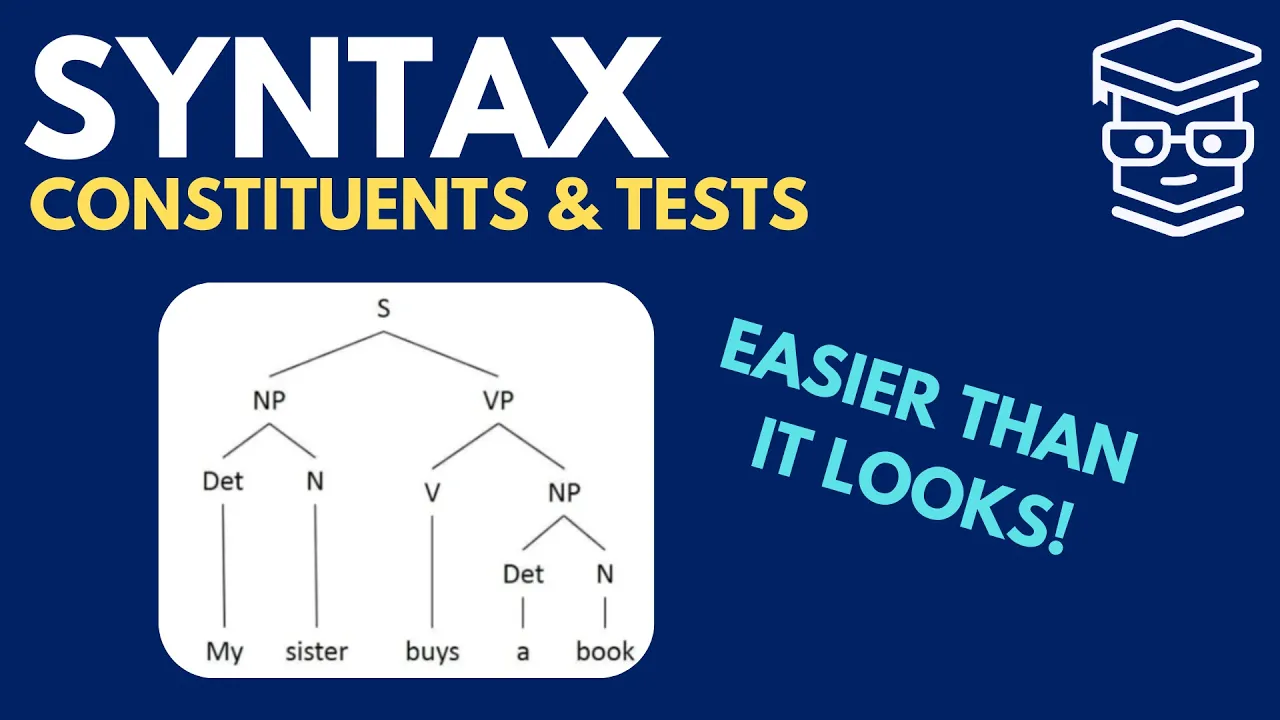
Constituency tests are linguistic methods used to determine whether a group of words functions as a single unit (constituent) within a sentence; the five primary tests include: (1) Replacement Test - checking if a word group can be replaced by a single word while maintaining grammatical correctness, (2) Movement Tests - including passive voice transformation, cleft sentences, and topicalization to see if groups can move together as units, (3) Modification Test - determining if one word limits or modifies another's meaning, (4) Ellipsis Test - checking if a verb phrase can be deleted while leaving the sentence grammatical, and (5) Coordination Test - seeing if two groups can be joined by a conjunction like 'and' to form a larger constituent.
Constituency Tests in Syntax: Replacement, Movement & More
Added:hello and welcome back to a new lecture on syntax and the last lecture we spoke about the need for internal structure and sentences and we briefly introduced the topic of constituency in this lecture we take a look at some tests for constituency stay tuned constituency tests are replacement movement modification ellipsis for verbs or deletion stand-alone test and then coordination or conjunction as a test so basically then we have 1 2 3 4 5 6 tests so let's start by discussing the replacement test now that our placement test is quite simple basically what it says is can you replace a group of words with something else so for example if you have a sentence that says the man and the store is my friend if you want to ask whether man and in form a constituent or function as a one unit then you want to see if you can replace man and in with one word and still retain a grammatical sentence well can you see it get something like the person the store is my friend hmm that sounds like a really bad sentence the person the store is my friend so then you know that man and in do not form a constituent how about the and store can you replace this with one word and still have a correct sentence what if I replace this with jail let's see a man in jail is my friend that works so now I know that the and store form a constituent what about in now we've already seen that in and men do not fit together maybe in works with the store so let's ask can in and the store form a constituent like so well let's see if we can replace it so you can say the man here is my friend so yep we can replace in the store with here so in the store forms constituent what about the and man did they form a constituent sure we can replace it with John John in the store is my friend how about the man and in the store instead of saying John or the man in the store I can replace all of this with John and say John is my friend likewise we can do the same for this site running through the replacement test will quickly figure out that my and friend combine together to form a constituent which may be replaced by one word for example nice so John is nice alright so the man in the store we said is one constituent my friend is another one and then we have is so should we say that this sentence is made up out of three different parts well let's try to give is one more chance and see if is can group with anything else to form a larger constituent can is regrouped with my friend to form one constituent well I could say the man and the floor smells so yes I can so then my sentence is really just made up out of two constituents like so now the way we show constituency in syntax or one way we show constituency is by using brackets so we know that my and friend function as a unit you know that is my friend functions as a larger unit we know that the store is a units in the store is a larger one the man in the store is an even larger one and then these two the man in the store plus is my friend all of these together or these two together one to create the largest constituent which is the sentence so that was only one test called the replacement tests there are five more tests we want to talk about and please keep in mind that using only one test to determine constituency will not do there are cases where one test can be misleading so we need to try more than one test to be sure our next test is the movement test can we move these groups of words together if we can move them together and still retain a grammatical sentence then those words do form a constituent if not then they do not so the basic idea behind movement is that if words can move together as a unit they form a constituent now there are several different types of movement tests we will discuss three in this class Kluft in proposing and passive let's start with the passive in the sentence John kissed the girl we were to ask whether the girl is a constituent we try to apply one movement test which is the passive voice now in the passive you take whatever is in object and make that the subject now taking only girl would give us girl John was kissed by the now that's not right how about taking kissed and the you would get kissed the John was girl again that's very bad too but notice what happens when we try to test that the girl is a constituent or not we get the girl was kissed by John and that is it perfect sentence so now we know that the girl forms a constituent it functions as one unit therefore it can move as one units okay so the next test is the Clifton or Clifton test which is part of the movement tests take the example sentence the man bought a new phone at the store now I'm collecting what you do is they say it was or is blank that and then continue here's an example say you want to find out if at the store was a constituent you would say something like it was at the store that the man bought a new phone that's a perfectly good sentence so at the store forms a constituent well say we took new phone acts and try to see if that was a constituent what do we get we get it was new phone at that the man bought a the store and that is a horrible sentence so new phone at that's not a constituent but take a new phone and try that you get it was a new phone that the man bought at the store that's perfect how about a new store a new phone at the store plug that in here and then complete the sentence it was a new phone at the store the man bought that the man bought that's also a great sentence now from our previous test of replacement we already know that the verb plus whatever follows forms a constituent in the sentence right and the second part would be the subject but try to plug that in here and see what happens it was bought a new phone at the store that de menthe that sounds very bad that does not mean that bought a new phone at the store is not a constituent that's why we put out that warning that says that you need to use more than one test before you decide that something is or is not the constituent the last movement test is called proposing say for example your sentences I like half pound stakes proposing would be taking a constituent and proposing it to the beginning of the sentence so you would say half pound stakes is what I like works then it's a constituent great so now we're done with the movement tests now we can move on to the modification test all right so the third test as we said is the modification test now what is modification modification is basically just limiting the meaning of the word you're modifying so let me give you an example imagine you have a white ball you have a yellow ball and you have a green ball now if I say the word ball what does that mean well it could mean this one or this one or this one but if I say yellow ball so now the word yellow is modifying the word ball now what one does it mean well it doesn't mean this one anymore and it doesn't mean this one anymore it only means yellow ball so in a sense this modifier of the noun ball actually limited the meaning so the idea is if a word modifies and limits the meaning of another word and most likely they form one constituent they functioned together as one unit so what if I have three red balls and I say something like oh that would mean any one of these three balls but if I say a ball then that means only one of them I could also say a red ball so both of these words are modifying ball this informs me that it is red and this informs me that it's only one of them so a red ball also limits which one I can choose here I can only choose one at a time and so a red ball all form a constituent the next test is the stand-alone test John bought eggs and bread if someone asks what did John buy you can reply with eggs in bread but you can't reply with eggs and you can't reply with bought eggs since you can reply with eggs and bread and have that stand alone or be a sentence fragment an exam bread form a constituent annex test this all ellipsis which basically means dilution now this is a test used for the verb phrase only so for example in a sentence like John didn't try to finish his homework and neither did Mary so this sentence really is and neither did Mary try to finish her homework but we deleted all of this the fact that we were able to delete all of that and still have a perfect sentence is proof that this entire verb phrase functions as one unit and therefore is a constituent the last test is coordination and conjunction so basically if I can group two things together then their constituents of the same type here's an example John and the man sitting next to Mary are nice people now Here I am putting together drawn on the one hand and the man sitting next to Mary on the other end since I'm able to connect these two that means each one is a constituent and if they are both constituents of the same type so this is a noun or a noun phrase and this also must be a noun or a noun phrase it can't be a verb phrase it can't be an adjective phrase you only connect things that are alike so I know right off the bat that the man sitting next to Mary even though it contains six words is a noun phrase nevertheless just like John is and with that we will have discussed some evidence for internal structure and sentences constituents and constituency tests see you next lecture you [Music]
Up Next
X-Bar Theory in Syntax: Specifiers, Adjuncts & Complements
@Trevtutor
304.4K views•2017-04-29
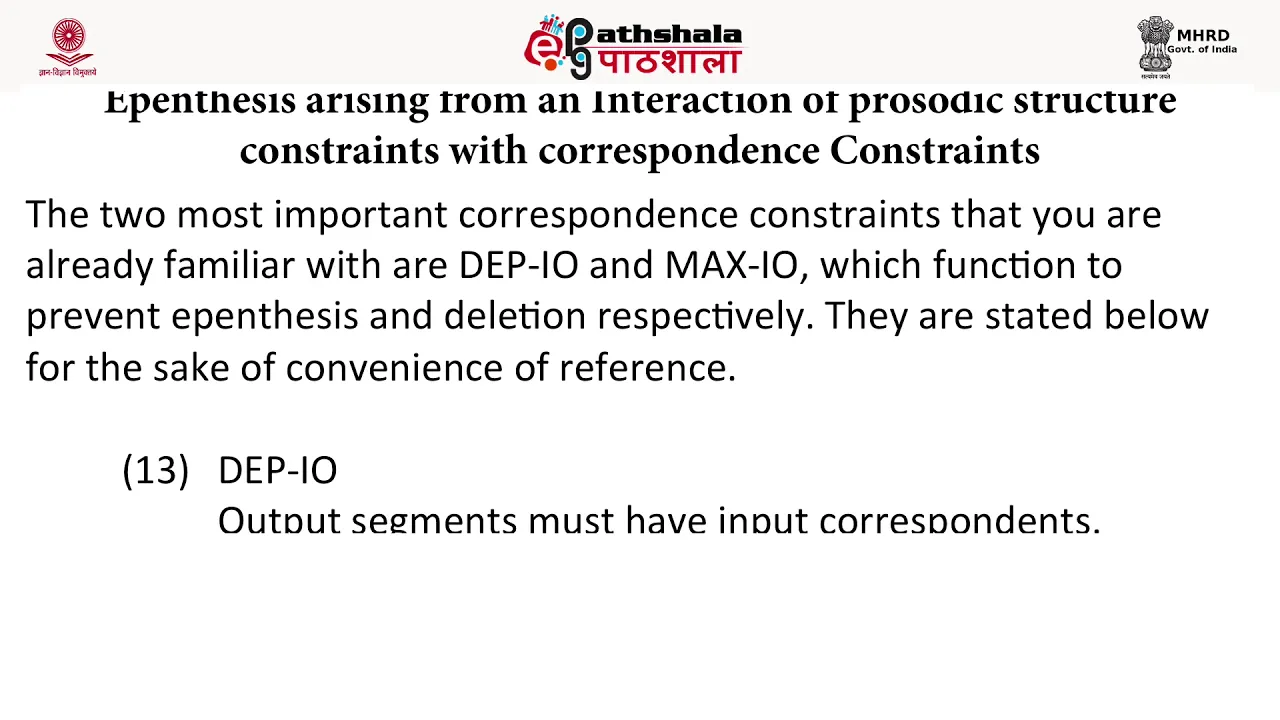
Constraint Interaction in Optimality Theory: Epenthesis & Deletion
@Vidyamitra
180 views•2018-08-20
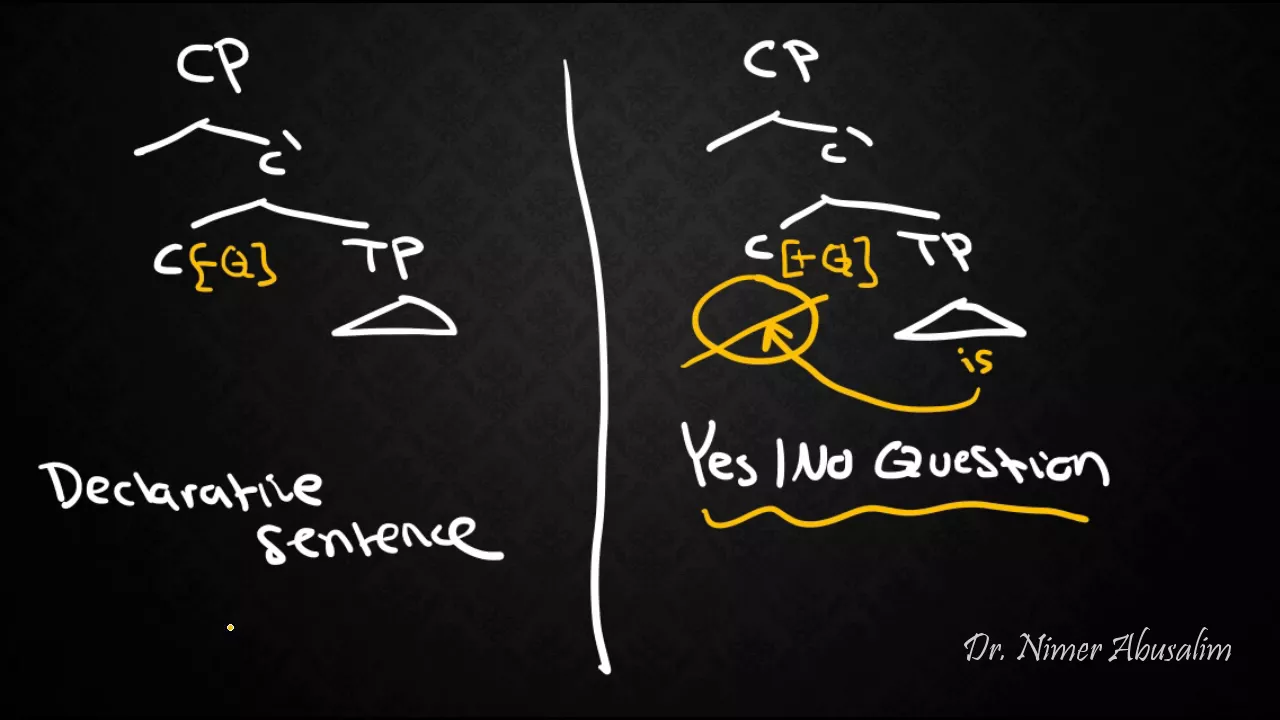
CP in X-bar Syntax: Yes/No Questions & Clause Structure
@DrNimerAbusalim
31K views•2017-09-30

Accent Expert Explains U.S. Regional Dialects | Part 1
@WIRED
9.3M views•2021-01-21
Related Study Plans & Knowledge Roadmaps
Structured learning paths in Linguistics