

Filmmakers can create high-resolution screen life movies by using vector graphics (created in Adobe Illustrator) instead of traditional screen recordings, which allows for infinite zoom capability without pixelation; this technique enables precise control over camera movements, character psychology through mouse movements and typing patterns, and pacing to guide audience engagement while maintaining the illusion of a computer screen interface.
How Missing (2023) Built Cinematic Tension Through Computer Screen Editing
Added:Familiarity with the 'screenlife' filmmaking genre, where the story is told entirely through computer, smartphone, or tablet screens.
Fundamental video editing concepts, particularly how pacing, framing, and cuts are used to manipulate audience emotion and tension.
The core difference between vector graphics (mathematical paths) and raster graphics (pixels), specifically regarding scalability in post-production.
Basic knowledge of virtual camera movement and how digital panning, tilting, and zooming differ from physical camera operation.
Advanced UI/UX animation techniques in software like Adobe After Effects to realistically mimic operating systems and software interactions.
Rigging and animating 3D virtual cameras within compositing software to create organic, hand-held camera aesthetics over 2D digital assets.
Narrative scripting and storyboarding methodologies tailored specifically to limited-perspective or desktop-narrative screenplays.
Production workflow and asset management strategies required to organize, update, and render thousands of graphic layers in a collaborative feature film environment.
648.3K views24.1Klikes19:04Original Release: 2023-04-13
you know in editing you use a screenshot zoom in on the detail and get this it is so pixelated it's horrible well these filmmakers figured out how to get it to do this and then they use that method to tell a story entirely through a computer screen my mom never came home from her trip so is there anything I can do online the movie is called missing and it grossed over 45 million the timeline for the movie is incredible and we want to unpack what is going on in there so we asked the filmmakers who created the movie we discussed the process of telling a story through a computer screen the technical details of how to make it not look pixelated unless storytelling philosophies on how to guide the audience through a mystery Riverside is the best tool for video podcasts honestly if you're not using Riverside for all of your virtual meetings you're making a big mistake I've even been using it for consultations as soon as we're done I get to send them the entire recording and not to mention the recording quality is freaking it's good whereas other virtual meeting Services can only do up to 720 Riverside can do 4K which is why we like to use it for podcasting and we love it because it records each audio and video tracks separately so that editing is such a breeze when we get into to post which means our editor can get started on cutting it almost immediately and even if you or your guest has absolute garbage internet it doesn't matter because remember that one time when we were in the hotel room I mean the call kept on jostling I thought we lost it but because Riverside records locally and then uploads the call was perfect and it's easy for the guests I don't need to install anything you just send them the link and you can start recording it even says like roll out the red carpet it's okay it's kind of cool it makes me feel special it makes me feel so special if you're podcasting creating video content or recording online calls then sign up to riverside.fm for free and use code editing podcast for 20 off and you can find that link in the description and we'll see you back in the interview so this whole movie is based on viewing it from a computer screen but there was this one scene that had amazing style can you break down one down [Music] great music queue there like [Music] I can't find my phone I need Siri now tell me what's this the party sequence was one of the most creatively explorative sequences in the sense that when we got the script there was a line that says and then like a cacophony of images as an editor you look at that and you're like okay what am I supposed to do with that okay [Music] Austin and I would just get on Zoom and and sort of just like brainstorm she's having a party with her friends her mom's gone through it the whole week what does that look like on screens we would jot down a bunch of ideas and then we would just go film ourselves acting them out and it's come a long way from that but I think what was really fun for us about editing this scene was getting to like idea [Music] I think with editing a lot of times it becomes like what is the simplest way to get the points across how can we make this as as tight and as quick as possible without having any like excess beats in it um it's fine this is this is so her her family friend comes over to check on her and this was a fun one because in the script it was pretty straightforward it was the the text of what they're they're talking to each other but there are all these small little things that she does just with her screen elements that kind of like give character and sort of further what she's going when you know someone nice and cute cool Tech job I would kill for a guy like that it's pretty rough out there not that I don't have I love how relatable that is I've done that one of the things in the footage of this movie that was especially uh gave us a lot of creative control was that since this is all happening on computer screens and bad connections and things like that we're able to sort of glitch takes and sort of compress sort of moments to combine takes or change the timing so oh um so like if like the timing was just slightly off or we wanted things to move in a different way you just take still frames and kind of stagger them and put a compression over to make it seem like a stutter through the glitch I would say 99 of as much as you see are us doing something whether we're changing takes or just taking out some time or adding time whatever it is I love that because I think for me I noticed the bugs and the glitches and things like oh that I thought that's like a solid choice to kind of make the screen a lot more believable exactly I was under that assumption but for it to be a narrative tool so much of this film is not like a traditional film and so you you know Norm normally you have shot reverse shot of a scene in a conversation but with the footage here you're kind of locked into seeing the characters on screen in a way that makes it harder to cut around things that normally you could easily cut around that's you guys inventing a whole new filmmaking language that's crazy I was like yeah and I like David Finch who uses that as well on any wide shot of his two people on a table it's two different performances just splice together I mean well I think most films to do that but this is like an extra element on top of that as well you'll probably notice like in the rest of the movie we pretty much adhere to a realism in terms of the way the computer works and the way these apps and these windows work but this was a space and later on in the news Montage as well where we were like okay we've we've established how these computers work we're addressing that but now we can kind of have a little fun kind of stepping outside the realm of how these things actually function so like these these windows moving in and out you know on top of each other that's not something that would ever happen but narratively I think that works really really well because I think with a lot of people they come they come in and start watching this movie and they get really excited at the concept themselves what type of ideas can I do with the film because I remember this I got excited but then for you was like all right we're going to throw you everything at this here's all the fun we can have great now let's get into the story and the Music Drops as well it's like this is important information and that's sort of things I really like about this because it's to an extent that is really powerful visual storytelling using the pacing of the editing and in a contrast edit you need to pay attention to this moment party that shift into suddenly it's Father's Day you have all this kinetic energy that's Rising rise rising and then all of a sudden it drops out we get a slow push in where before we were sort of darting around anytime you ha you're able to lean into a shift in the pacing I think is when you can really find those more emotional Beats [Music] the biggest challenge of all of this is the technical aspect I've tried to do effects like this you know like it was like screen capture show something on the screen but in a moment for me is I take a screenshot I zoom in and it comes low quality and so literally the first time I was watching this film was like actually get such high-res screenshots people saying what you just said and thinking it's screen recorded is in some ways the highest compliment the problem with screen recording or taking a screenshot is that the moment you start to punch in you're just going to lose resolution things are going to become like fuzzy and so in this movie Sometimes we're getting straight up on one word in an email you know so we needed to have infinite Clarity basically so nothing in the film is screen recorded and as you can see from our timeline every single thing is built up of different layers where each layer is a different asset of the desktop when we were doing the previous we were just taking screenshots because it was just Rough and Tumble we were just trying to get it out there but in the finished film every single thing is made from a separate illustrator file because the illustrator file allows to use those vector graphics to get infinite rasterization yeah so no matter how close up you want to get it'll still be Crystal Clear what is Vector and rasterization for those who don't know so which is me I would admit actually yeah we didn't really know either well basically what it means is that no matter how much you want to blow it up or how close you want to get it'll still be just as like crystal clear and smooth around the edges so you won't lose that like Clarity what it is is essentially a mathematical formula okay that they use in a path so when you draw like a line it's a it's they've just used like a graph essentially this gets into like calculus straight up and so it's like it's like a graph and so it's it just follows one line mathematically so you can zoom in or whatever it's not created out of pixels it's created out of math so each app essentially or every element that you would see on screen that you see in this film was created as its own illustrator file illustrator basically is Photoshop but with vectorized Graphics but this way we could go in and change all the text change the timing of when these things come in move the windows around on our desktop essentially production designing June's desktop hello cheeky Segway there's a few products we would like to share with you so take a look get funding for your content that's it that's what Creative Juice can offer juice fonts have helped creators upgrade their gear hire editors or start the podcast they've always dreamed of which was amazing for us because we uh really underestimated how expensive a podcast is it's a lot of beans but what's really exciting about juice though is that you stay in total control of your content which is awesome because it's only you that knows exactly what you need for your channel juice just supports you with funding and resources think invoicing expenses income and more and juice helps you with the worst part of being a creator taxes Creative Juice is awesome because they have personalized tax prep tools where you can pay contractors track 1099s and categorize all your expenses automatically all of those things you just said I've never heard of that sounds really scary juice please help me and we actually did just send our producer Ashley a W9 all I had to do was type in her email she fills it out and sends it back to us we'll get a notification and boom it's super easy and that's great because the less time you spend doing taxes that's more time for you to be doing what you do best creating go to the link in the description and sign up for juice today at getjuice.com get funding we need to have a serious conversation I need you to stop spending your entire day looking for music that actually isn't even that good but Track Club is actually full of bloody great music their entire library is Banger off of Banger and mash we also know that audio is essential for creating an emotional world for your audience this is why beyond having great music track club has mix lab which allows you to use stems to customize it to your situation for example there's this documentary song that I really liked that sounded hopeful but if I soloed the vocals that sounded scary or I just use the Mallet to create a build and Track Club makes it super simple to avoid copyright strikes paste your Channel's URL into track club and Bob's your uncle your videos will be cleared automatically my uncle's name's Dave guess what they're offering your first month for free so go to the link in the description and get your free month of track club today how do you balance that because you have literally infinite control over the entire like what the text says what the camera move is the cinematography the production design the timing like do you have on the limited control how do you handle that all of this underneath is a wide of the desktop but up here these adjustment layers that we threw in are how we created the shots so when you turn off the adjustment layer you see it's a wide of the desktop and then so we would build the wide out first and then drop these adjustment layers on top and use transform effects to create the different shots and Camera moves that are seen in the film so basically these adjustment layers became our virtual camera within the desktop there's a lot going on on the screen at all times but I think it's like guiding people enough so that they're not trying to look in every direction with that virtual camera the vignetting the blurring the way the mouse is like pointing at things we are trying to guide people's eyes to very specific things happening on screen there's lots going on we have 40 Graphics layers and the mouse and this and that but it's like always keeping it grounded in the story and the character I think is what makes the film work and not feel like a gimmick it reminds me of when 4K cameras first start coming around and all the filmmakers when we mean I can crop in I can start zooming in instead of 10 and it still looks 1080 this is it on another level whereas like use essentially have the entire film as a wide and then you're able to completely animate our eye lines like our eyesight like you should look hey you need to locate a new look here exactly yeah and and like we were saying you know I think there are there's some they call like screen life films that sort of take place mostly in a wide and you're you're able to see everything but it gives the filmmakers I think less control over guiding your eye and the the idea with this just like with searching was always to make this a really cinematic experience and so you're not just showing everyone the wide shot of what she's doing but we're like you know creating shots and we have close-ups and then we have shots that pan over just like you would with a regular camera on set and that's one of those things where it's like you wouldn't expect a screen movie like to build suspense or attention out of just like a mouse moving to click on something but you really can use these elements not only just for like the technical coolness of it but to really tell an emotional story with just Graphics essentially essentially like The Mouse and the keyboard and the way everything is done on screen is like a character 100 that's nuts yeah and it's little things but the way her Mouse is moving and the way she's like how quickly she's hitting the the keyboard and stuff it's sort of like showing her frustration In This Moment you're right here's this and that's like a idea be like Austin was saying you know every time she types something every letter is timed out in After Effects so it's like it's not just okay let me you know zero to 100 it's a everything was timed out so that we can like introduce these really really slight hesitations or like areas that she rushes through or type intentional typo you know intentional hard typos because she's like doesn't have the time and so all those little beats I think like you're saying like do give us a little bit of insight into her headspace in that moment even if we're not seeing her face on the screen and then the way that the mouse either darts over or like is hesitant to click on something I think was one of our most useful tools with creating tension so we've seen her being frustrated that's that's interesting Behavior as you want to find let's just say uh she's sad oh the character said how would you just how would you show sad through a screen slow down yeah towards the end of the movie where she's she's feeling at sort of her lowest point and she's she's going to shut her computer down and you see the mouse come over to press shut down on that pop-up and she notices a text from her mom underneath and it's just the slowness of seeing her go to do something hesitating the camera tracking down to see what she's recognizing and then like treating that and we were editing all of those motions one of my favorite quotes from storytelling is from Andrew Stanton who made Finding Nemo and Woolly he says audiences want to work from a mill but they don't want to know that they're doing that so he says the formula is are you gonna give him two plus two to make four but if you give him four too much it then becomes a frustrating experience because they're not able to be actively engaged this movie did that brilliantly in terms of there was a few moments where like I kind of kind of like we needed to speed up the plot along so we had like one or two moments of four but then afterwards I felt like there was those two plus two moments when we're figuring it out alongside of her or she figures something else and we and we're going wait what did she figure out what was the balance like in terms of the audience's engage engagement and trying to figure it out compared to also providing us the answers that was a huge concern all along the way because there are some pretty big twists in this movie and we wanted to make sure that audiences weren't feeling cheated at any time some of the twists obviously are pretty well concealed within it and most likely wouldn't be able to be solved along the way but we made sure that there were enough of these small things that if you're paying attention some audience members could get ahead on certain things so there's a password section here where uh she's trying to guess a password and I think some audience members can sort of guess the password before she does and she fails until later on and so I think giving them the ability to feel like they kind of one-upped her they knew something about the movie before she did help so that when there are big bigger twists uh it's not so shocking but that was the thing there's there's so many moments here where you can actually see in the background or even the first time we're showing things where it is right there in front of you and so if you know what to look for if you know how to pay attention to this type of thing like there is a way that you can feel like you're solving it alongside them you know there's a lot of Easter eggs and hidden things that clue you into a lot of the big twist but and sometimes we were worried like um isn't this too obvious and we would be shocked when people wouldn't pick up on it so it's I think that makes it kind of fun as we were always seeing how far we could push it like how many pointing to the answer could we put in the film without people all getting it one of the things I really enjoyed about this movie is like I felt inspired like I wanted to make a movie like this myself how possible and accessible is this we didn't know how to use illustrator or after effects before starting this movie and the whole movie was built literally just in Premiere illustrator and after effects basically and so it is it and not we weren't using any kind of like complex plugins or any kind of you know special special scripts it was literally just out of the box Adobe products basically and and I think what was so nice about it was it really did feel like anyone could kind of do this you know like we taught ourselves how to use these these softwares while making it and at the end of the day yes it helps to have two years of time and A-list actors and all that but in a studio a whole team of people supporting you and helping you make it but the previous we made an entire version of the movie Just sitting in our in our rooms at home uh and it was you know it was a little rough around the edges but it was a full watchable movie and I think that's what's been so inspiring is that it felt really kind of like a bunch of friends getting together and being like hey let's like try to make something I think that is something exciting about this I guess like new cinematic language of this film is that this is following a really specific story in this specific series of films but like I feel like there's infinite types of stories you could tell like you could tell something that's not a thriller at all that's like a romance or a rom-com of like people falling in love on the internet which happens all the time it's an exciting thing to realize that like this is accessible to people and I think that like anyone interested in making films nowadays for the most part like has access to tools that you can use to make a film even if you don't have a budget thank you
Up Next
7:51
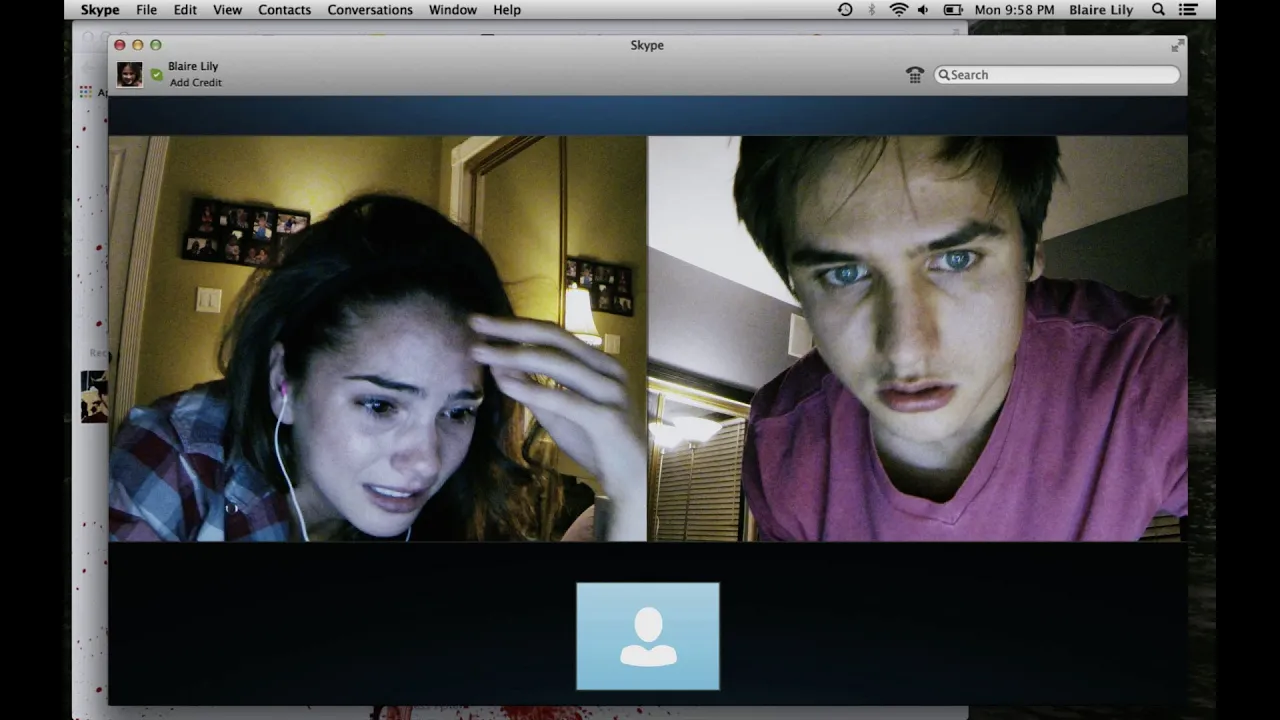
Unfriended Analysis: Cyberbullying in Horror Cinema
@kermodeandmayo
49.8K views•2015-05-01

26:22
Walking in the City: Urban Rituals and the Flâneur in Contemporary India
@PSBTIndia
1.9K views•2016-08-02

9:49
FastAPI vs Flask vs Django: Choosing the Right Python Web Framework
@TechWithTim
302.5K views•2024-05-26

1:42
Game of Thrones Opening Credits: A Cinematic Analysis
@gameofthrones
46.3M views•2011-04-18
Related Study Plans & Knowledge Roadmaps
Structured learning paths in General & Interdisciplinary Studies
general-studies
Artificial Light: History, Tech & Human Impact
01The Pre-Electric Era: Fire, Oil, and Gas Lighting
02The Incandescent Revolution and Grid Electrification
03Gas Discharge and Fluorescent Illumination
+ 3 more learning modules
14h6 modules
Explore Roadmap
general-studies
Elevator Engineering: History, Physics & Cities
01From Hoists to Safety Brakes: The Dawn of Vertical Lift
02Hydraulic vs. Traction: The Engineering Physics of Elevators
03Modern Speed, Safety, and Algorithms
+ 2 more learning modules
12h5 modules
Explore Roadmap
general-studies
Rubber: Material Science, History & Geopolitics
01Origins of Natural Rubber & Mesoamerican History
02The Chemistry of Natural Rubber & Vulcanization
03The Geopolitics of the Rubber Boom & Colonization
+ 2 more learning modules
12h5 modules
Explore Roadmap
general-studies
Containerization: Evolution, Logistics & Trade
01Ancient Trade & Bulk Cargo: Amphorae to Barrels
02The Industrial Revolution & Cardboard Packaging
03The Containerization Revolution: Malcom McLean
+ 2 more learning modules
12h5 modules
Explore Roadmap