

![ECONOMÍA - Modelos de Mercado [CICLO FREE]](https://i.ytimg.com/vi/jLcqz9m03r4/maxresdefault.jpg)













![[Oligopoly Market Structures] | Part 5 | Capacity Constraints under Bertrand Competition | 46 |](https://i.ytimg.com/vi_webp/1e7P3gtn4rU/maxresdefault.webp)



 | Tacit Collusion | Infinitely Repeated Game | 49 |](https://i.ytimg.com/vi/ErT4KANRvaE/maxresdefault.jpg)
![(AGT3E11) [Game Theory] Infinitely Repeated Bertrand Competition: Collusion and Monopoly Pricing](https://i.ytimg.com/vi/eT4yL39AC-c/maxresdefault.jpg)



![[Market Structures] Oligopoly | Part 4 | Bertrand vs Cournot Comparison. |45 |](https://i.ytimg.com/vi_webp/YGizpyniO3k/maxresdefault.webp)



In Bertrand competition with two firms, if firms have identical constant marginal costs, they will undercut each other's prices until reaching marginal cost, resulting in zero economic profits; however, if one firm has lower marginal costs than the other, the low-cost firm can price just below the high-cost firm's marginal cost and capture the entire market, earning positive profits while the high-cost firm earns nothing.
Bertrand Duopoly: Price Competition & Equilibrium Outcomes
Added:The concept of an Oligopoly and how it differs from perfect competition and monopoly.
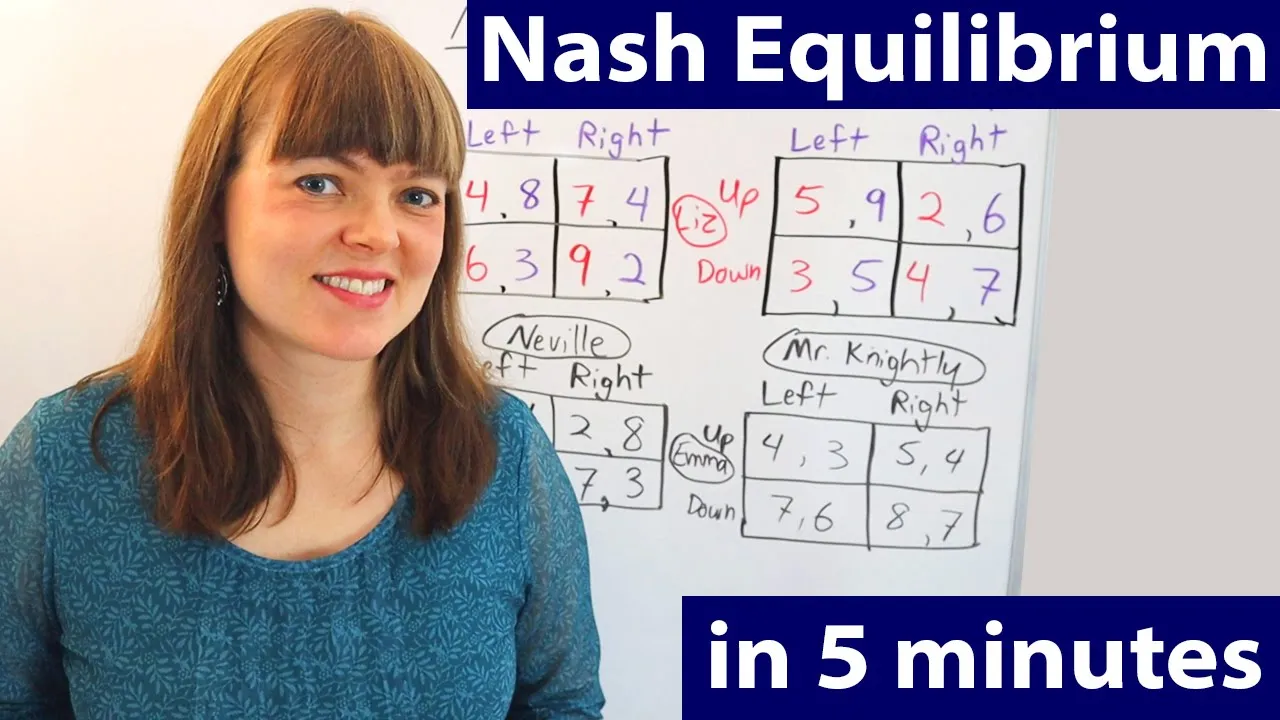
Fundamentals of Game Theory, specifically how to identify a Nash Equilibrium in simultaneous-move games.
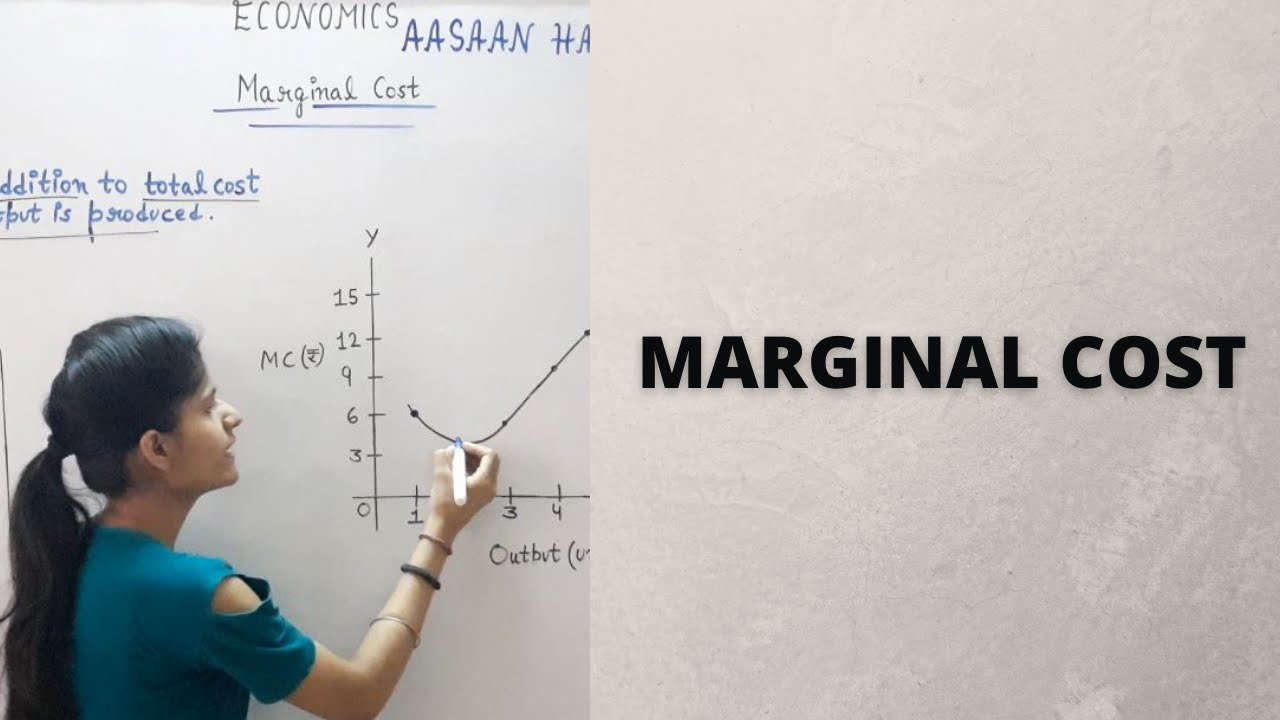
The microeconomic definition of Marginal Cost (MC) and how firms calculate economic profit.
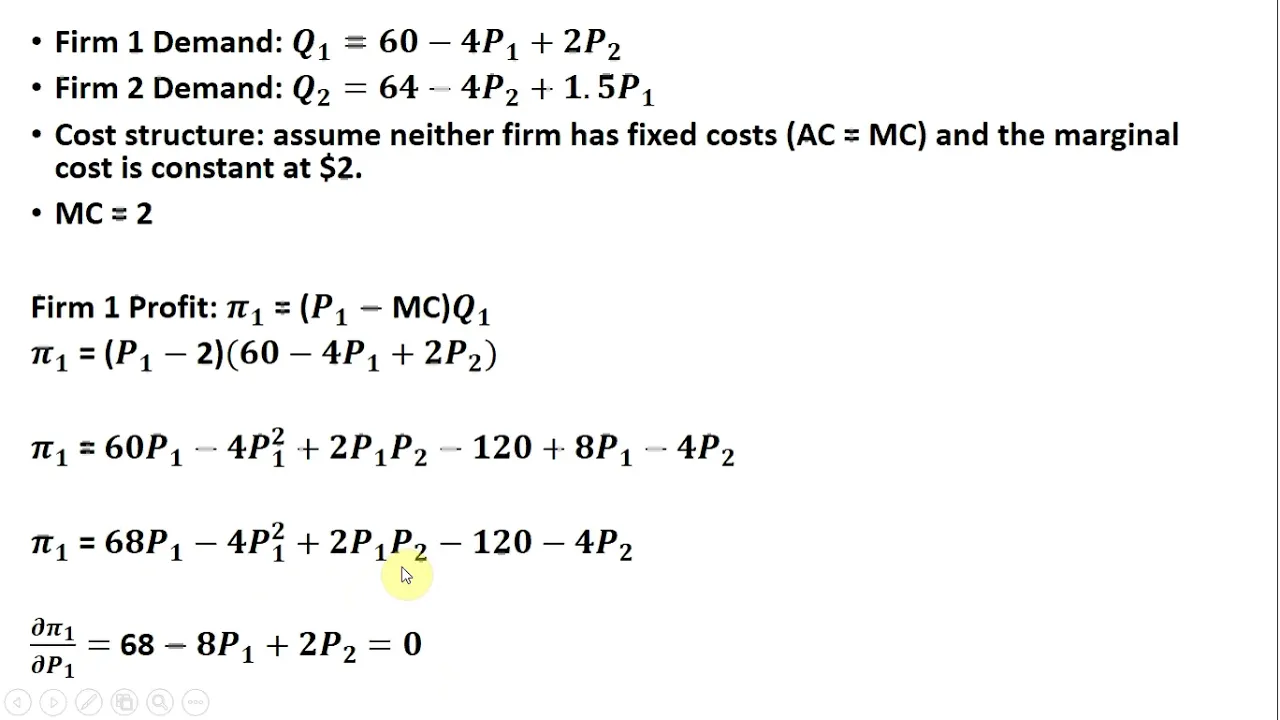
Basic demand functions and the law of demand, illustrating how price changes affect quantity demanded.
The Bertrand Paradox and how capacity constraints (the Edgeworth-Bertrand model) resolve the zero-profit outcome.
Bertrand competition with differentiated products, where brand loyalty allows firms to charge prices above marginal cost.
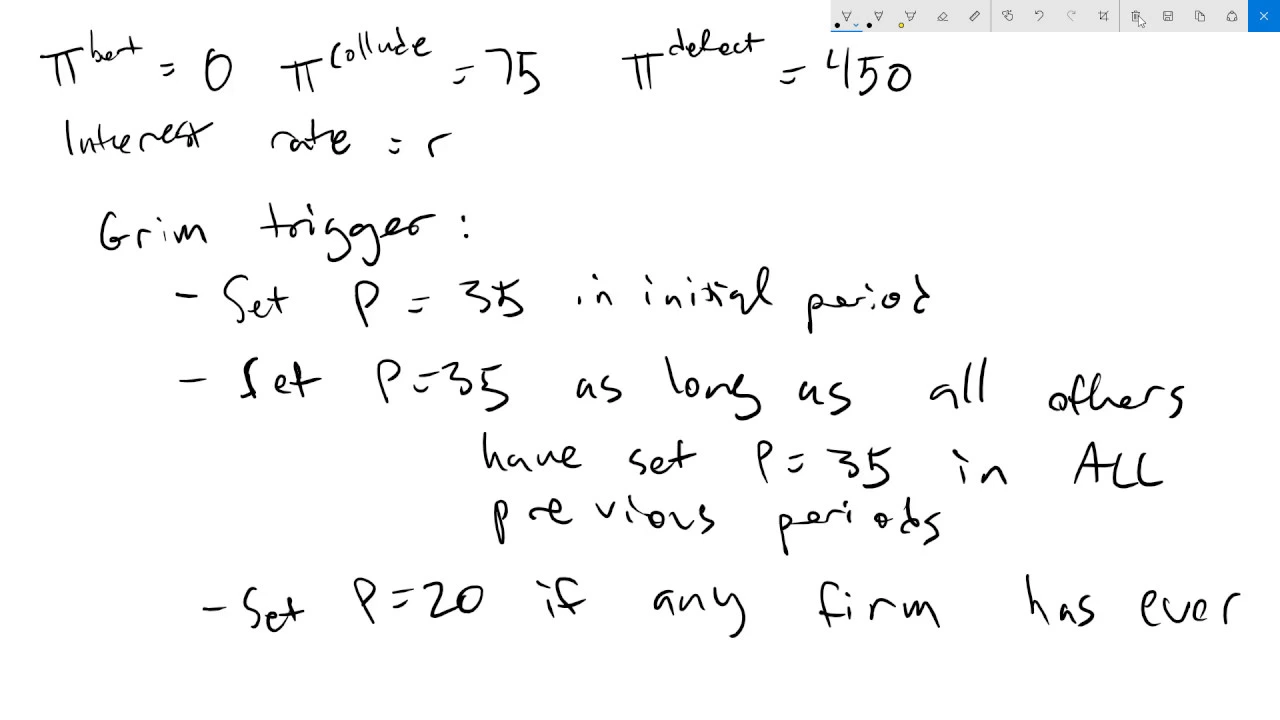
Collusion and repeated games, examining how firms can sustain monopoly prices through tacit coordination and threat strategies.
A comparative analysis between Bertrand (price competition) and Cournot (quantity competition) models to understand when each is more applicable in real-world markets.
88.7K views791likes8:49Original Release: 2018-11-16
hello everybody welcome to my video on Bertrand competition Bertrand competition is when oligopolistic firms compete by choosing prices I'm gonna focus on the duopoly case so there's only two firms so whatever the market queue is it's equal to q1 plus q2 just two firms we're gonna have a market demand inverse demand curve of P equals 60 minus 2q and to start out we're gonna make sure that these firms are symmetrical marginal costs for one firm is ten marginal costs for the second firm is ten that's a zero one out of six ten there we go so what's going to happen Bertrand competition we address a little differently than Cornell or not we need a little bit more intuition we don't choose by our usual marginal revenue equals marginal cost thing that's not where we start we are instead of competing by price and we assume that both firms have the capacity to fill the whole market and if they're only competition is by price then they get into a price war and it's going to hinge on these ideas if the price for that firm one offers is less than the price that firm two offers then the firm one is going to take the whole market and firm 2 will make nothing if the price for firm 1 is greater than the price for a to firm 2 and a firm one will get pushed out of the market and firm 2 will take the market if they sell their goods at the same price then q1 equals q2 equals big Q over 2 all right so if they have symmetric costs which we do this is really easy we're just gonna we're going on a shortcut a little bit we're gonna choose our price equal to marginal cost now why is that well if firm 2 tries to sell their product for $12 which is 2 hours above marginal cost someone can sell it for 1199 and take the market firm 2 not wanting to lose the market can then sell it for 1198 and so their prices are gonna undercut each other until they get to where that's not worth it to them to go any farther down prices marginal cost so if they're symmetric it's really easy to do this see price is 60 minus 2q set that equal to the marginal cost of 10th let's see that's 50 equals to Q that's Q equals 25 and these firms because their prices are equal are gonna split the quantity so that Q 1 equals Q 2 equals 25 over 2 is 12.5 and then our market price price equals 60 minus 2 times Q just 25 is 10 great so if we do this let's calculate each firms profit over profit is equal to quantity times price minus average total cost well that's 12.5 times 10 minus 10 equals zero okay there's our result in Bertrand competition if you ever have a constant marginal cost and no fixed costs you're gonna hit zero profit for both firms and that's how they breed and that's their breaking even competitive output so that's really simple I mean this stuff here was all just intuition underlying it but actually solving it was just this stuff done so what if they have different marginal costs though what if our price curve equals 60 minus 2q was competed for by two firms where marginal cost per firm one was 10 but marginal costs per firm 2 was higher like a 20 well we still need to look at these ideas because that's still true for our market actually let me bring those down real quick okay so the lowest that firm two can possibly charge is twenty bucks and so that's what firm two would offer if firm one was also twenty and if both firms charges their marginal cost you might think from one charge as a price of ten and firm two charges a price of twenty that's not going to happen if they did that firm one would take the whole market and firm two would take nothing which is fine but firm one's profit would be zero oops they don't need to do that right now because firm one can take the whole market if from one charges a price just barely under $20 to take the market all from one has to do is set a price equal to $19.99 and maybe even a whole bunch more nines but let's just do it by one penny just for fun if firm 1 charges $19.99 that is less than firm twos marginal cost from two is out of the market from one we'll take the whole market for itself if he charges any higher price firm to enters and takes half the market and so from one we'll do this price and let's see at that price price equals 60 minus 2q that's 40 point 0 1 equals to Q Q then equals 20 point zero 5 from 1 I make 20 units of the good and sell it for $19.99 too many O's so quantity times price minus average total cost which is 10 equals 199 dollars and 85 cents and of course firm 2 always going to get a profit of 0 so what happens if we're competing by prices then the firm with lower costs can price the second firm completely out of the market they have to keep their costs they have to keep the price down enough that the second firm doesn't produce again so yeah we have to charge a price lower than the other firm is marginal cost but as long as we do we can take the market for ourself and claim some positive profits it was short it was eating but I figured it might be useful to you if they're the same marginal cost it's really easy and if they're different marginal costs it's still pretty straightforward always useful it's not too bad but we saw a short thanks for watching
Up Next
9:38
Solving Cartel, Bertrand, Cournot & Stackelberg Models
@EconomicsinManyLessons
61K views•2022-05-06

5:07
Impact of Yuan in Indo-Russian Trade Amid Sanctions
@WION
261.9K views•2022-07-01

7:15
Free Trade vs Autarky | Intermediate Microeconomics, No Calculus
@MattBirch
7.5K views•2019-05-02

113:18
The Age of Easy Money: Fed & Inflation | Full Documentary
@frontline
21.2M views•2023-03-15
Related Study Plans & Knowledge Roadmaps
Structured learning paths in Economics
economics
Sovereign Debt: Defaults, IMF & Restructuring
01Introduction to Sovereign Debt & Government Bonds
02Debt Sustainability & Credit Ratings
03Anatomy and History of Debt Crises
+ 2 more learning modules
12h5 modules
Explore Roadmap
economics
Market Design: Matching Theory & Gale-Shapley
01Introduction to Market Design and Price-Free Markets
02Two-Sided Matching & The Gale-Shapley Algorithm
03School Choice Systems and Mechanism Design
+ 2 more learning modules
10h5 modules
Explore Roadmap
economics
Impossible Trinity: Forex, Capital & Policy
01Introduction to Monetary Policy and Central Banking
02Exchange Rates and International Capital Flows
03The Mundell-Fleming Model
+ 2 more learning modules
8h5 modules
Explore Roadmap
economics
Healthcare Economics: Market Failures & Systems
01Introduction to Healthcare Markets and Market Failure
02Asymmetric Information and Adverse Selection
03Moral Hazard and Insurance Design
+ 2 more learning modules
12h5 modules
Explore Roadmap