
















![[핵심 주제] 11장 (2)소득분배와 무역정책](https://i.ytimg.com/vi/CDOOehvDYPc/maxresdefault.jpg)

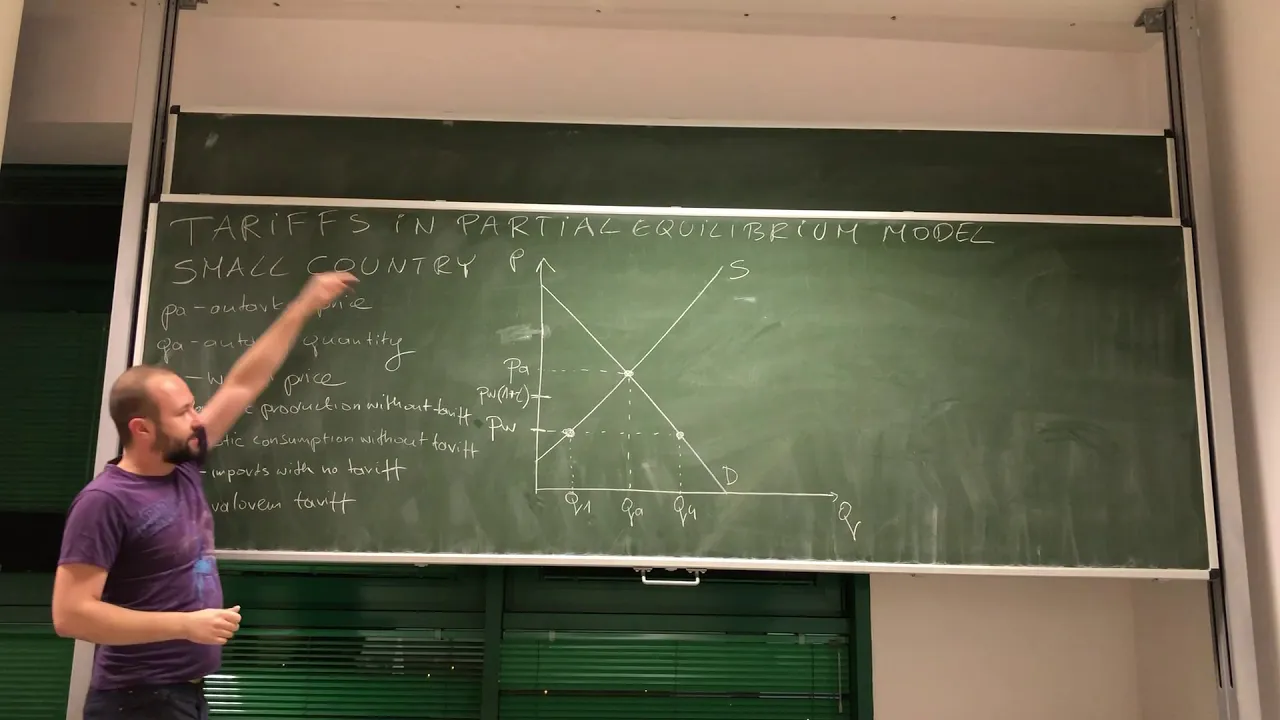




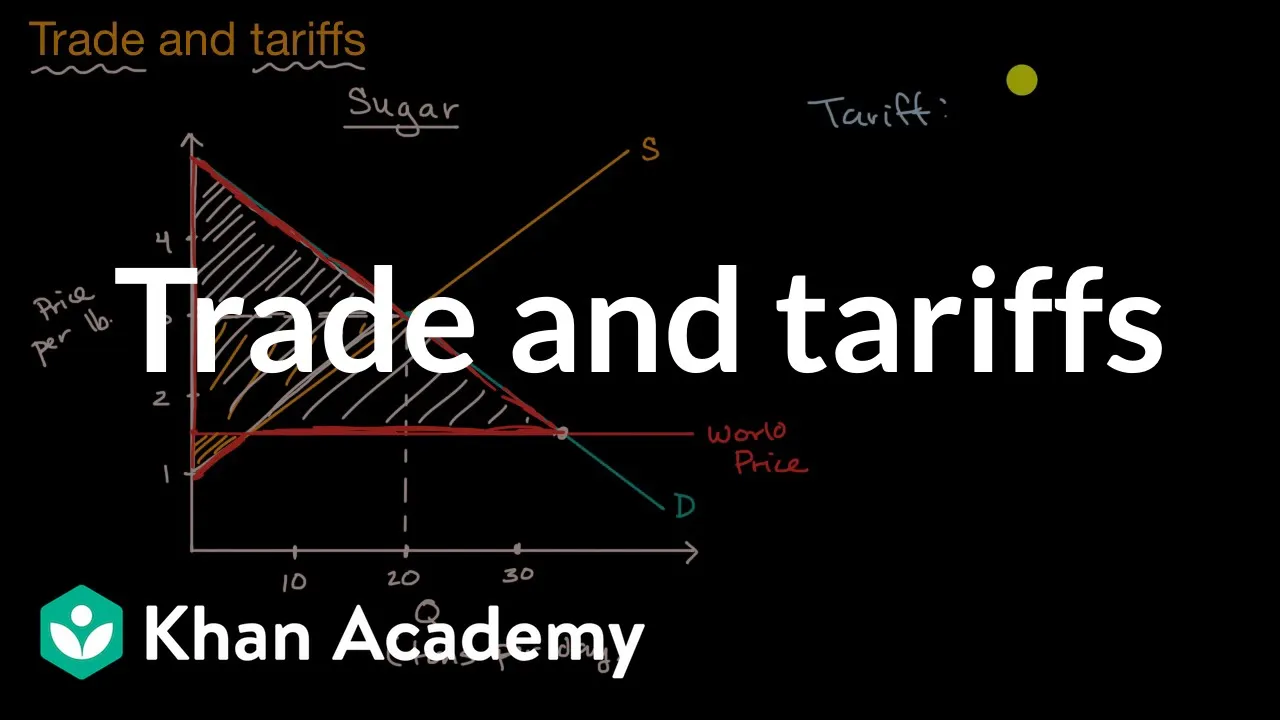
When a country opens to free trade at a world price lower than its autarky equilibrium price, consumers gain significantly through increased consumption at lower prices (consumer surplus increases), while producers suffer losses from selling fewer goods at lower prices (producer surplus decreases); however, society as a whole benefits because the total surplus (consumer plus producer) increases, making free trade preferable to autarky despite the distributional effects on individual producers.
Free Trade vs Autarky | Intermediate Microeconomics, No Calculus
Added:Fundamental supply and demand analysis, including how domestic market equilibrium price and quantity are determined.
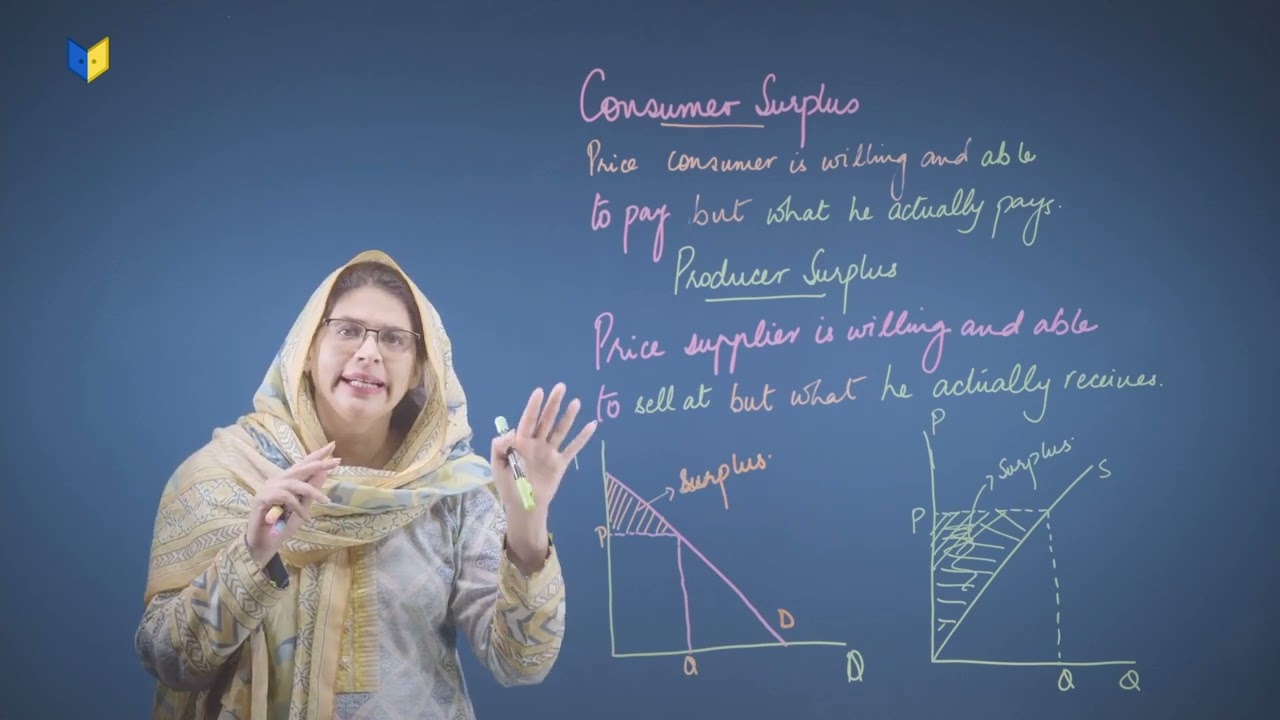
The conceptual definition and graphical representation of consumer surplus and producer surplus in a single market.
The definition of autarky as a closed economy or a state of complete national self-sufficiency without international trade.
How to identify changes in economic welfare (social surplus) on a standard supply and demand diagram.
The economic impact of trade restrictions, specifically analyzing the welfare effects and deadweight loss of tariffs and import quotas.
The underlying theories of international trade, such as comparative advantage and the Ricardian or Heckscher-Ohlin models.
The political economy of trade policy, exploring why domestic producers often lobby for protectionism despite the net gains of free trade to society.
Advanced mathematical derivation of import/export functions and welfare changes using calculus-based microeconomics.
7.5K views41likes7:15Original Release: 2019-05-02
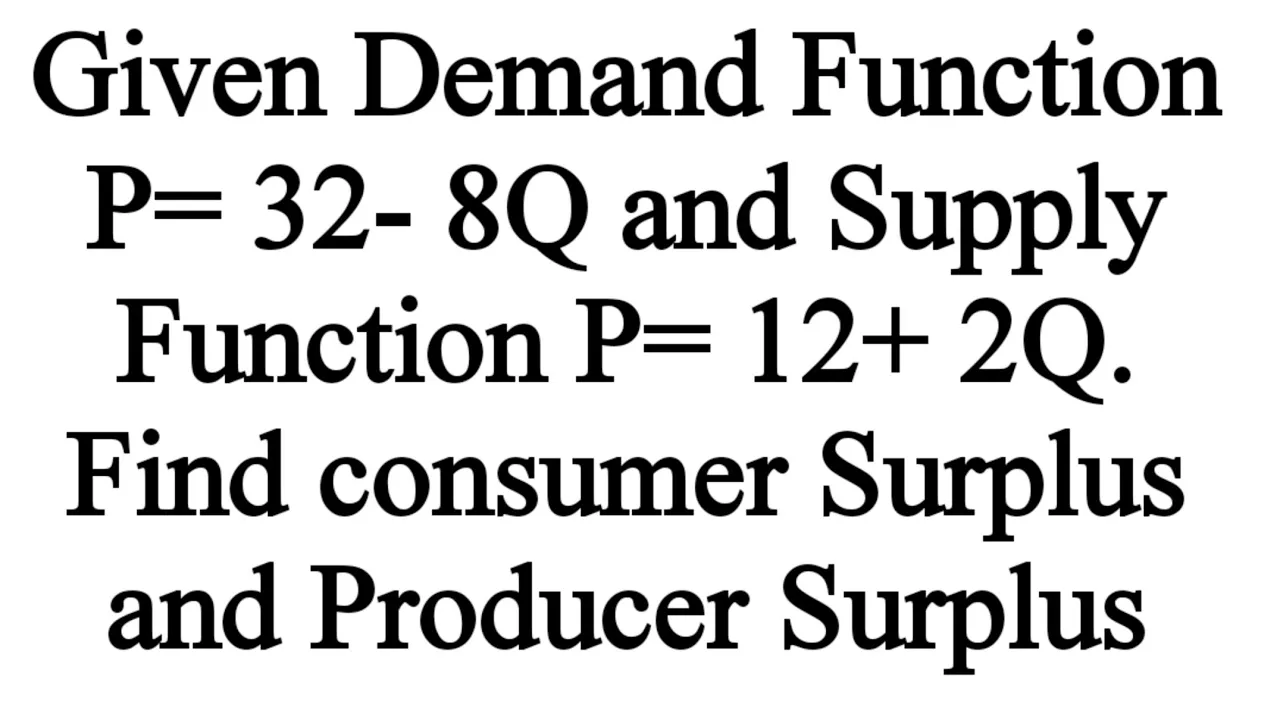
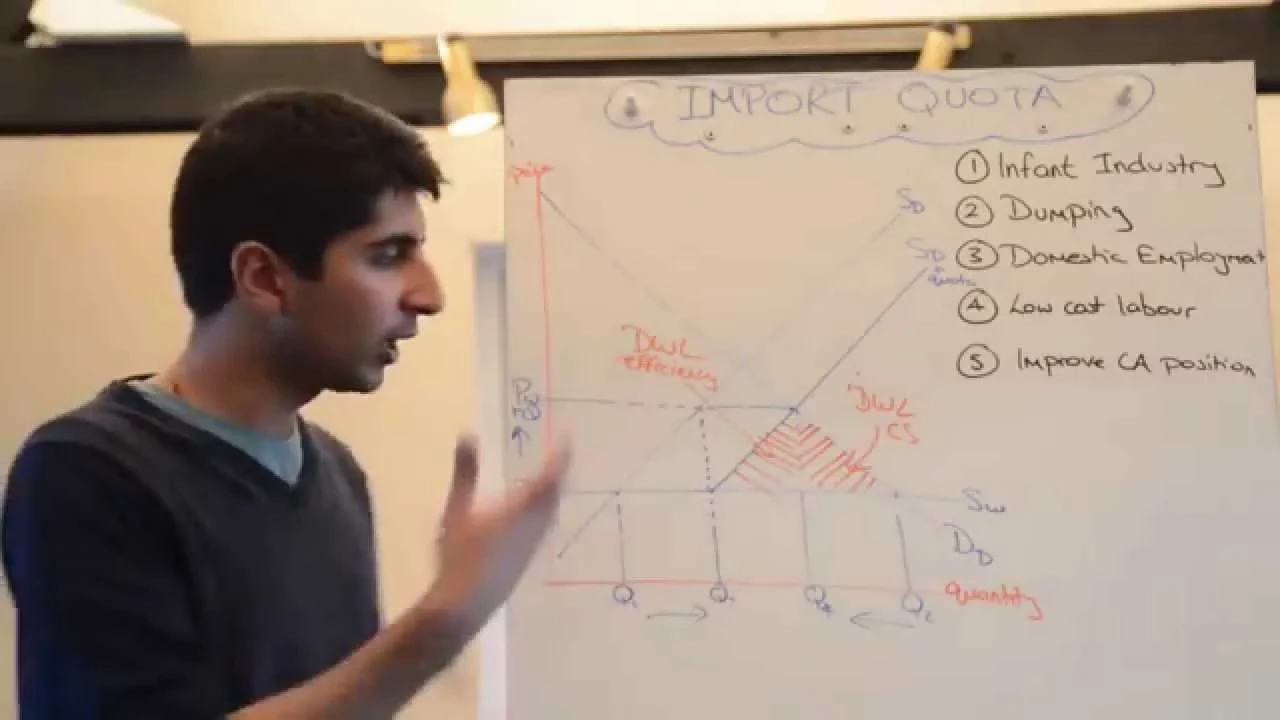
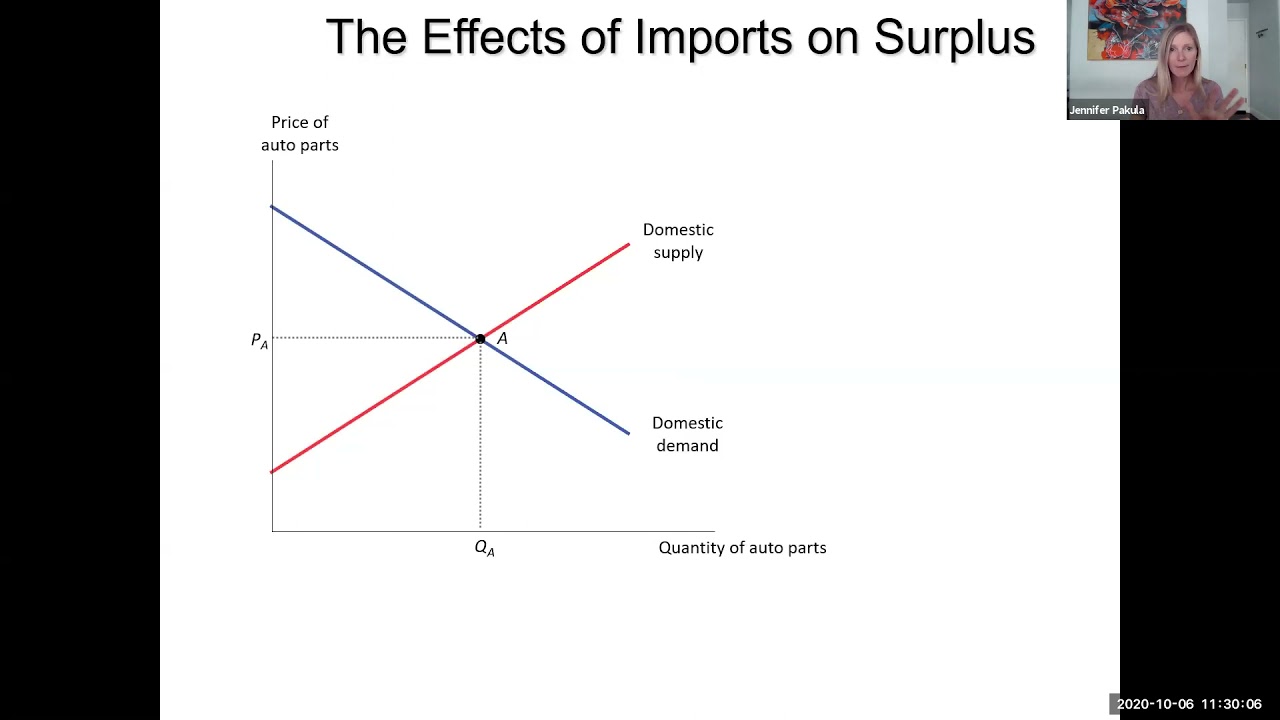
hello everyone hook on my video on autarky versus free trade it's mostly about free trade already did autarky in my previous video on supply and demand I used this demand curve and this supply curve and I was able to solve for our equilibrium quantity price consumer producer and total surplus over there I already did that in my other video that's autarky autarky is this when the market is left alone and there's no outside trade I want to introduce a new situation now where we have trade with the world and the world price is a hundred now I will say it just like the supply and demand graph is a very simplified version of reality so is this going to be a very simplified version of trade we're going to assume that at this price the world can supply any and every quantity that we could ever want and so the world just will dump in and fill in at that price and the price won't change so let's figure out what happens now we knew before that the equilibrium price was 140 which means our world price probably looks something more like this I know it's not the scale I'm not an artist but world price is a hundred and so that's a hundred on this price axis now first thing you're probably going to see is that the quantity demanded and the quantity supplied do not equal each other we are not in equilibrium I always thought if this were autarky our quantity demanded let's figure out what it is actually real quick and then we'll come back to it corn demand equals 200 minus P is 100 and quantity supplied goes 1/2 times P minus 1040 I want to get those out of the way real quick so quantity demanded quantity supplied our 140 alright so this gap what looks like a shortage if there were no trade in this case is a gap for the world to fill in we are going to buy a hundred units of stuff our demanders are and our suppliers are only gonna make 40 which means we're got ahead of myself which means that we are going to buy 60 units of the good from the rest of the world we made 40 we're buying a hundred then as you have to buy 60 from someone else we call that imports we import if quantity demanded is greater than quantity supplied and we export if quantity demanded is less than quantity supplied in this video I'm not going to show an actual export example all the math will be the same all the ideas will be the same it would just be what happened if our world price was above the equilibrium autarky price at 140 okay so let's see we fill in a few gaps coin demanded under trade or with the world price there's 100 quantity supplied is 40 so our imports are 60 let's calculate our consumer and producer surplus now and then will be total surplus so quick reminder to you guys consumer surplus is everything below the demand curve up until the price below demand curve above price so it's all that stuff you'll notice that it's very different than what it looked like in the autarky video where it cut off there at equilibrium and it was just all this space consumers have benefited a lot from importing why because they can buy more stuff at lower prices they were buying 60 now they're buying a hundred they were buying those 60 for 140 bucks each and now they're buying it for for $100 each consumers like imports let's calculate our consumer surplus it's 1/2 times we'll see the base of that triangle it's a hundred units across and it's a hundred units tall so five thousand cool next let's figure out our producer surplus well producer surplus is everything below price above the supply curve basically that it doesn't have to be a tiny sliver of a triangle that's just by virtue of how I drew the graph what you will find how it oops where you will find however is that it will always be lower in import markets than under autarky just as the consumers gain from trade our producers lose when we import why because our producer surplus is equal to one-half times 40 that's how wide that triangle is and it's $80 hi nice it's gonna be 1,600 so what happened to the producers they are selling fewer products at lower prices that hurts them they don't like that the total surplus in the market however is the sum of both is the sum of all surpluses so five thousand plus sixteen hundred equals sixty six hundred all right so what do we see here I see that consumers benefited from imports producers were harmed but that overall our society gained total surplus went up this is why this is one of the main arguments that people will use to support free trade agreements because they create the most well-being for society however in my next video we're going to introduce the concept of a tariff which is a tax on trade which has the goal of protecting our producers because our producers are harmed by trade so that'll be the next video though hope this was helpful for you if not too bad good luck you guys and happy ich awning is that the word
Up Next
19:35
Productive and Allocative Efficiency in Perfect Competition
@JasonWelker
115.8K views•2012-02-27
5:07
Impact of Yuan in Indo-Russian Trade Amid Sanctions
@WION
261.9K views•2022-07-01
8:49
Bertrand Duopoly: Price Competition & Equilibrium Outcomes
@MattBirch
88.7K views•2018-11-16

113:18
The Age of Easy Money: Fed & Inflation | Full Documentary
@frontline
21.2M views•2023-03-15
Related Study Plans & Knowledge Roadmaps
Structured learning paths in Economics
economics
Sovereign Debt: Defaults, IMF & Restructuring
01Introduction to Sovereign Debt & Government Bonds
02Debt Sustainability & Credit Ratings
03Anatomy and History of Debt Crises
+ 2 more learning modules
12h5 modules
Explore Roadmap
economics
Market Design: Matching Theory & Gale-Shapley
01Introduction to Market Design and Price-Free Markets
02Two-Sided Matching & The Gale-Shapley Algorithm
03School Choice Systems and Mechanism Design
+ 2 more learning modules
10h5 modules
Explore Roadmap
economics
Impossible Trinity: Forex, Capital & Policy
01Introduction to Monetary Policy and Central Banking
02Exchange Rates and International Capital Flows
03The Mundell-Fleming Model
+ 2 more learning modules
8h5 modules
Explore Roadmap
economics
Healthcare Economics: Market Failures & Systems
01Introduction to Healthcare Markets and Market Failure
02Asymmetric Information and Adverse Selection
03Moral Hazard and Insurance Design
+ 2 more learning modules
12h5 modules
Explore Roadmap