

















In Mark Twain's 'The Adventures of Huckleberry Finn,' the Mississippi River serves as a complex metaphor representing both freedom and danger, embodying a moral force that guides Huck and Jim's journey; however, the novel's controversial ending, where Tom Sawyer's elaborate escape plan causes unnecessary suffering to Jim despite his actual freedom, has been criticized for undermining the moral growth established throughout the story, suggesting that systemic racism cannot be escaped through individual action alone.
Decoding the River, Raft, and Ending of Huckleberry Finn
Added:Familiarity with the plot, major characters (Huck, Jim, and Tom Sawyer), and the narrative trajectory of Mark Twain's 'Adventures of Huckleberry Finn'.
Understanding of the historical context of the antebellum American South, including the legalities of slavery and the Fugitive Slave Act.
Basic comprehension of literary analysis concepts, specifically how motifs, setting, and physical objects function as symbols.
An introduction to Mark Twain's satirical style and his use of irony to critique 19th-century American society.
Analysis of the critical reception of the novel's ending, exploring arguments by literary scholars like Leo Marx, Lionel Trilling, and Toni Morrison.
Examination of how the novel's resolution reflects the historical realities of the Reconstruction Era, the period during which Twain completed the book.
A comparative study of the 'river journey' archetype in American literature, contrasting Twain's work with authors like Herman Melville or later picaresque novels.
Research into the history of the novel's censorship and its controversial status in modern educational curricula.
477K views8.6Klikes10:48Original Release: 2016-07-20
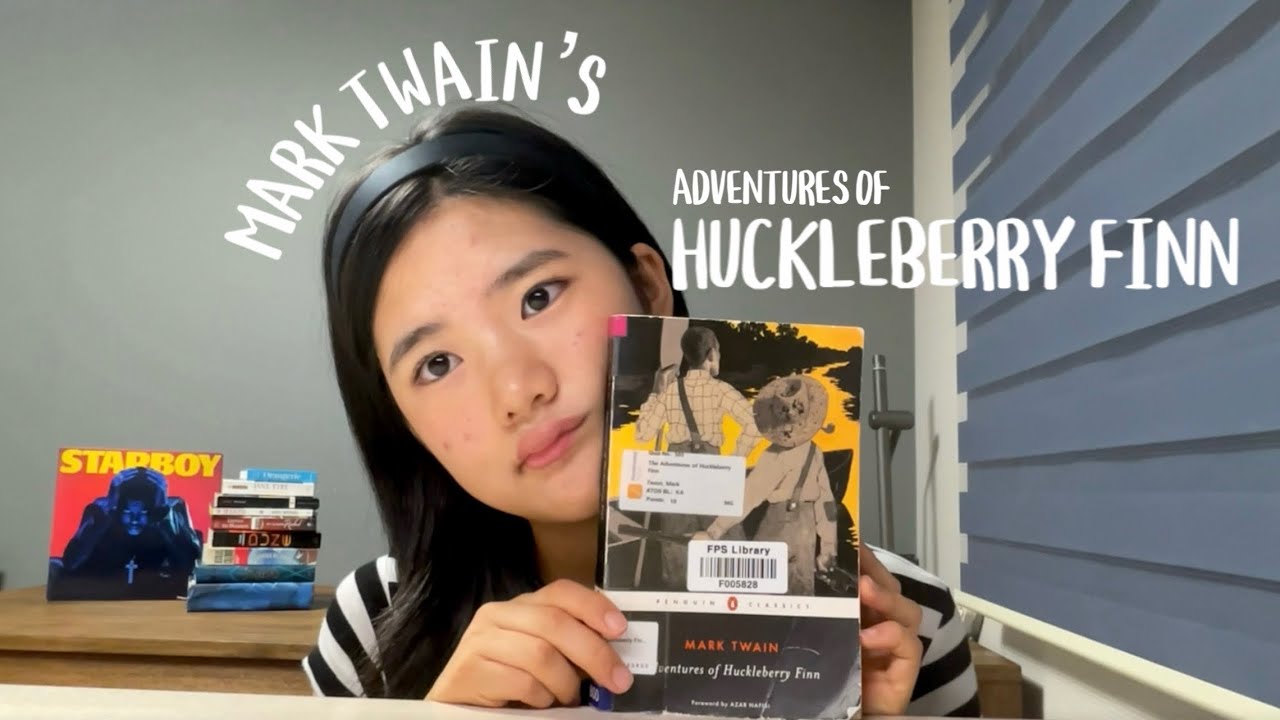
Hi, I’m John Green, this is Crash Course Literature, and today we’re going to continue our discussion of Mark Twain’s “The Adventures of Huckleberry Finn.” But this time we get to talk about metaphors, and the book’s extremely unpopular ending.
So as Sigmund Freud probably never actually said, “sometimes a cigar is just a cigar,” but in Huckleberry Finn, the raft, the island, the river, they aren’t just rafts and islands and rivers.
[Theme Music] So, I think the most significant metaphor in the book is the Mississippi river itself.
It was a river Twain knew well; he worked in his youth as a steamboat pilot.
And he communicates some of the beauty and the wonder of that river in a passage where he describes the approach of dawn: “Not a sound anywheres - perfectly still - just like the whole world was asleep, only sometimes the bullfrogs a-clattering, maybe.
The first thing to see, looking away over the water, was a kind of dull line - that was the woods on t'other side - you couldn't make nothing else out; then a pale place in the sky; then more paleness, spreading around and you see the mist curl up off of the water, and the east reddens up, and the river.” I mean, you read that, and you think, hey, I want to escape my alcoholic, abusive father and travel down the river, too!
The sense of serenity, of possibility, of benevolent nature is almost overwhelming.
The river is seen to be in contrast with a lot of the violence and pettiness that Huck finds on land.
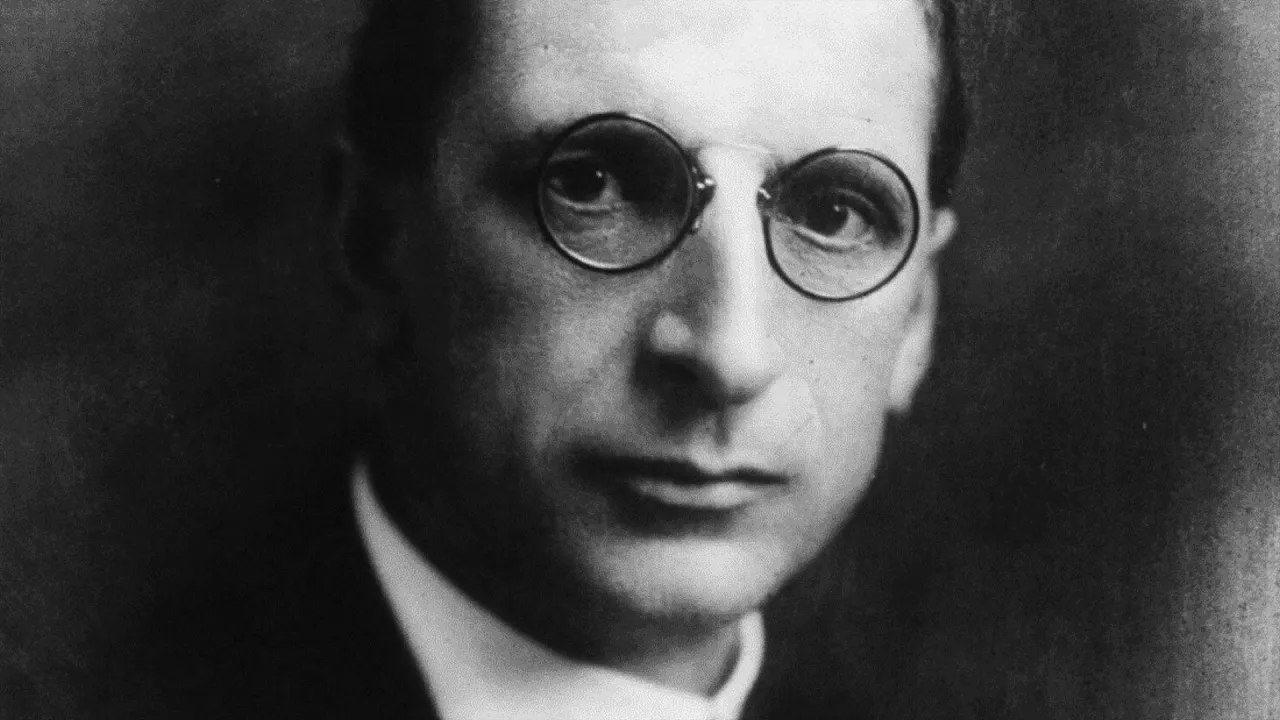
That’s what some early critics noted, like Lionel Trilling and T.S. Eliot.
They argued that while the book doesn’t have a lot of time for conventional religious belief, it does make kind of a god of the river.
“It is about a god,” Trilling wrote, “a power which seems to have a mind and a will of its own, and which, to men of moral imagination, appears to embody a great moral idea.” He argued that while this god of the river isn't necessarily good, love of it leads Huck toward goodness, which you can see in the way Huck’s voice is at its most beautiful and poetic when he’s describing the river.
But some later critics have argued that this view is maybe too rose-colored and limiting.
Like, the river is a beautiful place in Huck Finn, but also a dangerous one, which Trilling only sort of acknowledges.
I mean, it's a place where dead bodies float by, where a sudden fog separates the two friends, where a steamboat threatens to destroy the raft.
But to that, I’d point out that gods aren’t necessarily nice, as much as they’re powerful.
And there’s also been a lot of scholarship around the idea that the river represents a great moral idea: Freedom.
Like, early in the book, he says, “In two seconds away we went a-sliding down the river, and it did seem so good to be free again and all by ourselves on the big river, and nobody to bother us.” And throughout the book, there’s a strong opposition between life on the river and life onshore, where there are a bunch of nonsensical rules, and uncivilized civilizations, and absurd feuds.
But that opposition is also an oversimplification in the end, isn’t it?
Because the river is often a threat to the freedom that Huck and Jim want.
I mean, Jim escapes in the first place because he's learned he’s about to be sold “down the river.” I mean, it's the river that sends bounty hunters past them.
That sticks them with two of the worst specimens of humanity ever known: the con men known as the King and the Duke.
It’s the river that pushes them right past Cairo, where they were hoping to catch a steamboat up to the free states, and transports them deeper into slave territory.
So, if we’re gonna see the river as a god, and I think it’s helpful to, let’s see it as, like, one of the gods of Mount Olympus, a complicated, quasi-human god.
Mr. Green, Mr. Green, I’m sorry, but you’re always ruining books by overreading them.
Like, why does the river have to be a god? Why can’t it just be a river?
A little late in the game for you to be rearing your head me from the past, but OK.
I would argue that you’re going to worship something.
Maybe it’ll be a god, maybe it’ll be money, or power, or fame, but there’s going to be something that orients your humanness in a particular direction.
I think Twain is arguing against the pro-slavery, quote unquote, civilized god of the widow.
And arguing that love of this huge, intimidating, beautiful river is a better way to worship.
So I do think it matters whether you see it just as a river, because you’re going to worship something.
All right, that’s the end of my rant.
Let’s move on to the raft, which a lot of critics also romanticize and Huck does too, like when he says, “We said there warn't no home like a raft, after all.
Other places do seem so cramped up and smothery, but a raft don't.
You feel mighty free and easy and comfortable on a raft.” Or when he says, “It’s lovely to live on a raft.
We had the sky up there, all speckled with stars, and we used to lay on our backs and look up at them, and discuss about whether they was made or only just happened.” I just don’t think that living on a raft would be like that at all.
I mean, one of the things I love most about sleeping in a bed is that when I roll over, I do not fall into the Mississippi River.
So again the raft seems to represent a kind of freedom, but on the other hand, the raft gets them off the island at the beginning of the book, and the island is kind of a paradise.
I mean, when they’re on the island.
Huck even says to Jim, “I wouldn’t want to be nowhere else but here” So take that raft and river!
But of course, there’s also a problem with the island, which is that it’s too close to the past they’re trying to escape.
This is often what Twain does.
I mean, he was a satirist and an ironist, and so there wasn’t much he held sacred, so if he showed something in a positive light, he was usually very aware of the negatives, too.
So they do feel great freedom on the raft, but in some ways, of course, it restricts freedom.
I mean, it sends them south.
If there’s real freedom to be found in the book, it’s not going to be in a raft or on a river.
It’s going to be inside the characters, in a changed moral sense and a new idea of what true freedom, and loyalty, and friendship really mean.
And that is what makes the ending of the book so confounding to many critics, because the ending seems to go against a lot of the great stuff that the novel has already established.
OK, let’s Go To the Thought Bubble.
So, Huck escapes the King and Duke only to learn that they have sold Jim away and that Jim is being held on the Phelps farm until his owner can claim him.
So he goes to the Phelps farm where is very conveniently mistaken for Tom Sawyer, who was scheduled to arrive for a visit.
When Tom does arrive, pretending to be his brother Sid, he and Huck discuss plans to free Jim.
Huck comes up with a simple no-nonsense scheme – steal the key and sneak Jim out.
But Tom wants a plan that’s a lot more elaborate, that borrows from every adventure and romance novel he’s ever read.
Now Twain was no big fan of romance.
“Huckleberry Finn" is one of the first proper attempts at American realism and he names a wrecked steamboat the Walter Scott, just to show what he thinks of Ivanhoe and all those lords and ladies and unlikely coincidences.
You know, like Tom Sawyer being previously scheduled to visit a random farm?
But even if Twain is obviously satirizing Tom and his harebrained schemes, there’s no ignoring the fact that these schemes hurt Jim, both physically and emotionally, though he endures them all with a willingness that is actually pretty heartbreaking.
He lets the boys put snakes and rats and spiders into the hut where he is held and when the rats bite him, he writes messages in his own blood on a shirt that Tom provides.
Jim can’t actually write, but he scrawls on the shirt just to please Tom.
Then Tom gets the bright idea to announce the escape plan in a series of anonymous letters, which complicates things even more and gets Tom shot in the leg while running away with Jim.
And Jim jeopardizes his freedom to get a doctor for Tom and is captured again, only to have Tom announce that Jim has been free all this time.
His mistress freed him on her deathbed.
So everything Tom put him through, with Huck’s agreement, was just for show. Just for fun.
Thanks, Thought Bubble. So, of course, that’s a pretty messed up idea of fun.
And yes, the ending ties up the loose ends of the plot pretty neatly and it restores to the book some of the feel of “Adventures of Tom Sawyer.” But as previously noted: Tom Sawyer isn’t that great of a book.
So going back to its tone isn’t necessarily a great call.
Huck has matured tremendously over the course of this journey, and he’s developed a relationship with Jim that relies on mutual affection and mutual trust.
And while Huck takes a dim view of most people – he tricks them, he lies to them – he comes to believe that cruelty is unworthy of him and that he doesn’t want others to suffer.
Like, when the Duke and the King, men who have abused Huck and sold Jim away, are finally caught and tarred and feathered, we might expect Huck to be happy, but he isn’t.
“Well, it made me sick to see it,” he says, “and I was sorry for them poor pitiful rascals, it seemed like I couldn’t ever feel any hardness against them any more in the world… Human beings CAN be awful cruel to one another.” But if he’s able to summon that kind of sympathy for his enemies, if he doesn’t feel any hardness toward them, how can he allow the cruelty to Jim?
How can he let himself be reduced to the role of Tom’s sidekick again?
And how can Twain encourage Jim to bear it all so complacently?
I don’t have good answers to those questions, although some of it may lie in Huck’s upbringing.
Huck is very conscious of having not been raised in respectable circumstances and he believes that Tom – with all of his reading and all of his education – must know better.
In fact, he can barely get it through his head that a boy as educated and civilized as Tom would consent to help free a runaway slave.
Now, of course Tom knows that Jim is free all the time, so he's not taking a moral risk.
But even so, for many readers, this ending sequence is a betrayal of what has come before.
I mean, out on the river, when they weren’t being threatened by steamboats or menaced by con men, Huck and Jim could almost believe that a new and better world was possible.
They could even look up at the stars and wonder if they were made or just happened, which is a pretty sacreligious thing to wonder.
But on the Phelps farm the story falls back into stereotype and caricature, and to return to the boys’ adventure mood of the beginning is a kind of defeat.
It's giving up on what Huck and Jim have forged on the river.
Why did Twain do this? Could he not think of a better ending?
Or had he seen too much of how racial injustice continued even after the Civil War to believe that Huck and Jim could escape its indignities?
Therin lies my half-hearted defense of the ending.
It’s a big pivot from the rest of the novel, but it might be an honest one.
Two friends on a river can accomplish a lot, but they cannot escape the deep systemic racism in America.
We get a taste of this when Jim risks his freedom to save Tom, and Huck says approvingly, “I knowed he was white inside."
Huck means that Jim is brave and honorable and loyal, but those are qualities that most of the white people he has met throughout the book have not exhibited.
But the fact that he uses “white” as a mark of approval shows that neither Huck nor Jim has become somehow magically free from racism.
And so in the end, the book concludes, not comically or tragically, but on a note of uncertainty, as Huck realizes that he’ll have to leave again, have to seek out a new place in which to feel at home.
“I reckon I got to light out for the territory ahead of the rest,” he says, “because Aunt Sally says she’s going to adopt me and sivilize me, and I can’t stand it. I been there before.” We can only hope for Huck, as for America, that his time on the river becomes part of a much larger journey toward acceptance and understanding and compassion.
Safe travels, Huck. Godspeed.
Crash Course is produced with the help of all of these nice people and it's made possible via your support on Patreon.
Patreon is a voluntary subscription service that allows you to support Crash Course directly so we can keep it free for everyone forever.
If you like Crash Course and you value it, please head over to Patreon and consider supporting us.
There's lots of great perks. The biggest perk, of course, you know, more Crash Course.
Thanks again for watching, and as we say in my hometown: Don't Forget To Be Awesome.
Up Next
11:07
Invisible Man by Ralph Ellison: Race & Identity in America | Literature Analysis
@crashcourse
623.4K views•2016-08-24

13:43
Formalism in Literary Criticism: An Academic Lecture Overview
@mattalberhasky9952
39.1K views•2015-08-05
12:38
Frankenstein, Part 2: Romanticism and Critical Readings
@crashcourse
1.1M views•2014-04-03

15:25
1984: Orwell's Dystopian World and the Mechanisms of Totalitarianism
@AlternateHistoryHub
7M views•2017-03-04
Related Study Plans & Knowledge Roadmaps
Structured learning paths in Literature
literature
Graphic Memoirs: Visual Art, Trauma & History
01Foundations of Sequential Art and Visual Language
02Autographics and Processing Historical Trauma
03Visualizing Personal Trauma, Grief, and Graphic Medicine
+ 2 more learning modules
14h5 modules
Explore Roadmap
literature
Campus Novels: Evolution, Themes & Critique
01Introduction to the Campus Novel Genre
02Mid-Century Satire and the Post-War Academy
03Dark Academia and the Critique of Privilege
+ 2 more learning modules
14h5 modules
Explore Roadmap
literature
Theater of the Absurd: Philosophy & Plays
01Postwar Existentialism & Historical Roots
02Dismantling Narrative: Esslin & Absurdist Conventions
03Samuel Beckett and Tragicomic Existentialism
+ 2 more learning modules
12h5 modules
Explore Roadmap
literature
Revenge Tragedy: Justice, Madness & State
01Foundations of Early Modern English Theatre
02Anatomy of Revenge: Structural Conventions
03Psychological Complexity: Madness and Melancholy
+ 2 more learning modules
15h5 modules
Explore Roadmap