


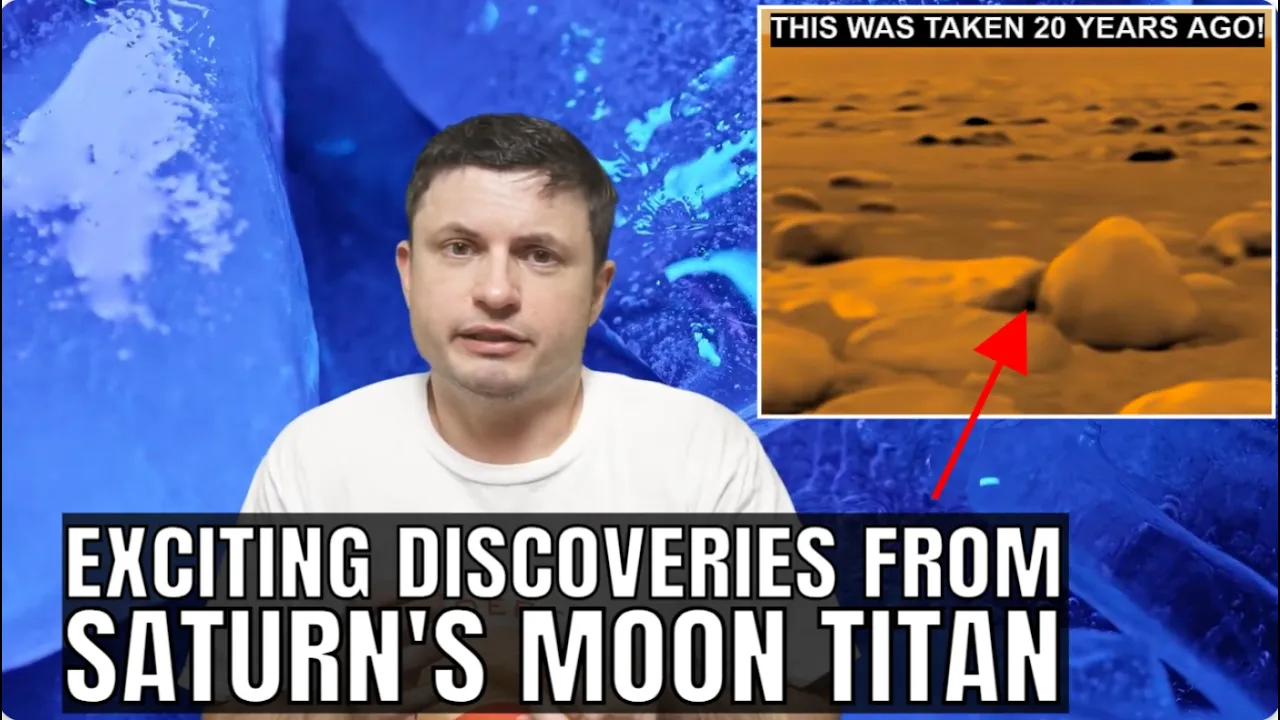


















Dr. Chris McKay presents evidence suggesting that Titan, Saturn's largest moon with a thick nitrogen-rich atmosphere containing liquid methane lakes, may harbor alien life based on liquid methane rather than water. His research team predicted that if life exists on Titan, it would consume atmospheric hydrogen, acetylene, and ethane for energy through hydrogenation reactions, leaving distinctive biosignatures. The discovery of hydrogen flux into Titan's surface by Dr. Darrell Strobel supports this hypothesis, as no known non-biological process can explain this phenomenon at Titan's extreme cold temperatures. This case exemplifies how astrobiologists search for life by identifying environmental modifications that indicate biological activity, rather than directly detecting organisms.
Titan: Saturn's Moon with Lakes, Rivers, and Possibly Life
Added:good evening everyone my name is Andrew fraknoi I'm the astronomy instructor here at Foothill College and it's a pleasure to welcome everyone in the Smithwick Auditorium and everyone listening to us on the web to this very special lecture in the 12th annual Silicon Valley astronomy lecture Series this series of public lectures completely free to the public is sponsored by NASA's ases Research Center the Foothill College astronomy program the Astronomical Society of the Pacific and the SEI Institute and we're very grateful for their support uh tonight's speaker is Dr Chris McKay of NASA Ames Research Center Dr MC is a planetary scientist with NASA whose research focuses on the evolution of the solar system and the origin of Life he's best known for his work on Mars he's been a an investigator with several of the Mars projects and he's actively involved in planning for future Mars missions including the Mars science laboratory Mission that's coming up and also about thinking what might be needed for future human settlements on Mars he has been a leader in polar research since 1980 traveling through the dry valleys of the Antarctic and more recently to the Siberian Arctic to conduct research in these mars-like environments he's on the board of directors of the planetary society and won their Thomas opay Memorial award for the advancement of human exploration of Mars in 1994 um but the reason he's here tonight is because every once in a while he lets go of his passion for Mars and seeks understanding of other worlds and he's been very involved in the mission to explore the realm of Saturn and in particular Saturn's giant Moon Titan um he was a co-investigator on the hyan probe uh which landed on this Moon Titan the first human landing on a moon of a giant planet and so we we asked him here tonight to tell us about Titan an alien world with lakes rivers and intriguingly enough possibly life ladies and gentlemen it's a real pleasure for me to present to you one of the real explorers of the solar system Dr Chris McKay uh I want to start by thanking Andy for inviting me to give this talk and Foothill College for sponsoring it I've taken many classes here at Foothill so it's always a pleasure to come here uh as Andy mentioned I'm at NASA Ames just down the road and my main interest is exploring the solar system and searching for Life searching for life in the solar system so I want to talk today about the prospects for understanding Titan the large moon of Saturn and the possibility that it might have life um and so we know it's got rivers lakes and the possibility that intrigues us is that it has life it's the way I'm going to set this up is sort of a mystery and of course in a mystery story you first start off learning what the mystery is and then there's a lot of background information that you got to trudge through before you get to the answer so here is the mystery in the beginning a few months ago there was a paper that pointed out that there was a flux of hydrogen down through Titan's atmosphere into the ground so I call it the case of the missing hydrogen on Titan where is that hydrogen going and why am I so interested in it why did that report really uh spark an interest in those of us that were speculating on the possibility of life so remember that I'll come back to it but of course this is the point in the story where you now flash back and you know well why are you here what's going on and you learn about all the characters and many many pages go by before you get back to the mystery at hand but it's the case of the missing hydrogen so what are we doing here why are we out looking for life I want to talk a little bit about why we search for life in the Solar system or why in particular are we searching for what I call a second Genesis of life because that's really what we're looking for uh why are we searching for Second Genesis because we would then be able to compare the biochemistry of that life with our life all life on Earth we now know shares a common biochemistry a common genetics and a common philogenetic history which is this tree of life all organisms on this planet that we know of map onto a single tree of life what we're interested in is finding another example we have one example on Earth finding another example what I call Life 2.0 we're looking for a second example because then instead of having a course called biochemistry you could have a course called biochemistries think how many more textbooks that would involve right and the knowledge we have also if we were to find out that right here in our solar system life started twice once on earth once on Titan or once on earth once on Mars if we found out that life started twice then we would know that life is common in the universe if it started twice right here just having one example it's very hard to extrapolate but having two would put us in a much much firmer position in understanding that life is common and I I've add a little comment there yay it'd be great to know that there's life in the universe know at the scientific level and not uh in terms of rumors and so we we know what we're looking for we're looking for life that is not like life on Earth and we know what life on Earth is it's organisms that map on to our tree of life as it's called it's not really a tree some people say it's a bush or a ring or or a mesh connecting life forms but the point is that all life forms on earth have this shared biochemical history what we're looking for aliens an alien is an organism that is not on this tree of life that's the operational definition and I show a picture of a possible alien taken from the NASA secret alien storage locker that that people always ask me about and of course there is one and of course I would tell you about it and even show you a picture of aliens from the secret storage locker it's funny when I was a kid an alien was an organism from another planet so if you're another planet you're an alien and if you're an alien you were from another planet but now we realize that that's an inadequate definition an alien now is an organism that's different biochemically even if it comes from another planet so we might go to Mars and find life there and it maps on our tree of life it's not an alien even though it comes from another planet on the other hand we might find something in the soil on Earth that we never encountered before that is not on our tree of life and then it is an alien so we have a very the definition of alien has changed uh because of our understanding of biochemistry and so when we search for another type of life we're searching for a second Genesis well where how might we get information about another type of life there's really three programs directed towards searching for a second Genesis which I show here one we're going to make it in the laboratory and that's uh getting closer and closer every day in a sense it's a race between these methods we're going to make it in the laboratory we're going to create synthetic life and then we'll be able to compare it to our life uh a hammer is not the tool they use to make synthetic light but it was what I could conveniently find as an icon so I put it in there uh the other is to go find it on another world and that's what I'm interested in uh go find it on the other world and since the shuttle is its last flight coming up I thought I'd put that icon there to commemorate the the shuttle go search for it on the other worlds of our solar system those are the only worlds we can get to to search for uh an example of life that we can study biochemically we've discovered all sorts of planets around other worlds and Kepler that wonderful mission is discovering them faster than they can be numbered they've already got to numbers that exceed my ability to count and that's wonderful but we won't be able to go to those worlds and get an example of that life and map it onto our tree of life the third approach of course is Ste we listen for them to call well I'm doing this middle one because I'm not very good with in the lab and I'm not very good at the telephone my Approach is go out and search for it so that's what I'm going to talk about how would we go search for life on another world what would we look for where would we look well ideally we would take a tricorder and just cruise by and detect alien life with a trior wonderful device you all recognize of course the scene from episode 26 of the original Series where with small adjustments of the tricorder Spock not only detects alien life but he detects silicon based life wonderful tool we should have one unfortunately unfortunately science doesn't know how a tricorder Works doesn't know the principle on which a tricorder detects life form even worse science fiction doesn't know the principle by which tricorder detects life forms and I say that because you go to Lawrence krauss's wonderful book the physics of Star Trek in which he explains warp drive transporter force fields Tri quarters no not Tri quarters he explains everything but Tri quarters so even in the science fiction literature we don't have an explanation the other approach common approach to searching for life you can see the kind of literature I read Calvin and hog we can't Define it we don't know what it is but we'll know it when we see it you can think of this as the Justice Potter Stewart approach to uh search for Life uh and that's okay if the organisms are big and they're chasing us or we're chasing them but what we're likely to find we know already in our solar system is microscopic organisms and the sample that we're likely to have is likely to be dead so it's unlikely that we will be able to recognize microscopic life forms that are dead uh in either of these methods so what do we do the approach we're taking is to ask the question well what does life need and go look in those kind of environments so the approach is to say what are what are the list of things that life needs and the list is pretty short it needs energy on Earth there's only two types of energy that life uses sunlight and chemical energy particular type of chemical energy called redo chemical energy shown for example by this reaction so life needs energy it needs carbon it needs liquid water and it needs a few other elements nitrogen phosphorus and sulfur the key requirement for life in terms of its Distribution on Earth is liquid water so liquid water becomes the operational constraint that we use when we think about life in other worlds you say what other worlds have liquid water those worlds usually have plenty of energy plenty of carbon and plenty of these other elements so liquid water is the restrictive requirement for life and that's why you often hear NASA's approach to search for Life described as follow the water search for the water not that life equals water but that given all the things life needs water is the hardest to find so where are there worlds with water but in fact this slide is not worlds with water it's worlds with liquids because you could argue that it's not water per se that life needs needs but it needs some kind of liquid medium in which to do its chemistry life needs a liquid uh Earth that liquid is water there is no other liquid that's occurs naturally on the surface of the Earth Mars Europa Enceladus are all also water worlds they're worlds that had water or have water under ice in the case of europan Enceladus so there we're searching for carbon based life living in water just like we see here but it might be that on these worlds we find life indeed and they are related to us they're not alien Titan the world of Interest tonight also has a liquid and that liquid is not water it's completely different so if we find life on Titan there's no chance at all that it is on our tree of life any life on Titan is sure to be alien because it's living in a fundamentally different liquid than life on Earth is and that's why Titan is so fascinating to astrobiology because even though it's so strange it's very strangeness ensures us that whatever we find there will be interesting if it's life at all so that's why Titan is the focus so let's go to Titan so here is Titan is seen from space uh it looks just like a organic fuzzball like a tennis ball because the atmosphere Titan has a thick atmosphere the atmosphere is Rich with Organic let me just do a quick comparison of Titan and Earth Titan's got about the same size and gravity as the moon so think of it as a mooniz object but with an earthlike atmosphere it's the only world with an atmosphere that's roughly equal to ours in that its pressure is only one and a half atmospheres so if you are standing on the surface of Titan it wouldn't feel that different than standing on the surface of Earth it would be the same pressure you would experience under 15 ft of water swim to the bottom of a swimming pool and that's the pressure sensation you would feel on the surface of Titan uh it's also the only world with a nitrogen atmosphere like Earth's so Earth and Titan both have nitrogen atmospheres it also has rains and clouds in an active hydrological cycle but instead of the liquid being water the liquid is methane it also has a strong greenhouse effect based on a different chemistry than the greenhouse effect on Earth but the really big differ between Earth and Titan is on Earth the temperature is+ 15 C on Titan it's minus80 cenr that's a big difference right Titan is really cold it's like a it's like a mirror image of Earth where the mirror is a freezing cold mirror everything that we see on Earth all the processes that we see on Earth we see cold counterparts on Titan now of course the folks on Titan are looking at Earth and saying that world looks a lot like ours only it's really really hot much too hot to support life um so so that's one reason why Titan is so interesting is this comparison to Earth and part of this comparison is the organic chemistry as I said we see Titan's atmosphere it's rich with Organics and we can simulate that in the laboratory this in fact is a photograph of an experiment that was done in our lab at a was actually done by a high school student as part of what used to be called the Westinghouse science uh project and what what the student did is she hooked up a tank of nitrogen and methane flowing in and then Sparks in this chamber and over time there Sparks created a reaction in the methane and nitrogen and created this brown organic material and the spectral studies of this material show that it's the same as what we see on Titan from Earth and from spacecraft so we can simulate the organic ganic processes that are making this Haze on Titan in the laboratory and we can study them and they don't have anything to do with Biology this is just Sparks through a titan-like atmosphere and so in Titan's atmosphere not surprising there's all sorts of organic molecules it's a real soup it's the most organic Rich environment we know in the solar system if you like Organics Titan has got lots of them uh they may not be very tasty but somewhere in the mix there's got to be things like chocolate and who knows what else so Titan has got Organics and so searching for organic based life Titan is a place to go so that's where we went uh what we've learned about Titan has come from the fabulously successful Cassini Mission and the hyim probe the Cassini orbiter was built by NASA the hyan probe through Titan was built by Issa so I call this picture the Isa view of the European view of the Cassini hyan Mission seeing the probe up close landing on Titan and it's interesting when we designed this Mission many years ago we were sure that Titan was covered by an ocean so the probe was actually designed as a boat to float and even had sensors going through the bottom of the boat we thought we were going to land like this on an ocean or at least on the shore of a big giant equatorial sea uh the reason we thought that was because we saw methane in Titan's atmosphere and we knew that with time sunlight destroys that methane and turns it into ethane and that would have happened in about a 100 million years so the only way Titan could still have methane after being around the Sun for 4 billion years as if there was a huge supply of methane on the ground that was slowly being processed process into ethane so our concept when we built the probe was that we would land in an ocean of ethane and methane that would have been processed over time to produce to produce that ethane from an initial inventory ocean deep inventory of methane when we got there to our surprise what we found was essentially a desert world we land the probe landed on the equator not a drop to be seen it looked dry it look like scenes in deserts on Earth if you go to the Mojave Desert and see scenes like this looks like rocks in the field and the entire equatorial region up to 50° in both hemispheres was dry we didn't see any evidence of lakes or streams or ponds active at that time but there was some Curious results one is that when the probe landed the accelerometer Trace indicated that the the ground was soft it landed with a Splat not a splash or a thud these are highly technical terms a thud is what happens when you hit something that's really solid and a splash is when you go into a water in the pool and a Splat was kind of something in between uh think of Muddy ground so this was one indication that the ground that we landed on even though it looked dry and here are the black and white image showing the scale these rocks are about 15 cm in size that it looks dry but this is indicating that it's a little bit wet and sure enough one of the instruments on the probe detected Vapor being released right after landing so this is the landing Point Splat we land and steam starts coming up from the parts of the probe that are sticking into the ground the probe of course is much hotter than Titan because it's operating at Electronics temperatures and the Titan is minus 180 Centigrade so the probe is very hot it heats up the ground and we saw methane steam come out so the ground was wet which is a which is a puzzle where we see what looks like a huge uh desert region in the equator of Titan but the ground is wet we did see clouds these were storms uh seen by the Cassini orbiter as it was flying by these storms are at the polar regions there's Cloud activity in the poles but the Equator was without clouds and seems to be without clouds for most of Titan's year interestingly at the Landing site we saw evidence of dried channels we saw evidence of rivers that were now dry and what looks like coastlines all now dry arguing that maybe in the past Titan may have had a global Ocean or may have had large equatorial Seas but now think of it as a desert world with mysteriously wet surfaces at the equator eventually we discovered that there were lakes in the polar regions this is uh Lake Ontario it was named that because it's about the size of Lake Ontario it's the only Lake in the South polar region and in the north polar region many lakes were discovered here is uh different Pro C of them from Alex Hayes's PhD thesis and here is Lake Michigan for comparison so you can see these are Great Lakes so in summary Titan has lakes in the polar regions you can see that this is uh extending down to about 70 Dees North only so what we would call the Arctic and Antarctic regions on Titan have lakes but in the equatorial regions and the mid latitudes it's a desert with slightly damp soil so that's the world it's got liquid it's got liquid prevalent in Lakes but also in terms of wet soil what does this mean so one of the questions is what is the possibility for life and to understand that I want to think about life on earth viewed from space uh on Earth we have carbon based life it's made out of carbon it lives in liquid water and because it's carbon based and because it lives in liquid water it's everywhere on this planet because water is everywhere on this planet so the life is widespread life on Earth is widespread it's in fact very hard to find a place on Earth where there isn't life I spent decades trying to do it find a place on Earth that's as lifeless as we can possibly find and in fact the most lifeless place we found is in the atakama desert in Chile the driest place on Earth where we find the least level of life and still it's teeming with life compared to what we expect to find on mars or anywhere else so even the most uh Barren place on Earth is Rich on life and that's because carbon and water is prevalent on Earth as a result of life being so prevalent it has a Global Effect it changes the world life has changed the world and there's some obvious ways the oxygen in our at atmosphere is made by life uh the fact that there's methane in the atmosphere at the same time as there's oxygen also is very odd and is due to life and the CO2 that's my favorite example CO2 has a very odd signature which is due to life here is that signature of CO2 measured in Hawaii and you can see CO2 in the atmosphere goes up and down up and down up and down up and down that is a signature of life well on Mars CO2 also goes up and down but on Mars the CO2 goes up in the summer and down in the winter on Earth it's going up in the winter and down in the summer exactly the opposite and this of course is due to plants growing in the summer eating the CO2 pulling it down and then in Winter the plants die the leaves die the CO2 goes back in the environment CO2 goes up this is a direct signature of life now this increase with time could also be a signature of life but that scientific observation has been trumped by ideology so I don't want to discuss it tonight uh but let's go back to Titan where the science is still uh science observations are still interpreted free of uh ideology so back to Titan here we have plenty of carbon so we can postulate carbon based life but if that life is to be widespread the liquid it's going to have to live in is liquid methane the liquid on Titan that's widespread is liquid methane so you can imagine well we should imagine life that's water based on Titan but if it is we're not going to find it because there's no place on the surface of Titan where there's water why search for water-based life there what we should search for is liquid methane based life well if there's carbon based liquid methane based life on Titan then it should be widespread it should live in all these Lakes it should live in the wet ground it should live everywhere on Titan just the way water-based life lives everywhere on Earth you have a planet or a world it's not really a planet it's a world uh planet is not a scientifically useful term uh as we all know now given the sorry fate of Poor Pluto but uh if there was life that could live in liquid methane it could be widespread and and if it is widespread on Titan it should change the world that's the basic philosophy we're using to search for life on distant planets we look at a planet around another star we can't detect the life on that planet directly but if life is widespread it'll change the world just like it is on Earth it'll create things like oxygen or methane or some Global disequilibrium that we will recognized as a signature of life on other planets that are earthlike we've picked oxygen as the key indicator so when we see an earthlike world around a sunlike star we will look to see if it has oxygen and if it does that'll be very very interesting but me but Titan is not an earthlike world life on Titan is probably not making oxygen what is it making it's living in liquid methane and that's the key Point here uh so some of you may remember this famous cartoon ammonia ammonia but we want change that liquid methane liquid methane what could live on liquid methane and what would it do how would life forms living in liquid methane alter their environment the way life on Earth has altered our environment to create oxygen what would be the global change effects that we could see from Earth or see from a spacecraft flying in Titan so a couple years ago uh together with a graduate student who was a uh Heather who was then a graduate student who's now since graduated and is working at the nationaly of science we did a study of what would organisms on Titan eat because if we go back to the things on earth that life has changed oxygen CO2 methane they're all things that organisms consume or release as part of their metabolism they're either food or waste product and in fact one organism's waste product is another organism's food so when we breathe in oxygen we think oh this is all great fresh air it's just the waste product of other organisms uh algae and plants so we looked at what would organisms on Titan eat and what would be their waste products so what they eat what an organism will eat is something that it can get energy from so here is the list that we came up with of the sorts of things that would be edible on Titan in terms of the kind of reactions Redux reactions that life on Earth uses the most edible thing the tastiest thing on Titan Titan chocolate if you will is acetylene acetylene plus hydrogen makes methane produces a whopping 80 calories per mole so what does this mean it means that on Earth what we do is we take in organic material and as you can probably tell preferably chocolate we take in organic material and we take in oxygen and we react that organic material with the oxygen to produce CO2 and that gives us energy okay so we oxygenate Organics on Titan there is no oxygen but there's hydrogen in the atmosphere and it turns out that organisms can make energy by hydrogenating Organics not oxygenating them on Earth we oxygenate Organics because we live in an environment full of oxygen on Titan the strategy would be to hydrogenate the organic so they react acetylene with hydrogen and that gives them energy and their waste product is methane uh other things that organisms could eat would be ethane or even the solid Haze uh would be edible so if you're an organism on the surface of Titan food is coming down from the sky being produced by photochemistry producing this ethane and hydrogen which organisms can then eat so it's easy living if you can live in liquid methane it's easy living and you can get plenty of energy that way but if you say well what are the organisms consuming they're consuming hydrogen they're consuming acetylene and they're consuming Ethan so in the paper we wrote we pointed out which is hard to see but I'll read it to you that if there was life on Titan and it was widespread it would be it would reveal its Presence by anomalous depletion of acetylene ethane and hydrogen at the surface so our prediction was the way life on Titan would change the world is not by making oxygen or seasonally varying CO2 it would change the world by eating all the acetylene eating all the ethane and most importantly eating the hydrogen that's what life on Titan would do so this then takes us to the case of the missing hydrogen so we wrote this paper we submitted it the day the probe landed uh just cuz we were late we should have had it done a few years earlier but uh we didn't we submitted it actually the day before the prob landed uh January 15 2005 the prob landed we submitted the paper the day before and we didn't really think much of it it was just sort of idle astrobiology speculation about the possibility of Life on Titan um and we went on to more serious things well a few years later darl Strobel published his paper in which he concluded that the Cassini hen's measurements imply that something is eating hydrogen at the surface of Titan boy this got our attention right I went through and found that old paper and said wow that's exactly what we predicted right isn't that odd uh and it is odd and in fact when I went back and looked at the three things we predicted depletion of a settling depletion of ethane and depletion of hydrogen all of them were being shown to be true uh so here's what we said we said the results would implicate the presence Life by anomalous depletions of acetylene ethane and hydrogen that's what we predicted would be gone and acetylene is expected but not detected ethane is much more depleted than we originally thought it would be these are not very important constraints because there's other ways we could lose those molecules but the flux of hydrogen into the surface there's no way we could explain that without biology there's nothing eating hydrogen but organisms which is why we thought that was a particularly strong indication of something odd and maybe biological is the flux at the surface and so what we expected then is that uh the hyan probe or any instrument would detect a depletion and hydrogen if there was no life we expected the concentration of hydrogen to be constant in the lower atmosphere if there was life we expected it to be to drop off right and we were thinking that the probe would detect this drop off right but there's confusing results when we look at the results from the probe which just came out a month and a half ago the hydrogen concentration looks straight all the way down you I was I would have been ecstatic if we saw a little drop here at the bottom the hydrogen profile from the most recent analysis of the probe does not show any strong drop but nonetheless Daryl's model shows sorry Daryl's model go back to this shows that there's still a flux into the surface so in the case of the hydrogen depletion there's one bit of evidence that argues for it and one bit of evidence that seems to argue against it if we confirm that there really is hydrogen lost into the surface it's hard to explain that any other way but life so let's go back to life what would it be like to live on Titan would it be a difficult life challenges of life on Titan first as I said earlier food is easy it's falling from the sky the organic Haze being produced by the sunlight is the food that the organisms would consume carbon is easy it's coming in those organic molecules nitrogen is easy it's being incorporated into the Organics By photochemistry that's in contrast to Earth on Earth nitrogen is very hard biology has had to invent special tools to get nitrogen because the N2 in the atmosphere is so hard to break up there's special nitrogen fixing enzymes to do it hydrogen is also easy what's hard on Titan is getting oxygen you can't imagine organic based life without oxygen it's needed in many different molecules it's not common on the surface of Titan it's all tied up in rocks otherwise known as water ice so there's going to be special enzymes for these organisms needed to pull the water ice out of the oxygen out of water to use it in their biochemistry the same way earthlife has had to invent special enzymes to pull the nitrogen out of the air to use it in its chemistry on Earth nitrogen is hard oxygen is easy on Titan oxygen is hard nitrogen is easy so let's imagine we did go to Titan uh and this is not a real picture of Titan uh this is actually Lake me Modified by uh computer Graphics to look like Titan there's a film crew doing a special about Titan and they sent me this image and said does this look realistic I was just amazed uh at how much it looked like what I would expect Titan to look like but suppose we did go to Titan uh we scooped up some stuff and we wanted to know is this gooey stuff from the bottom of the lake on Titan is it Titan life how would we tell it's going to be alien it's not going to be life like We Know It uh but that's the whole point we want to find life like we don't know it well what how would we detect it what would be in this liquid we don't we don't know yet we're just starting experiments to see what kind of Organics could dissolve in a liquid like this uh could there would this soup be a thick soup or a thin soup we already know that it's going to be a pretty thin soup but just how thin it is uh we don't really know yet we're just doing those experiments now but if we imagine that there is life on the shore of these Lakes how would we recognize it what would we look for U so I want to make a suggestion that there is a way to tell the difference between Organics that are produced in the atmosphere like in our Titan simulations that are just a biological Organics and Organics that are produced by a biological system biology is a lot more picky than chemistry shown by this schematic plot so I'm plotting con concentration versus type of molecule a non-biological distribution has got all sorts of types of molecules more or less at the same amount everything is in there whereas biology picks certain molecules and uses only them for example biology uses L amino acids left-handed amino acids and not right-handed amino acids paray for lefties that's the only kind of amino acid that biology uses whereas if we make amino acid in a chemical experiment we make both right and left-handed so biology chooses chemistry doesn't and we can see that by looking at the distribution of Organics now suppose we go to Titan and find some organic material and we find that is also has an unusual distribution but the distribution is different from the distribution of Earth light that would be evidence that that organic material was produced biologically and it goes back to this example here about life choosing the L the left-handed amino acids and not the right-handed amino acids light biology chooses chemistry doesn't that is I think the most fundamental principle that we can generalize to searching for life that's not like us it wouldn't do us any good to search for DNA we know how to search for DNA but if there's life on Titan it's certainly not using DNA it's not using the same molecules that life on Earth uses so we need a more General principle and that more General principle is life chooses but chemistry doesn't I want to end by going beyond our solar system there's a real excitement now in the planetary Community the discovery of planets around other stars our goal has been to search for earthlike planets that's cool I'm all for earthlike planets but we ought to also search for Titan light planets around other stars uh because Titan is so cold it doesn't have to be so close to the star to be habitable so we talk about liquid water habitable zones and unfortunately the most common type of star an M Star red star all those you remember Superman comics know that he came from a red star of course because they're more red stars and any other type of stars uh but life in a water-like world around on an mstar has to be uncomfortably close to the star so close that it's probably tidy locked but if you're living in a liquid methane world a titan-like world then you're much further from the mstar so a titan-like world could be habitable around an mstar at a much further distance and it wouldn't be tily lot and Jonathan lunine a scientist involved in studies of titanus suggested that there may be much more titan-like worlds in our galaxy than earthlike worlds because they could exist around these small dim very numerous stars and when we look at Titan we think boy it's going to be hard to live there but if we imagine the view from Titan uh I have this slide here that I call rare Titan and it's kind of a spoof on the book Rare Earth which some of you may be aware of in which the authors my good friends Don brownley and Peter Ward brilliant guys and I like them but I don't like the conclusions of their book they said well Earth is really unusual and really special and there's not going to be very many places like Earth I think well imagine there was a Don brownley and a Peter ward of microscopic proportions living on Titan writing a little book called rare Titan in which they point out that okay we've got this other world in which there's water but it can't really have life it's another world with liquid but that liquid water is extremely corrosive it dissolves Organics it even dissolves inorganics it solu in concentrations are so high as to be toxic the high temperatures would require organisms on that world to eat several times a day right how could that possibly be uh and the solid phase would float over the liquid phase creating a temperature instability that could cause runaway glaciations and on and on their list would go proving that there couldn't be life on that water world and proving the suitability of the Titan environment and the the intelligence of the design of the liquid methane environment suitable for Life uh so it's it makes the point that maybe as we learn more about life we'll realize that it's perspective on we'll get a different perspective and that this is the slide that tells me it's the end of the talk and time for questions thank you start right here uh yes regarding uh flux of hydrogen down uh as I understand that means that hydrogen is moving down through the atmosphere toward the surface of Titan uh so wouldn't that also mean that there has to be um hydrogen going back up again no that's that's exactly why it's a mystery is that there's a flux of hydrogen into the the ground and that's it according to Daryl's study Daryl Strobel study there is a sink a loss of hydrogen so it's flowing into the ground and then something is consuming it and now that hydrogen may be reappearing as methane CH4 coming out but it's being changed it's not coming out as hydrogen and that's why it's a mystery something is consuming the hydrogen if he's right if Daryl is right and and what could be consuming the hydrogen well my favorite answer is biology we can't there's no chemical process that we know of that would operate at these temperatures that would consume hydrogen so it's uh very curious question over here thank you Dr M um it has become apparent that for man missions in space for longer than 90 days we need substantially more shielding against Cosmic R part particles then is economical to launch and um one solution that has been proposed is robots uh welding or fastening uh spherical asteroid components into a hole of of sorts to shield and in order for robots to do that they would need a replenishable propellant um the the nuclear reactors could keep going for some time but the propellant would need to be replenished so the two alternatives are nitrogen from Titan's atmosphere in an ion engine or the uh um ice and dry ice from comets and main main sequence uh comets in the asteroid belt which do you think would be the more economical given the gravity well of Saturn and such which do you think would be the more economical source of propellant yeah well that's a fundamental problem as long as you're using Rockets you have to exhaust something out the back end and if you don't bring it from Earth you've got to find it in space I don't think either of those is going to prove the two methods you suggest were using nitrogen on Titan or volatiles from comets as the propellant in some sort of propulsion system I predict that neither of those will prove to be economical we need to invent a different type of space Transportation than Rockets now my personal favorite of course is warp drive but I'm willing to accept something intermediate uh but I don't think so I think it's a tough problem and I think the engineers ought to get working on it so if there's any engineers in the audience don't sit here go get working on it the rocket Rockets are just too uh too limied to get through the solar system it's a solar system is too big for Rockets we need a new technology and I don't know what that is question here since this talk was really more about life than titani I think um a few days ago a paper surfaced by Richard Harris in this uh so-called Journal of cosmology about ancient alien fossils in meteorites is this junk or is this science well that's a uh a very timely question there was a uh big blurp in the internet over the weekend B because of a paper in a sketchy online Journal called the Journal of cosmology in which Richard Hoover Uh who's a friend of mine uh reported seeing structures that he identified as bi biological in origin not just biological in origin but a particular type of organism cyanobacteria and what's more identified heterocysts of cyanobacteria well cyanobacteria are photosynthetic they live in water with sunlight and heterocysts are structures that cyanobacteria make to protect their nitrogen fixing enzymes from oxygen so the presence of heter of cyanobacteria says that he is saying that these meteorites came from an environment with water sunlight and oxygen that is radical the alternative is that he's just seeing some bizarre shape that's got nothing to do with Biology so you either have to accept that there's strange little shapes in meteorites or that meteorites come from a world that's strangly earthlike out of context of our understanding of meteorites now if I had to choose chose between those two I would choose it's just just a shape and at that scale shapes don't tell you anything you think about it these shapes are Micron in size you think of a meteorite that's say 10 cm there's something like a 100 billion Square microns in the cross-section of that so you're going to probably find something that looks like you know anything you want you know take a picture of one of your friends and search through it and you'll find a picture of your friend in the meteorite you then conclude that the meteorite came from a world that was populated by organisms that look like your friend I don't know you just include that well isn't that curious that this shape had that odd proportions now uh I don't think it's it's contamination I don't think it's sloppy technique Richard Hoover is actually very good at microscopy but I just think that you can't unequivocally deduce biology from shape when you're looking at those kind of tiny shapes you'll see every type every structure you can imagine question over here regarding signatures of life in the chemistry of Titan have any researchers been modeling or simulating um evolutionary Pathways of Organics into more and more complex uh molecules that uh over you know simulated many large large intervals of time yeah that's that's a very important question and I carefully avoided talking about how life got started on Titan I only talked about the energetics and what the effect would be uh and I didn't say how could you get life started in such a cold organic poor mix as we see on the as we expect in The Lakes there uh and part of the reason I avoided it is because we don't even know how life got started here and here we've got uh lots of scientists working on biology uh full time well at least part time um so we don't understand how life got started here so we shouldn't expect to understand how it got started there but it is probably the most difficult part of postulating life on Titan is postulating how it could get started how the kind of self-organizing of organic molecules that we think leads to life could happen in a organic mixture uh at such low temperatures we're actually we're thinking I wouldn't say we're working on that because that would be a slight conceit in terms of the level of our understanding and effort but I'd say we are thinking about working on that and thinking about what kind of experiments would we do to try to simulate organic Prebiotic chemistry in a liquid methane like solution and the answer is we don't have any good ideas yet but we're still thinking that's what we get paid to do you know question here can you hear oh yeah uh you suggested that the uh U probably the only way to get oxygen connected up with a chn would be some uh living process Are there specific compounds that could be detected spectrographically from uh satellites or some probe and there was with future missions be designed to look for uh something that had oxygen combined with it uh that's a good point that's a very good point and that is if there's no life on Titan the oxygen content of the Organics on the surface should be very low if there is life on Titan the oxygen content of the Organics on the surface will be higher because those organisms will be Scavenging oxygen and sticking it into their biological molecules um and that I don't know of any way to detect that from orbit or from Earth but we could detect it when we land and it's part of the whole idea that if we can land and scoop up some Organics if there's life there we'll see it by the signature in the Organics uh because it will look different than the stuff produced non-biologically and that will be a very good example of the kind of difference it will be enriched in oxygen the same way that on Earth organic material is enriched in nitrogen compared to what you'd expect uh from non-biological processes on Earth not earth life specifically collects nitrogen and phosphorus and so biological or material of biological origin on Earth is enriched in those elements nitrogen and phosphorus and nitrogen in particular people suggest that that could be a way to detect life on Mars is look for nitrogen follow the nitrogen on Titan it would be follow the oxygen good good point question here again uh piggy back down that a little bit talking about Signature Sign features of Organics is that something you can start doing now is that something you've already started doing and what does it take does it take maybe a probe to the planet to the to the Moon does it take something a satellite orbiting or does it you know a Hubble right a Hubble image with RF Spectrum I I think to analyze the Organics we've got to land and scoop up the Organics we don't know of any way to make the analysis at the level of precision needed remotely we've got a scoop it up and then stick it in an instrument like a gcms stick that in the stick the Organics in there and then look at what we see we've flown those kind of instruments we've flown them on Viking we've flown them on the hens probe we' flown them on uh the mission that's going to Mars in November the Mars science laboratory is on its way to Mars it launches in November it will have a state-of-the-art gcms with both liquid and pyrolysis extraction that instrument would be perfect to send a Titan uh the problem is getting it there it's a long way away and Landing it safely and then getting the soil up from the ground and into the instrument but we have the instrument we just don't have the spacecraft to get there question here um one one thing that fascinates me about what you've been talking about the implications of Life at such low temperatures and you already indicated that if life at such low temperatur to look at us they would think my God no one God eating three times a day such a rapid Pace how can it live with that right sometimes I wonder myself yeah but um when we look around the earth we see we recently the last 10 years 20 years discovered life in places we can expect it whether it's in deep ocean Vents and very high temperatures and the aesthetic environments or what we would think of as poison environment but I'm not mistaken I recall it was life discovered a mile or two under the ground in rocks with incredibly slow metabolism in that kind of environment where cell division might take a thousand years right um and I'm just curious with my laying those possibilities those things out what you have to say about what would the implications be of Life taking place as slow temperatures and with such I presume a low rate of metabolism right it's you're certainly correct that on Earth we find organisms living very very slowly living at low temperatures metabolizing at a very slow rate or living in environments where they spend most of their time Frozen or starve and hence are in a stasis and so their life cycle is stretched out over literally geological time scale so we even see that on Earth so on Titan that could be taken to an extreme it could could well be that the cycle time of an organism the metabolic lifetime could be thousands and tens of thousands of years uh but if you think what's the hurry uh if everybody is living at that same time scale if the organisms you're chasing and the ones that are chasing you are also moving at Thousand-Year Paces you know everybody's going at the same Pace who's to say that it that isn't fine so uh there there's no intrinsic time scale that life must keep up with so uh I don't see any fundamental reason why it couldn't be true the life on Earth at very low temperatures and very long time scales is in a way a model uh but I think what if we do find life on Titan it'll be even slower still it will give a whole new meaning of life in the slow lane okay on Earth our water loving life makes use of the fact that the water molecule has a dipole moment right whereas on the methane and ethane has no dipo moment I'm wondering if there's anything at all soluble in methane ethane that does have it like is ammonia at all soluble or is there some organic molecule that with a dipole moment that could be in there or you really have life operating in a different kind of chemistry it's have you been listening in on our lab meetings because that's exactly this today at what was it one o'clock or 2 o'clock one of those o'clocks we were talking exactly about that okay methane isn't working very well non-polar solvents aren't working well maybe a little bit of a polar solvent added in would spice up the mix and allow for enhanced solubility it's like you know just putting a little bit of alcohol in the water I wasn't ease dropping that's all right if you have any good ideas email them to me we need them really but it is a it is an interesting possibility because we have theories which suggest that there is ammonia on Titan it's going to be mostly Frozen and solid but the literature suggests that there should be some small solubility of ammonia in the liquid methane and that could really change its solubility chemistry but the experiments are very hard to do I can't do them and the and the highly qualified technicians in the lab that are working on it can but it's still very hard uh they're working at very cold temperatures and the things you normally like to do like sonicate a sample Shake It Up are very difficult to do if the sample's at minus 200 Centigrade so practical problems are preventing us but the line of thought I think is brilliant if I do say so myself because we've been thinking the same thing which goes to show great minds are all on the same same rut question here so are there any more are there any more return trips to Titan plan say in the lifetime of any of the young people here are there any more trips to Titan plann in the lifetime of any bu here well trips to Titan take a long time uh when I started working on Titan on the mission huan's mission to when the data arrived was just two months short of 20 years so from start to data was 20 years so uh if we start again now it'll be another 20 years and in 20 years you'll we'll all be 20 years older than we are now that's the way it works out so and we're not starting a Titan mission right now the decal survey just came out last week or yesterday Monday establishing the priorities for planetary science and Titan mission was about fourt so first was Mars sample return then was EUR uh Europa pretty interesting World half as far away as Titan though Mars is really close we can get there in just six months um we can do a Mars mission from start to finish in about four years Titan it's more like 20 years just because it's so far away so Titan is a few mission in down in the queue so maybe uh maybe it'll get we'll start one in another 15 years and then it's another 20 years to get there so uh these predictions about life on Titan won't be disproved anytime soon so I'm I'm free to continue giving talks speculating about life on Titan uh who knows now on the other hand there's a bunch of clever Engineers trying to come up with simple missions to Titan that might be able to sneak in like a mission that just lands on a lake and measures what's in the lake or an airplane mission that flies through the clouds those kind of missions are less expensive and could possibly get in as a faster nearer term mission that might be only 15 or 20 years from a new start which could be in a couple years so maybe so if you want to see a Titan Mission plan on living for quite some time don't smoke exercise regularly eat right get plenty of sleep and just think liquid methane uh I guess we're next question over here uh towards the end of last year there was some interesting Publications about uh work at Mono Lake by I think it was wolf Smith and her team looking at arsenic as a life process and some potential bacteria that they have found does that count as being off thee and inform your work in any way yeah that's a good question and it's timely that what that work was there was a paper in science that reported an organism identified from Mono Lake a Californian uh that was able to utilize or survive I think technically survive very very high concentrations of arsenic arsonic is Poison the reason it's poison is because it's a lot like phosphorus phosphorus is an essential element arsenic sneaks in and pretends like it's phosphorus and gums up the works because it's right below phosphorus in the periodic table so the idea of searching for phosphorus based life actually came out of a meeting at Arizona State a few years ago where we were trying to find trying to come up with ideas what could we look for on Earth to find organisms not on our tree of life and one idea was well if we can find an organism that doesn't use phosphorus that uses arenic instead that's pretty weird and maybe that won't be on our tree of life well it's kind of a success but not they found an organism that can survive extremely high concentrations of arsenic maybe even uses the Arsenic as a replacement for phosphorus although that's not really anchored in the results and still controversial but it is not an alien organism it is a normal organism that normally likes to eat phosphorus but it will use our aric if you or tolerate arsenic if the phosphorus is very low but it definitely is on our tree of life maps onto the uh bacterial Kingdom and it's got the same uh ribosomes and triplet code and all the things we know and love about life on Earth so it's one of us just a strange one of us but this is California we accept all times they wouldn't allow it in New Jersey or New York or the East Coast or any of those red States but here we'll take it right hoay for diversity in life question here so if life was found on Titan or a planet like Titan would that change the Drake's equation somewh yeah that's a really good question the Drake equation in fact most thinking about life beyond the earth and its distribution in the universe is based on our water life Paradigm we say how many earth like life worlds could there be what fraction of earthlike Worlds could have life what fraction of those earthlike worlds with life would have intelligence That's the basis of the Drake equation is those estimations but it starts with an assumption that the life form is going to be like us living in water if we expand that to include liquid methane Jonathan Lenin's point is there could be way more methane liquid methane world than water worlds and the reason is is the universe is a cold place it's hard to make it warm warm enough for water it's a lot easier to make it warm enough for liquid methane so there's in a general sense a lot more phas space available for cold planets and for hot planets and so yeah it would affect our estivation now would that methane life have the possibility to develop intelligence and that's you you didn't ask that question but I'm asking it for you uh that's more problematic it may be that the answer to that would be no that it's going to only be microbial uh but let me think about that uh maybe we could come up with some reason why methane based life on Titan could develop multicellularity and hence Intelligence on Earth multicellularity is rooted in oxygen metabolism we don't get multicellular life until we got oxygen and and all complex large life forms use oxygen uh or they're they breathe oxygen like humans do and so many people conclude that an oxygen-rich atmosphere is a prerequisite for multicellularity and a prerequisite for intelligence but they haven't really thought a lot about liquid methane life so maybe uh there's a way around that uh that problem that's a good thought question here it does seem reasonable that uh regardless of the biochemistry you would life forms to be organized into cells um given that you focused mostly on biochemistry tonight but are there efforts underway to deploy microscopes remotely operated microscopes or cytometers or other kinds of instruments that could look for those small organized structures yeah that's a good point and it certainly would be true that if there was life on Titan it would compartmentalize itself and one of the questions were asking is what kind of molecules would it use to compartmentalize itself life on Earth uses lipids uh lipids work because they have a hydrophilic and a hydrophobic and so lipids work because they act against and with water uh on Titan you would need a different organizing principle to create compartmentalization uh maybe Som day you could try to search for that with a microscope but that's not what I would send as a first instrument I would send something something more General like a gcms and just look for unusual patterns like high oxygen as we talked about earlier or chyal asymmetry all of certain left-handed or right-handed or some other signature in the Organics that's a little more General and easier to spot whereas microscopes it goes back to the question about the meteorites if you look at something on a very very small scale you see all sorts of strange shapes and they're no long the shape no longer becomes characteristic of biology we're used to thinking of dinosaur fossils where just the shape of the fossil tells us that it was a lie but those are things that are large when you get to things that are a micron big there's so many different shapes that shape is no longer a sign of function or sign of origin and so I would be very leery to argue for a microscope to as a way to search for Life uh on on an early mission once we detected life and we know it it's there say with some biochemical approach then you might want to send a microscope to have a look at it because then you've got more of a context to put it and that same logic I think applies to Mars microscope is powerful but it's only powerful when you know what you're looking at and that's the problem with the meteorite searches only people standing now okay um so three more questions on either side so that's good question here uh you mentioned the uh length of time to search life of course eura and in CS waterbased would be uh somewhat difficult however um I'm wondering instead of trying to land on them and drill or melt down through some of ice what would you think about uh sending a spacecraft to points around eura and Enceladus because through either the eruptions on incel or impacts on eura and also on cus there should be a lot of stuff hanging out there yeah and wouldn't that be a uh a faster cheaper uh and perhaps better way of doing it Fly by through the Fizz coming off and sell this it gives you a very brief snapshot whereas shouldn't there be a lot of stuff that's been accumul garage points yeah it's a good approach there's two parts of the approach one is catch the stuff that's flying off and two catch it where it's accumulating now in the case of Enceladus it's definitely flying off we can fly through the plume it's also accumulating but not at L Grange points it's accumulating in the e-ring the entire e-ring of Saturn is um Titan is from Enceladus so we could so when we were thinking of a sample return Mission we're thinking of flying through the plume of Enceladus several times and then going through the e-ring and picking up some more stuff uh sort of catching the stuff that's been caught by Saturn because the stuff that leaves in cellus is still trapped caught by Saturn Europa is a much harder case because we don't know for a fact that anything is jetting off there's one hint that there are eruptions from Europa and that was during the Galileo mission one of the flybys saw a very high increase in plasma density electron density factor of 10 over all the others and one interpretation of that is some sort of plume or eruption so I've argued that if we do a Europa Orbiter uh we ought to be watching for eruptions and just watch an orbit and catch it as it comes out and if it's coming from the ocean it should contain interesting things in it like argon dissolved in the water that we wouldn't see if it was just coming off the ice I'm not sure I haven't thought about the possibility that that stuff would be caught at a lrange point or an orbit around Jupiter I'd be more interested in catching it fresh which we could do with an Orbiter so I would argue that the way to do that is watching an Orbiter and if you see an increase in density there's something happening capture that and the Galileo data suggests that that POS that's a plausible scenario um question here um if I recall your some of your slides correctly the liquid methane Lakes are concentrated along one of the polar regions right um presumably the uh solubility and diffusion rates of this molecular hydrogen within this kind of slushy solid surface in the equatorial regions and in the actual liquid methane lake or lakes is very different and presumably the magnitude of life would vary uh across the planet uh the question is is there any um atmospheric modeling or any atmospheric Tracer that might uh uh favor a non-uniform distribution of life that one could pick up remotely or is there just too much atmospheric turbulence and smars everything out no uh that's a good question and it's a good suggestion and it may even be happening the question is is there's something we could see in the atmosphere that would vary with latitude that indicate that life is rich in the lakes and not so rich in the desert and in fact uh a couple years ago a friend of mine in Paris reie Corton sent me an email showing that his analysis of the Cassini data indicating variations in the hydrogen concentration from with latitude because hydrogen is the thing that the bugs are going to change that nothing else can change as easily and so I wrote him back and say well this is obviously Signs of Life uh not really but it but that's the answer is if the hydrogen really is if the organisms are really eating hydrogen and you have more organisms at the pole and less of the Equator then you're going to get a latitudinal variation in hydrogen as well as its consumption going down so hydrogen is the molecule to track and that we can detect actually at some level from the Cassini orbiter and that Orbiter of course is still going around Saturn we're still getting more data of from Titan the mission continues more data comes in and um the analysis of the hydrogen is still being done so the story may still be written um as ter in terms of what's happening with the hydrogen uh you you didn't mention anything about the uh possibility of uh hot core on the planet is that uh could that contribute to increase the chance of Life by having you know localized hot spots to accelerate processing yeah we we think that Titan probably has some activity subsurface and we base that on the fact that since there was no ocean how is it getting methane we we speculate that it must be coming out through volcanoes so there must be some sort of source we haven't seen any we have no evidence of volcanoes but we believe that they're there just from this theoretical argument so we believe that there must be a subsurface uh ocean and Heating and a core so we have we have theoretical evidence if you will if that isn't a contradiction in terms we have theoretical indications that there is uh active interior whether that's going to be important biologically um I don't see a connection the surface is so rich in energy and organic sources coming down from the atmosphere that organisms would not need to uh use any geothermal sources geothermal energy there might be some that do just like on Earth most life depends on sunlight but there are organisms nonetheless that depend on geothermal processes that may be also the case on Titan we have no way of knowing though question here excuse me but um if there is a life evenly spread up uh in a in a vertical axis in the atmosphere um which would explain the evenly spread uh hydrogen uh could volcanoes uh spread oxygen if needed to the uh things to the um uh life and to get you know Frozen ice could it use some sort of super powerful anti freeze and which could be used on Modern cars and you know Wisconsin all those places yeah the the uh there's two questions there one is could there could there be life in the atmosphere itself it's a good question and I we haven't thought of it before uh there's a lot of organic material in the atmosphere and there's a lot of energy sources in the atmosphere and there's even liquid methane in the atmosphere just like there's liquid water in clouds on Earth and people find life in clouds on Earth so maybe there could be life in clouds on methan so it's it's something it's an interesting idea and it's worth thinking about could the life be in the atmosphere as well uh in terms of how would that life get off oxygen if they're not decomposing rocks we know that there's a very small flux of oxygen coming in in terms of meteorites burning up in the upper atmosphere very low levels producing a CO level for example of about a part per million the organisms could be very efficient at Scavenging that if they lived in the atmosphere in terms of the antifreeze question now that's a different question on Earth we look at Titan we see it's very cold we need antifreeze but to an organism that grew up up in minus 190 Kelvin they would need antifreeze they would say this is just fine right so they probably have not invented antifreeze they just learned to live in that temperature that is the temperature that is the temperature of their environment to make water liquid at that low temperature you could put an antifreeze in it like ammonia and then you could have water at very very low temperatures uh but we don't see any evidence of that on the surface of Titan the liquids we see are liquid methane not ammonia water cold ammonia water mixtures question here as you know uh life is a very uh simple cells are very intricate me very intri intricate mechanisms which require a vast amount of um information stored in the genetic material what do you postulate as the molecule capable of storing this kind of information in the very simple hydrocarbon chemistry of Titan right that's a good question I don't think you can with just simple hydrocarbons which is why you need oxygen and nitrogen you need the full complexity of all four molecules c h n and O to make the kind of complexity required for information storage and translation and expression all those things so I think you get the C for free you get the H for free and you get the N for free on Titan but you have to work to get the O so I think life will have to have solved that problem because I think from a information Theory point of view you're going to need all four molecules now you say okay well what what molecule does it actually use I have no idea uh but at a broad sort of theoretical level I think you're going to need the degrees of freedom that come with having more than just hydrocarbons you're going to need nitrogen you're even need more than that you're going to need oxygen so I can make a general argument that you need the complexity that comes from that diversity of molecules I can't make I can't answer you in specific what is the equivalent of DNA question here hey uh so on Earth certain organisms take in oxygen and turn that into CO2 and other organisms take that CO2 and H them back in oxygen coning themselves um if on um organisms are taking in CO2 and spitting out methane in order for that to be sustained that doesn't mean that other organisms have to be taking that methane BR it back in hydrogen yeah yeah that's a it's a good point on Titan the acetylene and hydrogen is made by the sun okay so the equivalent of what plants do which is to take sunlight and make food on Titan that's occurring without plants without life in the atmosphere and we know that's happening so food is being made in the atmosphere and raining onto the ground so all we need is someone who's willing to eat it right uh on Earth there is no food being made in the atmosphere one theory for the origin of life is that's how life started with free food but uh now the atmosphere is oxygen rich and there's nothing being made in the atmosphere so plants are making the food and then heter are eating the plants so that's the cycle you referred to on Titan phototo don't exist it's just being made in the atmosphere so the simple cycle we imagine is sunlight makes acetylene and hydrogen by the photo dissociation of methane that's food it comes to the surface organisms eat it making methane which goes back up and then gets hit by sunlight so it's it's a free lunch it's a very cold free lunch but it's a free lunch thank you than really cool all right the last question is here right yep s since the since Titan has a gravity would that mean that that its atmosphere could be could be contained and have an orbit well Titan has a gravity about the same as the moons the moon as you know doesn't have an atmosphere none of the other objects in our solar system that are the size of the moon have an atmosphere the Titan which is also roughly the size of the Moon does have an atmosphere and it's even thicker than Earth's atmosphere that is a mystery uh solve it and let me know what the answer is we don't know there's one Theory by a colleague whose office is just down the hall from mine so I I I must believe this theory that uh it's got to do with the effects of Jupiter versus Saturn and on Saturn the impacts were so strong that they destroyed the atmosphere or Jupiter but on Saturn they were weaker but the real answer is we don't know so it is a little bit of a puzzle why such a small moon has an atmosphere and why that atmosphere isn't lost to orbit around Saturn uh the way the stuff coming off Enceladus is lost to orbit around Saturn so it's a puzzle but it's a fact that it does have an atmosphere and a very thick one uh and to me that raises the possibility that small worlds around other stars could also have an atmosphere so uh yeah just because we can't explain it doesn't mean it doesn't exist thank you thanks
Up Next
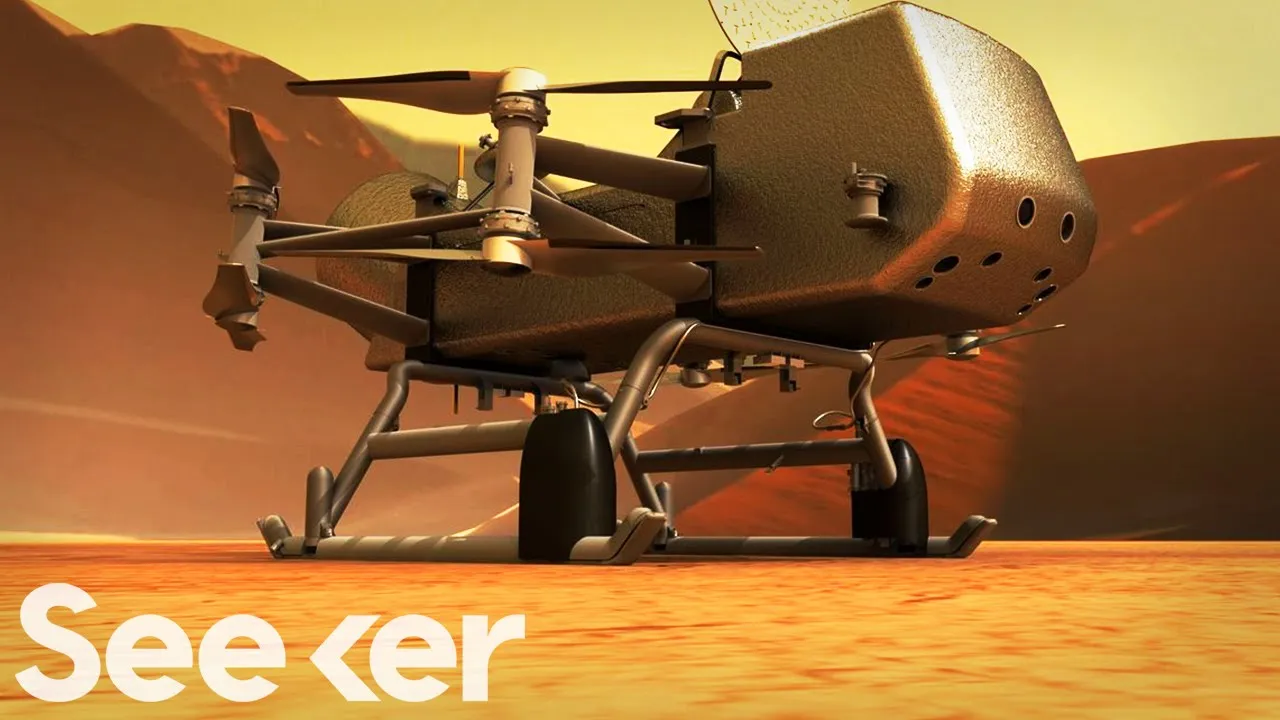
NASA's Dragonfly: A Nuclear Drone to Search for Life on Titan
@Seeker
414K views•2019-08-12

Triumph of Orthodoxy Icon: Byzantine Art & History Explained
@BenCallan
2.1K views•2024-08-06

FastAPI vs Flask vs Django: Choosing the Right Python Web Framework
@TechWithTim
302.5K views•2024-05-26

Game of Thrones Opening Credits: A Cinematic Analysis
@gameofthrones
46.3M views•2011-04-18
Related Study Plans & Knowledge Roadmaps
Structured learning paths in General & Interdisciplinary Studies