























Coral is an active animal belonging to the phylum Cnidaria, characterized by tentacles that extend to capture food and a central mouth leading to a gastrovascular cavity for digestion; corals are classified taxonomically into Hexacoralia (with tentacles in multiples of six) and Octocoralia (with eight tentacles), and they form calcium carbonate skeletons that create complex reef habitats supporting immense marine biodiversity, making coral reefs vital ecosystems often called the 'rainforests of the sea' that face threats from climate change and pollution.
Coral Is an Animal: Biology of Reef-Building Polyps Explained
Added:The fundamental distinctions between plants and animals, particularly regarding heterotrophic feeding versus autotrophic photosynthesis.
Basic taxonomy and characteristics of the Phylum Cnidaria, including their radial symmetry and specialized stinging cells (nematocysts).
The ecological concept of mutualistic symbiosis, where two distinct species live together to support each other's survival.
An introductory understanding of calcium carbonate (CaCO3) and how marine organisms utilize minerals from seawater to build structural shells or skeletons.
The physiological process of coral bleaching, specifically how environmental stress causes the expulsion of symbiotic zooxanthellae algae.
The chemical threat of ocean acidification and how rising carbon dioxide levels impede the ability of polyps to calcify and build reef structures.
Advanced marine conservation and restoration strategies, such as coral microfragmentation, larval seeding, and assisted evolution for thermal tolerance.
The global ecological and socioeconomic impact of coral reef degradation on marine biodiversity, coastal erosion, and human fisheries.
151.4K views5.2Klikes5:27Original Release: 2026-01-31
This is coral. If you place coral in seawater and watch it, something starts to move. So, what kind of animal is coral?
Bishas.
To show you living coral, we came to a specialty aquarium store that sells coral. Once inside, we found that corals come in an amazing variety of shapes and colors. If we choose one coral and lift it out of the water, everything suddenly retracts inside.
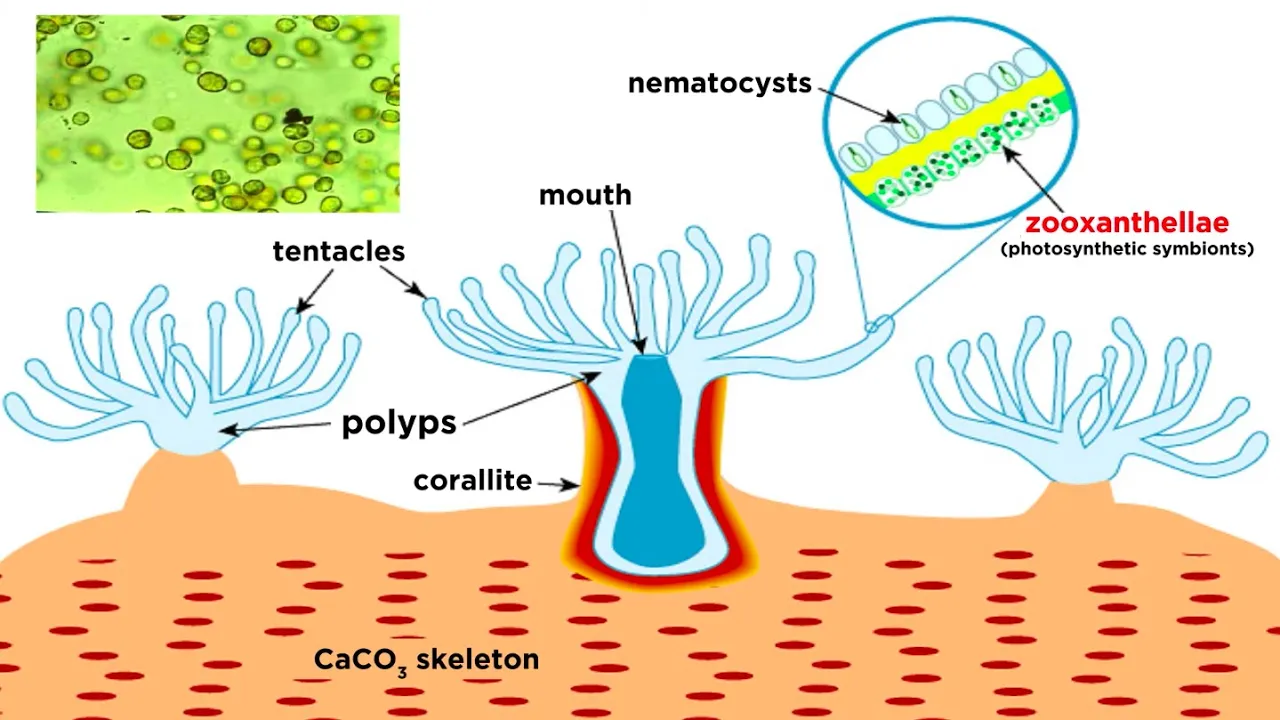
When it's out of the water, it just looks like a rock. In fact, in the past, coral was often mistaken for something non-living like stone or even thought to be a kind of sea plant. But actually, coral is a very active animal, constantly moving and feeding. These coral tentacles may look like they're just swaying in the current for no [music] reason, but in reality, they're waiting for food to come close. The owner showed us what it looks like when coral eats. If we give it food, you can see the tentacles move and carry the food into its mouth. So, what exactly is coral? Tada! We brought a small coral back to the lab. If we put the coral into seawater and wait for a bit, we can see the tentacles come out. Amazing, right? It looks very similar to the sea an enemy we showed you before. In fact, coral is classified as a nidarian along with sea annemy, jellyfish, and hydra.
All of these animals have a mouth in the center of the body and inside they have a digestive cavity called the gastrovascular cavity. Because nidarians don't have separate mouths and anuses, waste after digestion is expelled through the same opening where the food entered. So coral does the same thing.
It catches food with its tentacles, brings it to the central mouth, eats it, and later spits out what remains. Some corals live as a single polip on its own, while others live as colonies formed by many polyp. This is a coral formed by a huge number of polyp. If we zoom in, each tiny hole you see is actually an individual polip. Pretty fascinating, right? Online, you'll often see coral classified by the size or number of polyps or divided into hard coral and soft coral depending on whether it has a hard skeleton. But these aren't perfectly strict biological or taxonomic categories. In taxonomy, corals are classified based on the number and symmetry of a polyp's tentacles. They're divided into hexacoralia and octooralia. [music] In general, if the tentacles are a multiple of six, it's classified as hexacoralia. If the polip has eight tentacles, it's classified as octooralia.
Most of what we call hard corals belong to hexacoralia. And most soft corals belong to octoaria.
It's a bit complicated, right? So, what does the inside of coral look like? We received the skeleton of a dead coral from the shop owner. If we break it open, you can see from the cross-section that it has a calcium carbonate structure.
Coral uses carbon ions and calcium ions in seawater to build this [music] kind of skeleton. The living tissue forms only a thin layer over the surface and the inside is packed with this calcium carbonate structure. Corals keep growing larger and larger as their polyps increase in number and they continue secretreting calcium carbonate. Amazing, right? But as we kept looking, a lot of creatures came out of the coral, starting with gastropods like these. We also found crustaceans and other tiny organisms. In marine ecosystems, coral serves as a habitat and hiding place for countless living things. That's why coral reefs are sometimes called the rainforests of the sea. They're extremely important ecosystems for biodiversity.
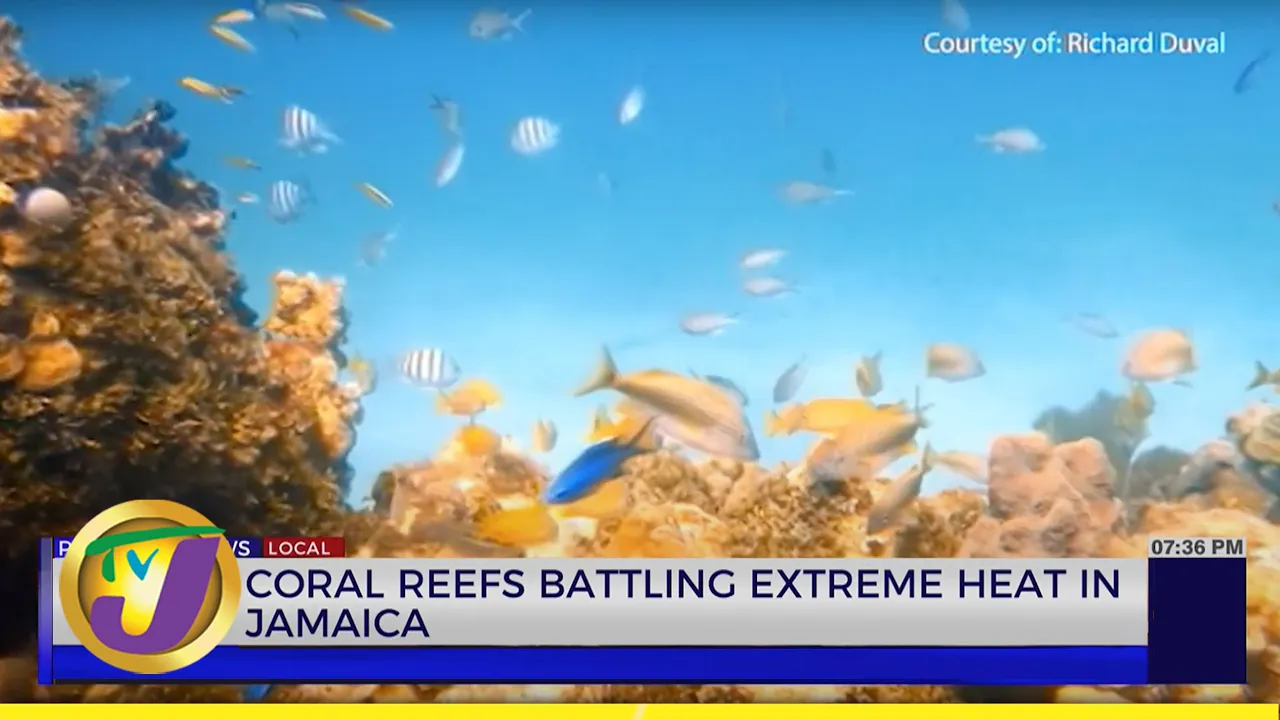
However, because of rising sea temperatures caused by climate change, as well as marine pollution and coastal development, corals around the world are disappearing rapidly. Even in the waters around Japan, rising sea temperatures have led to shifts in coral habitats and coral bleaching, and many changes are being observed. That's why to protect coral and marine ecosystems, various efforts are being made both in Japan and internationally, including projects such as creating sea forests. Because coral provides complex three-dimensional habitats like a forest and dramatically increases biodiversity in the ocean, protecting coral is essential for safeguarding our marine resources. It may be time for us to take a little more interest in the ocean environment and the marine life that gives us so much.
That's it for today's video. If you enjoyed watching, please subscribe. This was Fishy Science, uncovering mysterious things through science.
Up Next
11:29
Coral Reefs Explained: Cnidaria Part 6 | Zoology
@ProfessorDaveExplains
28.4K views•2022-05-06

50:12
Bacterial Communication: Quorum Sensing and Biofilm Formation Explained
@JHUAAP
12.6K views•2011-06-28

5:35
Enteric Nervous System Explained: The Gut's Brain | Neurobiology Lecture
@alumniu6029
438 views•2018-09-12
7:08
Bacteriophages: Earth's Deadliest Killers and Future Antibiotics
@kurzgesagt
34.6M views•2018-05-13
Related Study Plans & Knowledge Roadmaps
Structured learning paths in Biology
biology
RNAi: Biogenesis, RISC & Gene Silencing
01Molecular Biology Foundations: DNA to Protein
02Introduction to RNA Interference (RNAi)
03Molecular Biogenesis of miRNA and siRNA
+ 2 more learning modules
10h5 modules
Explore Roadmap
biology
Mycorrhizae: Signaling, Biophysics & Ecology
01Foundations of Mycorrhizal Symbiosis
02Molecular Signaling and Root Colonization
03Biophysics and Bioenergetics of Nutrient Exchange
+ 1 more learning modules
11h4 modules
Explore Roadmap
biology
Circadian Clocks: TTFL, SCN & Periphery
01Foundations of Molecular Biology & Gene Expression
02Introduction to Chronobiology and Actograms
03The Core TTFL: Molecular Architecture of the Clock
+ 3 more learning modules
14h6 modules
Explore Roadmap
biology
Population Genetics: Math, Drift & Selection
01Genetic & Probability Foundations
02The Hardy-Weinberg Principle and Baseline Models
03Mathematical Modeling of Natural Selection
+ 3 more learning modules
18h6 modules
Explore Roadmap