![Anibal Quijano : la colonialité du pouvoir [Yves-Frédéric Livian]](https://i.ytimg.com/vi/LwaXeSER1mM/maxresdefault.jpg)















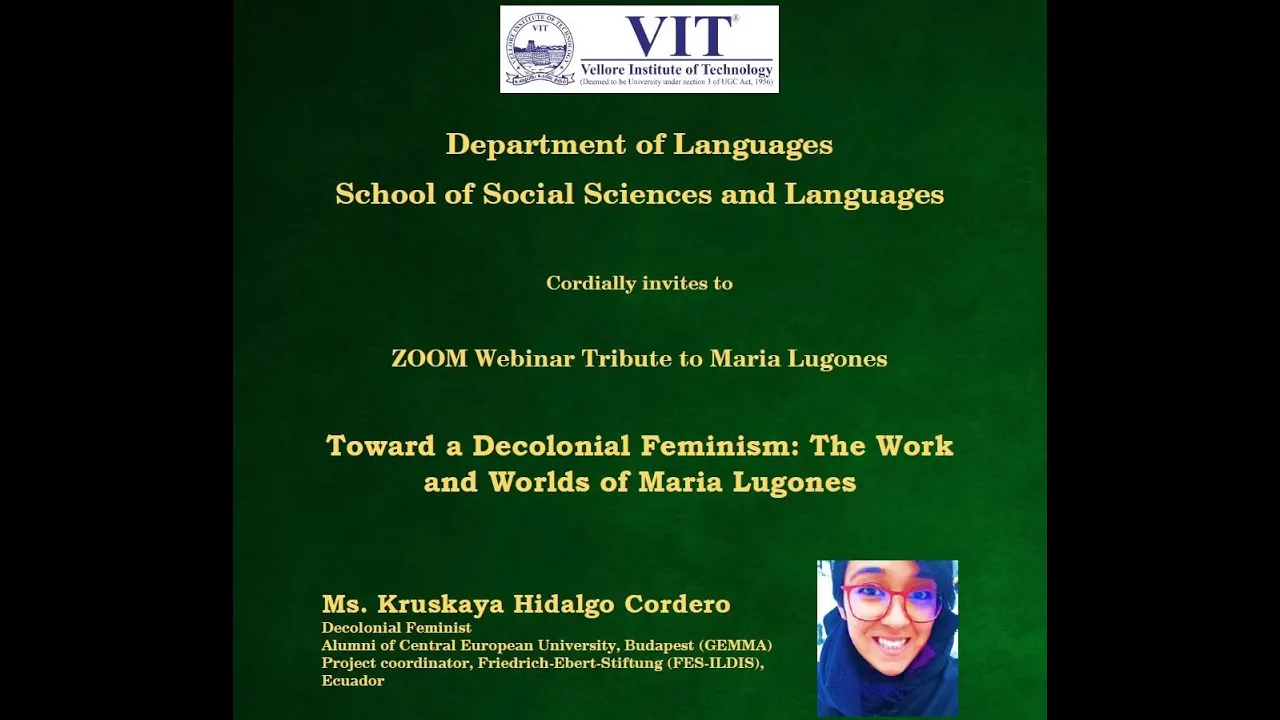





Maria Lugones' theory of the coloniality of gender argues that colonialism did not simply impose existing European gender systems on colonized peoples but created entirely new gender arrangements that served to reinforce colonial control, thereby explaining why some men of color and white feminists may be indifferent to the oppressions faced by women of color; this theory extends beyond intersectionality and the coloniality of power by demonstrating that gender itself is a colonial invention used to divide and conquer colonized populations, as evidenced by historical examples such as the Yoruba people and Native American tribes where pre-colonial societies had different gender systems that were disrupted through the introduction of Western patriarchal gender categories.
Coloniality of Gender: Decolonizing Gender Studies Lecture
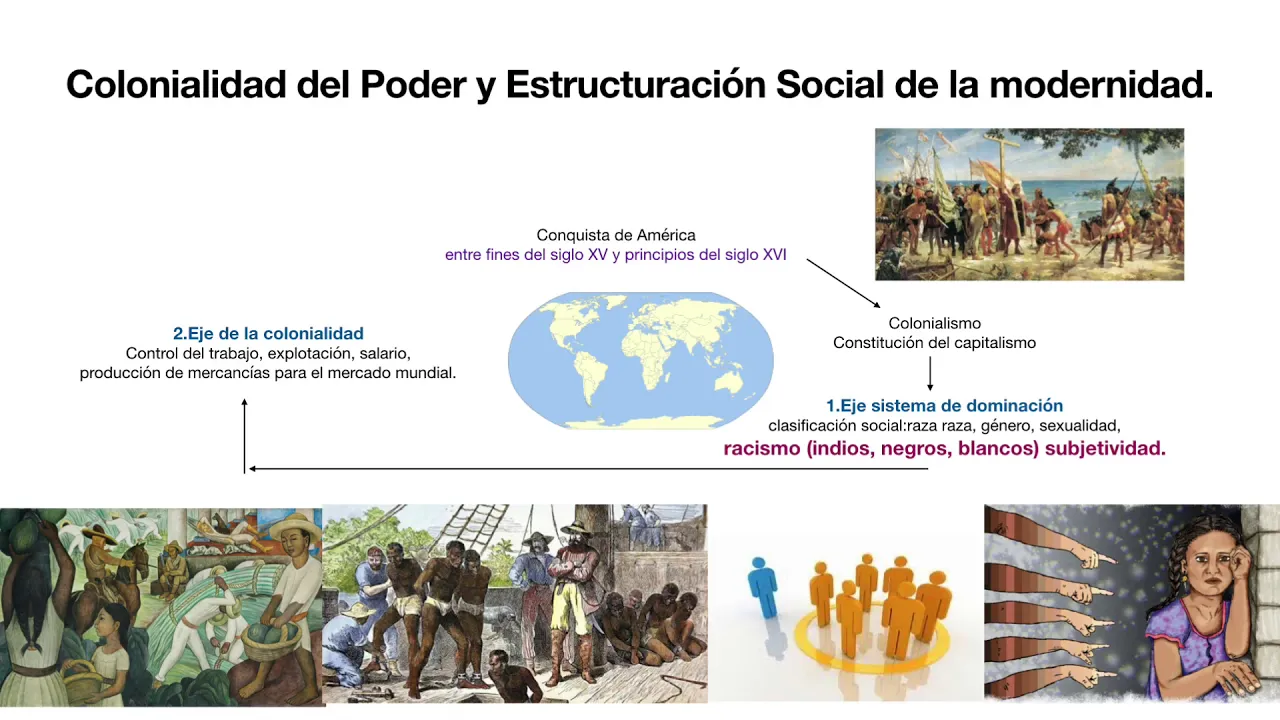
Added:okay here we go now for part two of our lecture on coloniality and gender I you part one was pretty much a course overview and discussion of the syllabus so that's ready for you so you can just look at that if you want to go back to that but now we're gonna discuss on the coloniality of gender okay so for this week's readings I asked you to read Maria lagunas is si um and before we get to that let's kind of do a quick review so from the Africa reading we have this kind of working definition of decolonization which is the process of revealing and dismantling colonialist power in all its forms this includes dismantling the hidden aspects of those institutional and cultural forces that had maintained the colonialist power that remain even after political independence is achieved so last week we talked about particular institutions that maintain colonial power such as like the university but now I want to talk specifically about the kind of one of the cultural forces or ways of thinking about how coloniality or sorry colonialism and we'll talk about coloniality create sort of systems of knowledge systems of categorization that are used to reinforce its power and/or the power of the colonizer and also to kind of structure this the systems that are in place so a big part of why it's important to decolonize still ashcroft and others say is that the globalization of the modern world economy has meant that political independence has not affected the kinds of changes in economic and cultural control the early nationalists might have expected has even been argued by some recent commentators that the colonial powers deliberately avoided granting independence until they had through internal discriminations and hegemonic educational practices created an elite comprar door class to maintain aspects of colonial control on their behalf but without the cost or their program associate with classic colonial models so they they argue that decolonization still happens because you had these systems of power that are still in place especially through the kind of development of a comprehend any of you okay who maintain aspects of colonial control on behalf of the kind of uh what you could call the colony the European and American colonial powers okay so in order to decolonize that you have to understand the kind of I guess well let's just stick with this word systems of power I know that's kind of vague okay but I'll kind of get into that and how they maintain colonial control alright so one of the kind of specific ways that this system of control is generated and maintained is through what Maria lagunes calls modern colonial genders the modern colonial gender system okay so the argument that lagunas makes is that gender and not just race and we'll get into why it's not just race but obviously race is very very important but gender and race there's just no gender right now gender is a knowledge system that is instituted to enable colonialism okay so she argues in the essay as as you read that colonialism did not impose pre-colonial European gender arrangements on the colonized it imposed a new gender system that created very different arrangements for colonized males and females than for white bushwalk colonizers thus it introduced many genders and gender itself as a colonial concept and mode of organization of relations of production property relations of cosmologies and ways of knowing okay so this is this is quite um a radical idea the idea that gender itself is not something that was uh well I don't know about if I want to use the word present but it wasn't a way of organizing people before European colonialism especially in the argument lagunas makes is in these kind of pre-colonial places and people at the same time this new gender arrangements were not the ones that Europeans themselves lived up to or held for themselves but we're ones that were created in order to Institute colonialism in order to kind of emphasize it right just what one way to think about this is let's say instead of we're talking about gender let's say we're talking about like religion or something like that and or capitalism or systems of law right these are all things that were also instituted by colonialism right you know um you have these kind of indigenous people who get conquered and you know I can tell you from the case in the United States where you know these kind of colonizing groups come in and say hey you know sign this contract and this land now belongs to me and you know this is the kind of general way it's taught right in u.s. high schools right but then you know many of these indigenous people say well yeah we'll sign this contract but what does it mean to own land this is not even a sort of understanding or a kind of a system that they've kind of follow I mean to hope that the idea that land can be owned in some sort of way right similarly then lagunas is saying that gender or this kind of special gender arrangements themselves are also a system that is implemented and put forced upon the indigenous as a way to implement colonial control okay and what's important to note she's saying is that it's different arrangements for colonized males and females than for white bourgeois colonizers so this gender system is not the same gender system that they had in Europe or you know yeah let's just stick with Europe okay the gender system is one that was used in order to emphasize an institute colonial control alright alright so that's the kind of basic concept now how does she get to this idea of the colonial any of gender okay so she starts with a practical problem right why do men of color you know and what she means women of color is basically non white or non non non anglo-european or you know men feel indifferent to the injustice is faced by women of color okay so basically this why is it that there's sort of sexism even within let's say you know colonized or people of color communities okay and this is a kind of a long-standing thing that you know if you want to we could talk more about in the forums or something like that so she looked blue ganas looks at a couple frameworks okay for thinking about this new concept of the coloniality of gender the first framework she talks about and these frameworks are used to address issues of racist sexist capitalist and colonial oppression okay the first is the concept of intersectionality which was first coined by kimberlé crenshaw but used by many kind of effeminate women of color you know are uh I don't know you want to use word third wave I don't know women of color feminists okay um especially in the the legal system and I'm gonna talk more about that later but already you should know quite a bit about intersectionality if you've taken other Gender Studies courses before okay and Laguna says that it's adequate in revealing how power works but insufficient for press men to acknowledge their complicity or collaboration in the violent domination of women of color and this I think is a really important point it's that when you think about intersectionality oftentimes people think about it as like oh you know you have this compounding of oppression but no one talks about intersectionality in terms of you know you can benefit in one way but then also be you know negatively influenced in another so intersectionality even though it doesn't it doesn't necessarily imply that you can't be both privileged and oppressed by the system many times it's only considered in that way okay all right so uh sorry if you can hear my screaming baby okay it's okay alright so another framework that lagunas uses is the coloniality of power by Annabelle quijano and Quijano argues that um coloniality of power which is and I'm going to go into going to depth on the coloniality of power but is a system that's used to justify and Institute and incorporate colonialism and it reveals how power channels through knowledge systems inherited from colonialism at the same time though the and specifically talks about race you know and race is a sort of system of knowledge that's used to justify kind of the separations that make the system work okay but the problem with the coloniality of power is that it does not specifically articulate the role of gender in that system of categorization it's almost like gender is a kind of secondary or even kind of a and I think there's a pretty devastating critique that we're going to makes is that gender is considered to be normative and instead of something that's also part of the coloniality of power okay and that's the big kind of gripe I don't know grep is the right word the big critique that Lou bonus makes and kind of her very important intervention right just keep going I'm trying to get these videos to be shorter so I feel like I talked too long all right so then Lugano says research goal then is to demonstrate how of solidarity right whether that's between people of color right or between all women gets disrupted because of these unacknowledged power dynamics of the modern colonial gender system okay so it's like you know if like a femine you know like a probably second wave or whatever someone says you know women of the world unite or someone's you know or a so like a social you know you know universal global socialist says you know workers of the world unite you know lagunas would say it's like this solidarity gets disrupted because you don't acknowledge the power dynamics you know of this modern colonial gender system you know not all women are the same and not all workers are the same so or and not all people of color the same not all of the colonized quote wretched of the earth that's a fan own term are the same and if you think about it that way and ask for solidarity without acknowledging these power dynamics then you know it's gonna get disrupted okay all right so explaining how that works is important and that's Luke onus is sort of research intervention okay so let's start with kahana's colonial look cannellini ality of power so quijano understands that all power is structured in relations of domination exploitation and conflict as social actors fight over control over the four basic areas of existence sex labor collective authority and subjectivity in turn / interception subjectivity their resources and products okay um so this is important is that power power is not something where it's like top-down okay where it's like I have power you know and I grant it to you or you know you take it from me power is a relationship okay so power needs to be structured in relations of domination so you know in order for there to be strong there must be weak in order for there to be rich there must be poor okay and so it's like creating creating these kind of structures you know in this relation of domination is how power works and exerts itself um so in order for the colonizer to be a colonizer there must be a colonized in order to colonize you must have you know indigenous to be colonizing okay so what is characteristic of global euro centered capitals power is that it is organized around two axes that Quijano terms the colonial the coloniality of power and modernity the axes order the disputes over the control of each area of existence in such a way that the meaning and forms of domination in each area are thoroughly infused by the coloniality of power and modernity okay so basically the system of relations in our world are structured by a power system that was instituted in order to enforce colonial control and that system kind of ordered organizes all the hierarchies that are in place today so Canada's argues that specifically racial differences okay and okay let's go back to this okay this is the key line right here the four basic all of these relations are structured over control of what he calls the four basic areas of existence sex labor collective Authority and collect Authority and subject to be intercepted their resources and products okay so it's a very materialist way of thinking about you know how relationships between people are structured okay and Keanu argues that racial races are instituted over competition over sexual assets access and its resources and products so race is a category system based on pseudoscience really okay like you know you have people in the 1400s creating these kind of terms you know for you know like racial differences to justify relations of superiority and inferiority so if it's like oh you know I was able to go into your house and take your things then it must be because I'm more powerful and I'm more powerful you know because I'm and then I would create some sort of system where I say it's like oh you know I must be more powerful because I'm biologically different from you and this is a lot of it Keanu argues was based on Eurocentric theories of social classes and this was also kind of a long-standing kind of okay if you read quijano and I have it but I've read some review of it but basically he talks all about like how in Spain you know have you had these kind of incursions and religious differences between Catholics Jews and Moors and these forms of social classification and these kind of rules about biological purity we're then used to kind of organize you know organize the kingdom and then kind of extend it into their colonies as well so this form of social classification basically the creation of race right permeates all social existence and generates new identities right so coloniality does not just refer to racial classification is an all-encompassing phenomenon so these patterns of power are meant to justify : colonizers superiority and it defines the relations of our present era okay so yeah it's very similar to the argument by cite that Sayid makes about Orientalism where you know you kind of create this category of people in order to justify the kind of system of domination that's going on and so race instead of being something that we consider to be kind of inborn it's actually something that's created in order to organize this competition over what a Keano saying is sexual access its resources and products okay um let's see okay so let's get into the critique said okay so the bonus is critique of Quijano is that the lenses that Keanu uses assume patriarchal and heterosexual understandings of the disputes over control of sex its resources and products okay so Keanu accepts the global you're centered capitalist understanding of what gender is about so basically quijano sees race as constructed by colonialism but assumes that this construction assumes that gender itself is normal and biological and so control over sexist resources and products is kind of a normative thing that he thinks is kind of or at least it seems like he's arguing is kind of natural and race is created in order to organize the competition over things like sexual different sex control of sex and resources and products so it assumes heteronormative patriarchal values as the norm as opposed to a value system instituted by colonialism so in this kind of system that Quijano is arguing race is constructed but gender is it okay whereas on let's keep going so the way he talks about is colonialism is structuring competition over resources between men okay so Quijano appears to take it for granted that did the disputes over control of sex is a dispute among men about men's control of resources who are thought to be female men do not seem to understand not seem understood as to the resources and sexual encounters we men are not thought to be disputing for control over sexual access the differences I thought of in terms of how society reads reproductive biology so it normalizes is kind of patriarchal heterosexuality so race is still defined in terms of men you know as men competing and racial categorizations basically being this kind of you know really kind of all racial categories being another word for dominant and dominant strong and weak let's just use strong weak okay and you know and the strong and weak compete over women whereas this naturalizes a patriarchal heterosexuality okay so it's really insufficient model for understanding gender construction if you if if quijano saying that coloniality structures all of our sort of let's say kind of identity and systems of I guess knowledge and you know relations of labour and you know governmental organization then it actually is insufficient for understanding this very very important way of understanding gender he says that gender is kind of a product of coloniality of power but actually what lagunas is saying is that gender is actually a creation used to institute colonia is an instrument of coloniality as well so not just race but gender as well and we'll get into how that is okay so what we're gonna saying is what aspects of gender are shown depends on how gender is actually conceptualized in the model and kiha doz model gender seems to be contained within the organization of that basic area of existence that quijano calls sexist resources and products that is there is an account of gender within the framework that is not itself placed under scrutiny and that is too narrow and overly biologists as a presuppose the sexual dimorphism so sexual dimorphism is this idea that there's just two sexes male and female okay heterosexuality which is what we consider to be male/female kind of sex I guess and reproduction patriarchal distribution of power which is that you know men are in charge and so on so quijano seems to me to imply that gender difference is constituted in the disputes over control of sex its resources and products differences are shaped through the manner in which his control is organized sexy as he understands as biological attributes that become elaborated as social categories he contrasts the biologic equality of sexes with phenotype which does not include differential biological traits the color of one's skin is the shape of one's eyes in hair do not have any relation to the biological structure exam on the other hand seems sorry sex on the other hand seems um probable unproblematic unproblematically biological to count so yeah you know race is quite obviously not bile logical category those of you are interested we can talk more about this forums in the forum she's post and I can I can look up some resources for you but no race is not race is not jerk you cannot genetically identify a racial category okay we'll put it like that alright there's no relation to biological structure but Quijano stops there why not extend it into sex as well alright and that's part of the criticism okay all right so that's the insufficiency with Kiana's theory okay so another theory that but there are there are useful things about coloniality of power that lagunas wants to use okay but by thinking about it in terms of intersectionality so intersectionality is a is a term okay just the term itself was coined by kimberlé crenshaw who was a legal scholar who came upon these kind of issues when it came to issues of American in the American legal system where someone would like sue for discrimination right and in the courts they would be like okay well you know you seem to suffer from sexual discrimination but then the subject would be someone who not only is you know is a woman who face sexual discrimination but also as a person of color right let's say they're African American or something like that and so then the person suffers from dual oppressions right and these dual oppressions do not work in this like oh it's like additive it's like one plus one but these oppressions work together and kind of form the subject and form that identity but you know what is called a multitude of oppressions okay but at the same time the court system did not have a way to address that it would be like well which which law is this person breaking are they breaking the rule against sexual discrimination or they're breaking a rule against racial discrimination okay so Crenshaw found it very useful and to institute this term to use this term intersectionality to talk about how oppression happens in a multitude of ways okay so this is what laguna says about intersectionality intersectionality reveals what is not seen when categories such as gender and race are conceptualized as separate from each other the move to intersect the categories has been motivated by the difficulties of making visible those who are dominated and victimized in terms of both categories though everyone in capitalist euro centered modernity is both raced and gender not every one horse is dominated or victimized in terms of them okay so it's intersectionality makes visible okay as a concept that makes visible the ways to see how people are dominated in multiple ways and victimized in multiple ways okay and even though everyone is raised in gender not everyone is dominated or victimized in terms of race and gender you know and you know other other I don't know intersectional theorists you can say you know like listen and I don't know if you want to call this but like bell hooks for example you know would say that you know it's not just that - it's also capitalist exploitation you know we're all we're also ok subjective ID is the term you can use ok we're all made into subjects by the knowledge system ok by the system of you know values that are used to create knowledge and knowledge categories ok and this includes this includes race this includes gender this includes class this also includes ability right and so on and so forth language ability as well ok so you have these intersections of disciplinary mechanisms and it's important to be able to identify and understand how they kind of work together ok um and make visible this is key to make visible the ways that these these things work ok so a good working definition of intersectionality comes from Jennifer Nash's work so Jennifer Nash is a very kind of more recent scholar on intersectionality and she has a lot of discussions about it about how it's been co-opted in certain ways on how in the end you still kind of can't get away from the fact that intersectionality really comes to be archetypal II you know defined by the black woman's body and how even that's problematic ok so I recommend you read that if you're really interested in thinking about intersectionality especially today ok but the working definition is that the notion that subjectivity is constituted by mutually reinforcing vectors of race gender class and sexuality okay right so of course sexuality too right um so these mutually reinforcing vectors are what constitutes subjectivity so subjectivity is like who are you you know how do you how do you define how do you get defined how do you understand yourself what are you who are you as a subject okay and that it's constituted by multiple things okay and so you can't simplify it to just one thing like I am a class I am I am for example like saying like oh you know I am a settler colonial you know that's that's not enough right there's mutually reinforcing vectors right or you know if I think of myself as Asian or Asian American that's just one aspect I'm also a gendered person I'm also you know I don't know I'm also middle-class right I'm also educated right so all of these mutually reinforce and lead to very very different results okay so you know this this gets to what you know Lou bonuses talking about it's like how can you have these kinds of solidarity when people don't acknowledge these kind of differences okay all right so let's keep going I mean yeah so this is part of the settler colonial argument right it's like just because I'm a quote person of color doesn't mean that I can so easily pick up this term decolonization and say oh yeah I'm part of the decolonizing not decolonizing force when not only am i person of color but I'm also you know a settler colonial right okay so this is important to understand and maybe maybe some people might even say I'm not a person of color because you know I'm hon well I consider myself Taiwanese but many people would say I'm Han Chinese or whatever okay but anyway let's go on okay but intersectional is very very useful okay this is going to scan it becomes logical clear that the logic of categorical Oregon these typos logic of categorical separation distorts would exist at the intersection such as violence against women of color given the construction of the categories the intersection misconstrues women of color so once intersectionality shows us what is missing we have ahead of us the task of reconsent a logic of the intersection so as to avoid separable 'ti it is only when we perceive gender and race as intermeshed or fuse that we actually see women of color okay so it's important to see race and gender as intermeshed or fused okay but they kind of mutually reinforce each other all right so not only is your you know your masculinity linked you know not only are you masculine and raced right for example not only am you an Asian male you might okay let's use me an example right I'm an Asian American male right or man I guess and you know heterosexual cisgender okay we can just keep going but not only am i agent american and male my my men or masculine let's just say my asian as' or asian-american this influences my masculinity and my masculinity influences my Asian American Miss so these are not separate categories okay they're fused together right so so building upon using the term intersectionality right are thinking about you could say the inter you thinking about the colonial at the coloniality of power intersectionally okay lagunas argues that gender itself is part of the coloniality of power okay she gives sorts of some examples okay one of the examples she gives is that there is gender systems gender systems that prefigure biological sex okay so she talks about examples of intersex people especially in tribal societies prior to colonization that were not assimilated to a sexual binary so like today you know and you know I guess in the during the time of coal period of you know aggressive colonialism any time someone who was intersex was born they were forced to be kind of undergo surgery so that their biological traits would make them fixed into this clear gender kind of dimorphism okay but not all traditions correct and normalized quote-unquote intersexed people right so it's not so intersex people did not have to be assimilated before colonialism before colonization okay another example that that uh the conus uses is how coloniality Institute's patriarchy so lagunas argues and gives examples from like the from Rome kou woo me sorry I if I pronounced that problem study of the Yoruba people who says that you know people were not necessarily organized into these patriarchal societies okay and that actually these kind of differences were not considered to be the definition of what is leadership leadership or not and people were called were recognized not as male or female but you know they were assigned different kind of categories and then based upon anatomic parts but these anatomic parts were not seen as was seen as a variety and not as a binary opposition okay um but then oh you roomie okay argues that the introduced the introduction of the Western gender system was accepted by Yoruba males who thus colluded with inferior ization of Ana females so when we think of the indifference of non-white men to the violence's exercise against non-white women we begin to have some sense of the collaboration between animals and Western Colonials against Ana females so oh yeah woo me makes clear that both men and women resistant cultural changes at different levels so oh you will be study demonstrates that when Colin and Oni ilysm happened for the Yoruba people many of them of the males began to collude and work with the colonizers because this new system actually privileged males over females when that is not something that existed before so coloniality Institute's a patriarchal system that is dependent upon a clear and categorical separation between the sexes and then what happens then is like a sort of the males become more powerful in that kind of small small group but then diminishing the power over all of the kind of Cologne colonized groups um so colonized men basically in some cases okay all your will be sites colonized men work together with colonizing European men to undermine local women all right and guess they were called men and women right so but then colonization incentivized this categorical separation okay and then another example that lagunas gives is Pollock gun Allen's work on the indigenous Native Americans tribes that were kind of gynae Craddock I think that I've never heard that term before but it was quite interesting so a guy necrotic egalitarianism so um you know there was actually a lot of the kind of uh American Indian tribes thought that the primary potency in the universe was female and that understanding authorizes all tribal activities you know so they're kind of I don't know if they're guy knock receives but this idea that women can be like the leaders right see but then at the same time in order to dominate and transform tribal life the colonizers need to institute a new system which diminishes the guy knock receipt okay so the promise of the females creators displaced and replaced by male gender creators generally generic or Christian right so uh you know in order for the calling colonialism to work then you say oh you know your gods you know like the and you're gone if your God is a woman then that's wrong so or you know sex or gender it is female and it's wrong and you need to have a male a male kind of gendered creator you know for that life and then these kind of governing institutions and philosophies their foundations are destroyed you know people have pushed off their lands so that they're kind of and because they're pushed off their land in their way of life then they become dependent upon the colonizers for their survival so they can't they can't use their former systems their the system requires this kind of male dominance so it's like if you want to go if let's say your tribe is on the ropes you know and you need you know some you need the colonizers to kind of give you back land or to give you some sort of resources they won't negotiate with the women leaders of your tribe right and so they you know you have to have male men go and negotiate with them and then the clan structure gets replaced by the nuclear family so the women clan heads are replaced by elected male officials and the psychic net that is formed and maintained by the nature of non authoritarian gyda centricity grounded in respect for diversity of gods and people's is thoroughly people is thoroughly rent okay so rent can also mean like you know like destroyed okay um so a system of life where you have women leaders gets kind of destroyed in order to institute colonialism and this is important right colonialism creates gender categories so colonizers okay in order to kind of Institute rule and create kind of systems where you know the bounties and the resources of the colonies are diverted and you know sent towards the Colin Colin Colin eyes errs okay in order to in order to maintain kind of control over the colonies they create gender court categories so not just racial categories but gender categories to divide and conquer so like oh you owe me a gun Allen is interested in the collaboration between some Indian men and whites and undermining the power women it is important for us to think about these collaborations as we think of the question of indifference to the struggles of women in racialized communities against multiple forms of violence against them in the communities the white colonizer constructed a Powell full inside force as colonized men were co-opted into patriarchal roles okay um so I think this is important to understand is that coloniality right coloniality of power so is to create a system that justifies colonial control and this knowledge system has to be based on certain values right so that you know something is always considered better than the other one thing is considered weak one thing is considered drunk you know one group you know one category is considered high one category is considered low you need to enforce this kind of value system in order to maintain a sort of system for the diversity distributor of goods resources of labor okay um and so starting with Quijano Kiana argues that race is the first kind of category right so it's like you know if white is good then everything else is bad and so then that justifies this sort of power system so obviously white labor would be worth more than you know colored labor for example okay um however Louganis is arguing is that no it's not just race but it's gender and gender gender is intrinsic to colonial rule because the kind of gender differences are necessary in order to create this kind of a system of power that justifies colonial rule and specifically it was used to undermine women and create these kinds of communities where that sorry the okay yeah right where these kind of systems that they had before were disrupted and part of the way that it was disrupted was by kind of instituting a difference within indigenous groups by saying that gender is a big important factor and because by making it an important factor then it creates the better possibility of organizing and dividing okay I think a really good example would be like let's say you know we had a system in place in the classroom and it was like you know the teachers versus the students and I'm the teacher right and you're the students right so let's say the students you know there's there's quite a bit of you right and so like you know normally I would be like okay well I'm the teacher you know you should listen to what I say but then maybe you might rise up you're like no there's more of us students and we're more powerful you know we we don't have to listen to you we can do what we want right but let's say I start whispering to some of your students some of the students be like hey you know hey student you know like you may not be a teacher but at least you're a male student and I'm a male teacher so male students are better off than female students right and so if I start telling you know the fee the males you know or creating this category of male inside the student group and telling these male groups or men you know the the masculine okay telling this group that they you know can have are actually more powerful than the other students in their group right the feminine students then they are incentivized to believe in this system of organization even though overall it might diminish you know their their their power as students okay so it can be seen as a sort of tactic I guess really know not active a strategy a strategy for instituting power and control I don't know you could maybe you can see that as when you know teachers say you're an A student Europe be student and you're C student you know I don't know okay but that's just kind of how power works how it works through organization okay in the creation of kind of categories of knowledge okay all right so let's go on so um this is quite obvious for and it's quite obvious that this gender separation is not something that is separable from colonialism according to the gonna is okay so and the reason is is that because white women are not treated the same as women of color or colonized with them okay so to be a racialized woman it's very different from being a non racialized woman um and this is an example of the link and the intersectionality okay of the way that we think about gender has been uh intrinsically linked to colonialism itself okay so that's very important to understand alright so I kind of want to keep going so lagunas is making a critique of this kind of white bushwa feminism okay so she says white feminist struggle became one against the positions role stereotypes trace desires imposed on white buchwald women's subordination no one else's gender question was countenanced the understood women as inhabiting white bodies but did not bring that racial qualification to articulation or clear awareness on a real good example of this is Sojourner Truth who was a who was a woman who was an abolitionist and she went to a big conference of feminists who were fighting for the vote during the and during the period of slavery and she went there and she said ain't IA woman right so it's aren't I also a woman so the fact that she's a slave means that she's being in means that women are being subordinated as slaves so why aren't feminists also fighting for the freedom and the abolition of slavery okay so that's a very important you know obvious example right so going on through gonna says that that is they did not they as in white boudoir feminists did not understand themselves in intersectional terms at the intersection of race gender and other forceful marks of subjection or domination because they did not perceive these deep differences they did not see a need for creating coalitions they presumed a sisterhood a bond given without the subjection or gender so this is quite similar to thinking about how colonized men will undermine colonized women right well what is it about women who will under not undermine colonized women okay or racist women okay so this is this kind of gets to blue bonuses key point is that this is why you have disruptions and things where you might consider to be solidarity okay so what are the criticism of the bonuses theory okay um one is it definitely ideal well I don't know if it definitely I'm not an anthropologist okay but there's arguments that it and that it idealizes pre-colonial societies it makes it seem as though there was no patriarchy's you know before the colon colonizer came in okay also that there's some limited evidence of guy necrotic and non heterosexually organized societies so you know the cite the citations that the bonus uses the research that the bonuses uses like of the Yoruba people for example is kind of limited especially because of your Reuben people now apparently are very very like many many are you know Muslim or Christian and very heterosexual and patriarchal I mean depending okay so really you know there's arguments about the scholarship but nonetheless you know the the scholars that kind of disagree with lagunas or criticize the theory they criticize it not in kind like as a type but really by degree they're arguing that yes you know um they still are agree that colonialism exacerbated gendered hierarchies and heteronormativity by a generating kind of drastic changes in social and cultural life for the indigenous and the colonize I think that this is very similar to arguments that people make you know about caste in India or what was cos you know and remember India was not called India before the British came in so let's just say you know pre-colonial South Asia okay you know or religious differences it's that it's not that you know there weren't religious differences or caste or racial differences before colonialism it's that colonialism enforced these differences as a way to kind of control and organize okay and so it exacerbated the importance of these differences especially because these differences became means of access to resources all right so even though lagunas is you know in even though there might not be much and it's very hard to prove what what life was like before before colonialism okay or if they're you know like in the case that we're talking about like Hong Kong like how can you conceive of Hong Kong pre-colonial Lee okay um at the same time it's very important to understand that colonialism exacerbates and generates and makes these categories very very important to social life okay especially because capitalism is dependent upon these categories in order to run okay so you know and that's another thing that you know like you know feminists and women of color feminist scholars will argue is that you can't think about capitalism without thinking about patriarchy and without thinking about sexism because these categories are very important you know to the way that capitalism works right we can talk more about that in the forms if you like okay so just I'll mention it won't discuss more okay so here our discussion questions right so if you would like to address these in the forums feel free okay so how how is what lagunas is arguing coloniality of gender different from what Simone de Beauvoir theory of the second sex okay so remember Simone de Beauvoir you know second wave feminist talks about how one is not born but rather becomes a woman right so is a critique of essentialism saying that basically there's no such thing as essentially a woman that being a woman is something that's socialized and learned it's an experience okay so as an existentialist you know Beauvoir's arguing that this category woman is one that you know comes about through experience in existence not one that is essentially you know there's such thing as a woman like as a category in naturalized category okay and then how is that different from Judith Butler's argument about the social construction of gender so you know I provided you the readings but also as a reference ring but also consider the screen the podcast I think it's really good but um Butler argues that gender is a fundamental part not only of you know of how we identify people as people so you can't think of a person without thinking of a person is gendered so Butler is arguing that kind of even our understanding of people what people are and our knowledge you know of Croatia creating a subject is gendered already okay so her critique goes down to this pistol mala G right this kind of theory of knowledge right that gender is one of those kind of fundamental ways of understanding what people are and it goes all the way down to that sort of level all right so the goddess's theory of you know coloniality of gender is that the kind of construction of gender is instituted by coloniality okay whereas Butler is arguing that the institution of gender is gender is instituted by kind of knowledge systems about what makes people people okay or a subject a subject and that it's already gendered already um so why do these differences matter I think that this is the key question okay why is it why does it matter to think about that even though all three of these are demonstrating ways that gender is constructed why is it important to understand gender is constructed in one way versus another versus another as linked to for example colonialism or is linked to essentialism or linked to the pistol mala G okay lastly how does Laguna's his theory of the coloniality of gender applied to a place like Hong Kong China and Asia which is not entirely colonial which is not entirely not coke excuse me not colonial okay is it applicable is it useful and what does the fact that you have different systems you know and yet still have a gender you know and yet still have gender differences in places like Hong Kong and China you know and places in Asia and yet at the same time we're not colonized in the way that you know places in South America and how does that does that undermine her theory does it does it apply do we need a different theory you know do you have any kind of speculation to think about it all right okay so um that's our discussion questions and I'll talk to you in the forums and hopefully you know we come up with some interesting kind of discussion okay so that's it for this week's this week's lecture um like I said before next week on the 2027 right 27th okay February 27 we have a guest lecture and discussion with dr. Nasri burrow II so I really hope that you can make it I know that classes are canceled and many of you have plans or whatever and that's okay but if you can please try to join our conference okay and do the readings so that we're prepared to discuss this idea of you know is decolonization really a metaphor or is it not a metaphor and why does it matter okay all right so uh talk to you soon and stay safe stay healthy wash your hands okay bye
Up Next
Subculture: The Meaning of Style by Dick Hebdige | Summary & Analysis
@Englishliterature
4.3K views•2023-03-11

Astrobiology Through an Anthropological Lens: Field Insights
@georgiatechastrobiology
128 views•2021-04-14
Proxemics Explained: The Study of Personal Space
@Vox
536K views•2016-07-05

Psychology of Internet Trolling and Pranks Explained
@AzzyLand
10.7M views•2017-12-20
Related Study Plans & Knowledge Roadmaps
Structured learning paths in Anthropology