






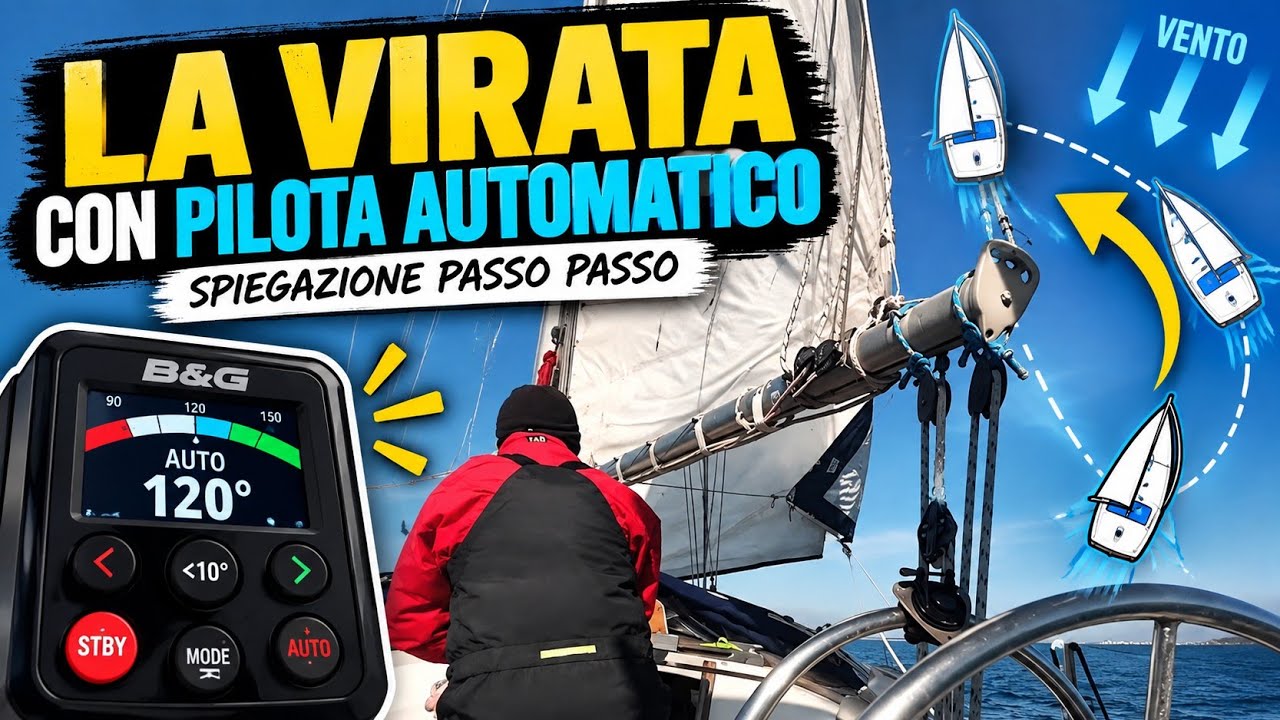




An Arduino-based sailboat autopilot system uses multiple navigation modes: Compass mode maintains a fixed heading (boat's pointed direction), GPS mode follows waypoints by calculating the course to steer, and GPS-to mode maintains the current course over ground. The key distinction is that heading (from compass) indicates where the boat is pointed, while course over ground (from GPS) shows the actual direction of travel, which is critical for steering accuracy, especially when dealing with cross currents. The system uses RF remote controllers for manual steering adjustments.
Arduino Sailboat Autopilot V2: GPS & Remote Control Guide
Added:Basic Arduino programming and hardware interfacing, including working with GPIO pins, serial communication, and servo motor control.
Fundamental concepts of GPS technology, including latitude/longitude coordinate systems and parsing NMEA data sentences.
Basic vector mathematics and trigonometry used for geographic navigation, such as calculating bearing and distance between two coordinates.
Introduction to wireless communication protocols (like RF, Bluetooth, or Wi-Fi) and how transceivers exchange data packets.
Basic sailing and marine terminology, specifically how a rudder influences vessel heading and the difference between heading and course over ground (COG).
Implementation of PID (Proportional-Integral-Derivative) control algorithms to prevent oversteering and stabilize the rudder in dynamic wave conditions.
Integration of an IMU (Inertial Measurement Unit) with a 3-axis magnetometer to provide reliable heading data when the vessel is stationary or moving slowly.
Advanced autonomous pathfinding and wind-aware routing algorithms, such as automatic tacking when sailing against the wind.
Design of fail-safe mechanisms and marine safety protocols, including geofencing, automatic return-to-home (RTH) on signal loss, and low-battery overrides.
Power budget analysis and the integration of solar panels and marine battery management systems for long-endurance autonomous voyages.
6.2K views90likes9:31Original Release: 2017-04-25
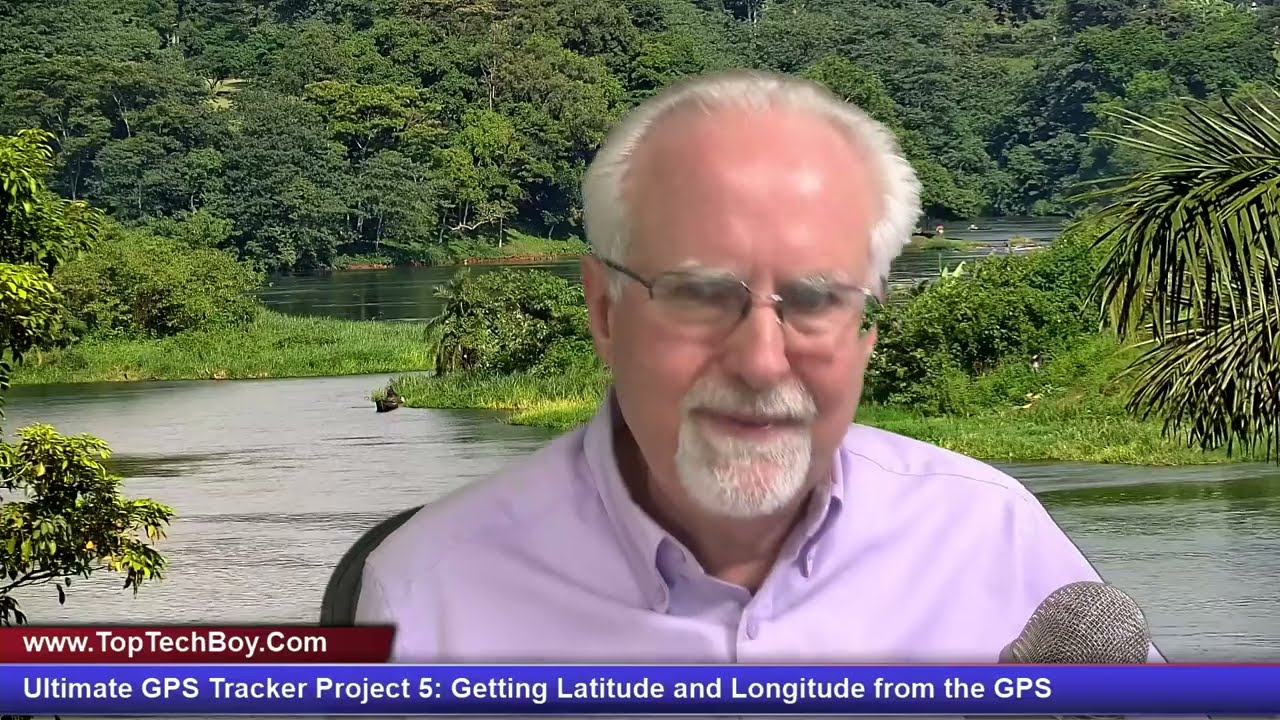
what I'd like to show you this morning is the an updated status of the major components of the autopilot system first of all this is the main autopilot unit it has an LCD and a keypad it also has this RF Wi-Fi remote antenna and inside we'll take a look over on this side is the Arduino mega and this chip that brings in the GPS system over here is the main Arduino mega with all the inter connecting wiring this is this does the major that'll work right here is the RF module that transmits data to the remote systems and then on the front of here we have several switches for power and remote operation and run permissive so then we have two remote units this one is the old serial remote which it's wired in and so it can use the switches in the knob but it actually is sending data it has a RF module inside here also for the data sending I over here is a totally remote system it has a it uses the RF for both the battery off for both operation receiving data and sending data and internally I have a battery in here and this battery is an anchor cell phone recharging battery this is about a six styles and really what a milliamp hour battery it'll run this for a day or two okay now over here at the back at the main unit let's take a look at the screen and then we'll look at the operating modes first of you all here on the screen we have the operating mode currently it isn't off as we press 1 we get compass - we've got GPS 3 we get tach etc go back to off here the other display is the course over ground Co G that's reported from the UM the GPS unit hookie right now because we're not physically moving the heading that's strange we're pointing in the same direction as the co G so this is the compass you can see that responding here is the the waypoint that the GPS is programmed to that's my driveway over here is the bearing to the waypoint and this is the heading to steer this and this is the course to steer now we'll cover that in just a second ok so let's look at the first mode the compass mode so when I press t1 off we'll go to compass mode and the heading to steer will capture this heading 310 degrees and then it would maintain that course we'll do that so we get three hundred and nine point seven and as so I can so I can modify this with the with the keypad for instance if I want to increase this to the right by ten degrees I can press it once twice three times back one two three we can increment it by 1 degree with this forms with the seven and nine keys one two one two all right so that's the compass mode you can go into compass you can set it next is attack mode it's in attack mode is just like compass mode except that the four and six keys will change this by 100 degrees so that will let you change your course by a hundred degrees the boat will pack talking a sailboat now and give the helmsman higgins if your single-handed steering you can tack your sales you'll steady up on this new course and then after you get on course and your sale sales full you can bring that back a little bit to bring it up a little closer to the wind you can set that hundred degrees whatever you want to in the program so this is look at the GPS mode now in GPS mode we capture this bearing actually support over ground and the course to steer this course the skier will get us back on course and get us to this Waypoint in the GPS mode in the I've added recently a GPS to mode and then if I press and hold key to this goes to GPS to in GPS to the course to steer is captures the course over ground and will maintain that and if I I can increment this just like I can the heading to steer when I'm in the compass mode so I can increase that 10 degrees 20 degrees down 10 down 20 plus 1 2 3 down 1 2 3 so in essence this lets you steer a GPS course without actually having to enter Oh a waypoint so if you want to the cover that briefly cover the difference between the heading to steer in the course this year that let's say you the boat were going at 6 knots with a three not cross current you would have to crab into that current at 30 degrees in order to maintain the course you wanted to maintain so the heading is the direction the boat is pointed as reported by the compass which has errors in it and the course the steer is the course that the you want the boat to go over them the most accurate then you have is the GPS course over ground that's them that is what the boat is actually traveling now unfortunately that is what it has traveled not what it will travel so that's why the heading is more it is very important for steering the boat so the boat actually steers the heading to steer but it captures that from the course over ground and of course to steer alright then also on the screen this is the crosstrack error currently that is 27 feet that's just based on how I have the GPS laid out here at this location but this is the main parameter that the course Desir is modified by and so that you will stay on the original course if you're in the GPS mode let's take this back to off let's go over and look well that's one more mode here that is mode 5 that is knob steering unfortunately in this we showed this is the command it also displays the available Waypoint so it's jumping back and forth but if I increase this over here all the way you see I get a write a plus 41 degrees command I go all the way the left I'll get a minus 40 degrees command so that would move the rudder to that position now here I do not have the rudder feedback unit connected I don't have one at the house so this just says zero but if we were on the boat this would report but the rudder isn't so basically in the knob modes of steering you can steer the boat using this we'll go back to off now we'll take a look at the like I'm calling this a serial serial remote though it's actually an RF remote with wiring so let's look at mode five on that which is knob steering and as I turn the knob here I don't have a knob printout on here because I turn the knob here whoops I have to do one of the thing to use knob steering on this this is feeding into the autopilot and over here in the back I've got a switch that lets you switch from local to remote and that has to be in the correct position to use the knob steering so as I increase to the right I'm getting 40 degrees plus off to the left forty degrees - so with this remote we can do knobs steering alright now let's go over and look at the third autopilot remote second remote unit so this one's totally remote has that battery I showed you the battery in the back it operates basically the same way does not have the knob steering has a on-off switch you can turn it on and off with has that battery built-in and the bat is a this unit is plugged into and let you recharge use it you can use a USB extension cable to plug into there and it's plugged into the battery so then you could recharge your battery but it has the same operating modes we go to one we can increment this one two three okay we can come back one two three well that's what I wanted to cover this morning I hope that's helpful to you thank you for watching
Up Next

14:50
Autonomous Sailboat Heel Control: N4N1 Field Tests
@meholden
456 views•2025-03-14

58:25
MathWorks Virtual RoboSub Simulation Environment | Webinar 2026
@RoboNationInc
209 views•2026-03-10

11:04
How to Build a Self-Balancing Robot: Arduino Nano & MPU6050
@easytechzones
16.8K views•2022-03-09
25:22
Micromouse: The Fastest Maze-Solving Robots on Earth
@veritasium
23.5M views•2023-05-24
Related Study Plans & Knowledge Roadmaps
Structured learning paths in Robotics
robotics
Robotic Sailboats: Arduino, Sensors & Tacking
01Sailing Physics and Aerodynamics
02Arduino Programming and Electronics Basics
03Sensors and Actuators Integration
+ 2 more learning modules
35h5 modules
Explore Roadmap
robotics
Building Delta Robots: Kinematics & Pico
01Foundations of Delta Robots & Mechanical Design
02Electronics and Microcontroller Setup with Pi Pico
03Delta Robot Kinematics and Coordinate Math
+ 3 more learning modules
65h6 modules
Explore Roadmap
robotics
Building Ballbots: Dynamics, Kalman & LQR
01Embedded Electronics & Omniwheel Actuation
02Ballbot Kinematics & Rigid Body Dynamics
03IMU Sensors & Kalman Filter State Estimation
+ 2 more learning modules
42h5 modules
Explore Roadmap
robotics
Micromouse: Hardware, PID Control & Flood-Fill
01Electronics & Teensy Microcontroller Basics
02Sensors and Actuators: Motors, Encoders & IR
03Precision Movement: Implementing PID Control
+ 2 more learning modules
35h5 modules
Explore Roadmap