![CALCULUS II Midterm [Part 3/3] | พี่สอนน้องครั้งที่ 20](https://i.ytimg.com/vi_webp/N-zJsfahFc4/maxresdefault.webp)




![Кватернионы | Вращение в 3D [Самая суть]](https://i.ytimg.com/vi_webp/tBYXR_fAXSQ/maxresdefault.webp)














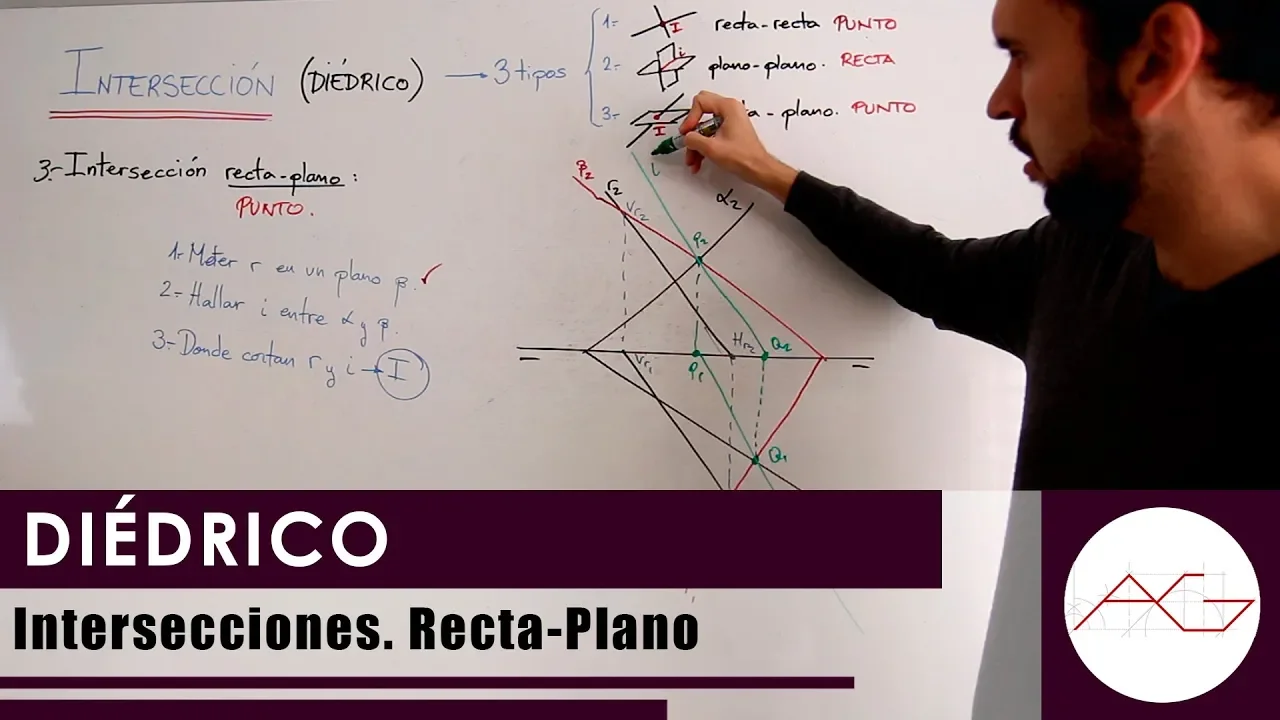

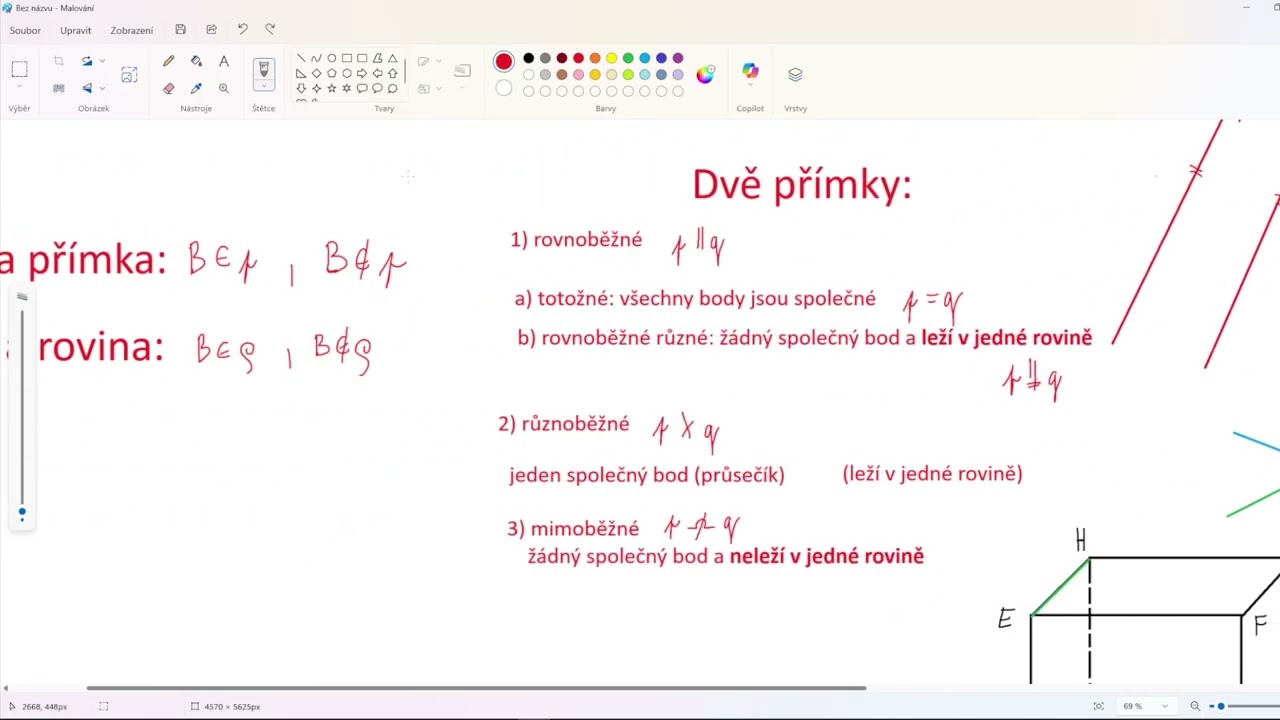
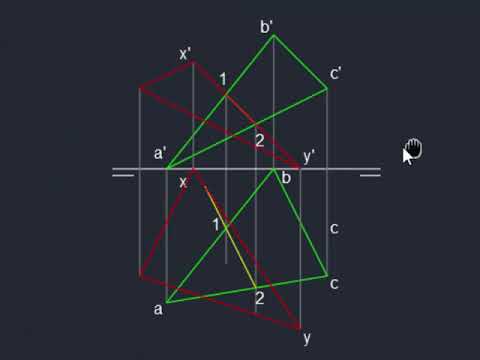
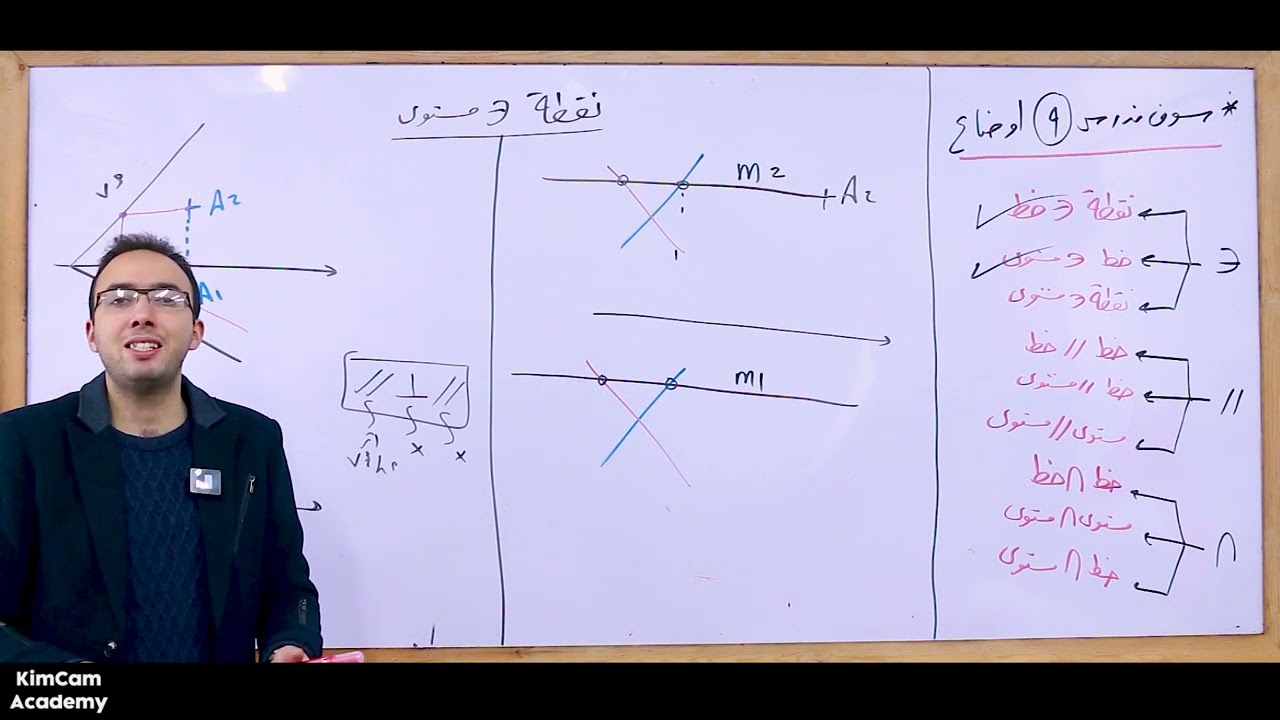




Reflection composition using dual quaternions provides a unified mathematical framework for representing and manipulating geometric objects (points, lines, and planes) in game development, enabling efficient computation of angles, distances, intersections, and projections through algebraic operations that work consistently across all object types.
Quaternions to Points, Lines & Planes | Game Math Guide
Added:Fundamental 3D vector algebra, including dot products, cross products, and vector projections.
Basic complex numbers and standard 3D quaternions representing rotations (unit quaternions).
Matrix transformations and the concept of homogeneous coordinates (e.g., 4x4 transformation matrices in computer graphics).
Analytical geometry basics, specifically defining lines, planes, and intersections in 3D Cartesian space.
Dual Quaternion Skinning (DQS) to prevent volume loss in character skeletal animation.
Rigid body dynamics and kinematics, applying screw theory and dual quaternions to physics engines.
Advanced collision detection systems utilizing line-plane, ray-cast, and plane-plane intersection tests.
Implementation of custom transformation pipelines in shader programming (HLSL/GLSL) to optimize GPU computation.
15.2K views379likes1:06:11Original Release: 2024-06-13
[Music] so this talk is from querian to homogeneous points lines and planes such as the ones that we have down here uh in the previous talk which I'm afraid to say is a little bit of a prerequisite for this talk we were talking a lot about caterans so rotation composition which we Implement using querian multiplication and we unified that in a sense with translation composition we unified it into a thing that we call dual querian multiplication another word for this is rigid transform composition because it's uh whenever you move and rotate something so you it's like it's a rigid object you're not squashing or stretching or scaling it one thing that I didn't talk about in that previous lecture is this function which uh in 3js at least it's called set from unit vectors it's when you have uh you've got like a vector going this way and a vector going this way and you want you ask for the querian that takes you from here to here like this um but there's a reason that I didn't talk about this one it's because I wanted to leave it for this talk because it turns out that there's a way of unifying this and this one you can even unify them with other things that you want so taking angles and distances and projections of let's say the distance from a point to a plane or the projection of a point onto a plane or the uh taking the angle between a line and a plane um and it also unifies it all with intersection of planes and lines what is this magical thing up here which could do all of these things together it's one function and it is called reflection composition and I would claim that a large number of video game engines contain little pieces of reflection composition the closest that they come to having actual reflection composition is in this function um but yes reflection composition is a very very fundamental thing going on with a lot of lot of geometry that we do for video games so we're thinking about points lines and planes and we're going to think about planes as being planer Reflections and then lines do things called line Reflections and points do thing called things called Point Reflections to which you say oh God why would I care about this stuff I mean even a reflection you don't see that that often in a game uh and you know I tried using once and it didn't work out that well for me the normal map went weird I wasn't sure how to fix it but these are these are these objects which I'm going to introduce are they don't cost you anything to represent them because you actually represent them using the same technique that you already used to represent planes so it's X XYZ and D that we used to represent a plane and a point is going to going to be X YZ and W and then a line well that is uh it's part of a dual quitan it's the line part of a dual quitan um but by thinking about these exotic objects these Point Reflections and line Reflections we're going to be able to see how all of this nice functionality gets into this thing called reflection composition all right I'm also going to give you lots of video gamey examples you know we're not just doing pure math here so we're look at going to look at Loft and dead space and halflife and a lightsaber fighting thing um and we're going to look at several problems which are all going to be turned into problems that concern points lines and planes this is going to be a long time coming though um I'm afraid to say that you're going to have to learn a bunch of maths in this talk and then this is there's going to be like an orgasm of usefulness right where you learn how to actually use the math in your game um but yes in order to get there uh which we start by saying everything is Reflections and in order to climb to the top of the mountain which is being able to write a compact game math library from scratch maybe some of you can already do this but I bet that using reflection composition it can be even more compact youve got a lot of things coming at you along the way um and the way that we're going to walk through these things is first we're going to talk about querian as compositions of two planer Reflections then we're going to talk about the math of General Reflections and why normal vectors are points at Infinity slightly strange sounding thing to say here but it's true then in section three this is all the usefulness we're going to do video game case studies so getting angles distances intersections and projections of things that you want and then we'll look at the fully General formulas that compile to fast specific formulas um and this is going to be again back to being a bit math heavy because we're going to try to generalize across points lines and planes so it's not very easily visualizable well it is visualizable but you visualize it with specific examples but yes anyway so part one querian are compositions of two planer Reflections uh and the motivating video gaming example that we have temporarily is a snowboarding game you want to make a game about snowboarding and to make a game about snowboarding you're probably going to be very concerned with the plane that is defined by this snowboard and the plane that is defined by the ground uh in this case this snowboarder is about to land on the ground and you might want to do various things at that specific point when it's when they're going to land so keeping this in mind uh we're going to think about representing planes so if you've never seen this representation of a plane before don't worry you've got X you've got y you've got Z and you've got D going to leave D alone for a second and just think about this one so if you imagine the normal ve the well the vector in the X Direction um so x 1 yal 0 zal 0 then that Vector is the normal to this plane It's s a right angle to this plane um if you consider this plane so we've got X is equal to two uh this plane and this plane actually have the same geometric interpretation right um and so you actually don't need to think very much about how about these vectors again very similar to the Eran case you'll be distracted by the length of the vector it just doesn't matter that much so here's our basis we've got various different planes through the origin we've got the X plane through the origin the Y plane through the origin and the Z plane through the origin uh you can think of this as the plane like I say whose normal is in the X Direction points on this plane have x equal to zero which is a little bit confusing right the points have x equal to zero but this plane has this plane is the X xal 1 or xal 2 plane that's a little bit s strange sounding but you can kind of get used to it and then this is the Y plane where it's got uh the plane whose normal is in the y direction points on it have y equals z PL the plane whose normal is in the Z Direction uh and by the way uh other people including Eric uh call the call this one E1 this one E2 and this one E3 and if you read more about the uh you'll encounter this a lot if you well you'll encounter this exclusively if you read Around the stuff that I'm talking about today but for the sake of argument because this is already in a video game engine I want to talk in terms of the X plane the Y plane and the Z plane and later on the D plane anyway yes mixing and weighted averaging is still addition like remember this so we use this to think about querian if you add two querian together and they have equal amounts then you get a quitan that's directly in between them just like if you add blue and red you get purple but you've got to be careful with that amount because you might get it's a different color um if you add two planes together by which I mean adding the X part and the X part the Y part and the Y part and the Z part and D part and the D part and the D part um if these two planes have amounts that are equal to one another then you'll get a plane that's directly in between them all right planer Reflections at an angle allow us to construct line Reflections this is the kind and the first of the more exotic objects that I'm talking about here but they're very important so here we've got a plan of reflection that is the plane of this mirror and like any mirror it's taking this backwards writing and it's turning it into forwards writing uh yeah here is a line reflection it's one Construction in the real world this isn't a computer screen or anything this is a real mirror or it's a certain kind of mirror you'll notice that this hand is a it's a left hand and this hand the other hand oh dear me the other hand is also a left hand all right so it's not like an ordinary mirror which reverses writing it's a special new kind of mirror the way that this mirror is constructed is that you have actually two mirrors kind of looks like there are four but there are actually just two um and you have them at a perfect right angle which makes it so that you get this interesting kind of uh non-h handedness reversing uh mirror over here but you still have actually this mirror this is an ordinary mirror reflection and this is an ordinary mirror reflection and what you have here is the reflection of a reflection all right uh this mirror is in some very uh important sense defined by this line This is the line of intersection of the two mirrors which uh I had to put it in there because they've been very very careful about removing that but yes this is a line and if you imag and you can see that any object is related to its reflection in this interesting kind of Mirror by a 180 degree rotation around this line it's a 180 degree rotation around a line H does that remind us of anything o well yes it should remind you of something it should remind you of this particular querian this querian is a 180° rotation around the Y AIS right if you write it as a dual querian it looks like this because it's rotating from Z to X right it's going around here it's rotating from Z to X and okay let me try and prove that to you by using my hands okay so we start with a hand like this we're going to do a mirror reflection in here so we get this and then we're going to do a mirror reflection in here so this is at a right angle to this plane so we start out with this we do a mirror reflection then we reflect to this so we start out with this reflect reflect we get to here that is a 180° rotation prove that to yourself as many times as you need to fully absorb it all right here are two planes two mirror planes which are not at a perfect right angle to one another I was in this hotel room and I think they've gone for this effect but they haven't quite managed it because there's two copies of me I want to compare this one and this one so this one I just told you the mirrors are at a right angle it's a 180 degree turn what that means is that this is a Pure Line reflection we say uh and it's got no identity if you write it as a as a dual cerian it's a Pure Line it's not got any identity component it's got this component in here and that it defines the line of the Dual Quan it's a 180 yeah this one so we're thinking about the reflection of me to this side this is again it's a special kind of handedness reversing uh handedness preserving uh rotation where the writing on my shirt is not backwards uh but this one it's not quite a 180 it's a 175 degree turn let's say um so it's got some amount of identity if you represent it as a dual querian there's also this one this guy here this is another reflection of me um and it minus 175° querian it's got some amount of idenity again and it goes the other way clearly uh which means that as a dual querian it's got the same amount of w and the line is the same except that it's been multiplied by minus one so we've taken the 0.99 and we've gotten Z minus 0.99 because we've gone from going clockwise to counterclockwise or the other way around I'm not sure okay but I promised you practical video gameing example we've got two planes here you're thinking about this snowboarder Landing from a big jump that they've just done in your video game we're going to label these planes A and B and we're going to write M we're going to Define m this thing M as being a multiplied by B in this reflection composition kind of way these are mirror these are planes which means that they are planer Reflections so the composition of two planer Reflections is a dual Quan um and suppose that you wanted to get the line of intersection of these two planes right even so this this line turns out to be the line part of this dual querian which makes sense right so we and you might want this line because in your video game about snowboarding you want to land and you want to put a uh a nice you know marking in the snow to tell the player where they landed um and this line will help you get that so we've kind of gotten what we want from reflecting in a then reflecting in B even though this snowboard you know it's not a mirror and the snow and the ground beneath them that's not a mirror either so these are two planes and we're treating them as mirrors in terms of our mathematics in order to get this line uh so long as we have this thing called reflection composition implemented in our engine we can get this line uh but we don't have to actually think of we don't actually have to think about these things as being mirrors even though they're not mirrors treating them as mirrors is helpful okay suppose that instead you wanted the angle between these two planes because maybe you're Landing in your snowboarding game and uh if you land at the wrong angle then you you're going to Tumble over right it's not a proper Landing so you're going to play in the tumble animation and maybe you lose the race or something so you want this angle once again it this angle is available to you if you get this this dual Quan if you compose a reflection a with a reflection in B you get a dual ceran and it turns out that this angle is equal to the arct tangent two of the square root of the sum of the squares of these parts of this dual querian and the identity part of the Dual Quan all right this is weird sounding this has come out of nowhere I H I haven't introduced this don't worry if this you're like why why the hell does that work work I'm going to go through it very carefully soon okay but sometimes we want to think of planes that are displaced from the origin we want to about think about planes that are not through the origin one reason that we might want to think about this is we might want to think about parallel planes so this snowboard I would say is approximately parallel to the ground down here to which you might say well that that's a pretty unlikely situation um but notice that if you're actually if you're going along the ground your should be is in some sense paral it's either close to or it's exactly parallel with the ground so this isn't that unlikely of a situation in the snowboarding game another reason that uh we might want to think about parallel planes is because many games happen on grids so for example if you're building a city on a grid you will if if you think about the plane that's defined by the front of this building and the plane that's def defined by the front of this building these planes are clearly parallel to each other okay so in order to think about parallel planes or planes displaced through from the origin we need to think about a certain extra kind of plane right this plane if you uh if you used to this kind of way of representing planes you might look at this and say uh that's not a plane man that's a really weird kind of thing I mean what like Okay so we've got xal 0 y equal 0 Z equal to Z which means that this plane is like it's not facing in any direction right that doesn't sound like a plane but what you're telling me that it's somehow got D like you we often think about d as represent distance so it's got some distance from the origin but it's not facing in any direction what is that well let me show you what it is it's basically this okay that sounds really weird I mean that isn't even a plane that's a freaking sphere right it's the sky sphere that you surround the player with in order to give them the impression that they're looking at the sky well I put to you that not exactly this sphere but a thing like this sphere is that plane that we've got there X is z y is z z is z d is one this is the sky and I put to you if you can think of the sky as being a great big sphere surrounding you but it's a sphere that's so big that's so very very big that if you imagine like oh I've got a sphere like this if I measure like the curvature of this sphere then it's got some curvature if I increase the size of my sphere like this then uh and I measur this curvature well this is a little bit less curved than the smaller sphere that I had if you take the limit we say uh you're talking about a sphere that is so big that if you went up to it you would measure no curvature on it all right so it's a surface with no curvature that sounds like a plane so I put to you that this thing is a plane there's another word for it which is the plane at Infinity why on Earth do we care about this though well in a in a video game engine you can actually represent a plane like this and you can use it to represent more useful planes so here we've got uh I'm putting into I'm I'm creating a plane here this is my plane and uh I'm initially putting in D equal to zero right which means that this plane here is the X plane that's not very surprising right so this is the X plane it's normal Vector points in the X Direction um and but if I increase this number here what I'm doing is that I am putting some amount of of plane at Infinity in there I was about to say sphere at Infinity I shouldn't say that it's a plane at Infinity that just happens to feel a little bit like a sphere so a plane that's displaced from the origin I claim is some amount of plane that is through the origin mixed with some amount of plane through through plane at Infinity okay oh I didn't want to do that I looked very surprised in that momentary image you got that okay um here's how you make a plane in unity I haven't tried it but uh in my opinion if it's not already true if you give this a value of 0 0 0 in the normal but you give it some D um I claim that this should give you a valid plane because this is and has always been some amount of Planet Infinity or some amount of sky that you use to displace from the origin if you if it's equal to zero youve got a plane through the origin with that normal Vector if it's equal to not if it's not equal to zero um then yes you have a plane that isn't through the origin potentially a plane at Infinity if the normal is equal to 0 0 0 all right the composition of two Reflections in parallel planes is a translation which is a dual qu uh let me demonstrate that to you so here's my hand let's say that this is our starting point we're going to reflect in this plane reflect we're going to now reflect in this plane which is parallel to this plane and we get this oh okay so started here reflect reflect uh that is a translation we've gone from here to here prove it to yourself as many times as you need here's a clip from just a great movie I love this movie How Could anyone not like this movie I don't know so what happened there well we started out with the reflection planes at some angle the there's the reflection plane that we've got here we've got a reflection plane that's behind Leo um if you look at the lines that you know def some lines defined by these reflection planes those lines meet at some specific place um and what you're seeing is a rotated reflection of Leonardo DiCaprio but eventually we got to the case where the planes are parallel we've got parallel mirrors and now it's the case that these lines do not meet each other because they're par or rather they may be meters Infinity um and that gives us a translation we've got translated reflections of Leonardo DiCaprio a a practical place where you see this in the real world not necessarily in video games is periscopes uh maybe if you're using a lot of Ray tracing I don't know you might Implement a periscope this way uh but yes the Periscope uses two parallel mirrors to uh translate um what's above the submarine down to the level where you are looking at it okay we're interested in our snowboarding game though we def we maybe want to know for example uh the distance between these two planes and once again if we take Reflections in these two planes well of course we get a translation we get it as a dual querian most likely um and if you want to get that distance you can also get it from the parts of that dual querian there's a little bit of uh extra complexity here because if you have two planes that are at an angle to one another then by definition they sort of don't have a distance all right so if they have an angle they don't have a distance um and if they but if their angle is zero then they can have a distance it could be a distance of zero because they could be the same plane um but yes another thing you might want to get from this if you take ref C in these two planes you might want to get for some reason the line at infinity and that can be read off from this dual quenan as well it turns out okay querian and dual querian are applied to planes using composition and inverses so I've used this function before I've uh for example used it to apply Quan to the cow model that you saw all of the vertices in that cow model but it's time to open up this black box all right so oh we're thinking about Dumbledore and Harry har Potter Dumbledore in this situation is trying to empathize with Harry Potter we're not interested in what happens in the actual story we're not interested in Harry's dead parents we are interested in Dumbledore being a geometer and asking himself hm this mirror reflection plane that he can see he can go like I wonder what it looks like from Harry's point of view I wonder what that mirror looks like from Harry's point of view uh and note that this mirror reflection plane is of for of transformation it's a mirror plane that does mirror Reflections obviously okay and Dumbledore knows where Harry is so he can uh he can get T he has t which is the uh transformation from Harry to Dumbledore and he may have this as a dual querian he can also very easily get T inverse because to if you've got a dual querian if you want the Dual Quan that's in the opposite goes the opposite way the inverse of that dual Quan it's just some minus sign so if you've got T you can get T inverse very easily and this is how we write T inverse which is Dumbledore to Harry we want to know how to apply T to P1 all right we want to get uh that plane Dumbledore wants to know where that plane is from Harry's point of view which is to say that he wants you know let's guess that it's somewhere here we can label it P2 Dumbledore wants to get P2 um and note that P2 will also be a transformation whether or not it is used to transform anything if Dumbledore is only interested in like oh I'm going to intersect this plane with some lines or I'm going to project I want to know how distant this plane is from some other thing um regardless of what he wants to do with it he could use it as a plane of reflection so it is a transformation okay can we use that for anything well consider what if Dumbledore had a point and he wanted to apply P2 to it well what he could do would be to apply T inverse and then reflect in P1 which he already has and then apply T okay that gives him what that gives him the point reflected in this plane that he doesn't have but in a sense he does have that plane that plane is T composed with P one mult uh composed with t inverse it turns out by the argument that I've just given you and since he could do that he doesn't really need to think about that point he doesn't need to think about that point he could have chosen a point anywhere else and this sequence of Transformations would have given him the reflection in P2 which is to say that you can figure out P2 just by using composition and inverses okay part two the math of General Reflections and why normals are points at Infinity so we want to think about Point Reflections another one of these exotic objects so suppose we start with a line reflection like this and we add another reflection plane down here what do we get well get something that's like this quite a beautiful thing here I would say note that the camera's Reflection from where which is where we're looking at this thing is always on the exact opposite side um of the point in the middle of these mirrors uh from where the actual from uh the camera obviously um yeah another way of looking at a point reflection is like this uh but this is slightly cheating because this is 2D we're interested in point Reflections in 3D which work a bit differently um does anybody remember this from school yeah love it right turns out that this is a point reflection oh she looks very excited she's just learned that this is a point reflection um it's a point reflection because look if I take if I've got a little ball bearing in between this in this specific Place between my two fingers here if I walk from this fingertip to the ball bearing and then I come out the other side by the same distance I will get to my other fingertip and this H what my the the fingertip the same fingertip on my other hand uh and you can do the same thing with any fingertip you can kind of see this from the construction of this thing so right now my hands are clearly reflected from one another and then I rotate 180 de which might remind you of a line reflection and then I put them together and there's my I've seen it called the worm and I've seen it called the Seesaw should probably think of a well we should standardize this because it's really important all right how dual querian are applied to points and lines this is really important because uh you know video games are mostly about vertices but sorry Graphics programming is significantly about vertices we want to be able to apply if we've got some dual concern you we want to apply it to a point might also want to apply it to a line as well well consider the Harry and Dumbledore situation again but suppose that instead of a plain Harry oh and Dumbledore still has the Harry to Dumbledore transformation instead of a plane Harry is looking at a point if we think of this point as being oh and Dumbledore wants to get that point from Harry's point of view if we think of that Point as being a plane reflection sorry a plane reflection a point reflection if we think of that point as being a point reflection it turns out that literally every single thing that I said to you about the plane reflection case applies in this case so Dumbledore can uh if he wants to get this point reflection he can uh apply the inverse of the the uh har to Dumbledore transformation reflect in that point reflection and then apply T if Harry's looking at a line similarly you think about it as a line reflection and again the argument works so this is our formula this is called the sandwich product for obvious reasons to apply a transform T to an object B where you know I say an object all objects here are also transforms a plane is always a transform whether or not you use it to transform anything um and you're thinking about as a transform here if you apply T to B you can think of it as an object if you like you use sandwich product whether it's a point or a line or a plane or indeed a dual querian you can apply a dual Quan to a dual Quan this way or a quan to a querian whatever okay dividing by a point which is a point reflection is like dividing by a line where a line is a 180 degree rotation or a line reflection okay what do I oh first a reminder of why we want to divide by things so B multiplied by a means transform by B but transform by a first B divided by a means transformed by B but transformed by the opposite of a first and we saw that in the case of these rotations okay so we saw that if you do a 180 and then another 180 so you square this you take the square of a line you compose the line reflection with itself you get minus one start here end up here that's minus one from this you can derive okay we've got a * AAL minus1 because minus1 is where my arm is kinked up uh a * AAL minus one divide both sides of this equation by B by a and you get that 1/ a is equal to the which is the inverse of a is equal to minus a quite simply and you can apply this logic to point Reflections as well it turns out so let's say I'm starting here and I'm and a point reflection is what a point reflection is you reflect in a plane then you reflect in a plane and you reflect in a plane these two plane Reflections we can think of as a 180 so we're going to reflect in here we're going to do a 180 so squaring a point reflection we're going to start here reflect 180 that's the point reflection applied to my hand then reflect and 180 again and it's the 180 going in the same way we get minus one reflect 180 reflect 180 all right points at Infinity also known as directions also known as normals this is another kind of Point uh We've looked at this picture quite a lot we've seen that uh dual cians can involve these lines in the sky uh We've also thought about the pl the sky itself which is the plane at Infinity these were the lines at Infinity but what about the Stars these Stars act like points at Infinity I claim and having a have a look at this animation so this is an animation where we're moving right we're moving in this car we are if we look at the telegraph poles they're passing Us by very fast if we look at the mint windmills they're also passing Us by uh the further away windmills are passing Us by a lot slower and the mountains well the mountains are probably moving a little bit and the clouds maybe even as well but the Stars should not move Stars shouldn't move no matter how translate I claim some video games involve stars in this way so this is Kerbal Space Program um and Kerbal Space Program sorry about that uh Kerbal Space Program handles stars in the right way so as you're blasting off the Earth will be moving away from you but the stars are going to stay in place but I've seen some video games where the stars move they really shouldn't move when you translate camel tree for example does this um okay stars are points at Infinity which means that you can point at them oh sorry this is an experiment you can do at home point at a star Move Yourself around all right move yourself around as much as you like so long as you're pointing in the same direction and you will find that you are still pointing at the same star all right therefore points in the sky can be thought of as directions because if you rotate yourself you're changing your idea of left and right your rotation that will change where the star is from your point of view you will no longer be pointing at it but translations don't that's what defines a direction normals are examples of these points at Infinity I claim so this is a normal map and this is an ordinary vertex and as a uh most game developers know there's a fundamental difference between this kind of uh vector and a uh a normal normals don't care where the origin is right these arrows I mean in general you're supposed to say that a vector starts from the origin but these arrows are allowed to be anywhere because they're normal vectors vertex positions very much do care where the origin is uh to really Hammer that home you can have a surface like this and I claim that uh the normal Vector at that point is pointing at a certain star in the sky uh which you can point at and imagine like your arm is coming from that point in the surface and you can move yourself around okay how do we represent points in code though when some of them are points at Infinity so here is how we represent points in a Shader we've got X part Y part Z part and W part and yes this is very confusing and annoying because that's what a querian had as well XYZ W so Quan looks exactly like a point but yeah just remember that this is a fundamentally different kind of thing from a quitan uh a normal Vector in the context of this is or rather a direction you can also call it a vanishing point um a normal Vector in this context has W equal to zero right this is these parts Define the direction that it's going in but the W part is equal to zero a position or a Vertex which can be used as a point reflection will have W equal to usually one but technically any other value would be allowed you can dial W up and down and that'll move you towards and away from the origin but the fundamental thing is that it can't be zero so if it's if it's zero then it's a uh then it's a direction whereas if it's not zero then it's a position or a Vertex okay addition as ever is weighted averaging so if you got a point here and a point here if you want to get the point that's directly in between these two points you can add them that's going to work if the two points are coming in there in the same amount uh which is defined in a specific way but it's again exactly like this color mixing thing all right Roto Reflections and trans flections what the hell is that uh so this is a roto reflection my hands being like this so my this is like the Clapping pose which I hope to see lots of later um if my hands are like this so the sort of preying pose then this is a reflection right I have this hand I reflect and I get that hand right this is the point reflection so in between my wrists there's a point and this hand is related to this hand by a point reflection so you consider the clap to be somewhere in between a reflection and a point reflection that might remind you a bit of the querian because a querian was some amount of identity and some amount of 180 degree rotation and an arbitrary querian that wasn't Identity or 180 degree turn was some mixture of identity and of identity and 180 all right there's also trans flections these are the situation of I reflect and then I translate uh yeah I reflect then translate as opposed to reflecting and then rotating and with a transflection uh the point the the point reflection so to speak in this context is a point at Infinity which is a bit weird but it's again analogous to the situation that if you have a Quan uh or rather a dual catonian where the line is infinitely far away then that is a translation okay why do we care about these things though why do we care about Flector which is the general word for uh Roto Reflections and trans flections the answer is because the planes and points inside them may be things that you want so if we want to get the intersection the the place where the this uh you know laser site intersects uh the plane defined by this uh rectangle it doesn't actually intersect the rectangle but it intersects the plane defined with by this rectangle here which you might care about a lot if you want to get that point you will find it we'll see later on inside of a roto reflection um and if you want to get say the point on this branch that is as close as possible to Lara's hand this is something that you'll extract from a [Music] transflection so we probably should represent these in code but it's very easy you just haveen have to have a little bit of well a plane and a point right uh and this is what defines a Flector let's recap our understanding of querian to see a bit more about how we're going to extract these things so plain angle distance from querian is something that we did earlier uh we want uh if we reflect in a mirror and then reflect back in the same mirror you take that takes you back to the start so if we've got Robert dairo here that's Robert Deniro's reflection and if we reflect Robert Dao's reflection we get back to Robert daero Robert Dao's relationship with Robert daero is the identity transform therefore a plan of reflection composed with itself is the identity querian right planes this for this reason we sort of say they Square to one so uh the identity trans querian there's no axis to speak of but we've got a lot of identity in there it's got W equal to 1 or something else but not W equal to zero anyway and nothing else uh okay reflecting in a mirror and then in a very different mirror I.E an orthogonal mirror will get you a 180 degree querian um by orthogonal I just mean at a right angle if you've never heard this term before in this situation we saw that we had two mirrors that were at a perfect right angle to one another and reflecting in one mirror and then in the other gave us the reflection that was back here but this is a special kind of reflection this is the line reflection so multiplying a Plane by a plane that's at a right angle to it will give you this Quan it'll give you an in a l a querian that is completely a line querian so it's a 180 degree rotation in general a transform such as a querian has some amount of identity and some amount of line in and in specific relative amounts so the angle we saw was controlled by those relative amounts we wanted to get the angle and the distance of two planes we made our quern our dual querian by reflecting in those two planes and then we extracted our distance and our angle by you by taking the different amounts of identity or amount of line we had two different ways of of taking uh of extracting something else that gave us our information that we needed to calculate our angle on and our distance uh but all of these came from that dual qu they came from the line part of the Dual ceran okay so since we care about extracting these things points lines and planes from uh transform so much we should probably develop some notation for it uh and there's a very elegant notation for doing this so for Flector for so if you got M and M is a Flector or a dual querian there's a specific Shand not ation for extracting things and it uses this concept called the grade in this specific context not exactly in the context that Eric will be talking about later uh but in this context a plane has grade one and the reason that it's got grade one is because you can make a plane with one planer reflection that sounds like a boring thing to say but a line if you want to extract the line part of M if M was the Dual querian for example then you'd extract that with this and we put a two here because a line can be created with uh Reflections in two orthogonal mirrors a point which you might extract from a roto reflection or a transflection would be a grade three so because it's uh the intersection of three planes or rather it's the uh it's a refle a point reflection is a reflection in three planes how about this well this is the identity transform so if you have a dual Quan and you want to extract the amount of identity in there which you may want to do uh that that's written this way and it's got a zero here because the identity transform is a reflection in no mirrors at all and then the funny one is uh the screw motion it's it's not that common to extract this but it's not unheard of um the screw of a dual Quan you extract with the grade four it's the grade four part of this dual Quan here's why so reflect and reflect so that gives me a 180 Dee rotation and then reflect and reflect that's a translation so a rotation and translation which is a screw motion is four Reflections right one two 3 four okay to really Hammer that home if you had for example an ordinary querian and you wanted to extract only the line part the notation for this would be to just say I want the two thing here with the angle brackets and that'll give me this querian uh so you can see that this is the same as this but the W part is zeroed out it's only got a line part you might care about this again for example because you want to find the intersection line of two planes like from in your snowboarding example if you wanted only the identity part of the Quan only the W part the notation for that would be zero here because the identity is zero Reflections and yeah that gives you this Quan which has some amount of identity part but no line part that's been zeroed out all right figuring out what amount of point line and plane you have in there this is very important um there's a notation for the for extracting the length of a vector which is this so uh vx2 plus V y^2 plus vz^ s whole thing square rooted that gives you the length of the vector right and we write that for some reason with two uh with vertical lines on either side of v um incidentally you might uh you can ask the question where do you kind of get VX from and it's it's stored it's stored on your computer but how do you get it geometrically um I obviously it's a walk by some amount along the uh x- axis uh but note that you can only see that this point uh intersects the xaxis there or is related to that part of the x-axis by thinking about the plane that runs through this point and uh is has normal Vector in the X Direction um so this point is in some sense the in you get the VY the VZ from thinking about uh the intersection of these two planes and the intersection of this plane so the idea of a point as the intersection of three planes might not be as unfamiliar to you as you think so the amount of point line or plane reflection inside M notation so we've got two different ways of getting it this is the one that we use to get the amount of let's say let's say it's a we're thinking about a point so point to the intersection of three planes so we're looking for the uh grade three part of M if it's a point at Infinity then we have this notation and the way that I think about it is that this empty circle represents that big old Sky sphere right um the empty circle is the sky sphere so like a point at Infinity if you want the amount of point at Infinity inside M then you then that's what this thing means and uh if you've got something that isn't at Infinity then this is the notation for the amount of plane amount of line amount of Point uh that's in there and it's a filled Circle because we're looking at stuff that's inside that Skys sphere all right looking at this in the case of a dual ceran so here's the grade two part of the Dual cian this is a line part of the DU dualan uh this is uh how you would extract the amount of line that's in there if we're talking about a line that isn't at infinity and that's the way that we write this this is the amount of line that isn't at Infinity inside M this is the amount of line that is at Infinity inside M so this will give you a single just a number you can extract the you can just take these read these floats off take the square root of the sum of their squares and you will get this thing which is the amount of Linus Infinity that is inside M uh another way of writing these by the way there's some authors who write things differently like uh they write the filled Circle one as having nothing here at all and then for the this one they put an infinity sign here uh and if you want the identity part of the quitan then you know you just read off the W part and if you want the screw inous part then it's like this all right how about for a Flector a Flector is an easier case so you've got a plane that's right there uh that's the M the grade one part of M uh there's the grade three part of M so the amount of line the amount of Point reflection that's inside of the Flector uh these are the different ways of extracting the amount of Point reflection that isn't as in oh this is the amount of uh planer reflection that isn't at Infinity that's inside M this is the amount of Point reflection that is at Infinity that's inside M and this is the amount of Point reflection that isn't at Infinity inside of M all right so part three finally we're getting to some video games right we're looking at case studies we're going to get angles distances intersections and projections as well it's going to be very fast because we've got so much Machinery built up so plane line we're thinking about a plane and a line in this situation we're interested in how the laser sight Cuts this uh rectangle that we've got here uh we're going to turn the laser sight and this rectangle into a plane and a line and this is an infinitely extended plane so it's not the plane that's defin it's not it's not limited to this rectangle yeah it's a infinitely extended plane but we're interested in for example where to get that intersection how to get that intersection first we're going to label the line as a and the plane as B the line is the middle six it's the it's a dual querian it's a line uh if you wanted to do a a 180 rotation around this line that would be the same thing as this that would be this dual Quan so uh it's the line part of a dual Quan and this plane is obviously represented in this way uh we Define m equals A over B which we know how to do because uh we've seen to divide most things uh and then we're going to well oh well m is a roto reflection or a transflection by the way it's going to be a roto reflection if the line is not orthogonal to the is not parallel to the plane it's a transflection if they are parallel whatever this point of intersection turns out to be the grade three part of M with M having been defined that way and the interesting thing about this is that this is true even if a and b are parallel so if you have a plane and a line and they're parallel to one another you might be compelled to say oh like they don't intersect each other if you if you call the intersection function with these two objects it should give you nothing well no that's not true it should give you a normal Vector it should give you a point at Infinity maybe you want the angle between the line and the plane uh the way to get that angle is with this formula and again it involves the amount of Point reflection reflection that's inside of M where m is a roto reflection say and the amount of planer reflection inside of M where um yeah again m is a plan is a roto reflection there's only going to be a distance between uh the line and the plane again in the case where the line is parallel to the plane and so uh this yeah this is conditional upon the angle but it's still the ratio of two amounts of Point reflection and plan reflection and oh and obviously another situation where a video game developer cares a lot about the angle between a plane and a line is in lighting calculations okay plane Point here we've got dead space in this part you're going around on the surface of a great big spaceship um you've got a the ground beneath you probably defined by a plane your character's position is a point uh what can we do with this well suppose that you wanted a let's label these as a and b um and Define m m equals A over B because that's turned out to be a useful thing to do in the past um suppose that you wanted the line that is orthogonal to a sorry it's at a right angle to a and it passes through b well it turns out that this is the line part of M surprise surprise what else would it be though of course it's going to be a line part of some dual querian suppose you want project ection so you've got a point into a plane again and you want to project the point onto the plane well this is the uh line part well it's the grade it's the line part of M which is the grade two part of M they're the same thing divided by a it turns out maybe you want the distance between the point and the plane uh turns out that this is given by this formula which where we're taking the amount of screw inside of M and the amount of line inside of M these formulas are looking pretty Sim similar aren't they you can ask the question as well is the point to the left or to the right or is it embedded inside of the plane right so is it if here is my plane is it here or is it here or is it like you know in my plane um that is going to turn out that turns out to be the sign of uh the screw of M this is a slightly weird thing to think about um it's may be deserving of something in itself but uh it's it's a really it's quite interesting and you can actually apply this concept to lots of other situations that I won't go into so uh you want to know maybe for example you've got two lines and you want to know uh whether these two lines are Loosely clockwise to to each other whether they're like this or like this um yeah you can similarly extract that from this scrutinous part okay line and point though so here we're talking about Lara she's reaching out to grab grab a branch the branch is defined by uh a line the line we're going to label a her hand going to label with B we're going to Define m equal A over B you must be getting sick of this by now maybe you want the point on the line that's as close as possible to her hand turns out that that is the projection of this point onto this line and that is the uh plane part the planer reflection part of M divided by a the planer reflection part uh M by the way is going to be a transflection um maybe you also want the distance between her hand and the line well that's given by this formula again it's the ratio of the amounts of point point of uh pointed Infinity inside of M and the plane inside M the amount of plane inside of M sorry okay line and line here we've got lightsabers I'm not going to draw lines on them because it's a bit obvious uh these are again represented as the middle six floats of dual querian uh we Define m equals A over B uh where you know a is one of the lightsabers and B is the other it's the line defined by the lightsaber and B is the other line defined by the lightsaber if you want the angle between the lightsabers then that's this formula if you want the distance between the lightsabers that's this formula uh maybe you also want to have like let's say the lightsabers are like this and you want to have like some crackling energy going from here to here uh in order to get that you use you can use this formula I'm sorry I should have put in the uh multiplication sign so it's the so if you if you want to get the uh line that's at a right angle to these two lines then that turns out to be the Orange Line multiplied by the purple line and minus the purple line uh multiplied by the Orange Line and that gets you this line which is at a right angle to both lines okay fully General formulas and recap uh this part is going to have much fewer pictures than the other parts I'm very very sorry to say um yeah because we're trying to go across points and lines and planes but yeah okay distance angle intersection and projection of anything and anything else where we're talking about points lines and planes uh intersection so if you take if you've got uh the grade of a and the grade of B so let's say that um so a line is grade two because you can make it with two planer Reflections and a plane is grade one so that's uh one because that's one plane of reflection so the grade of a line and a the grade of a plane is 2 + 1 = 3 and if you take the uh composition of A and B and then you take the grade G part of of that uh G was equal to three so it's the grade three part of a composed with B well that's our point so the intersection of a plane a plane and a line is a point the intersection of a plane and a plane is a line angle and distance from anything to anything so this is looking very gnarly at this point um but for what it does I'd say that it's it's not bad right um here we're taking uh so we've got uh A and B where A and B are points lines or PLS so they've got some grade which is one two or three um you do grade A minus Grade B and then you take its absolute value and you assign that to G um and then the angle between them is going to be about the is going to be related to the amounts of these graded parts of M in the there and the distance is going to be related to these graded parts of them in there of M of M in there um yeah uh and this is sorry this is uh this is not that fast and not that compatible because you can ask the question well the arct tan what if this what if this is equal to zero the arct tangent of 1 divided 0 is in some sense well defined it's 90 degrees um the arct tangent of infinity is 90 degre but the only way to guarantee that you'll get the right answer is to use arct tangent 2 okay orthogonal to a thing and overlapping another thing the example that we had of this is uh the line that's orthogonal to at a right angle to the plane and it passes through this point um but there's lots of situations where you might need where you can get this so for example if you have a plane and you have a line you can get the plane that is orthogonal to this plane and passes through this line right and you can get that whe whether the pl whether the line is all is uh parallel to the plane or not that turns out to be this expression so you can get the unique plane that's orthogonal to a plane and overlaps a line the unique line that is orthogonal to a plane and overlaps a point unique plane that's orthogonal to a line and overlaps the point blah blah blah and then it turns out that this is a generalization of the dot product in a way that I don't really understand uh but that's our that's why we write this thing as uh the dot uh as the dot product uh um and you if you take this and you divide it by B it turns out you get projection you can project a plane onto a line you can project a plane onto a point a line onto a plane a point onto a plane all with this one formula isn't it great interpolation bis sectors and transforms from A to B all right addition is always weighted averaging across everything that we've said uh this is sort and this is sort of what we mean by the term homogeneous by the way uh so this lets you interpolate points lines planes and Transformations so you can interpolate any plane to any other plane you can interpolate any point to any other point and you can interpolate any line to any other line it's great this formula gives you the the the thing that's exactly halfway between two things by distance and angle so suppose you've got two points and you want the point that's directly in between them and you or you've got a plane and you want the plane that's guaranteed to be directly in between them well first you've got to normalize your A and B and that's what this little symbol here means uh you can Define the normalization of a as being a multiplied by one over the square root of the dot of A and B and bear in mind that this is just a float in this situation this is a single number and so you can do this very quickly with fast inverse square root um uh okay therefore generalizing that you've got the idea of a halfway rotation or trans translation sorry how much time do I have left okay normalization uh if you normalize M and you add one you get uh a a rotation that's halfway from uh the identity to M you can also write this as the square root of M because if you multiply it by itself then you get M normalized uh transform from A to B feels like it should be the same thing as transform composition but there is a caveat here so if you want to go from A to B it turns out you've got to take the square root of B over a and the reason that for that is because if you've got uh two planes at 90 degrees then this is actually a 180 degree rotation so you need to take the halfway rotation of this to get the angle between these two mirror planes um and this finally gives us this set from unit vectors thing that I talked about at the beginning where you want to get the quion that goes from here to here um you just think of those as the normal vectors of planes you take the composition of the the reflection composition of those two planes that gives you a querian then you got to take its square root okay conclusion this is a cheat sheet says everything that I've just said uh all of our code here can be deduced from these very very simple rules these are the fundamental uh equa these the fundamental definition of the algebra that I've just put forward so all of these reflection planes which are through the origin they Square to one which is the identity because that you reflect and you reflect back you get the identity and then uh the Planet Infinity squares to zero because you can't reflect past infinity and then reflect back again similarly you can't uh do a 180 around a line in at infinity and come back again that doesn't make any sense you can translate in a way that's uh preserve that's uh defined by the axis that's a lineus Infinity but you can't go all the way around Al lineus Infinity similarly you can't reflect in the planus Infinity if you follow up on this you'll find that uh this is how you comp compose dual Quan for example there's other things for composing flexions and planes and points um it's a bit gnarly looking but it's actually faster than 4x4 matrix multiplication uh and all of this has been geometric algebra uh but this is a term that's may be worth clarifying uh so what there are many algebraic systems for computational geometry and the cross product is one of those algebraic systems that you learn in school um but what I've been talking to you about today is called 3D ukian plane-based geometric algebra and it's defined by what we call cl3 comma 0 comma 1 um it's called that because it's got three elements that square basis elements that square to one and it's got one basis element that squares to zero uh a thing that Eric has talked about many times is uh 3D projective geometric algebra which is able to do even cooler stuff it's able to do camera Transformations and it's able to do for example take the uh if you got two points you maybe want the line that joins those two points or if you've got a line and a point you want the plane that joins those uh and he can so what I've been talking about is a subset of what uh of what he talks about so it's what uh it's what it gets called anti-space uh 3D conformal geometric algebra as I understand it he's about to to to to give us some stuff about that yep brilliant uh 3D conformal geometric algebra lets you do even more stuff including some with spheres and then there's this thing which is uh well you can call it Vector space geometric algebra um it's cl3 uh so it's a subset of what I've been talking about U and yeah the problem it's fine but the problem is that people sometimes say geometric algebra and all that they mean is this when geometric algebra really means all of this stuff and another word for it by the way is Clifford algebra um and uh if you want to learn more specifically just about 3D ukian plane-based geometric Algebra I recommend this lecture by the odor and he uses lots of mathematical rigor which is what something that I don't very much use um this is a link to lots of other things that you might have heard of if you studied mathematics or physics in University you might have heard of these things if you didn't don't worry you don't need these Concepts but yeah just to say these are labels different labels that you can give to the same things that I've been talking about uh and one of the fun ones is uh Spinners by the way that's somewhere in here yeah quorans and dual querian are Spinners one thing that you might have noticed that I've been doing a lot of in this lecture is taking vectors and then making them Fade Out and replacing them with something else with the exception of the translation Vector sort of though I've added this uh line in here um and the reason for that is because vectors are not that good of an idea I mean it depends on what you mean by Vector um but if you define a vector as the thing that goes into and comes out of the cross product it's a terrible idea the cross product can transforms in an inconsistent way um it's a mathematical dead end because it doesn't have any connection well doesn't have a proper connection to group Theory um and it gives you some something that if you you put in a and b But A and B are like Like A and B could be planes and then the output what what that you really want is the intersection of those two planes um so yeah I think that when uh when somebody uses the cross product the universe should scream type error uh and it remains to thank the many many people who have made it so I understand the stuff well enough to give a lecture on it um and uh please get in touch with me I'd I love talking about this kind of thing and I've got even more toys that I didn't get to talk talk about today optical illusions as well all right thank you very much [Music]
Up Next
51:00
Conformal Geometric Algebra Explained: Lines, Spheres & Inverse Kinematics
@bivector
1.5K views•2024-09-05
35:05
Plane-Based Geometric Algebra: A Practical Guide for GPU Computing
@bivector
9.7K views•2020-10-20
10:44
Fourier Series Introduction: The Big Idea Explained
@DrTrefor
387K views•2021-05-03
6:00
The Mathematical Impossibility of Accurate World Maps
@Vox
23.3M views•2016-12-02
Related Study Plans & Knowledge Roadmaps
Structured learning paths in Mathematics
mathematics
Tensor Calculus: Vectors to Riemann Curvature
01Mathematical Foundations: Linear Algebra & Calculus
02Covectors, Dual Spaces, and Tensor Basics
03The Metric Tensor and Index Gymnastics
+ 2 more learning modules
40h5 modules
Explore Roadmap
mathematics
Gödel's Incompleteness: Logic, Proofs & Limits
01Introduction to Formal Systems & Hilbert's Dream
02Set Theory, Cardinality, and Cantor's Diagonal Argument
03Arithmetization and Gödel Numbering
+ 2 more learning modules
14h5 modules
Explore Roadmap
mathematics
Galois Theory: Fields, Groups & Solvability
01Foundations of Abstract Algebra: Groups & Fields
02Polynomials & Field Extensions
03Splitting Fields & Symmetries
+ 2 more learning modules
24h5 modules
Explore Roadmap
mathematics
Non-Euclidean Geometry: Models & Geodesics
01Euclid's Fifth Postulate and the Birth of New Geometries
02Hyperbolic Space and the Poincaré Disk Model
03Geodesics: Defining Straight Lines in Curved Spaces
+ 2 more learning modules
15h5 modules
Explore Roadmap