























Fandoms can be understood as religious behaviors when analyzed through a functionalist lens, which focuses on what practices do for people and communities rather than what they are; this approach reveals that pilgrimage, canon formation, and ritual gatherings in fan communities serve similar psychological and social functions as those found in traditional religious contexts, such as creating liminal spaces for transformation, establishing communal boundaries through authoritative texts, and generating collective effervescence through shared rituals.
Fandoms as Religious Behavior: A Scholarly Analysis
Added:Sociological definitions of religion, specifically Emile Durkheim's theories on the sacred, the profane, and 'collective effervescence'.
Basic theological and anthropological terminology, including rituals, canon, pilgrimage, and orthodoxy.
The concept of participatory culture and the historical evolution of modern media fandoms.
Theories of secularization and how the human search for meaning adapts when traditional religious institutions decline.
Case studies of specific modern phenomena functioning as implicit religions, such as sports fandoms, brand loyalty, or tech-subcultures.
Advanced academic frameworks in the study of 'implicit religion' and 'secular religion' (e.g., the works of Edward Bailey).
The ethical, legal, and economic implications of corporate entities owning and controlling fan-defined 'sacred' intellectual property.
The impact of digital spaces and social media algorithms on accelerating online ritualization and sectarian divides within fan communities.
257.9K views12.9Klikes22:33Original Release: 2025-09-12
There's a phenomenon in which people transcend geographical and cultural boundaries, uniting under a shared identity with a shared set of mythologies and symbols. An identity marked by transcendent devotion to something greater, something that can shape their world view, influence their ethics, and even dictate their behaviors. People will gather in congregations, celebrating their shared passion, and experiencing a profound sense of belonging, singing or chanting the same formulas together. And no, I'm not describing religion. Seriously, who's choosing this footage? Well, I'm not describing religion as it's stereotypically defined. I'm talking about Swifties, Disney adults, or mega Star Wars nerds, or any experience of pop culture fandom at its most intense.
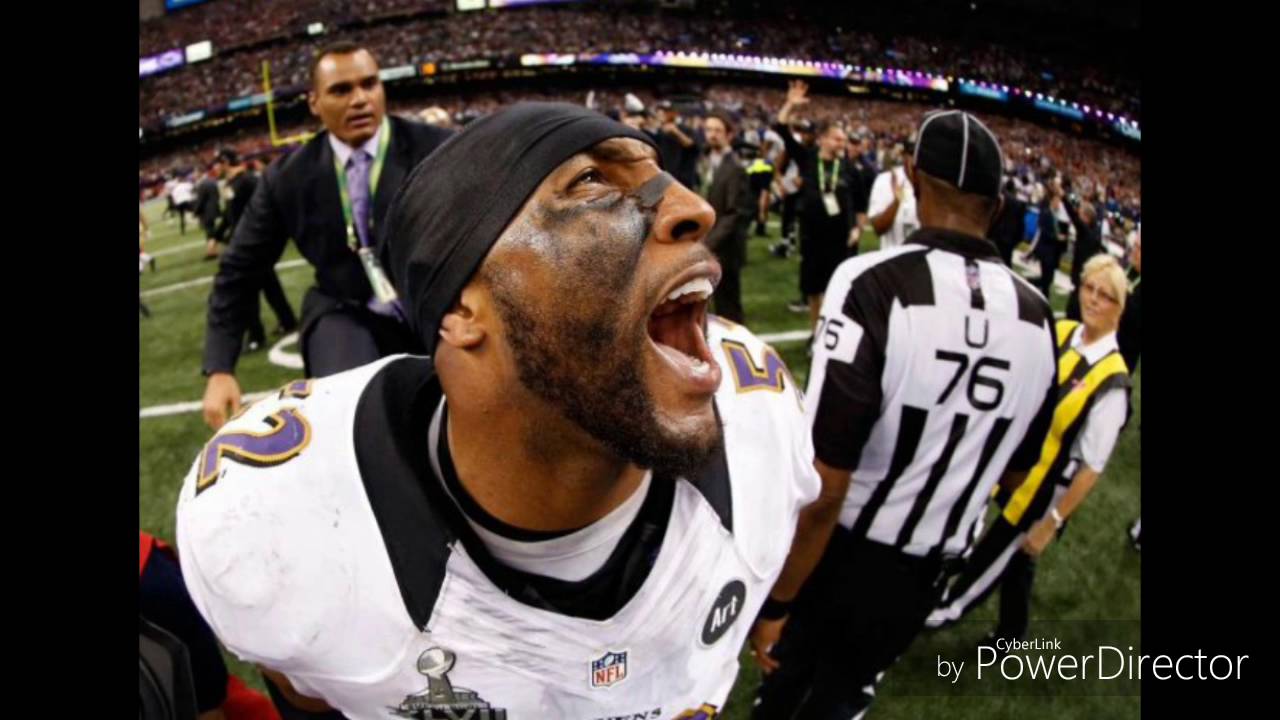
The communal empowerment of singing the fight song at a college football game, making a trip to Graceand to connect with Elvis Presley, getting married at Disney World. Are these religious behaviors? Can a person's fandom of a sports team, a corporate brand, a singer, or a cinematic universe be religious? Well, it all depends on how we define what religion is, or rather, what it does. See, I'm not a fan of the simplistic matching game you sometimes see online. Wokeism is a religion.
Environmentalism is a religion. Here are 10 reasons why. These arguments usually flatten both religion and the thing being compared, turning them into a checklist of surface level similarities.
But at the same time, I'm the same guy who published videos saying that baseball players engage in magical rituals, Silicon Valley tech companies can be religious, and the American flag can be a religious symbol. So what gives? Am I being a hypocrite? What I'm getting at is the classic distinction in religious studies between an essentialist definition of religion and a functionalist definition of religion.
Essentialist or substantive definitions of religion are based on the idea that there's something inherently different about religion than any other cultural phenomenon. In other words, religion is a human experience that's unique in its characteristics. A lot of scholars of religion back in the day, including Edward Tyler, William James, and Rudolph Otto, based their definitions of religion on a substantive foundation.
Tyler defined religion as belief in spiritual beings. Otto argued that religion is all about the numinous experience, a profound sense of awe or fascination, a feeling of tremendous mystery completely beyond human understanding. According to Tyler and Otto, these are characteristics that make religion religion. what makes religion essentially different from other domains of human culture and experience. But substantive definitions don't account for the fact that we see stereotypically religious behaviors playing similar functions in other domains of culture. So to go through those previous videos again, Christians and churches do rituals. But baseball players do rituals too. And social psychologists have found that rituals regardless of these two contexts function to ease psychological anxiety.
Hence, participation in rituals increases in war torn countries. And it also increases among elite athletes in the very stressful environment of professional sports. The rituals playing a similar function. Silicon Valley tech companies encourage employees to find transcendent senses of purpose and identity through their work. Something that's traditionally found in religious communities. Again, a similar function.
And the American flag is an object of devotion and a focal point for communal rituals with strict social norms and taboos on how to treat that object.
Again, something stereotypically reserved for sacred objects in a religious setting. Because the behaviors we call religious overlap so much with other parts of culture, scholars often turn to functional definitions of religion. Instead of asking what religion is, like belief in a god, functionalists ask what religion does.
And the answer is quite a lot. It generates powerful emotions and psychological effects, sets out rules for how to live, builds social hierarchies, and helps people grapple with life and death. Religion also creates solidarity. It pulls people together, channels group energy, and fosters a sense of belonging and a shared identity. According to this view, religion is not defined by doctrines, supernatural beings, or some special inner feeling. It's defined by what certain ideas and behaviors do for people and their communities. This means that religion is not some distinct thing that we can substantively define. It's a label we apply to a bundle of very ordinary human behaviors. Rituals, symbols, moral codes, group identities, hierarchies. None of these are inherently religious until someone decides to call them that. Which brings us back to fandoms. Now, most super fans would scoff at the idea that their devotion to Taylor Swift, Disney, or Star Wars is religious. But if you focus less on the label and more on the functions, what these practices actually accomplish in people's lives and their communities, the parallels to what we usually call religion become impossible to ignore. Let's start with pilgrimage.
Perhaps one of the most widespread and archetypically religious behaviors. The pilgrimage to Mecca or the tomb of Roomie for Muslims. Pilgrimage to the church of the holy supplr in Jerusalem for Christians or the western wall for Jews. The Dajamatsu pilgrimage for devotees of the sea goddess Matsu in Taiwan. Pilgrimages to the holy city of Vanasi for many Hindus or the holy city of Lish for Yazidis. I could go on.
There are a lot of examples. And we see similar special or meaningful journeys within fandoms. Traveling to popular cultural sites such as Elvis Presley's Home Graceland or Dolly Parton's Dollywood. fans of the Twilight series traveling to Forks, Washington, where the series takes place. Fans of Lord of the Rings traveling around New Zealand, where the movies were filmed, or fans of Star Wars traveling into the deserts of Tunisia to see the ruins of Luke Skywalker's childhood home. But this is a surface level comparison unless we can demonstrate that these journeys play a similar function. The cultural anthropologists Victor and Edith Turner developed a few concepts explaining how pilgrimage function on an individual level and on a communal level. The first concept is limonality. Limmonality refers to an inbetween state when pilgrims embark on their journey to a sacred destination. In this liinal phase, pilgrims temporarily leave behind their ordinary lives and social roles, entering a state where normal societal structures are temporarily dissolved.
This gives them the freedom to be someone else. In the case of the Dajia pilgrimage in Taiwan, you might be a project manager back at home, but you're not sitting at your desk anymore. You're a devote of Matsu escorting her through the countryside with your fellow devotees. In this suspended state, pilgrims are open to new insights and profound emotional and psychological transformation. In other words, the pilgrimage disrupts the status quo, providing a fertile ground for personal growth and renewal. This is what makes pilgrimages different from normal travel and why they're so often described as life-changing. For the fandom parallel, considered Disney adults visiting Disney World. Disney movies and theme parks are usually considered a kids thing, but there are a lot of adults who love Disney, and I mean really, really love it. They visit Disney theme parks several times a year. They collect Disney merch and display it in their homes. And they describe being in a Disney branded place as magical. It can be an intense devotion. And the scholar of religion Jodie Ikller Lavine says that the treks to Disney World that Disney adults make are akin to religious pilgrimages. In her research on Disney adults, she found thousands participate in rituals like wedding proposals, birthday celebrations, and pregnancy announcements. The Disney fans I've observed in the parks and online find immense meaning there. People don't just celebrate at Disney. They mourn lost relatives. They go to Disney World to mark surviving cancer. They go there for one last trip before they die. If these Disney trips are used to celebrate weddings, mourn the dead, or mark survival from cancer, you know, moments of ultimate concern, from a functionalist perspective, the pilgrimage to Disney operates a lot like the limonality of pilgrimages as defined by Victor and Edith Turner. fans leave behind the routines of ordinary life and enter a liinal space where everyday roles are suspended. You're not an accountant or a teacher anymore. You're a Disney fan or shall we say devote living in a world where the normal rules are temporarily dissolved. And in that space, people report powerful experiences of meaning, identity, and transformation. The same kinds of outcomes that religious pilgrims have long described. Edith and Victor Turner also developed the idea of communas, which describes the intense solidarity and equality experienced by people on pilgrimage. Your different social or economic backgrounds don't matter.
You're all in this together, journeying side by side out of shared devotion.
Pilgrimage thus functions to reinforce social bonds, creating a sense of belonging and shared purpose, which is a sharp contrast to the structured hierarchies of everyday life. The Hajj in Islam makes this especially clear.
Every pilgrim, whether rich or poor, wears the same simple white garments, erasing outward differences of wealth or status and emphasizing their equality before God. Now, a lot of fan pilgrimages are solitary, but the pop culture scholars Lin Zubernus and Katherine Larson point to fan conventions as a clear expression of communas. They argue that conventions create a temporary space where normal rules of behavior and self-exression are suspended, replaced by a sense of belonging among people with the same passion. At Comic-Con or anime conventions, fans celebrate together.
They cosplay as favorite characters and experiment with new identities. These spaces embody what the Turners described, the freedom to step outside of one's ordinary social role, if only for a few days, and then to re-enter everyday life, transformed by the solidarity and intensity of the experience. The scholar of religion, America Wolf, argues that cosplay makes this especially vivid. When thousands of people gather dressed as Voldemort, Sailor Moon, or Princess Leia, they're not just wearing costumes. They're taking part in an act of self-transformation, signaling that they belong to a community much larger than themselves. In that space, a lawyer, a high school teacher, and a delivery driver can all kneel side by side for a photo op as Sith Lords with their everyday social role suspended in favor of their shared fan identity. That sense of equality and belonging is what the Turners called Communitos. Now, before we go any further, let me pause because I don't want to be misunderstood. I get it. Cosplay at Comic-Con is not the same as the Hajj in Mecca or any religious pilgrimage. I'm not saying that dawning the is equivalent to dressing up as Sailor Moon. The Hajj is a central pillar of Islam commanded by God and for many Muslims is a once-in-a-lifetime act that involves weeks or months of preparation and substantial financial commitment. It's also profoundly transformative. Pilgrims return home with a renewed sense of faith and an elevated status in their communities as someone who has completed the sacred journey. What I am saying is that as students of the academic study of religion, we can use comparison as a tool not to flatten things into sameness but to highlight the shared functions of two seemingly different human behaviors.
The scholar of religion, Jonathan C.
Smith, hammered this point home. He argued that the statement X resembles Y is logically incomplete. That's the sort of thing you see in those edgy hot takes online. Comparison is always selective and to be responsible it needs a third term. X resembles Y with respect to something and that something is what the scholar is actually interested in. Maybe it's a question or a specific model or theory. But without that clause with respect to, comparison turns into lazy punditry. And Smith puts it memorably. A comparison is a disciplined exaggeration in the service of knowledge. In other words, comparison is a strategy of redescription. It doesn't collapse everything into being the same, but it redescribes them to help us see human behavior in a new light. So, in our case here, I'm redescribing fan conventions as a pilgrimage as a way to highlight something about the behavior that we might otherwise miss. Comic-Con resembles the Hajj with respect to how each suspends ordinary social roles and fosters solidarity, what Victor and Edith Turner called entering a state of limonality and experiencing communas.
I'm not equating the sacred status of Mecca or Jerusalem or Varonasi with the San Diego Convention Center, but I am saying that both contexts are humans doing human things, setting out on a journey during which they step outside their ordinary roles and enter a space where everyday hierarchies fade away and a shared identity takes over. An experience that many describe as deeply transformative and even transcendent.
That's the discipline exaggeration that Jonathan Z. Smith was talking about.
Okay, so let's turn to another disciplined exaggeration. Wherever you find a religious community, you'll find rules, norms, and hierarchies, as well as debates about who gets to decide them. One of the most important ways that some religious traditions define themselves is through a canon, a collection of texts and stories that are considered authoritative. Take early Christianity for example. By the 4th century, leaders like Athanasius of Alexandria were laying down lists of which gospels, letters, and writings should be considered scripture. In his festal letter of 367 CE, Athanasius gives us the first list of the 27 New Testament books we know today. But that did not end the debate. Some Christians were still using texts like the Shepherd of Hermas, which is not in modern Bibles, while others rejected books that later became canonical, like the book of Revelation. The fight over the biblical cannon was messy, political, and deeply tied to questions of authority. Scholars like Dr. David Brackie have demonstrated that cannons in early Christianity were never just neutral lists of books. These lists reflected social conflict, reflecting struggles over who gets to speak for the community and whose voices are authoritative. That brings us to Harry Potter. Religious studies scholar Dr. Christa Dalton points out that the release of Harry Potter and the Cursed Child in 2016 set off a cannon war in the fandom. Was the play part of the real wizarding world? For many fans, the answer was a resounding no. It wasn't fully written by JK Rowling, and for many purists, it felt more like a clumsy fanfiction than an extension of the beloved sevenbook saga. Even Rowling's endorsement of the play didn't settle the matter, just as an early Christianity, an authority figure's claim to authority was not enough to resolve a canon dispute. And the debate didn't stop there. What about the Fantastic Beast films or essays on Pottermore.com? Or perhaps most controversially, what about JK Rowling's tweets? Does a casual tweet from an author suddenly become part of the canon? Fans have wrestled with this question for years. Some incredulous of the idea that a 140 character aside could carry the same weight as a book painstakingly crafted over years. Does her tweet count as canon is a real question in the fandom, one that reveals just how much energy and investment fans pour into boundary making. Dr. Dalton's point, like Dr. Brachie, is that canons are never simply lists of texts. They're a product of an ongoing social process shaped by communal investment, contested boundaries, and ongoing negotiations over authority. Who speaks for a tradition? Who's in and who's out? Harry Potter fans deciding whether to include the cursed child, the movies, or Rowling's tweets are engaged in a similar kind of social process that animated early Christian communities choosing which gospels to include. And battles over legitimacy and norms are not unique to Harry Potter. They show up all across fan cultures, even in everyday exchanges on social media.
Discussion boards and social media are places where fans together create the unofficial rules of their community.
What counts as appropriate discussion, what's worth celebrating, and what crosses the line. For example, in her ethnographic research on the fandom around the teen drama Pretty Little Liars, the sociologist Isabel Gerard found sharp divisions between younger and older fans. The older fans thought the community should focus on the show's big themes. you know, the plot lines, character arcs, the portrayals of female friendship, but the younger fans poured a lot of energy into romantic pairings and speculation about the cast members themselves. Dr. Gerard found that adult fans were deriding younger ones as fan girls or shippers, belittling them as unserious. Dr. Gerard argued that these older fans were doing this to legitimize their own precarious position as viewers of a show clearly marketed for teens. On the surface, this might sound like petty disagreements about a TV show. But zoom out and they look remarkably similar to disputes in religious communities. In both fandoms and religions, these battles over legitimacy reveal deeper struggles about authority, belonging, and identity. Okay, so we've looked at pilgrimages and we've looked at cannons, authority, and disputes over legitimacy.
Now, let's turn to ritual gatherings. If pilgrimage bonds people over the course of a journey, these gatherings do it in a single concentrated burst of energy.
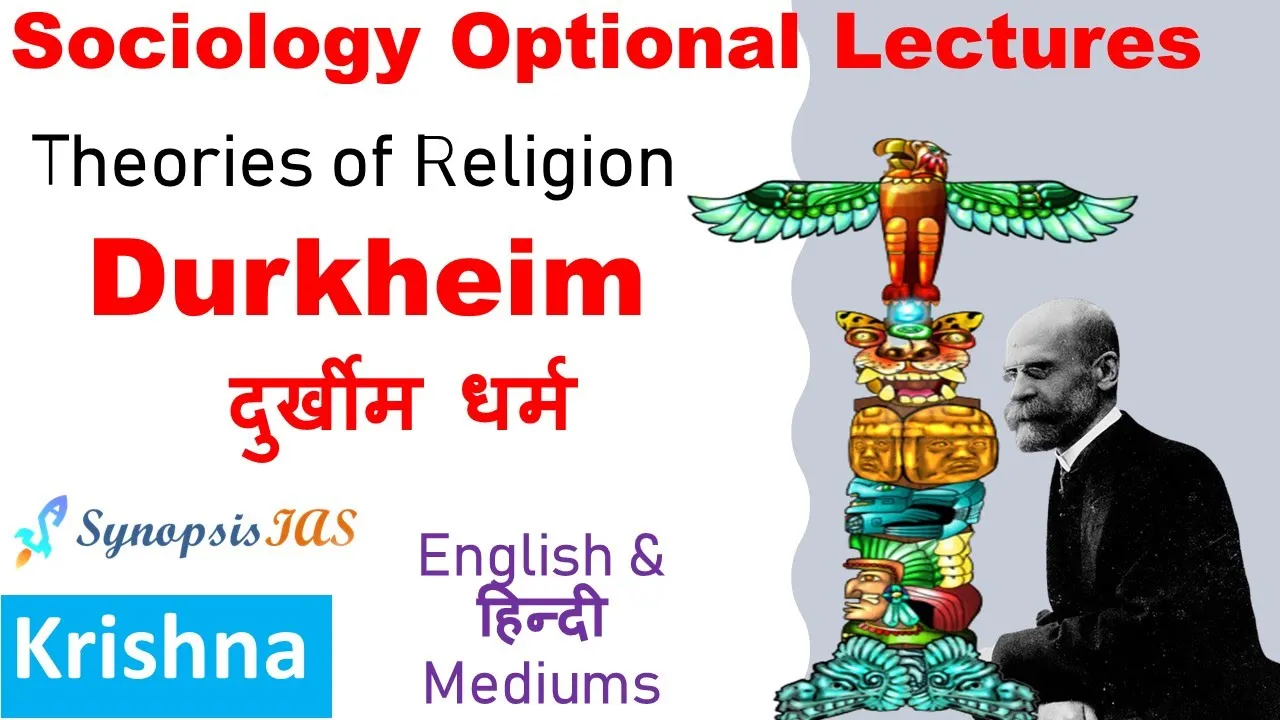
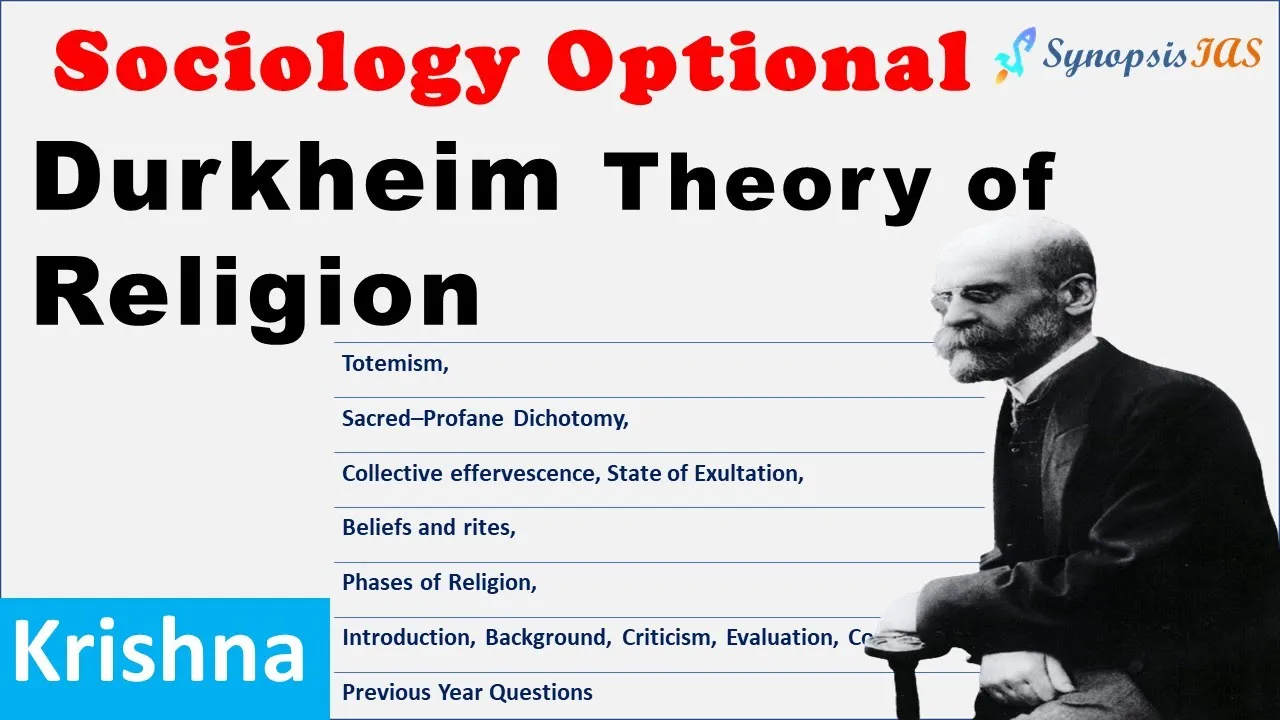
moments when people chant, sing, dance, or celebrate in unison. Religions, stereotypically defined, have plenty of these examples. Haitian voodoo dances, Pentecostal worship services, the ghost festival in China. These large-scale gatherings can generate what the sociologist Emil Durkheim called collective effervescence, a surge of energy, harmony, and excitement that bubbles up when people rally around the same thing at the same time. For Durkheim, the power lies in what happens to the individual. You get pulled outside yourself and swept into a feeling of oneness with the crowd, a sensation people often describe in terms of divine presence or sacredness. In those moments, the crowd itself becomes identified with the object of devotion.
And while Durkheim developed this idea by looking at religions, the same dynamic is easy to see in modern pop culture gatherings, whether it's a concert or a football game. To reach those emotional heights, people temporarily surrender part of themselves in order to become part of something greater. Think of a football fan who paints their bodies in team colors. In that moment, they aren't just individuals. They're embodiment of the team itself. During Taylor Swift's 2023 record-breaking eras tour, fans dressed in elaborate costumes tied to different eras. They traded friendship bracelets with strangers and sang and danced together, sometimes with lifelong friends and sometimes with people they had only just met. One Presbyterian minister and self-identified Swifty, reflecting on the show in New Jersey, put it this way. The participation began long before the show as we all made friendship bracelets, picked our favorite era, and matched our outfits.
We did it for ourselves, for Taylor, and for each other. We did it not to outshine one another, but to join one another. What a gift it was to know I had a part to play in the magic that was created. From a Durkheimeian perspective, what's happening here is collective effervescence being generated by collective ritual. Even back in the early 1900s when Durkheim developed this idea of collective effervescence, he explicitly said the same mechanisms operate in secular contexts like nationalism and showing devotion to a national flag. In the case of a Taylor Swift concert, the bracelets, the outfits, the shared singing, all of it creates a social setting where individual boundaries blur and people feel swept into something larger than themselves. For a few hours, the thousands in that stadium were a unified body, a community brought into being by their shared devotion to one individual.
And that's the heart of Durkheim's point. The sacred is not necessarily about gods. It's about the power of a group to transform ordinary activities into experiences that feel transcendent.
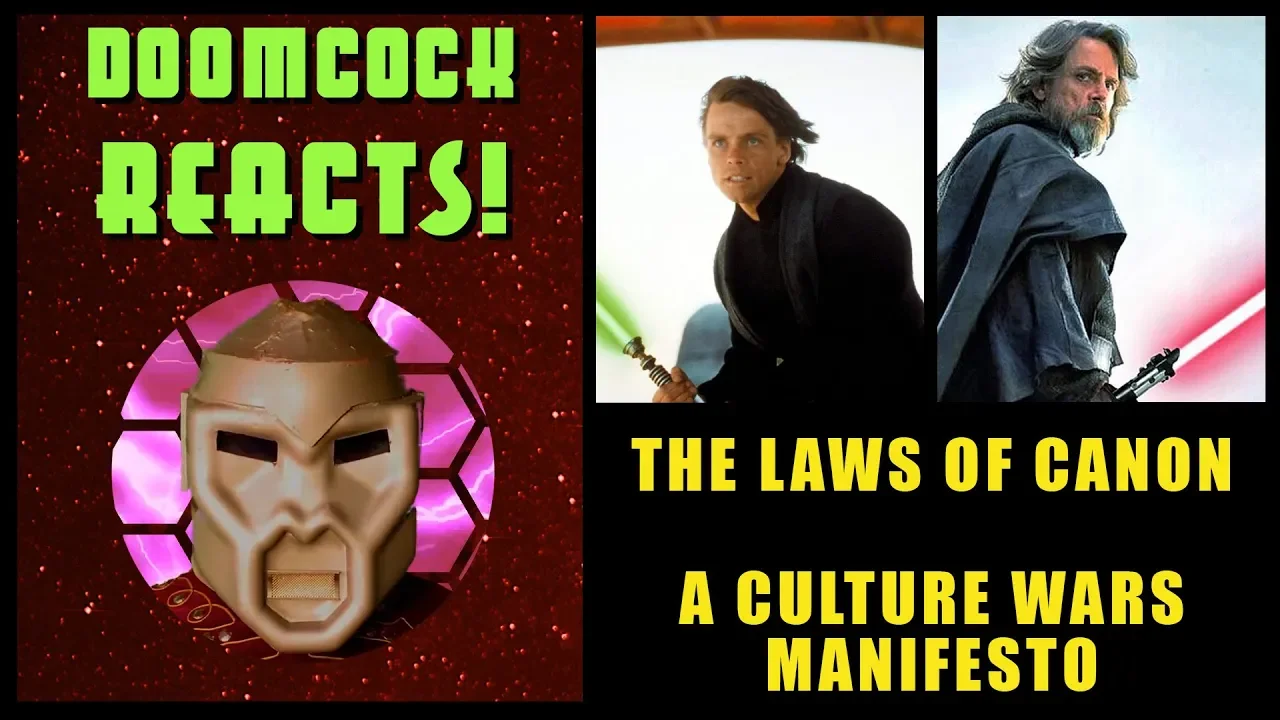
Okay, so let's return to our initial question. Are all of these fan behaviors religious behaviors? We examined a few distinct examples of human behavior, journeying to a specific location that is historically and culturally relevant to a particular community and how those journeys function to transform individuals and communities. We also examine the practice of choosing certain works as authoritative, exemplary, and foundational within a specific community, and how those authoritative bodies of texts can function by prescribing boundaries of acceptable belief and practice. And we examined how communal gatherings that are focused on an object of devotion can function to create a heightened state of communal unity, emotional intensity, and shared identity with that object. Sure, we could use religiony sounding terms for these behaviors like pilgrimage or canon or worship, but I would argue that these are not substantively different behaviors than a journey to Luke Skywalker's childhood home in Tunisia, the Disney enforced Star Wars cannon or the Star Wars Celebration Convention.
These are not uniquely religious or non-religious behaviors. They are human behaviors, mundane human behaviors that humans create and deploy in all domains of culture. Sometimes the special journey honors a deity like the goddess Matsu and other times the special journey pays homage to a larger than-l life figure like Elvis. I'll reiterate that I'm not saying that Matsu and Elvis are the same. What I am saying is that the practice of pilgrimage plays a similar function in each case. Both bring communities together, both create meaning through travel and ritual, and both reinforce a shared identity tied to a revered figure. Calling one religious and the other non-religion is itself a defensible choice. But when I choose to call both religious, I would argue it's also a defensible choice. A deliberate, disciplined comparison to highlight that what we label as religion is really a bundle of human behaviors repurposed in different contexts for different goals and functions. This is why scholars of religion and pop culture increasingly argue that fandom could be understood as religious behavior. We overlook the similarities only because of a knee-jerk essentialist tendency. The tendency to treat the category of religion as a special separate category set apart from other aspects of human life. Consider a thought experiment from the religious studies scholar Steve Ramy. At the University of Alabama, Saturday game days are sometimes jokingly called church. But Dr. Ramy says, "Try flipping the comparison. Switching the order to call a worship service the game day of Christianity elevates the game day experience as the norm. a norm that we find surprisingly mimicked in gatherings that people commonly see as religious.
In other words, calling Sunday worship the game day of Christianity forces us to see the football stadium as the baseline. Forces us to see it as the ordinary human activity and the church service as the variation of it. Fans streaming into the stadium, chanting roll tide, tailgating, wearing crimson jerseys. Suddenly, those look a lot like ritual behaviors. And when you see it this way, perhaps chanting Roll Tide is no different than a call to prayer. And speaking of ritualized shouting, a few months ago, the season finale of Abolish Everything dropped on Nebula. Abolish Everything is a competition show where comedian abolitionists pick a pet peeve that they think should be banned from society, while a panel of improvisers, dubbed the political establishment, defend the status quo. Each episode ends with the audience choosing their champion, and the winners return for the finale to settle it once and for all.
It's absurd. It's hilarious and it's exclusive only on Nebula. Nebula is a streaming platform built and owned by independent creators. It's where we get to make big, ambitious, and sometimes very weird projects you can't watch anywhere else. Everything from competition shows like Jet Lag to heavy-hitting documentaries like 17 Pages, which is all about one of the biggest scientific controversies of the 20th century. Subscribing doesn't just give you a huge library of thoughtful and entertaining content. It also directly supports the people making it.
And that includes me. I'm a Nebula creator. I upload all of my videos there early, including some exclusive videos, which means your subscription is a vote of confidence in the kind of in-depth human-made content that I do here on Religion for Breakfast. As I mentioned, Nebula is creatorowned. It's built from the ground up with independent creators in mind. And every subscription has helped us grow the platform into the prestige streaming service it is for smart original content. With my link, nebula.tv/religionforre, you can get 40% off an annual subscription. That's just $36 for the whole year or three bucks a month. And if you're over subscriptions and really want to lock it in, there's even a lifetime membership. Pay once and you've got Nebula forever. Again, that's nebula.tv/ionforre.
Thanks everyone.
Up Next
11:42
Understanding Atheism: Inside the Sunday Assembly Community
@SoulPancake
514.2K views•2014-03-21

12:54
Triumph of Orthodoxy Icon: Byzantine Art & History Explained
@BenCallan
2.1K views•2024-08-06

9:49
FastAPI vs Flask vs Django: Choosing the Right Python Web Framework
@TechWithTim
302.5K views•2024-05-26

1:42
Game of Thrones Opening Credits: A Cinematic Analysis
@gameofthrones
46.3M views•2011-04-18
Related Study Plans & Knowledge Roadmaps
Structured learning paths in General & Interdisciplinary Studies
general-studies
Elevator Engineering: History, Physics & Cities
01From Hoists to Safety Brakes: The Dawn of Vertical Lift
02Hydraulic vs. Traction: The Engineering Physics of Elevators
03Modern Speed, Safety, and Algorithms
+ 2 more learning modules
12h5 modules
Explore Roadmap
general-studies
Rubber: Material Science, History & Geopolitics
01Origins of Natural Rubber & Mesoamerican History
02The Chemistry of Natural Rubber & Vulcanization
03The Geopolitics of the Rubber Boom & Colonization
+ 2 more learning modules
12h5 modules
Explore Roadmap
general-studies
Containerization: Evolution, Logistics & Trade
01Ancient Trade & Bulk Cargo: Amphorae to Barrels
02The Industrial Revolution & Cardboard Packaging
03The Containerization Revolution: Malcom McLean
+ 2 more learning modules
12h5 modules
Explore Roadmap
general-studies
Textile Tech: Evolution, Labor & Global Impact
01Pre-Industrial Textiles: Handloom & Cottage Industry
02Mechanization: The Spinning Jenny to the Power Loom
03The Factory System & Global Labor Transformation
+ 2 more learning modules
10h5 modules
Explore Roadmap