











![SACANI RESPONDE [FÍSICA QUÂNTICA COM JOÃO JOTA E CÉSAR LENZI] - Ciência Sem Fim #254](https://i.ytimg.com/vi/ZSfikMx5Grc/maxresdefault.jpg)





![[Conférence] A. ASPECT - Des concepts étranges aux technologies de pointe : la mécanique quantiqu](https://i.ytimg.com/vi_webp/WrTEFCHl-Bo/maxresdefault.webp)





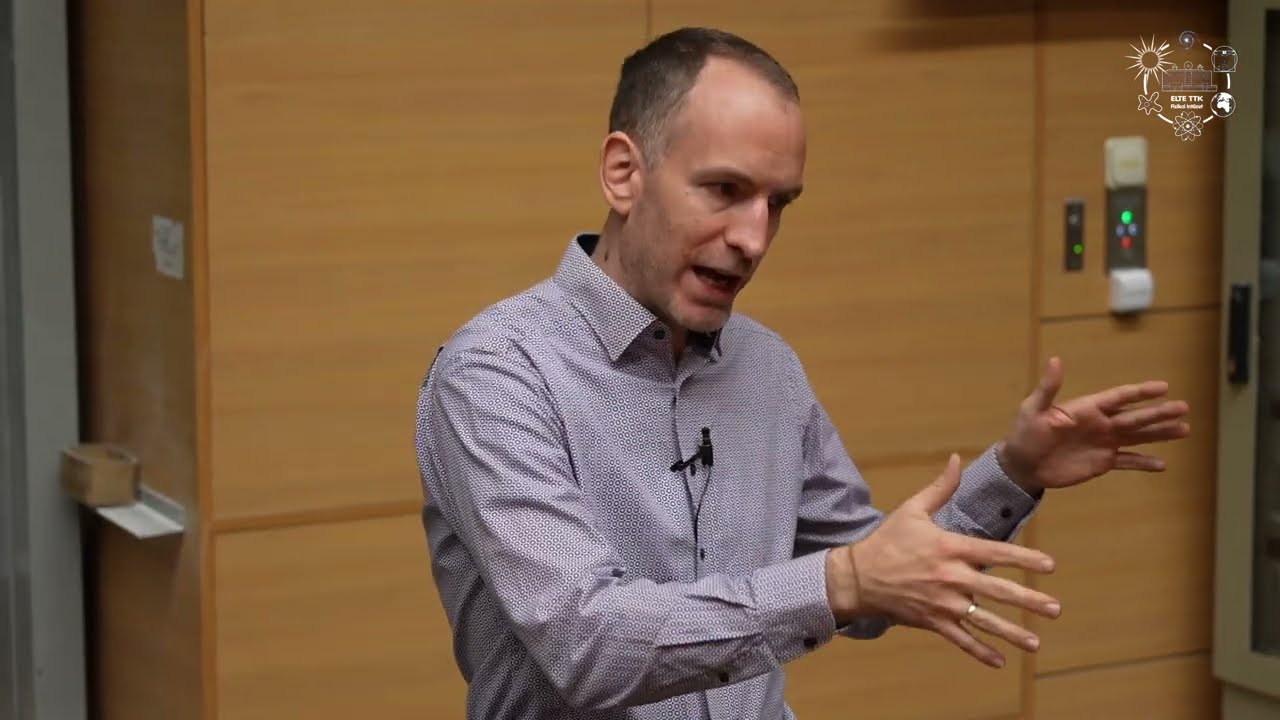










Bell's Inequality is a mathematical constraint that tests whether quantum particles have predetermined properties (local hidden variables) or if their properties are determined only upon measurement. If Einstein's locality principle holds, at least 55% of entangled particle measurements should show correlated results; however, quantum mechanics predicts exactly 50% correlation. Over 20 experiments since 1972 have consistently violated Bell's Inequality, confirming that quantum particles do not have predetermined properties and that entangled particles can coordinate their states instantaneously across any distance, violating the classical assumption of locality.
Bell's Inequality Explained: Quantum Mechanics vs. Locality
Added:The concept of Quantum Entanglement, specifically how the physical states of two or more particles can become inextricably linked regardless of distance.
The EPR (Einstein-Podolsky-Rosen) Paradox, which questioned the completeness of quantum mechanics and proposed the existence of 'local hidden variables'.
The classical physics definitions of Locality (forces cannot travel faster than the speed of light) and Realism (objects have definite properties before they are measured).
The fundamentals of Quantum Superposition and Measurement, including wave-function collapse and the probabilistic nature of quantum states.
Experimental tests of Bell's Inequality, including Alain Aspect's landmark 1981 experiments and the 2015 'loophole-free' Bell tests.
The CHSH Inequality (Clauser-Horne-Shimony-Holt), which adapted Bell's theorem into a form that could be practically tested in laboratories.
Quantum Cryptography and Quantum Key Distribution (QKD), particularly the Ekert (E91) protocol which relies on Bell's theorem to detect eavesdroppers.
The physics and applications of Quantum Teleportation and quantum information processing.
Alternative interpretations of Quantum Mechanics (such as the Many-Worlds Interpretation or Bohmian Mechanics) that attempt to resolve the implications of non-locality.
1.6K views63likes6:25Original Release: 2021-05-17
einstein podolski and rosen make an important assumption in their argument namely that things can only affect each other by intersecting in space and time all causality is touching this assumption is called locality things must share the same locality in order to affect each other and the boundaries of this locale are determined by the speed of light bohr's interpretation of quantum mechanics must be wrong because it leads him to violate locality i.e the speed of light in that case if bore's right then whatever it is that allows the entangled particles to coordinate their choices whether it be the power of love or god or the force would have to be a non-local variable coordinating things outside the laws of space and time years later an irish physicist named john bell decided to force the issue in einstein's favor in a 1964 paper he laid the groundwork for a profound experiment the core of his argument is this if einstein is right and things have determined properties before you measure them then god's dice are loaded that is to say if you measure a large number of entangled quantum particles then the results should be constrained in a particular way that reflects their predetermination by some local hidden variable the results of such a game should not be 50 50 but at least 55 45 this is called bell's inequality quantum mechanics predicts the opposite of this the game is fair the dice are perfectly balanced and your chances are always 50 percent to show this bell proposes a version of the einstein podolsky rosen experiment as before pairs of particles are entangled and then sent to be measured by two separate teams however this time each team has a special measuring device the device can measure a particle along one of three different axes which axis is measured for any given particle is chosen by the team for each axis a given particle can measure as either spin up or spin down but since the particles are entangled on a given axis the particle pair must give opposite answers but if each team chooses a different axis then they could both be spin up there is no need for them to coordinate in that case bell points out that if einstein is correct every particle must be predetermined along all three axes before being measured and since the particles are entangled and must maintain conservation of energy they can only come in one of three combination pairs up down up with down up down up up down with down down up and all up with all down for each of these combination pairs there are nine possible measurement outcomes depending on which axis is chosen by which team in a given measurement eg if team a measures axis 1 and team b measures axis 3 and the incoming particles are up down up on the one side and down up down on the other side then the results will be up down or down up depending on which side the point being that they will be alternating and as it turns out if you run through all the possible combinations that will show up then you discover that for the first two combination pairs five of the nine options are alternating they're up down or down up while for the third combination pair all nine options are alternating they're all up down or down up in other words if einstein is correct then at least five ninths of the time i.e 55 percent or more we should be getting alternating pairs the fact that the particles must be determined along all three axes constrains the experimental results in an observable way on the other hand if bohr is correct then the particles are not predetermined along any of the axes the only constraint on boar is that if both teams measure the same axis the answers must be alternating in order to preserve the conservation of energy otherwise bohr has no real constraints on him he doesn't have to coordinate anything beforehand when a measurement is made along a given axis the other two axes remain indeterminate and they don't have to all coordinate all bohr has to worry about are the four possible results of measurement up down down up up up and down down two of these four measurements are alternating the other two are the same so if bore is correct we should expect alternating pairs only about one half of the time or 50 percent the first bell test was performed in 1972 since then well over 20 different bell tests have been performed often varying the parameters using different equipment or technologies and doing everything possible to cover a variety of potential loopholes in the experiment but despite all of that to date every single one of these experiments has supported bore over einstein every experiment has violated bell's inequality by showing alternating pairs 50 of the time you
Up Next
9:48
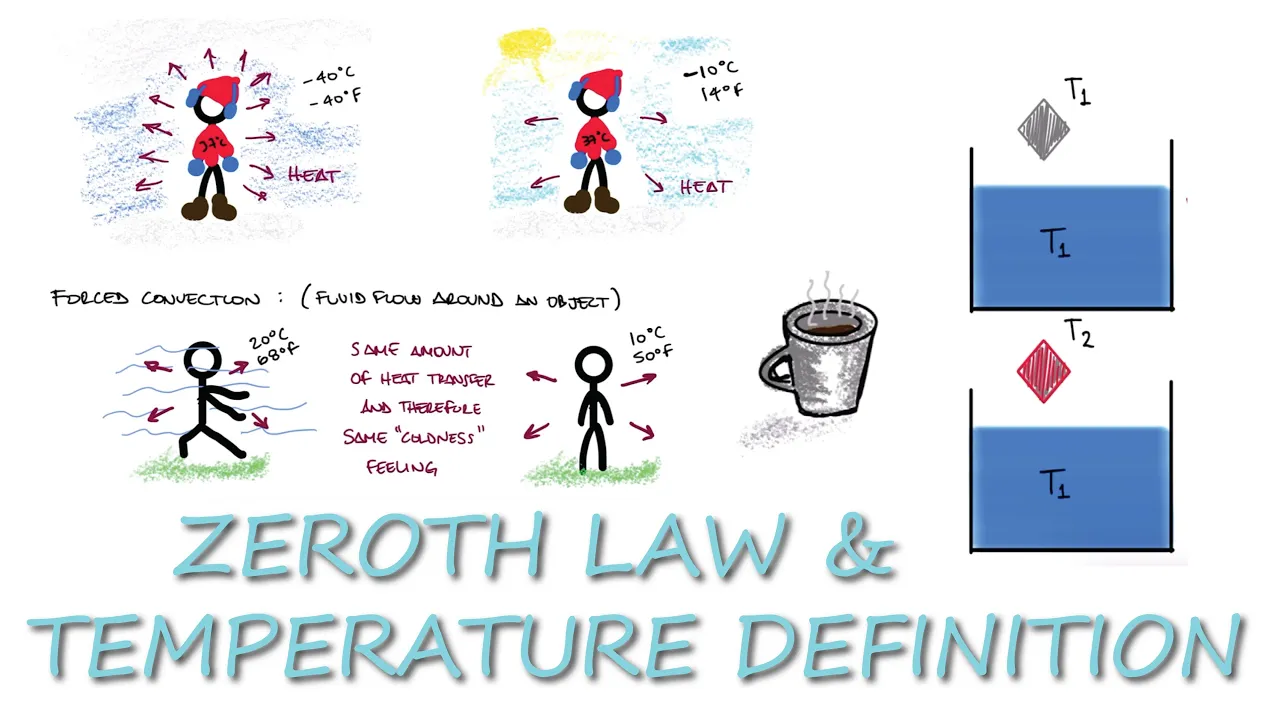
Zeroth Law of Thermodynamics: Temperature Units Explained
@LessBoringLectures
17.8K views•2022-05-07

12:53
21cm Hyperfine Transition in Neutral Hydrogen: Radio Astronomy Basics
@AaronRobertParsons
12.4K views•2011-10-13

32:32
NMR Spin Physics I: Zeeman Effect, Resonance Condition & Larmor Frequency
@nptel-indianinstituteofsci8064
2.3K views•2024-01-17

27:14
Entropy and the Second Law of Thermodynamics Explained
@veritasium
27.5M views•2023-07-01
Related Study Plans & Knowledge Roadmaps
Structured learning paths in Physics
physics
Nuclear Physics (Decay, Fission & Reactors)
01Atomic Structure and the Binding Force
02Radioactive Decay and Half-Life
03Nuclear Fission Mechanics and Chain Reactions
+ 2 more learning modules
12h5 modules
Explore Roadmap
physics
Soft Matter (Polymers, Colloids & Rheology)
01Foundations of Soft Matter & Thermal Forces
02Polymer Physics and Macromolecules
03Colloids, Surfactants, and Self-Assembly
+ 2 more learning modules
38h5 modules
Explore Roadmap
physics
Analytical Mechanics: Lagrangian & Hamiltonian
01Mathematical Foundations: Calculus of Variations
02From Newtonian Mechanics to Constraint Dynamics
03The Principle of Least Action & Lagrangian Mechanics
+ 3 more learning modules
28h6 modules
Explore Roadmap
physics
General Relativity (Spacetime & Cosmology)
01Foundations of Relativity: Special Relativity
02The Geometry of Spacetime: Equivalence Principle & Curvature
03Einstein's Field Equations: The Mathematics of Gravity
+ 2 more learning modules
55h5 modules
Explore Roadmap