











![[Full] 나의 두 번째 교과서 - 고대 문명 4강 고대 이집트의 신과 함께](https://i.ytimg.com/vi/xQePhKoZB7k/maxresdefault.jpg)





![|🍷🗿• Mitologias |REACT: Mitologias é uma Piada [@GuilhermeAnalisa] #17 •|](https://i.ytimg.com/vi/VcmwnwAH8sU/maxresdefault.jpg)


Greek and Roman mythology, while often conflated in popular culture, represent distinct religious traditions that merged through syncretism; Romans adopted Greek cultural elements including artistic imagery and heroic narratives while maintaining their own indigenous religious practices centered on Jupiter as the chief deity, with the resulting mythology serving primarily to construct Roman national identity rather than recording historical facts, and this syncretized tradition persisted through Christianization by transforming into literary and artistic heritage that continues to influence Western culture today.
Greek vs Roman Mythology: Untangling the Gods and Legends
Added:Familiarity with the major deities of the classical Greek pantheon (e.g., Zeus, Athena, Poseidon) and their core mythological narratives.
Basic historical understanding of the chronological timeline and geographical locations of Ancient Greece and the Roman Republic/Empire.
An understanding of the distinction between 'mythology' (narrative lore) and 'cultic practices' (active religious rituals, priesthoods, and civic sacrifices) in ancient societies.
The concept of cultural syncretism, specifically how polytheistic cultures historically merged, adapted, and equated foreign deities with their own.
An in-depth study of classical literary epics, such as Virgil's 'Aeneid' and Ovid's 'Metamorphoses', to analyze how Greek myths were adapted for Roman political and moral agendas.
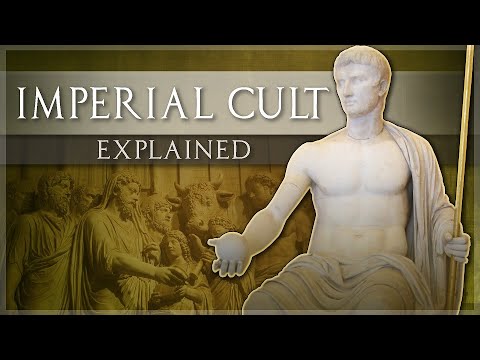
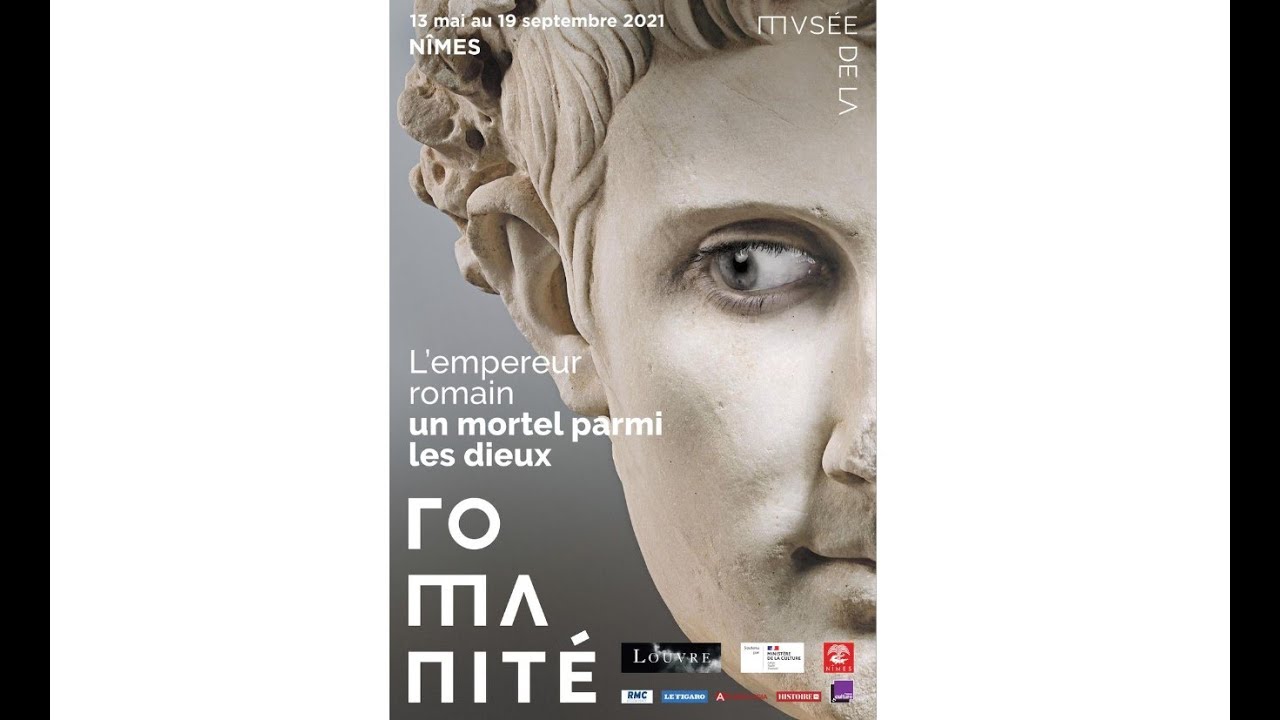
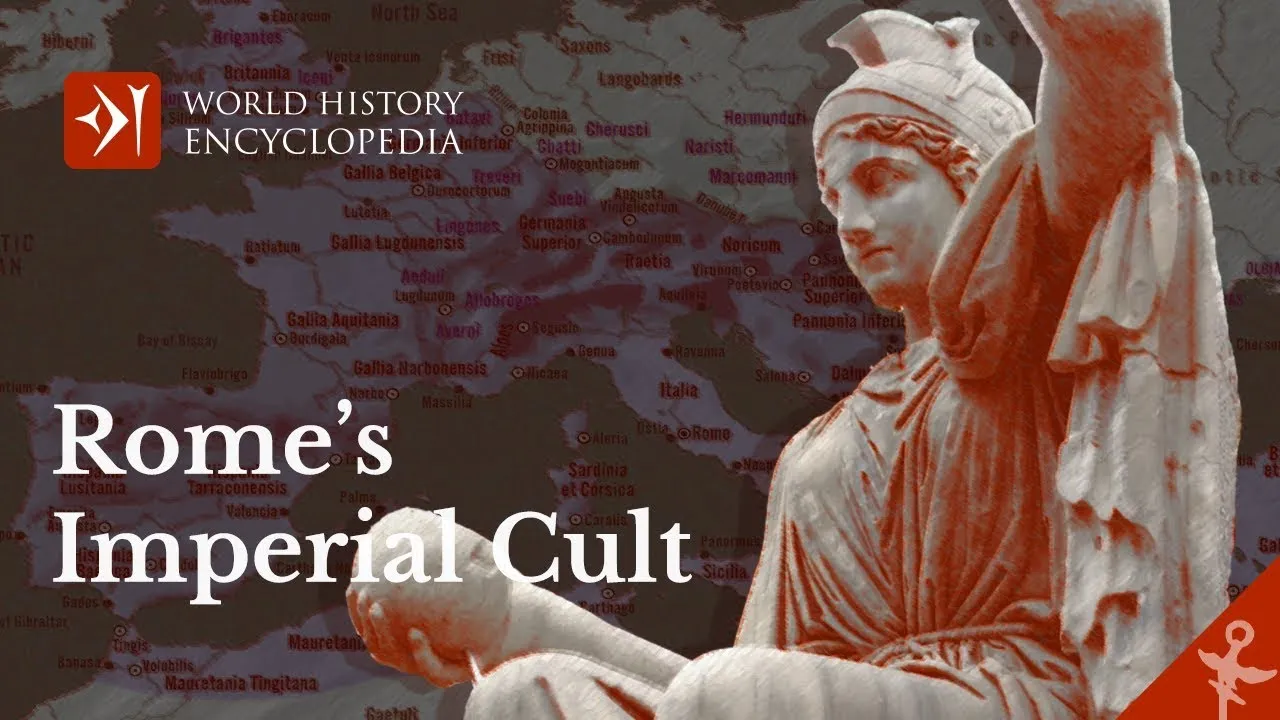
Investigation into the Roman Imperial Cult and how the political deification of emperors blended statecraft with traditional religious framework.
Analysis of the historical transition from Greco-Roman polytheism to Christianity, exploring how pagan iconographies and calendar rituals were absorbed or contested.
Comparative mythology studies examining how the Greco-Roman syncretic model contrasts with other neighboring belief systems, such as Egyptian, Norse, or Near Eastern mythologies.
518.4K views3.2Klikes1:37:45Original Release: 2019-11-13
Tonight we're going to try to untangle uh Greek and Roman mythology and it's um uh I was talking to Elizabeth before this and she wasn't had never even asked the question there was any difference at all between Greek and Roman mythology.
Aren't they just Greco Roman religion?
And so we'll see if we can kind of uh do that a little bit of that untangling.
This is actually uh a topic that Erjun requested and he's unfortunately because of his schedule not able to be here but he's I'm sure joining us in recording.
So hi Arjun. So the gods I'd say of Greek and Roman mythology are still with us in our popular culture. These are just a couple um sets of the pantheon from a movie called Clash of the Titans in the 80s and then a remake that they recently made of it. Clash of the Titans but they're actually gods in all kinds of movies. everything from um Roman gods, you know, to the Marvel comics often have or the DC ones, I guess, are the ones that have uh interspersed with Roman mythology, right? Um um the Latin and Greek versions when we have them are often synretized.
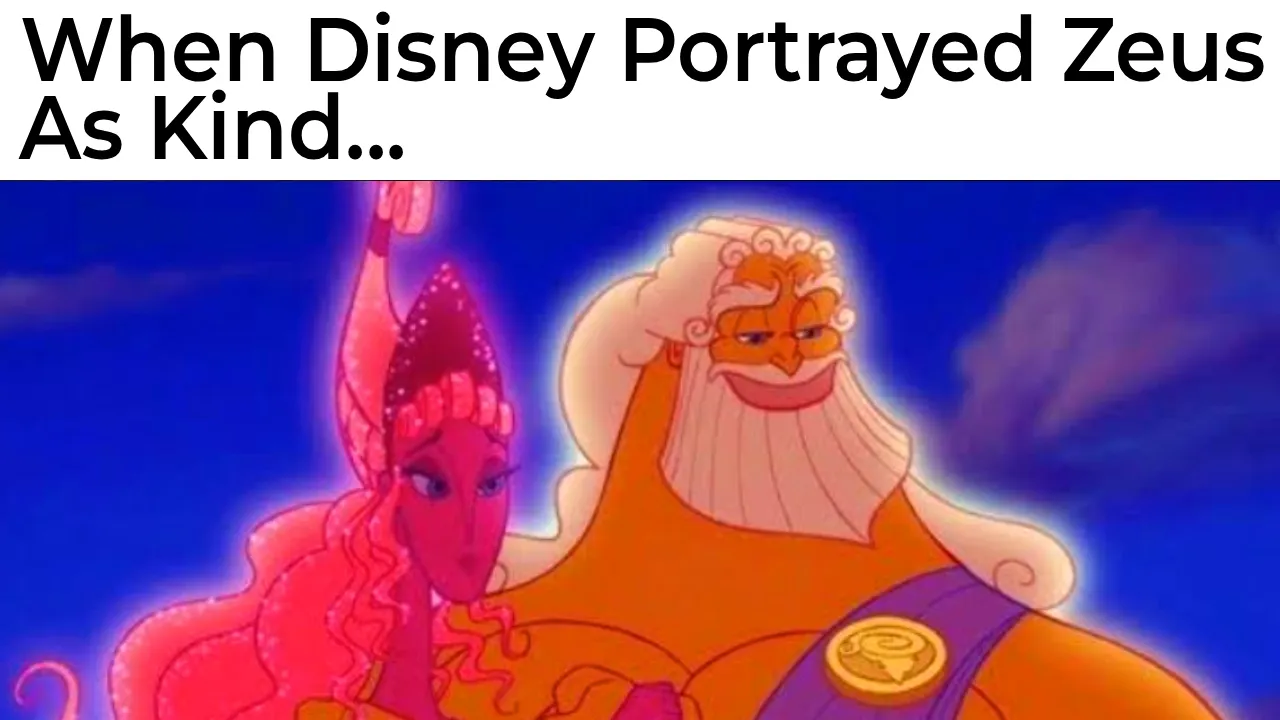
So, for example, this is all the gods from the cartoon Hercules. And so, Hercules is the Latin uh name of Heracles, the Greek hero. So, this is a Roman hero Hercules, but Hercules when he's running around, he's talking not to Jupiter and Saturn, I believe, in the movie, but he's talking to people like Hades and uh and Zeus, which is to say the Greek version. So, it's totally intermixed, right?
Oh, here it is. Yeah. Hercules, Latin, Heracles, Greek. And so, we uh in English anyway may know the god or hero by a Latin name. Um but even then we're probably going to know the stories um as they're coming from us or at least the originals from ancient Greek mythology as opposed to um let's say if they were originally in in Latin mythology, Roman mythology.
Uh another example is we usually say Ulisses even though the original Greek hero is Odysius. So Ulisses is the Roman version and we think of though um the great Greek epic the uh the Odyssey um which we use that word but anyway we have Ulisses running around in the Odyssey right you know we know that that's probably Odysius but anyway the movies are Ulyses so sometimes our picture actually of these gods comes a little bit more from the Roman side. So, um, there's been a big, uh, bump in the amount of that the character, the god Aries gets a lot of play these days. So, he's a big character like in Zena Warrior Princess.
He's a big character in or in the Wonder Woman saga, I guess. Um, and and yet Aries um, as a god, the Greek god, is of very little importance at all to Greek mythology. He's not anywhere nearly as important. Um whereas Mars uh uh the Roman god with whom Aries is associated actually was a very important god. Um I'm not saying that this doesn't really look a lot like how we picture Mars or neither does this. But any any event um the fact that the guy is important is because more probably more because of Mars than because of Aries. Um a couple places we definitely have the Roman name and the Roman conceptions. So for example our Valentine's Day with the little cupids running around. Um, that's generally speaking Cupid, the Latin god who is associated with the Greek god Aeros. And Aeros though is not usually depicted as this little cherub kid, you know, it's actually usually a anyway a young man. And so we're seeing that as one of the examples where it's more the Roman myth and name that have survived for us.
Um, like I say, often it's just totally mixed. So Hercules, you know, is the, you know, son here of the Greek god Zeus. Um, as opposed to, you know, making it all one or the other. So, usually we use Greek stories, Greek origins, but we have whatever name suits us. Actually, like it says here, like with Disney, we often just make the stories up, so they may not may not relate too much to the actual original mythology at all.
And the high five.
Yeah, they do a lot of high-fiving in ancient Greece, right? in ancient Rome.
All right. So, one place where we have all the Latin names where those predominate forestes and the planets and so obviously Mercury, Venus, Mars, Jupiter, Saturn, Uranus, Neptune, and even poor Pluto that doesn't get to be a planet anymore. Uh, ice dwarfs. Uh and then the biggest of the uh the dwarf planets, the asteroids are series and Vesta as opposed to then the associated Greek gods Hermes, Aphrodite, Aries, Zeus, Kronos, Orinos. Probably should say this now. I don't know. Anyway, Poseidon, uh Deer, Hestia, Hades, right?
Okay. So, I want to cover a couple things in this presentation. So first, you know, who are the Roman gods? And for me, I always assume when I want to show Roman stuff, it's mosaics, right?
As opposed to the Greek gods, which are pots, right? Anyway, so what Greek gods are they all associated with? We kind of went through associations there on the planets of some of the main ones. How did those associations come about? So why do we see here Neptune as equaling Poseidon?
So the Greek the Roman god Neptune on the left, the Greek god Poseidon, they both got trident. They're both they both have seahorses hippocampus. Um that one doesn't have it on that pot, but he does it on other pots. How did the associations come about? To what extent? So if it is the Roman god totally different from the Greek counterpart and not the same um want to ask a little bit, step back a little bit and say, well, what is mythology at all anyway? And how in a way maybe is that different from um in contemporary religion u modern ideas in for example the Abrahamic traditions of Judaism, Christianity and Islam of scripture? Uh how is that different from uh ancient traditions of telling this or is it different?
And question, did these Romans actually believe in the gods? Or if they believed in the gods, did they actually believe these stories, the myths of them, which sometimes seem uh pretty outlandish and amazing? And therefore, what role did mythology play in ancient Roman religion? And essentially um by correspondence how different a role is it for example than uh in contemporary religions and Abrahamic religions the role of Quran or Torah or the Bible um compared to ancient myths and so and then also I'm going to also try to say um so what are some of the historical lenses as we look back now throughout the ages from where we are now in the essentially modern blockbuster action movies uh through all the different past to get to uh back in antiquity when the gods were actually revered uh as actual gods. So, how are we distorting or what are the different lenses that have distorted our picture of the gods today?
All right. Uh Rome is a big place, big empire. Uh and so you know if we're going to talk about any topic like this there's going to be a lot of complexity um you know from how things are practiced from the one end to the other end of the empire.
Uh and of course there's also a huge scope of time and so um it's a time and place. You know in terms of scope we're I'm going to really focus in you know on the city of Rome as opposed to um a belief or practice let's say what the legions are doing on the frontiers of uh of Hrien's wall. Uh likewise we'll look at particular moments I think uh of the archaic period and then also um when the myths are kind of getting written down in terms of the timeline. So for this timeline here I've set up essentially the main um timeline of the western empire and its predecessors. So the empire its predecessors the Roman Republic and the period of the legendary period of the kings of Rome that uh where a kingdom preceded uh the Roman Republic almost certainly. However, we don't really have actual history of it.
We have instead um mytho historic accounts. So essentially a period of time where the Romans tell stories that about kings, ancient kings uh that seem like their history but in fact are are actually mythtelling of of a different kind. So we have from the date of the traditional founding of Rome 753 to uh the period of those seven legendary kings to the found their overthrow the foundation of the Roman Republic. Um at that time the major influences of the early Romans so their neighbors the Atruscans in the north and uh also Campa and then in southern Italy the Greeks who have um settled down there. uh the different wars against uh uh Puris first and then the Carthaginians that cause Rome to uh become a great power in the west and ultimately the biggest power in the Mediterranean by the time of uh the civil wars in Julius Caesar and the foundation of the empire under Augustus and that's that time period right around the meridian of time here um when we switch from BCE to CE or from BC to AD.
That's also when um Augustus is also patronizing um these great poets and also his contemporaries are patronizing Virgil Avid and others who are actually the people that are writing these myths down in the literary format that we then really have. So, a lot of them have been uh composed or orally or in earlier sources that are lost to us and they're all kind of getting through that lens of that middle time through the Roman Empire all the way up till um uh it's uh the pagan empire ends with the conversion of Constantine and ultimately his successor Theodosius who um who makes uh Christianity the official religion of the Roman Empire and does things like for example shut down the pagan games, the Olympics, uh the academy and all the other uh pagan temples and so and then ultimately then the fall of the western empire questions on the timeline.
Yes. Oh wait wait wait we need to um can I have to speak to the microphone? Uh yes. Um in there it says uh the year 285 is division of empire but conversion Christianity you put it in the 4th century.
So there's a early division of the empire. It which is just administrative which is so the empire is still all one in terms of um they're all it's like let's say one state but it has two capitals. Uh and so under the emperor Diolesian at the end of a uh an unrest period of time called the crisis of the 3rd century uh the first strong emperor in a very long time Diolesian decides it's impossible for one emperor and one capital to um to essentially manage this entire state properly with all of the different um frontiers and all the different things. So essentially uh you have this frontier that the Germans are always um pushing against and you have this frontier that the Persians are always um pushing against. And so uh what the what Diolesian does is he divides the empire and there's essentially a capital that's here at Milan and there's a base that's here at Chirer and then there's a capital um that's here at Nika and there's Dialesian goes here to Spaltto and so the eastern empire then is focused on this these frontiers and the western empire on this then at different times from that division. Um sometimes that's maintained where there's two different capitals, but sometimes um one emperor from one side or the other will knock the other one out and just rule the whole thing.
Uh and so one of those times when when an emperor rules the whole thing is the emperor Constantine. And so when he does that, that reunites the empire for a while uh but it's later split again. And so it's not always divided, but essentially that's what this should mean here is the first division of the empire. But the division of the empire administratively is actually a completely separate thing from the conversion of the empire to Christianity which happens later. Uh so the division under dialesian dialesian actually is quite anti-Christian has some Christian persecutions. So, but my point is simply that when uh Constantine when he made Christianity a state religion, he made it for the entire empire, not just for the entire empire. You're exactly right. Yes.
Okay.
And so both the Western Empire and the Eastern Empire are Christian. Uh the Western Empire ends at uh technically at in 453. Uh the Eastern Empire continues until uh uh 1453. So it's like 457 453 it should be I think.
All right. So, I think we tend to have like a picture of Rome that's maybe ourselves a composite picture where we kind of see Rome as its kind of uh late pagan imperial greatness, but we maybe think of it as being Julius Caesar's in charge of it. And so, uh you know, when Caesar is still there, it's still a lot different. and a lot of those monuments and the size and everything like that.
It's it's administratively and politically quite powerful. But all of this uh these later magnificent buildings and everything like that wouldn't have uh been around in in Caesar's time. It's still Augustus who's finding a city that's made of wood and leaving a city that's made of marble. Um and it's still lot many many emperors afterwards that continue to add to it.
Um but as we kind of zoom in anyway on the traditional center of the city um we have the uh capital line hill the palletine hill the Roman forum the campus marshes um it was back the later in the middle ages this becomes the medieval and renaissance city and then across the little bridge here uh is where the Vatican is right and so that's at the outskirts of what would have been the um the ancient city so anyway way in the ancient city as we're kind of looking at it we kind of zoom in to the capital line hill which is kind of the center of the Roman state religion we think of the word capital is uh derived from the fact that the capital line hill is at the center of the you know what essentially the capital of Rome and at the top of that here is uh the temple to Jupiter optimus maximus and so um that means Jupiter the best and the greatest. So there was an original 6th century temple that was destroyed by fire. Uh it's rebuilt in 69 B.CE. There's sub subsequent rebuildings as well. Um but the center of the religion here um throughout the uh period in Rome from the time period of the kings all through the republic all through the pagan part of the empire until um Constantine converts to Christianity in which case uh Jupiter essentially gets displaced. Um although by the way his image stays the same.
This is pretty much where the image of the Christian god comes from but in any event he gets more close but uh that's where we kind of got it. So anyway, so Jupiter um ends up being the um uh this the head in the of the Roman religion.
Uh and and unlike for example um the Greeks who are of all these different citystates of which the most prominent that we are aware of Athens, the main patron there is actually Athena, not the not the chief of the pantheon. So the chief of the pantheon is Zeus. Uh but their chief god in any particular city state might be something different. So for the Romans and for their city um really Zeus, not Zeus, it's Jupiter. So Jupiter's name uh so Latin is the language that the Romans speak. Latin is an italic language. Uh italic uh by way of prototalic. So in other words, an earlier version of the italic languages uh descends back to Indo-Uropean languages. And so back in the prototalic uh there would have been a word that is like juice which means sky and then pater which means father and ultimately pater becomes that in Latin as well. Uh and so that becomes then sky father.
Yes.
Is it like very similar to Sanskrit?
Yes it's very similar to Sanskrit is the question.
So similar to in Sanskrit also this is how it's pronounced. So the the comment is we have to we have to be able to spread this microphone around so otherwise people can't hear.
Yeah. Well, if it's a if it's a short question or comment you you can repeat it.
So the point of it is is that is that um in terms of Sanskrit which is a related language because Sanskrit is also an Indo-European language. um Sanskrit here is almost the same therefore as the protoitalic and and the reality is the reason why linguists in the 19th century um discovered that Indo-Indic languages like Sanskrit are related to languages like Greek and Latin is because they looked at Latin and they looked at Sanskrit and they're like this is crazy these line up like nutoo so there must be something going on and what it turns out is there is a parent language that's lost um of which all of these these languages from um um what's the current Indian languages is something like Erdo you know and um anyway the current indu northern Indian languages uh Iranian uh all the way across to uh Slavic and Russian uh the romance languages and the German languages. So in other words those are all related to each other. Um not every language in between is because there's a bunch of languages in there that um are their own totally unrelated languages like Basque. Um but all these other ones are related. Right? So in Latin then um the genative of Jupiter.
So which is to say Latin has all these case endings. Uh and so it's for us we have a couple words that are like that in English like I, me, mine, he, you know, his, him, those kind of words. Uh Latin all the nouns are like that. And so uh Jupiter is a third declenion noun which begins very irregularly. So Jupiter is the nominative but all of the others are uh go like you know Jovis jo and so as a result of that um the way we say it they would say yovvis yuper um but anyway so by jo if you've heard English people say that by jo I think he's done it that means you're swearing by Jupiter because you that would be in the in the ablative okay can I have the slides Okay.
So if we were be in that temple on the cap, so in the temple to Jupiter Optimus Maximus, there's in fact three um gods that are worshiped there. Jupiter, Manurva and Juno or Juno in her form Juno Regina. So the Juno the queen. Um this is quite normal in a lot of ancient Indo-Uropean religions to have these triads um and to create these kind of god trinities. Um but it is very unusual to have um one man and two women. Uh it's usually in these things this will be two two uh men and one women or just three men. Uh but in any event, we have two uh female gods and one male god uh that are here at the center of the capital and in terms of that religion.
Uh Roman society, we'll just note uh is very very very patriarchal. That's one of the Romans values that they were really excited about. Um the u the potter familas of the family, which is to say father of the family, um has all sorts of uh rights over his entire clan.
um traditionally the right of uh even life or death over over wife and son and sons and daughters um although you it's quite bad taste to to actually exercise that right so people wouldn't look highly on you but in any event um all of those kinds of um those kind of rights within that and ultimately even to um Augustus when he becomes emperor what we call emperor we didn't they didn't use that title back then emperor didn't mean that yet um when he becomes head of the Roman state um the title that he um was most excited to get was Pater Patri which means father of the fatherland. So the Romans again were one of those places that have a fatherland as opposed to your motherland. So it's not like mother England uh it's potter um patria uh in terms of the Roman state. So the birds Yeah. Well, we'll look at the birds in a future slide, but yes, they each have a bird, but we'll look at them in a bit. Okay, so um so Jupiter from the time of the kings is the head of the pantheon and chief god of the state religion. Um it becomes a little bit problematic after uh after the period of the kings because he's the king, right? And so he has all the kind of the regalia that he's wearing of the Roman kings. And so throughout the entire Republican period, um they have to kind of tone down him being kind of a king, uh because they are really, you know, into not emphasizing kings and thinking that kings are bad. Uh and so but then again, when the republic is no longer a thing and and uh there's now emperors that are running it, the emperors are able to be more equated with Jupiter again and so it isn't as hard for Jupiter to be kind of the head of this of the pantheon. Um like I said he's then worshiped as part of this trio. So Juno is his wife and his sister is Manurva. Manurva gets associated with Athena.
There's another triad uh worshiped elsewhere in the early city from the earliest times. Jupiter is also part of this one. Um but the second one consists of himself, Mars, and this relatively mysterious god Quirinus. There really aren't almost any images of Quinus, but this is a coin that he kind of appears on. Um the Romans actually call themselves quirites. Uh and so they and that's in reference to this kind of god Quirinus. And so it's thought to be that that means um men of you know kind of men of Quorinus and that the word probably comes from kind of a compound co-w ver means man. And so viri means men. So it's a co-group of of men, which is to say a um a curia as it comes together.
All of these different assemblies that when we did that um we did a lecture a couple months ago on the Roman constitution. And so the Senate obviously is one of the most famous bodies that the Romans have, but there's also all these curi, which is to say all these assemblies, the tribunal assembly, the uh the centurion assembly, the curial assembly. So where all these curies meet where the Romans um are doing different kinds of republic ministerial functions and things like that. So Curinus then is associated uh with the city founder Ramulus after his death and that's the only place where we get a sense of what he might where where the thing comes from. But that doesn't necessarily mean that the god always was that and it's not entirely clear because we have so little about him. But what he does seem to be is kind of this especially um municipal or um god with the Roman Republic ideas. Right? So all of the people in the republic are quirites because of quirinus.
All right. So how are we finding out what what the oldest parts are? Well, so part of the way we can do it is by looking at um the oldest traditions and the oldest um institutions within the Roman Republic. These are ones that may well go back to the time period of the kings and that includes this group called uh the flamnes or it's a flamin.
Flamnese is the plural here. So um there are archaic tri that archaic triad that we just mentioned of corinus mars and jupiter. Each one of them had a major priest one of the major priests of the Roman uh state called a flamin. Uh and so flamin means apparently he who burns offerings and so it's obviously cognate as you can imagine with the word like flame right so a flamin uh it had to be a patrician uh which is to say the people who are the nobles has to be to be one of these priests um or at least the chief flammans not the lesser flammans Jupiter's priest is called the flamin diialis mars's priest is the flamin martialis or marshialis and then quinus has one called the quirinalis so in other words these are three of the chief priests. The other two um major uh priests in Rome are the pontiffex maximus, which is to say the head pontiff, which is a title that even the pope still has. Uh and then the other one being the Rex sacurum, which is um it's a curious holdover of the title Rex king um as it goes on into this time period of the republic where the republic and Romans hate kings, right?
So he's the king but of the sacchorum of the sacred things, right? Uh and so he's not a king in terms of being able to do anything except for some of those sacred functions that the kings used to have.
Um but any event that's what this the Zorum used to be. Okay. So just look at one of these so we can kind of see how they work. So the flaminialis this is to say the flamin who is the priest uh uh the lead priest for Jupiter has to be a patrician which is to say a nobleman. He has to have gotten married by uh this very sacred sacrament of conferatio ferato which is to say the strict marriage. Normally Romans got married by common law which is they more or less you are sleeping together you're shacked up. Um I don't you have to hardly say more than that you know so people acknowledge the fact that that's happening and so then you're married. Um but for this it's a special ceremony that is much closer to the ceremony that we've preserved in the west uh where we're doing all of the u the special things of witnesses of of making sure the u bride is a virgin and she's wearing white and her father is you know leading her through the whole town and putting her in the hand of the of the um the husband giving her to the new family. And so that's essentially the um it's like the tradition that we have um anyway the origin of our work kind of with the one in the west. So um also very hard to get divorce uh when you go through that as opposed to the regular um common law which is more or less get out you know. So anyway so it's a lot more complicated. So it's the it's the holy marriage right. So upon uh consecration, so when the person is made into uh the flamin, the flamin is then emancipated from his father. And so we mentioned how Romans are very uh uh patriarchal. And so if you're like, let's say my age, my dad's still alive.
He's technically, you know, um got a lot of power over the whole family still as the leader of the whole clan. Um, but since I'm the flamingial and so I'm specifically devoted here to uh to Jupiter, I'm my dad doesn't doesn't get me anymore. I'm just just specifically for Jupiter. Um, he has to wear an apex.
This is a relief. And you can see kind of this hat that the guy has on with the little pointy thing on the top. So he gets to wear a toga pretexta which is to say the big fancy Roman toga. He's allowed a licer. And so if you have ever remember that um we have these things you know fascism has those foss which is to say a bundle uh of sticks and axes and so the the magistrates of the Roman Republic have all these licers who walk in front of them to show their authority. Well in addition to folks like the console which is to say the the chief executives of the Roman Republic uh the flamin here gets a licer as well.
Uh he has a curial seat. So um these seats that ultimately evolved into medieval thrones and he's by uh by right of his office exophysicio he's a member of the senate. Um when he's having a banquet um nobody's allowed to sit in a place that's higher than him except these other two um other two major priests that we mentioned before the pontifix maximus and the rex sacorum.
So, uh, because he's holy to Jupiter, uh, the rest of us can't be eating higher than than him in the place, right? There's a lot of restrictions that go with it, though. So, here's a modern reenactor and what they think the hat looks like.
So, the flamingialis is not allowed to stay outside the city uh, for a single night. So, you can go outside the city, but then you got to come back within the sacred boundaries for for sleeping time.
The guy is not allowed to touch iron.
Um, where did I go? That's more restrictive.
I got it back. Here it is. Okay. He cannot touch iron. He can't get on a horse or even touch a horse. He can't touch dogs, she goats, ivy, beans, raw flesh, flour, leaven, leavened bread.
There's a lot of things you can't touch.
Um, so why iron? So iron, um, you know, uh, Jupiter, you can imagine electricity. with the with the lightning. But a lot of these other things um the idea of it is you are being kept apart from like all the things that you'd have to do to be let's say a soldier or doing like all kinds of other regular stuff. Um he's not allowed to uh visit graves or touch dead bodies.
So there's this ideas of ritual impurity that the dead um are doing that. He can't go to funerals but he can't um anyway go see them. He can't go to a gravesite burial. He's got to wear the hat and he's got a whole bunch of other special garments that he has to wear all times. He's not allowed to sleep away from his own bed for three nights. So, he's in the city, but he has to go back to his own special bed where his bed is actually the feet of which are are smeared with clay uh so that it's connected into the earth and um and nobody else is allowed to sleep in that bed. It's just him. uh if he's going to get a haircut, you can't have a slave do it. Only a free man can cut the hair.
And then you take the leftover hair and any nail clippings if you're clipping fingernails and you have to take them and bury them under a special sacred lucky tree.
Anyway, um anyway, and because he's paired with a priestess, which is to say that woman that he married in that special, she's also a patrician and she and they married in that very special wedding, right? uh she becomes uh the flaminia flaminica dialysis. So she is a special priestess then who also has almost all the same restrictions not the hat and uh and is has to do all kinds of other kind of um religious functions. Uh uh if she dies he and he's becomes a widowerower he's got to resign. That's it. So they are a paired couple um in in this kind of administration. And that's true for a lot of these um flamines. So these these Roman priesthoods. So even though it's a very patriarchal um society in terms of the fathers all being in charge, there's nevertheless um understood both in the divine and here in the priestly world that there needs to be a pairing of the male and the female as the female responsible for certain um functions that they have to do and the the priest is responsible for certain functions. Okay. So, this is meant to be then a priesthood that it sets you apart from doing daily life stuff, right? You can't bake bread.
There's all kinds of things that you're not allowed to do. Um, they're just supposed to serve the god. Uh, in fact, the most famous person that that would have been um chosen to be the flamingial is actually Julius Caesar when he was a kid or a young man. um his uh uh father-in-law SA who had been a lieutenant of uh Salah got the um anyway got the priesthood for him but they never fully consecrated him uh for some technical reason that isn't entirely clear and so he never had the hat on and all that kind of thing. If he had had done that um all of history would have been different because it would have precluded Caesar having any of his later career. He couldn't have been uh console. you're not allowed to be a console if you're if you're the Flammenialis and certainly you can't he can't even leave the city much less go and um rule Gaul and all that kind of thing that he did right so instead he would have been presiding over the cult of Jupiter he would have been uh providing all all over all of Jupiter's festivals all the different sacrifices um anyway so um all of that I kind of just set out to kind of illustrate um the kind of scope of Roman religion which is really focused on like a lot of rules and then a lot of different obligations of what you're supposed to do and that's really at the center of the Roman religion especially more traditionally going back all the way to archaic times.
Um another component of that uh uh and this is more about how then the Romans are interacting with the gods. So it's through um another kind of priesthood called augury.
So since Jupiter is literally sky father, so the father of the sky that is controlling everything from lightning and thunder to the weather, um the Romans really believe that uh Jupiter is continually communicating with them uh via weather, via especially thunder and lightning. But he's also in control of the sky in general. So what birds are doing in the sky, so are they all taking off and flying one direction?
Are they flying together? Are they going different ways? All the different things that might happen. um they understand that to be under Jupiter's control and also uh transmitting messages to them.
Uh but you have to have been trained to know what those messages might be and you have to perform certain rituals and ask certain incantations and and questions in order to um get the right results from what the u what the augury will be. So the auggers for example um will do an incant incantation where they'll ask uh see foss so just to say if foss means good in terms of right with god so as opposed to nayas which means you know against what the god's will is right and so if it is foss for you god if you if jupiter um this is this is to your will um then give me a sign I want to have a sign u and that sign will be one of these these different things that you're kind of asking for and then they'll let all the birds loose and see what happens and you'll watch the birds gone and that is um observed from a platform called an you know an opic of which then we have the word auspicious if the birds fly the right way or inospicious if they fly the wrong way and in result of that question. So the Romans are in continual communication with their gods in this kind of a way.
Okay, so that's kind of just a background of the archaic Roman religion and now we want to get trying to get into the mythology here and we talked about having asking this question about synretatism uh between Jupiter and Zeus.
So Jupiter was definitely a Roman god all the way back and we can even we saw how his name even is a holdover going back to the Indo-European. Um, so what's his connection to the Greek god Zeus?
Totally equated today in the Disney animated classic Hercules and so many other uh movies, but anyway back then.
And actually in this particular case, they actually have a very historic uh uh connection because they are both actually cognate with each other. And this is not true for most of the Greek and Roman gods, but it is true for um uh Zeus and Jupiter. So we talked about how Latin is derived from italic languages that is derived ultimately from this uh hypothetical source Indo-Uropean that also had Sanskrit as its um descendant.
Um likewise Greek um didn't necessarily go through Minian but Minian is an earlier form of Greek anyway. So proto Greek and this is just a mcanian word um also derives from Indo-uropean. So there is a hypothetical or reconstructed word here you know deos which is probably close to Sanskrit as well which means sky. The masonians the very earliest name that they have for their chief god or their sky god is dwayi. So that's attested in linear B inscriptions from the masonians which is that time period that's before the Greek dark ages before the Greeks lose literacy. So it's all the way back to there and then when classical Greece emerges the name of their god is zus right and so those again are derived ultimately from that Indo-European word in italic it went this way it becames juice and then they added this word pater which means father and that's how we get Jupiter right so ultimately therefore it's the same probably god that's going back to the ancient Indo-uropeans um okay so although Oh, Jupiter and the other gods we mentioned um were worshiped by the Romans since their prehistory. The images that we have though of them uh and also for example their attributes by the time we actually get sculptures and this kind of thing in the later republic and the empire have already been substantially influenced by Greek art. And so Elizabeth had pointed out all these birds because she's a bird spotter. And so it turns out that Manurva, um, Juno, and Jupiter all have their own totem bird here. So there's an owl. You can see this is an eagle. Anybody know what that is?
Peacock.
Um, peacock.
Peacock. Yep. And so those are the um those are the sacred animals though not from any kind of past association with uh the Roman gods but with the their Greek counterparts. Right? So we know for example that Athena we know that wise and she's got the owl as her kind of totem that uh that Zeus um has the eagle. The eagle's sent to uh punish Prometheus and he's always it's Zeus's eagle that is uh eating out his liver.
And also for example when he's having the affair with Ganymede he has the eagle come and get get the kid you know or young man to bring him back. Uh likewise um uh with Hera. Hera has uh her servant um what's his name? Argos.
Yeah. Argos who has the all the hundred eyes. And so that becomes the peacock with all of the eyes you know on the back of it at least on decorative feathers. Right. It's a ideological myth that explains why peacocks have these decorative eyes on the on their tail. So um so what happened here is we're already this is actually even this helmet that looks like what the helmet Athena wears, right? So, um there's some romanization of what the gods are looking like, but they've been quite um uh taken over from the iconography and also attributes uh and just in in general the imagery has been massively influenced by their uh Greek counterparts as they've been synchretized together as they've equated Manurva with Athena, Jupiter with Zeus, and Juno with Hera.
Okay. So, how does that happen? So, if we turn all the way back even to Rome at its very beginning when it's just starting out here, you know, uh, you know, it's founded all the way back here in the 700s as a um as a citystate, but it really only is a little tiny city that hasn't have very much um influence.
Even here, it's saying here by 500 years, so just within that monarchical period, it's it's still only just a important city state that has some surrounding territory. and uh and that's true all the way down here to 400. So even at this early time then Rome is simply an important city state among uh the other Latin tribes this kind of pink area and the Latins are simply one of the italic tribes. So these are those people that are speaking that italic language people like the the Samites and everybody. Um, and then they are then in turn surrounded by these people called the Atruscans who are also down here a little bit. And I mean there's Gauls up here who are scaring everybody and Kelts. And then down here though, Greeks have colonized the whole of southern Italy and Sicily. And indeed, this is where we even get the word Greece. So the Greeks, as you may know, don't call themselves Greeks. Uh but it's when they moved here, this area is called Magna Grecia. When the Romans encounter Greeks, that's the place where they're from. And so we because we are kind of descended from the Romans, we use the Roman word for the Greeks. Um so prior to that expansion, the Greeks are already down there. Uh the Atruscans are up to the north. Although the Romans, you know, have many of their own archaic practices uh from the beginning of their history, they're massively influenced by these two uh more sophisticated, more economically and culturally developed neighbors.
Okay, so let's just look at that. I mean, in prosimplified terms here. So, we have those native itallic traditions that the Romans um pull through in order to create their religion and some of those things that we talked about of those um officials and things like that are part of it. So they're are conservative people. They're descended from those italic ancestors. They retain a lot of that stuff. And so that's certainly part of the mix of what becomes Roman uh religion. But there's also though this very heavy influence of the Atruscans who are all around them and more civilized uh and they are actually giving all kinds of different ideas and practices to um the Romans including we talked about that whole thing about Auggury. The Atruscans are the ones who really make the what for the Romans they consider to be a science. It's a science that uh that the Atruscans make up. And so they're getting that whole component of their religion from the Atruscans. But even with all of that um very near at hand influence that the Atruscans have, there's a lot of influences coming from those Greeks that are down there. So Greek citystates are even more influential because they are such cultural innovators. And indeed, one of the things that they're innovating about is celebrating their gods in things like poetry, in sculpture, coming up with inventing things like plays. Um, and especially they're doing things like creating all of these pots for export.
The pots are decorated with all of this iconography. Um, they become their gods therefore become the infectious pop stars of the day. Uh you might go around to old places like the Romans. They might not have all the they have the gods, but they don't have a statue of it. They don't have a pot that has the picture of the god. They don't have stories even necessarily about what the god does. You know what the god does. He rumbles uh and and and tells you whether or not you should go out, you know, what you should do this or that. And you ask the god for these or that favors, but you may not have these elaborate stories of uh where the god came from or why the god is that way or what the god looks like or any of those things. And so they um when you find out find somebody who does have that um it's immediately uh powerful and intriguing and you maybe think well how is that god related to my god right um one of the things that also is true even though the atruscan influence is very close at hand for the Romans uh the Greeks are massively influencing the atruscans so the atruscans also have um a lot less uh formulated mythology and things like that before they start to import all of these Greek ideas. And indeed, one of the things that the Atruscans, they're quite rich, but one of the things that they love to do is import all of that um Greek pottery. And so there's more um Athenian pots in great uh uh great shape uh in Tuscanyany than there is back in Attica, back in Athens because the Atruscans imported so many of the things. And so there's all kinds of these um and they're all about Greek myths and everything like that, but the Atruscans are understanding those pictures now. They know those stories. They're adapting those stories to their own native Atruscan gods who in some cases then influenced the Roman gods.
Okay. So by way then of a simplified overview, the Romans always had their own gods like Jupiter, Manurva, Juno, Corinus, Mars. Um but still when we're back in what I'm calling the mythic period of Rome's history. So that period of the kings, the kings um we don't have good history from that time period. We only have actually what the Romans said about it which is largely a mythical past. Um the Romans were already back then though appropriating for example the idea of setting up statues of their gods. Uh they had gods but now they're going to have a statue of the god and now they're going to make a house uh for that god to live in. that god statue to live in. So temples that are designed on atruscin models and also on Greek models. Um they get that from the atruscans. Um so the Romans though had always had you know like the duties they performed but now from the Greeks they learn stories about them and so that's where we're getting here to the mythology. Right? So this is the vestal virgins in this image and it's in one of these early temples that are these round temples. Um there's a couple of those on the Roman forum that are the more primitive type.
Okay. So as um the Romans are exposed very very early on to Greek myths um they start to write their own versions of these stories and they take uh Greek heroes and they write um new episodes for those heroes that include visiting Rome. And so when you're going back all the way back to the earliest ones of these, uh, it makes very much sense that the ones that they immediately appropriate are the very popular um, Greek heroes, Heracles and Odysius, but in part because those are the guys who do all the traveling. So if you know the story of Odysius, um, he is trying to get home from the Trojan War. uh he's on a boat and he uh keeps on getting uh sailing off course and he has to sail all around the whole Mediterranean uh in order to make his way back home after uh 10 years of wandering. And so in so doing um the Romans are able to say well he's going by where we are. This is our um this is our kind of part of the story. Uh likewise, Pericles um has all of these 12 labors to perform which sent him all around the world, including uh going all the way to uh the edge of the Mediterranean, which is to say where um Spain and Morocco come together, an area we still call the pillars of Hercules.
Um it's because the idea is Heracles goes all the way out there and raises up those uh pillars. And so in one of his la last labors as he's kind of walking home from the pillars of Hercules, he's got brought back all these cattle um that he's stolen. Oh, let's see where we got um and um one of the things that he has done. So he's stolen all these cattle from Garin and that's one of his 12 labors. So when he does that, he goes back according to the Romans uh in the earlier Greek versions, he doesn't go by way of Italy, he goes back by way of Africa or something like that. but now is there writing themselves into the story. He's hanging out in Italy on the way home to uh Greece. And so he's at the site of that's going to be the future site of the city of Rome. Rome doesn't exist yet at this early time with Heracles with Hercules. Uh instead there is a monster that lives there, a guy named Cauus. Um and the Cauus is living under maybe the Aventine Hill. Um and he has a big cave. um and he steals um the cattle from Hercules. So this is also something that goes you know all the way back into Sanskrit and the vadas which is um you know that these early Indo-Uropeans they do a lot of cattle rustling and so some of these again these early stories are about stealing each other's cattle in order to get honor and that kind of a thing and that certainly is in the uh the the Zoroastrian scriptures too. Um and so anyway, Cauus then steals some of them.
He takes them back to his cave and he puts a huge boulder in front of it. Uh and so you can even see like as the story is going, it's an original story with the Romans and yet there's already elements here that are similar to the Adysius story. And so Adysius in his wanderings, he meets this giant named Polyphimas the Cyclops and he steals a bunch of uh cattle and he puts everybody he puts the soldiers into the cave. And so then the and he blocks it up so they can't get out, right? And so in this case it's the other way around. So, he's in there with the the cattle. Uh Hercules um rips there's a bunch of different versions of the story. One of them is he rips the top off the the mountain and then he's in there um shooting arrows down and you know trying to kill Cauus who is a kind of an elemental god who is throwing out smoke and and flames and um depending on what happens in this particular Renaissance portrait he he actually wrestles him ultimately and Hercules is very strong and so he squeezes all the blood out of him and his eyes pop out and all these kind of gory Roman details. So it depends on what happens but in any event it's happening right there in Rome and Heracles Hercules did it right. Uh so essentially as it's these Greeks who traveled it's easier for the Romans to write them into these myths right um generally speaking then as um the Romans like co-opt a bunch of this mythology there's usually a Roman spin on the myth. So even though they say okay well I know you're saying that um uh uh lightning is being hurled by uh Zeus this your god Zeus and thunder as well we know that in fact it's Jupiter who does that and so therefore it must mean that Jupiter and Zeus are the same right and so as they as they start doing this kind of uh synretizing where they say well you're using that word in Greek but the name as we know that is Jupiter so as they start putting it together they never and they nevertheless then start to accept uh some of the Greek myths as um let's say stories that about uh Zeus are now stories about Jupiter.
Nevertheless, in the Roman retelling um they'll tend to um express Roman values instead of the Greek values that they're coming from.
Um so for example um in the Greek myth so as those these earliest kind of creation story that is taking you from um the beginning uh in Greek uh cosmology or mythology when you have chaos and then you have Gaia which is to say the earth uh and then you have uh uh Orionis which is to say the sky um so that's like the very first um kind of cosmic u uh forces that exist in kind of the Greek pantheon. on. So, the sky and and earth give birth to the first race of gods in the in the Greek myths, which are the Titans. And the chief of the Titans uh is Kronos. And then his wife is his sister, Rehea. Uh and so, at a certain point, in order to overthrow the father, Sky, um Kronos uh attacks and and uh castrates him, right? And so the uh the causing the you know causing monsters and and Aphrodite and all kinds to people to be not Aphrodite monsters in this case to form uh during the castration. So because of that history that Kronos had in overthrowing his own father, then later when he's kind of uh king of the gods and he and Rehea keep having all of these ne next generation of of god kids who are going to be the Olympians um as their babies he swallows each one of them, right? And so one by one he swallows them up inside of him so that uh they can't grow up to overthrow him. Uh but ultimately what ends up happening is that Rehea um gets fed up with this. She has her her last Olympian kid uh who is Zeus and she hides him on Cree uh and instead gets a big rock, gives that to Kronos. Eats the rock and so then it allows Zeus to grow up and he's able to overthrow his father uh by making um his father throw up all his brothers and sisters who uh come out and become the Olympian gods. There's a question. One sec.
Me first.
Um, question. If Zeus was then grows up on cre before returning to fight his father, does this mean he was raised by Manoans like the humans?
Uh, I don't think yet because I don't think that we're going to have all these people around. So, the Manowans are going to be um, you know, a later thing.
So, this is at the very earliest prehistory in terms of kind of like uh, Greek cosmology. Um, so I I'm actually forgetting who he's raised by, but he's raised kind of in secret and it's only later that Kronos realizes that he's been tricked and the guys and the, you know, he's got one kid that's running around out there.
But yeah, it is maybe one of the reasons why they're thinking about it uh is because the the Greeks remember the Mowans as being, you know, like an early civilization. And so it could be there's a connection there.
Just a quick comment. This is so similar to one of our mythology story about how Krishna the god god Krishna came to the world where his um his uncle uh killed all his um uh all Krishna's brother and sister and Krishna was the eighth child and uh he was uh Krishna's mother tricked uh the uncle and uh sent him across um uh to another place and uh yep that's how Krishna was saved and then he grew up killed his uncle then became a king.
Yeah. So it's so similar to um that story. We're going to have to do one on other comparative mythology because there is this amazing interesting things across um not only even among related peoples because Indo-Uropean all the languages and the groups ultimately do go back to the same thing but actually there's these also archetypes that recur in all kinds of even unrelated um mythic traditions but certainly within that that's an interesting connection thanks sorry just one more question uh I was going I was going to ask this before uh you said Jupiter is a sky god.
Yes.
But isn't in Greek mythology the sky gods are Oruranos, the concert of Gaia?
So, so the sky itself um in Greek mythology is Oruranas, right? Uh but then there are gods that have power over the sky and the gods that have power over the sky are the um you know are the people that overthrow them, right? And so it's Oranis that's getting castrated by his son Kronos. And now then Kronos becomes the the king of all the gods and is also a sky god. He doesn't he's not simply the sky.
So it's like Apollo and Helas effectively.
Like Apollo and Helios is another example. So yeah, there's one that is more uh cathonic which is to say the kind of the older more elemental animistic effectively.
Yeah, exactly. Animistic. And then there's one that is way newer and more anthropomorphic. And that's another thing that does tend to happen a lot in all kinds of different um uh polytheistic religions, which is to say as the god um that is the old let's say chief of the gods u becomes further and more distant and more uh universal like becomes the sky itself. Um it also that god seems less um connected to you and so people are less interested in just worshiping that god. they prefer to have, let's say, a little figurine of of Zeus or something that they know, then they have a kind of a they can picture an image and it's a lot easier um than just the the element itself that seems very distant and maybe less personable to you.
Yeah, Valerie, just kind of a little side comment. Um feminist scholars have related the coming of these uh sky gods as a pan indo-uropean phenomenon to the uh uh overthrow andor dimmonition of the importance of formerly uh very potent female deities.
Right.
And typically um in the uh origin stories of the sky gods, there's an overthrow of a monstrous female.
Yes. Um and that's found I think both in in European traditions and Indian traditions. So that's kind of sort of a anyway their theory is that the that these the elevation of these patriarchal sky gods came with the coming of the warrior peoples of the uh central Asian area.
Yeah, it's really interesting and actually we should probably do a whole lecture on you know as we look at kind of those archaic the case anyway for um archaic mother goddesses that were maybe um displaced like you say when this um group this particular pat you know patriarchal group these indo-uropeans who maybe had a um a military technology that allowed them to um spread from a a pretty little place you know in somewhere in in kind of Ukraine or somewhere where they're from uh you know and actually take over enough places that their language has now spread all the way from India to you know here of course you know so anyway but like you say in a lot of cases displacing maybe there's lots of especially in the Greek tradition to my awareness also in India where there's um where there's uh a lot of good evidence for mother gosh mother goddess worship uh that it displaces and they're diminished in concert right and so Um it's hard to know in the Roman context.
The Romans are so um patriarchal all the way back and and so we'll there we don't have the myths for it. So it's hard they certainly have um they certainly have paired uh like we say. So the the the flamin and the flamina flaminica. So in other words there's these god and goddesses are are having paired functions anyway um going all the way back in the Roman tradition.
Yep. Uh, I've often wondered about the origin of the Romanian word for for God.
I never got to ask this of my parents and I I've asked other Romanians, but they don't seem to know. The Romanian word for God is do and do means Lord.
Yeah. So, I'm wondering is does are they actually saying Lord Zeus and sounds sounds like it sounds sort of sacrilegious or hear like heresy to call the god that but that's what the word is. doil. Yeah, it's interesting that um you know in a lot of cases we we always we talked about this a little bit um when we talk about different pagan survivals where we think how on earth did uh Christians in charge for of you know Europe for 1500 years have pagan names still for planets and days and months and everything like that and yet um even the word God you know goes back to it's not like the name of God from uh Judeo-Christianity or something like that it's you know, Anglo-Saxon archaic word, you know, that is for a pagan divinity, right? As opposed to a pagan conception of God. So, so words are very hard to displace. So, it could be I don't really know in that particular case in terms of Romanian. Romanian is descended from Latin. Uh, and so the it the deo part there is from, you know, deos for Latin god or doina, you're saying. So, do Latin for lord. And depending on who you ask, Zeus was raised by a nymph or by a goat, but not by humans, but not by menowans. Good. I'm glad you looked that up. Thank you.
Uh, okay. So, so even though we have that kind of like bloody uh overthrow, you know, this kind of thing where son struggling against father, that's a very Greek tragic kind of story. Uh, Romans are like, uh, that's not our values, you know, as far as Romans are concerned.
Romans are about uh peelial piety. So the son is supposed to be um very obedient to his father and is being raised and he's going to be the next one. And so as opposed to this kind of bloody series of bloody overthrows uh that happens in the Greeks Orionos to Kronos to Zeus um instead uh from Uranus to Saturn to uh Jupiter it's a much more kind of orderly thing where the one is kind of going into retirement uh and the next person has you know kind of been elevated because it's his time to be the potteras of all of the gods. Uh and so for example um as opposed to Kronos who is almost kind of very monstrous and as a child devourer same thing like the uh Krishna's uncle I presume who's also not a great figure who's probably re revered by too many people. Saturn nevertheless the Roman version of Kronis. So Saturn being Jupiter's dad um he just has a nice retirement. He's got his own temple there in Rome. you can go and um worship Saturn, continue to do that even even though he's not the chief of the gods anymore. And he's in charge of, you know, a bunch of um you know, it's even thought of as being kind of like a golden age, you know, where um I don't know, in the retirement home, you're going to go over and help out with Saturn, you know. So, okay, there's other ones of these. So, Mars, I mentioned um as opposed to Aries. Aries um uh had probably been you know more or less a minor god who figures into um uh the story of Aphrodite and her husband Hefistas. So Aphrodite the goddess of love and her uh powerful but um not attractive husband Hefistas who is the uh lame um uh blacksmith of the gods. So he has all this power as you could imagine in kind of this time period of the Iron Age uh where being able to smith is you know incredibly important to uh everybody's war capacity. Um nevertheless the goddess of love is not excited about her ugly husband. So has this uh affair with a minor war god Aries primarily in the story as a way to kind of humiliate um Histis.
uh it's a bit different uh when that gets translated and equated with the Roman god Mars because Mars is they understood Mars because Mars is a war god to be the same as Aries.
Nevertheless, he's a so much more important god to the Romans than Aries ever was to the Greeks um uh that they changed the story around a little bit.
So Mars had always been kind of ones Roman's principal gods. We saw that he's part of that triad. Um, in addition to his marshall function, which we even get that word from for him, right? So, warfare, Mars. Um, he also is a guardian of agriculture. So, he has a month named after him, March. And there's all kinds of festivals. March was the archaic times, the original, um, New Year's. And so, it's also can be associated with things like the the world is going to be renewed again, you know, so we're going to have spring and things are um, uh, will eventually be planted again. And so in other words, an agricultural god in addition to um being a god of war. Uh and so when um this is a Roman painting from Pompei um of Mars and Venus um the romance between Mars and Venus um they don't really go around emphasizing the affair aspect of it or the scandal aspect of it. And sometimes it even seems like they're just like a married couple even though um in fact Venus is married to Vulcan, the Roman version of Hephistis. Um any event, one of the things that um comes together for the Romans uh is that the two of them are parents not through each other uh but uh anyway by their different spouses. Venus is um the mother of Anias who as we know is one of the legendary founders of Rome from Virgil's Aniid and Mars is in fact the the father of Romulus and Remis and so essentially these two even though they are not producing the Rome's founder together but between them they produce alternate founders who eventually the lines come together uh to make the ancestors of the Romans right so Venus and Mars um uh the union of love and more um important to the Romans in that way. So, one of the things that's interesting though um to the the extent to which all of these stories that we have, all of the kind of myth stories, even if they've been respuned by the Romans or extra episodes have been written in, so the Romans are part of them. Um if they didn't align their god uh with any Greek god, so they weren't able to find, you know, like a god who seemed to line up with Corinus.
So Corinus is this important god but there isn't this let's say god of the Greeks somehow didn't come up with a god of de democracy or of of um uh let's say municipal offices or something like that which is what they would have wanted for Corinus and so the Romans never anyway decided on any particular Greek god to equate him with and as a result of that corinus never really got any imagery and he never really got any stories and so that's the reason why even know he's this important god that we don't know very much about him because no thing no nothing nothing's written down there's no Greek stories to um to pull so uh I mean the only things we really have is and in as much as he's associated with the deified Ramulus so after Ramulus dies and becomes a god and he maybe maybe is Corinus we have the stories that the Romans tell about Romulus uh which although um are written as if they're like history are in fact myths um and he's sometimes equated with the Roman god Janice and in those cases we have images of him.
So we wanted to talk about this theme did the Romans believe in their mythology. So um unlike way you think of religion today, religion um in the last anyways since Christianity uh especially since Paul um the idea that religion is about beliefs and about faith that you have to believe in God and you have to maybe believe in uh uh doctrine in the Christian case or in uh Judeo and Islamic case you have to believe um that there there are certain holy laws that need to be interpreted. Um the idea in all three of those religions that you have to believe uh in the kind of sacred authority of your individual scripture.
So all of those things are kind of a lot about belief. And so belief has become a major component of religion. Belief wasn't really on the list of things um that ancients were called upon to do.
They wouldn't say um really stand up and swear their testimony that they believe in Jupiter or any such thing. that's really not the goal of what they did. Um they also um were what they were more concerned about uh were all of those rules and rituals and practices and everything that they are supposed to do in order to uh at least not be out of favor with the gods if possible to be in favor with the gods and in some cases to consult the gods about what they what's the best course of action to do and what's going to um result in a success or bad or what's a good day and to have a market maybe what's a bad day to have a market. all those kind of consultations that they could do through their augury. And so they definitely had all kinds of uh ritual behaviors and things that they were called upon to do out of duty and that sort of thing, but it wasn't so much focused on what do you believe about any of those things. I would also say, you know, when we're talking about like believing in myths, did that thing actually happen? Ancient people didn't have at all our modern sensibility about historicity. So because of the um development of the modern academic discipline of history, we are so much more aware of the question uh what is the most likely scenario about what happened in the past. Uh and we have so many more tools uh to kind of discern that. So I can tell you things like no no historian thinks that Romulus the stories about Romulus and Remis with the shewolf and things like that there's any chance that that's historical uh that those are mythic. um that's based on um our capacity to do that kind of academic history. They had nothing really like that. Um what they had in terms of the invention of history in antiquity. Um, part of the things that this kind of skeptical age of the Greeks did was to more or less take, uh, kind of a tradition of taking the more fabulous elements, thing, talking animals, this kind of thing, kind of purge that from the kind of mythic stories, um, and make gods into people and make it so that, uh, things are things that are less supernatural and more realistic. And so essentially um ancient historians went through a process often of cleaning myths up but generally saying that they were largely using them kind of uncritically as source material. That's certainly what Herodotus did as the um kind of father of uh the invention of history. Um so generally speaking I would just say is that ancient people they weren't even ancient historians. They're mostly all just ancient people. They they hear these kind of myths. They more or less understand that that happened the way the story is being told. So it probably did happen that uh Zeus was raised by you know either a goat or a nymph on we just we know it's cit somebody was there doing it maybe it was both the goat and the nymph at different times you know something like that so in other words that the details they might not be clear on and it doesn't necessarily matter um they they would understand that there's flexibility in terms of how you would um tell or retell the story um but the general essentials probably did happen is what most people would probably I think um again not with any kind of precision. Another thing that they would have had for all of these kind of u myths is they would have had much more much more currency. And so um this little ern here this little earn here um is in the form of kind of an early um italic hut and there was an archaic uh or old hut that was at the foot of the Palatine Hill. um that was traditionally understood to be the hut of Romulus and it would occasionally burn down. They'd have to rebuild it and things like that. But the idea of it was it was meant to have gone all the way back. And the hut is actually at the beginning of a feature that are called uh the steps of cactus.
And we've already heard, you know, of Cactus, that story where Hercules fights Cactus, right? And so in a lot of cases, um people's myths are actually explaining things that are happening in their daily life. So you you don't believe in Romulus. I've been to his hut, you know. You know, so you've seen the hut that he made. How are you what's not to believe in? You know, same thing Cacus. There's the steps from Cactus. Um any one of these kinds of festivals, um they're all I'm sorry, any one of these gods, they're all uh stories are played out in all of the different festivals and rituals and everything that you have to that plays out in your life as you go around. All of these things are written into the kind of sacred geography of everything that's around you. So in general um they're not sitting around you know questioning all of these things the way let's say we would in our kind of modern way.
So one of the examples um that we went into kind of at length when we did our story of the anid is um this example of what these myths are for and I'm calling them also sacred stories. These are stories that um aren't about discovering what happened in the past, but they are meant to instead um explain our identity as a people or so for example in this case the Romans the Romans telling it the Roman identity and the Roman character through telling these stories.
And so one of them here is this story of this one of the founders Anias who flees Troy and he always comes in these these figurines like this. So Anias is a hero and he carries his old dad uh who's lame on his back and he has his little son in his hand and his wife is following behind him and she gets left behind and it's because it's showing here as Rome's founders that they're worried about the patriarchal lineage right so this felop piety thing anas is epithet is I am pious anas I am pious in this the original sense of piety felop piety I'm pious to my father and his little son ulus or escanius comes with him. Right?
So they're descended from that. Uh he flees. He brings his household gods from Troy to him. So this is to to Italy. And so this is the Romans again writing themselves into Greek myths. So the person who formulates that when we read uh uh when we did the Anid this is a late iteration of a historic um understanding. The Romans had this idea before but they don't get it written down in this full form until uh the time of the Roman Empire. So Virgil who is this great poet of the imperial early imperial period um he has all these important material that is very fortunate. So the primary Greek sacred story included villains who were portrayed as noble worthy adversaries, the Trojans. So it's not a it's not like the Trojans were just stupid or immoral or something like that. they are actually portrayed as quite honorable and they're it's a it's a big they're actually played up to be really great um adversaries in order. So the Greek heroes are much better that they actually beat somebody worth beating up, right? And so as a result it's no big deal to be descended from Trojans because they also were really good.
They're just faded to lose. One of their number Anias uh was faded in the uh uh Iliad to found a city and the Romans claimed to be that city for many centuries prior to when this got written down. um Julius Caesar who had been the adopted father of Augustus who is the patron of Virgil. He had associated himself with Anias in his lifetime and indeed he thought of himself as being descended from Venus, you know. So Anias is Venus's son and they changed the name of Venus's I'm sorry of of um of Anias's son Ulcanius to in Latin to Ulus or just to say the ancestor of Julius, right? So the Julian clan. So that way um it's fit right here into the imperial dynasty.
Um Virgil's patron Augustus promoted himself as the pious son avenging his adopted father's murder. The whole reason why Augustus or Octavian he didn't want to have to take over the whole empire and have a civil war and kill everybody. But he had to do it to avenge um his father's murder by the senatorial party, right? And so it it was a defensive move on his part and it was expressing piety is what he wants to show, right? And so that's the same as Anias saving his father from Troy. So building on all those details uh uh Virgil then integrated fully Rome into that Greek sacred story.
Um so what does it show? So this is how does this work in terms of identity formation? So um by making this narrative the hero shows that potent um that attention to patriarchal family. He has this mantra I'm pious and it shows what illustrates want to have as their core value. He sails all around the Mediterranean where he's the ancestor of Ramulus and Remis. And by claiming that Trojan descent, the Romans are tied into the Iliad, that sacred story of the Greeks without having to ever claim that they're subordinate to the Greeks. They don't want to have that. They want to be Greek, but they don't want to be Greek.
They don't like the Greeks, but they want to have appropriate all of their culture. So, it's a big wonderful uh move that the Virgil is able to make for the Romans.
And so anyway, here's a coin of Caesar and you can see it has here um bringing the household gods and bringing uh the father on his back. So Anas and Kises's father.
Okay. So I'm just going to suggest here.
So do they believe going back to that question, do they believe these things happen? Um Virgil to some extent knows that he's writing this great epic. He's filling in a lot of details that he's not getting from anywhere other than if he himself maybe is thinking uh direct revelation from God, but certainly not from any source that he's finding. So he's not simply doing history or anything like that. There's all kinds of stuff that is frankly creative original detail that's coming from Virgil, right?
So the focus in writing that then is not historical. And so although it's not historical, as historical, Anias's story is still revealing truths at least about how the Romans saw themselves at the time the text was written. Right? So at Virgil's time, what we're really seeing is what do the Romans want to believe about themselves as opposed to what their actual history is, right? And that's just what myths do all around.
There are loads more, you know, of these kind of uh Roman myths. Uh the most original Roman myths it turns out actually are from their kind of mythic past as they are telling the stories leading up to the founding of Rome.
These stories of Romulus and Reheis being abandoned and raised by the wolves, the shewolves, the ultimately the the stories the legendary stories of the different um seven kings and all of their backgrounds. Uh the overthrow of the last king, the establishment of the republic um and then later all kinds of things some of these stories um have had continue to have impact for us. So there's this kind of legend myth of of Catis uh who they find plowing in the fields uh in the Republican times. They need him to go win a war. Uh so they appoint him to be dictator. Um and like a good uh Republican Roman, he goes, he has complete power over the state, he leads an army, he raises the army, he crushes the foe, and then as soon as that's over, he relinquishes the power of the extraordinary magistrate. So he's no longer a dictator and he goes back to plowing in his field. And indeed that Cincinnati story inspired um George Washington and some of the founders of the United States and which is why they named the city Cincinnati, Ohio after after that. And so some of these kind of reverberate, but again these are not really historic incidents and I'm not even sure always who Cincinnati is maybe off fire fighting because that's really not the point. The point is to show what Romans of the Republican era understood to be kind of the core values. Not um taking power unto oneself except for in an extreme emergency and on then remembering that the state is what counts and you go back to what you you do as a private individual which is agriculture.
Um so there's plenty of those kind of things. The rape of the Sabian women, all of those things that are part of the Roman mythic and legendary past. So in terms of how um you know whether people believe those who are writing those um we have a little bit of insight uh into what the poets think from Virgil's younger contemporary Avid who is in fact actually um probably the most important formulator of Roman mythology. So Avid wrote several long works including one called the Fasti which is uh an arrangement of like explaining all of the Roman calendar and all the different things you're supposed to do for all the different gods on all those times telling stories about the gods. And then more importantly there is a a book called the metamorphosis which um is the most famous work of Greco Roman or at least Roman mythology where lots and lots of these stories that we otherwise wouldn't have um are formulated in their in the form that come down to us from Avid. And so Avid uh to explain him himself and where he's getting these details um says I will sing facts and he's calling them but some will call them fiction and think no gods appear to mortal men. So there are skeptics in um in Avid's day none of the gods are making appearance but he says but there is there is a god inside us his movement makes us glow his power owns the seeds of sacred thought. So we are all um evidence that God exists according to anyway Avid's understanding of how the universe works. Um and so his power owns the seeds of sacred thought. So in other words, you are able to receive inspiration, ideas and revelation from this god. Uh for me above all, it's lawful to see a god's faith face since I'm a poet or sing sacred themes. And so in other words, it's the job of a poet to um open yourself up to God's creative revelation or inspiration as far as um Avid is saying. And probably other poets have a similar idea. So Virgil maybe doesn't quite make this formulation or confession, but this is maybe where they're understanding themselves to be allowed to do all kinds of creative improvisation because the muses are inspiring them, right? The gods are inspiring them in their understanding.
So um then from all of that um what I'll just say from artists uh like Avid. So Avid is not a priest when he's writing all of these things. He's an artist who is telling these stories and and reformulating them um in poetic works of art. And from there actually um as they're transmitted through the middle ages uh into the Renaissance when they continue to uh inspire all of this artwork and all of these um new plays and all of these new kind of stories through uh the romantic era which does more of the same and ultim ultimately now to our blockbuster video that we have in in movies. Um, I would say that that's how uh Greek and Roman gods, their conflation, their mythology, and their stories um have been transmitted and developed and come down to us to this day. And that's my take for untangling the two of them. So [Applause] question. Yeah. Jane, who were the two beautiful ladies in the romantic?
Oh, well, this is Do we know the artist?
Oopsy. Whoopsie. So, this is not ladies.
This is a This is Narcissus.
So, he is a beautiful young man and this is Ekko. And so this is a story that is um is really told in the metamorphosis. So in by by Avid. And so essentially there's a a very vain uh beautiful young man who uh anyway is only interested in looking at his own reflection. Uh there's a nymph echo that's uh in in love with him. uh but ultimately he uh anyway can't stop looking at his reflection you know uh and the ult and stays there and ultimately you know becomes this flower in uh it's an ideological myth for the transformation into where did the this particular flower the narcissist come from whereas Ekko she fades away um she originally uh could only uh repeat what he said and so he'll say something and she'll say there'll be like a bunch of um double antandra where you know it was say he'll the last few words of his thing will be I love you or or something like that and so she can say that but ultimately that's how she transforms to just uh the echo in the air right so when you say something out you hear it back and so ideological myths uh of transformation from avid and the I don't I don't know who the painter is I should have looked that up I'm sorry it's pretty though I like it yes one of the pre raffites I think pre- raffael lights that's what we're thinking yes I I I noticed echo looks quite beautiful there. Yeah. And I was thinking back to that that coin you showed of Caesar's coin which had the Venus on it. She It's quite unattractive that coin with the depiction of Venus. I wonder why it was this one. You mean no further back.
Corinus.
Oh, Venus. Oh, yeah. Yeah.
It looks like that looks Yeah.
Is that Venus?
Yeah, because there's a little there's a little Cupid, right?
So maybe they just Yeah, it's not a very attractive Venus. You know, you can only do so much with a coin. So I kind of uh filibustered all of you. Um do you have a question from online? So when when the Roman Empire when the G Greco Roman society replaced all these myths with the the stories that come from the Hebrew Bible y so what happened to all this people just decided okay we're not going to pay attention to this anymore or people continued to even in Christian times to think about all those things and even perhaps trying to make sense of oh this is this thing that happened in the Bible is this thing that happened in in this ancient Yeah. story.
So, um in in in so many ways some so much of this stuff is so rooted in um in Greek Greek and Latin culture. So, we'll just look at the Latin side. Um so much of this even though uh even though Christianity totally displaces uh the preceding religion like all kinds of um there's all kinds of remnants remain. So one of them is in terms of like for example all the planets and so as people uh people still are using those those features you know and the things that are associated with them. So the astrology remains the same. And so if Venus has a certain aspect uh the planet Venus because of it being associated with the female and is with uh the goddess of love will have different qualities. And so in other words there's too much of that it's tied up with the um it's not it's not scientific but the physical universe is understanding um that uh that that can't all be shunted away or isn't all shunted away. Um there's too much also of the literary um footprint that survives. And so for example um when the Christians decide that they're taking, you know, taking over, some Christians argue we just need to get rid of all of these pagan classics. Um but the leading Christians actually say no, we need them to in order to understand Latin and teach Latin. So the curriculum uh for um people who learned for scholars um throughout time continued to be the the classics and so they would continue to read all of those and that's why they're copied. That's why they all survive. And so we um any of these things all of these books wouldn't survive if medieval monks hadn't you know who are Christians hadn't copied them all you know from Latin and kept them in their in their monasteries and things like that. So um I would say that in terms of the common people's religion um what ends up happening is that the Orthodox Christian leaders who are talking to the common people um equate the different pagan gods with demons. And so they will go and they will have a like a local shrine. Um they'll go and the monks will go and and chop down the holy tree that had belonged to uh whatever god that had been there. Um and instead of having a holy tree there, then they'll put like a a saint statue there or something like that. And so the old um ladies that would used to come to get their uh you know, they lost something and they needed to pray about it. They used to go to the tree, now there's no tree there, but now St. Sebastian has a has a statue there. They still go there. They still get the uh the keys found or whatever they're missing. Um and it works kind of the same way. So in that sense that a lot of the religious practices remain in terms of the mythology. The mythology survives because it's written down in literature. So we lose kind of the oral tradition but we retain things like like Avid and it continues to um to a lesser extent it's inspire new stories in the middle ages but it opens back out pretty fast into the Renaissance when um you new stories new literature continue to be written to this day. So, so who's this one? Um, very Yeah, they're just using all of these ones that are uh So, there's centaurs, right?
I just I think there's centaur here. And uh and there's a person with maybe a horn and it's a guy or a woman. Can you tell?
It's a man.
It looks like a man.
Yeah, I can't. A man. So then it's um I don't know maybe Apollo and looked toward Dianicius Bacus. Yes Karen we have John William John William Waterhouse is the painter sorry he's uh echoing narcissist by John William Waterhouse. Um he's not a priulite, although he's often mistaken for that. Okay.
Um as part of the brotherhood, but he's not. He's a romantic realist.
A romantic realist. Very good.
Yeah.
And there's a huge there's a huge uh thing on uh about that painting and all the mythology around it and and it really does go into um the mythology.
Neat.
Well done.
Do you know anything about um James Joyce's Ulisses and how it resembles the other uh uh literature of the literature you mentioned?
Um yeah, I think I I can't I guess I'm going to have to say not enough. I've read about it in the past, but I don't have it at the top of my head. I have not read James Choic's Ulyses. Um so that's something we'd have to I'd have to go back to you for. So yeah um as I recall it's it's quite a big different take so there's a big divergence and but then because a book is very um well known it colors everything we know since then in the same way that uh uh you know Shakespeare when Shakespeare writes about uh different Renaissance kings or tutor kings it affects how we view Henry V think he had this um this rambunctious youth with fall staff when that's not that's not true. You know, that's just Shakespeare. So, in this precase case, I don't know. Do you do you know, Elizabeth? Okay. Sorry. We'll have to look it up for next time.
Yeah. A couple of things. Um, one is that you you said quite a while back that Aries, Mars was important, but Aries was not somewhere so important.
Now, that I find strange because uh war gods seemed to be quite important in in many places, which is understandable.
It's a um my impression is that a lot of these gods are um personifications of aspects of human nature.
Yeah. And uh there's a very good reason why they the believed that that that war was uh was not so much divine as we would say divine but it's something out of human control. Once it once Mars takes over um people can't you can't you can start a war you can't stop it easily. The other thing was the uh the way that um uh for certain kinds of Christians um the pagan uh authors were uh forbidden but they gave Virgil a pass.
Yeah. Yeah. Yeah. There's some different ones that uh the Christians decided you know they they they loved him too much and they decide oh well he was kind of a crypto protoChristian. He would have been a Christian if there had been Christians. that kind of a thing. And so there was a bunch of um um philosophers you know like so Dante even this is all the way later um he when he writes his great Christian epic uh you know the divine comedy Virgil is his guide you know because he thinks so highly of Virgil. So yeah, Philip Goss who was a Christian brotherhood uh minister, father of Edmund Goss, uh he was uh that's a long story but uh Virgil was okay but aside from that the only thing he wanted anybody to read was the Bible.
the um in terms of the on the first point the idea that uh the Greeks did have other war gods that were also so for example Athena is a war god um and so in addition to a god of wisdom and so part of the problem for the Romans though is that like an important war god you know who's a woman okay they have one for that too Manurva and so they quote equate her with that but they you can't fit um Mars into that and so the particular combination of things that Mars had going um they equated him they decided because there is kind of a chaos war god kind of guy, but he just was less important in in that particular case. And Aphrodite also had war and qualities because she's in the same way that the Romans equated Venus with Aphrodite, the Greeks equated uh Phoenician Astarte uh which was a war goddess with um with Aphrodite and is you know which in turn comes from Ishtar in in Babylon.
Yeah, we'll have one last cut. I think if everybody's getting tired, just to add to what you said, but uh that was true in Sparta where they had Aphrodite. I cannot pronounce Ara.
Okay.
And when it came to Athens, they to Athens, they separated the Aphrodite like being just the goddess of love and war but removed all the love and sex and fertility but removed all the warlike aspects from her.
Yeah. Yeah. So to to to re re dial back right to the beginning when we said in fact none of these things are all coming from like one source of unified doctrine or anything like that and so even to go between what even what the Greeks have and what you know Athens is different from how the Spartans would even be seeing there is they've already had to have gone through synretatization in order to bring their their ideas back together too. And then also the synchretatization goes further east to when the Greeks are encountering Middle Easterners. Right. All right. And so that will conclude and we'll take it offline and we will um continue to have discussion over snacks here and we will thank everybody who has joined us uh in the stream. Thanks again.
Thank
Up Next
31:42
1.5-Million-Year-Old Footprints Reveal Hominin Encounters
@GutsickGibbon
51.2K views•2024-12-21

38:41
Astrobiology Through an Anthropological Lens: Field Insights
@georgiatechastrobiology
128 views•2021-04-14

4:45
Proxemics Explained: The Study of Personal Space
@Vox
536K views•2016-07-05

10:38
Psychology of Internet Trolling and Pranks Explained
@AzzyLand
10.7M views•2017-12-20
Related Study Plans & Knowledge Roadmaps
Structured learning paths in Anthropology
anthropology
Space Anthropology: Analogs, Culture & Habitats
01Foundations of Space Anthropology & Cosmic Imaginaries
02Extreme Isolation & Micro-Societies in Orbit
03Space Analog Habitats & Earth-Based Simulations
+ 2 more learning modules
15h5 modules
Explore Roadmap
anthropology
Legal Anthropology: Customary Law & Pluralism
01Foundations of Legal Anthropology and Social Justice
02Legal Pluralism: Coexisting Legal Systems
03Customary Law and Indigenous Dispute Resolution
+ 2 more learning modules
15h5 modules
Explore Roadmap
anthropology
Global Tourism: Gaze, Authenticity & Heritage
01Introduction to the Sociology of Tourism
02The 'Tourist Gaze' (John Urry)
03Staged Authenticity in Tourism
+ 3 more learning modules
14h6 modules
Explore Roadmap
anthropology
Modern Kinship (ART, Adoption & Chosen Family)
01Foundations of Kinship and Family
02Assisted Reproductive Technologies (ART) & Relatedness
03Transnational Adoption and Global Kinship
+ 2 more learning modules
12h5 modules
Explore Roadmap