



















The Métis represent one of the most rapid ethnogenesis events in human history, emerging within approximately three generations (by 1820) from unions between French and Scottish fur traders and Indigenous women during the fur trade era. Their unique genetic profile, characterized by a founder effect with predominantly Western European paternal lineages and Indigenous North American maternal lineages, creates a genetic isolate that defies normal population genetics models. Despite government efforts to erase them through the scrip system and the execution of Louis Riel in 1885, the Métis survived as a distinct nation with their own language (Michif), culture, and genetic markers, with over 400,000 people today across Canada.
The Métis Nation: Genetics of a New Indigenous People
Added:Basic principles of genetics and inheritance, specifically genetic admixture and how ancestral lineages are tracked through DNA markers.
The historical context of the North American fur trade, particularly the interactions and alliances between European traders (French and Scottish) and First Nations women.
The concept of ethnogenesis, which describes the process by which a group of people comes to be understood or to understand themselves as a distinct ethnic group.
The distinction between biological ancestry (genetic makeup) and sociopolitical identity, particularly in the context of Indigenous sovereignty.
The legal and constitutional recognition of the Métis Nation in Canada, including Section 35 of the Constitution Act and pivotal court cases like the Powley and Daniels decisions.
The ethical implications of genetic testing on Indigenous identity, including the critiques raised by Indigenous scholars regarding 'Native DNA' commercialization.
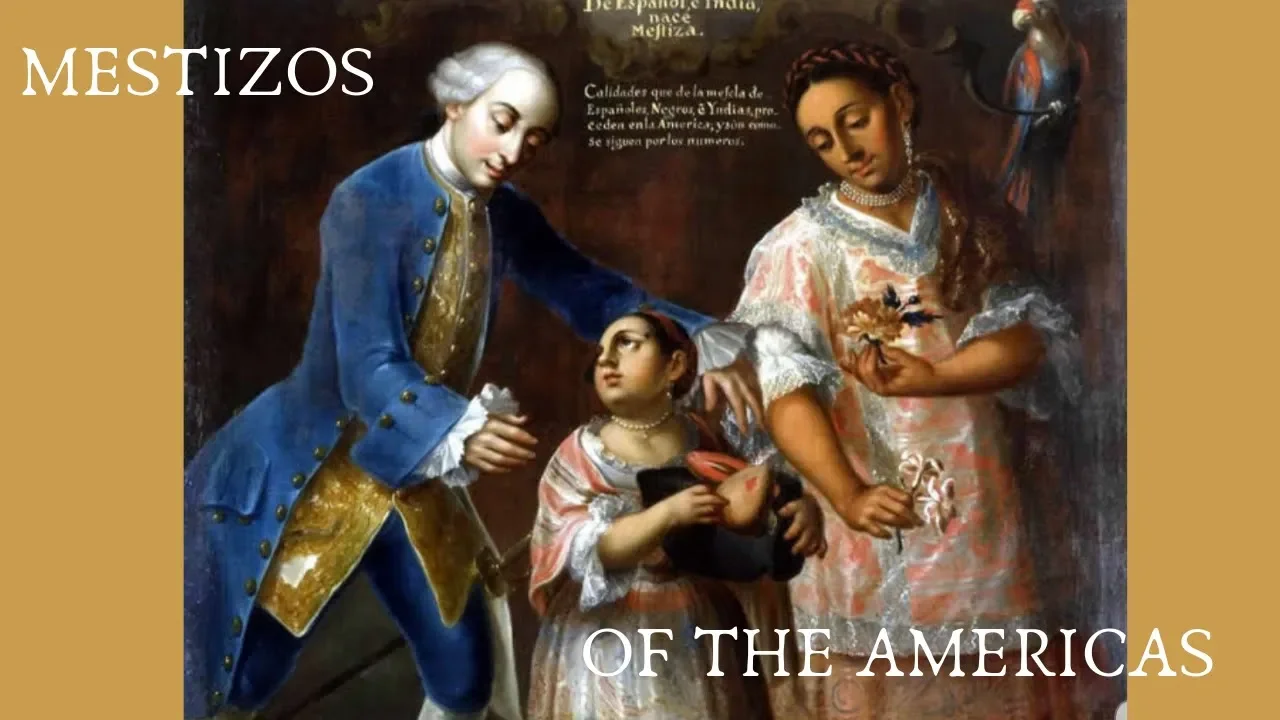
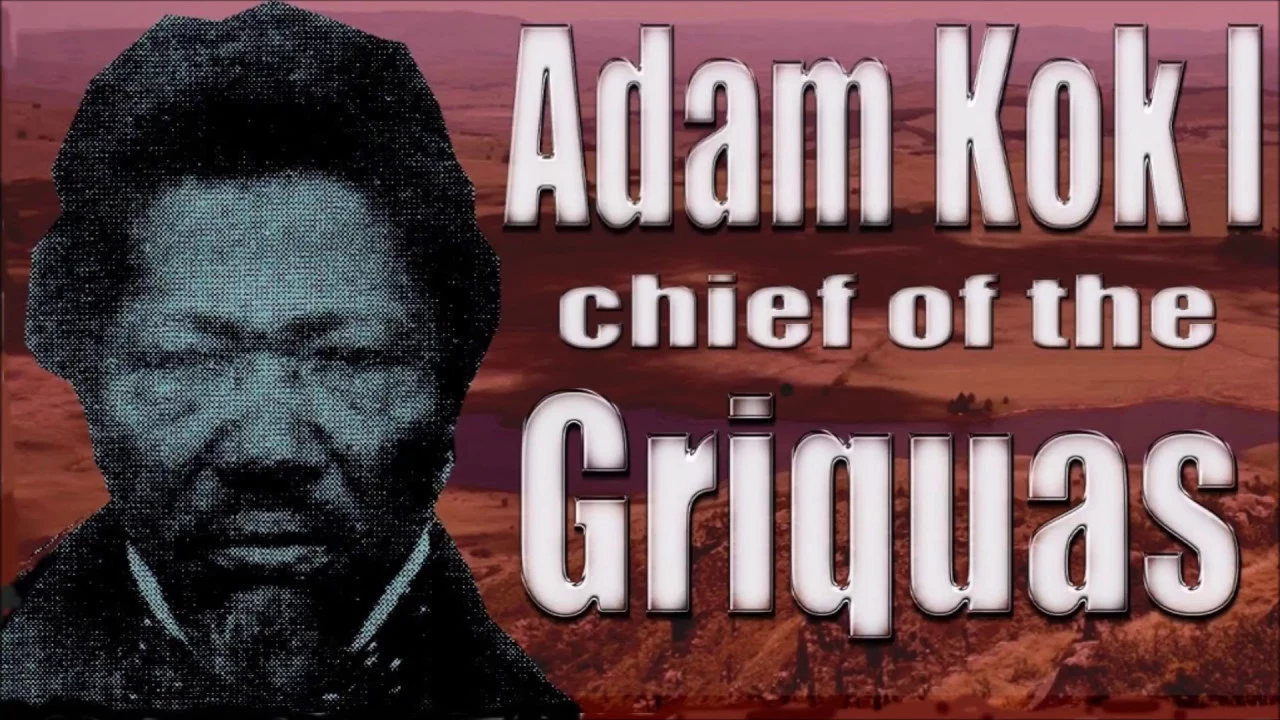
Comparative analysis of other global ethnogenetic populations, such as the Griqua of South Africa or Mestizo populations in Latin America.
The field of Indigenous genomics and community-led scientific research, examining how Indigenous nations are reclaiming authority over genetic data.
83.8K views2.7Klikes17:40Original Release: 2025-11-24
On a winter morning in 1870 in the Red River settlement that would become Manitoba, British Canadian troops marched past Matei farms that had stood for generations. Families watched from their doorways as soldiers carried documents declaring their land claims invalid unless reregistered under British law. The government wasn't sending the Matei into exile like the Acadians or confining them to reservations like other indigenous peoples. They were doing something far more insidious. They were erasing the matey on paper, making them legally invisible while leaving them physically present on land that was no longer theirs. Lewis Reel, the brilliant young leader who had negotiated Manitoba's entry into Confederation just months before, was in hiding. His provisional government had collapsed. The promises made by the Canadian government were already being broken. And in bureaucratic offices across the new province, a system was being designed that historians would later call a paper genocide. This is a story of how an entire people emerged so quickly that science still struggles to explain them and how a government tried to make them disappear without anyone noticing. But here's the mystery that haunts geneticists to this day. The Matei weren't simply people of mixed ancestry.
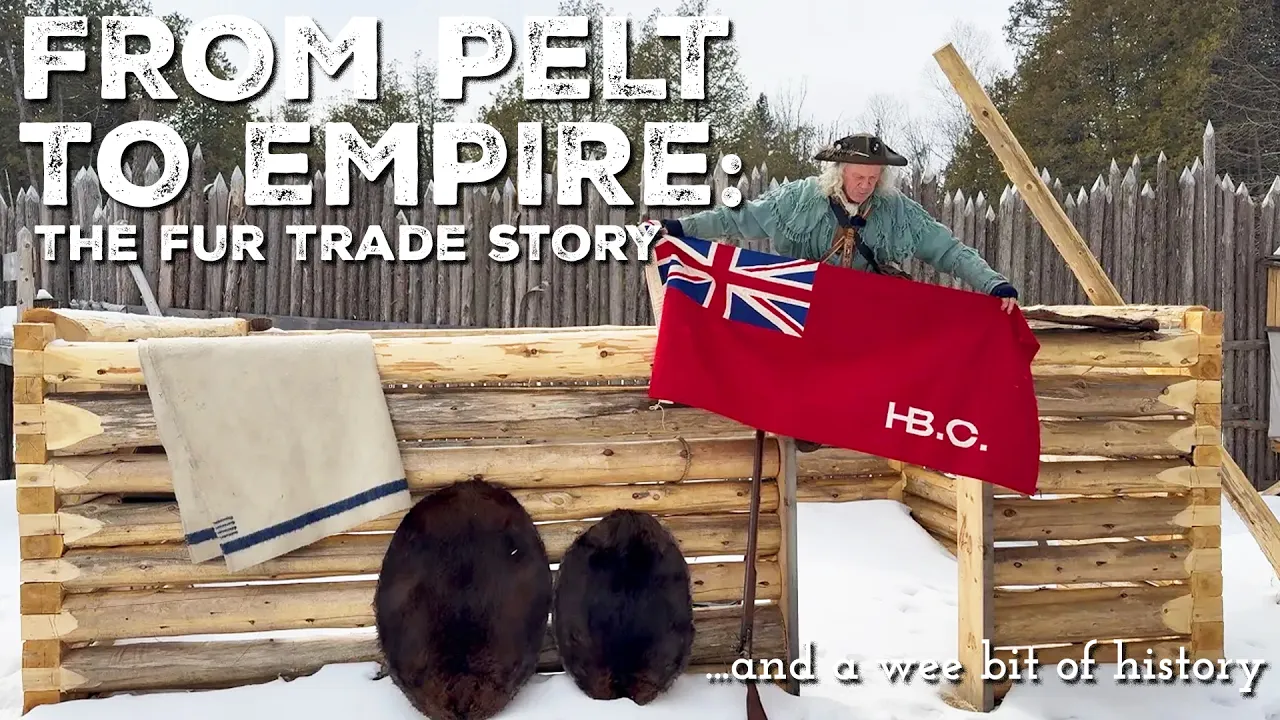
Mixed ancestry happens everywhere. The Matei were something science had never seen before. A completely new ethnic group that crystallized in less than a century with their own language that broke all linguistic rules, their own culture that combined elements that shouldn't have worked together, and genetic patterns so unique that researchers still can't fully explain how they formed. To understand what makes the Matei such a genetic puzzle, we need to go back to the beginning, back to the 1600s and early 1700s [music] when French voyagers and Scottish fur traders ventured into the vast interior of North America. These men weren't colonizers building settlements. They were traders operating hundreds of miles from any European outpost, completely dependent on indigenous peoples for survival. The fur trade companies had a problem. European women refused to come to these remote regions. The few who did rarely survive the journey or the brutal climate. So, the companies quietly abandoned their official policies. French voyagers and Scottish factors began marrying Cree, Ojiway, and Sto women, not as a casual arrangement, but as formal unions recognized by indigenous law and later by the Catholic Church. These marriages weren't about desire. They were about survival. Indigenous women controlled the kinship networks that made trade possible. They knew which routes prevented scurvy, how to navigate rivers and spring floods, how to preserve meat through winter. They brought their husbands into complex political alliances that stretched across thousands of miles. Without these women, the fur trade would have collapsed. But something unexpected happened. The children of these unions didn't simply blend into indigenous communities or European settlements. They became something new. By the late 1700s, French and Mitchie words from both parents' languages, creating a linguistic chimera that shouldn't exist according to every rule of language formation. Mitch uses French nouns, but crever verbs, not borrowed words, complete grammatical systems from two unrelated language families functioning simultaneously.
Linguists are still arguing about how this is possible. These mixed families developed their own economy centered on buffalo hunting and the freight routes that connected Hudson Bay to the Rocky Mountains.
>> [music] >> They created the red river cart, a vehicle so distinctive that you could hear a caravan coming from miles away.
They designed their own flag, the infinity symbol, representing a people with no beginning and no end. By 1800, they called themselves Mateis, not French, not indigenous. Matei, [music] a new nation. Here's where the genetic mystery begins. When researchers started analyzing matei DNA in the early 2000s, they expected to find recent ad mixture, the genetic signature of ongoing mixing between European and indigenous populations. That's not what they found.
Instead, they discovered something extraordinary. The Matei showed a stable genetic profile that dated back to a small founding population. Why chromosome analysis tracking paternal lineage showed predominantly western European HLA groups. HA group R1B common in France and Scotland appeared in high frequencies but mitochondrial DNA tracking maternal lineage [music] told a different story. HA groups A2, B2, C1 and D1 all characteristic of indigenous North American populations dominated the maternal lines. This pattern makes sense so [music] far. European men, indigenous women. But here's what puzzled geneticists. The ratios weren't random.
They showed a founder effect so extreme that it created what researchers call a Matei genetic isolate. Most modern Matei can trace their ancestry to just a handful of families from the Red River region. The Collins family, the Lajimodier family, [music] the Grant family, perhaps 15 to 20 founding lineages total. These families intermarried for generations in tight geographic clusters, creating genetic patterns that don't match their parent populations. Dr. Dr. Jennifer Raph, who has studied matey genetics extensively, describes it as one of the most rapid ethnogenesis events ever documented. In normal population formation, you see gradual ad mixture over centuries. The matei crystallized in roughly three generations. By 1820, you have a genetically distinct population with unique disease susceptibilities, unique physical characteristics, and unique genetic markers that appear in modern matei descendants, but nowhere else. But what really makes scientists scratch their heads is the stability. Once the Matei emerged as a distinct population, the genetic profile stabilized. Even when Matei people married outside the community, the core genetic signature persisted. [music] It's as if the founding population created a template that subsequent generations maintained. This defies normal population genetics, which predicts that small isolated populations should show increasing genetic drift and differentiation over time. The Matei somehow maintained their distinctiveness while also remaining connected to broader populations. [music] By 1869, the Matei had created something that terrified the Canadian government. A functioning nation within lands that Canada claimed but didn't control.
[music] The Matei governed themselves through elected councils. They had their own legal system. They owned the best farmland in the west, the fertile river lots along the Red and Asin rivers. They controlled the buffalo hunt that fed thousands. They spoke multiple languages and moved freely between indigenous and European worlds. They were living proof that Canada's simple racial categories didn't work. When Canada bought Rupert's land from the Hudson's Bay Company in 1869, the government made a fatal mistake. They didn't consult the 12,000 people already living there. More than half of them made tea. Instead, [music] they sent surveyors to remap the land using square townships, completely ignoring the traditional river lot system. On October 11th, 1869, when surveyors reached Andre No's farm, 18 Matei men blocked their path. It was the first act of what would become the Red River Resistance. Louis Reel emerged as leader. At just 25 years old, this Montreal educated polymath organized a provisional government that included both French and English Matei. [music] He drafted a list of rights demanding provincial status, land guarantees, and cultural protections. And he understood that the Matei had one chance to negotiate from strength. Throughout the winter of 1869 1870, Reel's government controlled Fort Garry and most of the Red River settlement. Ottawa sent negotiators. Realel presented his demands with the confidence of someone who knew he held the winning hand. On May 12th, 1870, the Manitoba Act was passed. It seemed like a victory. The Red River Colony would enter Confederation as a province. Matei land rights would be protected. 1.4 million acres would be set aside for the children of Matei families. But Realel made one fatal error. During the winter, his government had arrested troublemakers who opposed the provisional government. One of them, Thomas Scott, an orange man from Ontario, was particularly disruptive. He insulted guards, threatened violence, and openly declared that the Matei had no right to govern. Realel's tribunal convicted Scott of insubordination, and ordered his execution on March 4th, 1870. The decision was legally defensible. Realel's provisional government had authority. Scott had threatened armed resistance, but politically it was a disaster. Ontario erupted in rage. The execution of a Protestant by a Catholic Matei government became a symbol of everything English Canada feared about the French-speaking West. When Canadian troops arrived in August 1870, Realel fled to the United States. He would never again feel safe in the country he'd helped create. The Manitoba Act should have secured Matei futures.
Instead, it became the blueprint for their dispossession. Section 31 promised 1.4 million acres for the children of Matei families. But the government implemented this promise through a system so complex and so corrupt that historians now call it the largest land swindle in North American history, the script system. Here's how it worked.
Instead of granting Matei families land where they actually lived, the government issued certificates called [music] script. Each Matei person received either money script worth $160 to $240 or land script for 160 to 240 acres. The script could be redeemed at Dominion Lands offices to claim homesteads. Sounds fair, right? Except the system was designed to fail. The land available for script redemption was located in the southern Manitoba and Saskatchewan, often hundreds of miles from where Matey families lived. To claim their land, they had to abandon their communities, travel for days or weeks to lands they'd never seen, and start over in regions they didn't know.
The script wasn't registered to specific individuals. Money Script certificates were made out to the bearer, meaning anyone could use them. [music] This created a black market overnight. Land speculators appeared at script distribution sites like vultures.
[music] They offered matei families immediate cash, maybe $20 or $50 for script worth $160 or $240. For families in desperate need of supplies, the offer was tempting. But here's the crulest part. [music] The speculators knew something the matei didn't. That script would become exponentially more valuable as Canadian settlement expanded.
Homesteads that sold for $160 in 1875 were worth thousands by 1890. Out of nearly 15,000 money script certificates issued, land speculators acquired over 12500 of them. The Matei ended up with less than 1% of the land script meant for them. When Matei families realized they'd been cheated and tried to sue, Senator James Lawheed amended the criminal code in 1921 to create a three-year statute of limitations on land claims. The window closed. The thieves won. The genetic consequences of this dispossession are still visible today. When Matei families lost their land, they scattered. Some moved north into the boreal forest, becoming the road allowance people who lived on the narrow strips of land beside railways and highways that nobody wanted. Some moved west into Alberta and Saskatchewan. Some disappeared into cities claiming to be French Canadian or Scottish or anything but matey. This scattering created new genetic bottlenecks. Communities that had a maintained genetic diversity through careful marriage networks suddenly found themselves isolated in groups of 10 or 20 families. The founder effects intensified. Rare genetic variants became common in specific Matei communities while disappearing in others. Dr. Tracy Heatwald studying genetic disease patterns in modern Matei populations found something remarkable.
Certain genetic conditions appear in Matei communities at frequencies that don't match either parent population.
These aren't just indigenous diseases or European diseases. They're Matei diseases arising from the unique combination of genetic varants and the intense bottlenecks created by force displacement. But the Matei didn't disappear quietly. In 1884, Saskatchewan Matei sent a delegation to Montana asking Realel to return and help them negotiate with Ottawa. The government was again surveying land without consultation. Again ignoring Matei claims, again breaking promises. Realel returned, but this [music] time Canada sent soldiers instead of negotiators.
The Northwest Rebellion of 1885 lasted less than three months. It wasn't really a rebellion. It was a desperate last stand by a people who had nowhere left to go. At Batosh, 300 Matei fighters with hunting rifles and homemade ammunition faced 800 well-armed Canadian soldiers. They held out for 4 days. When the ammunition ran out, they fired nails and stones. Gabrielle Dumont, Realel's military commander, wanted to continue guerilla warfare. Realel refused. He believed God had a plan. He surrendered.
The trial was a foregone conclusion.
Realel was charged with high treason.
His lawyers wanted to plead insanity, pointing to religious visions and erratic behavior. Realel refused. He insisted he was sane and that his actions were justified. The jury convicted him but recommended mercy. The judge sentenced him to death anyway. On November 16th, 1885, Louie Reel was hanged in Regina. His last words were, "I have been faithful to my people." The execution shattered Matei's communities for the next 80 years. Being openly Matei was dangerous. Parents stopped teaching their children machief. They burned photographs. They claimed to be French or Scottish or indigenous.
Anything but matei. Census records from 1890 to 1950 show the same families classified differently every decade. In 1891, they're matei. In 1901, French.
[music] In 1911, half breed. In 1921, often just white if they could pass. This erasure left genetic mysteries that DNA testing is only now revealing. Thousands of families across Canada and the northern United States carry matei genetic markers without knowing their heritage.
They show up in 23 and me results as unexpected French and indigenous ancestry. They have surname histories that don't quite add up. They have family stories about a grandmother who was Portuguese or Spanish or Mediterranean. Stories invented to explain features that looked wrong for their claimed ethnicity. Modern genetic studies are finding hidden matei populations in the most unexpected places. [music] In the Appalachian Mountains, in communities once thought to be Melundonian, in Montana and North Dakota, among families who thought they were German or Scandinavian, in Ontario and Quebec, in families who identified as French Canadian but carry specific mitochondrial DNA markers that only appear in Matei populations. These aren't recent ad mixtures. The genetic signatures date back 150 to 200 years to the original Matei communities. But here's what makes the Matei such an enduring scientific [music] puzzle. Even with modern genetic tools, researchers can't fully explain how the Matei emerged. The speed of ethnogenesis is unprecedented. [music] The stability of the genetic profile defies population genetics models. The linguistic development of Mishifs every rule about how languages evolve. and the cultural coherence. The fact that matei communities separated by thousands of miles maintained similar traditions and identity despite no contact suggest mechanisms of social organization that anthropology doesn't fully understand.
Dr. Ripan Malhi, who leads one of the largest indigenous genetics projects in North America, describes the matei as a population that formed too fast and survive too well. Normal ad mixed population should show continuous gene flow from parent populations. The mate te show barrier effects as if something deliberately separated them and kept them separate. Was it cultural? Was it geographic? Was it biological? The data suggests all three, but the mechanisms remain unclear. The Matei nation today numbers over 400,000 people across Canada. In 1982, they gained constitutional recognition as one of Canada's Aboriginal peoples alongside First Nations and Inuit. In 2013, the Supreme Court ruled that Canada had failed to uphold promises made in the Manitoba Act of 1870, opening the door to land claims and reparations that are still being negotiated. But the genetic legacy is complicated. Many Matei don't know their Matei. Many people who think their Matei don't meet the legal definition, which requires genealogical proof of descent from historic Matei communities. And many indigenous peoples question whether the Matei should be recognized as a distinct group at all.
Seeing them as a colonial creation that undermines indigenous sovereignty. The DNA evidence doesn't resolve these debates. It just makes them more complex [music] because the genetics prove that the Matei are real. A distinct population with unique markers and unique history. But they also prove that identity is more than genetics. The Matei exist because people chose to be Matei maintained that identity across generations despite overwhelming pressure to abandon it. and passed it on to their children as something worth preserving. If you trace back modern Matei genetics, you find something remarkable. Nearly every Matei person in Canada can trace their ancestry through just a handful of maternal lineages. The Lagimodier line descended from Marie Anne Gabri, the first European woman to travel to the Red River. The Realel line through Louis Realel's grandmother, the Goule line, the Brilland line. These women marrying into fur trade families in the early 1800s became the genetic anchors of an entire nation. Their mitochondrial DNA passed unchanged from mother to daughter marks matei identity today. You can erase people from maps.
You can invalidate their land claims.
You can execute their leaders and outlaw their language, but you cannot erase them from their DNA. The Matei survived because their identity was written in genetic code that no government could alter and no paper genocide could destroy. [music] Today, when someone gets an unexpected DNA result showing French and indigenous ancestry in specific patterns, when they discover ancestors from Manitoba or Saskatchewan with suspiciously changing census records, when they find script applications in government archives, they're discovering what the government tried to hide, that the Matei didn't disappear. They were just hidden. and genetics is revealing them one DNA test at a time. The Matei mystery isn't just about how a new people emerged so quickly. It's about how they survived when everything was designed to make them disappear and why, despite everything, they're still [music] here.
If you found this story of genetic mystery and cultural survival fascinating, please like this video and share it with others who might have their own hidden heritage to discover.
Do you have mysterious family stories or unexpected DNA results? Share your experiences in the comments below.
Remember, we all carry history in our genes. The only question is whether we're brave enough to learn what it really says about who we are and where we [music] come from. I will see you in the next video. Thanks for watching.
Up Next

80:50
Raw Eggs, Ancestral Diets & Fitness as Defiance: A Conversation
@AlexKaschuta
10.1K views•2022-11-30

12:54
Triumph of Orthodoxy Icon: Byzantine Art & History Explained
@BenCallan
2.1K views•2024-08-06

9:49
FastAPI vs Flask vs Django: Choosing the Right Python Web Framework
@TechWithTim
302.5K views•2024-05-26

1:42
Game of Thrones Opening Credits: A Cinematic Analysis
@gameofthrones
46.3M views•2011-04-18
Related Study Plans & Knowledge Roadmaps
Structured learning paths in General & Interdisciplinary Studies
general-studies
Elevator Engineering: History, Physics & Cities
01From Hoists to Safety Brakes: The Dawn of Vertical Lift
02Hydraulic vs. Traction: The Engineering Physics of Elevators
03Modern Speed, Safety, and Algorithms
+ 2 more learning modules
12h5 modules
Explore Roadmap
general-studies
Rubber: Material Science, History & Geopolitics
01Origins of Natural Rubber & Mesoamerican History
02The Chemistry of Natural Rubber & Vulcanization
03The Geopolitics of the Rubber Boom & Colonization
+ 2 more learning modules
12h5 modules
Explore Roadmap
general-studies
Containerization: Evolution, Logistics & Trade
01Ancient Trade & Bulk Cargo: Amphorae to Barrels
02The Industrial Revolution & Cardboard Packaging
03The Containerization Revolution: Malcom McLean
+ 2 more learning modules
12h5 modules
Explore Roadmap
general-studies
Textile Tech: Evolution, Labor & Global Impact
01Pre-Industrial Textiles: Handloom & Cottage Industry
02Mechanization: The Spinning Jenny to the Power Loom
03The Factory System & Global Labor Transformation
+ 2 more learning modules
10h5 modules
Explore Roadmap