
![[어쩌다 특강] 제14회 공존의 미학, 마이크로바이옴 | 김동건 박사님 | 221031](https://i.ytimg.com/vi/7ooNHHSQovY/maxresdefault.jpg)



















Microbiome research faces significant challenges across different sample types—soil samples contain humic substances that interfere with nucleic acid extraction and harbor diverse cell wall structures requiring mechanical lysis; water samples are highly diluted and require concentration methods like filtration or centrifugation; wastewater monitoring has emerged as a powerful epidemiological tool for tracking pathogens at community levels; and human microbiome research extends beyond the gut to include oral, vaginal, and skin microbiomes. Successful microbiome analysis requires specialized extraction kits optimized for each sample type, combined with either NGS for comprehensive discovery or digital PCR for precise quantification, supported by automation technologies that ensure reproducibility and scalability in processing large sample volumes.
Microbial Secrets Revealed: Tips for Microbiome Research Labs
Added:hello micro friends and guten tag from our studio in Hilton today we will feed your curiosity and help you reveal microbe secrets welcome to curious [Music] my name is Julie I'm the senior Global product manager responsible for microbiome extraction products together with Dominic our microbiome product development director will be your host thanks Julie really happy to be here and talking about microbes and microbiome research something that I've been very busy with over the last many years now actually it's been our primary focus and today we're going to talk about lots of different topics starting with challenging samples we'll be talking about soil and all the different challenges associated with that about water Wastewater as well as human microbiome and not just gut and fecal samples but all the different kinds of human microbiome samples that there might be and we'll have some tips and tricks along the way as well and around the middle of the show we will have our experts joining from dpcr and NGS and to close the show Professor zagara will talk to us about human microbiome yes and also throughout the show we'll be talking about some of the new product developments that we have coming out in the near future some new things that we'll be launching as well as talking about automation options for our existing kits right but of course this show has been designed for you so you are invited to ask your burning questions at all times this will connect you with our colleagues in the background Marianne malgochata So if they can wave at us that'll be great and to make sure that your questions are coming in you have to exit the full screen mode and make sure to enter your name as well so that we can get back to you um in case there's no immediate response via that channel we will also be asking you uh questions um for the poll and we actually have the first one coming in because it'll be great to get to know you better so in one of the following areas does your microbiota research make an impact in and while you're answering we have prepared a little video with key statements from three of our scientists [Music] what passionate me about uh intestinal microwave is the fact that is composed by a complex ecosystem of these microorganisms that they are leaving the balance and according to the environment that they have an intestine they change their abundance and composition so that means that these bacteria are perfect sensors informing us about the disorders in our body so that means that is an ideal Reservoir to develop diagnostic tools and that opens a new paradigm to diagnose and to treat Digestive Disease through the modulation of this bacteria I started being interested in still more than 13 years ago now when the first data sets from metagenomics were becoming available and it was clear already at the time that we needed new occupational matters to try to make sense of these large and obstructural Descent of data [Music] we are focused on developing non-invasive diagnostic tools and therapeutic products just for Digestive Disease and based on studying intestinal microeon and so with this our goal is to introduce the use of intestinal microbiome in the clinical standards to manage Digestive Disease we all know that there are tons of microbes living in our gut and we can somehow manage a mirror called balance between another with another millions of thousands microbes they have a lot of nutrients they have their needs they need and there are their peace and love as their host we are sometimes attempted by some food products that are not cautiously prepared which then bringing a lot of football pathogens so the pathogens after they go into our body they're like amazed Jesus Christ there are a lot of new trends there's everything I want I'm gonna colonize here I'm gonna live here but the rather than bacteria they're like no this is not how it works I'm gonna fight with you I'm gonna protect my habitat so there are some kind of competitions between the commensal bacteria and the foodborne pathogens and that's what we study currently and we try to understand the behavior of the guns community and we try to figure out if there are some kind of weapons we could utilize to kill the football pathogens as a normal antimicrobial strategy so at the time I started developing new methods to try to make sales on the taxonomic and factor of the best it will be microbiome arriving to the discovering of many new microbe species and even microbiome or even for example distinguishing specific neurotype specific notation differentiating two Strays of the same species into different samples we develop bees and new metals and we apply them or real case you know problems like in the medical field or in the nutrition foreign [Music] use of intestinal microbiome will be introduced as a clinical standard for the management of Digestive Disease which is the field that we have more evidence and I expect in five years to have successful cases where we have patients that has been diagnosed and treated through microwave markers and treatments that model is intestinal microbiome and I guess that we will have more insights about the role of intestinal microbiomes in other diseases which are not in the field of Digestive Disease may I say like uh neurological one such as Parkinson and or metabolic ones so I think that in five years microbiome will be um in our daily um daily days in the clinical practice and so maybe we will consider like the analysis of intestinal microbiome as a regular text such as is the blood test because we will consider it as a new whole organ that we have to check to manage a differential diagnose from the beginning [Music] and I think we reached the other field a step that usually critically they think there are all the possibilities that in five years from now and metadatism or mix will be applied routinely in many uh real life examples for I think I'm thinking for example at the medical feeding which you know patients uh oncological patients may be profile for their cut microbiome to try to understand what is the best possible immunotherapy approach for that or in nutrition for example to try to understand what is the specific personalized dietaryology which is best for each of us given our unique microbiome a while by unique biology I think D is in many other applications are really really ready to be around in the field so I think these are in a very exciting field to study a human microbio and other microwaves as well and develop new methods so that we can arrive as soon as possible to have an impact in many realized problems and settings so in the next couple of years I'm thinking I'm hoping for a kind of I'm forcing there will be more Cutting Edge techniques emerging to be combined with current microbiome studying techniques so that we can really come up with a solid conclusion and then we could draw a microbiome profile of Any Given ecosystem so that we can use that as a featured to characterize a human being health status or the uh biological structure of an environment it sounds that human microbiome is a great territory for Discovery right and it'll be great to see now what you think so can we please have the poll results okay so I think uh not surprisingly we see that improving human health and well-being is is leading the poll results here I think that's one of the most exciting areas for microbiome research and monitoring pathogens and outbreaks um may fall into that as well but also quite a lot of people who are interested in biodiversity sustainability efforts and that goes into the environmental monitoring side of things yeah so I think quite a quite a diverse set of applications and I think that's what has really characterized microbiome research that we see that it affects almost every aspect of our life right and hopefully we can cover all of those topics within this show and since human was actually the most answered one I'm actually happy to see this because Professor Sagara will be joining us later in the show so stay tuned but before we get there let's focus on the microorganisms that are beneath our feet indeed we are digging into the captivating realm of soil microbiome so Dominic you've been working with your team for many years on soil microbes would you please tell us why it's so challenging to start with soil samples uh yeah actually so soil is really difficult primarily because of the Matrix that it's in so we are all familiar with soil and I can show really briefly a little bit here coming up in a minute will be some other slides but really what's challenging about soil is in the first line the humic substances that are present so this is what gives soil its characteristic brown colors it's the result of organic decomposition as microbes break down plant and animal matter and turn it into small organic compounds within the soil the challenging part about that is all of these small chemicals that result that we call humic acids or fulfic acids or human some of them have very similar charges and sizes to nucleic acid and so they will bind with your nucleic acid as you try to extract it and they'll also interfere with all of your Downstream applications on your NGS or your PCR so is that holding true for all sample types or would there be other there's there's a wide range of issues within different sample soil types um some soils have a much higher mineral content some have a lot more clay present in them some have low organic content like Sandy soils Marine sediments will have different issues than other ones so there's a lot of chemical issues coming from the different soil types as well and particularly for Sandy soils one of the issues is low yield so if you have if you have a low organic material then of course you're not going to have a whole lot of microbes present and then it becomes really critical to isolate as many of those microbes as you can and attempt to extract every one of them that's present to be able to see what's going on and for that we optimize the yield of all of our kits and we actually find that our power soil Pro kit which is optimized for high yield from high organic content soils also works the best for us for low biomass and low organic content soils as well yeah that's that's the two notes are a great tour for our soil micro researchers so this is the first Challenge and the Matrix of the actual soil but the microbes itself also come with other challenges right yes and those are mostly related to the cell wall of the microbes so we have um generally people think about bacteria whenever they think about microbes and microbiome research bacteria is the first thing that pops into mind but particularly in soil you also have a lot of fungal activity and you may also have our kale species present and they all have different challenges so they all have very rigid cell walls here is some diagrams showing what their cell walls look like and we'll start off with the gram-negative bacteria so all bacteria have a cell wall formed of pepticoglycan which is a very rigid difficult to lice material gram-negative cells have a relatively thin layer of pepticoglycan but they also have an outer membrane beyond that where to which they might have other proteins Associated or they also have lipopolysaccharides so LPS on the outside that can pose their own challenges for lysis and they can give the bacterial cells different kinds of chemical resistances gram-positive bacteria are also characterized by that peptidoglycan but it's a much thicker layer they don't have an outer membrane but they have a up to 10 fold or more thicker layer of peptical glycan on the outside makes them much more rigid that's also what makes them a stain under Gram stain obviously of course why they're called ground-positive bacteria um and so they all these bacteria need these things to keep the cell walls rigid um so that they don't break under osmotic pressure or under environmental influences and the same thing is true for fungus but they go about it in a very different way so instead of peptidoglycan fungal cell walls are a mixture of beta-glucans and chitin with also some nanoproteins and other glycoproteins on the outside serves the same purpose but fungal cells generally are also quite a lot larger than bacterial cells which means that they also have some different challenges associated with beating them and then the last type of microbe or prokaryote here is also archaea um and archaea may have a pseudopepticoglycan it's not exactly the same as in bacteria but it serves the same purpose of giving it a strong outer cell wall and a lot of these also have outside protein membranes which give them resistances to being broken so because the chemical content of all of these different types of cells is so different we find that mechanical lysis is ideal so if we use mechanical lysis we can break open all of your different kinds of cells and whether you're looking at Gram negative gram-positive fungal or archaeal species you're able to to crack them open and then we use a lysis chemistry get all the biomolecules into solution negate all of your secondary chemical effects wherever you can and then you should be you should be good to go great so you mentioned it already earlier so the way we address those challenges is actually with the dnac parasaur pro and I went to the lab a few days ago to show you how we extract DNA from soy samples yeah today we will look at one of the most abundant and diverse ecosystems on Earth soya soy samples collected from the same Source have variable microbial load and different organic makeup after collection use your sample as soon as possible as prolonged storage will affect the microbial composition for later use stored in power protect DNA RNA I'll put it in the freezer for small sample with large microbiome load use the DNC power saw Pro kit for low biomass samples use the DNA Z Power Max soil kit that features tubes that can handle larger volume are you ready for the extraction let's start with a license briefly spin the powerbeat pro chips to make sure that the beads have settled down use a weighing paper or funnel to transfer the soil and put it into the tube make sure to not overfill to prevent inefficient disruption you can also store the tubes overnight in the freezer before disruption make sure to fold to room temperature to avoid to breakage adding solution cd1 to your powerbeat pro tubes would help disperse the soil dissolve the humic acids and protect the DNA from degradation briefly Vortex your sample before I show you our new instrument this is our new digitalizer 3 disrupt the sample using 25 Hertz at 5 minutes or use one of our pre-installed protocol called soil DNA after the disruption centrifuge YouTube to palette the solids transfer the supernatant into ml micro centrifuge tubes your sample is now light and homogenized [Music] and that's it your DNA is ready for Downstream application [Music] all right Julie looks like you had fun in the lab yeah indeed but it was mostly interesting to be able to put myself into the shoes of a microbiome researcher so you've seen during the video our t-shirt as a three but it surely deserves more screen time so let's follow Dominic with a K so that he can show us the new features of the instrument [Music] today we will homogenize soil samples with the digitalizer 3. they can be used later for DNA extraction with the dnec power soil Pro kit let's look at the touchscreen interface of the instrument from the home screen you can start the sample disruption run directly press the buttons for time and frequency and adjust to the setting required for your sample using the rotary knob [Music] the teacher lesser 3 can save up to 12 disruption programs seven of them are pre-installed and five are customizable for trial run today let's select soil DNA from the list of programs now that we have selected our program let's prepare our sample I've weighed 250 milligrams of soil which I am pouring into a powerbeat pro tube from the dnec power soil Pro kit now I am adding license buffer to the tube and choose from different adapters depending on your needs now it's time to place our sample in the adapter distribute the tubes evenly to ensure safe operation the sample is now ready to be live after the initial run rotate the plates to allow even disruption of the samples and restart the program take out YouTube from the adapter and it's that simple you're now well on your way to a successful license thoroughly homogenized samples and nucleic acid isolation so that was our initializer 3. so we have more to come and actually a Premiere today we do we have a new kit for extraction of RNA from soil the r e z Power Max soil Pro kit so this is a new development that we'll be launching in September now um and it is designed to get high amounts of RNA out of soil which has previously been quite challenging a mountain generally the RNA of mountain soil is low um and it's also the challenges I talked about earlier with soil are particularly bad for RNA um all the extra interactions and so the way around it is to scale up your extraction so we have a new bead tube that we use for the extraction these are with the power bead pro tubes using all of our other microbial extraction kits also compatible with the tissue lizer 3 of course and by scaling up with that's this process anywhere from 500 milligrams to 15 grams of soil making sure that you have enough RNA for your Downstream applications if it's sequencing meta transcriptomics or PCR anything that you might need to do okay so this has been great news for our researchers that are doing metators cryptomix from absolutely so we actually we've sent this out to some field testers already and some of them have come back with the the feedback that they love it because extractions where they used to have to do three to five replicates and then pool all of those eluates they can now do it in a single extraction great so this is coming that'd be like the sample to inside in a kit format right yes that's right yeah we have what we're calling the microbiome wgs seek sets um I have a couple of slides to show how those work so this is a combination of all of our Best in Class microbiome extraction and sequencing kits as well as the downstream analysis so through CLC genomics so for the extraction part we can either start with the Kaya amp power fecal Pro kit if you're looking at stool samples and then that goes into the library prep which combines our kiaseq FX DNA Library prep as well as the normalizer to make a rapid normalization of your libraries possible for multiplexing and the Kaya seek beads for a cleanup once you have your fastq files you can upload them to Gene globe and within the microbial analysis portal you get your comprehensive metagenomic analysis immediately giving you the feedback and if you're looking for soil you can also start with the D and easy power soil Pro kit instead as a seek set and again you get all the components that are present here as a single catalog number giving you sample to Insight results a whole workflow and just to give the quick example of what that might look like is here so we have this is where the results would come out after you have uploaded your fastq files into Gene Globe gone through the microbial analysis portal it will provide you with taxonomic identification your microbial species abundance profiling your Alpha and beta diversities and we can also offer antimicrobial resistance Gene identification within your samples and so here's just a quick example of what an otu table might look like this is a taxonomic abundance from different samples giving you species identification across these different samples so it's really an all-inclusive workflow particularly good for people just starting out in microbiome research right so you've heard it right this set is really ideal for the researchers that want to start and microbiome field and if you're interested to try one of those kits you're welcome to drop us a note in the chat function and somebody will get in touch with you and provide you with a quote speaking of set function I think that Maria and malgochetta are joining us now and they have some questions from the audience hello hi hello yeah we have quite a few questions and so to give some examples at the often quite often asked question is about samples that are collected previously and how to ensure the Integrity of the microbial load of this sample so for instance fecal samples and that samples are quite difficult because of the chemical composition coin and danger our DNA stability and we suggest using power protect DNA RNA which is a solution which we can use to preserve our sample for a further analysis in the laboratory and it can be used for storing the sample in the fridge freezer but also in the room temperature um correct and another question we got was in regards to the Denise power soil Pro kits because it's the best kit for actually isolating low biomass samples from surface reps and it's better than the original Power soil technology because it isolates even more and pure microbial DNA from all cell types including compost clay and topsoil now the efficient lysis that we have in this kit combine in combination with their inhibitor removal technology is also reflected in our sequencing results something similar to what dominic just showed we could see a higher Alpha diversity as measured by the otus um in comparison to other extraction methods so another quite interesting but a difficult to process sample is a biofilms and biofilms basically consist of bacteria that are attached to the substrate by different polymeric substances and such are not very easy to break down or and to process so we offer dedicated kit which is DN easy power biofilm for this type of samples and it has again robust bead beating the analysis buffer that will break down the sample and also the inhibitor removal technique that will ensure that DNA that were obtained will be quite good for any Downstream application yes and speaking of difficult sample types water is a challenging sample as well because usually the analyzing question are pretty diluted now the best way to process a water sample is actually using a DN easy Power Water kit or a DN easy Power Water stereo mix kit which kit actually fits your needs will depend on the analyte you would like to look at and of course what type of membranes you have access to or you would like to use for your Downstream or Upstream in this case collecting your your water samples um but Julie Dominic you will talk about this in your next session right water samples and how to to deal with them absolutely so thank you very much Maria and Marco Cheta um you will stay with us actually until the end of the show so keep on asking your questions and uh they will help us answering so as we heard Maria said that um it's very difficult to work with water samples because they usually come with very low concentration in bacteria viruses so so we move then to that part Dominic yes yeah let's talk about water um so yes water is a challenging sample primarily because it does have um it's dilute right it's as your bacteria are present they're present in generally sparse concentrations but they're of course very important for environmental monitoring they're important for the health of oceans and lakes and rivers and streams but they're also important for human health so monitoring of recreational beaches and so on is also important to know which bacteria are present there and which may also influence things like beaches being closed or not um but it is difficult because as I said they're dilute samples and generally it's difficult to start off with three liters of water and get your DNA out of it so we're going to have to concentrate um and there's different ways to concentrate you can do adsorption so this is when you have a surface that has an affinity for the the substances that you'd like to isolate either bacteria or viruses um and they actually just stick onto that surface As you move them through you can do classical filtration as well and so this is what uh Maria was talking about when we were doing filtration with the sterivex kits or other filters this is classically used for bacteria right so you can you can filter your bacterial cells out very easily concentrating the water all the bacteria stay behind on that filter um and then the last method of concentration is around centrifugation so specifically if you have like very turbid water or lots of sediment you can spin those samples down process the pellet and then it's all the bacteria are generally associated with that solid fraction all right that's another way that you can concentrate out of those large samples and that's used for example often in Wastewater applications as well but so is filtration and I believe for filtration we also have some more information exactly so our colleague Nathan went to the lab to show you what's the best way to disrupt the filter sample thank you [Music] water filtration is a typical method used to concentrate samples during nucleic acid extraction using the dionese or iron easy Power Water kits and this step isn't trivial today I'll show you best practices for handling water filters thank you [Music] after the water has been filtered remove the top of the funnel then using a sterile forceps take the membrane [Music] grabbing both sides so that the membrane is facing inwards put the filter in the bead tube so that it fits properly now add the corresponding places to offer [Music] and fasten the cap tightly and now it's time for beat beating using a Vortex or a tissue visor the optimize slice buffer and Beads break the cell walls releasing the nucleic acids when this step is finished take the supernatant and continue the D and easy or iron easy Power Water kit according to protocol and suddenly water isn't so hard to handle after all so welcome back and now I think we want to go more in depth into the Wastewater because it's a very big sample type that's it's an important sample type especially now after the covet pandemic and during the covet pandemic Wastewater monitoring became an essential tool for seeing where the pandemic was most active and it's really established Wastewater monitoring as a standard process so not just to to look for covid but we're also looking for quite a few other substances that might be present within Wastewater so this is of course going to have a lot more content also coming from municipalities this is this is classically coming from a sewer shed coming in being concentrated and so it gives you an insight into what's happening in the community that that sewer shed serves and like I said covid is one that has been used regularly pre-covered polio monitoring was done through Wastewater based epidemiology and now that we have this great infrastructure for Wastewater people are looking at antimicrobial resistance genes people are looking for new and emerging pathogens coveted monitoring is continuing but we're also expanding that out to things like influenza norovirus RSV I really think that wastewater-based epidemiology is is here to stay and will continue to expand in the future yeah because it has so many information that are there to be uncovered great so depending on what the researcher or the group would be doing they would need to choose the right asset technology and to understand better what you are doing we have another poll so the question will come up now into the the section so which asset Technologies are you using for analyzing microbes and while you're answering we have a little video for you our care genius and after that we will meet again with alien affif our experts in dpcr and NGS [Music] hi I'm Kaya genius and in this episode I will cover the what why and how of microbial detection let's have a look at the first question question one what is the most critical factor to consider when extracting microbial nucleic acids for successful dpcr analysis besides efficient lysis of microbial cells and high nucleic acid yield it is critical to remove PCR inhibitors for example bile salts hemoglobin and human stool pulvic acids or humic acids in water and soil fats glycogen polysaccharides and minerals and food samples these substances can interfere with PCR amplification by reducing the activity of DNA polymeracies or interfering with the annealing of primers and probes question two how will my microbial applications benefit from dpcr some of the apparent advantages of dpcr are precise and accurate microbial load assessment fast results during public health or food safety surveillance and monitoring rare Target detection in low biomass samples measurement of the absolute abundance of DNA of specific microbial taxa without a standard curve and multiplexing of up to five targets with the possibility of detecting viral RNA and microbial DNA together I find this final question very interesting question three why should I rely on a kyogen workflow for microbial detection Are there specific dpcr assays your laboratory can benefit from kyogen standardized sensitive and fast microbial detection workflow patent-pending inhibitor removal technology IRT included in denisi arnesi all prep and Kaya amp power and Power Pro kits manual or automated successfully remove Inhibitors during nucleic acid purification more than 685 assays for microbial detection including 387 bacterial assays 35 fungal assays 46 viral targets and 202 virulence factors and antibiotic resistance genes have been developed by scientists and they have wet lab validated the multiplexing of several assays relevant to the human microbiome or cannabis production I encourage you to explore workflow capabilities by downloading this free poster thanks for watching and stay tuned for my next episode [Music] okay welcome back and I'm joined here by Ellie from our NGS team and Afi from our digital PCR team to talk about the detection technologies that we use for microbiome research but before we get into that let's take a look at the poll results okay so we had asked which assay Technologies are being used for analyzing microbes and it looks like the majority of people are using sequencing either whole genome sequencing or targeted DNA sequencing and even more people are using digital PCR than classical PCR um um so that looks uh quite interesting a mix of analysis techniques being used here so um maybe we'll start with ufif why is why is digital PCR so well suited to microbial uh analysis thank you Dominic um allow me first just to um remind our viewers that zika scans or a QR code that will appear on the screen now and to invite them for our digital PCR Festival which will be in less than one month now on the 28th of September we are celebrating two things the three annivers the third anniversary of the car acuities the digital PCR solution from kaijin and the 40th anniversary of PCR we will have around 18 presentations from kol from around the world and I hope that many will be able to uh to register now I will be back to your question of course you know digital PCR allows absolute quantification of a Target nucleic acids by partitioning the sample into thousands of individual reaction wires now this partitioning will produce the competition between targets and non-target molecules will increase the sensitivity and will reduce also the effects of inhibitors so the result will be a more precise and accurate quantification of low abundancy targets often found in Wastewater so this is why it's used for covet monitoring so regularly yes right yes and so believe me or not this is just the future is specific for the nanoplate based based dpcr because it's amenable to standardization across different Laboratories allowing for a better comparability of results between different studies different experiments and in different locations and now last but not least the high accuracy and precision of digital PCR is a key role or plays a key role in the detection or the early detection and monitoring of disease outbreaks so Public Health Public Health Laboratories will use the technology to take quick actions and contain the spread of infections because they know exactly what they're looking for they can get that really sensitive detection from it yeah and there's also only three features we prepared more than 10 so but of course we don't have the time to but we will be able to share some with our viewers also of course yeah um and yeah so for and then in contrast NGS and acceleration sequencing Technologies you can do shotgun or you can do targeted those both came up um what would be the pros and cons of those two technologies yeah yeah so it really depends on what you're trying to investigate so for whole genome sequencing it's really comprehensive you're looking at the entire genomes of a microbial community and so because of this this is really well suited when you're looking at novel microbes or novel antimicrobial resistant genes this is the kind of technique that's used and for this we have our chiotic FX DNA Library kit this is has many features but one I want to highlight is that it has low GC bias so when you're working with Wastewater samples you have various types of microbial species that are in there and have various GC contents so you want to make sure that the library of preparation kit that you're using is robust enough to deal with these different variations not not just Wastewater either all sorts of samples exactly microbial yeah yeah Dodge DC range you want to capture everything that's near a sample so to have accurate results when you're moving into the targeted sequencing the courses looking for the targets or the specific pathogens that in your sample and what's different is that you're now looking only at specific genomes or specific areas in the genome so your sequencing reads are now dedicated to these areas which enables higher sensitivity as compared to wgs and this is mostly critical also for as mentioned earlier with Wastewater you usually have lower concentration of your pathogen of Interest so you want to make sure that the technique you're using is sensitive enough to detect your pathogen you're looking for another aspects with targeted sequencing is that it is immutable for multi higher multiplexing so you know multiple samples you run in the single sequencing run and of course this helps to reduce the cost so for this one we have our Chi X High viral bacterial panels these we have various panels to look at different pathogens and a lot of pathogens that are of interest for Wastewater surveillance and you can look at both the pathogens and different variants in addition against the AMR genes so if people are interested to hear more about these NGS Technologies we actually have our curious Festival coming up all things genomics so if you um to stay tuned and get some more information coming up in the next curious show okay well it sounds very much like the the Technologies are complementary right they have a bit of a different application Focus um so if you had to sum up in just a quick quick view where would you see the primary application for these different Technologies so it's very very difficult to sum up yeah we how we were been arguing for like 20 hours but we we have the common ground I think um and it's really really in one sentence so in a toolbox that the scientist can have so the best tools that you have for Discovery it will be the NGS and the best tool for routine monitoring it will be the digital PCR don't yeah no that makes perfect sense yeah all right well thanks Ellie and Fe for joining us on the Curious show thank you we'll head back over to Julie so thank you so as you've seen it's pretty straightforward if you want to do Discovery you're going to use NGS and for routine testing it's going to be dpcr but before we move on to human microbiome Parts did you actually know that we could automate the sample extraction our critics went to the lab taken some missions to help you choose the best method for you [Music] a lot of people have been asking which extraction automation is the right fit for the lab I have an idea let's each play an instrument and show what role each instrument plays in their lab yeah in this case I would suggest I be the Kyle Symphony I will be the character PhD so it's the car Cube click for me excellent now that we know who is who let's start with our first mission for samples for microbial DNA extraction for Downstream NGS metagenomic analysis plus daily blood samples for another research study it sounds like this is the job for me for Kyle Symphony see you the chios symphony SP divides its full capacity into four distinct sample batches we load the samples in the sample drawer you can see three of the sample drawers are just occupied by the microbiome samples and the fourth one is blood samples which I add now to the instrument the barcode camera is moving out to detect the barcode and while loading the barcodes are detected it's important to recognize you can load the instrument with different sample prep cartridges which allow processing of different sample materials in a single run after loading everything to the system the instrument is now ready to go we press the button and let the system work [Music] mission 2 extract microbial DNA from 12 soy samples then extract microbial RNA from eight water samples then extract both microbial DNA and RNA from nine stool samples all kinds of samples looks like I'm up the cube connect see you alright so I will start with the extraction of the microbial RNA from my eight water samples and the software of the car Cube connect tells you exactly where to place everything so where to place the buffer the amount of buffer in the position of the buffer the tips you have to use the size of the tips and the amount of the tips Additionally the spin columns so where to place the zip spin columns which string columns you need and also the illusion tube and the position in the rotor additionally we need our eight water samples so one sample is left and the software also tells you where to place the sample and in the end you can just close the hood and start the protocol and now we just need to continue with soil samples and also with the stool samples [Music] from 96 urgent soil samples as quickly as possible 96 samples just enough samples for me see you soon see you bye meet the kayakube HD I've already loaded the buffers and the tips now I'm just going to place the 96 swell plate with samples right here and then it's all ready close the lid and then we can press on start [Music] I'm all done here let's go back wow I'm really impressed thank you we might have our differences but we do have the same goal to save time at work and we standardize the front end of every workflow Kaya Cube connect Kai Cube HT and Kaya Symphony three instruments each with their own advantages like a musical conductor Kaya Symphony can direct multiple samples in a single run the HT and Kaya Cube HD stands for high throughput ensuring samples are processed quickly to save you time while color Cube connect is flexible to cover your varying microbiome and microbiology research sample preparation needs how convenient it is to transfer manual work to a robot I think I could really use this in my daily work yeah what would you use all the time you saved for probably get a highlighter with my colleagues and actually did you know that in China there's a lot of spices that are helping against guts inflammation so it seems that it's also interfering here with the with the gut microbiome and uh since we get there uh it's not only in the gut that we have microbes right Dominic yes but not only um so yeah you're absolutely right most people think of the gut microbiome when they talk about the human microbiome um but there are multiple other options as well and I have a quick animation that I can show on that so um as we zoom in on our person here um we'll see that we of course have the gut microbiome that's where most of the bacteria and most of the bacterial diversity in your body are they are responsible for a lot of your immune system training they are responsible for of course your nutritional uptake metabolism but there's also many other things that the microbes in your gut do such as modulate your mood through the brain access as well as some other things but I said even though most people think of the gut microbiome there's lots of other bacteria on your body that also perform important functions one that may be fairly obvious is the oral microbiome so the all the bacteria that are on your cheeks and your throat and on your teeth we're very aware of them whenever we get sick and get a sore throat of course or if we have a cavity caused by bad bacteria and that's it's very key because the there's always bacteria there and it's always just a question of whether they are harmful or beneficial but there's other microbiome as well most organs have them in particular the reproductive tract is a very important area of research the vaginal microbiome in particular where again the healthy functioning of the microbiome is essential for good health and also the skin microbiome we have a biofilm of bacteria along our skin which is very important for keeping our skin healthy and also protecting against invasion of damaging bacteria and so we can see that the microbiomes all over our body are performing really important functions and actually to continue talking about microbiomes and their functions we would like to invite Professor dikuda sagata to join us now hi Nikola welcome to the show Welcome to the Curious show thank you Dominique and Julie thank you so thanks for coming to talk to us about microbiome research we were talking about human microbiome and how there's many different areas where it's important but I think it's not just the different microbiomes in the body I think there's also many different areas of research in which the microbiome is important and that would be the first question I want to ask you which which field do you think is probably the most relevant for microbiome research that's a great question I think uh you know we do microbiome research mostly with metagenomic approaches in my lab and in the initiatives that we push forward and one of the very nice thing about metagenomics on the microbiome is that we can really apply on a very diverse set of applications they go from medicine nutrition food safety just to mention a few um really I don't know I can mention for example that we are looking at the plaque microbiome connected with our teeth or our dental implants to try to understand what is the health status of our of our teeth or implants again but I can mention for example that we also looked with the same techniques to ancient microbial samples so uh you know they are called copper lights which is nothing more than fossilizable but there's still there is still DNA there we can extract that we can analyze it and we can have an idea about which are the microbes that were there hundreds or thousands of years ago in our microbiome and maybe they are changing because of our mutated lifestyle yeah no I think especially the Western lifestyle has been shown to to shift microbiomes quite a lot do you think researching these ancient microbiomes may give us insights into how to maybe shift it back absolutely I think we have a really a large panel of bacteria and viruses and eukaryotes actually that we find in most population and in ancient microbiomes that are almost non-present anymore in our westernized populations or they are very very depleted present in only few individuals now you know we change the microbiome with antibiotic which are extremely important for many many reasons of course but as a side effect these bacteria that we probably lost are important we should study them more and maybe even try to introducing ourselves and this is the power of metastromics really untargeted survey of the microbial West in many different environments you can connect those environments to try to really look at the one else Approach at what we do yeah and I think that's an important point the one health approach looking at the the not just the the by the individual bacteria themselves but the whole community of them that's there um their interactions with the the human host as well and with the environment um but of course that means it's it's incredibly complicated um to figure out which effects are the critical ones which ones are really matter and which ones don't um and so what do you think is is necessary to bring this kind of research into into routine use where the interpretation is perhaps a little bit more easier well I think in the last 10 years or so the field really moved forward a lot and I think the driving forces here are standardization of the approach to really be able to apply it on multiple different sample types with basically the same thing the same approach prices sequencing especially uh you know decrease a lot in cost and this is helping a large case investigation which has extremely important field because the microbiome is so variable that we need large number of samples to to make sense of it and last but not least as a computational biology biologist I think is extremely important to have computational tools able to analyze a metagen data efficiently and in a relatively easy way for everyone and these are things are I think are the three main ingredients that are going to push even forward metagenomics for microbiome research right and so standardization is really probably key right as maybe not necessarily across groups but at least within the work that you're doing yourself should always be done the same way yes um um I think that's something that we see you know we realize that yeah let's have some samples and uh in Arab in in order to be able to compare them we need to process extract in the same way so we need robotics from the beginning uh actually even before we need the same way we collect the samples in uh you know preserve the the sample while you're arriving to the this arriving to the wet lab and then all the standardization possible with robotics able to really make every sample process the same exact way so we don't introduce biases and the differences that we see are actually those that are characterizing our microbial problem so I actually have a question about that that's very related to to what I do right I'm I'm developing new products all the time I'm trying to improve the Technologies um and in some ways that is runs counter to the standardization approach right and I want to give you a new method that extracts more DNA or gets a better bacterial diversity or gets archaea when you didn't get archaea before um how do you build that into the standardized process um is there a good way to to do that uh so I think uh you know we are also part of a European projects try to understand what standardization means so standardization doesn't mean that you need to do always the same thing for the next 10 years it means that we need to have movie targets uh of standardization meaning once we understand what is the best thing we can do with what we have available right now we need to be able to consistently apply to all our the samples of our project or right at least the project we are working on but as soon as we introduce you know we we learn how to even improve the the process we can improve the standards the important point is that each project should have the same standard otherwise data would not be reproducible yes but uh from the computational Viewpoint we can do meta-analysis so meaning that if there are two studies done with different standards we can integrate the data but this is not possible if the standard is changed during a resolution of one single project so strategist is important standards changes standards improved and this is really important we need to be consistent within the same project yes yeah no I think that that that covers it quite well um and then we can do comparison studies between one study to the next to make sure that the you're getting at least the same information if not more um and you had earlier mentioned about automation um what role do you think automation plays in the standardization of these processes it's crucial because you know robots are doing the same thing very very consistently um and uh so you know introducing robotics at each step is extremely important of course uh you know maybe not all Labs will be able to use robots for small projects now if you have only a few samples maybe maybe too expensive or you are unable to really use the power overall of Robotics that is also I think why is important to move to our large sample sizes and automatize ways or you know also to to integrate multiple uh projects in the same standards so we can you know process multiple samples with robotics from Gene instruction to library operation and even sequencing and have consistent results at also lower costs okay right so it's always to manage the complexity of these microbiome samples wherever possible okay yes so then you let uh you know uh the biology the competitional biology is here to to be able to really capture all the diversity in a sample and uh and and discover at the end uh you know new biology inside is extremely exciting world okay all right well thank you very much Nicola um is there any last thoughts that you would like to to give our audience as interested in the microbiome well thank you thank you so much actually for invitation uh what you are doing is great I think and uh no I I just hope that I gave a bit of enthusiasm to everyone about metazoom results because it's really multidisciplinary and it gives the possibility really to study very diverse problems with the same framework which I think is what is most exciting of this field for me at least yes I absolutely agree and the the fact that affects so many different areas of human health and environmental uh impacts and the whole one health concept makes the field incredibly fascinating I agree okay all right thank you very much Nicola um and goodbye thank you thank you goodbye goodbye thank you okay so with that that brings us to the end of our curious show um thank you all for for listening um thank you Julie for co-hosting it with me um what was your favorite part of the show well first of all it was a pleasure co-hosting this with you Dominic and um I think there was no better way to end the show with um Nicolas Segura uh interview I think there's still so much to discover although the field is very young we made already a lot of progress but Michaels are there and they have some messages to to give to us so I think the point of the show was really to Unreal the the secrets of microbes and uh I hope this is a step towards uh towards discoverers and uh yeah The Best Is Yet To Come that's what I believe yes I agree um I think that the we've also revealed that there's many more secrets still to to be shown and that we're trying to do our best to get those uh secrets fixed with our methods um and uh I hope that we've been able to excite our audience as well um that you've all been interested now in the microbiome and the research that we are enabling um and we hope that you enjoyed your curious show thank you goodbye thank you see you soon bye foreign [Music] [Music]
Up Next
Metagenome-Assembled Genome Extraction: Workflow Tutorial
@DOEKBase
5.7K views•2022-12-16
Bacterial Communication: Quorum Sensing and Biofilm Formation Explained
@JHUAAP
12.6K views•2011-06-28

Enteric Nervous System Explained: The Gut's Brain | Neurobiology Lecture
@alumniu6029
438 views•2018-09-12
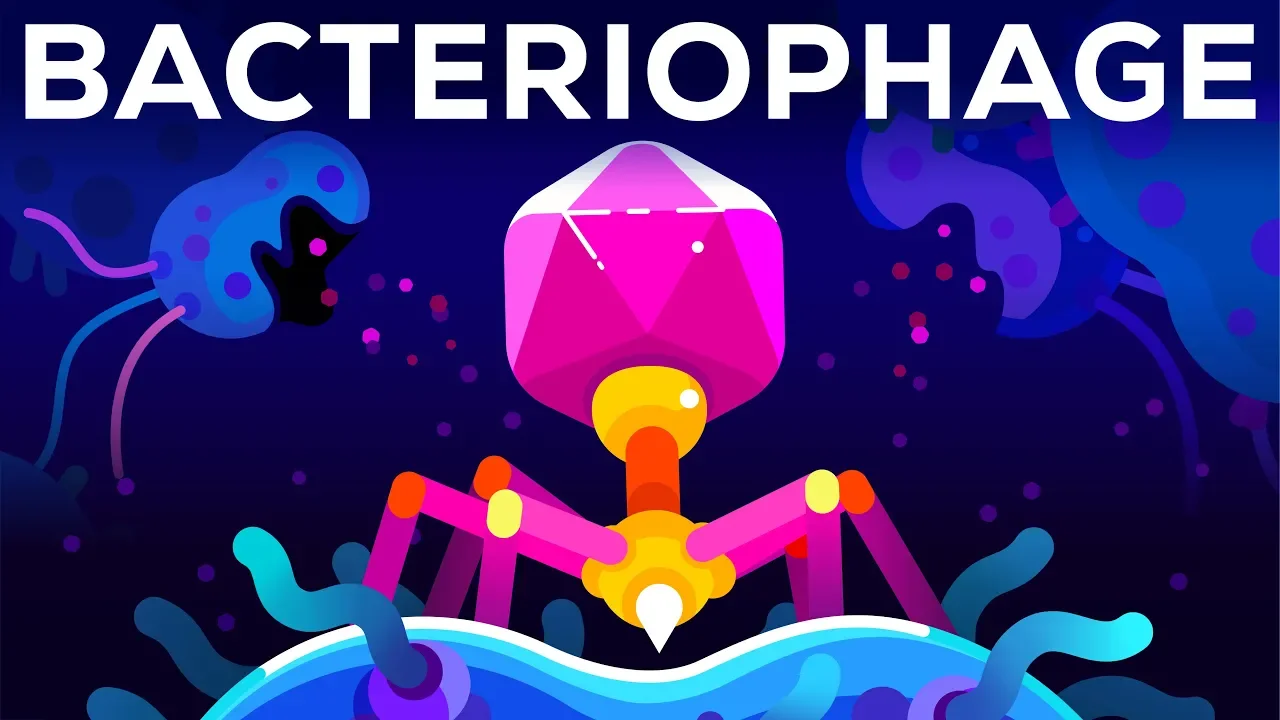
Bacteriophages: Earth's Deadliest Killers and Future Antibiotics
@kurzgesagt
34.6M views•2018-05-13
Related Study Plans & Knowledge Roadmaps
Structured learning paths in Biology