




















![Top 3 Ways To Rebuild Your Gut Microbiome [Podcast Ep. 435]](https://i.ytimg.com/vi_webp/Z0NBcEYWmdA/maxresdefault.webp)




Gut microbial fermentation of dietary fibers produces short-chain fatty acids (SCFAs) that impact host physiology through G-protein-coupled receptor binding and HDAC inhibition, yet measuring colonic SCFA production remains challenging due to absorption complexities; an in vitro approach using fresh stool slurry incubation allows quantification of individual fermentation capabilities, revealing that people differ dramatically in their ability to produce specific SCFAs from specific fibers, with this capability being relatively stable over time and potentially actionable for personalized dietary interventions targeting disease prevention.
In Vitro Gut Microbiome Fermentation for Disease Prevention
Added:Fundamental understanding of the human gut microbiome, including its composition and general role in metabolism and immunity.
The biochemical principles of anaerobic microbial fermentation, specifically how bacteria break down non-digestible carbohydrates.
The conceptual distinction between 'in vitro' (laboratory/test tube) and 'in vivo' (living organism) experimental models.
Basic concepts of personalized nutrition and how individual biological variation affects dietary responses.
Advanced bioreactor models (such as the SHIME system) used to simulate different regions of the human gastrointestinal tract.
The physiological pathways of short-chain fatty acids (SCFAs) like butyrate, propionate, and acetate in host metabolic health and disease prevention.
Integrating metabolomics and metagenomic sequencing data to map specific bacterial taxa to biochemical fermentation outputs.
Clinical trial design for validating personalized, microbiome-targeted dietary interventions in human subjects.
266 views6likes28:46Original Release: 2020-10-28
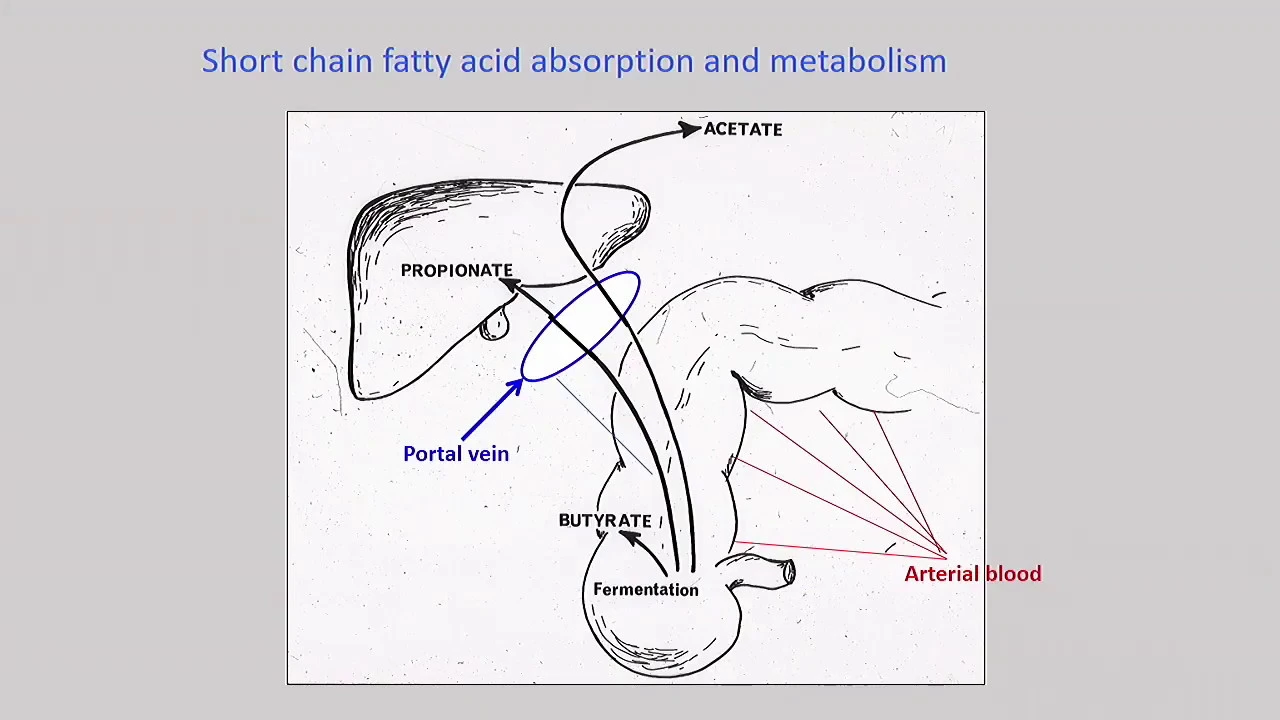
[Music] hi everyone i'm very pleased to open our next session of that symposium which will focus on in vitro approaches to study the gut microbiome this type of approaches mimic some aspects of the complex of the complex as well as complex to study um gut environment and facilitate microbiome research uh in this session we will have two speakers darth dr thomas guri from the university of geneva and dr julie mcdonald from imperial college london as in the previous section time for q a will be right after the two talks so please make sure to deposit your questions in the zoom using the q a bottom button at the bottom of the screen and please note which of the speakers the question is intended for you can also upload other questions each talk will be 30 minutes and after both docs we will have about 30 minutes for questions to both speakers now thomas is your cue to get ready while i introduce you so it's my pleasure to introduce dr thomas gury dr guri completed his phd work uh in protein biophysics with colin staltz at mit he went on to do his post doctoral work with eric ohm at mit studying the relationship between diet and the microbiome as well as contributed to a number of clinical trials in different indications involving the microbiome after his postdoc thomas focused on translational applications of the human gut microbiome developing a combination of experimental and computational methods to engineer the ferment the fermentative output of the patient's microbiota in order to optimize clinical outcomes thomas is currently a senior research associate at the university of geneva as well as a co-founder and a ceo of vesta biosciences which is a personalized nutrition company which was awarded a spinoff grant to develop a diagnostic for microbiome fermentation diagnostic for microbiome fermentation capabilities thomas will speak to us today about exploiting in vitro measurements of gut microbial fermentation capability towards disease prevention go ahead thomas thank you very much for the opportunity to talk i'm just getting in full screen mode um can you see my screen yes okay so yeah no thank you i really appreciate that that both that introduction and the opportunity to to speak to you all today as as noted i'll be uh discussing how we can exploit in vitro measurements of uh gut micro microbial fermentation capability towards disease prevention um and uh the question that underlies much of what i'll be discussing today in the work that i've done in recent years is can we engineer the metabolic output of an individual's gut microbiome through targeted dietary interventions specifically in order to improve health outcomes so one of the things that we started with here was to wonder whether we could modulate composition and for this you really have to go to an in vivo approach and i would just like to contextualize why we take an in vitro approach by talking about this for a second um the issue is that actually if you want to quantify the effects of dietary ingredients on a microbiomes composition and even on its metabolic output requires in vivo very tightly controlled feeding studies that are extremely difficult to pull off here is a study that we conducted at mit which was one where we were trying to understand the impact of different nutrients on the microbiome and its composition and in order to do that and to try and mitigate the effect of a variable diets and people consuming different portions of the prescribed diet we actually put them on this nutritional meal replacement milkshake called ensure that you may or may not be familiar with and we enrolled about 60 people and asked them to consume nothing but that for three days with water of course um followed by a further three days of that with a particular nutrient spiking and we collected stool throughout and the supplements that we were actually investigating were the dietary fibers pectin inulin and cellulose as well as coconut oil as a sort of fat saturated fat fish oil unsaturated fats and protein powder and what we found is that we didn't actually see any signals from the non-fiber nutrients perhaps that was the study was underpowered but certainly we saw some reproducible effects from dietary fibers in vivo so here are shown uh time series with the the squares corresponding to the days in the figure above and uh in blue um is uh the relative abundance of that particular bacterium is shown in blue if lower than average for that particular trajectory and in red if higher and you can see that these bacteria were found to statistically significantly spike on days five six and maybe the first day after the intervention which corresponds to exactly what you would expect um from a a bacterium responding to the spike in specific specifically um and in particular we're seeing quit pretty strong responses from inulin and pectin so indeed we can see some reproducible effects however we also see some individual specific effects to um illustrate that on the left-hand side i'm showing a case where it's a fairly homogeneous response across participants you can see that particular bacteroides uniformist species um has a relative abundance that blooms on days four five six um in the arm the arm where patients were treated with inulin whereas uh in other arms there's no significant bloom and when you break that down by participants in the lower panel lower left normalizing their relative abundances to day three so that they're comparable you can see that all of them are blooming to a certain extent and multiple factors of the original um the original abundance however on the right hand side uh another bacteroides species bacteroides cellulosicus which you may or may not have heard of and is a cellulose degrader um if you look at the average time series you may get the sense that uh that uh cellulose is resulting in reproducible blooms but actually if you tease out the individuals there are blooms in in the different participants of that arm but there's one individual in particular here shown as ao89 um that results in a 30-fold increase in the relative abundance of that bacterium so uh there seems to be something about that individual's gut ecology on the one hand potentially or a strain specificity of that particular individual that results in their microbiome having a culprit that's very very capable of feeding off cellulose and fermenting it the other thing that i will note that complicates matters and really does lend itself to um in vitro investigations where we can probe more carefully is that the ability to ferment a given fiber is is likely strain specific again honing in on the bacteroides uniformis example where i'd shown it with the response to inulin what we did is that we went and calculated uh the uh from the singular single and nucleotide polymorphisms in a housekeeping genes of that species we calculated the heterozygosity um for a given individual within that individual and loosely speaking that's a proxy for the strain level diversity if you like how uh how many different uh how what are the fractions of the different polymorphisms that you see at that site and so high heterozygosity is a is a proxy for high strain diversity if you like what we see clearly is that um here shown at 1997 and 99 identity to the housekeeping genes just a different alignment stringency if you like you see that on day 6 there's a reduction in heterozygosity within individuals which indicates that there's a lowering lower diversity in that species despite a higher relative abundance indicating that a particular strain is blooming and when you look at the between subject heterozygosity you can see again particularly at higher alignment stringencies that the heterozygosity between subjects goes down on day six as well which indicates that not only is there a particular strain responding but it appears to be the same strain across different individuals now this is merely suggestive but i think that this is consistent with what people know about dietary fiber and then so why are we uh you know really curious about dietary fiber at the end of the day um in order to understand uh the motivation here i mean there are over a billion people currently on the planet suffering from chronic conditions either of inflammation or metabolism and one of the key processes uh in the background that's happening in all of our guts right now is the fermentation of dietary fibers by the gut microbiome which results in the production of the short chain fatty acids for the most part acetate proteinate and butyrate as you'll probably know very well and these molecules have wide-ranging impacts on host physiology which have downstream effects on processes and biomarkers that are very likely associated with different diseases some links are stronger than others for example ibd and diabetes the link is quite strong and in others they're merely suggestive at this point but there's mounting evidence so really this is the sort of context behind which we we that that causes us to want to understand fermentation deeply and um i'll just note as i said that scfas impact host physiology um in a variety of ways and through two main mechanisms um the first being by binding g-protein-coupled receptors in the gut epithelium on the one hand and in immune cells on the other and potentially other tissues as well um but the other is through hdac inhibition and to cut a long story short those of you who who aren't familiar with that um all you need to know is that hdac inhibition results in uh different epigenetic regulation and so actually short chain fatty acids can impact uh host tissue gene expression and there's no real reason why that would be limited to the gut since these short chain fatty acids are found in the blood and circulating and so there are many potential ways in which these can affect the hosts the second thing that i would just note about droid chain fatty acids particularly in the context of our of our symposium today is that they're the output of very complicated ecological networks in the gut and so we've very much taken a black box approach here where we've black boxed the microbiome and consider fiber hinge or chain fatty acids out and that complex ecology as as very much inside that black box but it's really important to note that there's there is that complexity which complicates analysis and so the last thing that motivates an in vitro framework is that measuring scfa production in devo is very difficult on the one hand we don't have any technology that allows us to non-invasively track fermentation in the gut um and this is uh obviously because this is happening inside the garden as a continuous as a continuous process but also something very important that i think sometimes people tend to neglect is that stool short chain fatty acid concentration while interesting and while resulting in signals in associations with disease may not necessarily be so representative of colonic scfa production and the reason why i say uh not necessarily it is that it may or it may not be as a function of different parameters so for example just to illustrate this if you make a very simple model of chain fatty acid production where you have fiber ingested and fiber excreted and the short chain fatty acids are produced at a certain rate as a function of the microbiome here depicted by x um and then they are uh well they are both degraded and absorbed the degradation doesn't really happen in a meaningful uh quantitatively meaningful way on on host time scales but uh however absorption is a big part of it and all indications from the literature are that in in most concentration ranges that are physiologically relevant that absorption is linearly dependent on the concentration so you can construct a very simple model here where you have a rate constant absorption rate constant and depending on the value of that rate constant which we currently don't know accurately the interpretation of stool scfas is very different so for example um here plotting butyrate on the y-axis and different values of that rate constant on the x-axis on a logarithmic scale plotting the total butyrate excreted in blue versus total absorbed in red depending on your value of that rate constant you get a very different interpretation and so one estimate in the literature was obtained from a dialysis bag approach another was using a gut on a chip monolayer which we conducted uh preliminary experiments with and we obtained a rate constant that was almost two orders of magnitude off of the dialysis bag approach we don't claim that ours is any better all i'm saying is that the dialysis bag rate constant results in an interpretation where the short-chain fatty acids excreted are basically uh the entire amount of short-chain fatty acids produced and only a very small fraction are absorbed versus in the other in the monolayer rate constant the interpretation is quite different and and there's only a fraction of it that's uh that's actually excreted and so you have to ask yourself was all the substrate fermented before the stool was passed um and a lot of these different questions that might actually completely alter your interpretation of the results this is why we've resorted to an in vitro or put differently an ex vivo framework where uh you we collect fresh stool from volunteers homogenize it into a slurry it's an extremely simple framework where we incubate it anaerobically at 37 degrees and spike in different conditions um either a control condition with nothing or different dietary fibers and as in the case here and through time we can sample aliquots and measure short chain fatty acids so what we find is that fermentation capabilities differ quite dramatically between people on the top uh i'm sure i'm plotting here uh butyrate in both plots computer rate concentration as a function of time over a 24 hour time series and uh different conditions namely different spikens are plotted in different colors you can see in this particular subject that they're very good at making butyrate from inulin but they can't measurably make butyrate from pectin or cellulose above the control condition in contrast to the second subject where they seem to be able to make it from inulin and a bit less from picton and a tiny bit from cellulose what you can do then is that you can measure somebody's fermentation capability if you like which we define as their ability to produce a particular short-chain fatty acid from a particular fiber and across the pairs of fibers and scfas and so that's perhaps what uh one subject's fermentation capability would look like if you limit yourself to inulin and pectin and you can repeat this over many people which we did and what you find is that um that people do differ as you can see in their fermentation capability and moreover they tend to cluster into what appear to be discernible groups that may be an artifact of clustering at the end of the day it's a continuum but nonetheless it's interesting to note that for example type 2 are very good at making all three short chain fatty acids but from uh pectin as opposed to say type 5 which appears to be weaker than the population average in general at making all short chain fatty acids from those two fibers and so these different people have radically different fermentation capability i'll also note that fermentation is highly specific to fiber type so we extended these experiments to a larger set of fibers and as you can see um the results are similar here on the left showing propionate production rate computed from the early linear phase of the production on the previous plots and uh you can see for example that this individual varies by fiber in their propionate production rate as similarly by butyrate in butyrate and it really does depend by fiber and that is true the more you extend the list of fibers but the thing to note here is that um people often talk about soluble fibers as being the same thing when they're being sloppy as fermentable fibers and insoluble fibers is not being fermentable and that's strictly speaking uh not very accurate uh because depending on the model that you use you may not find that here we find for example that microcytosine is is is well fermented into both propionate and butyrate by this individual which is an insoluble fiber similarly the degree of polymerization appears to be a very important variable um so for example um both inulin and fructooligosaccharides of foss are derived from chicory root if you like or as one example and they differ only in the um degree of polymerization they're both fertiles and phos are just a shorter chain length typically on average but you can see that in this individual as far as propionate production is concerned they can't make any propionate from inulin the long form but they can make a lot as much as anything from boss and all that's changed is the degree of polymerization similarly um if you take uh kitazin and microcytosan both chitin-based fibers that are modified chitin with different degrees of polymerization you see the same effect both with propionate and butyrate that microkydesign is well fermented whereas chitosan is not fermented at all so one has to really be quite precise if you want to be talking about the ability to ferment a given fiber and and one should be careful to clearly define the degree of polymerization and everything and frankly the field hasn't gotten to that stage yet which is something that i think we all need to graduate to uh me included but we can use such a framework to also measure a fermentation of uh proteins and amino acids using the same method um so for those of you who are perhaps less familiar with that um the uh what tends to happen is that there are branched chain amino acids um specifically leucine isoleucine and valene that are fermented by the gut microbiome if they make it down there so if you ate it in excess or at a very large quantity and they make it down there um to the colon they're fermented into their equivalent branch chain fatty acid which are a type of scfa if you like um but so for example valene is fermented into isobutyrate and you can see that as you dose baleen into the medium you see an increase in the amount of isobutyrate produced similarly if you spike in leucine and dose it from 1 grams 10 grams let's say you can see an increase in the amount of isoval rate used so it appears that this in vitro framework while it may not be perfectly representative of the gut and it's a very simplistic model i do recognize that allows us to probe the fermentation of different uh dietary ingredients and uh one thing that i i think i'll note as well is that we that microbiome composition can predict fermentation capability it's not so surprising since at the end of the day the bacteria are the culprits but um here i'm uh illustrating this uh in terms of short chain fatty acid and fiber paris propionate being on the top row butyrate on the bottom row inulin on the left hand column and pectin on the right hand column and you can see that uh on the x-axis is the relative abundance of this particular lac-nos beratio otu that's unknown of an unknown unknown taxonomy you can see that the relative abundance of that otu is correlated with the ability to produce butyrate from inulin but less so with other pairs however and on in contrast you have say from this telecoprio to you where there is uh quite a clear correlation between the ability of uh to produce propionate from inulin but not much else and uh that would be consistent with what we know about private telecopri namely that it's a propionate producer like old provitilla but so uh the last thing that's important to note um in terms of can we is this actionable information or is this just a snapshot that changes in time entirely what we did is that we re-recruited the same participants several months up to six months down the line and and then compared their fermentation capability between time points and here on the left you can see them at both time points they do differ between individuals but only but the extremes tend to be preserved and to illustrate that if you project anything lower than average or blue onto say low and uh in blue here and uh anything higher than average on too high and uh binarize if you like your your your data and you do a two-tailed fischer test on the uh similarity between those you can see a statistical significance so there's indication that fermentation capability at least in its extremes is relatively stable through time of course assuming that and this was an exclusion criterion for us you weren't treated with antibiotics you didn't undergo major lifestyle changes and so on and so forth but that is somewhat actionable because if there's some stability over six months then we could presumably lead to a clinical vision for a particular icd-9 code for example where you would have a group of patients that could be stratified according to their microbiome fermentation capability and and assigned to different personalized dietary fiber mixes as a function of their fermentation capability some patients may require more than that if their their fermentation capability is so impoverished that they need some kind of recolonization therapy but ultimately if you can link the production of a particular short chain fatty acid or other fermentation metabolite with a particular icd-9 code then this diagnostic framework could be somewhat helpful and what it also allows us to do this in vitro framework is to measure fermentation capability in different patient groups so uh that allows us to in a sense to do case control studies um between disease or healthy or and or different uh um different stratifications um we're doing that currently uh in a cohort of alzheimer's disease patients um and uh specifically around uh particular mutations and as well since as some of you may know there's a link between dietary fiber intake in response to cancer immunotherapy we can look at the difference between responders and non-responders and we're also exploring that at the moment but at the end of the day if we want this to be clinically actionable and translatable um we need to be able to measure the impact of fiber supplementation on the host and uh and before we can even get to that we need to be able to have a good readout of the process itself as explained we don't have a good readout and that's why we're resorted to the in vitro framework but if we want to go back to the clinic we need to be able to do something and so the question that we're asking is can we use plasma short chain fatty acids as an in vivo readout and and also can we identify high quality surrogate biomarkers of microbial fermentation for example circulating markers of inflammation such as pro or anti-inflammatory cytokines or potentially other metabolites as well and uh ones and plasma short-chain fatty acids are very interesting uh to me i find that uh they're understudied because as i've noted um histone the acetylase inhibition or hdac inhibition is something that can transcend the gut in in theory and uh but the problem is that short-chain fatty acids exist in plasma potentially at some micro molar concentrations in some people and depending on the literature that you read the estimates vary by two orders of magnitude so we need to be able to measure these very accurately and sensitively much more so than from stool by two three orders of magnitude lower concentration and so to conduct these analyses we've developed an in-house lcms protocol with internal standards specific to each short chain fatty acid and with a very low limit of quantification in the nanomolar and so we went to some length to do that which is now allowing us to accurately quantify plasma short chain fatty acids in order to study their pharmacokinetics which is something that's poorly understood and so the study design that we're taking here and that we're currently on going i wish that we had data to share today but that'll have to wait a few months unfortunately is um is to be to treat a participant with different meals for example uh in our study a high fiber diet in the first meal a low fiber diet in the second meal and then a third meal consisting of the same low fiber meal as meal b but with a particular fiber chosen to boost butyrate in this case and and personalized determined using our in vitro framework and then we can track both the short chain fatty acids as well as the surrogate biomarkers um so with that i'd just like to thank my collaborators and uh as well as um professor scaposa with whom i i work at at the university of geneva and my postdoctoral advisor eric allm who uh with whom i started all of this work back in the day as well as doctor tu nien who's was uh a close collaborator of mine as well and and with with whom we started that pilot experiment and developed this in vitro frameworks i'm very grateful to her for that as well as professor frisonia with whom we're currently doing a lot of these analyses including the latest diet study um so with that i'd very happily answer any questions in the next session and i do very much appreciate the opportunity once again so thank you very much thank you very much thomas for this fascinating and clear clearly explained talk you
Up Next
45:50
Gut Microbiome & Diet with Dr. Gary Wu | Research Insights
@EmeranMayerMD
3.4K views•2019-03-14

50:12
Bacterial Communication: Quorum Sensing and Biofilm Formation Explained
@JHUAAP
12.6K views•2011-06-28

5:35
Enteric Nervous System Explained: The Gut's Brain | Neurobiology Lecture
@alumniu6029
438 views•2018-09-12

7:08
Bacteriophages: Earth's Deadliest Killers and Future Antibiotics
@kurzgesagt
34.6M views•2018-05-13
Related Study Plans & Knowledge Roadmaps
Structured learning paths in Biology
biology
RNAi: Biogenesis, RISC & Gene Silencing
01Molecular Biology Foundations: DNA to Protein
02Introduction to RNA Interference (RNAi)
03Molecular Biogenesis of miRNA and siRNA
+ 2 more learning modules
10h5 modules
Explore Roadmap
biology
Mycorrhizae: Signaling, Biophysics & Ecology
01Foundations of Mycorrhizal Symbiosis
02Molecular Signaling and Root Colonization
03Biophysics and Bioenergetics of Nutrient Exchange
+ 1 more learning modules
11h4 modules
Explore Roadmap
biology
Circadian Clocks: TTFL, SCN & Periphery
01Foundations of Molecular Biology & Gene Expression
02Introduction to Chronobiology and Actograms
03The Core TTFL: Molecular Architecture of the Clock
+ 3 more learning modules
14h6 modules
Explore Roadmap
biology
Population Genetics: Math, Drift & Selection
01Genetic & Probability Foundations
02The Hardy-Weinberg Principle and Baseline Models
03Mathematical Modeling of Natural Selection
+ 3 more learning modules
18h6 modules
Explore Roadmap