




















Standard English, characterized by specific grammatical rules, spelling conventions, and vocabulary (such as avoiding double negatives and using 'ain't'), represents a minority dialect used by approximately 1% of English speakers globally, despite being prominently featured in public discourse; conversely, non-standard English varieties, historically dismissed with derogatory terms like 'patois' or 'broken English,' constitute the majority of English usage worldwide and deserve equal scholarly recognition alongside standard English.
Standard vs Non-Standard English: David Crystal Lecture | Academic English
Added:The distinction between prescriptive grammar (rules on how language 'should' be used) and descriptive linguistics (analysis of how language is actually used).
Basic sociolinguistic concepts, specifically the definitions of accent, dialect, sociolect, and the social prestige associated with language varieties.
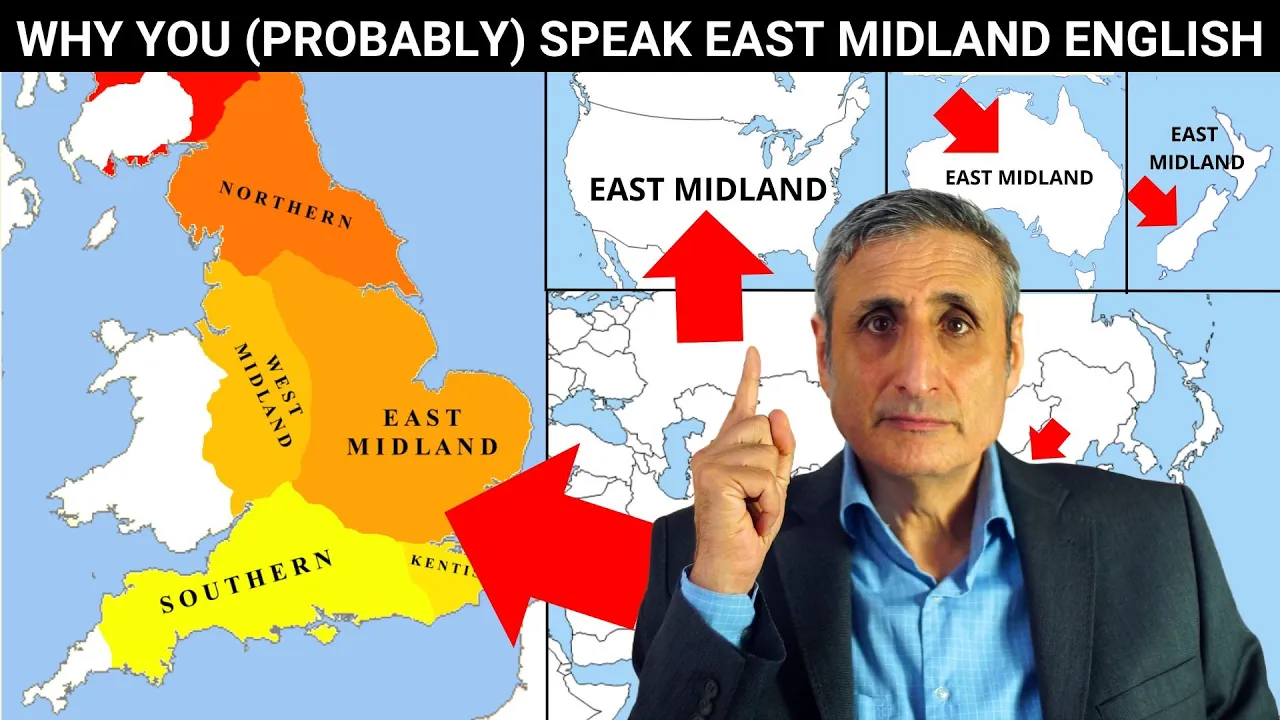
A foundational understanding of how Standard English historically emerged from a regional East Midlands dialect through standardization and political centralization.
The study of 'accentism' and linguistic discrimination, particularly how non-standard dialects affect employment, education, and social mobility.
Braj Kachru's 'Three Circles of English' model and the evolution of global varieties, or 'World Englishes' (e.g., Indian English, Singaporean English).
The psychological and social dynamics of code-switching and style-shifting, where speakers transition between standard and non-standard dialects depending on context.
Language policy and planning, specifically debating the role of non-standard dialects (such as African American Vernacular English) in public school curricula.
199.2K views2.2Klikes5:38Original Release: 2012-10-23
it is the stories of English of course that's what i'm talking about this evening, not the the story of English which some of you may remember was the title of the television series or twenty or more years ago and the story of English that was told in that particular program and indeed has been told virtually in the same way for the last hundred years or more is the story of one kind of English only, a story of standard English.
And dialects, the nonstandard varieties of English have been virtually neglected.
And quite consciously so.
Here's a quote to illustrate the point, H C Wyld [Henry Cecil] 'A Short History of English', a book I cut my teeth on when I went too read English for the first time - absolutely standard work - and this is what he says; when you open his book and look for dialect you will find them there at the very back in the very last chapter sort of tucked away at the end somewhere 'Fortunately', says Wyld at the present time, 'the great majority of the English dialect sort of very little importance as representatives of English speech and for our present purpose we can afford to let them go.
Except in so far as they throw light upon the growth of those forms of our language, which are the main objects of are solicitude, namely the language of literature and received standard spoken English.
Quaint and eccentric he calls dialects.
And those are two of the commonest adjectives for dialect in that particular period of our history.
Oh, there's another little quote here. You'll love this one.
He allows at one point that there may be sophisticated valleys of dialect use saying 'these certainly differ from the pure old dialect but isn't identical with the English, let us say, in in Oxford or Cambridge common room or in an officer's mess?
We should probably say that it was not', says Wyld.
Well, that captures a whole ethos of attitudes towards dialect in relation to the standard language.
Standard English is proper English is correct English.
Dilect is inferior English, is low quality, is deficient in some way to be judged against the criterion of the standard language.
And the names for these dialect situation are of course many and various, and they're all negative in their associations, aren't they?
People talk about thing about these varieties being 'patois' or 'cant' or or a lingo of some kind or 'broken English' or 'gutter English' or 'substandard English'.
Linguists on the whole have tried to get away from this kind of negative terminology - we talk a lot about non-standard English as the most neutral way of expressing the relationship, but even that is a somewhat, uh, negative way of looking at the situation. Something has gone horribly wrong, that's the point.
Standard English is the minority dialect - always has been.
Perhaps one percent of the English speakers of the world, um, use standard English. Or I should say, of course, English writers of the world, because standard English is essentially the dialect of the written language.
Defined, as you know, by its grammar, by its spelling and its punctuation and, to a minor extend, by its vocabulary as well.
If people say 'What is standard English?' we give examples and there are dozens of them - like in standard English we don't use double negatives for example.
Nobody in standard English says 'I haven't got nuffink.'
or something like that. 'I don't have anything.'
So a double negative is in current terms non-standard. Or the use of 'ain't'.
'Ain't got nuffin.'
Very much non-standard. Or 'We was sat 'ere.'
Very much no standard.
And then of course in spelling and punctuation there are lots and lots of examples of the standardization of the language. We have to spell correctly in order to use standard English well. We have to punctuate correctly, in so far as it's possible, in order to use standard English well.
But that written language, that written definition of standard is still only a minority of the overall English language used in the world.
Nobody's got any real statistics, of course.
But how many people speak standard English in that way? iIm doing my best at the moment.
And indeed you will hear standard English spoken on the most public of occasions, and that's why everybody gets the impression that it's universal but in actual fact perhaps only five percent at most of the spoken English around the world is going to be standard English. Most people around the world use double negatives and say 'ain't' and have various kinds of, uh, irregular verb used in the non-standard sort of way.
Up Next

11:21
Sociolinguistics: Language and Social Identity
@crashcourse
314.5K views•2020-10-23
36:52
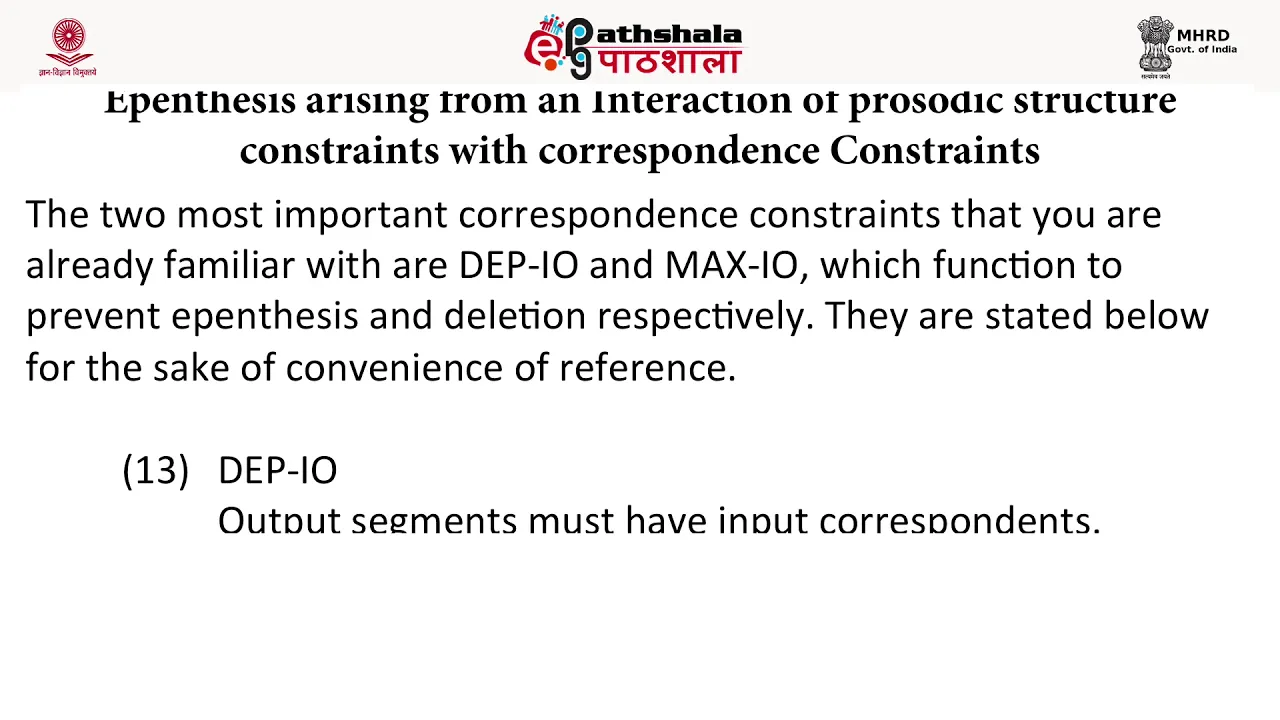
Constraint Interaction in Optimality Theory: Epenthesis & Deletion
@Vidyamitra
180 views•2018-08-20

8:59
Forensic Linguistics: How Language Solves Crimes | PBS
@pbsstoried
1M views•2024-01-25

21:32
Accent Expert Explains U.S. Regional Dialects | Part 1
@WIRED
9.3M views•2021-01-21
Related Study Plans & Knowledge Roadmaps
Structured learning paths in Linguistics
linguistics
Optimality Theory: Tableaux & Constraints
01Phonological Basics: Sounds, Syllables & Rules
02Foundations of Optimality Theory: GEN, CON, and EVAL
03The Constraint Inventory: Markedness vs. Faithfulness
+ 2 more learning modules
15h5 modules
Explore Roadmap
linguistics
Morphosyntactic Alignment: S, A & P Systems
01Foundations of Syntax: Transitivity and Arguments
02The Linguistic Variables: Mapping S, A, and P
03Nominative-Accusative Alignment
+ 3 more learning modules
12h6 modules
Explore Roadmap
linguistics
Analyzing Sign Language: Phonology & Syntax
01Foundations of Sign Language Linguistics
02Phonology: The Five Parameters of a Sign
03Morphology: Word Formation and Classifiers
+ 2 more learning modules
14h5 modules
Explore Roadmap
linguistics
Pragmatics: Speech Acts, Grice & Politeness
01Introduction to Pragmatics: Meaning in Context
02Grice’s Cooperative Principle & Implicature
03Speech Act Theory
+ 2 more learning modules
14h5 modules
Explore Roadmap