





















Educators should shift from viewing students through a deficit lens (labeling them as 'at-risk') to recognizing their inherent assets, grit, resilience, and character; this reframing, combined with culturally relevant teaching, adequate resources, and restorative justice practices, can transform student outcomes and help young people succeed academically and personally.
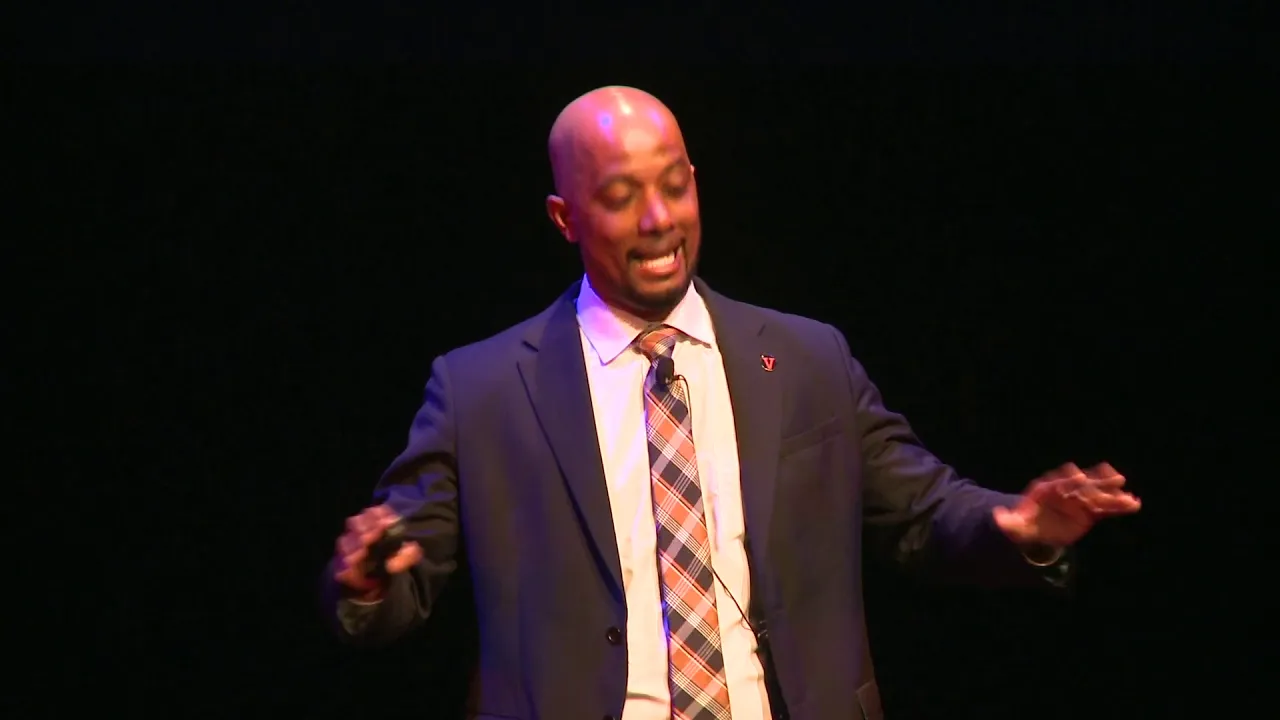
Education for At-Risk vs At-Promise Students: Victor Rios on Transforming School Systems
Added:Understanding of the historical context of 'at-risk' terminology and how deficit-based labeling has been traditionally used in the education system.
Basic principles of Labeling Theory in sociology and its impact on student identity, self-esteem, and academic performance (the Pygmalion effect).
The conceptual distinction between deficit-based pedagogy (focusing on student weaknesses) and asset-based pedagogy (focusing on student strengths).
An awareness of systemic socioeconomic inequities and how they influence educational access, school funding, and student outcomes.
Practical strategies for implementing asset-based teaching methods and designing curricula that validate and integrate students' diverse lived experiences.
The principles of Restorative Justice in Education as an alternative to punitive disciplinary policies that disproportionately affect marginalized students.
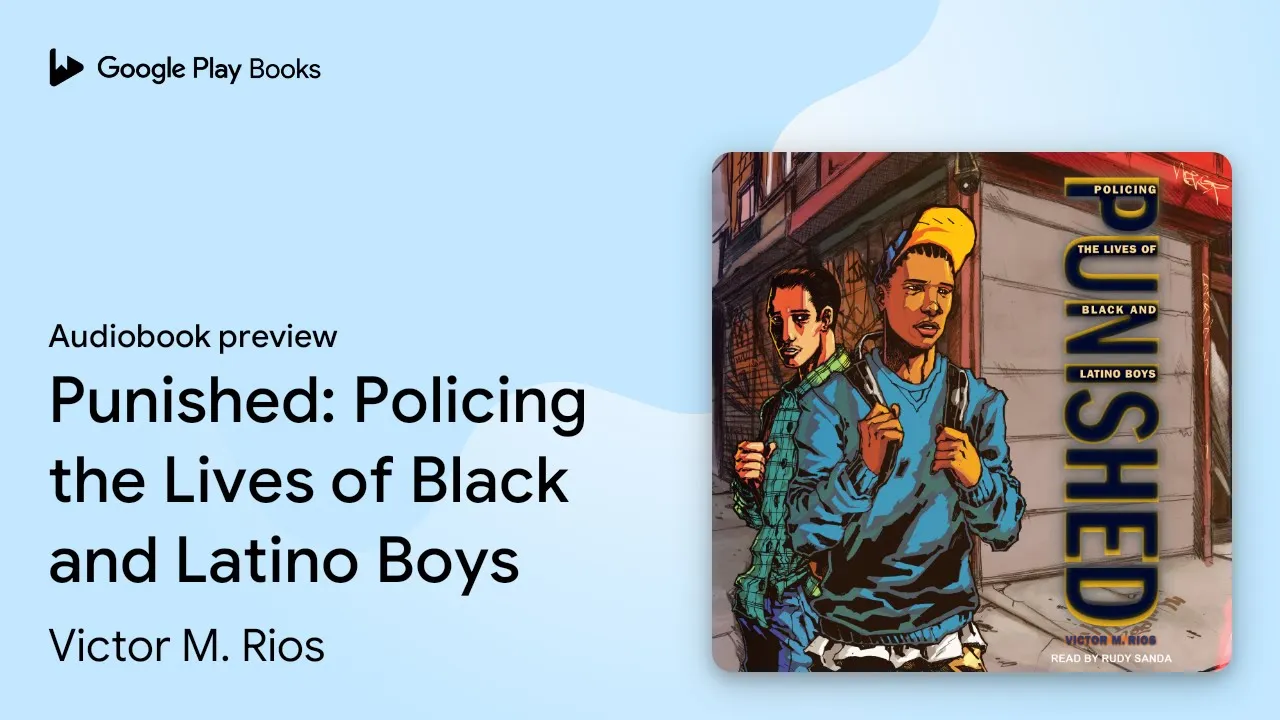
In-depth exploration of Victor Rios's broader sociological research on the 'school-to-prison pipeline' and the over-policing of youth in academic environments.
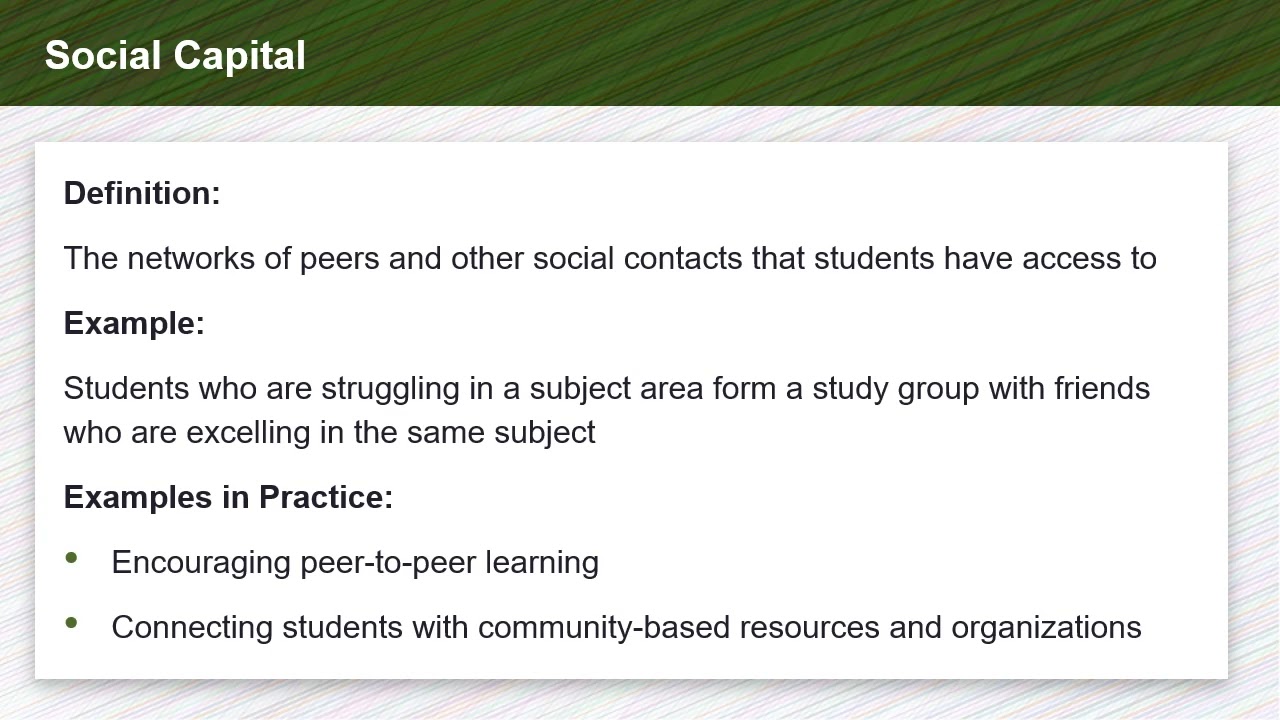
Tara Yosso's framework of Community Cultural Wealth to analyze the specific forms of capital (aspirational, familial, social) that 'at-promise' students bring to school.
Policy analysis of educational reform, focusing on equitable resource allocation, mental health support, and community school models.
195.4K views3.5Klikes11:53Original Release: 2016-12-12
For over a decade, I have studied young people that have been pushed out of school, so called "dropouts."
As they end up failed by the education system, they're on the streets where they're vulnerable to violence, police harassment, police brutality and incarceration.
I follow these young people for years at a time, across institutional settings, to try to understand what some of us call the "school-to-prison pipeline."
When you look at a picture like this, of young people who are in my study... you might see trouble.
I mean one of the boys has a bottle of liquor in his hand, he's 14 years old and it's a school day.
Other people, when they see this picture, might see gangs, thugs, delinquents -- criminals.
But I see it different.
I see these young people through a perspective that looks at the assets that they bring to the education system.
So will you join me in changing the way we label young people from "at-risk" to "at-promise?"
(Applause) How do I know that these young people have the potential and the promise to change?
I know this because I am one of them.
You see, I grew up in dire poverty in the inner city, without a father -- he abandoned me before I was even born.
We were on welfare, sometimes homeless, many times hungry.
By the time I was 15 years old, I had been incarcerated in juvy three times for three felonies.
My best friend had already been killed.
And soon after, while I'm standing next to my uncle, he gets shot.
And as I'm waiting for the ambulance to arrive for over an hour... he bleeds to death on the street.
I had lost faith and hope in the world, and I had given up on the system because the system had failed me.
I had nothing to offer and no one had anything to offer me.
I was fatalistic.
I didn't even think I could make it to my 18th birthday.
The reason I'm here today is because a teacher that cared reached out and managed to tap into my soul.
This teacher, Ms. Russ... she was the kind of teacher that was always in your business.
(Laughter) She was the kind of teacher that was like, "Victor, I'm here for you whenever you're ready."
(Laughter) I wasn't ready.
But she understood one basic principle about young people like me.
We're like oysters.
We're only going to open up when we're ready, and if you're not there when we're ready, we're going to clam back up.
Ms. Russ was there for me.
She was culturally relevant, she respected my community, my people, my family.
I told her a story about my Uncle Ruben.
He would take me to work with him because I was broke, and he knew I needed some money.
He collected glass bottles for a living.
Four in the morning on a school day, we'd throw the glass bottles in the back of his van, and the bottles would break.
And my hands and arms would start to bleed and my tennis shoes and pants would get all bloody.
And I was terrified and in pain, and I would stop working.
And my uncle, he would look me in the eyes and he would say to me, "Mijo, estamos buscando vida."
"We're searching for a better life, we're trying to make something out of nothing."
Ms. Russ listened to my story, welcomed it into the classroom and said, "Victor, this is your power.
This is your potential.
Your family, your culture, your community have taught you a hard-work ethic and you will use it to empower yourself in the academic world so you can come back and empower your community."
With Ms. Russ's help, I ended up returning to school.
I even finished my credits on time and graduated with my class.
(Applause) But Ms. Russ said to me right before graduation, "Victor, I'm so proud of you.
I knew you could do it.
Now it's time to go to college."
(Laughter) College, me?
Man, what is this teacher smoking thinking I'm going to college?
I applied with the mentors and support she provided, got a letter of acceptance, and one of the paragraphs read, "You've been admitted under probationary status."
I said, "Probation? I'm already on probation, that don't matter?"
(Laughter) It was academic probation, not criminal probation.
But what do teachers like Ms. Russ do to succeed with young people like the ones I study?
I propose three strategies.
The first: let's get rid of our deficit perspective in education.
"These people come from a culture of violence, a culture of poverty.
These people are at-risk; these people are truant.
These people are empty containers for us to fill with knowledge.
They have the problems, we have the solutions."
Number two.
Let's value the stories that young people bring to the schoolhouse.
Their stories of overcoming insurmountable odds are so powerful.
And I know you know some of these stories.
These very same stories and experiences already have grit, character and resilience in them.
So let's help young people refine those stories.
Let's help them be proud of who they are, because our education system welcomes their families, their cultures, their communities and the skill set they've learned to survive.
And of course the third strategy being the most important: resources.
We have to provide adequate resources to young people.
Grit alone isn't going to cut it.
You can sit there and tell me all you want, "Hey man, pick yourself up by the bootstraps."
But if I was born without any straps on my boots -- (Laughter) How am I supposed to pick myself up?
(Applause) Job training, mentoring, counseling... Teaching young people to learn from their mistakes instead of criminalizing them, and dragging them out of their classrooms like animals.
How about this?
I propose that we implement restorative justice in every high school in America.
(Applause) So we went out to test these ideas in the community of Watts in LA with 40 young people that had been pushed out of school.
William was one of them.
William was the kind of kid that had been given every label.
He had dropped out, he was a gang member, a criminal.
And when we met him he was very resistant.
But I remember what Ms. Russ used to say.
"Hey, I'm here for you whenever you're ready."
(Laughter) So over time -- over time he began to open up.
And I remember the day that he made the switch.
We were in a large group and a young lady in our program was crying because she told us her powerful story of her dad being killed and then his body being shown in the newspaper the next day.
And as she's crying, I don't know what to do, so I give her her space, and William had enough.
He slammed his hands on the desk and he said, "Hey, everybody! Group hug! Group hug!"
(Applause) This young lady's tears and pain turned into joy and laughter knowing that her community had her back, and William had now learned that he did have a purpose in life: to help to heal the souls of people in his own community.
He told us his story.
We refined his story to go from being the story of a victim to being the story of a survivor that has overcome adversity.
We placed high value on it.
William went on to finish high school, get his security guard certificate to become a security guard, and is now working at a local school district.
(Applause) Ms. Russ's mantra -- her mantra was always, "when you teach to the heart, the mind will follow."
The great writer Khalil Gibran says, "Out of suffering have emerged the greatest souls.
The massive characters are seared with scars."
I believe that in this education revolution that we're talking about we need to invite the souls of the young people that we work with, and once they're able to refine -- identify their grit, resilience and character that they've already developed -- their academic performance will improve.
Let's believe in young people.
Let's provide them the right kinds of resources.
I'll tell you what my teacher did for me.
She believed in me so much that she tricked me into believing in myself.
Thank you.
(Applause)
Up Next

95:30
Systemic Racism: Defining Terms & Evaluating Evidence | MLK Lecture
@ASUSCETL
800 views•2022-01-19
54:57
Contemporary Sociological Theory: Micro, Macro, Integrative
@NaSESYNC
45.7K views•2016-02-17

21:18
Sexism and Epistemic Injustice: How Male-Centered Culture Shapes Knowledge | Soraya Chemaly | TEDx Talk
@TEDx
395.5K views•2015-07-28
9:41
What is Sociology? The Sociological Perspective Explained
@crashcourse
4.6M views•2017-03-13
Related Study Plans & Knowledge Roadmaps
Structured learning paths in Sociology
sociology
Celebrity Culture: From Hollywood to TikTok
01Foundations of Celebrity Sociology
02The Rise of Micro-Celebrity & Digital Platforms
03Parasocial Relationships & Algorithmic Intimacy
+ 2 more learning modules
12h5 modules
Explore Roadmap
sociology
Hostile Architecture: Space, Power & Control
01Introduction to the Sociology of Space
02Social Control and Surveillance in the City
03Hostile Architecture and Defensive Design
+ 2 more learning modules
12h5 modules
Explore Roadmap
sociology
Loneliness Epidemic: Third Places & Isolation
01Foundations of Social Capital and Community Cohesion
02The Death of Third Places and Urban Space Erosion
03The Privatization of Leisure and Atomization
+ 2 more learning modules
12h5 modules
Explore Roadmap
sociology
Sociology of Tourism: Gaze, Power & Heritage
01Foundations of the Sociology of Travel and Leisure
02John Urry and the 'Tourist Gaze'
03Staged Authenticity and Cultural Commodification
+ 2 more learning modules
14h5 modules
Explore Roadmap