















Artificial intelligence is revolutionizing the deciphering of ancient lost scripts by analyzing patterns, frequencies, and spatial relationships between symbols that human eyes cannot detect, revealing that many ancient civilizations deliberately buried or silenced their writings containing warnings about societal collapse, political suppression, and cyclical disasters, raising profound questions about whether these ancient messages were meant to be hidden and whether modern humanity is prepared to confront what they may contain.
Decoding Ancient Languages with AI: The Herculaneum Scrolls
Added:Basic principles of computer vision and machine learning, specifically how neural networks detect subtle patterns and textures in 3D data.
The historical context of the Mount Vesuvius eruption in 79 AD and how the intense heat carbonized the papyri library of Herculaneum, making physical unrolling impossible.
The fundamentals of non-destructive imaging technologies, particularly micro-computed tomography (micro-CT) used to scan delicate archaeological artifacts.
An introduction to ancient paleography, focusing on how ink (specifically carbon-based ink) differs from the background of carbonized papyrus.
Advanced Natural Language Processing (NLP) models designed for text restoration, such as using deep learning to predict missing words or letters in damaged manuscripts.
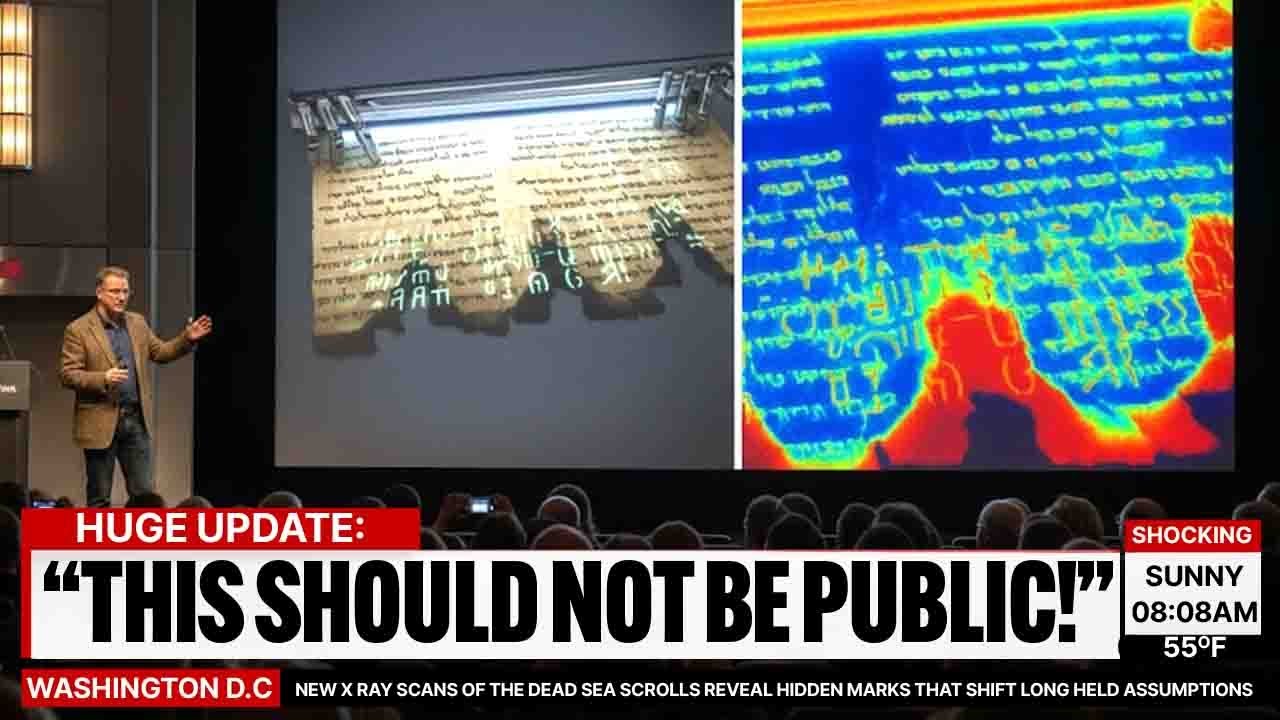
The application of similar AI-driven virtual unwrapping techniques to other delicate historical texts, such as scorched Dead Sea scrolls or medieval palimpsests.
The challenges and methodologies of deciphering completely lost or undeciphered ancient scripts (e.g., Linear A or the Indus script) using computational linguistics.
The ethical, legal, and collaborative aspects of open-source science in digital humanities, as exemplified by the Vesuvius Challenge.
1.8M views17.7Klikes36:32Original Release: 2025-05-25
Ancient scrolls that were buried in volcanic ash during the eruption of Mount Vuvius are now being deciphered 2,000 years later, thanks in part to artificial intelligence. An ancient scroll buried by a volcano for nearly 2,000 years has just been read by an AI.
What it revealed wasn't history. It was a warning. Across the world, machines are now decoding lost scripts once thought gone forever. But the messages aren't peaceful. They speak of fire, silence, collapse, and something darker.
We as humans are going to reconnect with a part of our history that's incredibly difficult to connect to. From the Indis Valley to Mayan temples, from forbidden women's codes to vanished prophecies, these languages didn't just disappear, they were silenced. And now that AI is unlocking them, you have to wonder, why were they hidden in the first place?
Join us. Dead scripts and digital resurrection. All across the world, pieces of ancient writing have been found, inscribed, painted, scratched, or carved into surfaces ranging from rock and bone to clay, gold, and even woven cloth. But for centuries, most of them have remained unreadable. These are what scholars call lost scripts. Not because we don't know they exist, but because we can't understand them. But what happens when those voices start speaking again?
What happens when artificial intelligence designed to recognize faces and predict ad clicks starts decoding the lost messages of dead languages? And what if what they reveal is something we were never supposed to see? Think of the Indiscript over 4,500 years old found across Pakistan and Northwest India. But we still don't know what a single symbol means. There's no translation key, no bilingual inscription like the Rosetta Stone. It's as if someone wrote in code, threw away the decoder, and disappeared. Or take Rango Rango from Easter Island. Glyphs carved into wooden tablets using a strange mirrored writing direction. Left to right, then right to left, flipping every line. Some researchers think it was their version of scripture. Others believe it recorded genealogies or even warnings. But when European colonizers arrived, the culture that used it collapsed. Not a single person alive today can read it. Then there's the Atruscan language spoken in ancient Italy before the rise of Rome. We've uncovered thousands of inscriptions, funeral dedications, religious texts, personal names. We can pronounce the words. We know their alphabet. But the meaning still mostly a mystery. That's because Atruscan is a language isolate.
It has no known relatives. It's like finding an entire book in a language that doesn't connect to anything else we've ever seen. So why have these scripts been so hard to crack? It's not just the age or the damage. It's because language is more than just symbols. To understand a lost script, you need three things. a large number of examples, some context about the culture, and ideally a bilingual document, something like the Rosetta Stone, which helped scholars finally translate ancient Egyptian.
Without these, decipherment becomes guesswork. And for centuries, that's exactly what it was. Until now, AI, artificial intelligence, is changing everything. Not by replacing human experts, but by helping them see what was previously invisible. Using powerful machine learning algorithms, researchers are feeding these undeciphered scripts into systems that can analyze structure, frequency, and spatial relationships between characters. These systems aren't reading the language in the human sense.
They're spotting patterns, mathematical, and visual relationships that our eyes miss. They can group similar symbols, detect repeated sequences, and even guess what symbols might be verbs or nouns based on where they appear. One technique is called neural network modeling. It mimics the way the human brain processes information. In practice, that means giving the AI thousands of images or symbol strings to study until it starts recognizing patterns. Another is pattern recognition which trains algorithms to identify recurring shapes or arrangements that could indicate syntax like punctuation marks or grammatical rules. Then there's linguistic modeling where AI tries to understand how a language might work even if it doesn't know what the words mean. This includes tracking how symbols are spaced, how often they appear, and in what order. Just like how we know that in English the is likely to come before a noun. These tools have already revolutionized our understanding of known languages such as the 2021 discovery that the Dead Sea Scrolls are the work of two different scribes, not just one person. But now that same technology is decoding unreadable texts from lost civilizations. But something's off.
Hidden in these ancient symbols are eerie patterns. Cycles of destruction, fire returning, silence before collapse.
These scripts were buried for a reason.
Now they're speaking. The real question is, should we be listening? The scroll that should never have been read. In early 2024, something happened that shook the academic world and barely made a ripple outside of it.
A scroll that had been unreadable for nearly 2,000 years was finally cracked open, not by human hands, but by an algorithm. And what it revealed wasn't just a forgotten piece of philosophy.
According to those who've read the fragments, it hinted at destruction, political silence, and a cycle of fire.
Little did humanity know, a scroll that literally survived the end of a city had been hiding a warning no one was supposed to see. Let's rewind. The year is 79 AD.
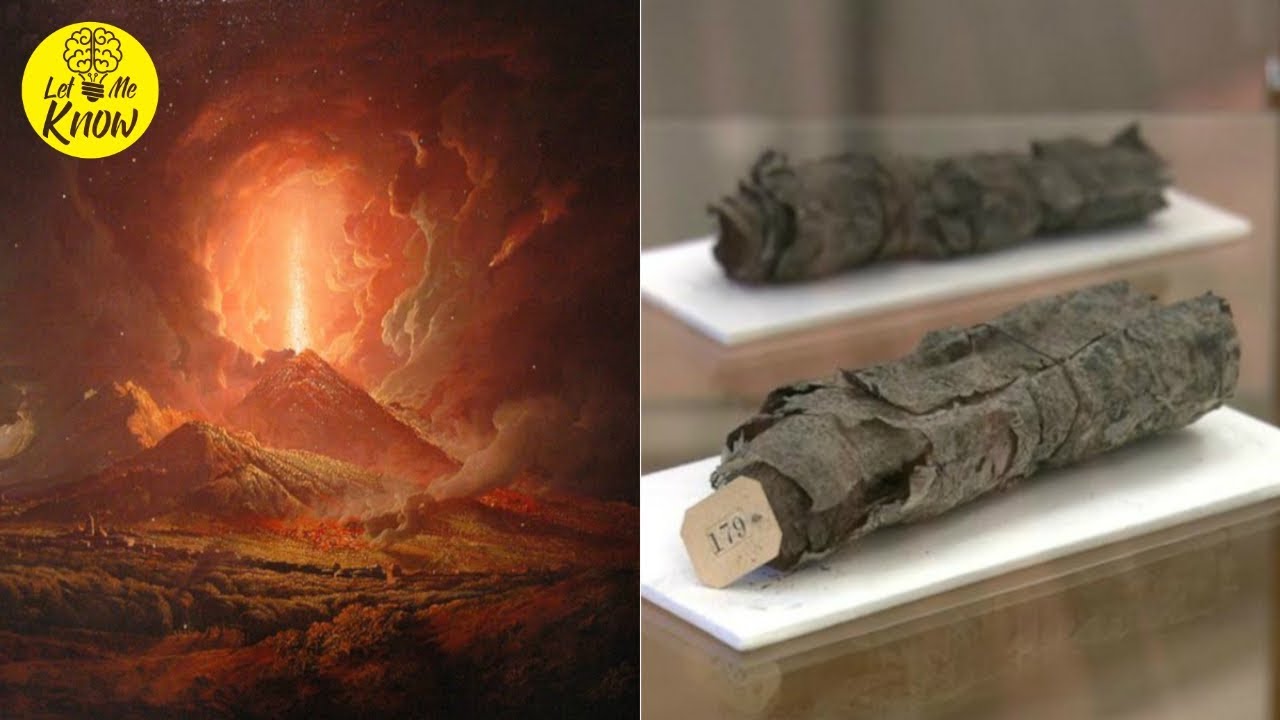
Mount Vuvius erupts with catastrophic force, covering the Roman cities of Pompei and Hercuanium in volcanic ash and debris. Pompei is the name most people know, its plastered corpses, its frozen streets. But Hercuanium, closer to the coast, was wealthier, more refined, and buried in a different way.
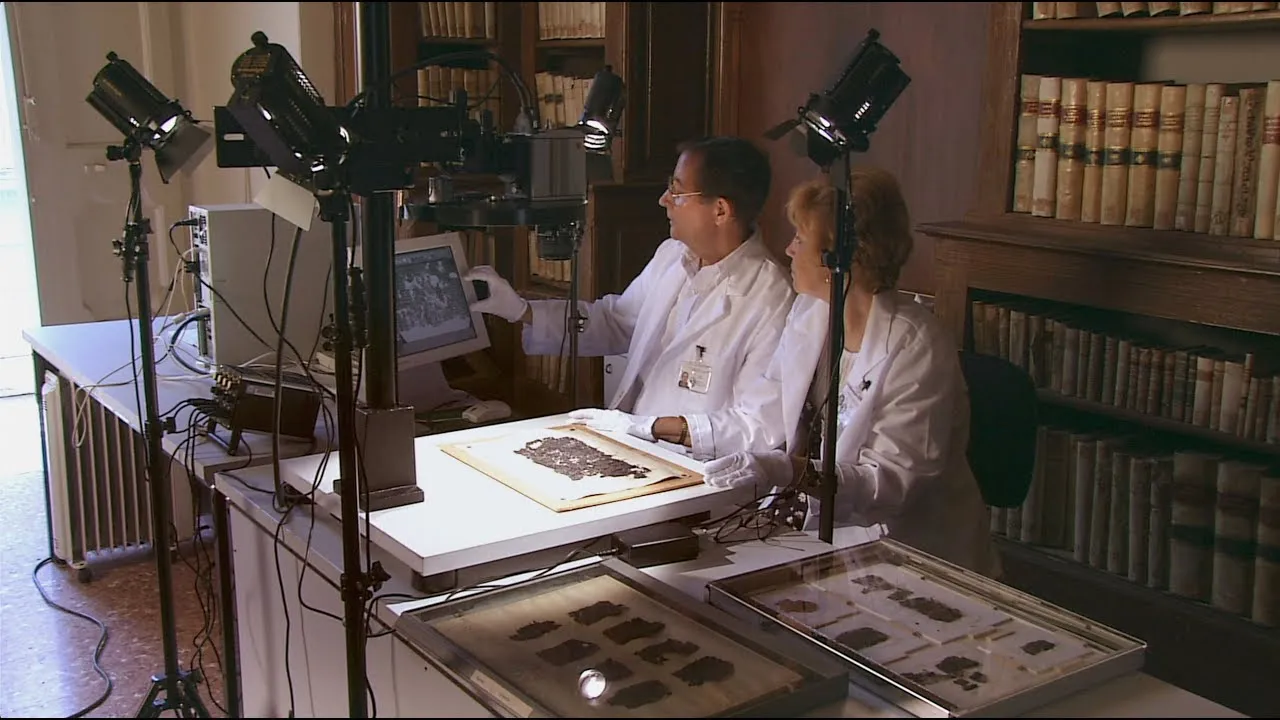
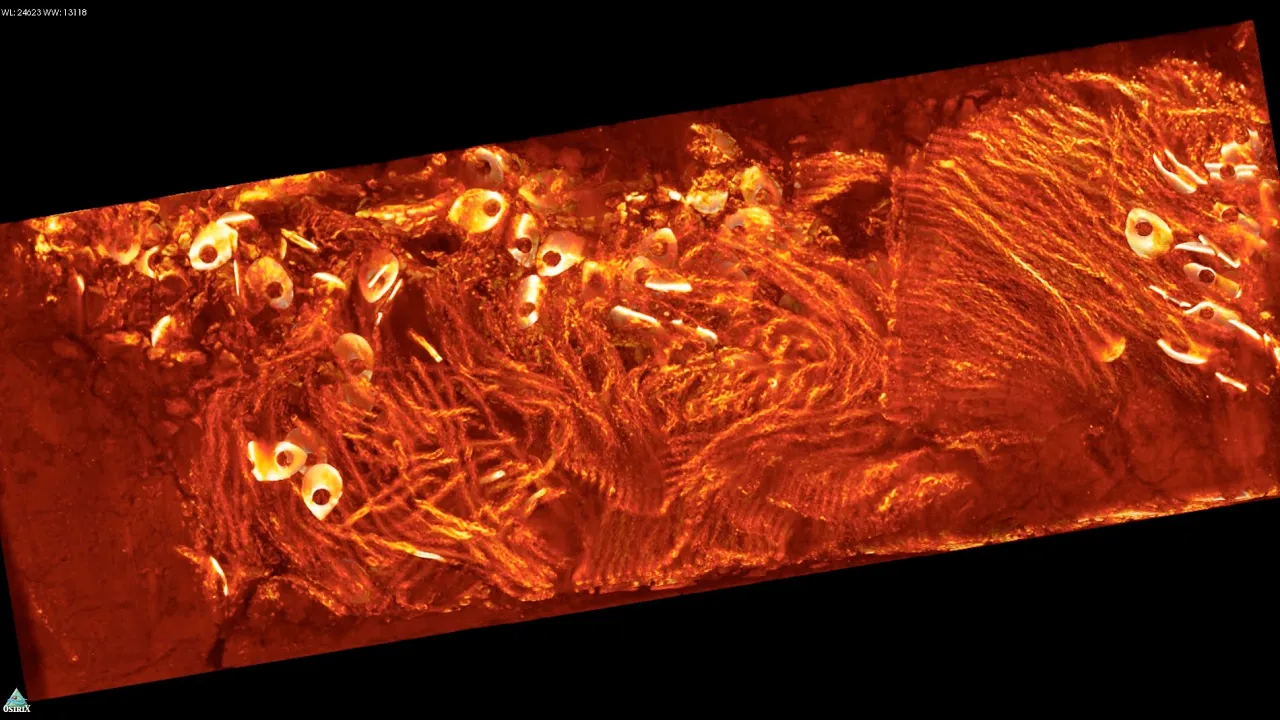
While Pompei was smothered in ash, Herculanium was hit by waves of pyrolastic material, scorching flows of gas and rock that cooked the city at over 500° C. It happened fast. So fast, in fact, that an entire library was preserved by being carbonized, literally turned to charcoal in an instant. That library located in what is now called the villa of the papri belonged to a wealthy Roman, possibly the father-in-law of Julius Caesar. Inside were hundreds of scrolls, all fused into black, fragile cylinders. For centuries, they sat untouched. Attempts to unroll them by hand only shattered them. Ink and paper had become one, indistinguishable.
Scholars believed the knowledge inside was lost forever. A few fragments were teased out using infrared photography in the 1990s, but no one could fully read an intact scroll until now. Enter the Vuvius challenge.
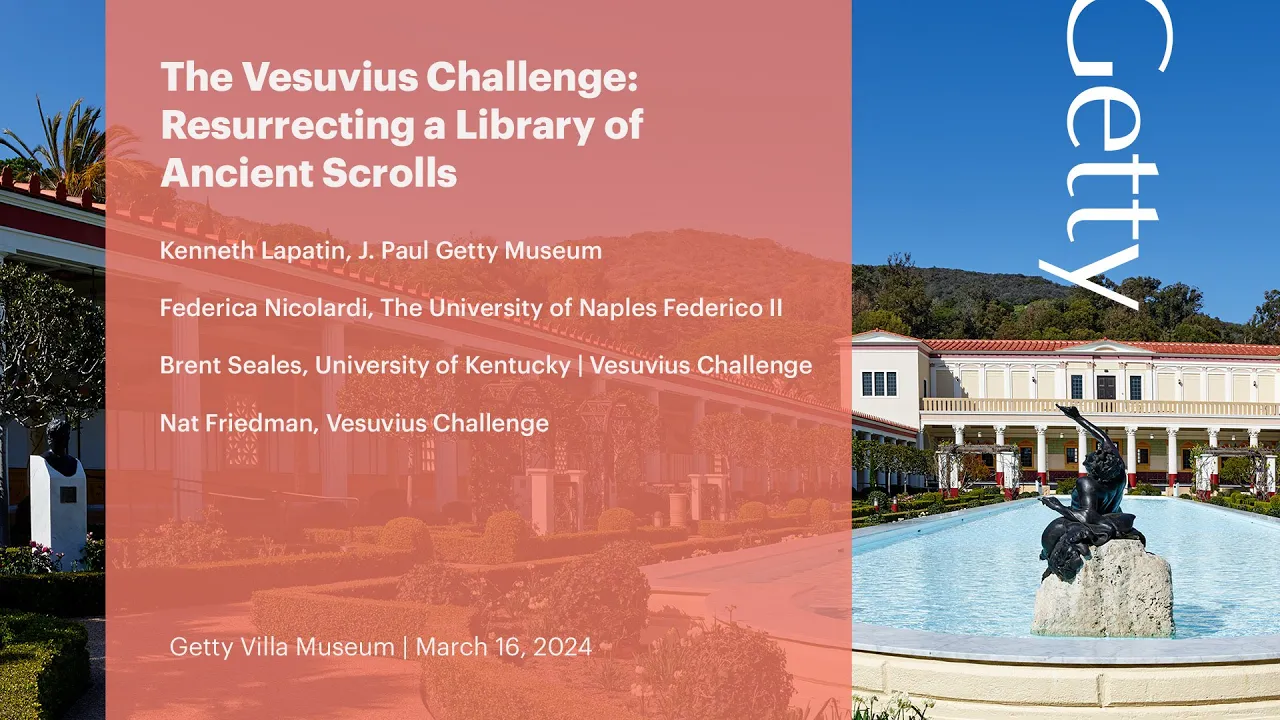
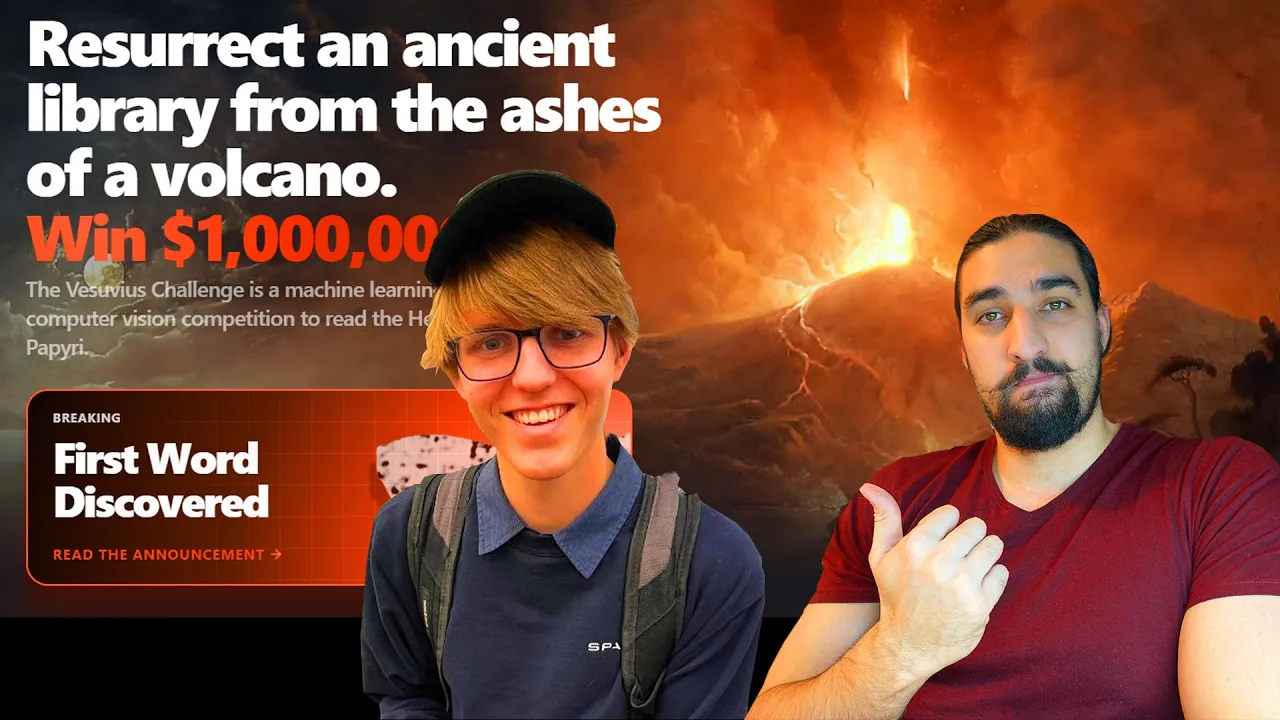
In March 2023, a group of researchers and tech entrepreneurs, including former GitHub CEO Nat Freriedman and University of Kentucky computer scientist Brent Seals, launched a global competition.
The goal to virtually unroll these scrolls using non-destructive imaging and machine learning. The prize, over $1 million in rewards for anyone who could recover actual text from within a sealed scroll. Why so much money? Because the task was almost impossible. First, researchers used microctt scanning. Imagine a super precise X-ray that captures thousands of tiny cross-sectional images. Then came the hard part. These scans had to be interpreted by a AI systems trained to detect subtle differences in density.
Meaning the AI had to see ink that no human could buried inside a scroll that looked like a rock. This isn't just computer vision. It's machine interpretation of chemical shadows inside carbonized material. And then in a quiet corner of the internet, a college student named Luke Fareriter made history. In October 2023, he became the first person in nearly 2,000 years to read a word inside one of these scrolls. The word was porfas, Greek for purple. It was a color associated with royalty, luxury, and power. That one word earned him a $50,000 prize. But it was only the beginning. Ferriator was quickly joined by two other researchers, Yousef Nater and Julian Schilliger. Together, by early 2024, they had uncovered over 2,000 Greek letters from within the scroll, enough to begin identifying phrases, context, and eventually the author. What they had unlocked wasn't just a random poem or a lost grocery list. It was a philosophical treatise by Fademus, a prominent Epicuran thinker and a student of Zeno of Siden. Fademus was no fringe figure. He was part of a movement that openly challenged the religious and political order of the Roman Empire. Epicurans believed that the gods didn't interfere in human affairs. They rejected divine punishment, fate, and the manipulation of the masses through fear. They believed pleasure, not in the hedonistic sense, but as the absence of pain, was the highest goal. They warned against blind obedience to rulers and dogma. So when this scroll began to speak, it didn't whisper. It argued. And here's where it gets strange. Among the fragments, according to insiders close to the Vuvius challenge team, were phrases that didn't just describe personal virtue or philosophical detachment. Some described a coming fire. Others referred to periods of imposed silence, times when voices were intentionally suppressed. One especially controversial fragment still under debate uses the term strategic quietude to describe how rulers maintain control during predicted upheavalss. Another refers to a cycle of smoke and renewal and how the learned few should be prepared for the moment when the light goes out and the cleansing begins.
Are these just metaphors or are they veiled references to actual disaster, past or future? Keep in mind, Philus lived a few generations before the eruption of Vuvius. He wasn't writing after the disaster. This scroll wasn't a record of what happened. It was possibly predicting or warning of what might come. The response from academics has been cautious. Some say we're over interpreting the fragments. That ancient philosophers loved speaking in symbols, that fire could mean internal turmoil, that cleansing is spiritual. But others aren't so sure. Because the text doesn't just talk about natural forces. It references censorship, the silencing of speech, the control of knowledge. And now that very knowledge has returned through a machine. Here's the catch. AI doesn't know myth from fact. It doesn't recognize allegory. It only sees patterns. It pulls out structure, repetition, context, clues. The danger is not just in what we read, but how we interpret it. If a phrase like fire will return shows up in the context of political power and elite suppression, what are we supposed to believe? That it's a metaphor for debate or a literal warning buried just long enough to survive? Some call it coincidence?
Others call it metaphor. But those who know the language of power, silence, and fire, they call it something else.
Prophecy. The algorithms that see the invisible. How exactly is AI making these discoveries? What kind of technology can read a scroll turned to charcoal or make sense of symbols carved 5,000 years ago?
The short answer is pattern recognition. But the real answer is more complicated. and far stranger. AI systems don't read the way humans do. They don't need to understand the meaning of words or grasp the flow of a sentence. Instead, they analyze relationships, which symbols appear together, how often they repeat, where they show up in a structure. To do this, these systems rely on three key methods: language modeling, character segmentation, and symbol clustering.
Language models are trained on vast data sets, sometimes made up of thousands of pages of texts, images, and transcriptions. These models learn not what each word means, but what tends to come next. Think of it like a giant autocomplete system. If the model sees a symbol followed by another symbol 500 times in different contexts, it begins to expect that pattern. And when a chunk of text is missing, the AI can generate a prediction of what probably belonged there. Character segmentation is more visual. When researchers scan ancient manuscripts, especially ones that are damaged or overwritten, the letters are often hard to separate. The ink may have bled or the text might be partly erased.
AI tools can be trained to slice each character out of the noise, cleaning it up digitally so it can be analyzed more precisely. Think of it as isolating one voice in a crowded room and amplifying it until it becomes clear. Symbol clustering goes one step further. Once the AI isolates symbols, it groups similar ones based on their shape, position, and context. In languages that haven't been deciphered, like the Indis script or Rango Rango, this technique is crucial. If the system can identify repeated clusters of symbols in the same position within a line or used in similar types of inscriptions, it can begin to suggest what those clusters might represent. names, verbs, numbers or religious references. One of the most groundbreaking tools for this kind of work is called proto snap. Developed by researchers working on cunoform, the script used by the ancient Sumerians and Aadians. Protonap helps align prototypes of ununiform characters with the many different ways they were written across time and geography. Ununiform wasn't carved neatly with a chisel. It was pressed into clay with a reed stylus.
The result was a wedge-shaped script that varied wildly depending on the scribe, the region, and the century.
Proto snap reduces that visual chaos, linking together all the forms of a single character, so the AI can understand them as one unit. It's like showing a child how the letter A looks in cursive, print, or calligraphy, and expecting them to treat them as the same thing. Then there's Hierro LM, a system trained to handle Egyptian hieroglyphs.
Hieroglyphs aren't just pictures. Each symbol can represent a sound, a concept, or even an entire word. That makes them one of the most complex writing systems ever invented. Hierrom uses the logic of modern translation tools like Google Translate, but for dead languages. It learns what symbol patterns are likely to occur. And when a hieroglyph is damaged or missing, it can suggest what might have been there based on grammatical structure and word frequency. It doesn't always get it right, but it gets us close enough to interpret what was once unreadable.
Another set of breakthroughs comes from deep learning techniques used on palmstes manuscripts where the original writing was scraped off and replaced with new text. In many cases, this wasn't accidental. Old religious texts, philosophical treatises, or scientific notes were deliberately erased and overwritten by scribes in later centuries, often when the old content became politically dangerous or the parchment was simply too rare to waste.
But some of those hidden layers are now being revealed. One method is reflectance transformation imaging or RTI. This technique involves photographing a manuscript from dozens of angles under different lighting conditions, allowing software to detect the microscopic grooves and residue left behind by erased ink. These grooves form ghostly outlines of letters invisible to the naked eye. And when paired with GN's, generative adversarial networks, AI can reconstruct what was once written. GN's work by having two neural networks play a kind of game. One tries to create an image of the erased text.
The other tries to spot flaws. The process repeats until the first network produces something that the second can't distinguish from the real thing. What results is a recreation of the vanished text with eerie precision. In 2021, a team used this technique to uncover previously unknown mathematical work by Archimedes written beneath a 13th century prayer book. But palms aren't limited to harmless knowledge. Some contain warnings, dissent, or accounts of disasters that were intentionally buried. Why? because someone didn't want them remembered. And that's the part that gives researchers pause. Because while AI is giving us unprecedented access to lost knowledge, it's also unsealing texts that may have been hidden for a reason. Ancient rituals, taboo philosophies, descriptions of cosmic cycles or prophecies that stretch far beyond metaphor. These are now being pulled into the digital light by machines that don't care what they find.
Some of the manuscripts decoded with these tools have references to things that feel uncomfortably current.
Societal collapse, moral decay, cataclysmic fire, and forced silence.
Are we simply projecting our fears onto neutral words? Maybe. But these aren't single incidents. These motifs appear across different civilizations on different continents in unrelated scripts. What do you call that?
Coincidence or a pattern? And then comes the real question. Are we uncovering knowledge or breaking ancient seals?
Messages from the oldest civilizations. Some of the oldest messages ever written weren't meant to be read by us. They were carved, stamped, scratched, or pressed by hands that vanished thousands of years ago.
Hands that lived in cities long since buried in languages that no longer have living speakers. And now, after millennia of silence, those messages are being read by machines. Not because we understand them, but because AI is starting to recognize something terrifying.
structure, intent, purpose. These weren't random marks. These were languages. And we may only be beginning to realize what they were trying to say.
Let's start with ancient China, where a writing system was being used to ask the future for answers. The oracle bones of the Shang dynasty around 1,300 years before Christ are some of the earliest known examples of Chinese writing. These weren't letters or stories. They were questions. Priests would carve them into turtle shells or ox scapula, heat them until they cracked, and then read the cracks like a message from the gods. The questions they asked were preserved, etched into the bone. What's eerie is what they asked. Will there be a plague this season? Will the stars be clear on the third day? Will the sacrifice be accepted? For centuries, these inscriptions were mostly deciphered through traditional methods, slow, careful comparisons with modern Chinese.
But in 2024, Chinese researchers introduced AI systems capable of matching oracle bone characters to their modern equivalents with astonishing speed and precision.
The tool used hundreds of thousands of digitized glyphs, training on known examples, and using image recognition to fill in missing or damaged portions.
What they found were patterns in the kinds of questions asked, the timing of rituals and the way celestial phenomena were recorded. Some of the questions feel ancient and obvious. Others feel uncomfortably modern. Warnings of plague, patterns of fire and famine, requests for guidance in times of instability. The bones weren't just about predicting the future. They were about controlling it. When to make a sacrifice, when to wage war, when to stay silent. Move west and jump forward over a thousand years and you arrive at the Mayan world. Their cities rose in what is now southern Mexico and Central America. Massive stone pyramids surrounded by temples, ball courts, and palaces. Their writing system made up of intricate glyphs is one of the most visually complex ever created. Each glyph can represent a syllable, a word, or an entire concept. For a long time, these texts were completely undeciphered, just strange swirls and stacked shapes. But in the last few decades, breakthroughs in Mayan linguistics combined with AI have accelerated translation efforts.
Projects using machine learning have trained algorithms to segment and classify glyphs, breaking them apart and recognizing their individual components.
The process is painfully slow for humans. For AI, it's a matter of hours.
Some models now identify and extract glyphs with pixel level precision, even from damaged or weathered monuments.
What these glyphs reveal is not just religion or kingship. They tell stories of sacrifice, drought, political betrayal, and collapse. Entire dynasties are recorded rising and falling with glyphs marking years of famine, war, and strange celestial alignments. One phrase appears across multiple cities, the great thirsting. It refers to a period of prolonged drought that scholars believe may have contributed to the civilization's collapse. But was it just nature or something else? The texts speak of blood rituals meant to balance the sky and calm the earth. Were these metaphors or were the Mayans documenting and trying to stop something they didn't fully understand? And then there's Nushu, a language so unique it was created and used only by women in the hills of southern China in Hunan province. For generations women were denied education. So they invented their own script written in songs, letters and embroidery. It was soft, slanted and filled with emotion. Nushu means women's writing. It was passed from mother to daughter, sister to sister, never taught in schools, and hidden from men. For a long time, scholars believed it was a decorative or poetic curiosity. But in 2025, an AI project led by researchers at Dartmouth College used deep learning to begin decoding and reviving Nushu.
Using just 35 sample pairs, original Nushu texts and their Chinese translations, they trained a model to predict Nushu structure and meaning, it reached nearly 50% accuracy, an extraordinary leap for a script no modern AI had ever seen before. What emerged from those texts was not light poetry. The themes were darker. grief, isolation, resilience, and when warnings. Many writings spoke of silent suffering, of unseen daughters, of bitter winds that speak no truth. One letter decoded partially by AI mentioned a coming sorrow woven into the moonlight. Scholars debate whether these were symbolic or literal, but taken together, they show something undeniable. This was a voice of pain.
preserved in secret, hidden from power.
Across continents and centuries, these languages are starting to speak again.
Not through human memory, but through machine logic. AI doesn't see culture.
It doesn't know shame, censorship, ritual, or trauma. It only sees data.
And when it sees the same themes, plague, drought, silence, suppression across civilizations that never met, that never traded words, you have to wonder, what were they all trying to say? But it's not just what they wrote.
It's how they disappeared. The Mayans abandoned their great cities. The oracle bones gave way to imperial bureaucracy.
Nushu faded into whispers when modern schooling arrived. In every case, a voice went quiet. And now AI is pulling those voices out of the ground letter by letter, code by code. What happens when the full message is clear? Will we still call it history or something else entirely? The scripts that vanished. And why? Some languages evolved, others endured, but many simply vanished. Not over centuries, sometimes almost overnight. Scripts disappeared, writing systems collapsed, and entire languages were wiped out, leaving only fragments behind. Today, we call them lost, but that word implies they wandered off.
What if that's not what happened? What if some were buried on purpose? We still use Latin in medicine and law. We still read Chinese in its modern forms traced back thousands of years. So why did other systems just as complex, just as refined, go extinct? The answers aren't as simple as time or disuse. In some cases, these languages were overwritten by force. In others, they were absorbed, erased, or abandoned. But in a few chilling cases, the silence feels deliberate. The vanishing looks intentional, which leads to a far more disturbing question. Were these scripts erased because of what they said?
Rangorango is one of the most unsettling examples discovered on Easter Island in the 19th century. Rangorango is a set of strange glyphs carved into wooden tablets, some of them with a unique writing direction that snakes across the surface in alternating lines. The islanders no longer remembered how to read them by the time European colonists arrived. There were no teachers, no oral traditions that preserved the meaning, and not a single modern speaker. The culture that created Rangarango collapsed shortly after European contact. Disease, enslavement, and religious conversion erased centuries of history. And yet, researchers have always suspected the glyphs weren't just decorative. Some believe they encoded genealogies or rituals. Others argue they contained oral history, possibly even warnings. One theory suggests Rangarango was a form of encoded prophecy created as the islanders watched their environment degrade and their society fall apart. That's what makes it especially haunting. If they saw the end coming, did they try to preserve their knowledge in a form no outsider could understand? Then there's the Atruscan language. Once spoken across central Italy before Rome rose to power, the Atruscans were an advanced civilization, building cities, creating art, and practicing a deeply spiritual religion centered around divination, the afterlife, and celestial forces.
Thousands of inscriptions have been found on urns, monuments, jewelry, but most remain untransated. We know the Atruscans had a rich vocabulary. We can sound out their alphabet. Yet, their grammar, their verbs, and their full syntax remain a mystery. Why? The dominant explanation is that Latin simply replaced Atruscan as Rome expanded. But some scholars aren't convinced. They point to specific religious texts and rituals that were banned by Roman authorities. Certain Atruscan rights linked to necromancy and prophecy were declared dangerous. The Roman state tolerated many religions, but with Atruscan practices, they seemed to draw a hard line. Could it be that some of what the Atruscans wrote was too unsettling, too politically risky, or too spiritually disruptive to survive Roman control? Some fragments reference omens, sky charts, and a doctrine of cyclical catastrophe, teachings that may have contradicted Roman imperial ideology. If Rome erased Atruscan knowledge, was it an act of cultural assimilation or a purge? The Voinich manuscript pushes this even further.
Found in an Italian monastery in the early 20th century, this book has defied all efforts at translation. It's filled with strange looping script that matches no known language, accompanied by bizarre illustrations, naked women bathing in strange tubes, unrecognizable plants, and zodiacike diagrams. Every time someone thinks they've cracked it, the meaning falls apart. Some linguists believe it's a hoax. Others say it's a forgotten language. But in 2018, researchers using AI suggested that the text might be encoded Hebrew with all vowels stripped out and grammar rearranged. The AI model claimed that certain passages translated into phrases like she made recommendations to the priest, man of the house, or they prepared the bath in accordance with herbs. Another theory emerged. one far more grounded and unsettling, that the manuscript was a kind of midwife's guide, filled with knowledge that male authorities weren't meant to access.
That would explain the coded language, the secrecy, the odd illustrations. But it would also mean something else, that this knowledge was deliberately hidden because the people who wrote it knew it would be taken from them. If true, that makes the Voinich manuscript one of the clearest examples of forbidden knowledge preserved in plain sight. Throughout history, we've seen this happen again and again. When a regime takes power, it rewrites the language. When a religion spreads, it buries older symbols. When a culture wants control, it controls who gets to speak and who gets to remember. So, we assume lost languages died naturally. But what if they were silenced? One answer is violence. The sword often outlasts the pen, but another answer is fear. Fear of what was written. Fear of what might be rediscovered. Fear that some knowledge once read cannot be unread. Some secrets were never meant to survive. That's the part that worries historians. And now AI researchers because machines don't fear anything. They don't draw moral lines.
They don't pause at warnings. They simply keep reading. And if they uncover knowledge that someone tried to bury, they will not stop to ask why. The real question is, are we sure we're ready to know what's been hidden? Or are we simply opening books that were never meant to be opened? And what happens when one of them finally says something we're not prepared to hear. Thanks for watching. If you enjoyed this, don't forget to like, comment, and subscribe.
Click the next video for more exciting content.
[Music]
Up Next

95:32
Anunnaki Evidence on Earth: Ancient Technology & Origins Part 2
@4biddenKnowledgePodcast
210.1K views•2021-12-10

12:54
Triumph of Orthodoxy Icon: Byzantine Art & History Explained
@BenCallan
2.1K views•2024-08-06

9:49
FastAPI vs Flask vs Django: Choosing the Right Python Web Framework
@TechWithTim
302.5K views•2024-05-26

1:42
Game of Thrones Opening Credits: A Cinematic Analysis
@gameofthrones
46.3M views•2011-04-18
Related Study Plans & Knowledge Roadmaps
Structured learning paths in General & Interdisciplinary Studies
general-studies
Elevator Engineering: History, Physics & Cities
01From Hoists to Safety Brakes: The Dawn of Vertical Lift
02Hydraulic vs. Traction: The Engineering Physics of Elevators
03Modern Speed, Safety, and Algorithms
+ 2 more learning modules
12h5 modules
Explore Roadmap
general-studies
Rubber: Material Science, History & Geopolitics
01Origins of Natural Rubber & Mesoamerican History
02The Chemistry of Natural Rubber & Vulcanization
03The Geopolitics of the Rubber Boom & Colonization
+ 2 more learning modules
12h5 modules
Explore Roadmap
general-studies
Containerization: Evolution, Logistics & Trade
01Ancient Trade & Bulk Cargo: Amphorae to Barrels
02The Industrial Revolution & Cardboard Packaging
03The Containerization Revolution: Malcom McLean
+ 2 more learning modules
12h5 modules
Explore Roadmap
general-studies
Textile Tech: Evolution, Labor & Global Impact
01Pre-Industrial Textiles: Handloom & Cottage Industry
02Mechanization: The Spinning Jenny to the Power Loom
03The Factory System & Global Labor Transformation
+ 2 more learning modules
10h5 modules
Explore Roadmap