

















In film character analysis, authenticity and gradual character development create more compelling narratives than predetermined villainy; Tom Ripley's gradual descent into villainy feels more authentic because his manipulative methods paradoxically reveal his true self, while Oliver Quick's pre-existing evil and circular character development lack the complexity and depth that makes audiences emotionally invested in a character's journey.
Ripley vs Saltburn: Class Envy and Screen Villain Authenticity
Added:Fundamentals of character arc development, specifically the distinction between a gradual moral descent (tragic arc) and a premeditated, static plot device.
Thematic representation of class envy and social mobility in cinema, including basic concepts of Marxist film theory regarding class consciousness.
Psychological archetypes of the literary and cinematic antihero, sociopath, and the manipulation of audience empathy.
The concept of narrative verisimilitude—how screenwriters construct believable and consistent psychological motivations for their characters.
Advanced comparative adaptation studies, analyzing how source literature (e.g., Patricia Highsmith's novels) is translated to the screen to alter character morality and depth.
Application of Psychoanalytic Film Theory (such as Lacanian desire and the Freudian shadow) to dissect the subconscious motivations of screen villains.
Screenwriting and character design principles for creating compelling, psychologically authentic antagonists with nuanced internal conflicts.
A historical analysis of the 'Class Intruder' subgenre in cinema, comparing *Ripley* and *Saltburn* to foundational works like *Parasite*, *The Servant*, or *Brideshead Revisited*.
330.7K views7.5Klikes11:40Original Release: 2024-09-25
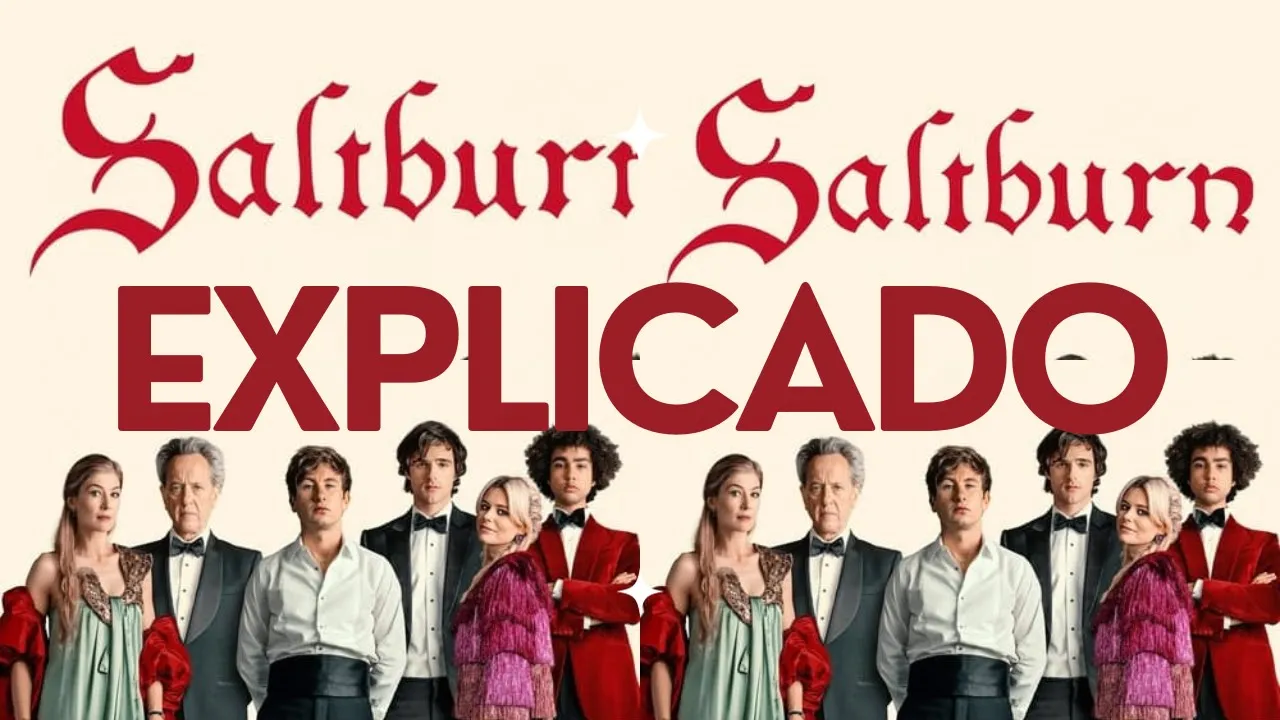
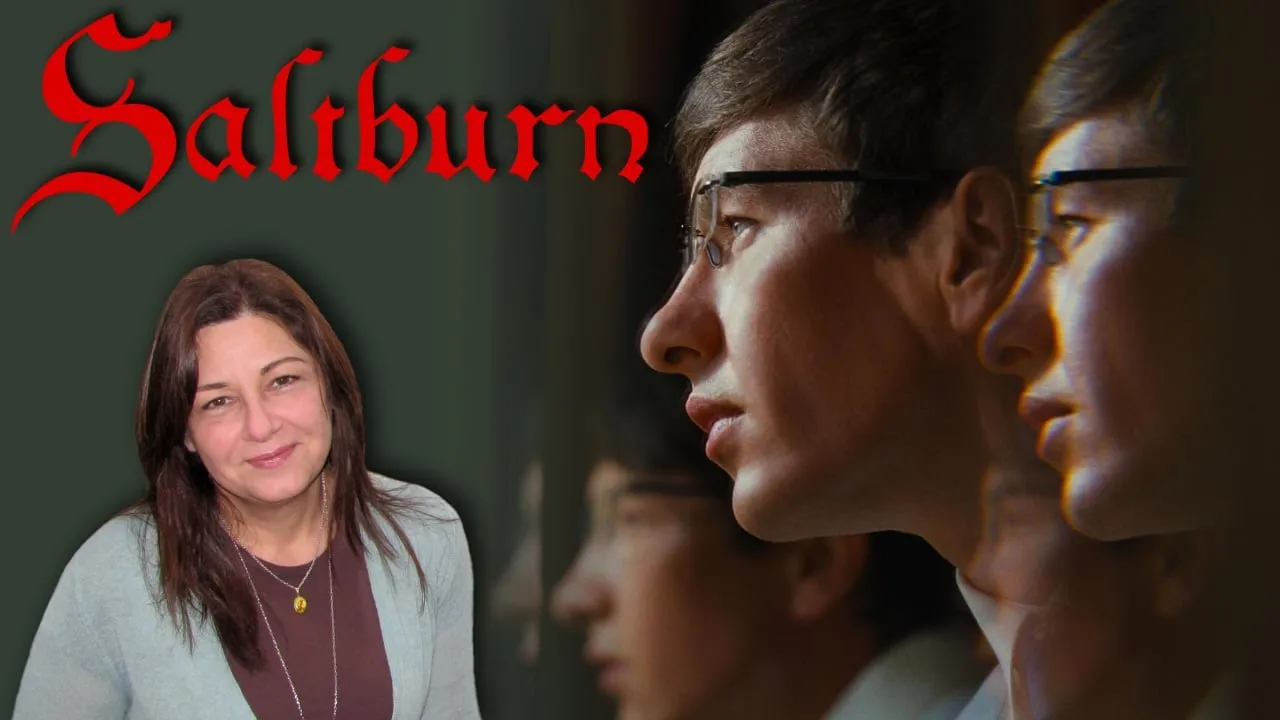
so I watched saltburn the other day and I'm aware I'm about 9 months late to the party but I was still curious to see the film described to me as made for feral jenz ticktockers first off I love the cinematography in saltburn the decision to shoot in a retro 4x3 aspect ratio really enhanced the visuals and was effective in creating that nauy Nostalgia which underpin the whole film's aesthetic I also thought salt bur started strong Oliver quick played by Hollywood's favorite hot rodent bar Yogen is a scholar at Oxford University struggling to find his footing amongst his more privileged peers he becomes obsessed with a charismatic wealthy student Felix Katen played by Euphoria heartthrob Jacob AI OE BLS himself an invite to spend the summer at the Katen Family Estate saltburn setting the stage for a dazzling analysis of class and the dark undercurrents of privilege anything anything will you be quiet sit down and eat the bloody pie just eat it eat it and shut up eat the bloody except nah not really the film ultimately can't be bothered with that in the end it's more seductive clickbait that looks good but doesn't really make you think in fact a lot of the time during the film I was just thinking brother what's that what's that brother now don't get me wrong I'm I enjoyed saltburn it was fun a film making achievement in itself the acting's great with kyogen AI and particularly Rosman Pike providing Stellar performances the dialogue's often sharp and witty they probably don't have rehab in Liverpool no gosh no I can't imag they everybody just goes to ruin I suppose ISO I think it's but second half I couldn't silence a nagging in a voice asking what exactly is this film about salt bun poses interesting questions and it's a absurdest glamour had me on the hook at first but ultimately it's a film without a pulse less Eat the Rich satire more feiz porno it's Maniac without a cause and there's the puzzle I struggle with the most why is this bloke such a freak at the film's Dan Mo he stands well dances naked revealed a sociopathic manipulator fixated on infiltrating society's most privileged Circle he picked the lock find improbable friendship with one of the circle's most charismatic members then once inside plays and outplays every one of his hapless heedless benefactors seamlessly assuming their identities Hold Up Wait A Minute something right I've met this guy before in fact I'm watching him right now just not in salurn Tom Ripley as played by a mesmeric Andrew Scott in the new Steven Zen Netflix adaptation Ripley now many a comparison has been made between saltburn and The Talented Mr Ripley starring and Jude Law critics believe that fenel was heavily inspired by the 1999 film because they are extremely similar but she's tried to downplay the influence however watching saltburn and Ripley in tandem I couldn't help but compare the protagonists and amongst their similarities which I'll get to a major difference struck me why do I buy into Tom Ripley's motives more than Oliver Quicks why does his deceit feel more authentic before I get into how they're different let's look at how Andrew Scotts and Barry kogan's crazy con artists are alike Patricia heis Smith's 1955 novel The Talented Mr Ripley has inspired many onscreen adaptations most famously and successfully the 1999 Anthony mangela film starring met Damon Damon's Ripley is naive and Charming a youthful workingclass opportunist seduced by the Allure of privilege Andrew Scott's Ripley is far more Sinister arguably truer to high Smith's novel there's no sense in which Tom charms dicki the way with son he's been secretly sent to bring home from his hideout on the Amalfi Coast he just jams himself awkwardly into his life with a sort of anti- Charisma that Scott does to perfection in saltburn Oliver is our awkward outsider struggling to fit in at Oxford and finding no other company than this stud in my head anything ask me a some you're okay come on it's it's not like I don't believe you please come on no I believe ask me something then you do feel sorry for Oliver at the beginning unlike Ripley he comes across as more shy and reserved and creepy but both Ripley and Oliver exist on the edge of a world they're desperate to be a part of and look far more likely to trip and fall in the manufacturing opening both after all make pretty shaky starts Ripley mangles his words and nearly reveals the covert Mission Dicky's father sent him on quick lays it on too thick and insults Felix's privilege by cleaning his room two steps back no steps forward but they recover gain confidence and then the game's really begin when Oliver infiltrates salt bur and starts to work The Eccentric cat and family out his awkwardness recedes into a smooth malign charm Tom Ripley sensing the suspicion of Marge Dicky's partner secures Dicky's trust with an act of apparent but mischievous honesty when he admits it was in fact Dicky's father who sent him but here for me is the key difference Tom Ripley is a genuine and plausible opportunist what Oliver quick is a never puts a foot wrong altogether too smart to be completely believed evil Mastermind let me explain top of the first episode we see Ripley's dishonest background scamming a Griff his living under the Alias of George mccalpin struggling to cash a check or even get running water when Herbert Greenleaf offers him the chance to go to Italy and retrieve his son dicki you see the appeal quick as Tom does steady money an Italian holiday and the chance to deceive Ripley might have always had Sinister intentions but his opportunism is genuine he grows into his con Artistry manipulating on the Fly you buy it it's real her name marer Sherwood marer sh she is at the time at that time and still salt bur asked viewers to accept another reality Al together at the film's finale strutting around the deathbed of Felix's mother El Katen her death is revealed as the final step in a much more Barac premeditated scheme sabotage multiple murder they've all been in Oliver's mind from the start Ripley's descent into villain is gradual one aoral decision leading to the next an inevitable Arc from failed conman to Skilled serial killer Quick's character development is much more circular his wickedness pre-existent he's evil from the the get-go which begs the question why soulburn provides its answer when it busts Oliver's assumed workingclass identity in a spectacular scene Felix despite Oliver's increasingly frantic protest insists on visiting the quick family home by the end of a disastrous visit we know his father isn't dead as Oliver claimed nor is his mother a drug addict they instead loving parents in a middle class Suburban home Oliver's poor me backstory was just a ruse to enlist Felix is pity so saltburn is less a story about the halves and the Have Nots and more about the halves and once more all of his hatred is not rooted in workingclass alienation but middle class Envy his contempt for the Katen family arises from jealousy of their wealth not a front at their privilege now personally I think this idea middle class Envy as a driver of resentful hatred has a lot of potential but it's kind of raised and then dropped as there's a lot with this film and ultimately comes off is shallow Oliver wanted more stuff got more stuff and can now dance naked in this new mansion listen fair enough I'm not blaming him I might do the same but where's the satisfying villain origin story where's the complexity behind his motivations it's not there the naked dance is definitely the tamest of the notorious viral moments in saltburn before that we have to endure some period drama slurpy bath time and a dash of imaginative graved digging all pretty disturbing sexual escapades on Oliver's road to control and possession his hypersexuality almost defines his character with all of his explicit encounters serving as tools for manipulation Tom Ripley's queerness on the other hand is subtle more suggestive repressed Ripley is humanized by his sexuality a nuanced expression of his inner conflicts vulnerabilities and Desperation to fit into an alienating World maybe forel in Oliver aim to saiz how grotesquely obsessed we are with consumption in today's age of social media and I guess the B I've seen really fits that bill but when he started shagging Felix's grave I couldn't help but think you're just doing this for the sake of it now aren't you on the topic of repressed sexuality Steven Zen gave his adaptation of Ripley an intriguing and clever twist consistent references to the art of Caravaggio the Italian Barack painter notorious for his violence on the canvas and off it funnily enough I had no idea who Caravaggio was into early this year when I saw some of his art in Rome was intrigued mostly by his cinematic use of Light which is apparently called karuru Zen himself employed plenty of this technique in Ripley with his high contrast deployment of black and white but it's caravaggio's actual character that exerts a greater influence the painting's turbulent life his sporadic resort to lethal violence his closeted homosexuality are all strongly mirrored in Ripley's own character the final episode even begins with a flashback to 17th century Rome every point of comparison further layers our understanding of Ripley's motivations each further humanizes him a nice touch from the director so back to my original question why am I more invested in Tom Ripley's motives than Oliver Quick's or perhaps more fundamentally why do I find Ripley a more compelling character than Oliver saltburn and Ripley sh a central theme Outsiders Elites and a craving to belong in both the protagonists appeared to satisfy that craving and by the exact same means manipulation and deceit however while Ripley's methods of deception ultimately and paradoxically reveal the person he truly is Oliver serve to conceal him in Ripley we witnessed the story of a dishonest character authentically realizing his Sinister potential in saltburn we gradually build up to a grand reveal pulling back the curtain to expose a villainous scheme which has been playing out from the very beginning but disappointingly little about the villain behind it
Up Next
17:55
Bandersnatch Endings: A Comprehensive Analysis
@FoundFlix
1.9M views•2019-01-09

23:14
Visual Analysis Essay: How to Analyze Graphic Novels in College Writing
@nataliepleimann5941
1K views•2020-10-14
4:55
Film Blocking Techniques for Directors: Space, Shapes, Lines
@StudioBinder
1.9M views•2018-07-23

4:00
Evolution of Darth Vader: Anakin Skywalker's Animated Journey Across Star Wars Films
@TellItAnimated
13.4M views•2019-03-30
Related Study Plans & Knowledge Roadmaps
Structured learning paths in Film Analysis
film-analysis
Sensory Cinema: Foley, Haptic Sound & Texture
01Introduction to Film Sound and Foley Artistry
02Micro-Sounds, Textures, and Extreme Amplification
03Haptic Audition and Film Phenomenology
+ 1 more learning modules
12h4 modules
Explore Roadmap
film-analysis
Breaking the Fourth Wall: Mockumentary & Satire
01The Invisible Wall: Basics of Cinematic Illusion
02Looking at the Lens: Direct Address & Character Glances
03The Mockumentary: Satire, Realism, and Complicity
+ 2 more learning modules
12h5 modules
Explore Roadmap
film-analysis
Analyzing the Long Take: Cinema, Space & Ethics
01Foundations of Film Grammar: Montage vs. The Long Take
02Choreography and Mechanics of the Simulated One-Shot
03Phenomenology of Film: Real-Time Spatial Continuity
+ 1 more learning modules
14h4 modules
Explore Roadmap
film-analysis
Anachronistic Music: Period Drama & Subversion
01Foundations of Film Sound and the 'Needle Drop'
02Traditional Authenticity vs. Revisionist History
03The Rise of the Anachronistic Soundtrack
+ 2 more learning modules
12h5 modules
Explore Roadmap