





![Pierre Bourdieu. Capital humain, capital culturel [1977]](https://i.ytimg.com/vi/WIXOVJ4XNJ8/hqdefault.jpg)




















The US education system, despite being promoted as a meritocracy, actually reinforces social inequalities through structural factors including unequal school funding based on local property taxes (with affluent districts spending significantly more per student), cultural capital disparities where higher-income families provide more educational resources at home, and biased practices such as teacher expectations, disciplinary actions, and standardized testing that disadvantage minority and low-income students.
Education and Social Inequality in US Schools | Sociology
Added:Basic concepts of social stratification, socio-economic status (SES), and social mobility in a sociological context.
An introductory understanding of Pierre Bourdieu's theory of cultural capital and how it differs from economic capital.
The fundamental structure of US public school funding, particularly its reliance on local property taxes.
The distinction between individual prejudice and systemic or institutionalized racism in American history and policy.
Advanced policy debates surrounding educational equity, such as school voucher systems, charter schools, and affirmative action.
The sociological concept of the 'hidden curriculum' and how implicit norms and values reinforce existing social hierarchies.
The transition from K-12 to higher education, analyzing how inequality affects college access, student debt, and career outcomes.
A comparative analysis of sociological frameworks on education, contrasting Conflict Theory (inequality reproduction) with Functionalism (meritocracy).
554.5K views9.4Klikes11:26Original Release: 2018-01-22
We’ve all complained about having to go to school at some point, right?
I mean, who decided that teenagers need to get to school at the ungodly hour of 7 am?
That right there seems like a big drawback that we didn’t consider when we talked about the positive functions of schools.
Last week, we discussed all the good things about schooling – how it helps people learn about the world, how it helps kids meet other kids their own age, and how there are countless other ways it helps society function better.
But there are many not-so-good components of our educational system – and I’m not just talking about having to get up at dawn.
Social-conflict theory can help us understand how the US educational system can disadvantage some people, while giving advantages to others, so that schools ultimately play a role in reinforcing inequalities.
[Theme Music] Education is supposed to be the great equalizer, right?
We’re all told that if you work hard and do well in school, you can be whatever you want to be when you grow up.
In this understanding of school, society creates a meritocracy, or a system in which hard work and talent is recognized and rewarded.
In a pure meritocracy, two kids who work equally hard and have the same raw talent should do equally well – no matter what neighborhood they grew up in, no matter their race or gender, and no matter their class standing.
On the surface, it might seem like the US has a meritocratic school system.
But educational measures of merit, like grades or SAT scores, don’t always measure everyone’s talents consistently.
Grades don’t just measure an individual student’s effort or ability – they’re also influenced by many factors outside of the student’s control, like the quality of their school or their access to resources like books or computers.
This is where social-conflict theory comes into the story.
Social-conflict theory helps explain how our educational system can both cause and perpetuate class differences.
In the United States, there are large class gaps in educational attainment.
While 83% of students from high income families enroll in college after high school, only 63% of low income students do.
So, why the disparity?
One reason is that wealthier kids tend to live in higher income neighborhoods, which in turn fund better quality schools.
This makes it easier to get into college.
In the US, school funding is determined at the local level – and when I say local, I mean very local.
The city or town that a person lives in determines the funding of their school system.
While federal and state governments provide some support to school districts, most of the money comes from local property taxes – meaning that schools in towns with more expensive houses and higher earning residents have more resources.
For example, Fairfax County, Virginia, one of the richest counties in the US, spent $13,700 per student in 2016.
Compare that to what some of the poorest counties in the country spend – for example, Scott County in Mississippi spends a little more than half that amount, at $7,900 per student.
Unsurprisingly, schools in more affluent communities on average provide a better education than schools in poorer communities.
Having more funding for a school allows schools to hire better teachers, buy more and better supplies, offer a wider variety of classes, and provide extracurricular activities.
And these differences in school quality translate to differences in outcomes for students.
We know this because of research like a recent study done by American economists Kirabo Jackson, Rucker Johnson, and Claudia Persico which used a natural experiment – court mandated school finance reform – to show this.
They found that increasing school funding levels by 10% was associated with students earning 7% higher incomes as adults.
And this is only one of many studies that show that access to better quality, better funded schools makes kids more likely to go to college.
So is money the answer?
If we just give schools more money, will that be enough to fix the class differences in educational attainment?
Well, yes and no.
School funding – or the lack of it – is part of the social inequality we see in the US education system.
But there are plenty of school districts that are already spending a lot of money per student and still struggle to improve their student’s outcomes.
So why is that?
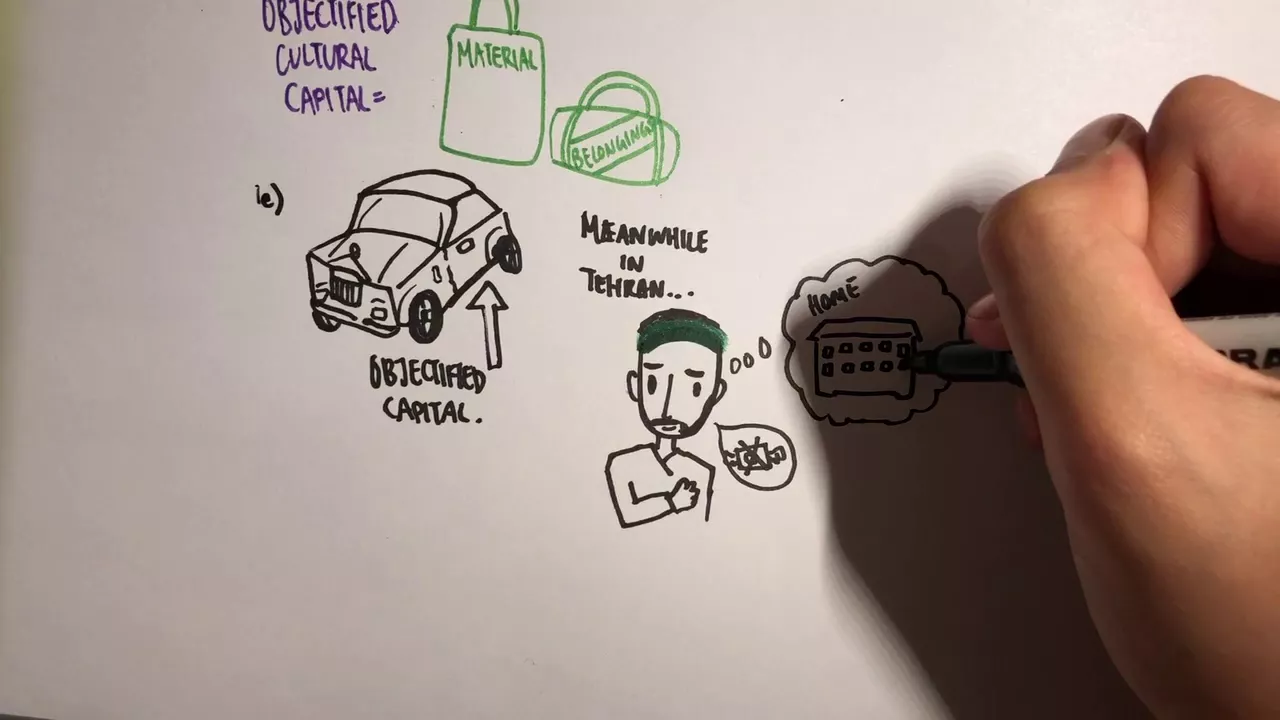
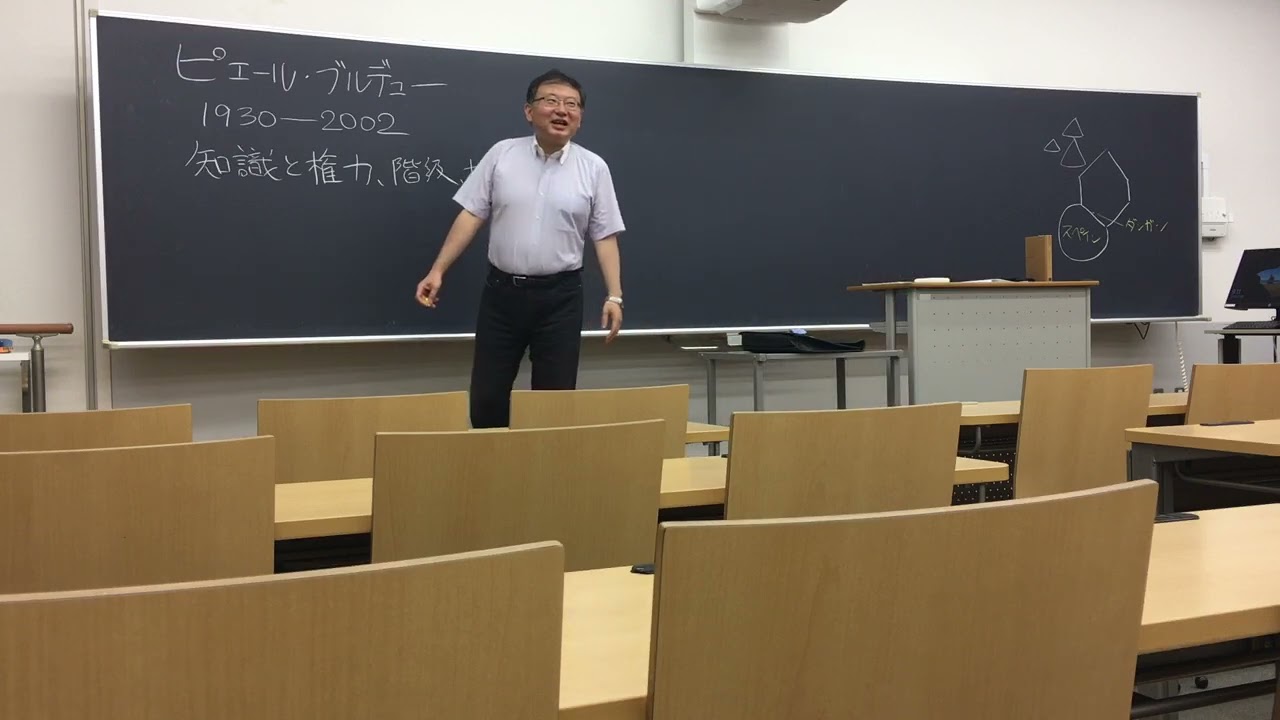
You might remember French sociologist Pierre Bourdieu’s work on cultural capital from our episode a few months ago on socialization.
Cultural capital is valuable cultural knowledge and experience that can be translated to forms of economic and social capital.
Even if school funding was the same everywhere, students whose parents have the time, money, and knowledge to support education in the home will have a step up on students whose parents don’t have the time or resources to pass on cultural capital.
For example, higher income parents are more likely to read to their kids and spend more time interacting with their children, even at very young ages – which leads to kids entering school with a more robust vocabulary and better literacy skills than their less affluent peers.
By the age of three, children of professionals have vocabularies that are 50% larger than those of children from working-class families.
Children from different class backgrounds are also exposed to different expectations about the path that their lives will take.
If you grow up in an upper middle class neighborhood where your parents and all your friends’ parents have college degrees, you’re much more likely to expect that you’ll go to college, too – and you’ll prepare accordingly.
Recall the self-fulfilling prophecy from last episode?
This is one way that works.
But for people whose parents didn’t go to college, expectations for attending college may be lower.
It may also be much harder to navigate applications for college, understand how the financial aid system works, or register for courses, all distinct barriers to attending college.
This specialized knowledge is a form of cultural capital.
So, schools and families unfortunately often work together to reproduce social inequality – kids with parents who have more time or money to devote to education in the home are also the kids most likely to be in well funded, high quality schools.
And the US education system doesn’t just contribute to class gaps in educational achievement.
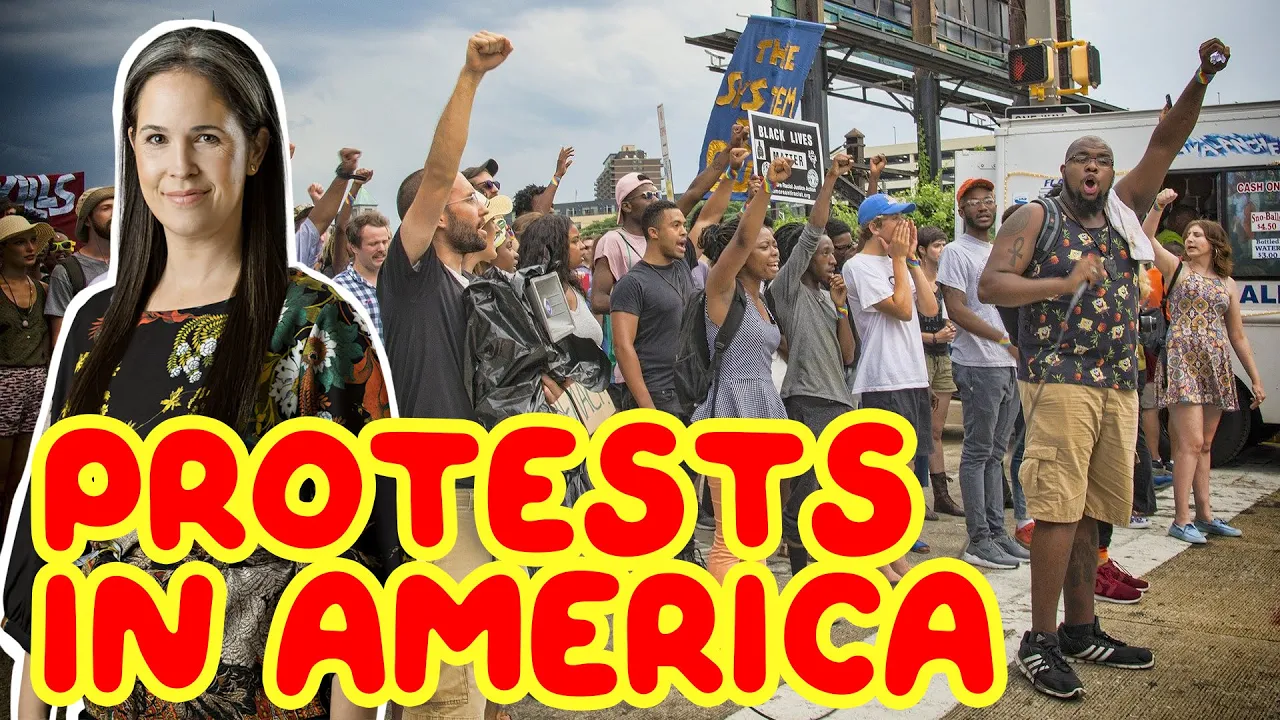
We also see persistent achievement gaps by race in the US, and they’re made worse by elements of our education system that advantage white students.
We’ve talked before about the role that historical patterns of segregation have played in shaping the neighborhoods that minority kids grow up in.
For example, Black children are more likely to be living in lower income neighborhoods, which tend to have worse schools because of how schools are supported by local tax dollars.
That’s a real structural disadvantage.
But social-conflict theorists point out other, lesser known ways that our education system privileges White students over minority students, particularly Black and Hispanic students.
First, most teachers and school administrators are white – which has important implications both for the curriculum that students are taught in schools and how students are evaluated.
A recent study of a nationally representative sample of American students found that black students with the same standardized test scores as their white classmates were less likely to be nominated for gifted programs if they had a non-black teacher.
But this bias didn’t exist for students who had a Black teacher.
This is an example of tracking, in which schools assign students to different types of educational programs.
While tracking is supposed to help teachers meet different students’ needs, it often ends up enhancing existing inequalities.
White and Asian students are more likely to chosen to be in honors or AP classes than Black and Hispanic students – which then contributes to racial gaps in college attendance.
Who gets chosen for college prep classes and who’s put in vocational classes often has to do with not just academic ability, but teacher’s perception of a student’s behavior.
Let’s go to the Thought Bubble to talk about how classroom discipline has especially negative implications for minority students.
In the classroom, certain behaviors are expected of students.
Sit at your desk. Raise your hand.
Finish your assignments quickly and quietly.
While these may seem simple once you’re an adult, these tasks are often difficult for young kids, but breaking these rules can have huge consequences.
Minority students, particularly Black and Latino boys, are much more likely to be disciplined for minor classroom infractions like these, often resulting in suspension of expulsion from school.
Black students are suspended at rates three times higher than their white classmates.
And if you’re suspended or expelled, you’re not in the classroom learning.
Higher risk of suspension and expulsion also puts minority students at a higher risk of doing poorly in school and contributes to higher dropout rates.
This ultimately affects their job prospects, and therefore their class standing.
But being in school also keeps kids off the street.
Kids who are suspended or expelled are more likely to engage in risky behaviors like drug use or other criminal behavior.
This contributes to what’s known as the school to prison pipeline.
This is an informal ‘tracking’ for students that criminalizes deviant behavior in schools, even minor disciplinary issues, like talking back to teachers.
For minority students, schools are more likely to escalate disciplinary issues to the juvenile justice system, putting students in contact with the criminal justice system at an early age.
Thanks Thought Bubble.
Another way that minority students end up being sorted into lower academic tracks are through standardized test scores.
Standardized tests are a topic of great contention, due to concerns about teachers ‘teaching to the test’ and not teaching a full, broad curriculum.
And most standardized tests are made and tested on the dominant group in society – the white middle class.
Critics of standardized testing often cite cultural bias as part of the reason that we see gaps in test scores across race and class lines.
The federal school funding requirements put in place by the No Child Left Behind act in 2001 also can create some perverse incentives for how schools classify their students.
To keep getting federal funding, schools have to have a certain percentage of their students pass the national assessments.
But students can be made exempt from these tests if they’re classified as disabled – which can lead to schools labeling marginal students as learning disabled to maintain the pass rate that they need to get funding.
This is important, because, as we discussed last week, the labels that schools give students often turn into self-fulfilling prophecies.
A marginal student who’s kept in the regular testing pool may be more likely to have teacher time and resources devoted to their improvement than one who’s labelled as learning disabled.
And, this type of tracking is more common for minority students, which can contribute to racial gaps in educational achievement.
More broadly, tracking can have long term consequences for what kinds of opportunities are available to students or the choices that they make later in life.
For example, boys are more likely to be tracked in higher level math classes than girls are.
This contributes to fewer women pursuing math-heavy careers, like economics or engineering – which happen to be some of the more highly paid careers, meaning that tracking is one contributor to the gender pay gap.
Ultimately, educational systems are grounded in the biases of the society that they’re built within – and while our schooling system does a lot of good, social conflict theorists point out that its structural features – everything from taxes, to cultural capital, to standardized testing – can disadvantage minorities in ways that can perpetuate patterns of social inequality.
Today, we discussed a few of those social inequalities in the US education system, using social conflict theory to explore how our system deviates from a meritocracy.
We discussed how school funding and school quality varies by income.
Then, we looked at how cultural capital and the family you grow up in impacts your educational experiences.
Finally, we used racial conflict theory to understand how the American school system disadvantages minority students through practices such as tracking, disciplinary biases, and standardized testing.
Crash Course Sociology is filmed in the Dr. Cheryl C. Kinney Studio in Missoula, MT, and it’s made with the help of all of these nice people.
Our animation team is Thought Cafe and Crash Course is made with Adobe Creative Cloud.
If you'd like to keep Crash Course free for everyone, forever, you can support the series at Patreon, a crowdfunding platform that allows you to support the content you love.
Thank you to all of our patrons for making Crash Course possible with their continued support.
Up Next
11:14
Medical Sociology: How Society Shapes Health, Disease & Illness
@crashcourse
347.9K views•2018-01-29
54:57
Contemporary Sociological Theory: Micro, Macro, Integrative
@NaSESYNC
45.7K views•2016-02-17

11:31
Food Access and Agricultural Revolutions: A Geography Lesson
@crashcourse
117.1K views•2022-02-15
9:41
What is Sociology? The Sociological Perspective Explained
@crashcourse
4.6M views•2017-03-13
Related Study Plans & Knowledge Roadmaps
Structured learning paths in Sociology
sociology
Celebrity Culture: From Hollywood to TikTok
01Foundations of Celebrity Sociology
02The Rise of Micro-Celebrity & Digital Platforms
03Parasocial Relationships & Algorithmic Intimacy
+ 2 more learning modules
12h5 modules
Explore Roadmap
sociology
Hostile Architecture: Space, Power & Control
01Introduction to the Sociology of Space
02Social Control and Surveillance in the City
03Hostile Architecture and Defensive Design
+ 2 more learning modules
12h5 modules
Explore Roadmap
sociology
Loneliness Epidemic: Third Places & Isolation
01Foundations of Social Capital and Community Cohesion
02The Death of Third Places and Urban Space Erosion
03The Privatization of Leisure and Atomization
+ 2 more learning modules
12h5 modules
Explore Roadmap
sociology
Sociology of Tourism: Gaze, Power & Heritage
01Foundations of the Sociology of Travel and Leisure
02John Urry and the 'Tourist Gaze'
03Staged Authenticity and Cultural Commodification
+ 2 more learning modules
14h5 modules
Explore Roadmap