















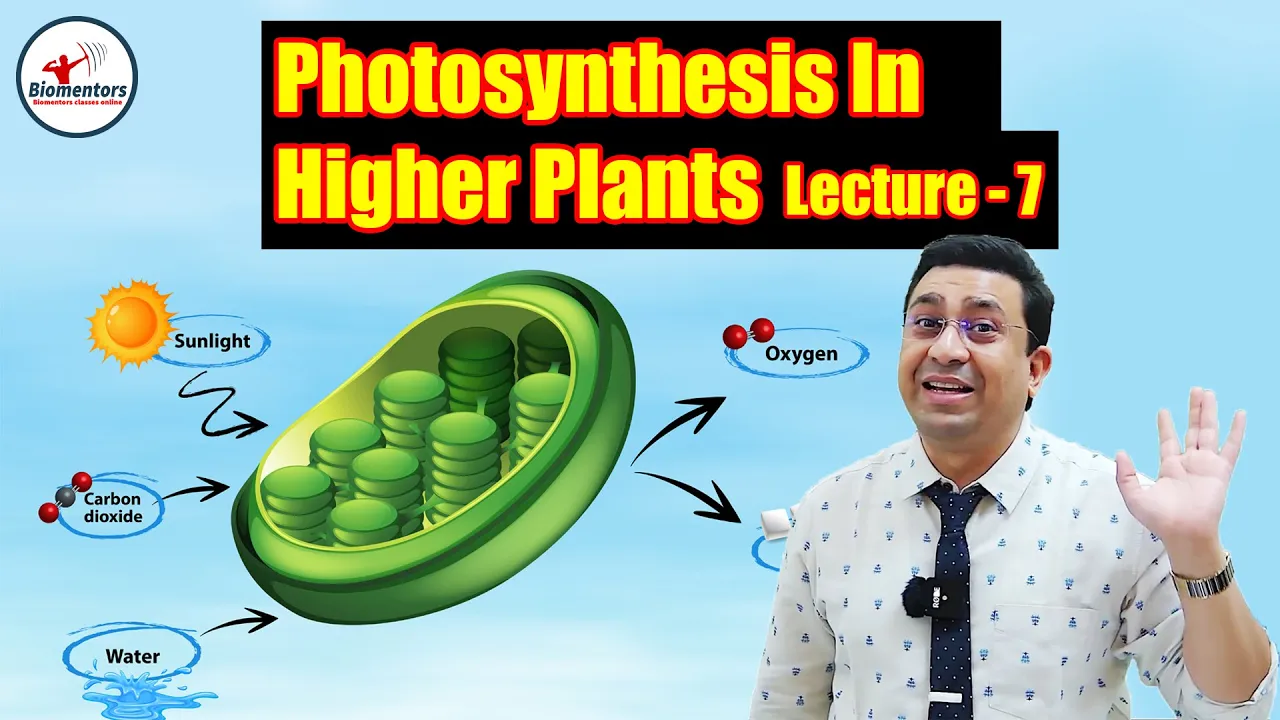





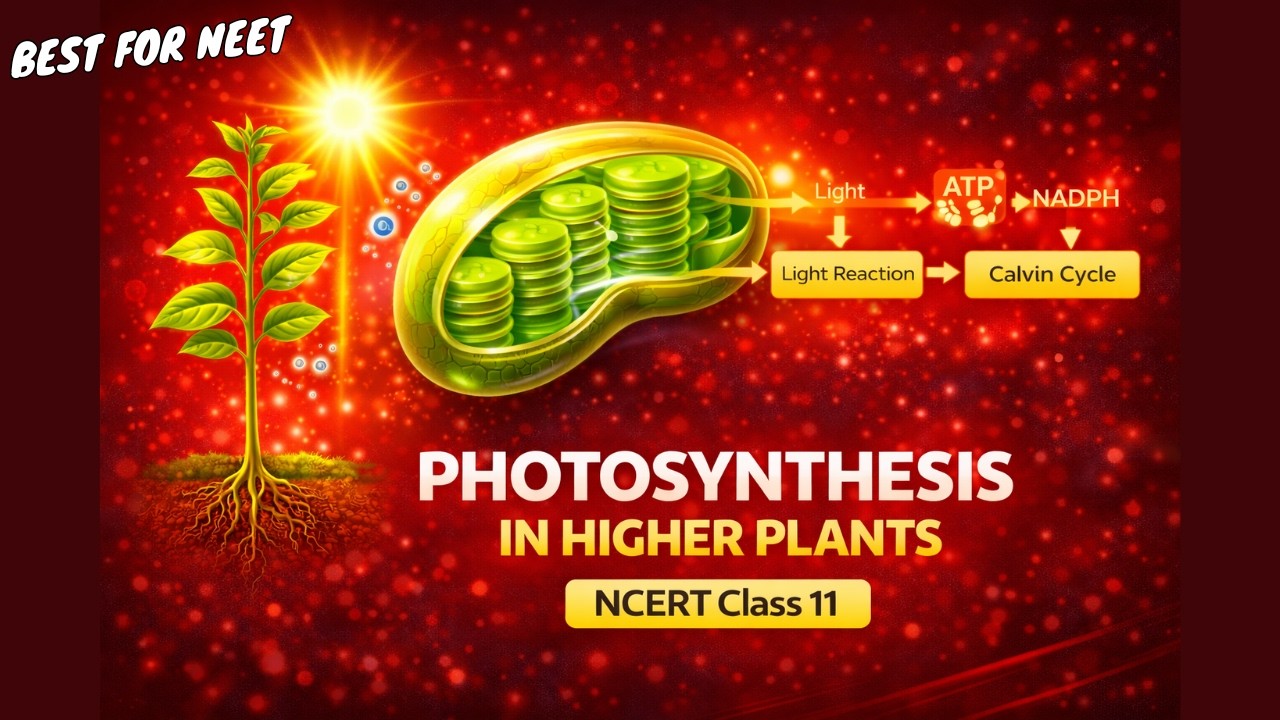


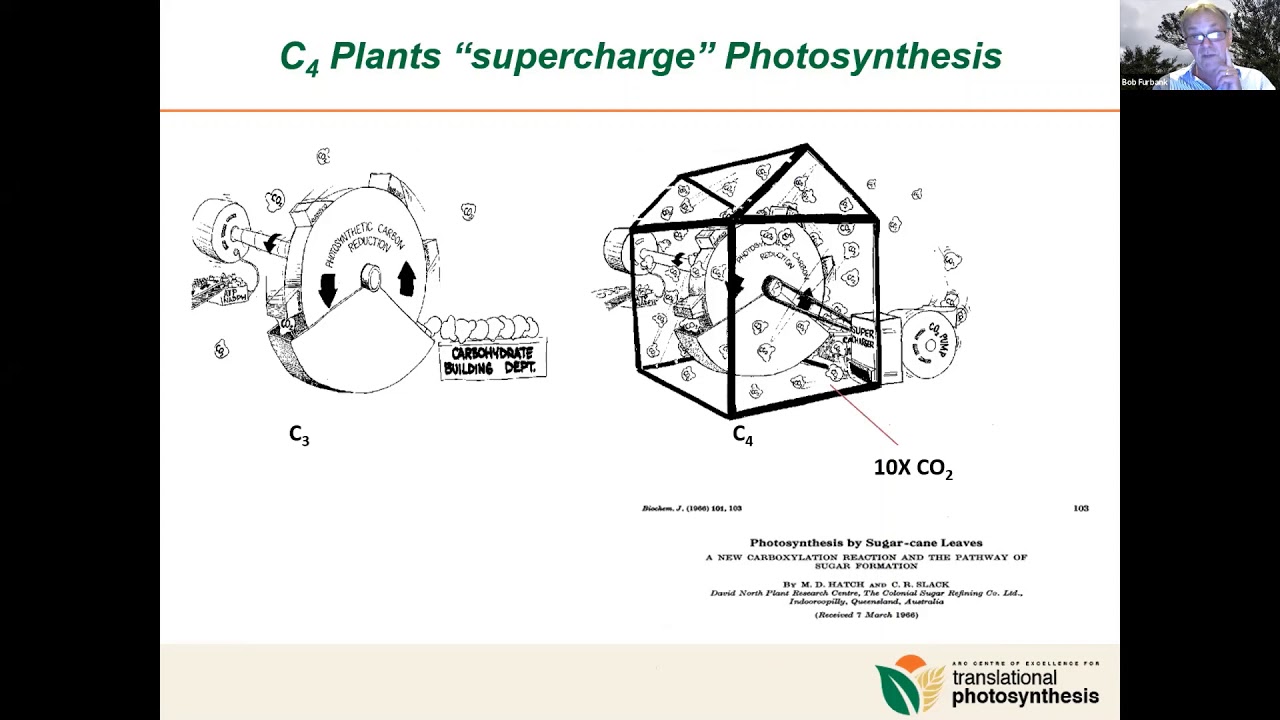

C4 plants (like maize, sorghum, and sugarcane) have evolved two key adaptations—the dimorphic chloroplast structure (granal chloroplasts in mesophyll cells and agranal chloroplasts in bundle sheath cells) and Kranz anatomy (wreath-like arrangement of bundle sheath cells)—to prevent photorespiration by spatially separating light-dependent reactions (in mesophyll cells) from the Calvin cycle (in bundle sheath cells), thereby reducing both high temperature and high oxygen concentration effects on Rubisco enzyme activity.
Photosynthesis in Higher Plants: C4 Pathway (Hatch-Slack Cycle) Explained
Added:The C3 Pathway (Calvin Cycle), specifically the steps of carbon fixation and the role of the enzyme RuBisCO.
The concept of photorespiration and how the oxygenase activity of RuBisCO reduces photosynthetic efficiency under high oxygen or high-temperature conditions.
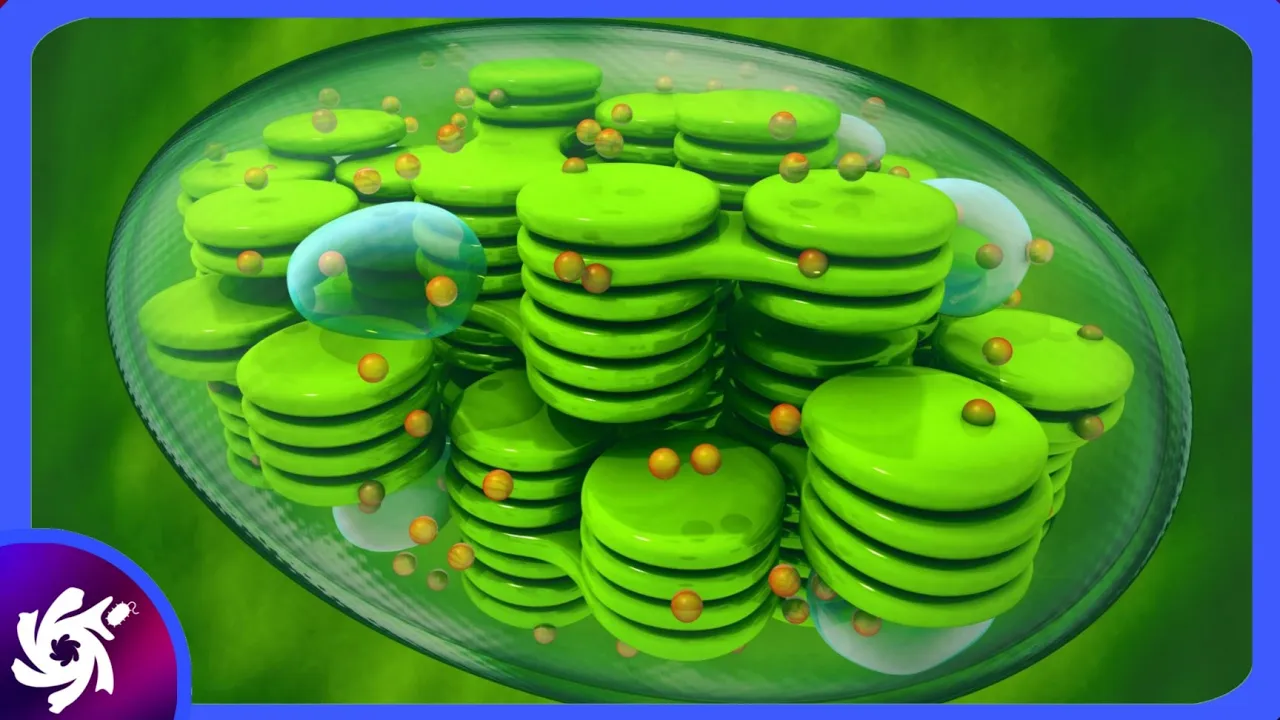
Basic chloroplast structure and function, including the distinction between the thylakoid membranes and the stroma.
General internal leaf anatomy of flowering plants, particularly the organization of mesophyll cells and vascular bundles.
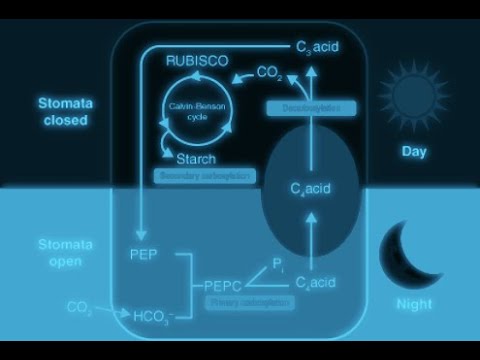
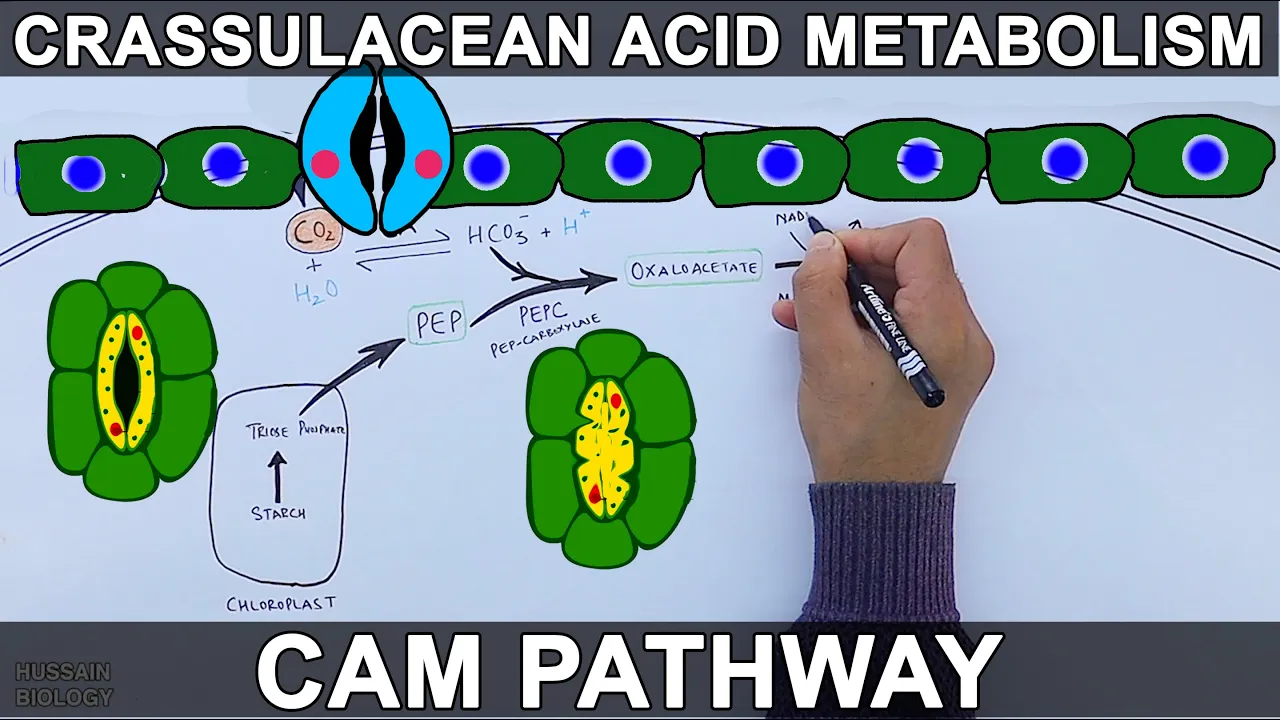
The CAM (Crassulacean Acid Metabolism) pathway, highlighting temporal carbon fixation as an adaptation to arid environments compared to spatial separation in C4.
A comprehensive comparative analysis of C3, C4, and CAM plants regarding water-use efficiency, nitrogen-use efficiency, and temperature optima.
The energetic costs and trade-offs of the C4 pathway, specifically calculating the additional ATP requirements per carbon atom fixed.
Biotechnological applications and genetic engineering efforts, such as the 'C4 Rice Project,' aimed at introducing C4 photosynthetic traits into C3 crops to improve yield and climate resilience.
372.3K views4.9Klikes10:41Original Release: 2016-07-22
in this uh video we'll discuss C4 cycle C4 cycle or C4 pathway this pathway is also known as hatch slack cycle named after the scientist who gave the complete uh cycle now this cycle is seen in plants and these plants are called C4 plants because they are showing this kind of cycle so the example of the plants in which we see this are maze sorghum sugar cane u4b Chino Podium Etc and how have these plants adapted themselves this is the most interesting thing the C4 cycle is actually a cycle which has evolved or the plants have undergone adaptation to avoid that photoes spiratory loss in the earlier video we talked about photorespiration and we saw that the plants which grow in warmer conditions they suffer from the problem of photorespiration and the problem was faced because of this rubisco rubisco's Behavior changes when the temperature is high and oxygen con concentration is high so if the plants which are normally growing in warmer condition unless and until they show some kind of adaptation they'll keep suffering from these problems so they show these adaptations let us talk about the adaptations which we see adaptations in C4 plants to avoid photo respiration one adaptation is they show dimorphic chloroplast dimorphic chloroplast we have discussed this earlier in brief these dimorphic chloroplasts are granal and a granal granal chloroplast are the ones which would have Grana and a granal would not have Gran they would have only stroma Lin so if we just in short draw the granal ones a typical chloroplast and all these thids they would be arranged in the form of stacks which we call Gran and connecting these Grana would be the stromal whereas in case of a granal everything is going to be same that means double membrane and everything only thing is there would be just troma Lam no granal now these granal have thids that means they have the pigments which are responsible for the noncyclic photo phosphidation in C4 plants gr granal chloroplast are found in the misop cells that means cells in the misop area they would have chloroplast and those chloroplast would be granal type a granal chloroplast are found in the bundle sheath cells bundle sheath cells this is one adaptation and how that adaptation is going to help that we will see in a minute so this is one one second important thing they show CR Anatomy C4 plant show [Music] CR Anatomy cran CR Anatomy means the cells of the bundle sheath they are arranged in a wreath like manner so if we draw the epidermal cells the upper epidermis which is covered with the cuticle lower epidermis which has stomata and these are the cells the misop cells of both the types that means the Palisade parena cells and then there would be spongy paren on the lower side and say here is the vascular bundle so the vascular tissue that is xylem and fluid is surrounded by special thick wall cells which are called bundle sheath cells so these are bundle sheath cells or this entire layer is known as the bundle sheet because it is surrounding the vascular bundle and we said the a granal chloroplast are found in this and CR Anatomy means the cells of bundle sheet are arranged in a wreath like manner they are arranged wreath like wreath word is used for any circular Arrangement normally this term is used for circular floral arrangement but here also the cells of the bundle sheath they are arranged in a circular manner and that is called CR Anatomy so so there are two adaptations which we see in these C4 plants one they show dimorphic chloroplast granal and a granal and second they show cren Anatomy now what is the advantage of these things granal chloroplast would be here that means in the misop cells so this is the location where there would be granal chloroplast and in the bundle sheet would be a granal chloroplast whever there is granal chloroplast that means those thids are present this is the place where light reaction would take place and whever a granal chloroplast are there that means pre dominantly it has stroma so this is the place where C3 cycle is going to take place now let us see what has been achieved by doing this light reaction takes place here this is the upper surface and from here the sunlight is going to fall on the cells so light reaction takes place here because light is essential for light reaction to take place thids are required because this is the place where the pigments are present so light reaction takes place and we also know that ox oxygen is produced as a result of light reaction or in noncyclic that means oxygen will be released here and C3 cycle which is rubisco dependent has been shifted into deeper cells so by Shifting the sight of the uh C3 cycle what has the plant achieved plant has achieved a slightly lower temperature because in the cells of the upper l the temperature is going to be a little more because they are on the top side C3 cycle has been shifted into deeper cells so in deeper cells that is in bundle sheet cells C3 cycle would take place and here the temperature is going to be slightly lower one problem has been taken care of rubisco acts as oxygen is when the temperature is high so what the C4 plants have done is they have changed the site where this rubisco acts that is C3 cycle instead of misop now C3 cycle would take place in bundle sheet cells so these cells are deeper cells and in deeper cells temperature is not going to be high so one problem resolved second problem was oxygen concentration oxygen is released as a result of noncyclic photo phosphorilation and that takes place in the thil oid membrane so granal chloroplast where Gran are present or thids are present is in the misop that means this is the place where oxygen will be released and in the bundle sheet cells a Gran chloroplast are there a granal chloroplast would not help in noncyclic photo phosphorilation that means here oxygen will not be released so oxygen concentration again is not going to be high in bundle and temperature is going to be lower so both the problems where rubisco was acting as oxyen is have been taken care of so by these two adaptations C4 plants they have overcome the problem of photorespiration and after we have understood this uh these adaptations now let us discuss the actual cycle that is the C4 pathway for
Up Next
66:10
Photosynthesis Dark Reactions: C3, C4 & CAM Pathways | CSIR NET Plant Physiology (Part 3)
@chandubiologyclasses8327
5.5K views•2022-03-14

50:12
Bacterial Communication: Quorum Sensing and Biofilm Formation Explained
@JHUAAP
12.6K views•2011-06-28

11:47
Neural Control & Coordination: Synapse Explained | NEET Biology
@NeelaBakoreTutorials
78.3K views•2017-03-24

7:08
Bacteriophages: Earth's Deadliest Killers and Future Antibiotics
@kurzgesagt
34.6M views•2018-05-13
Related Study Plans & Knowledge Roadmaps
Structured learning paths in Biology
biology
RNAi: Biogenesis, RISC & Gene Silencing
01Molecular Biology Foundations: DNA to Protein
02Introduction to RNA Interference (RNAi)
03Molecular Biogenesis of miRNA and siRNA
+ 2 more learning modules
10h5 modules
Explore Roadmap
biology
Mycorrhizae: Signaling, Biophysics & Ecology
01Foundations of Mycorrhizal Symbiosis
02Molecular Signaling and Root Colonization
03Biophysics and Bioenergetics of Nutrient Exchange
+ 1 more learning modules
11h4 modules
Explore Roadmap
biology
Circadian Clocks: TTFL, SCN & Periphery
01Foundations of Molecular Biology & Gene Expression
02Introduction to Chronobiology and Actograms
03The Core TTFL: Molecular Architecture of the Clock
+ 3 more learning modules
14h6 modules
Explore Roadmap
biology
Population Genetics: Math, Drift & Selection
01Genetic & Probability Foundations
02The Hardy-Weinberg Principle and Baseline Models
03Mathematical Modeling of Natural Selection
+ 3 more learning modules
18h6 modules
Explore Roadmap