
![Changing SOCIAL HIERARCHIES, 1450-1750 [AP World History Review—Unit 4 Topic 7]](https://i.ytimg.com/vi_webp/RQIEAt2_UoE/maxresdefault.webp)

![Changing Social Hierarchies 1450-1750 [AP World History] Unit 4 Topic 7](https://i.ytimg.com/vi_webp/mghQQHJIfO8/maxresdefault.webp)
![Labor, Slavery, and Caste in Spanish America [APUSH Unit 1 Topic 5] 1.5](https://i.ytimg.com/vi_webp/f1h-9W2Snik/maxresdefault.webp)












![MASP Seminários | Histórias Latino-Americanas | 21.1.2026 [Tarde]](https://i.ytimg.com/vi/LgLhgQsfwcc/maxresdefault.jpg)
Mestizaje, traditionally defined as a culture of mixed European and American Indian ancestry, represents a simplified binary view of Latin American identity that overlooks the diverse global influences including African, Asian, and Middle Eastern cultural legacies; to fully understand our identities, we must deconstruct historical silences by examining how official histories were constructed through biased primary sources and recognizing that the victor's narrative often omits crucial perspectives from marginalized groups.
Mestizaje Defined: Historiography & Silences in Latinx Art
Added:An understanding of the Spanish colonization of the Americas and the resulting racial hierarchy, historically known as the 'sistema de castas'.
A basic definition of 'historiography' as the study of how history is written, constructed, and interpreted over time, rather than just the history itself.
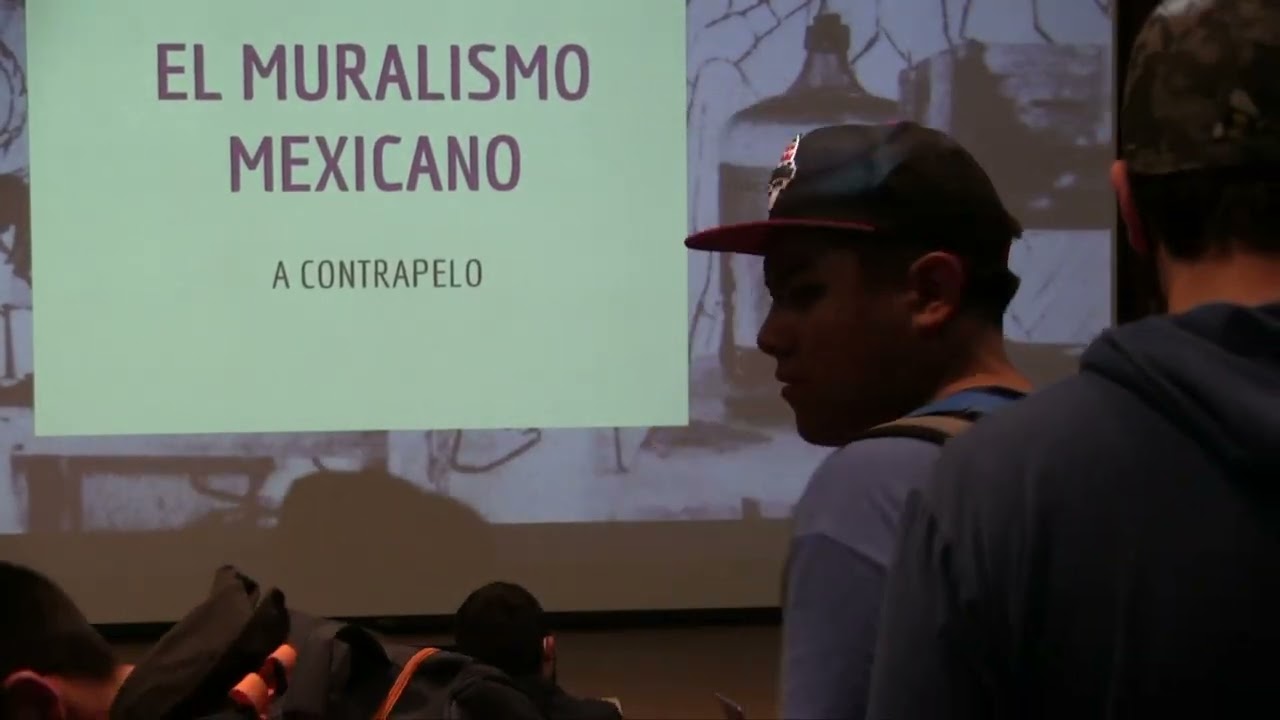
Familiarity with major 20th-century Mexican art movements, particularly Mexican Muralism, which played a key role in post-revolutionary national identity.
An introductory understanding of the distinction between Mexican, Latin American, and Latinx identities in both geopolitical and cultural contexts.
An exploration of decolonial aesthetics and the 'coloniality of power' framework to understand how colonial structures persist in modern art institutions.
Critical analysis of how contemporary Afro-Latinx and Indigenous artists actively challenge the homogenizing and exclusionary aspects of traditional 'mestizaje' narratives.
Examination of institutional critique and modern curatorial practices aimed at recovering and showcasing 'silenced' or marginalized histories in museum spaces.
Application of historiographical critique to other regional art histories (e.g., Chicanx, Caribbean, or Andean art) to identify systemic exclusions.
9K views229likes11:09Original Release: 2020-06-07
when learning about latin american history we tend to start with the painful encuentro or encounter a moment that's mostly talked about from the european point of view we have glorified the age of discovery and exploration as the natural result of european excellence and technology and we are taught that this culture clash ultimately resulted in our tragic yet beautiful mestizo culture in fact this mythical encounter has been at the very root of our identity as mexicanos latin americanos and latinx people for over 5 centuries as we near the 500 year commemoration of the aztec defeat by hernan cortes in august of 1521 we have to dig deep through the tangled roots of our history to understand how and why our identity has been shaped into what it is today because to continue thinking of our identity as just a simple binary of half spanish means half indian reinforces a version of our history that's not so accurate by boiling down our history and origins to only two cultures we effectively downplayed the global scale of interactions that happened after the encounter this simply wipes out the cultural diversity that existed in pre-columbian times and erases african asian and middle eastern cultural legacies from within our identities however when and where these deeply said ideas that our nations and cultures are only mestizo originate and what is it about mestizaje that makes us so proud to be latino americanos latinx or mexicano please join us by watching this video as we take a visual journey through the history of mestizaje before getting into the history of mestizaje we need to define what it is and also we need to talk about the nature of history mestizaje as merriam-webster dictionary defines it refers to a culture and its people of mixed european and american indian ancestry although our current understanding of mesti sage was mostly solidified after the mexican revolution in the 1920s the concept of mestizaje has actually been in development for more than 700 years the word was first used in 1275 in medieval spanish aka old castilian it referred to people of mixed bloods and was derived from late latin mixtikus from latin mixtus past participle of michele to mix all of this shows us that in europe and spain more specifically there's been a general anxiety about the mixing of bloods aka racism and with that a need to name and categorize the resulting offspring the stories we accept as the official truth are often one-sided incomplete inaccurate and almost always way more complicated the historiography of latin american mestizake that is the history of how history became official is long and complex but extremely important when trying to grasp how the events of 500 years ago led to the way our world is organized today the way we see the so-called discovery of the americas is different from the way people saw it when it was happening and that's different from the way it was imagined during the colonial period and you get it so because primary sources are limited our understanding of what happened is also limited consider the history behind this fool's writings christopher columbus the reason his voyages are so mythologized is because of how we got to hear his side of the story in the first place his original journal was lost 10 years after his first voyage so all we have today is nothing more than a transcription of an abstract of a copy of a lost original a mess a lot of copying errors misinterpretations omissions and outright lies rest between us and the truth this leaves critical historians reading in between the lines of what was written 500 years ago in order to find the silences of history a concept coined by historian michael rolfe trullo we always hear it history is written by the victor but here we see how easy it is to twist narratives and end up with two or even more versions of the same events it is precisely in these one-sided accounts where omitted facts become the silences of history now imagine everything that is missing from the defeated side with this in mind take this and each of our videos not as just the history of mestizaje but instead as an analysis of the silences that have been manufactured around these events silence what hey everyone my name is emmanuel ramos and my name is emmanuel ortega i know adorable keep going we are the creators of unsettling journeys i am a video producer and i am a college professor and we're always interested in talking about art and talking about visual culture and material culture architecture and most importantly history part of the motivation for us to create this type of videos is because the latinx content that we see out there in the internet in social media does not reflect the complexities of what we're talking about understanding our identities through art history has been very useful a very useful tool for myself for my husband and my students and the idea is to be able to share that dialogue with everybody out there especially because art and visual culture forms a very important part of our identity and as you saw in the video we are very interested with this idea of deconstructed silences so don't think about these videos as just history videos of latin american visual culture instead think about how there's so many parts about the histories that we found in regular books history books art history books and magazines and newspapers and this information that is missing from that that also contributes for the creation of history so we're gonna try to borrow from those silences and we're gonna try to deconstruct them from now on this is our little contribution to try to decolonize knowledge because a lot of these conversations are being held in academia but it's time for those conversations to go out in the general public for that reason we have planned a lot of content for this youtube channel we have multiple seasons in the making and what we want to do is track the ideas of latin american latinx and mexican art and identity and the way we're trying to do this is by roughly coming out with 10 videos and we have two different types of videos the first ones are going to be the visual breakdowns which are more like video essay and then the second type of video will be um the coding silences and that is going to be a little bit more academic and a little bit also more free-flowing as i mentioned before i am an art history professor so i want to be able to get into detail about some artwork some themes some general ideas that we don't have time to do in this shorter videos make sure that you subscribe to our channel we are going to be coming out with videos every other week two videos a month so what we're gonna do right now is we're actually going to deconstruct or just talk about a couple of words because we understand that some of the words that we use in our videos maybe palabras or mingueras as we call it in mexico they're just too big or very abstract very abstract correct so what we're gonna do is just at the end of all of these videos um first we're gonna encourage you to submit your questions so we can start a dialogue so we may address some of these questions at the end of our videos we also have reserved entire videos just for questions but the main idea is to talk about some of these terms such as binary what do we mean by that that mestizaje is a binary of indigenous and european and as we will find out there are so many other components there are african there are middle eastern asian influences in our identity present to this day something like los tacos de pastor is a middle eastern way of cooking food so these things that we think are just solely mexican have deep and complicated histories the next word will be historiography and in order to truly deconstruct the silences of history we have to understand how that history was created to begin with so that's why we we are going into the history of history that's basically what historiography means and primary sources it's looking at the very first time those histories were recorded these primary sources were not written by objective observers these were players in those histories they had a say and more importantly they had their own biases and they had their own motivations for writing what they wrote so precisely because of that we have to look at columbus's motivations why was he writing and why did he describe indigenous people as just being savage without understanding so a primary source will be the diaries of christopher columbus a secondary source will be somebody writing about that primary source so that creates long complicated chains and networks of events of narratives of truths of lies of omissions and silences and silences exactly we feel like the only way to connect with these cultures is to engage with the iconography to engage with the arts so understanding how frida kahlo can potentially be problematic it's not to reject that art it's not to say there's nothing that this art means for us but it's to say this artist was painting in a period of time in history they helped create and craft identities into what they are today and for us to have complete ownership of our identities to have complete ownership of our future possibilities we have to understand the ways that our identities have been limited in the past i reject frida kahlo anyway so make sure to subscribe to do the vitos para riva and we encourage questions and dialogues so please please please please make sure to um put it in the comments the type of questions that you have about the videos or you can also send us an email and we'll be more than happy to engage with you and the email address is unsettling journeys gmail.com so if you have any questions comments ideas for future videos clarifications if we got something wrong let us know we are happy to begin a dialogue and we want to have these conversations
Up Next

11:06
Disease vs Illness: Key Concepts in Medical Anthropology
@TheHumanConditionEWU
1.2K views•2023-09-26

38:41
Astrobiology Through an Anthropological Lens: Field Insights
@georgiatechastrobiology
128 views•2021-04-14
4:45
Proxemics Explained: The Study of Personal Space
@Vox
536K views•2016-07-05
10:38
Psychology of Internet Trolling and Pranks Explained
@AzzyLand
10.7M views•2017-12-20
Related Study Plans & Knowledge Roadmaps
Structured learning paths in Anthropology
anthropology
Space Anthropology: Analogs, Culture & Habitats
01Foundations of Space Anthropology & Cosmic Imaginaries
02Extreme Isolation & Micro-Societies in Orbit
03Space Analog Habitats & Earth-Based Simulations
+ 2 more learning modules
15h5 modules
Explore Roadmap
anthropology
Legal Anthropology: Customary Law & Pluralism
01Foundations of Legal Anthropology and Social Justice
02Legal Pluralism: Coexisting Legal Systems
03Customary Law and Indigenous Dispute Resolution
+ 2 more learning modules
15h5 modules
Explore Roadmap
anthropology
Global Tourism: Gaze, Authenticity & Heritage
01Introduction to the Sociology of Tourism
02The 'Tourist Gaze' (John Urry)
03Staged Authenticity in Tourism
+ 3 more learning modules
14h6 modules
Explore Roadmap
anthropology
Modern Kinship (ART, Adoption & Chosen Family)
01Foundations of Kinship and Family
02Assisted Reproductive Technologies (ART) & Relatedness
03Transnational Adoption and Global Kinship
+ 2 more learning modules
12h5 modules
Explore Roadmap