
![[#회사소개] ㅣ싸고 좋은 제품 전달하라ㅣ회사소개 박한길회장](https://i.ytimg.com/vi_webp/BK951XSh29k/maxresdefault.webp)

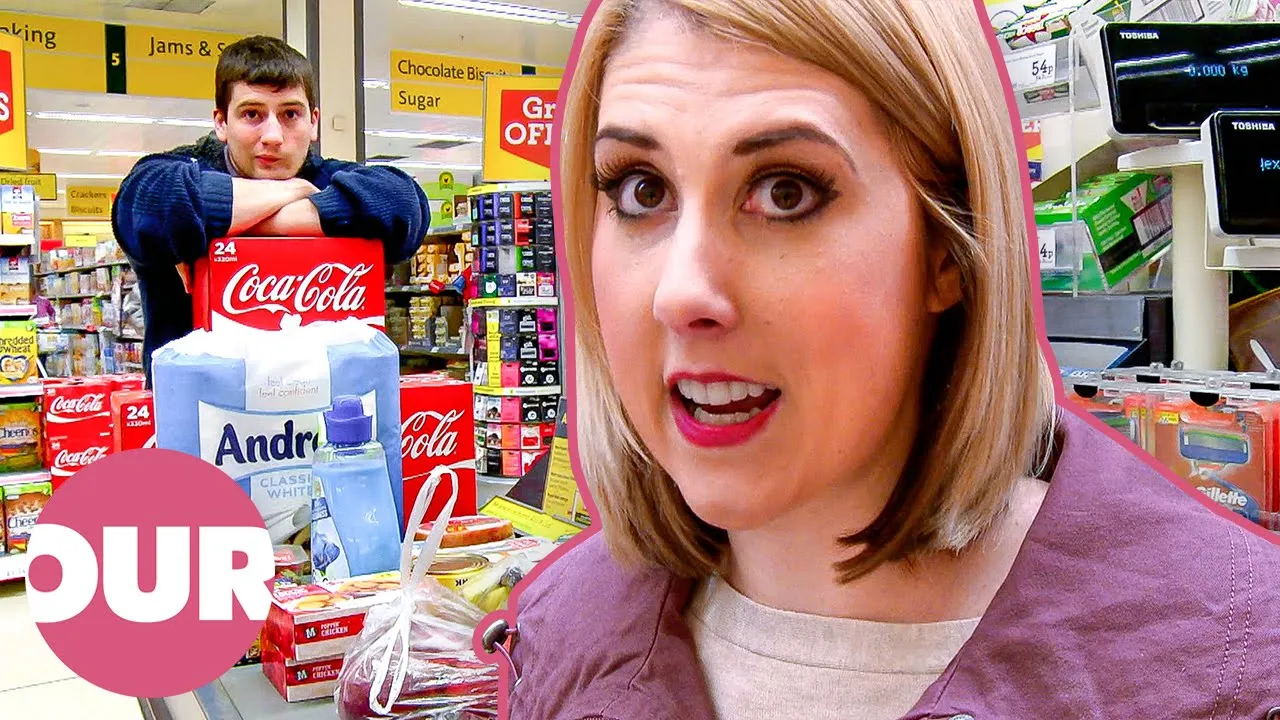



















Grocery stores operate on razor-thin profit margins of 1.5-2%, where the real business is not selling food but renting shelf space to manufacturers through slotting fees ($1,500-$250,000 per product) and selling customer certainty through strategic layout design that maximizes impulse purchases and basket size, making success dependent on volume, brand loyalty, and operational efficiency rather than product sales.
The Economics of Owning a Grocery Store: Margin Analysis
Added:The difference between gross profit margin and net profit margin, including how overhead expenses impact overall profitability.
The concept of high-volume, low-margin business models and how economies of scale apply to retail pricing.
Basic supply chain dynamics, specifically the relationship between consumer packaged goods (CPG) manufacturers, distributors, and retailers.
The fundamentals of cost structure in retail, distinguishing between fixed costs (rent, labor) and variable costs (cost of goods sold).
Strategic inventory management and shrinkage mitigation, examining how perishability and food waste impact net margins.
Private label strategy and brand differentiation, focusing on the vertical integration and pricing of store-brand alternatives.
Category management and shelf-space optimization, analyzing how product placement and layout maximize basket size and margin.
Alternative revenue streams in modern grocery retail, such as retail media networks (RMNs) and consumer loyalty data monetization.
4.9K views170likes20:00Original Release: 2026-07-20
Okay, so you want to buy a grocery store, and honestly, who wouldn't?
It might be the most recession-proof business on Earth. People cancel vacations, skip restaurants, quit the gym they never use, but nobody stops eating. Everyone in your town buys food every week, forever. You are standing in the one river of money that never dries up, and the numbers look enormous.
Grocery stores in the United States ring up about $1 trillion a year. The average supermarket does around 700 thousand dollars in sales every week. That is roughly $37 million a year flowing through one building, past one set of registers. It sounds less like a store and more like a machine that turns a town into cash. So, what is the trap?
This. Out of every dollar that flows through that machine, the owner keeps on average less than 2 cents. The average grocery net profit margin is around 1 and 1/2 to 2%. And for independents, it often drops below 1%. It is one of the thinnest margins in the entire economy.
You can sell $37 million of food and still lose the store, and the ground is shifting. Walmart alone now sells close to a quarter of all groceries in the country. Amazon launched its own grocery brand. Across 2025, chains like Kroger and Giant closed hundreds of locations, while cuts to the federal food program known as SNAP threaten to pull spending out of the exact neighborhoods independent grocers live or die on. So, no. A grocery store is not a money printer that feeds a town. It is a razor-thin, high-volume, brutally competitive business where you move mountains of product to keep a few pennies, and one bad month of spoilage or theft can erase a year of profit. And yet, some grocery owners get genuinely, quietly rich. Because the ones who win figured out one strange secret. A grocery store was never really in the business of selling you food. By the end of this video, you will understand why the margins are this thin, who the real customer in your store actually is, and what a great grocery store is truly selling instead. Because the groceries were never the product. And to see how a building full of food became one of the most misunderstood businesses on Earth, we have to go back to Memphis. To a man who got rich by making you do all the work for free.
Here is something you have never thought about. Every time you grab a cart and wander the aisles picking your own food, you are working an unpaid shift in someone else's business. And it was designed that way on purpose by one man.
The year is 1916. The place is Memphis, Tennessee. Before this, a grocery store worked nothing like today. You handed a clerk your list. He walked behind the counter, gathered your flour, your beans, your coffee, weighed it all out, and handed it to you. You never touched the shelves. You saw only what you asked for. Then a man named Clarence Saunders opened a store with a strange name, Piggly Wiggly. And he did something nobody had ever done. He tore down the counter. He put every product out in the open and forced each customer through a single entrance, down a fixed path that snaked past every item in the store before reaching the checkout at the end.
He called it self-service, and he patented it. He literally owned a patent on making the customer walk the maze and do the picking themselves. Think about what he actually invented. He did two things at once. He fired half his staff because now you gathered the groceries for free. And he guaranteed that before you reached the one thing you came for, you walked past hundreds of things you did not. He did not invent a more convenient store. He invented the impulse purchase. He turned the floor plan into a salesman that never sleeps and works on everyone who walks in. The modern grocery store was not born to sell food efficiently. It was born to expose you to as much product as possible on your way to the milk. That was the idea from day one. And here is the twist that should stop you cold.
Clarence Saunders, the man who invented the machine that prints grocery money, went broke. He lost a brutal battle on Wall Street, lost his fortune, and lost control of Piggly Wiggly itself. The inventor of the most copied store layout in history could not survive the economics he created. That is your first warning. This business is so thin it bankrupted the genius who built it. So, before you fall in love with a trillion-dollar river, you need to understand what you are actually buying.
And it is not what you think. Let us talk about the number that scares away everyone who understands it. When you buy a can of beans from a supplier and sell it on your shelf, the gap between those two prices is tiny. Groceries are a low-margin, high-volume business, and closest of any legal business you could walk into. Here are the real figures.
The average net profit margin for food retailers in 2025 is around 1 and 1/2 to 2%. The Food Industry Association puts it near 2.1% and notes it recently fell to about 1.6%, one of the lowest levels in years. The very best-run stores in the country claw up to maybe 2 and 1/2%. Independent grocers frequently run below 1%. Make that concrete. A customer checks out with $100 of groceries. After you pay for the product, the staff, the rent, the power to run the coolers, the insurance, and the losses, you keep somewhere between $1 and $2. That is it.
Compare that to almost anything else. A bar keeps around 80 cents on a dollar of drinks. A grocery store keeps under two.
On margins that thin, you cannot win by charging more. You can only win on volume, enormous, relentless, mountain-moving volume. That is why the average supermarket runs about 42,000 square feet and carries over 33,000 different items. The model only works if a whole town pours through it over and over every week. And that thinness creates a terrifying pressure. When you keep only a penny or two on the dollar, every leak becomes a catastrophe. A little too much spoilage, a little too much theft, one competitor opening down the road and taking 10% of your traffic.
Any one of them can push a barely profitable store straight into the red.
So, if the margins are this brutal, what exactly are you paying all that money to buy? The answer is heavier and colder than you would guess. When you buy a grocery store, you are not buying a store. You are buying a giant, refrigerated, perishable warehouse that starts losing money the moment you unlock the door. Start with the cost of getting in. A tiny corner store might open for 25,000 to 50,000 dollars. A full-size supermarket is a different universe, running into the millions with one well-known franchise reporting the average grocery investment lands around five and a half million dollars. And most of that money is not food. It is cold steel. A single walk-in cooler can run 8,000 to 30,000 dollars. A walk-in freezer, another 8 to 25,000. The open refrigerated cases lining your dairy and meat aisles can cost 15,000 to 50,000 each. Add shelving for the whole store, a multi-lane checkout system, carts, scales, and security, and your equipment bill alone can pass 150,000 dollars before you stock a single shelf.
Then comes the inventory. And here is what makes grocery uniquely cruel. A lot of it is trying to die. A clothing store can hold a shirt for a year. You are holding milk, meat, bananas, and bread all racing a clock. Every item in your fresh section is a tiny hourglass. If it does not sell in time, you do not just lose the sale. You pay to throw it away.
Fresh food waste is one of the biggest silent margin killers in the entire industry. So, picture what you truly own. A massive building full of machines that must run cold around the clock, packed with 33,000 products, many quietly rotting, all to earn a penny or two on the dollar. It sounds insane. So, why does anyone do it? Because there is a second hidden business running inside that building, and almost no shopper has ever noticed it. Here is the secret that flips this business on its head. In a grocery store, you are not really the customer. You are the product, and the real customers never push a cart. It is called a slotting fee. When a food company wants to put a new product on your shelf, in most large chains, they cannot just show up with it. They pay.
The manufacturer pays the store a fee simply to be allowed onto the shelf. On average, a slotting fee runs around $1,500 per store, per product. For a hot item across a region, it can climb to $25,000.
And in the most competitive markets, reports have put it as high as $250,000 for a single product line. The brand pays you before a single unit sells. And here is the part even shoppers who hear it cannot believe. For many grocers, the profit from simply agreeing to carry a product, the slotting fee itself, is larger than the profit from actually selling that product to you. The store often makes more money renting the shelf than selling the food on it. Now, be fair. This is not universal. The biggest players, like Walmart, Costco, and Whole Foods, largely do not charge slotting fees. Instead, they squeeze suppliers hard on the wholesale price, or simply build their own brands. But for most traditional and regional grocers, the shelf itself is quietly the product, which means a grocery store is not really a food retailer. It is a landlord. It's most valuable asset is not the food. It is the real estate, the shelf space, especially the shelves at eye level and the displays on the end of each aisle, which brands pay $350 to $500 each to control. Every inch is prime property, rented to the highest bidder. And you, walking the aisles, are not the one being sold to. You are the foot traffic the store rents out. Your attention, your eyes passing a shelf, is what is being bought and sold above your head. The brands are the real customers.
You are the audience they pay to reach, which raises a chilling question. If your attention is the product, then the layout of the store is not there to help you. It is there to control you. And once you see how, you will never shop the same way again. Remember Clarence Saunders and his patented maze.
Everything he started in 1916 has been refined for a hundred years into a quiet science of moving your body and opening your wallet. Start with the most famous example, the milk. The single most common item on almost every grocery list is placed as far from the door as physically possible, usually the back corner. Now, be fair. There is a real logistical reason, too. Milk is heavy and needs refrigeration near the loading dock. So, part of this is simple cold chain practicality, not pure conspiracy.
But the effect is undeniable, and layout designers know it. It forces the person who ran in for one gallon of milk to walk the length of the store and back past thousands of products, twice.
Retail experts have a name for this, the planned detour, and a name for its goal, building the basket. Then look at the front of the store. That is where the lost leaders live, the deal so good the store makes almost nothing or even loses money on them. A rock-bottom price on eggs or a rotisserie chicken. Why would a razor-thin business sell at a loss?
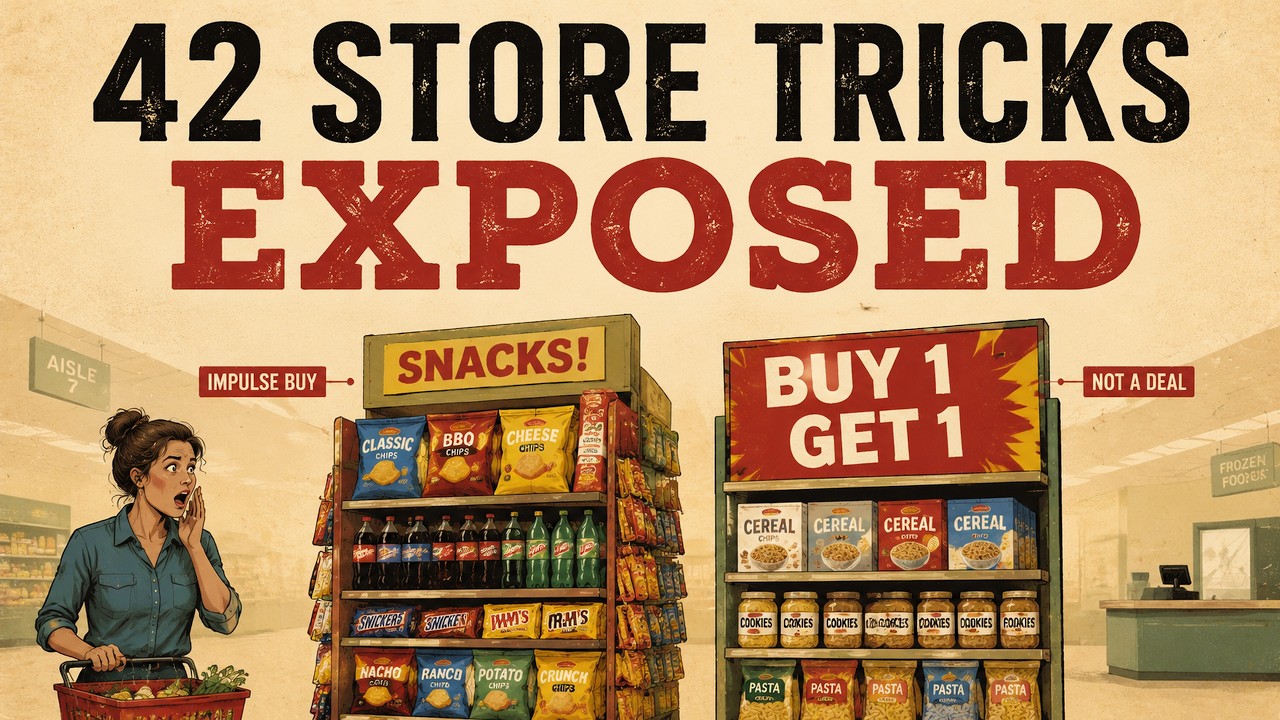
Because it is bait. It gets you in the door and bets correctly that once you are in the maze, you fill the rest of the cart with higher margin items. And the manipulation goes deeper than the map. The most profitable products and the brands that paid the most sit at adult eye level because that is where your gaze lands first. Cheaper options sit down low or up high where you have to hunt. The longer you stay, the more you spend. So, everything from the wide unhurried aisles to the soft background music is tuned to slow you down. The average shopper spends over 23 minutes inside on a normal trip. That is not an accident. That is the design working.
Every corner is a lever, all pulling on you at once, so gently you never feel it. And yet, with all this machinery, the business is still barely profitable because a force on the other side of the ledger is quietly eating those hard-won pennies alive.
Let us be honest about how a grocery store actually dies. It rarely dies from a lack of customers. It dies from the math. Start with a killer called shrink.
Everything that vanishes between the delivery truck and the register.
Shoplifting, employee theft, damage, expired product, simple errors. Across United States retail, theft alone was estimated at over $45 billion, climbing toward $48 billion in 2025. In grocery, shrink typically eats 1 to 2% of all sales. Now, hold that next to what you know. The store's entire net margin is only about 1 and 1/2 to 2%, which means shrink, by itself, can be as large as the store's total profit. Every item that walks out unpaid is not coming from some fat cushion. It comes straight out of the pennies you were going to keep. A shoplifter is not stealing product. They are stealing your profit directly. Stack her the rest on top.
Labor, rent, and energy all rising. And then the giants. When Walmart controls roughly a quarter of all groceries, and Amazon, Kroger, Costco, and Aldi fight over the rest, a small store on sub-1% margins is in a price war it can rarely win. That is why chains closed hundreds of locations in 2025, and independents warned that even small cuts to customer spending could push them under. And when a grocery store dies, something worse than a business closes. A neighborhood can become a food desert, where the nearest fresh food is miles away, out of reach for anyone without a car. People do not just lose a shop, they lose the ability to easily feed themselves. Which is the contradiction at the heart of this industry. It is one of the least profitable, most punishing businesses you can run, and one of the most essential things a community can have.
So, what makes a great one worth so much more than its cans and coolers? Here is the truth underneath everything. A great grocery store is not selling food. It is selling certainty. Think about what a full, well-stocked store actually promises. You walk in, and there is abundance. Shelves that are never empty.
The exact bread you like in the exact spot, every time. In a world that feels uncertain and expensive, the store is a quiet daily promise that you and your family will not go without. That there will be dinner tonight. It sells the feeling of a full pantry, which is really the feeling of safety. And that safety runs on something no competitor can copy, habit. Most people shop the same store, on the same days, twice a week, for years. They know the aisles by heart. It becomes part of their routine, woven so deep they stop seeing it. That boring, unshakable loyalty is the most valuable asset a grocery store owns. You are not buying a week of sales, you are buying a permanent place in the rhythm of a town's life, and the smartest players turn that trust into an empire.
Look at the store brand, the private label. Kirkland at Costco, Great Value at Walmart, the Aldi brands. What used to be the cheap knockoff is now, for many shoppers, the first choice. In 2025, private label sales hit a record of around $283 billion.
Now, more than one of every $5 and nearly one of every four products sold.
See the end game. When the store's own brand becomes the thing you trust most, the store stops being a landlord renting shelves to others. It becomes the brand.
It captures the trust, the loyalty, and the margin all at once. The final form of a grocery store is not a place that sells food. It is a name you trust to feed your family. That is the same secret hiding in every business in this series. The mall was never selling stores. It was selling the crowd. The pub was never selling drinks. It was selling belonging. The grocery store is not selling groceries. It is selling the quiet daily certainty that you will be fed at a scale so vast that keeping even two pennies on the dollar can build a fortune. You would not be buying a store full of food. You would be buying a place in the most basic human ritual there is. The gathering of the food that keeps a family alive. So, knowing all of it, should you actually do it? Be honest about what this is not. It is not a high-margin business. It is not easy money. It is one of the thinnest margin, highest volume, most operationally brutal businesses on Earth, where you can do everything right and still get crushed by a bigger store's prices, a wave of theft, or a truck of spoiled produce. If you want fat margins, this is the wrong room. But, here is who actually wins. Because there are three, and none of them is simply the person who owns one store and hopes. The first winner is the landlord, not the grocer, but whoever owns the building the store sits in and the shelf space inside it.
Groceries anchor shopping centers and pull steady traffic, which is why grocery-anchored real estate is prized by investors. The people renting the land and the shelves often earn more reliably than the people running the registers. The second winner is the brand builder, the operator who stops just reselling other people's products and builds a private label people trust, capturing that record-breaking store brand growth. They turn a landlord business into a brand business, and brands are where the real margin lives.
The third winner is the specialist, the independent who does not try to out-Walmart Walmart. Instead, they win on what a giant cannot copy, a specific cuisine served better than anyone, a local, high-touch, deeply loyal community store, a niche the big boxes are too clumsy to serve. On price, you lose to the giants. On loyalty and specialness, you can beat them. And if you want to own the biggest players without ever stocking a shelf, remember the largest grocers, like Kroger, are publicly traded companies anyone can research and buy. This is not financial advice. It is just the reminder that owning the grocery business and running one are two very different things. There are two people watching this right now.
One is already picturing their own aisles, their name over the door. The other just realized why the beloved local store that closed last year never stood a chance. Same business, different sides of the register. A century ago, Clarence Saunders tore down the counter, handed you a basket, and quietly turned you into the labor and the audience of his store at once. He made a fortune, then lost it, because even the man who invented the machine could not beat its brutal math. That math has not changed.
The store still runs on pennies. Shrink still eats the profit. The giants still press down from above. And after everything, the owner keeps a cent or two on every dollar a whole town carries out the door. But, the customers were never really paying for the food. The food was the bait, the loss leader, the reason to walk the maze. What they were paying for, without ever knowing it, was certainty. The quiet promise that the shelves would be full tomorrow and the day after. That whatever else fell apart in the world, there would still be a place nearby where a family could go and be fed. So, the next time you run in for 1 gallon of milk and walk out with a full cart, stop for a second at the door. You just walked through a machine designed a century ago to do exactly that. And the strangest part is, you were never really the customer. You were the product and the aisle was the business. You will never look at your grocery store the same way again.
Up Next
7:30
The Business Case for Pay Transparency: Benefits and Downside Risks
@TED
212.7K views•2016-10-11

46:36
Retention Habits of Top DTC Ecommerce Brands Revealed
@SendItPodcast
44K views•2026-03-03

15:23
Decoy Effect: How Pricing Psychology Influences Consumer Spending
@bobinvestsUS
90K views•2026-01-05

17:30
The Planned Obsolescence of Light Bulbs and Tech
@veritasium
25.3M views•2021-03-26
Related Study Plans & Knowledge Roadmaps
Structured learning paths in Business
business
Pop-Up Retail: Strategy, Design & Execution
01Introduction to Pop-Up Retail & Strategic Goal Setting
02Budgeting, Site Selection, and Legal Essentials
03Experiential Retail Design & Visual Merchandising
+ 2 more learning modules
15h5 modules
Explore Roadmap
business
Reg CF: Startup Funding, Marketing & Launch
01Introduction to Equity Crowdfunding & Reg CF
02Platform Selection & Legal Preparation
03Crafting High-Converting Campaign Assets
+ 2 more learning modules
14h5 modules
Explore Roadmap
business
Productized Services: Scaling Solo Freelance
01Foundations of Productized Services
02Packaging and Scope Definition
03Pricing and Subscription Models
+ 2 more learning modules
15h5 modules
Explore Roadmap
business
Gov Procurement: Find, Bid & Win Contracts
01Introduction to Government Procurement & Business Setup
02Small Business Certifications & Set-Asides
03Finding and Analyzing Contract Opportunities
+ 2 more learning modules
14h5 modules
Explore Roadmap