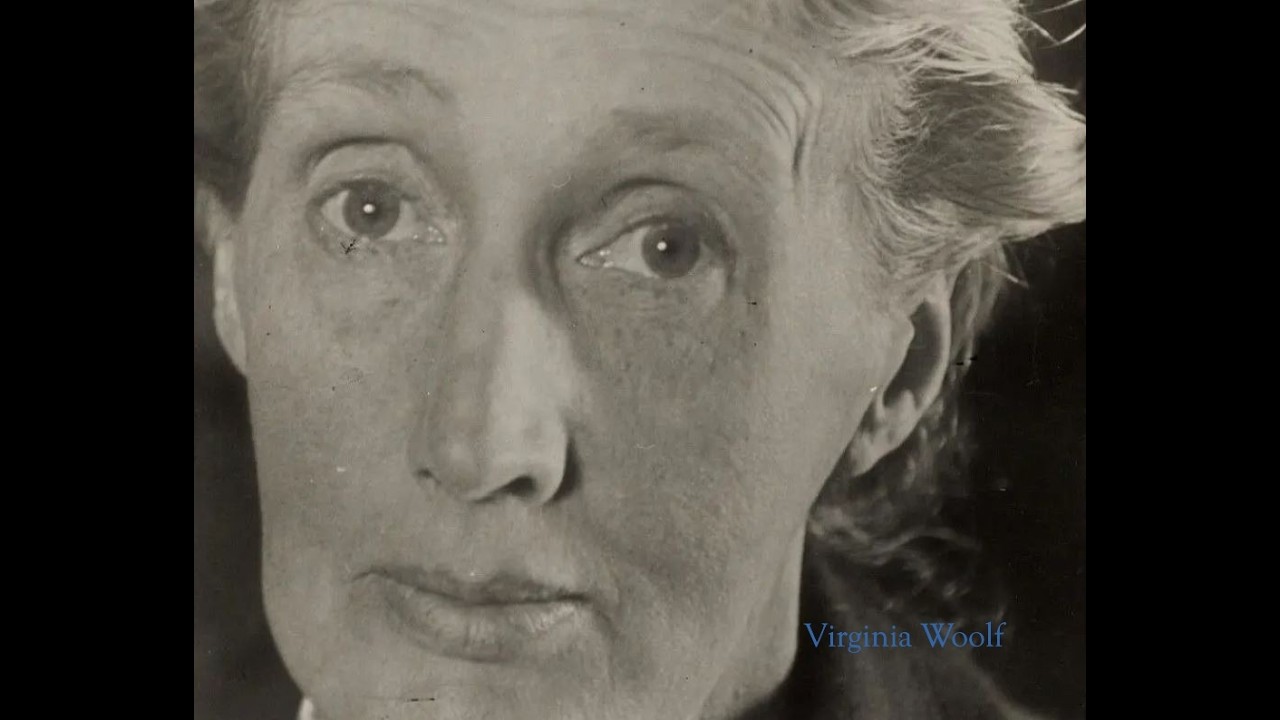




























Virginia Woolf revolutionized modernist literature by developing a stream-of-consciousness narrative technique that dissolves traditional boundaries between characters, time periods, and external/internal experiences, allowing readers to perceive the interconnected nature of human consciousness and the hidden patterns underlying everyday reality.
Virginia Woolf's Mrs. Dalloway: Modernist Novel Analysis (1987) | Literary Criticism
Added:Familiarity with the core tenets of Literary Modernism, specifically how it broke away from Victorian narrative structures and realism.
Understanding of the 'Stream of Consciousness' narrative technique and how it depicts the inner workings of the human mind.
Basic plot and character familiarity with Virginia Woolf's 1925 novel 'Mrs. Dalloway', including its setting in post-WWI London.
Historical context of the post-World War I era, particularly the societal trauma and the emergence of 'shell shock' (PTSD).
Comparative study of Woolf's other major works, such as 'To the Lighthouse' and 'The Waves', to track the evolution of her narrative style.
Application of Feminist Literary Theory to analyze Clarissa Dalloway's societal constraints and Woolf's essays like 'A Room of One's Own'.
Exploration of Queer Theory in Modernist literature, focusing on the themes of repressed desire and fluid sexuality in the novel.
Deep dive into the portrayal of mental illness, institutional psychiatry, and trauma in early 20th-century literature.
148.6K views2.6Klikes58:35Original Release: 2018-11-26
The sun had not yet risen.
The sea was indistinguishable from the sky except that the sea was slightly creased, as if a cloth had wrinkles in it.
Gradually as the sky widened, a dark line lay on the horizon dividing the sea from the sky, and the gray cloth became barred with thick strokes moving one after another beneath the surface following each other, pursuing each other perpetually.
As they neared the shore, each bar rose, heaped itself, broke, and swept a thin veil of white water across the sand.
The wave paused and then drew out again, sighing like a sleeper whose breath comes and goes unconsciously.
The light struck upon the trees in the garden.
The sun sharpened the walls of the house and rested like the tip of a fan upon a white blind.
This has been a very animated summer, a summer lived almost too much in public.
But down here, I feel as if I've entered into a sanctuary, a nunnery.
I want to make 300 pounds from my writing this summer.
Then I can build a bath and a hot water range here at Rodmell.
But first I must strike out some plan.
Two lectures to prepare and essays and reviews for the literary supplement.
And the novel.
I'm blown like an old flag by Mrs. Dalloway.
I feel I'm rushing towards the end of it and I must stop myself, think what I mean to say.
This is one of the experiences I have had here this summer, a consciousness of what I call reality-- something abstract but residing in the downs or sky, beside which nothing matters in which I shall rest and continue to exist.
Reality, I call it.
And I fancy sometimes this is the most necessary thing to me.
But who knows once one takes a pen and writes?
How difficult not to go making reality this and that, whereas it is one thing.
Now, perhaps this is my gift.
This perhaps is what distinguishes me from other people.
This is Monk's House in the Sussex village of Rodmell.
Virginia and her husband Leonard Woolf bought the house for 700 pounds in July, 1919 and lived here when they weren't in London.
Virginia Woolf's ashes were buried here in the garden after she had drowned herself in 1941.
What distinguishes Virginia Woolf is her attempt to make fiction get at something abstract.
This wasn't an easy thing to do.
There's often a painful feeling of effort as well as a lyrical power in her novels.
In her diaries, you can see her trying over and over to find the right shape, the right form, the right words for her vision.
She was working towards it in the three novels before Mrs. Dalloway.
By 1923, she had mastered her new form.
The idea was that instead of having a chronological plot, distinct actions, and dramatic events, the narrative would move fluidly in and out of different minds, in and out of speech and silence, in and out of the past and the present.
A day in the life of a middle-aged woman planning her party might not sound very experimental.
But Mrs. Dalloway is Virginia Woolf's first completely successful modernist novel.
Mrs. Dalloway said she would buy the flowers herself.
For Lucy had her work cut out for her.
The doors would be taken off their hinges.
Rumpelmayer's men were coming.
And then, thought Clarissa Dalloway, what a morning-- fresh as if issued to children on the beach.
It was June.
The war was over, the King and Queen were at the palace, and she too was going that very night to kindle and illuminate, to give her party.
Look, Septimus.
Look at the lady's flowers.
Let us get on, Septimus.
All right!
Mrs. Dalloway stiffened.
Oh, if she could have had her life over again, she thought, remembering those summers when she was young.
How fresh, how calm the air was in the early morning, like the flap of a wave, the kiss of a wave.
Musing amongst the vegetables?
I prefer men to cauliflowers.
Peter Walsh.
He'll be back from India one of these days.
June or July, I forget which.
She would still find herself arguing, still making out that she had been right-- and she had too-- not to marry him.
Though she had worn about her for years, like an arrow sticking in her heart, the grief, the anguish.
She felt very young-- at the same time, unspeakably aged.
She had a perpetual sense of being shut out, far our to sea and alone.
She always had the feeling that it was very, very dangerous to live even one day.
She had the oddest sense of being herself invisible, unseen, unknown.
There being no more marrying, no more having of children now, but only this astonishingly and rather solemn progress with the rest of them-- this being Mrs. Dalloway.
Away What do I feel about my writing?
This book, Mrs. Dalloway.
One must write from deep feeling, said Dostoevsky.
And do I?
Or do I just fabricate with words, loving them as I do?
Have I the power of conveying the true reality, or do I just write essays about myself?
The questions Virginia Woolf asked herself about her writing are ethical, conscientious questions.
She inherited this cast of mind from her father, the eminent man of letters, Leslie Stephen.
Leslie Stephen was an admirable intellectual mentor, but he had no idea how to bring up children.
After the shocking death of her mother in 1895 when Virginia was 13, the four Stephen children had a terrible time with their autocratic, grief-stricken father.
Virginia Woolf's writing is always coming back to the stifling oppressiveness of the Victorian, patriarchal home and the lack of opportunity for Victorian daughters.
When Leslie Stephen died and the Stephen children moved to Gordon Square and Toby Stephen brought his serious-minded men friends back from Cambridge to talk about GE Moore and the meaning of beauty, the reaction was intense.
If the Bloomsbury group had one general quality, it was the rejection of Victorianism.
This took some very different forms.
Lytton Strachey's debunking of 19th century biography in eminent Victorians.
Roger Fry's championing of French post-impressionist painters.
E. M. Forster's novels of personal relationships.
And Leonard Woolf's moderate left support for disarmament and the League of Nations.
You can see the Bloomsbury style in The Decoration of Charleston by Vanessa Bell and Duncan Grant-- light, optimistic, anti-authoritarianism domestic.
Bloomsbury's attractive qualities, I think, are its liberalism and freedom of speech about homosexuality, for instance, its dislike of imperialism, its feeling for European culture, and its skepticism and willingness to debate, where you can detect some leftover Victorian earnestness.
The unattractive side of the Bloomsbury Group, which has perhaps come to dominate our view of it by now, is its snobbery, its aura of privileged, middle-class self-satisfaction.
That class bias does come out in Virginia Woolf.
But on the whole, I think her reputation has suffered by being identified too closely with the group.
The most potent material for her fiction was not her modern friends but her Victorian family and her childhood.
So she was not so much turning her back on Victorianism as rewriting it, transforming it.
People say I can't create characters that survive.
And I daresay it's true.
I haven't the traditional reality gift.
I want to give the moment whole, whatever it includes.
Waste, deadness, come from the inclusion of things that don't belong to the moment.
This appalling narrative business of the realist, getting on from lunch to dinner.
It's false, unreal, merely conventional.
I want to lay the emphasis upon such unexpected places that at first it seems as if there were no emphasis at all.
And then as the eyes accustom themselves to the twilight and discern the shapes of things in a room, we see how complete the story is.
Like a nun withdrawing or a child exploring a tower, Mrs. Dalloway went up to her room.
There was an emptiness about the heart of life-- an attic room.
The sheets were clean, tight, stretched in a broad white band from side to side.
Narrower and narrower would her bed be.
Richard insisted after her illness that she must sleep undisturbed.
And really, she preferred to read, he knew it.
So the room was an attic, the bed narrow.
And lying there reading, for she slept badly, she could not dispel a virginity preserved through childbirth which clung to her like a sheet.
I can see what I lacked.
It wasn't beauty.
It wasn't mind.
It was something central which permeated-- something warm that broke up surfaces and rippled the cold contact of man and woman or of women together.
But this question of love, falling in love with women-- take Sally Seton, her relation in the old days with Sally Seton.
Had not that, after all, been love?
I've discovered I've got French blood in my veins, you know.
I'm not sure I believe you.
It's true.
I've got an ancestor who had his head cut off with Marie Antoinette.
He left a blood-red ruby ring to his daughter who ran away to England.
The strange thing on looking back was the purity, the integrity of her feeling for Sally.
It was not like one's feelings for a man.
It was protective on her side, sprang from some sense of being in league together, a presentiment of something that was bound to part them.
But she could remember going cold with excitement and doing her hair in a kind of ecstasy and dressing and going downstairs and feeling as she crossed the garden, if it were now to die, 'twere now to be most happy.
That was her feeling, Othello's feeling.
And she felt it, she was convinced, as strongly as Shakespeare meant Othello to feel it, all because she was going down to the lake in a white frock to meet Sally Seton.
Such a shame to sit indoors.
It's been such a glorious day.
Sally, what will happened when we get married?
I'm not sure I shall get married.
I'd rather smoke cigars and read books.
There she was, alone with Sally.
And she felt that she had been given a present, something infinitely precious, wrapped up, which as they sat there together she uncovered.
Stargazing?
It was like running one's face against a granite wall in the darkness.
The intrusion was shocking, horrible.
Peter Walsh.
The mind receives a myriad impressions.
From all sides they come.
And as they fall, as they shape themselves into the life of Monday or Tuesday, the accent falls differently from of old.
The moment of importance is not here but there.
As well as being one of the most important of the English modernists, Virginia Woolf's exceptional in being the only woman writer of the same stature as Joyce or Conrad or Proust or Kafka.
Like all the great modernists, she's full of tensions and contradictions.
She celebrates life intensely, but she also writes constantly about death.
A lot of her fiction is melancholy and elegiac.
She's not religious.
But there's a mystical quality to her writing.
That mysticism is part of her central attempt to get to the reality behind appearances.
I am not old yet.
She had just broken into her 52nd year.
Months and months of it were still untouched.
And as if to catch the falling drop, Clarissa Dalloway plunged into the very heart of the moment, transfixed it there-- the moment of this June morning on which was the pressure of all the other mornings, seeing the glass, the dressing table, and all the bottles afresh, collecting the whole of her at one point, seeing the delicate pink face of the woman who was that very night to give the party-- of Clarissa Dalloway, of herself.
Is this what the young women of Cambridge expect me to talk about when they ask me to lecture on women and fiction?
The world sounds so simple.
But 1,000 questions at once suggest themselves.
It seemed inevitable that I started work on this lecture at the British Museum.
If truth is not to be found on the shelves of the British Museum, where, I ask myself, is truth?
And what was London doing on the day I set out on my research?
Well, nobody it seemed was reading Othello.
Nobody had seemed cared a straw, and I do not blame them, for the future of fiction, the death of poetry, or the development by the average woman of a prose style completely expressive of her state of mind.
London was like a machine.
We were all being shot backwards and forwards on this plane foundation to make some pattern.
The British Museum was another department of the factory.
The swing-doors swung open, and there one stood under the vast dome as if one were a thought in the huge, bald forehead which is so splendidly encircled by a band of famous names.
One went to the counter, one took a slip of paper, one opened a volume of the catalog, and-- have you any notion of how many books are written about women in the course of a year?
Have you any notion how many are written by men?
Anyone who feels inclined to dismiss Virginia Woolf as an ethereal, apolitical, neurotic lady novelist should look at the range of her achievements.
Apart from the nine novels, she wrote enormous amounts of very distinguished criticism and essays, a biography of Roger Fry, and volumes of brilliant letters and diaries.
She and Leonard set up and ran their own publishing house, the Hogarth Press.
She lectured and taught, and she was an active feminist.
Her two long feminist essays, A Room of One's Own of 1929 and Three Guineas of 1938 both started as lectures to women audiences.
You can hear Virginia Woolf's public speaking voice in A Room of One's Own, elegant, reasonable, ironic, and carefully in control of its indignation.
Mrs. Dalloway was written some years before the feminist essays.
And it isn't a feminist novel in the obvious sense.
Clarissa, after all, is a very feminine, dependent, apolitical character.
But it does act out in fictional terms what the essays are saying.
For one thing, it's a novel which resists coercion and tyranny, the forces that have sent the young men to their deaths in the War.
And though Clarissa may seem to be part of the social system, an MP's wife giving a smart Westminster party, her secret self is outside it.
This is partly expressed sexually.
Her deepest feelings were for her girlhood friend Sally Seton, and she's married a man who would give her some space in her life, not Peter Walsh, who would never have left her alone.
But Virginia Woolf's particular kind of feminism isn't just in the subject matter of the novel.
It's also in the way it's written.
Clarissa wanting to resist tyranny and coercion in life is like Virginia Woolf wanting to resist old rules and rigid forms for the novel.
So she connects her characters through a fluid stream of consciousness.
She dissolves official time, the time that's measures out in clocks and bells, into private interior time, memories, dreams, meditation.
There must be two levels of being, the surface and the spreading depths.
To tell the whole story of a life, a writer must devise a means by which the two levels of existence can be recorded.
The rapid passage of events and actions, the slow unfolding of single and solid moments, of concentrated emotion.
Quiet descended on Mrs. Dalloway, as her needle drawing the silk smoothly to its gentle paws collected the green folds together and attached them very lightly to the belt.
So on a summer's day, waves collect, overbalance, and fall.
Collect and fall.
And the whole world seems to be saying, that is all.
[RINGING] Is Mrs. Dalloway expecting you, sir?
Mrs. Dalloway will see me.
Oh yes, she'll see me.
After five years in India, Clarissa will see me.
She heard a hand upon the door.
Now the brass knob slipped.
Now the door opened.
And in came-- for a single second, she could not remember what he was called.
Peter Walsh.
So surprised she was to see him, so glad, so shy, so utterly taken aback to have Peter Walsh come to her unexpectedly in the morning.
And how are you?
I'm quite well-- She's grown older.
--I was ill, you know-- I shan't tell her anything about it, for she's grown older.
She's looking at me.
Exactly the same.
The same queer look, the same Czech suit, a little out of the straight, his face is, a little thinner, drier, perhaps.
But he looks awfully well just the same.
How heavenly it is to see you again.
I only reached town last night, and I shall have to go around to the country at once.
And what's all this?
He is very well dressed.
Yet he always criticizes me.
Here she is, mending her dress.
Mending her dress as usual.
Here she's been sitting, all the time I've been in India, mending her dress, playing about, going to parties.
So it is.
And how's Richard?
Richard's very well.
He's at a committee.
Do you mind if I just finish mending my dress?
We've got a party tonight, which I shan't ask you to, my dear Peter.
And why not?
It's delicious to hear you say, my dear Peter.
It's all so delicious, the silver, the chairs, all so delicious.
Now of course he's enchanting, perfectly enchanting.
Now I remember how impossible it was for me ever to make up my mind.
And why did I make up my mind not to marry him that awful summer?
Will your guests be as dull as all that?
I always enjoyed your parties.
It's so extraordinary that you should have come this morning.
Do you remember those summers at my father's house in the country?
I do.
Herbert has it now.
I never go there.
Do you remember the lake?
Yes, yes, yes.
Yes.
It was an awful day.
And he couldn't see Clarissa, couldn't talk to her.
That was the devilish part of her, this coldness, this woodenness, something very profound in her which she had felt again this morning.
Everyone had gone.
They were going boating on the lake.
They had all gone out.
He was left quite alone.
Come along.
We're waiting.
Clarissa.
For there she was.
He had never felt so happy in the whole of his life.
Why go back like this to the past?
Why make me think of it again?
Why make me suffer when you tortured me so infernally?
It almost broke my heart.
I was more unhappy than I've ever been since.
Oh, for heaven's sake, leave your knife alone.
You don't have the ghost of a notion what anyone else is feeling.
I know all that.
I know what I'm up against.
I'm a failure compared with all this.
But I'm not old.
My life is not over yet, not by any means.
I'm only just 50.
[CRYING] It is all over for me.
The sheet is stretched and the bed narrow.
Clarissa refused me.
I must go now.
You've been so kind.
It was if the five acts of a play that had been very exciting and moving were now over.
Now it was time to move.
And as a woman gathers her things together, her cloak, her gloves, her opera glasses, and gets up to go out of the theater into the street, she rose from the sofa and went to Peter.
Peter?
Peter, remember my party tonight.
And doubtless I shall be criticized as before.
For it's obvious that the values of women differ very often from those values which have been made by men.
Well, naturally this is so.
Yet it is the masculine values that prevail.
Speaking crudely, football and sport are important, the worship of fashion, the buying of clothes trivial.
WEBVTT And these values are inevitably transferred from life to fiction.
This is an important book, the critic assumes, because it deals with war.
This is an insignificant book because it deals with the feelings of women in a drawing room.
The sun no longer stood in the middle of the sky, its light slanted, falling obliquely.
Here it caught on the edge of a cloud and burnt it into a slice of light, a blazing island on which no foot could rest.
Then another cloud was caught in the light and another and another, so that the waves beneath were arrow-struck with fiery, feathered darts that shot erratically across the quivering blue.
My mind is wool-gathering away about women and fiction.
The lectures I've been asked to give at Cambridge, should they be called A Room of One's Own?
Young women of Cambridge, you've asked me here to talk to you about women and fiction.
The words sound so simple.
But when I began to consider the subject, I soon saw that it had one fatal drawback.
I should never be able to come to a conclusion.
I should never be able to fulfill what I understand is the first duty of a lecturer, to hand you, after an hour's discourse, a nugget of pure truth, for you to wrap up between the pages of your notebooks and keep on the mantelpiece forever.
As I prepared for this lecture, I thought of that old gentleman-- who is dead now but was a bishop, I think-- who declared that it was impossible for any woman, past, present, or to come, to have the genius of Shakespeare.
He wrote to the papers about it.
He also told a lady who applied to him for information that cats do not, as a matter of fact, go to heaven.
Although they have, he added, souls of a sort.
How much thinking those old gentlemen used to save one!
How the borders of ignorance shrank back at their approach.
Cats do not go to heaven.
Women cannot write the plays of Shakespeare.
That persistent voice kept coming back to me, now grumbling, now patronizing, now domineering, now grieved, now shocked, now angry, now avuncular.
That voice that cannot let women alone but must be at them like some too-conscientious governess, adjuring them to be refined, dragging even into the criticism of poetry criticism of sex, admonishing them-- if they would be good and win, as I suppose, some shiny prize-- to keep within certain limits that the gentleman in question thinks suitable.
Female novelists should only aspire to excellence by courageously acknowledging the limitations on their sex.
That puts the matter in a nutshell.
Limitations of their sex indeed.
And what would the gentleman in question think of Mrs. Dalloway?
I think the design is more remarkable than in any of my other books.
Reviewers will say it's disjointed because of the mad scenes not connecting with the Dalloway scenes.
But I want it to be a study of insanity and suicide, the world seen by the sane and the insane side by side.
I still feel in the thick of the mad scene in the park.
Look, Septimus.
Look at the lady's flowers.
Let us get on, Septimus.
All right.
Virginia Woolf was worried that Clarissa Dalloway might come out too stiff, too glittering and tinsely.
She tried to prevent this by taking us into Clarissa's memories and by linking her with a young man, the shell-shocked, suicidal Septimus Warren Smith.
This was a difficult thing to do, since Septimus and Clarissa never meet in the novel.
But at the climax, Septimus's death must come as a message of truth for Clarissa.
Originally, in fact, Virginia Woolf intended Clarissa to kill herself or to die at the end of the party.
The two characters are connected not through plot but through overlapping images, similar physical sensibilities, shared lines of poetry and shared feelings of alienation from the social world.
Even so, Virginia Woolf thought people would say that the novel was disjointed because of the mad scenes not connecting with the Dalloway scenes.
And there is a sense of strain in the way the connection is made.
But it's that connection between Septimus and Clarissa which gives the novel its meaning.
In historical terms, Septimus stands for the appalling legacy of the war.
By comparison, Clarissa's pleasure in life, London, this moment in June, seems trivial.
Septimus puts her in her place.
It's wicked.
Why should I suffer?
No.
I can't stand it any longer.
He says hard, cruel things.
He talks to himself, to a dead man on that seat over there.
I've done nothing wrong.
I have loved him.
I have been happy.
Why should I suffer?
She must go back again to Septimus since it was almost time for their appointment with the doctor, Sir William Bradshaw.
She must go to him, sitting there under the tree talking to himself or to that dead man, Evans.
He had seemed such a nice, quiet man, a great friend of Septimus, and he had been killed in the war.
But Septimus had grown stranger and stranger.
He said people were talking behind the bedroom walls.
Suddenly he said, now we will kill ourselves.
How wicked people are.
I can see them making up lies as they pass in the street.
I know all their thought.
I know everything.
I know the meaning of the whole world.
When peace came, I was in Milan, billeted in the house of an innkeeper with a courtyard, flowers, and little tables in the open, daughters making hats.
And to Lucretia, the younger daughter, I became engaged one evening when the panic was on me that I could not feel.
But I am so unhappy, Septimus.
Love between a man and woman was repulsive to Shakespeare.
The business of copulation was filth to him before the end.
But she said she must have children.
We have been married five years.
My hand has grown so thin I've put my wedding ring in my purse.
Oh, look.
Our marriage is over.
The rope is cut.
I am free.
As it was decreed that I, the lord of men, should be free.
I am called for in advance of the mass of men to hear the truth.
The trees are alive.
Next, there is no crime.
Next, love-- universal love.
It is time.
Time.
Always time.
Time, time, time.
The word time split Its husk and poured its riches over him.
And from his lips fell like shells, like shavings from a plane without his making them, hard, white, imperishable words and flew to attach themselves to their places in an ode to time.
He sang.
Evans answered from behind the tree.
The dead are in Thessaly.
Evans sang among the orchids.
There they waited till the War was over.
But the branches parted.
A man in gray was actually walking towards them.
It was Evans.
But no mud was on him, no wounds.
He was not changed.
I must tell the whole world.
The time, Septimus.
What time is it?
WEBVTT I will tell you the time.
It is a quarter to the hour.
I have-- I have committed a crime.
The whole world was clamoring, kill yourself, kill yourself.
But why should he kill himself for their sakes?
How does one set about it?
With a table knife uglily with floods of blood or sucking a gas pipe?
Now that he was quite alone, condemned, deserted, as those who are about to die are alone, there was a luxury in it, an isolation full of sublimity, a freedom which the attached can never know.
He was an outcast who gazed back at the inhabited regions, who lay like a drowned sailor on the shore of the world.
Heavens, heavens.
For god's sake, don't come.
Septimus, you mustn't shout.
You mustn't upset yourself.
And that is being young-- to be having an awful scene.
The poor girl looks absolutely desperate.
But what is it about?
What awful fix have they got themselves into, both to look so desperate as that on a fine summer afternoon?
--people are watching us.
Septimus.
Oh, Clarissa.
Clarissa.
Clearly Virginia Woolf was writing here about the two sides of her own nature.
She had already had two prolonged experiences of mental illness and had made at least one suicide attempt.
When she writes about Septimus's hallucinations, she's writing about her own experience.
Her whole life was a fragile, careful balancing act between being able to use her intense mental states creatively and feeling them take her over and engulf her.
I don't think it's at all easy to talk about Virginia Woolf's mental instability in relation to her writing.
It's possible to diminish the value of her fiction by seeing it merely as an expression of neurosis.
This goes along with the kind of criticism started by the Leavises, which attacks her for being too precious and rarefied and sensitive.
As Iris Murdoch once said about Mrs. Ramsay in To the Lighthouse, some people think there's a bit too much luminosity based on not enough stuff.
A more admiring kind of critical approach, which can also in its way be rather damaging, is to interpret all the novels, particularly the Septimus sections of Mrs. Dalloway, as cathartic autobiographies which show the greater insights that madness can produce.
What strikes me most is the amazing discipline and control with which she mastered the subject of madness and contained it inside the shape of the novel even though writing about it, she said, made her mind squirt so badly she could hardly bear to go on.
The way to rock oneself back into writing is this.
First, gentle exercise in the air.
A very good summer, this, for all my shying and jibbing.
Beautifully quiet, airy and powerful.
The body has gone out of the air.
It is thinning itself, becoming pale and pure like the eyes of an old man.
I like going from one lighted room to another.
Such is my brain to me, lighted rooms.
And the walks in the fields are corridors.
One's progress through life is made immensely interesting by trying to grasp everything as one passes.
I feel as if I were putting out my fingers tentatively on either side as I grope down a tunnel rough with odds and ends.
There I am, now.
At last to the party.
It is to be a most complicated, spirited, solid piece, knitting together everything, summing up Mrs. Dalloway.
Fetch another tray of glasses, Lucy.
Oh, dear.
It's going to be a failure, a complete failure.
Why do I do these things?
Every time she gave a party, she had this feeling of being something not herself and that everyone was unreal in one way, much more real in another.
Clarissa.
So you have come after all.
Oh, I'm so pleased.
There was a breath of tenderness.
Her severity, her prudery, her woodenness were all warmed through now.
And she had about her an inexpressible dignity.
A feeling of depression is on me, as if we were old and near the end of all things.
It must be the change from London and incessant occupation.
And then the party, the summing up of Mrs. Dalloway, linking her with the suicidal young man, Septimus.
I daresay I shan't be able to carry it out.
And I begin to count myself a failure.
No, thank you.
This party, these triumphs, had a hollowness.
And it might be that she was growing old, but they satisfied her no longer as they used.
--Mrs. Dalloway, we hardly dare to come in.
No matter, no matter.
And how is your son at Eton?
He's just missed his 11 because of the month.
Ugh.
My husband minded even more than I did, being nothing but an excellent boy himself.
Just as we were starting out, my husband was called up on the telephone.
Very sad case.
A young man had killed himself.
He was in the army and married to a young Italian milliner.
Apparently they lived in Bloomsbury.
[MUTTERING] Oh.
In the middle of my party, here's death.
What business has she to talk of death at my party?
A young man has killed himself.
He has killed himself, but how?
Why has he done it?
And she talks of it at my party.
I once through a shilling into the serpentine.
Never anything more.
But he has flung it away.
We go on living.
I will have to go back.
The rooms are so crowded.
People keep on coming.
They would grow old.
A thing there was that mattered, a thing wreathed about with chatter, defaced, obscured in her own life, let drop every day in corruption, lies, chatter.
This he had preserved.
Death was a defiance.
Death was an attempt to communicate.
People feeling the impossibility of reaching the center which mystically evaded them.
But this young man who had killed himself, had he plunged holding his treasure?
If it were now to die, 'twere now to be most happy, she had said to herself once, coming out in white.
But this young men has killed himself.
Somehow it was her disaster.
It was her punishment to see sink and disappear here a man, there a woman, in this profound darkness and she forced to stand here in her evening dress.
Odd, incredible.
She had never been so happy.
Nothing could be slow enough.
Nothing lasts too long.
Nothing could equal this having done with the triumphs of youth, lost herself in the process of living, defined it with a shock of delight as the sun rose, as the day sank.
People were still laughing and shouting in the drawing room.
The young man had killed himself.
But she did not pity him.
She did not pity him with all this going on.
She felt somehow very like him.
She felt very glad that he had done it, thrown it away, while they went on living.
What's marvelous about Mrs. Dalloway is not just its beautiful formal control and its edgy, risky movement between madness and sanity.
And it's not just that in this novel she perfects her characteristic rhythmical, lyrical prose sentence, which she would use again in To the Lighthouse and The Waves.
It's also that the novel negotiates between a social history and the obscure secret parts of the personality.
Virginia Woolf tries to find a language for the things that are hard to write about-- memory, dreams, the mixing of physical and emotional states-- and to put the real things-- war, money, jobs, social relations-- at the periphery.
But it's quite wrong, I think, to say that she makes the factual areas simply disappear.
People often complain that she's divorced from reality.
But Mrs. Dalloway speaks very powerfully about the effects of war on a particular society.
The English upper classes, partly admirable, partly ridiculous, trying to carry on as though nothing had happened while right in the middle of their city, the ghost of a slaughtered soldier is haunting a shell-shocked clark.
That's a strong image.
In her next novel, To the Lighthouse, the War cuts like a great slice through the middle.
And in the '30s, she tried harder than ever to find her own way of writing about the rise of fascism and the imminence of the Second World War.
One of the impressive features of Virginia Woolf's work is its courage.
After Mrs. Dalloway, she goes on looking for new forms for her vision of reality.
If her novels have one thing in common, it's that they all try to make some lasting and coherent shape out of the intractable materials of life.
But they all try to do it in different ways.
Perhaps this is what gives me my strongest pleasure.
When in writing I seem to be discovering what belongs to what, making a scene come right, making a character come together.
From this, I reach what I call a philosophy-- at any rate, it's a constant idea of mine-- that behind the cotton wool is hidden a pattern and that we-- I mean all human beings-- are connected with this, that the whole world is a work of art.
But we are parts of the work of art.
Hamlet or a Beethoven quartet is the truth about this vast mass that we call the world.
But there's no Shakespeare.
There's no Beethoven.
Certainly and emphatically, there is no God.
We are the words.
We are the music.
We are the thing itself.
Where's Clarissa?
He looked back over that long friendship of almost 30 years.
Brief, broken, often painful as their actual meetings had been, the effect of them on his life was immeasurable.
She had influenced him more than any person he had ever known.
Where is she?
Why doesn't she come and talk to me?
Come along.
We're waiting.
Clarissa.
For there she was.
That is the moment.
It is, or will become, a revelation of some order, a token of some real thing behind appearances.
And I make it real by putting it into words.
The sun was sinking.
The hard stone of the day was cracked, and light poured through its splinters.
Red and gold shot through the waves in rapid, running arrows, feathered with darkness.
Erratically, rays of light flashed and wandered, like signals from sunken islands.
But the waves, as they neared the shore were robbed of light and fell in one long concussion, like a wall falling, a wall of gray stone, unpierced by any chink of light.
Up Next

57:42
James Joyce's Ulysses: Documentary Analysis of the Modernist Novel
@fozziex
243.9K views•2013-06-21

13:43
Formalism in Literary Criticism: An Academic Lecture Overview
@mattalberhasky9952
39.1K views•2015-08-05

29:17
Samuel Beckett's Legacy: Richard Wilson on Theater & Meaning
@ManufacturingIntellect
71.7K views•2017-11-04

15:25
1984: Orwell's Dystopian World and the Mechanisms of Totalitarianism
@AlternateHistoryHub
7M views•2017-03-04
Related Study Plans & Knowledge Roadmaps
Structured learning paths in Literature
literature
Graphic Memoirs: Visual Art, Trauma & History
01Foundations of Sequential Art and Visual Language
02Autographics and Processing Historical Trauma
03Visualizing Personal Trauma, Grief, and Graphic Medicine
+ 2 more learning modules
14h5 modules
Explore Roadmap
literature
Campus Novels: Evolution, Themes & Critique
01Introduction to the Campus Novel Genre
02Mid-Century Satire and the Post-War Academy
03Dark Academia and the Critique of Privilege
+ 2 more learning modules
14h5 modules
Explore Roadmap
literature
Theater of the Absurd: Philosophy & Plays
01Postwar Existentialism & Historical Roots
02Dismantling Narrative: Esslin & Absurdist Conventions
03Samuel Beckett and Tragicomic Existentialism
+ 2 more learning modules
12h5 modules
Explore Roadmap
literature
Revenge Tragedy: Justice, Madness & State
01Foundations of Early Modern English Theatre
02Anatomy of Revenge: Structural Conventions
03Psychological Complexity: Madness and Melancholy
+ 2 more learning modules
15h5 modules
Explore Roadmap